
BELIZE CITY – May 28, 2026 – Facing sustained public outcry and growing pressure from environmental advocacy groups over unregulated coastal development, Belize’s national Cabinet has approved an immediate temporary moratorium on all commercial dredging and private beach reclamation work across the country’s vulnerable shorelines. The pause will remain in effect while inter-agency officials craft a comprehensive, science-backed regulatory framework to oversee future coastal activities.\n\nThe decision comes after months of mounting pushback from coastal residents and community organizations, with the Ambergris North Alliance the most recent group to formally demand an end to unapproved dredging that they argue threatens both local ecosystems and the livelihoods of coastal communities. Blue Economy Minister Andre Perez, who confirmed the policy shift in a recent televised interview, noted that the government had heard widespread public concern and acted to address gaps in existing oversight.\n\nPerez explained that the temporary halt is not intended to permanently end legitimate coastal development, but rather to create space for all relevant government bodies to collaborate on a clear, consistent plan that balances economic activity with environmental protection. In the coming weeks, officials from the Department of the Environment (DOE), mining authorities, fisheries management, public health agencies, cultural heritage departments, and local town councils will convene to map out permitted activity zones across high-priority coastal areas, including San Pedro, Caye Caulker, Placencia, Hopkins, and St. Seine Bight.\n\nA key issue driving the moratorium is the proliferation of unapproved, haphazard development in popular coastal areas such as Secret Beach. Perez highlighted that many private developers have built illegal water-based platforms and structures without permits, even blocking public access to community docks in some cases. While the government aims to work with legitimate local businesses to address unmet infrastructure needs such as access to water and electricity, Perez emphasized that gaps in public services do not justify unlawful construction that harms coastal ecosystems.\n\nWhen asked about potential regulatory reforms to prevent future unapproved activity, Perez expressed full support for increasing fines for environmental violations. He argued that stiffer penalties are necessary to deter unauthorized dredging and construction, noting that most violating projects currently operate without any required government approvals. The temporary moratorium, Perez added, is designed to strengthen regulatory accountability, improve inter-agency coordination, and safeguard Belize’s ecologically critical coastline that supports both tourism and domestic fishing industries.\n\nThis report is adapted from a transcript of a May 28, 2026 evening television broadcast.
标签: Belize
伯利兹
-

Millions of Dollars Later, Sargassum Crisis Remains Unresolved
Even after pumping tens of millions of dollars into mitigation and cleanup, the persistent, growing sargassum crisis plaguing Belize’s Caribbean coastline remains largely unresolved, with the floating brown algae already beginning to pile up on popular beaches ahead of another devastating peak season.
-
8% Surge in Transport Costs Pushes April Inflation Higher
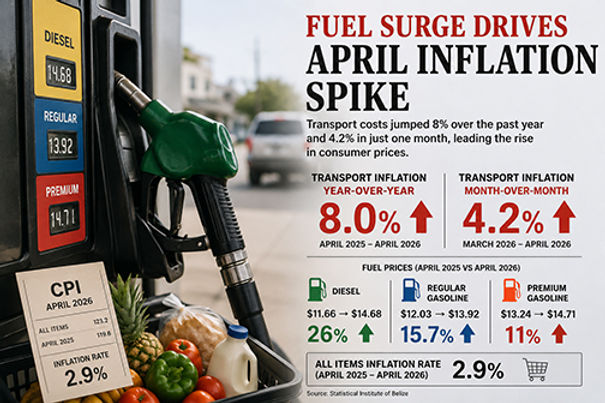
Belize is facing growing inflationary pressure, with runaway transportation costs emerging as the single largest driver of rising consumer prices in April 2026, according to official data from the Statistical Institute of Belize (SIB). Newly released government figures show that transport costs have jumped 8% year-over-year and 4.2% month-over-month, pulling the nation’s overall annual inflation rate up to 2.9% for the month. The entire surge is rooted in unprecedented spikes in global and domestic fuel prices that are hitting motorists and everyday consumers directly.
Diesel has seen the most dramatic price growth of all fuel grades. Between April 2025 and April 2026, the average retail price of diesel surged 26%, climbing from $11.66 per gallon to $14.68 per gallon. When looking just at the 30-day window between March and April 2026, diesel prices jumped by an eye-watering $2.42 per gallon. Regular and premium gasoline have also recorded double-digit annual increases: regular gasoline rose 15.7% year-over-year (adding $0.82 per gallon between March and April), while premium gasoline climbed 11% annually, with a $0.88 per gallon month-over-month increase.
The impact of rising transport costs extends far beyond gas station pumps, as fuel prices form the backbone of logistics and distribution for nearly every sector of Belize’s economy. Higher transport costs push up prices for nearly all goods that rely on ground or marine shipping, creating a ripple effect that raises the cost of living for households across the country. When combined with price increases in food and housing, the transport sector accounted for more than three-quarters of April’s total growth in consumer prices, SIB data confirms.
Food and non-alcoholic beverages have not been spared from inflationary pressure, recording a 2.6% annual price increase as of April. Common grocery staples saw some of the steepest gains, with sugar leading the pack at a more than 19% year-over-year jump. Consumers are also paying more for meat, coffee, soft drinks, and a range of fresh fruits compared to one year ago.
The housing, water, electricity, and domestic fuel category also logged a 2% annual increase, driven by higher utility rates and growing cooking gas costs. Over the past 12 months, the average cost of a 100-pound cylinder of liquefied petroleum gas, the most common cooking fuel for many Belizean households, rose from $127.63 to $136.47.
Across the country, inflation varies by municipality, with Orange Walk Town recording the highest annual rate at 4.2%, while Belize City saw the lowest regional inflation at 2.4%. Looking at the broader trend for 2026, the average inflation rate across the first four months of the year sits at 1.4% when compared to the same period in 2025. While most key spending categories have recorded price growth, including health care and restaurant services, one bright spot remains: costs for information and communication services have declined over the past year.
The SIB’s final Consumer Price Index (CPI) data puts the April 2026 reading at 123.2, up from 119.6 in April 2025, confirming the 2.9% annual inflation calculation. Economists note that fuel-driven inflation remains a key vulnerability for Belize’s economy, as higher fuel costs filter through to nearly every aspect of household spending, putting increased financial strain on low and middle-income families.
-
Court Orders JLSC, AG to Pay Enriquez
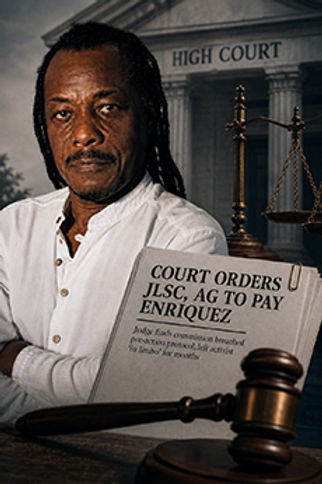
In a landmark judicial ruling delivered May 26, High Court Justice Martha Alexander has ordered the Judicial and Legal Services Commission (JLSC) and the national Attorney General to cover all legal costs incurred by government accountability activist Jeremy Enriquez. The decision follows a scathing judicial finding that the JLSC violated statutory obligations by failing to properly address Enriquez’s official complaint against sitting High Court Justice Tawanda Hondora, leaving the activist mired in months of unnecessary legal limbo.
The case originated on April 28, 2025, when Enriquez lodged a formal complaint alleging judicial bias and professional misconduct against Justice Hondora. The accusation stems from an unplanned incident during a court proceeding recess, when Hondora allegedly forgot to mute his microphone during a lunch break, leading Enriquez and his legal representation to overhear the justice discussing their active, ongoing case.
Over the next seven months, Enriquez submitted repeated written inquiries requesting updates on the status of his misconduct complaint. Despite these consistent follow-ups, the JLSC failed to issue any substantive response or ruling on the allegation. Frustrated by the prolonged lack of transparency and action, Enriquez filed an application for judicial review of the JLSC’s inaction in November 2025. Only after the review claim was lodged did the commission finally notify Enriquez that it had dismissed his complaint.
In her written judgment, Justice Alexander sharply criticized the JLSC’s handling of the complaint process. She found that the commission failed to adhere to mandatory pre-action protocols established to prevent unnecessary litigation, and its prolonged silence on the matter ran counter to both the explicit language and underlying principles of administrative law. The justice further rejected the Attorney General’s counter-argument that Enriquez should be ordered to pay the state’s legal costs for the judicial review, instead upholding that the activist had acted reasonably in pursuing the claim.
Alexander explicitly rejected claims that Enriquez had rushed to file legal action, noting that the entire dispute could have been avoided entirely if the JLSC had provided a timely, clear response to the original complaint. This ruling marks the third recent legal victory for Enriquez, who previously won two separate appeals at the Caribbean Court of Justice connected to his constitutional challenge of national redistricting plans.
Notably, the core dispute over Enriquez’s misconduct allegation remains unresolved. The activist has launched a separate legal challenge to the JLSC’s eventual decision to dismiss his complaint against Hondora, and that substantive case is scheduled to proceed to a full trial in the coming months.
-
Global Shipping Firms Warn of Rising Trade Costs Amid Route Disruptions
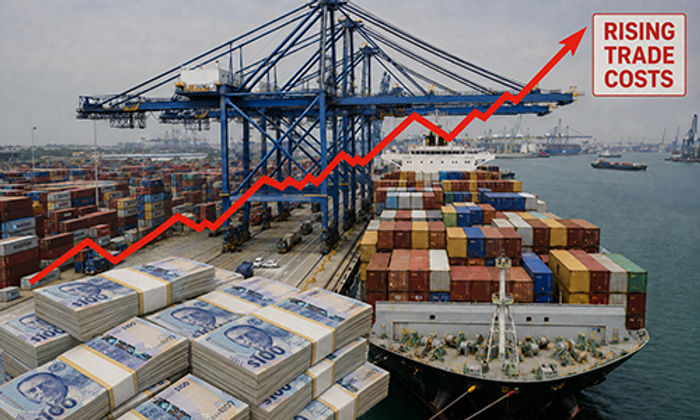
Global maritime shipping and logistics firms are grappling with rapidly rising operational expenses and tightening capacity limits as ongoing trade disruptions force carriers to divert cargo away from blocked or high-risk lanes, a crisis that threatens to push higher prices onto businesses and consumers across every region of the world. These urgent concerns were laid out Wednesday during a high-stake meeting between top executives from the world’s largest shipping companies and World Trade Organization Director-General Ngozi Okonjo-Iweala.
Industry leaders acknowledged that global supply chains have so far avoided total collapse and retained a baseline level of resilience, but they stressed that persistent disruptions to key maritime corridors – most notably strategic chokepoints in the Gulf region – have stretched transport networks to breaking point and driven up every type of operational cost. When meeting with Okonjo-Iweala, participants detailed that efforts to reroute cargo through alternative sea lanes, overland connections and alternate port facilities have already hit major barriers. Most existing alternative routes are already operating at near-maximum capacity, meaning diverting shipments away from disrupted trade lanes has become both increasingly logistically difficult and far more expensive for carriers.
One senior industry representative put the scale of the shift into stark perspective: moving the same volume of cargo that a single large container ship can carry requires roughly 70 full freight trains, highlighting just how hard it is to replace lost maritime capacity with overland alternatives. Beyond capacity constraints, executives flagged growing customs delays and logistical bottlenecks as critical, emerging threats. The rapid shift to multimodal transport and new alternative trade corridors has created extra administrative and operational frictions, slowing the movement of cargo and amplifying uncertainty for businesses that rely on just-in-time global trade networks.
Shipping representatives laid out two core priorities to address the growing crisis: first, they called for far greater public and private investment in port infrastructure, modern logistics systems and streamlined trade facilitation measures to keep supply chains efficient and predictable. Second, they emphasized that it is critical for all nations to uphold commitments under existing international trade agreements and defend the long-standing principle of freedom of navigation for commercial vessels.
In her response to industry concerns, Okonjo-Iweala centered the critical role that maritime shipping plays in underpinning the entire global economy, noting that more than 80% of global trade by volume travels across the world’s oceans. She called for strengthened collaborative action between national governments and the private shipping sector to tackle the emerging challenges and boost long-term supply chain resilience.
The WTO director-general also highlighted the urgent need to fully implement proven trade facilitation reforms, including modernizing customs processes, expanding digitalization of border procedures and improving real-time information sharing between trading partner nations. She issued a clear caution against the overuse of restrictive trade measures, warning that protectionist policies and unnecessary trade barriers would only deepen supply chain disruptions and erode stability for global trade overall.
Wednesday’s meeting gathered senior leaders from many of the world’s biggest container shipping and logistics firms, including MSC, CMA CGM, COSCO Shipping, Hapag-Lloyd, Ocean Network Express, Evergreen Marine Corporation, Yang Ming Marine Transport Corporation and China Merchants Energy Shipping, alongside leadership from major international shipping and freight industry associations. -
Belize Urged to Prepare as Hurricane Season Begins
The 2026 Atlantic hurricane season is scheduled to officially kick off on Monday, June 1, and will run its full six-month course through November 30. Though these dates mark the formal bounds of the annual storm season, meteorological officials have emphasized that tropical cyclones are not bound by calendar constraints, and off-season development remains a persistent possibility.
Lead forecasting bodies are projecting that this year’s hurricane activity will land slightly below the long-term historical average. Across the entire Atlantic Basin, the current outlook estimates that between 8 and 14 tropical systems will strengthen enough to earn formal named status. Of those developing disturbances, forecasters anticipate 3 to 6 will intensify into full hurricanes, with 1 to 3 gaining enough power to reach major hurricane classification – Category 3 or higher on the Saffir-Simpson scale.
To put this projection in context, a typical average Atlantic hurricane season sees around 14 named storms, 7 hurricanes, and 3 major hurricanes form over the course of the season.
Belize’s National Meteorological Service (NMS) has identified two key competing climate factors that will shape storm development over the coming months. Meteorologists report there is a high probability that an El Niño climate pattern will emerge over the course of the hurricane season. El Niño conditions are historically linked to reduced hurricane activity across the Atlantic Basin, thanks to shifts in atmospheric wind patterns that inhibit tropical cyclone formation and strengthening.
Counteracting this suppressing effect, however, is the ongoing trend of above-average sea surface temperatures across much of the Atlantic. Warmer ocean waters act as a critical energy source for tropical cyclones, creating favorable conditions for disturbances to organize and intensify as they move across open water.
Crucially, official forecasters have stressed that seasonal outlooks only provide a broad estimate of overall storm activity across the entire basin. These projections cannot accurately predict the exact timing of individual storm formation or the specific path any developing system will take. Even with the prediction of fewer total storms this season, Belize still faces a tangible risk of being impacted by one or more storm systems between June and November.
In response to this ongoing risk, the NMS and Belize’s National Emergency Management Organization (NEMO) have launched a public outreach push urging all residents to maintain consistent preparation for potential severe weather. Local authorities are advising all households and business operators to review and update their existing emergency response plans, as well as restock and refresh emergency supply kits ahead of any potential threat.
The NMS has confirmed that it will maintain continuous, close monitoring of all developing weather systems throughout the season. If any storm begins to track toward Belize, the service will issue timely updates to both NEMO and the general public to keep communities informed. NEMO and its network of local emergency committees across the country have also confirmed they are fully prepared to activate the national Hurricane Response Plan immediately if a storm threatens the nation.
In a final public note, officials are reminding all Belizeans to only trust weather and emergency updates released directly by official NMS and NEMO channels. They have also issued a warning that the distribution of false or misleading information related to hurricane threats constitutes a criminal offense under local law.
-

PM Says Sex Offenders Registry Will Be Public, But Structured in Tiers
Amid mounting public pressure to open Belize’s existing sex offenders registry to general public access, a multi-stakeholder gathering convened in Belmopan this week to review the nation’s handling of sexual violence cases and identify unaddressed gaps in survivor protection. The meeting, organized by the Ministry of Human Development in partnership with the National Commission for Families and Children (NCFC) and the National Women’s Commission (NWC), brought together judicial representatives, law enforcement officials, government agencies and advocacy groups to examine every stage of the legal process for sexual offenses, from initial incident reporting to court proceedings, and the persistent barriers survivors encounter at each step.
This round of discussions comes just weeks after Rossana Briceño, Belize’s Special Envoy for the Development of Families and Children, launched a public campaign pushing for full public access to the registry, which currently remains restricted from general view. Attendees covered a wide range of critical topics, including multiple categories of sexual offenses ranging from rape and incest to human trafficking and commercial sexual exploitation of children, as well as gaps in existing witness protection legislation and the current operational structure of the national sex offenders registry.
In recent days, Prime Minister John Briceño confirmed that the proposal for public access has been formally raised for discussion at the Cabinet level, and government teams are currently working through the logistical and regulatory details to implement the change. Speaking during an appearance on the local program *Open Your Eyes*, the Prime Minister outlined that the new public registry will operate under a structured tiered framework, rather than opening the entire list of registered offenders to unrestricted public view. Only offenders convicted of the most severe sexual offenses and repeat offenders will have their information made publicly available under the proposed model.
Briceño explained that the tiered system is designed to empower community safety, noting that residents would be able to check the registry to identify high-risk offenders living or working near them, allowing parents to warn children to avoid repeat offenders in local neighborhoods or public spaces. At the same time, he emphasized a clear distinction between high-risk cases and other convictions, such as first-time offenses or situations where an offender did not know their partner was underage. The Prime Minister stressed that these lower-risk individuals should be provided a clear pathway to rehabilitation after completing their sentences, without being burdened by permanent public stigma that would block their ability to rebuild their lives. He was careful to clarify that this differentiated approach does not minimize the seriousness of any sexual offense.
“Sometimes people make mistakes, and in many cases, they want to turn their lives around,” Briceño said during the interview. “If you have to carry that label over your head for the rest of your life, you’re essentially condemned to a permanent second-class status. I’m not in any way suggesting that these offenses are acceptable—they are not. We are building this framework based on guidance from legal and criminology experts.”
Briceño added that interagency working groups involving the Belize Police Department, the Attorney General’s Ministry and the Ministry of Human Development are currently finalizing the specific rules, access protocols and tier classification criteria that will govern the new public registry, with no final timeline for launch announced as of yet.
-

Zabaneh: Join NBC or Find Your Own Electric Buses
May 28, 2026 — Belize’s government-led electric bus pilot initiative has drawn to a close without a single member of the Belize Bus Association (BBA) having the opportunity to test or operate the new electric vehicles. Now, the association is pushing for a seat at the table in the project’s next phase, but their request comes after the pilot program has already concluded, leaving their demand facing an uncertain outcome.
Shortly before Minister of Transport Dr. Louis Zabaneh spoke to reporters on Wednesday, the BBA released an official letter laying out their position. The association is calling for the pilot electric buses to be rotated onto routes currently managed by BBA operators, arguing that a genuine nationwide transition to electric public transit cannot happen if independent operators are locked out of hands-on testing of the new technology.
The BBA’s letter emphasizes that asking independent bus operators to commit to large-scale investments in electric vehicles, and make long-term strategic decisions about the future of their businesses, without first gaining direct experience operating the buses, is an unrealistic expectation. The association stresses that it is not seeking any form of preferential treatment, but rather demanding equal and meaningful inclusion in the government’s electric bus rollout plans.
Minister Zabaneh pushed back on the request in his remarks to local outlet News 5, confirming that the pilot initiative has been fully completed, and no additional electric buses will be allocated through that specific program. He outlined only two available paths forward for BBA members who want to integrate electric buses into their operations: either merge their operations into the state-run National Bus Company (NBC), or organize independently as a private entity and purchase their own electric buses directly.
Zabaneh clarified that while the Ministry of Transport is willing to share all data and lessons learned from the completed pilot program with independent operators, the electric buses already owned by the NBC are reserved exclusively for use on NBC-managed routes. “They would have to, as independent operators, organise, form a company and procure e-buses,” the minister explained.
The minister also noted that growing numbers of BBA members have already chosen to join the NBC, drawn by the advantages of operating under the national entity. Just recently, three additional independent operators made the decision to align with the NBC. “I am pleased to share with you that the last operator from the south that did not join has now joined, and two operators from the north have now applied to join the National Bus Company,” Zabaneh announced.
-

‘Donald Trump’ Buffalo Spared from Eid Sacrifice After Going Viral
In a surprising turn of events sparked by viral social media attention, a rare albino buffalo with a unique golden tuft of fur – nicknamed “Donald Trump” for its striking resemblance to the former U.S. president’s signature hairstyle – has been granted a last-minute reprieve from ritual slaughter ahead of Eid al-Adha in Bangladesh.
The buffalo, which lives on a small family farm in Narayanganj, just outside Bangladesh’s capital Dhaka, was originally purchased to be sacrificed as part of the Islamic holiday’s traditional rituals. But everything changed when photos and clips of the unusual animal, whose golden locks are regularly combed and groomed by its owners, began circulating across digital platforms across the South Asian nation.
As the content spread, the buffalo quickly became a nationwide internet sensation. Curious tourists and animal lovers began traveling from across the country to visit the farm, turning the little-known animal into an unexpected local celebrity. Ziauddin Mridha, the buffalo’s original owner, shared that the unusual nickname was coined by his younger brother, who immediately noticed the similarity between the animal’s distinctive fur and the famous politician’s hairstyle. Mridha added that the albino buffalo has a uniquely gentle temperament and requires constant specialized care, including regular baths and multiple daily feedings to stay healthy.
Facing a groundswell of public interest, Bangladeshi authorities intervened to stop the planned sacrifice. Home Minister Salahuddin Ahmed issued an official order to spare the animal’s life, and the buyer who had purchased the buffalo for the ritual has already received a full refund. A spokesperson for the home ministry explained the decision was rooted in two key factors: widespread public affection for the buffalo and tangible security concerns, as the growing influx of visitors to the small farm created unmanageable crowd control risks.
Moving forward, the rare albino buffalo will be relocated to Bangladesh’s National Zoo in Dhaka, where it will join more than 2,000 animals from 191 different species and remain on permanent public display for visitors from across the country to enjoy.
-

Belize Rewriting “Decades-Old” Labour Laws
On May 28, 2026, the government of Belize announced a comprehensive overhaul of the nation’s decades-old Labour Act, a move driven by rapid shifts in the country’s employment landscape and growing systemic gaps in the existing labor framework. According to Tanya Santos, Chief Executive Officer of Belize’s Ministry of Labour, the current legislation has not kept pace with the evolution of work, leaving critical modern employment scenarios unaddressed.
The rise of non-traditional work arrangements, such as remote work and the fast-expanding domestic call center industry, has exposed major gaps in the outdated law, Santos explained. What was fit for the labor market of generations ago fails to reflect the realities of how Belizeans work today, with new industries and employment models emerging far faster than existing regulations have been able to adapt.
Beyond updating rules for modern work structures, the review process is also targeting pressing economic and demographic challenges that are weighing on Belize’s development. Santos highlighted that skilled labor shortages, exacerbated by outmigration of local workers, have created costly delays for major public projects across the country. As a concrete example, she pointed to the ongoing construction of the San Pedro hospital, which has fallen behind schedule due to the lack of available qualified local workers to complete the project.
To ensure the revised legislation balances the needs of all stakeholders, the Ministry of Labour has launched cross-sector consultations bringing together a diverse range of groups. Union representatives, leadership from the Belize Chamber of Commerce, and stakeholders from key sectors including tourism have gathered to negotiate core labor issues that will be integrated into the new law. Key topics under discussion include fair minimum wage standards, improved job security protections, updated workplace safety regulations, and manageable cost burdens for small and large employers alike.
Santos emphasized that updating the outdated labor framework is a long-overdue step for Belize, noting that “it is always a perfect time to update your legislation” to better serve the evolving needs of the nation’s workers and economy.