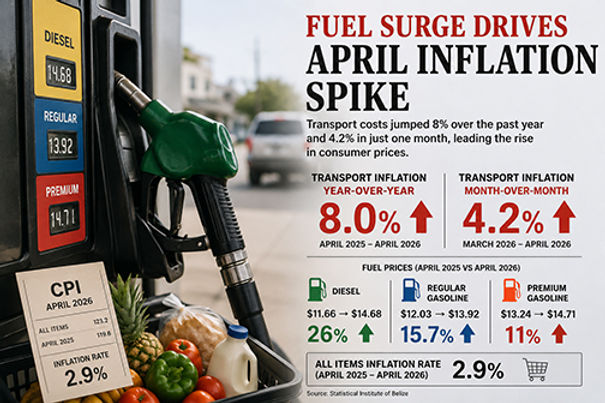
Belize is facing growing inflationary pressure, with runaway transportation costs emerging as the single largest driver of rising consumer prices in April 2026, according to official data from the Statistical Institute of Belize (SIB). Newly released government figures show that transport costs have jumped 8% year-over-year and 4.2% month-over-month, pulling the nation’s overall annual inflation rate up to 2.9% for the month. The entire surge is rooted in unprecedented spikes in global and domestic fuel prices that are hitting motorists and everyday consumers directly.
Diesel has seen the most dramatic price growth of all fuel grades. Between April 2025 and April 2026, the average retail price of diesel surged 26%, climbing from $11.66 per gallon to $14.68 per gallon. When looking just at the 30-day window between March and April 2026, diesel prices jumped by an eye-watering $2.42 per gallon. Regular and premium gasoline have also recorded double-digit annual increases: regular gasoline rose 15.7% year-over-year (adding $0.82 per gallon between March and April), while premium gasoline climbed 11% annually, with a $0.88 per gallon month-over-month increase.
The impact of rising transport costs extends far beyond gas station pumps, as fuel prices form the backbone of logistics and distribution for nearly every sector of Belize’s economy. Higher transport costs push up prices for nearly all goods that rely on ground or marine shipping, creating a ripple effect that raises the cost of living for households across the country. When combined with price increases in food and housing, the transport sector accounted for more than three-quarters of April’s total growth in consumer prices, SIB data confirms.
Food and non-alcoholic beverages have not been spared from inflationary pressure, recording a 2.6% annual price increase as of April. Common grocery staples saw some of the steepest gains, with sugar leading the pack at a more than 19% year-over-year jump. Consumers are also paying more for meat, coffee, soft drinks, and a range of fresh fruits compared to one year ago.
The housing, water, electricity, and domestic fuel category also logged a 2% annual increase, driven by higher utility rates and growing cooking gas costs. Over the past 12 months, the average cost of a 100-pound cylinder of liquefied petroleum gas, the most common cooking fuel for many Belizean households, rose from $127.63 to $136.47.
Across the country, inflation varies by municipality, with Orange Walk Town recording the highest annual rate at 4.2%, while Belize City saw the lowest regional inflation at 2.4%. Looking at the broader trend for 2026, the average inflation rate across the first four months of the year sits at 1.4% when compared to the same period in 2025. While most key spending categories have recorded price growth, including health care and restaurant services, one bright spot remains: costs for information and communication services have declined over the past year.
The SIB’s final Consumer Price Index (CPI) data puts the April 2026 reading at 123.2, up from 119.6 in April 2025, confirming the 2.9% annual inflation calculation. Economists note that fuel-driven inflation remains a key vulnerability for Belize’s economy, as higher fuel costs filter through to nearly every aspect of household spending, putting increased financial strain on low and middle-income families.