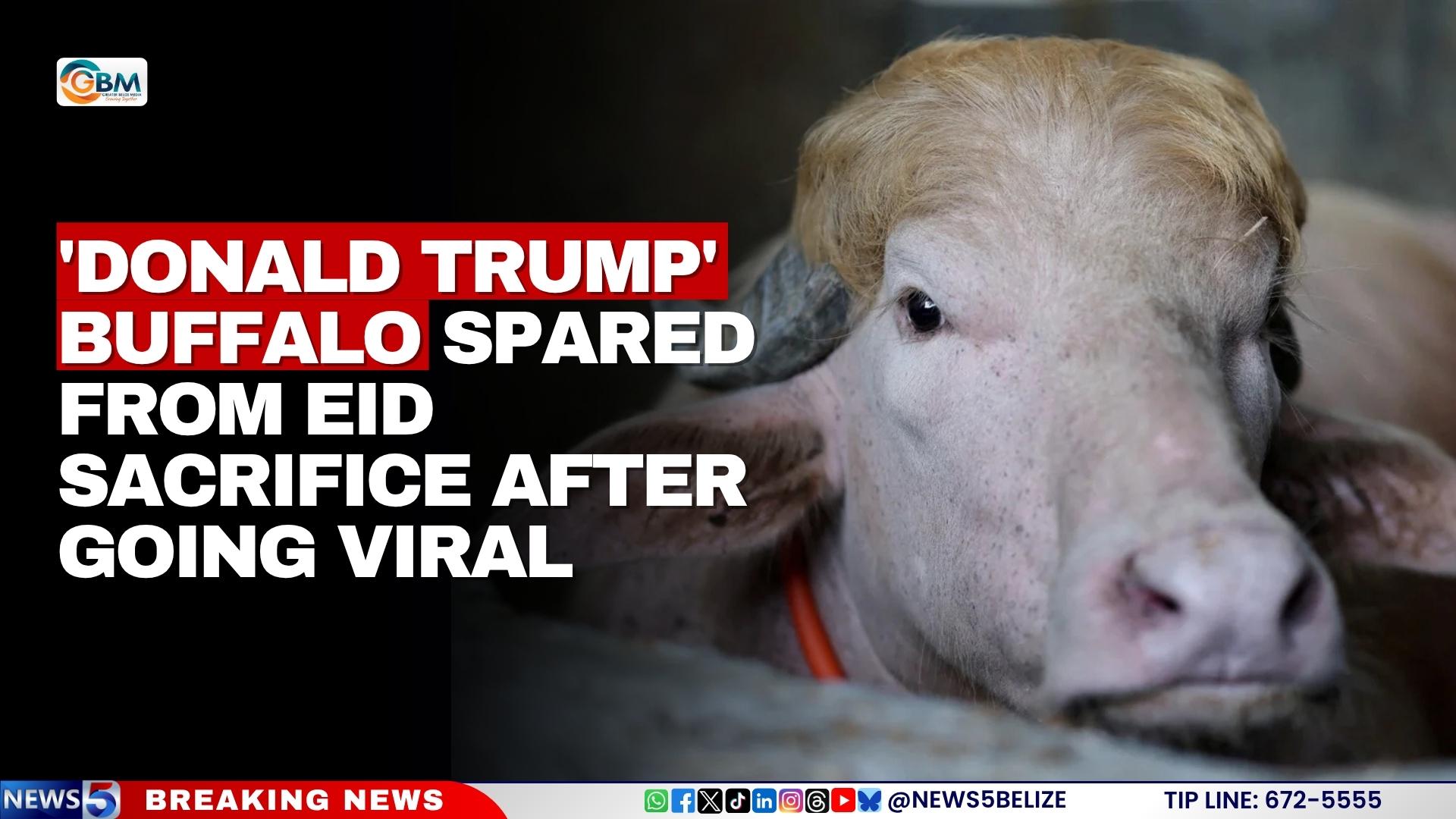
In a surprising turn of events sparked by viral social media attention, a rare albino buffalo with a unique golden tuft of fur – nicknamed “Donald Trump” for its striking resemblance to the former U.S. president’s signature hairstyle – has been granted a last-minute reprieve from ritual slaughter ahead of Eid al-Adha in Bangladesh.
The buffalo, which lives on a small family farm in Narayanganj, just outside Bangladesh’s capital Dhaka, was originally purchased to be sacrificed as part of the Islamic holiday’s traditional rituals. But everything changed when photos and clips of the unusual animal, whose golden locks are regularly combed and groomed by its owners, began circulating across digital platforms across the South Asian nation.
As the content spread, the buffalo quickly became a nationwide internet sensation. Curious tourists and animal lovers began traveling from across the country to visit the farm, turning the little-known animal into an unexpected local celebrity. Ziauddin Mridha, the buffalo’s original owner, shared that the unusual nickname was coined by his younger brother, who immediately noticed the similarity between the animal’s distinctive fur and the famous politician’s hairstyle. Mridha added that the albino buffalo has a uniquely gentle temperament and requires constant specialized care, including regular baths and multiple daily feedings to stay healthy.
Facing a groundswell of public interest, Bangladeshi authorities intervened to stop the planned sacrifice. Home Minister Salahuddin Ahmed issued an official order to spare the animal’s life, and the buyer who had purchased the buffalo for the ritual has already received a full refund. A spokesperson for the home ministry explained the decision was rooted in two key factors: widespread public affection for the buffalo and tangible security concerns, as the growing influx of visitors to the small farm created unmanageable crowd control risks.
Moving forward, the rare albino buffalo will be relocated to Bangladesh’s National Zoo in Dhaka, where it will join more than 2,000 animals from 191 different species and remain on permanent public display for visitors from across the country to enjoy.