标签: Belize

伯利兹

  • Man Charged in Fatal Crash That Killed Auria Ramos

    Man Charged in Fatal Crash That Killed Auria Ramos

    A week after a deadly traffic incident in western Belize claimed the life of a local woman, law enforcement officials have announced an arrest and formal charges in connection with the crash. On May 22, 2026, 49-year-old Auria Ramos, a resident of Bullet Tree Falls Village, was riding a motorcycle that veered off the roadway in the Santa Familia district of Cayo. Ramos sustained catastrophic blunt force trauma in the incident and died while undergoing emergency medical treatment shortly after the crash.

    After days of ongoing investigative work into the circumstances of the collision, authorities confirmed this week that 33-year-old Melvin Quikshan, also a Bullet Tree Falls Village resident, has been taken into police custody. Quikshan faces four separate charges connected to Ramos’ death: manslaughter by negligence, causing death by careless conduct, driving a motor vehicle without due care and attention, and failing to provide a required specimen for testing.

    Assistant Superintendent of Police Stacy Smith, serving as Staff Officer, confirmed the details of the arrest and charges in an official statement released Tuesday. “As a result of the ongoing investigation into the traffic accident which claimed the life of 49-year-old Auria Ramos of Bullet Tree Falls Village, which occurred on Friday, May 22nd, 2026, police have formally arrested and charged 33-year-old Melvin Quikshan of Bullet Tree Falls Village for the crimes of manslaughter by negligence and causing death by careless conduct, as well as the offenses of drove motor vehicle without due care and attention and failing to provide a specimen,” Smith stated.

    Investigative accounts confirm the charges were filed after preliminary findings indicated the motorcycle operator lost control of the vehicle before it left the roadway, leading to the fatal crash. The case is scheduled to proceed through the Belizean judicial system in the coming weeks as additional evidence is compiled for court proceedings.

  • Briceño Defends Swift Action as Fuel Dealers Cry Foul Over Margin Cuts

    Briceño Defends Swift Action as Fuel Dealers Cry Foul Over Margin Cuts

    A bitter public dispute has erupted in Belize over fuel pricing, putting Prime Minister John Briceño’s government in the hot seat after it implemented unexpected cuts to fuel dealer profit margins that have left industry representatives furious.

    Fuel dealers argue the Briceño administration violated a long-standing collaborative agreement that has governed the nation’s fuel sector since 2004. Under that 20-year-old framework, any adjustments to dealer margins required prior consultation between the government and industry stakeholders. Dealers contend the sudden, unilateral move breaks decades of established trust and the shared understanding that all changes to pricing structures would go through collaborative dialogue. As tensions continue to escalate, industry representatives are stepping up their pushback against the policy.

    Prime Minister Briceño, however, is standing firm in his defense of the swift decision, framing the margin cuts as a necessary response to an urgent national crisis. With global and domestic fuel prices skyrocketing to unprecedented levels in recent years, Briceño argues that waiting for a lengthy consultation process would have imposed unnecessary additional harm on cash-strapped consumers. While he has left the door open for future negotiations with dealers, he stressed that in the face of a rapidly unfolding cost-of-living crisis, delay was simply not a viable option.

    Briceño, who holds a personal stake in Belize’s fuel industry, offered a rare transparent breakdown of how the country’s fuel pricing system operates, giving the public an inside look at a mechanism that affects every driver and consumer in the nation. He explained that the 2004 framework was designed to let market forces adjust margins dynamically alongside fluctuating fuel prices, eliminating the need for frequent negotiations over profit levels. But he noted that when the agreement was drafted, fuel hovered around $5 per gallon — a far cry from today’s prices that have surged to between $13 and $15 per gallon. Under the original formula, higher retail prices automatically translate to larger absolute margins for dealers, a dynamic that was never anticipated when the 2004 deal was struck.

    Citing input from a former Texaco executive, Briceño pointed out that Belize currently has some of the highest fuel dealer margins in the region, a gap that widened as global prices climbed. He argued that as the government has already cut fuel taxes to reduce consumer costs, and households are already shouldering the burden of higher prices, it is only fair that dealers also contribute to easing pressure on the public by accepting a reduced margin. The cut implemented by the administration amounts to just under $1 per gallon. Briceño acknowledged that dealers would naturally prefer to retain higher profits, but emphasized the need for shared sacrifice during a period of national economic stress.

    The prime minister also called on major multinational fuel operators active in Belize, including PUMA Energy, to reevaluate their own pricing structures, particularly around facility rental fees and revenue sharing from in-store retail sales at gas stations.

    In his breakdown of the country’s fuel supply chain, Briceño explained that imported fuel costs are calculated based on suppliers’ stated acquisition costs, shipping fees, and throughput charges for processing fuel through terminal facilities. After these base costs are tallied, dealer margins are added under the existing formula, followed by government taxes. He also noted that fuel prices vary across Belize’s districts due to added transportation costs, a reflection of the country’s geographic spread.

    Unlike many larger nations, Belize does not maintain large strategic fuel reserves, Briceño confirmed. The country receives fuel shipments one to two times per month, aligned with current consumption rates, and building large-scale storage infrastructure to hold tens of millions of gallons of reserve fuel is currently unaffordable for the small nation.

    This dispute comes as rising energy costs continue to be a top economic pressure for households across Belize, putting both the government and industry stakeholders under growing public scrutiny over how retail fuel prices are determined.

  • Corozalenos Finding Ways to Cope with Higher Costs

    Corozalenos Finding Ways to Cope with Higher Costs

    May 27, 2026

    Across northern Belize’s Corozal District, the relentless pressure of rising living costs has become an inescapable daily reality for working families, who are now being forced to make increasingly difficult trade-offs to make ends meet. What began as gradual price increases has snowballed into a widespread crisis, with skyrocketing fuel prices and swelling grocery bills eating away at household budgets that were already stretched thin.

    For many Corozaleños, difficult choices are no longer the exception – they are the new normal. Faced with sticker shock at local gas stations and supermarket checkout lines, hundreds of residents have begun looking outside Belize’s borders for relief. The short trip across the nearby border into Mexico has become a regular routine for cost-conscious shoppers, who can find drastically lower prices on gasoline and everyday essential goods that have become unaffordable at home.

    To understand how this economic squeeze is reshaping daily life in Corozal, a reporting team visited Corozal Town this week to speak directly with residents about their experiences, the adjustments they have made to their household budgets, and their concerns about what sustained high prices could mean for the future of the northern community.

    This article is a full transcript of an evening television news broadcast; any comments from speakers in Belizean Kriol have been transcribed using a standardized spelling system for clarity and accessibility.

  • Fuel Crisis Takes Center Stage at Belize Energy Summit

    Fuel Crisis Takes Center Stage at Belize Energy Summit

    In 2026, Belize stepped into the regional energy spotlight as it welcomed attendees to the 65th annual assembly of the Latin America and Caribbean Energy Organization (OLACDE), where a crippling regional fuel price surge dominated every discussion on the agenda. New data presented at the summit painted a stark picture of the unfolding crisis: across Latin America and the Caribbean, regular and premium gasoline prices have jumped 15% in recent months, while diesel costs, a critical input for transportation, agriculture and industrial activity, have skyrocketed by a staggering 22%.

    Energy leaders and policy analysts at the gathering warned that this rapid price increase is unlikely to be a temporary market spike, warning of far deeper economic instability on the horizon. OLACDE Executive Secretary Andrés Rebolledo told attendees that the global economy is increasingly at risk of tipping into stagflation, a rare and damaging economic scenario marked by simultaneous high inflation and stagnant economic growth that would disproportionately hurt small and developing economies across the region.

    In his remarks from the summit floor, Rebolledo outlined the uneven patchwork of policy responses that regional governments have already deployed to soften the blow of rising fuel costs for consumers. Most nations have relied on one of four core strategies, he explained: widespread fuel subsidies, targeted tax exemptions for energy and transportation sectors, price controls for retail fuel distribution networks, or negotiated agreements with private sector fuel suppliers. But each strategy carries significant tradeoffs, Rebolledo noted: the ability of governments to maintain large-scale subsidies, for example, is strictly limited by national fiscal capacity and existing public debt burdens, leaving many lower-income nations unable to shield their populations from rising costs.

    Beyond immediate policy responses, Rebolledo highlighted the deep split in global analysis around the root causes of the current price volatility. While many economists warn that the world is now on the brink of a harmful stagflationary period that would impact every sector of the global economy, not just energy markets, another cohort of analysts frames the current instability as a side effect of what they term a “freezing conflict” — an extended period of low-intensity geopolitical tension that keeps global energy supply chains constrained and prices elevated.

    Against this backdrop, attendees at the Belize summit prioritized collaborative action, with regional energy partners working to draft joint strategies that can cushion regional economies from incoming shocks while accelerating the transition to sustainable domestic energy sources that would reduce long-term reliance on imported fossil fuels. Participants emphasized that coordinated regional action is the most effective path to mitigating the worst impacts of the current fuel crisis and building more resilient energy systems for the future.

  • Public Frustration Grows Over Skyrocketing Electricity Bills

    Public Frustration Grows Over Skyrocketing Electricity Bills

    As of May 27, 2026, widespread public discontent over dramatically inflated electricity bills is building across Belize, with many residents reporting that their monthly energy costs have nearly doubled in the latest billing cycle. Local outlet News Five has been closely following the growing backlash against the national electricity provider Belize Electricity Limited (BEL), which has framed the price spikes as a direct result of increased customer energy consumption, and has urged households to cut back on usage to lower their costs. This explanation has failed to convince most angered consumers, who are pushing for greater transparency around the sudden increases.

    Now, top officials from Belize’s Ministry of Public Utilities have stepped forward to offer additional context for the soaring bills. Dr. Leroy Almendarez, Chief Executive Officer of the ministry, confirmed that rising global fuel prices have also squeezed BEL’s operating margins, but reiterated that the bulk of the increase in individual bills still stems from higher customer consumption. Belize relies on imports for more than half of its total electricity supply, leaving the market vulnerable to shifts in global energy prices that eventually pass through to end users.

    To help consumers understand their billing statements, Almendarez broke down BEL’s tiered pricing structure for residential customers. For the first 50 kilowatt-hours of usage, customers pay a rate of 34 cents per kilowatt-hour. Any consumption exceeding 50 kilowatt-hours up to 200 kilowatt-hours falls into a higher-priced tier, with a separate per-kilowatt rate applied to that portion of usage. The total bill is calculated by adding the costs from each tier, a structure Almendarez says is clearly outlined on every customer statement similar to itemized pricing at a retail store.

    Almendarez advised customers to audit their own energy use to identify unnecessary consumption that drives up costs. He noted that many households unknowingly waste energy by leaving appliances and electronics plugged in continuously even when not in use. Phantom energy draw from plugged-in devices not only adds to monthly bills, he added, but also creates a small but real fire hazard, as demonstrated by overheated mobile phone chargers left plugged in indefinitely. Checking for hidden leaks in electrical systems and unplugging unused devices are simple conservation steps that can bring down monthly costs significantly, he said.

    Addressing ongoing concerns about the utility’s rollout of new smart metering technology, Almendarez pushed back against claims that the meters are used to overcharge customers. He emphasized that the smart meter program is intended to give consumers greater access to real-time data about their energy usage, empowering them to make more informed decisions about conservation rather than misleading the public.

    This report is a transcribed excerpt from an evening television newscast published online, with local Kriol language speech transcribed using a standardized spelling system for accessibility.

  • San Pedro Hospital Build Advances Despite Past Setbacks

    San Pedro Hospital Build Advances Despite Past Setbacks

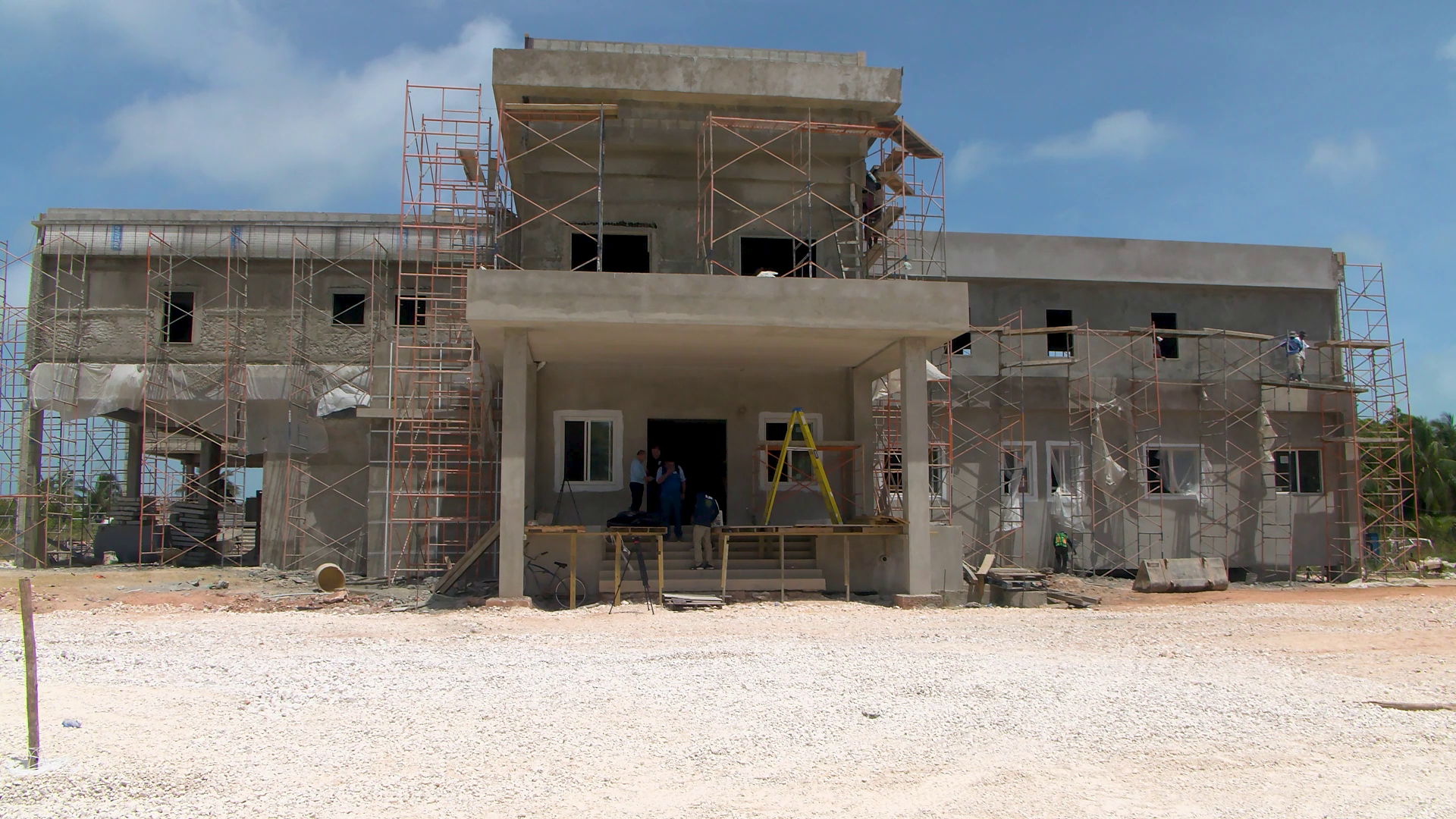
    Nestled on Ambergris Caye, one of Belize’s most bustling tourist hotspots, the island community of San Pedro has waited decades for improved local emergency medical care. That long wait finally moved into a tangible new phase in May 2026, as construction advances on the promised San Pedro and Caye Caulker General Hospital — a project that has faced repeated costly delays that tested the patience of local residents.

    The push for a full-service general hospital on the island gained urgent momentum after a devastating 2025 tragedy: two-year-old Kaleel Nah died from a high fever after his family was unable to secure an emergency air evacuation off the island, forcing the child to be transported via water ambulance. More than a year after that heartbreaking loss, the $33 million project remains unfinished, with multiple unforeseen setbacks pushing back the original completion target of December 2026.

    Belizean Prime Minister John Briceño outlined the core challenges derailing the original timeline and budget in comments to local reporters. Two major headwinds have driven unexpected cost overruns: skyrocketing prices for core construction materials, and a fierce local labor shortage that has pushed daily wages far higher than initial projections. “You could ask any contractor, from the most ardent UDP supporter to PUP, the cost of building supplies have gone up and we can’t get away from that,” Briceño explained. On the labor front, he added, competing construction projects across San Pedro are actively poaching skilled workers, with employers offering higher daily wages to steal talent from existing job sites, further driving up project costs. Currently, daily wages for construction workers on the site exceed $100 a day — a figure not accounted for in the original 2020s budget.

    Funding for the 37,000 square-foot, two-story facility comes from a multi-million dollar grant from the Republic of China (Taiwan), with Taiwan’s Overseas Engineering and Construction Company (OECC) leading all design, construction and outfitting work for the hospital. Once complete, it will be the second largest hospital in Belize, trailing only the Karl Heusner Memorial Hospital in the capital.

    Andre Perez, the Area Representative for Belize Rural South, confirmed that the original $33 million allocation is no longer expected to cover the full cost of completing the project. While rumors have circulated that total costs could balloon to $50 million, Perez pushed back on that estimate, noting that government and OECC teams are still calculating the exact additional funding needed. “It certainly is not $50 million,” Perez emphasized, adding that the Ministry of Finance is working alongside OECC and Taiwanese government representatives to secure the extra capital required to cross the finish line. Despite the budget gaps, Perez stressed that construction will continue uninterrupted, and the government remains fully committed to delivering the facility to island residents.

    A walk through the active construction site with Project Support officer David Schart revealed the detailed scope of care the hospital will offer once open. A large section of the facility is dedicated to maternity services, including dedicated labor rooms, delivery suites, postnatal recovery areas, a pediatric wing, and an entire maternity ward. The facility will also feature two operating rooms (one ready for immediate use upon opening, and one prepped for future expansion), two-bed isolation units, a full central sterilization department, and additional upgrades that were not part of the original plan, including a requested CT scanner. An earlier proposal to add an elevator to serve the second floor was later removed from the plans to help control costs, Briceño noted.

    After years of delays, pushed by rising costs, labor shortages, and incremental changes to the facility’s design, the government has updated the official completion timeline: the hospital is now projected to open to residents between early and mid-2027. When finished, it will bring full-service emergency and routine medical care directly to the 10,000+ permanent residents of San Pedro and Caye Caulker, eliminating the dangerous and time-consuming need to evacuate emergency patients off the island for urgent care — a gap that has cost lives in the past. The facility is also being built with space to accommodate future expansion as the region’s tourism and resident population continues to grow. As of late May 2026, officials have not released a final figure for how much additional funding will be required to complete the project.


  • San Pedro Residents Plan Protest Over Soaring Costs

    San Pedro Residents Plan Protest Over Soaring Costs

    On the sun-soaked resort island of San Pedro, simmering public frustration over skyrocketing living costs has boiled over into planned public action, with a coordinated protest set to take place outside Area Representative Andre Perez’s office on June 3. Organized by local island resident Celestino Tzul, the demonstration brings together a broad cross-section of the community fed up with multiple overlapping economic pressures that have made daily life on the island increasingly unaffordable.

    Tzul, who has spearheaded the organizing effort, laid out the core grievances driving residents to take to the streets. Beyond the already crippling general cost of living crisis, he pointed to predatory pricing around fuel as a particularly painful burden for local families. Many vendors immediately raise prices on existing inventory as soon as global fuel costs climb, he explained, passing extra margins onto consumers who have no choice but to absorb the added cost. Rent alone, he noted, has become an overwhelming hurdle for working people, with affordability worsening steadily over years rather than just months.

    While price control regulations were introduced by authorities last year, Tzul argued the measures have been entirely toothless. Regulators have not enforced the rules consistently, he claimed, leaving suppliers and vendors to set prices unchecked with little accountability. The result is a cost spiral that has made San Pedro not just unlivable for local workers, but even less accessible for the tourists that form the backbone of the island’s economy, he added.

    Interviews with local residents on the ground confirm the widespread depth of the crisis. One local pointed to exorbitant food prices as a daily struggle, noting that a single basic burrito now costs $6 Belize, and a $20 trip to the grocery store leaves shoppers with no change left over. Multiple residents confirmed that it is actually cheaper for them to travel to mainland Belize to purchase bulk groceries, cover the cost of ferry transport, and return home than it is to buy everyday goods directly on the island.

    Another resident outlined the ripple effect of high prices across the local economy: the average household now needs to spend a minimum of $50 Belize a day just to cover basic needs, while local incomes and salaries have not kept pace. This slow-motion affordability crisis is dragging down every sector of the island’s economy, from golf cart rental businesses that rely on tourist spending to local small enterprises, as both locals and visitors cut back on non-essential spending.

    In a response to the planned protest, Area Representative Andre Perez acknowledged the democratic right of residents to peacefully demonstrate, noting that Belize’s democratic framework guarantees the freedom to express grievances and organize public action. However, he downplayed the scale of discontent, suggesting the movement lacks broad public support and that the protest will not result in meaningful change. Perez emphasized that any demonstration must be conducted in a respectful manner that upholds mutual respect between all parties.

    This report is adapted from a transcribed broadcast of a local evening news program, with Kriol-language commentary retained as transcribed by the original reporting team.

  • Belize Freezes Construction of Tall Buildings Amid Environmental Concerns

    Belize Freezes Construction of Tall Buildings Amid Environmental Concerns

    In a decisive move to safeguard Belize’s ecologically vulnerable and culturally iconic coastal regions, the national government has enacted a six-month moratorium halting all construction of buildings over three stories in high-priority tourist and residential destinations including Caye Caulker, Hopkins, Placencia, and the Sittee River area. The policy shift comes in response to mounting public and scientific alarm over unregulated rapid development that has threatened delicate coastal ecosystems and eroded the unique low-rise charm that draws millions of visitors to Belize each year.

    Andre Perez, Area Representative for Belize Rural South, explained that the temporary pause is intended to give government agencies time to conduct comprehensive environmental risk assessments, engage in structured community consultations, and revise development frameworks to align with long-term conservation and public interest goals. The moratorium, which was formally approved by the country’s cabinet, targets overdevelopment that has increasingly altered the character of popular coastal communities, most notably the small island of Caye Caulker.

    “Caye Caulker holds a very special, quaint character that we are committed to preserving,” Perez emphasized in remarks following the cabinet decision. “We refuse to let overdevelopment and sprawling high-rise construction take over the island and destroy the charm that makes it one of Belize’s most beloved destinations. That is why the moratorium is now in effect.”

    The crackdown on unregulated development extends beyond high-rise construction to address unpermitted infrastructure in popular coastal spots like San Pedro’s Secret Beach. Perez noted that starting in June, authorities will convene collaborative meetings with local business owners to address longstanding concerns about illegal waterfront construction including unauthorized docks, floating platforms, water-side bars and commercial kitchens. Rather than imposing immediate punitive measures, the government is prioritizing cooperative solutions to bring existing unregulated structures into compliance with environmental and land-use rules.

    When questioned about whether limited government staffing would hamper enforcement of the new moratorium – a challenge that has undermined past regulatory efforts in Belize – Perez acknowledged the resource constraints. To address this gap, the government has coordinated a joint task force bringing together staff from all relevant regulatory departments including the public health agency, mining authority, and Department of the Environment. By consolidating inspections and enforcement efforts across agencies, the task force will maximize limited human resources to review construction sites and ensure compliance across all targeted coastal regions, from San Pedro to Caye Caulker.

    This regulatory action marks one of the most significant steps Belize has taken in recent years to balance its growing tourism economy with the protection of the coastal ecosystems that underpin that sector’s long-term viability.

  • $1.5M Caye Caulker Police Station Coming Soon

    $1.5M Caye Caulker Police Station Coming Soon

    More than three years after this report was first scheduled for publication, a key public infrastructure project on Belize’s popular Caye Caulker island is back in motion. The $1.5 million planned police substation, which was sidelined for weeks amid public controversy, has received official confirmation that construction will resume, ending the uncertainty that has surrounded the development for months.

    The facility is one component of the government of Belize’s broader $60 million Belize Integral Security Program, a national initiative designed to upgrade law enforcement infrastructure across the country. When completed, the new substation will offer far more functional and modern amenities than the island’s current outdated police facility, including a dedicated unit for responding to domestic violence cases, climate-controlled secure evidence storage, and confidential private interview rooms. These upgrades are designed to better serve both the island’s permanent resident population and the millions of international tourists that visit Caye Caulker each year.

    Andre Perez, the elected Area Representative for Belize Rural South, made the official announcement confirming the project’s restart in late May 2026. During his statement, Perez addressed the public concerns that had delayed the project, acknowledging the community’s feedback while reaffirming that the designated parcel of land is legally reserved for government use specifically for the police station. He also pushed back against any suggestions of misallocation of funds for this project, noting that all allocated funding will be used exclusively for the construction of the substation as planned.

    In a sharp critique of the previous national administration, Perez called public attention to a completed police housing project built by the prior government just two years before the most recent transfer of power. That initiative, he said, received $2 million in public funding to construct police barracks and living quarters, but the completed structure is now valued at less than $800,000, with widespread reports of poor construction quality. Perez noted that the current administration has no intention of repeating that costly mismanagement, and is committed to delivering a high-quality facility that meets the needs of Caye Caulker’s police force and community.

    Addressing the public disagreement over the substation’s proposed location at the entrance of Caye Caulker’s main town, Perez acknowledged that some community members oppose the site, but stressed that the priority is delivering a functional, well-built facility that improves local law enforcement capacity, rather than repeating past mistakes of public fund mismanagement.

    Oscar Mira, Belize’s Minister of Home Affairs, added that the new substation will deliver two core public benefits: it will drastically improve the day-to-day working conditions for officers stationed on the island, and it will boost overall public safety for both residents and the island’s large annual influx of visitors. This report is a transcribed excerpt from an evening television news broadcast, with all Kriol-language statements transcribed using a standardized spelling system for accessibility.

  • Deadlock Deepens as PM Eyes Unilateral Move on Maya Lands

    Deadlock Deepens as PM Eyes Unilateral Move on Maya Lands

    One of Belize’s most contentious and decades-long policy disputes over Indigenous land rights has reached a new impasse, with Prime Minister John Briceño confirming that negotiations with the Maya Leaders Alliance (MLA) have collapsed into repeated gridlock — prompting his government to consider pushing forward with unilateral legislation regardless of opposition.

    In comments delivered during an evening national broadcast this week, the Briceño administration head laid bare the full scope of the breakdown in talks, noting that the MLA has rejected every compromise proposal put forward by the government to resolve the long-running conflict over Maya land claims. After years of iterative negotiations and one last-ditch effort to carve out a 35,000-acre land reserve as a starting point for negotiations, Briceño said the MLA refused to accept even that framework.

    “Our party, the People’s United Party, has stood on a clear foundation laid by George Price: we will not accept the balkanization of this country — we remain one unified nation,” Briceño said in the broadcast. He added that the government faces competing pressures from within its own support base: while some PUP backers align with the MLA’s positions, many other supporters who voted the PUP into office have criticized the administration for delaying action on the file and ignoring their concerns over territorial integrity.

    “We have invested countless hours in working with the alliance to find a mutually acceptable settlement,” Briceño explained. “We have bent over backward to meet them halfway, but every proposal we put on the table gets a flat rejection. At this point, I believe the only path forward is to finalize our draft legislation, bring it to a vote, and let any disagreements be settled through the judicial system. If we do not take this step, this issue will remain stalled indefinitely, and no one will get the resolution they need.”

    The MLA has already pushed back against the government’s plan, rejecting key provisions of the draft legislation and formally submitting concerns of a flawed process to the Caribbean Court of Justice, the region’s final appellate body. The clash puts the years-long fight for formal Maya land rights back at the center of Belize’s national political agenda, with both sides digging in ahead of what is expected to be a protracted legal and political battle.

    This report is adapted from a transcript of a televised evening news broadcast.