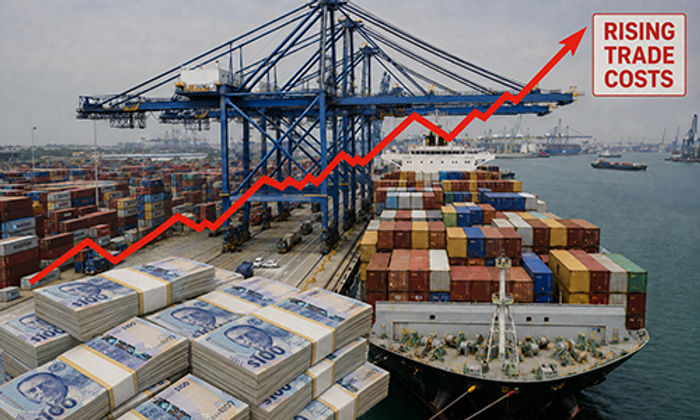
Global maritime shipping and logistics firms are grappling with rapidly rising operational expenses and tightening capacity limits as ongoing trade disruptions force carriers to divert cargo away from blocked or high-risk lanes, a crisis that threatens to push higher prices onto businesses and consumers across every region of the world. These urgent concerns were laid out Wednesday during a high-stake meeting between top executives from the world’s largest shipping companies and World Trade Organization Director-General Ngozi Okonjo-Iweala.
Industry leaders acknowledged that global supply chains have so far avoided total collapse and retained a baseline level of resilience, but they stressed that persistent disruptions to key maritime corridors – most notably strategic chokepoints in the Gulf region – have stretched transport networks to breaking point and driven up every type of operational cost. When meeting with Okonjo-Iweala, participants detailed that efforts to reroute cargo through alternative sea lanes, overland connections and alternate port facilities have already hit major barriers. Most existing alternative routes are already operating at near-maximum capacity, meaning diverting shipments away from disrupted trade lanes has become both increasingly logistically difficult and far more expensive for carriers.
One senior industry representative put the scale of the shift into stark perspective: moving the same volume of cargo that a single large container ship can carry requires roughly 70 full freight trains, highlighting just how hard it is to replace lost maritime capacity with overland alternatives. Beyond capacity constraints, executives flagged growing customs delays and logistical bottlenecks as critical, emerging threats. The rapid shift to multimodal transport and new alternative trade corridors has created extra administrative and operational frictions, slowing the movement of cargo and amplifying uncertainty for businesses that rely on just-in-time global trade networks.
Shipping representatives laid out two core priorities to address the growing crisis: first, they called for far greater public and private investment in port infrastructure, modern logistics systems and streamlined trade facilitation measures to keep supply chains efficient and predictable. Second, they emphasized that it is critical for all nations to uphold commitments under existing international trade agreements and defend the long-standing principle of freedom of navigation for commercial vessels.
In her response to industry concerns, Okonjo-Iweala centered the critical role that maritime shipping plays in underpinning the entire global economy, noting that more than 80% of global trade by volume travels across the world’s oceans. She called for strengthened collaborative action between national governments and the private shipping sector to tackle the emerging challenges and boost long-term supply chain resilience.
The WTO director-general also highlighted the urgent need to fully implement proven trade facilitation reforms, including modernizing customs processes, expanding digitalization of border procedures and improving real-time information sharing between trading partner nations. She issued a clear caution against the overuse of restrictive trade measures, warning that protectionist policies and unnecessary trade barriers would only deepen supply chain disruptions and erode stability for global trade overall.
Wednesday’s meeting gathered senior leaders from many of the world’s biggest container shipping and logistics firms, including MSC, CMA CGM, COSCO Shipping, Hapag-Lloyd, Ocean Network Express, Evergreen Marine Corporation, Yang Ming Marine Transport Corporation and China Merchants Energy Shipping, alongside leadership from major international shipping and freight industry associations.