标签: Belize

伯利兹

  • Infrastructure Development Loses to GOB’s Ballooning Payroll

    Infrastructure Development Loses to GOB’s Ballooning Payroll

    A pressing fiscal crisis is emerging in Belize as the nation’s budget faces severe structural imbalances. Economic experts are raising alarms that escalating government expenditures on wages, salaries, and pension benefits are systematically diverting crucial funding from essential infrastructure projects.

    Prominent economist Dr. Phillip Castillo has identified a dangerous trend where recurrent spending—primarily consisting of compensation for public officers—now dominates the national budget. This pattern creates a significant constraint on capital investments necessary for long-term development, including schools, healthcare facilities, and transportation networks.

    Current data reveals the alarming scale of this imbalance: approximately sixty percent of Belize’s budget, equivalent to forty-five cents of every collected dollar, is allocated to recurrent expenditures. Dr. Castillo characterizes this situation as fundamentally unsustainable, noting that successive administrations have recognized the problem yet failed to implement effective solutions.

    The economic challenge is further compounded by recent compensation increases for public officers, including a four percent salary adjustment scheduled for this year, building upon the four-and-a-half percent increase implemented in 2025.

    Dr. Castillo emphasizes that while public officers deserve fair compensation, the current trajectory requires urgent systemic reform. He advocates for a collaborative approach involving government, unions, and stakeholders to develop sustainable solutions, particularly through transitioning to a contributory pension system. The economist also recommends revitalizing dormant committees focused on revenue enhancement and cost-saving measures to expand the overall fiscal capacity without sacrificing essential public investments.

  • Lemonal on Edge Again as Anri’s Return Alarms Village

    Lemonal on Edge Again as Anri’s Return Alarms Village

    The remote community of Lemonal finds itself at the center of a recurring wildlife conflict as Anri, a notoriously problematic jaguar, has been captured for the second time. Forest Department officials confirmed the recapture operation following renewed complaints from villagers about livestock predation.

    Acting Chief Forest Officer John Pinelo provided critical context about the animal’s history. “Anri was originally captured in the Hope Creek area, which inspired its name,” Pinelo explained. “We initially relocated and collared the jaguar to monitor its movements in uninhabited territory.”

    The department’s tracking efforts revealed the big cat’s astonishing mobility, with jaguars capable of traveling up to thirty miles daily across their extensive territories. Despite relocation efforts, Anri found its way back to the Lemonal area, prompting renewed community concerns.

    Last week, wildlife authorities implemented a strategic capture operation using baited cages, successfully apprehending the elusive predator. Subsequent veterinary examination uncovered significant health issues: a severe screwworm infestation and a recently broken canine tooth.

    These medical complications present substantial challenges for potential rehabilitation. “All indications suggest that rerelease into the wild would be extremely difficult,” Pinelo stated. The Forest Department now considers permanent institutional placement, likely within a zoo facility, as the most viable alternative for the compromised predator.

    The situation highlights the complex balance between wildlife conservation and community safety in regions where human and animal territories increasingly overlap.

  • No Clear Plan for Belize’s Conflict Jaguars

    No Clear Plan for Belize’s Conflict Jaguars

    A critical breakdown in Belize’s wildlife management system is placing both communities and endangered jaguars at increasing risk. The recent recapture of Anri, a conflict jaguar in Lemonal village, has exposed dangerous gaps in official response protocols after the Belize Zoo suspended its two-decade-old Human-Jaguar Conflict program.

    The absence of coordinated authority leaves rural families vulnerable to livestock predation while conservationists warn of escalating jaguar killings. Residents report confusion over emergency contacts when big cats approach human settlements, creating potentially dangerous standoffs.

    Historical context reveals the severity of the situation: before the zoo’s intervention program began in the early 2000s, Belizeans killed approximately fifty jaguars annually. The program successfully rehabilitated over thirty conflict jaguars through specialized facilities including behavior modification enclosures and a fully equipped animal clinic.

    Notable success stories include Edgar Hill, an eighteen-year-old jaguar relocated from southern Belize in 2013 after preying on pets near homes. Despite losing an eye to glaucoma, he now serves as an educational ambassador. Similarly, Ben—another eighteen-year-old jaguar—was completely rehabilitated after arriving with gunshot wounds and mobility issues.

    The current impasse stems from administrative complications. The Forest Department maintains a memorandum of understanding with Corozal Sustainable Future Initiatives for jaguar capture, but has not renewed its agreement with the Belize Zoo despite their proven expertise.

    Acting Chief Forest Officer John Pinelo acknowledges the challenges: “We cannot think what the animal will do. It is not an exact science and that is why we keep adjusting.” Meanwhile, Belize Zoo Managing Director Dr. Celso Poot emphasizes their significant investments in community outreach and specialized facilities currently sitting idle.

    The situation represents a critical conservation crossroads for Belize’s national animal, with neither wildlife officials nor community members having clear protocols for human-jaguar coexistence.

  • Monkey River Finally Sees Action After Years of Erosion

    Monkey River Finally Sees Action After Years of Erosion

    After decades of watching their shoreline steadily vanish into the Caribbean Sea, the residents of Monkey River Village in southern Belize are witnessing their first significant government-led intervention against catastrophic erosion. The $300,000 emergency shoreline project, initiated on February 9th, represents a critical response to a community that has already lost homes, property, and even parts of its burial ground to advancing waters.

    Prime Minister John Briceño expressed profound personal and governmental urgency regarding the situation, stating, ‘If we do not do anything as a government, this village is going to disappear.’ He described the emotional impact of seeing cemetery plots submerged underwater, acknowledging both anger and despair that previous administrations had failed to act.

    The current strategy employs a natural-materials approach designed for rapid implementation. Initial work involves installing bollards at the river mouth to dissipate wave energy, followed by urgent measures to protect the vulnerable cemetery from further underwater erosion. Contractor Albert Loewen explained the hydrological challenges, noting that sediment buildup has altered the river’s natural flow patterns, complicating stabilization efforts.

    Beyond the immediate physical threat, the erosion crisis has severely impacted the local economy. Fast-moving tourist boats have exacerbated bank degradation while simultaneously churning the river into mud, crippling the traditional fishing and guiding industries that residents depend on for livelihoods.

    Community leaders like Chairlady Eloydia Cuevas emphasize that the preservation effort transcends environmental concerns, touching on fundamental aspects of culture, economy, and identity. The project represents not just infrastructure work but the preservation of a way of life.

    Government officials frame the intervention as a collaborative model. Valentino Shal, CEO of the Ministry of Rural Development, emphasized that sustainable transformation requires coordinated efforts across multiple ministries and full community participation. The project aims to both reduce immediate danger and establish foundations for a community-led conservation economy that balances ecological protection with economic vitality.

  • WWF Celebrates Builders Who Protect Mangroves

    WWF Celebrates Builders Who Protect Mangroves

    In an innovative approach to coastal preservation, Belizean developers and community leaders are demonstrating that construction and conservation can coexist harmoniously. The World Wildlife Fund (WWF) recently honored these pioneers at their 2025 Mangrove Friendly Development Challenge ceremony, recognizing property owners, resorts, and community organizations that have embraced sustainable building practices.

    Nadia Bood, WWF’s Senior Program Officer, emphasized the critical importance of this paradigm shift, noting that approximately 70% of Belize’s mangrove ecosystems exist on privately held land. This geographical reality places the future of these vital natural defenses squarely in the hands of individual landowners and developers.

    Contrary to conventional development approaches that prioritize clearance and concrete construction, the award-winning projects showcase how integrating mangroves into architectural landscapes creates both aesthetic appeal and functional environmental benefits. Bood highlighted the superior resilience of natural mangrove barriers compared to artificial seawalls, which frequently succumb to cracking or catastrophic failure during severe weather events.

    “These projects prove that landowners don’t face a binary choice between development and conservation,” Bood stated. “By working with nature rather than against it, they’re creating beautiful, functional spaces that simultaneously protect Belize’s coastline and biodiversity.”

    The celebrated initiatives range from luxury eco-resorts that incorporate mangrove waterways into their design to community centers built on stilts that preserve the underlying ecosystem. This growing movement represents a significant advancement in sustainable coastal management, offering a replicable model for other tropical nations facing similar environmental challenges.

  • Belize, UNHCR, Japan Team Up to Modernize Asylum Services

    Belize, UNHCR, Japan Team Up to Modernize Asylum Services

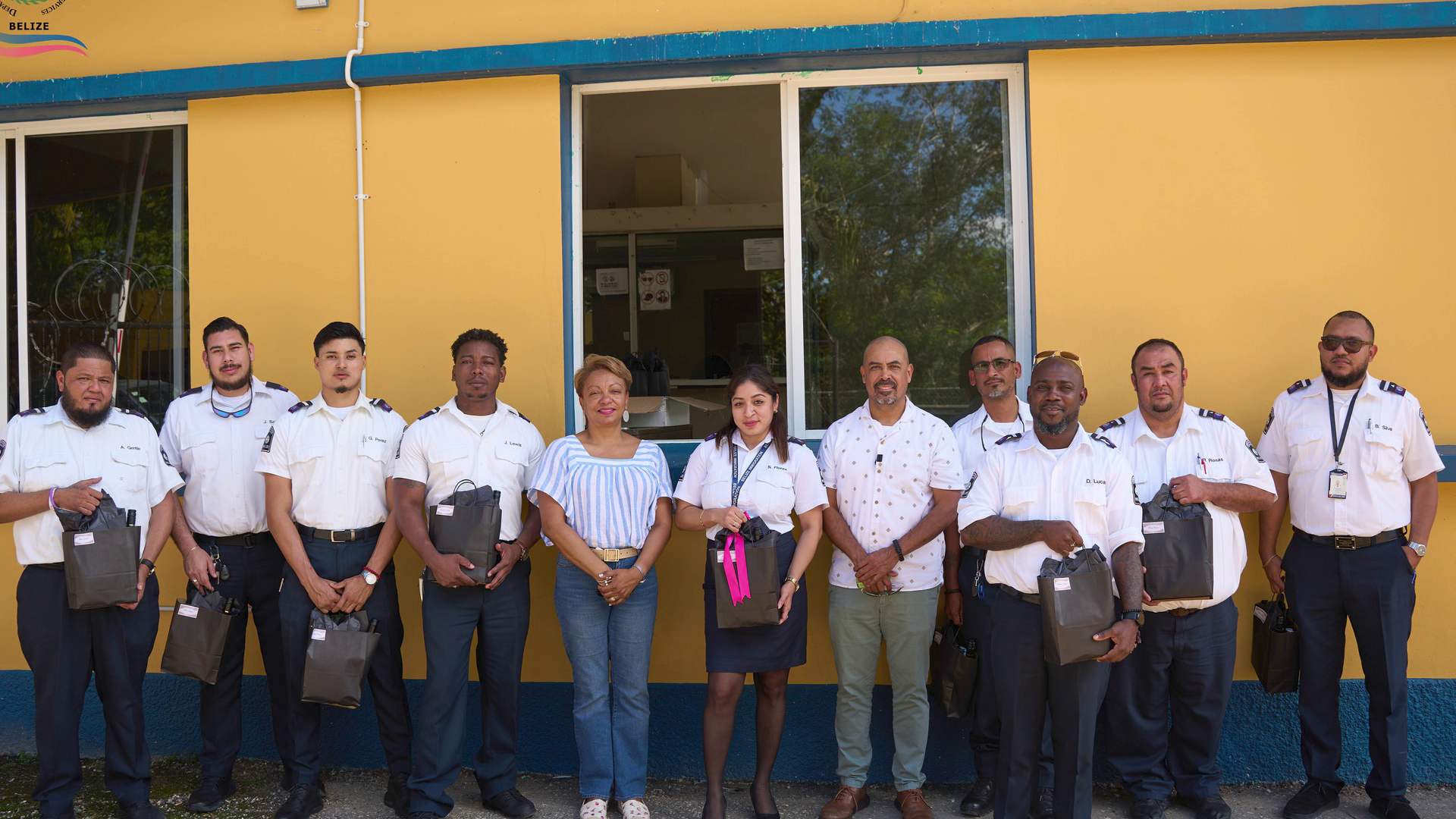
    In a significant move to enhance refugee protection capabilities, Belize has entered a multilateral partnership with the United Nations High Commissioner for Refugees (UNHCR) and the Japanese government to digitally transform its national asylum services. Announced on March 16, 2026, this collaborative initiative injects over $600,000 in funding from Japan’s foreign aid program to revolutionize administrative procedures for asylum seekers.

    The comprehensive technological upgrade will implement advanced digital platforms to manage the entire asylum case lifecycle—from initial registration through final processing. This modernization effort addresses critical needs for improved data security, accelerated case resolution timelines, and enhanced capacity to respond to increasing global displacement patterns. The digital transformation represents Belize’s commitment to international protection standards while optimizing resource allocation during periods of heightened migration pressure.

    This tripartite cooperation demonstrates how middle-income nations can leverage international partnerships to build more resilient humanitarian infrastructure. The project aligns with UNHCR’s global strategy to promote digital identity solutions and efficient case management systems in host countries worldwide. Japanese Ambassador Hiroshi Watanabe emphasized that the investment reflects Japan’s ongoing commitment to supporting sustainable development and human security initiatives across Latin America and the Caribbean region.

    The technological implementation will include biometric data collection, cloud-based case tracking, and secure digital archiving systems that maintain strict confidentiality protocols while improving interoperability with international refugee databases. Belizean immigration officials will receive specialized training to operate the new systems effectively, ensuring both technical proficiency and adherence to international refugee law standards.

  • Long Marathon, Hoops and Long Balls This Weekend In Sports

    Long Marathon, Hoops and Long Balls This Weekend In Sports

    Belize witnessed an action-packed weekend of athletic excellence across multiple disciplines, showcasing both international and local talent. The sporting festivities kicked off with the annual Run for the Reef in Belize City, a cornerstone event of Reef Week celebrations aimed at supporting conservation efforts for the Belize Barrier Reef.

    The eight-mile competitive road race saw Canadian runner Oliver Sinclair clinch victory in a dramatic photo finish, crossing the line simultaneously with Belize’s Christopher Broaster from Belmopan at 52 minutes and 53 seconds. San Ignacio’s Omar Pulido secured third place just 50 seconds behind the leaders. In the women’s division, Sarteneja’s Chrystal Thomas dominated with a finishing time of 1 hour and 3 minutes, followed by BDF’s Alberta Coh (1:09:00) and San Ignacio’s Jane Champion (1:17:00). The event also featured a two-mile recreational run attracting families and casual participants, with proceeds dedicated to reef preservation initiatives.

    Meanwhile, the National Elite Basketball League (NEBL) delivered thrilling matchups in week four action. The Orange Walk Running Rebels narrowly defeated the Belmopan Trojans 103-100 in Friday’s high-scoring affair, powered by Kenneth Perkins Junior’s 28-point performance. Saturday’s games saw the Cayo Western Ballaz overcome the EZ Investments Griga Dream Ballers 86-74 behind Zoren Smith’s 24 points, while the San Pedro Tiger Sharks topped the Corozal Spartans 87-77 with Devin Moody contributing 25 points.

    Softball action intensified at Sandhill field with nine games played over the weekend. The most decisive victory came as BEL Power Sockets mercy-ruled the Maritime Enforcers 10-1 after five innings, highlighted by a leadoff home run from their shortstop. Other results included HRCU/BCC Eagles defeating Police/Tax Enforcers 14-9, Bowen and Bowen Brewers edging Belize Bank Bulldogs 8-7 in the weekend’s closest contest, and Biscayne Tropical Breeze prevailing over Tiga Town Red Necks 15-8 in coed league action.

  • Government Launches $300,000 Emergency Works as Monkey River Erosion Worsens

    Government Launches $300,000 Emergency Works as Monkey River Erosion Worsens

    The Belizean government has initiated a critical $300,000 emergency coastal stabilization initiative in Monkey River Village, Toledo District, responding to escalating erosion that jeopardizes residential properties, public utilities, and even a local cemetery. This intervention, launched in February 2026, marks the first direct governmental action following persistent appeals from residents witnessing the gradual encroachment of the sea upon their community.

    Prime Minister John Briceño expressed profound concern during the project announcement, stating, “Without immediate governmental intervention, this village faces existential threat.” He recounted the distressing sight of cemetery sections submerged by seawater, conveying feelings of both frustration and urgency that earlier measures had not been implemented to protect the vulnerable coastal settlement.

    The engineering strategy involves deploying rock barriers and strategic sand repositioning near the river estuary to dissipate wave energy and reinforce the deteriorating shoreline. Village Chairlady Eloydia Cuevas emphasized the multifaceted crisis, noting that erosion impacts extend beyond physical land loss to threaten the community’s economic stability, cultural heritage, and environmental security. “This isn’t just land—it’s our identity, our livelihood, and our home,” Cuevas affirmed.

    The project represents a critical test case for climate resilience in Belize’s coastal communities, with implications for future regional environmental policy and disaster mitigation planning.

  • This Is How Venezuelan Farmers Are Fighting Fusarium

    This Is How Venezuelan Farmers Are Fighting Fusarium

    Venezuelan agricultural communities have embarked on an extraordinary transformation in response to one of the most severe phytosanitary emergencies in recent history. The confirmation of Fusarium Tropical Race 4 (TR4) by Venezuela’s National Institute of Integral Agricultural Health (INSAI) in 2023 triggered a nationwide agricultural recalibration across key producing states including Aragua, Carabobo and Cojedes.

    This soil-borne pathogen, capable of persisting for over two decades, effectively decimated banana and plantain plantations that had sustained local economies for generations. In the Renacer community of Aragua, where farmers had cultivated 20 hectares of banana crops since 2018, the fungal invasion resulted in complete agricultural collapse within months.

    Farmer Lesbia Margarita García recounted the emotional devastation: ‘Witnessing our lifelong work deteriorate before our eyes was heartbreaking. We faced the painful necessity of removing entire groves of banana trees that represented years of dedication.’

    The crisis prompted an unprecedented collaborative response between national authorities and international organizations. The Food and Agriculture Organization of the United Nations (FAO) implemented emergency intervention measures, supplying alternative crop seeds, advanced agricultural tools, biosecurity equipment and comprehensive technical training.

    Through the innovative INSAI-FAO partnership program, affected producers have successfully transitioned to cultivating corn, cassava, beans, chili peppers and pumpkin. This agricultural diversification strategy incorporates sophisticated crop rotation techniques and organic fertilization methods to restore soil vitality and create sustainable income streams.

    ‘Our corn harvests have demonstrated remarkable success, benefiting entire communities and proving the resilience of these lands,’ García noted with renewed optimism.

    The initiative represents a comprehensive national effort involving continuous farmer education, public awareness campaigns, and enhanced institutional coordination. Technologically, the program has deployed multispectral drones and advanced laboratory equipment to establish early detection systems and strengthen phytosanitary monitoring capabilities.

    Internationally, Venezuela’s experience has contributed to global knowledge sharing through FAO’s World Banana Forum and the Global Network on TR4, establishing new protocols for addressing agricultural emergencies in tropical regions worldwide.

  • Canadian Man Died From Fall, Police Say

    Canadian Man Died From Fall, Police Say

    Belizean authorities have concluded their investigation into the death of Canadian sailor Thomas David Harman, determining the 72-year-old died from injuries sustained in an accidental fall aboard his catamaran. The incident occurred during a maritime voyage from Guatemala to the Cayman Islands earlier this month.

    According to Assistant Superintendent of Police Stacy Smith, forensic pathologists established that Harman succumbed to blunt force trauma consistent with falling from height while aboard his vessel, named ‘Melynda.’ The investigation was initiated after the Canadian’s body was discovered on March 11 aboard the drifting catamaran approximately sixty miles offshore, following the rescue of Harman’s wife by a passing cruise ship.

    Initial reports had indicated the victim suffered cardiac arrest, but evidence including blood stains aboard the vessel prompted a comprehensive forensic examination. ASP Smith clarified that while Belizean authorities processed the scene and collected evidence, jurisdictional limitations prevent further action from Belizean authorities since the incident occurred in international waters.

    ‘The conclusion of the pathologist is that he fell from a height, and the circumstances are such that he was on board a boat,’ Smith stated during a press briefing. She further noted that speculation about whether others were present during the incident remained unconfirmed, stating ‘I don’t know if the assumption would be somebody would’ve been up on the sail with him because that is the suggestion that has been given.’

    All investigative materials and evidence have been prepared for transfer to Canadian authorities, who may pursue additional inquiries under their jurisdiction. The case highlights the complex jurisdictional challenges involved in international maritime incidents.