标签: Belize

伯利兹

  • Belize Imports Rise 21 Percent as Exports Dip in April 2026

    Belize Imports Rise 21 Percent as Exports Dip in April 2026

    Newly released external trade statistics from Belize’s national statistics body reveal a striking divergence in the Central American nation’s trade performance for April 2026: total merchandise imports jumped 21% year-over-year, while domestic exports registered a slight quarterly contraction. The Statistical Institute of Belize (SIB) published the full trade report on May 29, 2026, laying out detailed shifts across key import and export categories that point to evolving demand and global market pressures.

    According to the official report, total imports for the month hit $268 million, up $46.4 million from the $221.5 million recorded in April 2025. The most substantial growth came across three core categories: mineral fuels and lubricants, machinery and transport equipment, and assorted manufactured goods. Fuel and lubricant imports rose by $15.9 million to reach $50.2 million, a jump directly tied to upward pressure on global crude and refined fuel prices this year. Imports of machinery and transport equipment grew by $9.9 million to hit $62.6 million, driven by increased inbound shipments of heavy-duty commercial trucks, aircraft components, and residential and commercial air conditioning units. Food and live animal imports also saw a notable uptick, climbing $6.6 million to $29.6 million, reflecting higher volumes of incoming corn seeds and processed cheese to meet domestic demand.

    When looking at the first four months of 2026 as a whole, Belize’s cumulative total imports have reached $1.1 billion, marking a 17.6% increase compared to the same period in 2025. This consistent upward trend signals growing domestic demand for imported goods across multiple sectors of the Belizean economy.

    Against the backdrop of rising imports, domestic exports contracted slightly in April 2026. Total domestic exports were valued at $42.8 million, a 4.1% drop that equals a $1.9 million decline from April 2025 levels. The steepest drop came from molasses exports, which fell from $2.3 million in exports last year to effectively zero shipments in April 2026. Banana exports also declined by $2 million, while red kidney bean exports dropped by $1.3 million due to reduced harvest and export volumes. Smaller contractions were also recorded in formal cattle exports and crude soybean oil shipments.

    Not all export categories moved downward, however. Sugar exports bucked the trend, rising $2.5 million to $21.5 million on the back of increased production and higher export volumes. Marine product exports also grew by $1.9 million, lifted by stronger international sales of processed lobster meat and conch.

    The report also highlights a sharp shift in Belize’s key export market performance for the month. The United States emerged as Belize’s top export destination in April 2026, with total export earnings growing $14.6 million to $19.5 million, a gain fueled almost entirely by increased sugar sales to the U.S. market. In contrast, exports to the United Kingdom plummeted by $17 million, a drop directly linked to reduced sugar and banana shipments bound for the UK.
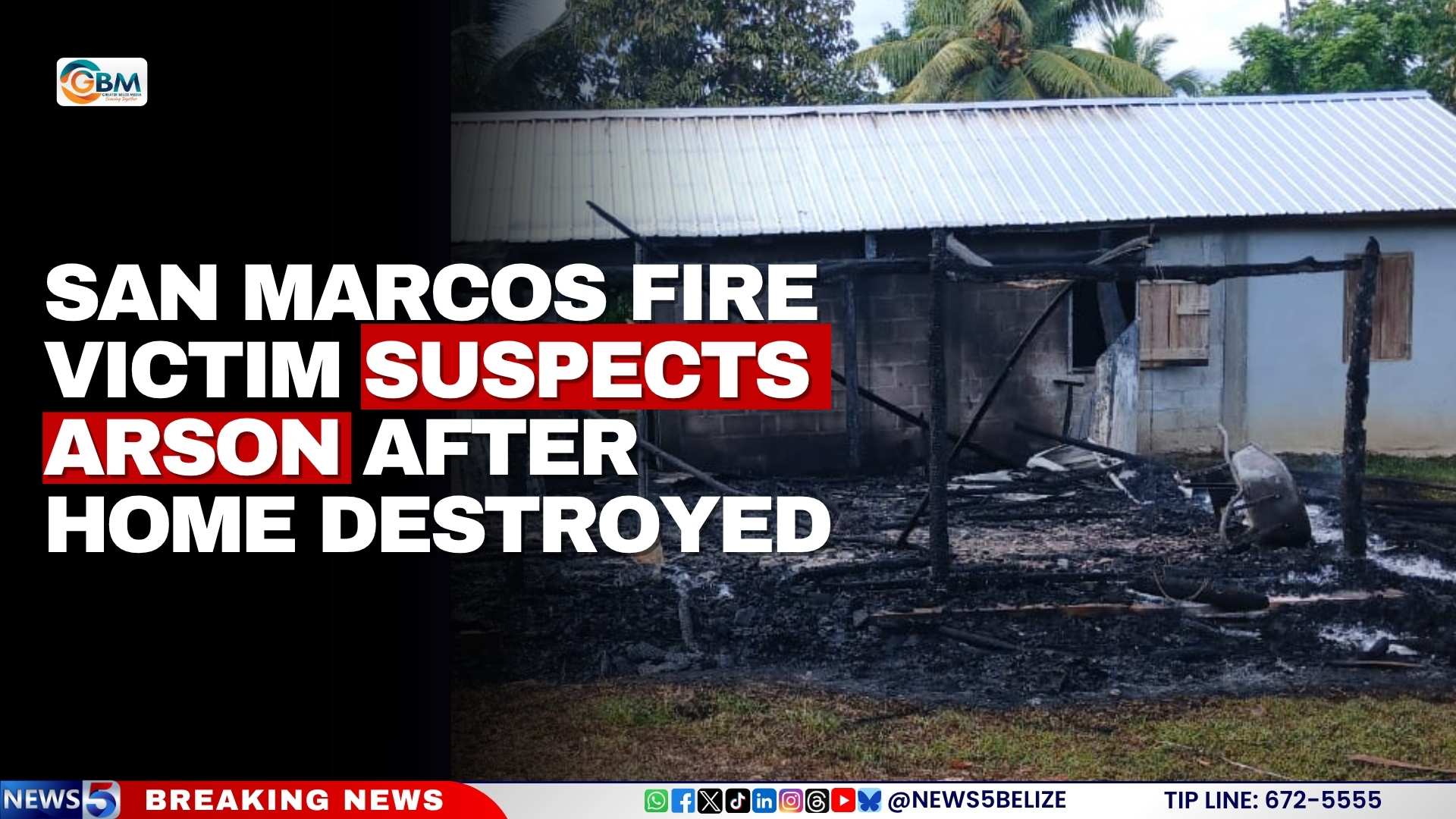

  • San Marcos Fire Victim Suspects Arson After Home Destroyed

    San Marcos Fire Victim Suspects Arson After Home Destroyed

    A devastating late-night fire has destroyed the thatch-roofed home of San Marcos, Toledo District resident Ambrosio Teul, igniting a bitter public dispute between the displaced homeowner and local village leadership over their response to the incident, which Teul claims was a deliberate act of arson.

    According to Teul’s account, the blaze ignited around 10:30 p.m. on Thursday, spreading rapidly across his property. While he successfully evacuated and pulled a portion of his personal belongings out of the burning structure, unforeseen rain left most of the recovered goods water-damaged and unusable.

    Teul is convinced the fire was no accident. He told reporters that the fire began simultaneously on two separate sides of the home, and moments after the blaze took hold, he heard the sound of a motorcycle speeding away from the area. Teul, who says he has no known conflicts with community members that would warrant an attack, expressed confusion over the incident. “I am a good person. I don’t see why they would do something like this to me,” he stated.

    The most significant point of contention for Teul is the lack of immediate response he claims from local authorities and village leadership. He asserts that no police officers, village chairman, or local alcalde arrived at the scene to check on his welfare or investigate the fire in the immediate aftermath. When Teul reached out to the local police station to report the incident, he said he was instructed to travel to the station in person to file the report himself, a requirement he has questioned as inappropriate for a victim who just lost his home.

    This account directly contradicts an official press release issued by San Marcos village leadership in response to local media inquiries. The leadership claims that the village chairman, members of the village council, and the alcalde all rushed to the fire scene the same night after receiving an emergency call about the blaze. In their statement, they also extended gratitude to local community volunteers who worked to extinguish the fire before it spread to neighboring properties.

    Village leaders added that they advised Teul to file a formal police report as a necessary step to launch an investigation into the fire’s cause. They noted that while the San Marcos community is generally defined by peace and order, there are isolated individuals who repeatedly act to disrupt public stability.

    The statement also pushed back against growing criticism of leadership circulating on local social media platforms. Leaders warned that they are documenting all accounts and users spreading what they call false information about the incident, and that they are prepared to pursue legal action against those responsible if deemed necessary. “Going on Facebook to attack leaders and spread false information will not solve anything,” the release read.

    Social media criticism of the response has been sharp, with one San Marcos resident posting online that “there is no more peace in the village, the village leaders are chaotic, corrupt, no action has been taken, people’s lives are jeopardised.” Notably, the village leadership’s official statement did not address Teul’s specific claim that no leader has reached out to speak with him directly since the fire destroyed his home.

    Left without housing after the incident, Teul is currently seeking emergency assistance from any community members or organizations willing to provide support. He can be contacted directly at 652-5864.

  • Trump Weighs Iran Deal as Tentative Agreement Hangs in the Balance

    Trump Weighs Iran Deal as Tentative Agreement Hangs in the Balance

    On May 29, 2026, a high-stakes decision over a potential landmark agreement between the United States and Iran hangs in the balance, as President Donald Trump convenes senior White House advisors in the Situation Room to weigh what he describes as a “final determination” on the deal that could end months of open military conflict and unclog one of the world’s most vital global shipping chokepoints.

    Negotiators from both nations have already struck a tentative framework this week that lays out two core commitments: the full reopening of the Strait of Hormuz, through which roughly 20% of the world’s daily oil supplies pass, and the launch of formal negotiations over Iran’s nuclear program. But the deal remains far from finalized: Trump has not yet given his official approval, and Iranian government representatives have so far declined to issue any public statement on the draft terms.

    Details of the draft memorandum of understanding, shared by anonymous U.S. officials, outline a phased mutual drawdown over a 60-day timeline. Under the proposal, Iran would step by step relax its restrictions on shipping movement through the strait, while the United States would simultaneously wind down its naval blockade of Iranian ports and waterways.

    Iran’s chief negotiator Mohammad Bagher Ghalibaf has offered a cautious, skeptical reaction to the emerging agreement, reflecting longstanding distrust between the two nations. “In negotiations with the United States, we have no trust in guarantees or words — only actions are the measure,” Ghalibaf warned, underscoring Tehran’s insistence on tangible, verifiable steps from Washington before it commits to any deal.

    The push for a final agreement unfolds against an increasingly volatile security backdrop, with fresh clashes breaking out just hours before Trump’s deliberations. Both sides have traded accusations of ceasefire violations in overnight engagements: U.S. forces based in Kuwait were reported to be the target of an Iranian missile strike, while Tehran confirmed it had launched the attack against a U.S. military installation it accuses of carrying out earlier strikes on Bandar Abbas, Iran’s key port city located adjacent to the Strait of Hormuz.

    The current cycle of full-scale military conflict between the two nations traces back to February 28, when the United States and Israel launched a coordinated series of massive joint strikes targeting Iranian military installations, government facilities, and critical national infrastructure, igniting months of sustained fighting that has disrupted global energy markets and raised fears of a broader regional war.

  • More Details of Young Doctor Murdered in Belmopan

    More Details of Young Doctor Murdered in Belmopan

    On the morning of May 29, 2026, a brutal, public attack left a well-respected young Belizean physician dead in the capital city of Belmopan, shocking local communities and reigniting critical conversations about national crime policy. The victim, identified as Dr. Naun Bonilla, an internal medicine specialist focused on diabetes and hypertension care at Belmopan Medical Imaging Center, was gunned down while driving his young daughter to school just steps from Las Flores Park.

    The shooting unfolded shortly after 8:30 a.m., in full view of multiple bystanders. Witness accounts confirm that as Dr. Bonilla drove his white SUV along the road, an unidentified second white vehicle pulled parallel to his car. A masked gunman exited the vehicle and fired more than 10 rounds directly at the physician before fleeing the scene. Remarkably, Dr. Bonilla’s young daughter, who was seated in the backseat of the vehicle, escaped the attack without physical injury.

    After the shooting, the uncontrolled SUV veered off the roadway and crashed into a patch of nearby brush, where crime scene investigators and local law enforcement later processed evidence before removing the doctor’s body. Coincidentally, crew members from the Belmopan City Council were conducting routine park maintenance in Las Flores Park at the time of the attack, meaning multiple first-hand witnesses were already on site. One of those maintenance workers told reporters they assisted in pulling the unharmed young girl from the vehicle immediately after the gunman fled.

    What makes this deadly incident particularly politically notable is that Belmopan lies outside the geographic scope of Belize’s current national State of Emergency (SOE), which has been implemented to curb violent crime in other regions of the country. The killing has prompted widespread online scrutiny of the SOE’s reach and effectiveness, with many social media users questioning why the measure has not been expanded or adjusted to address rising violence in the capital. One user put the prevailing criticism bluntly, writing that the current SOE “seems to be having little to no effect on the bloodletting.”

    Beyond policy debate, public reaction to the murder has been overwhelmingly defined by collective grief. Dr. Bonilla was a widely beloved figure in the Belmopan community, known for his commitment to caring for local patients. Dozens of social media users shared tributes remembering him as “the best doctor in Belmopan” and a provider who dedicated his entire career to helping vulnerable community members. Many commenters also expressed deep despair about Belize’s broader ongoing violent crime crisis, noting the senseless loss of a young professional who spent his days saving lives. “Such a young doctor, why take someone with such a great future… someone that saves lives,” one comment read.

    Local outlet News 5 has confirmed it will continue providing updates to the investigation as more details become available.

  • Charged for Attempted Murder

    Charged for Attempted Murder

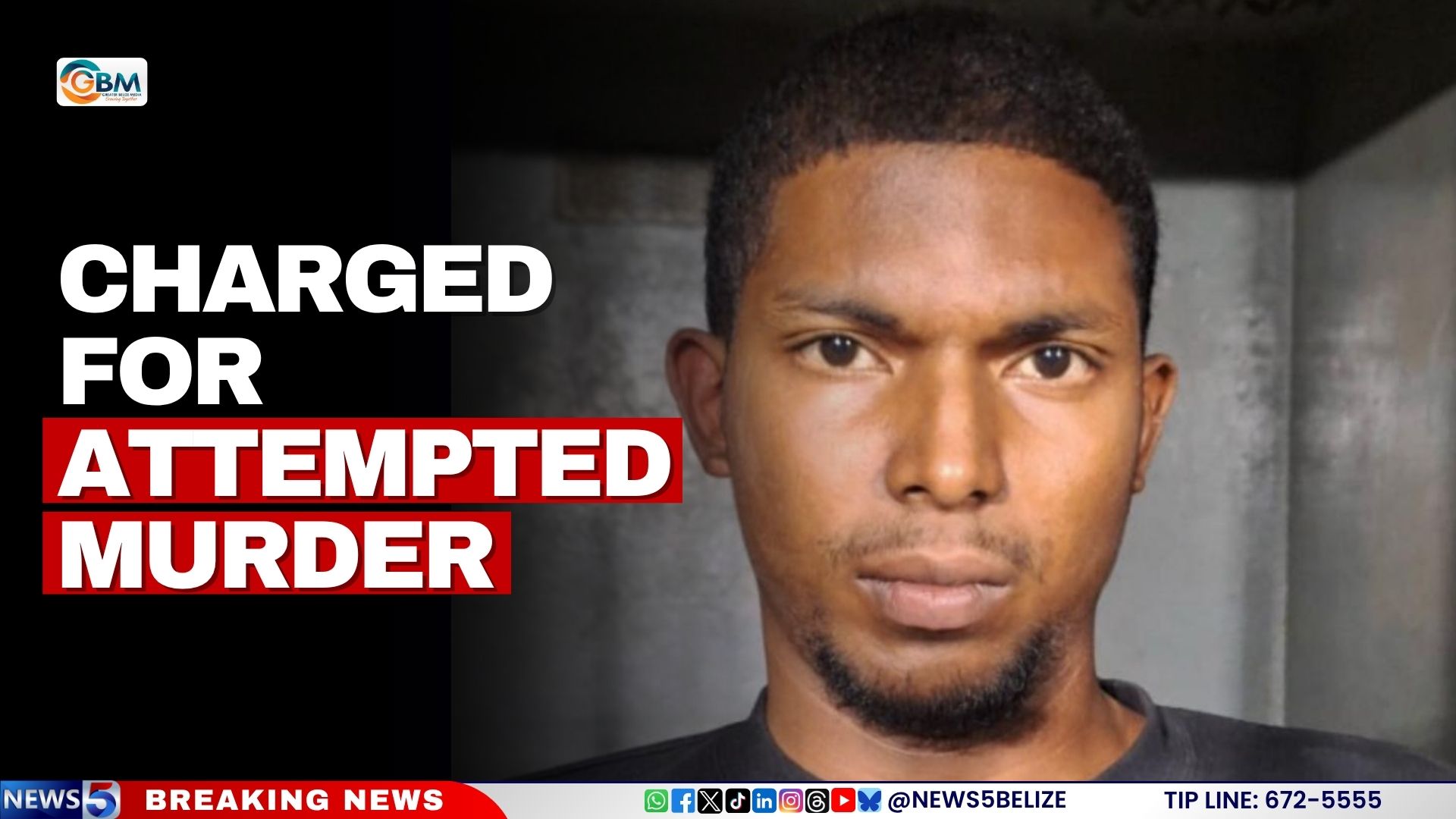
    A shocking daytime shooting in Belize, the nation’s former capital, has resulted in formal attempted murder charges against a 21-year-old suspect, law enforcement officials confirmed Thursday. Jadon Young is now facing two criminal counts: attempted murder and use of deadly means of harm, in connection with the shooting of 25-year-old Maleek Sutherland earlier this week.

    According to initial police accounts, the attack unfolded as Sutherland, a resident of Bermudian Landing Village, traveled to his regular workplace. As he moved through the area, an unmarked SUV pulled alongside him, and a person identified as a passenger in the vehicle opened fire multiple times. Sutherland was struck by gunfire during the assault and was quickly rushed by emergency responders to a local medical facility for urgent treatment. As of the latest update, no further details on Sutherland’s current condition have been released by authorities.

    Assistant Superintendent of Police Stacy Smith noted that investigative teams are actively working to map out a clear motive for the brazen public shooting. Smith added that sensitive case details will only be released to the public at a time when it does not jeopardize ongoing investigative work, declining to share additional information on potential connections between the suspect and victim or any gang or personal links that may be under review.

    The case marks the latest high-profile violent incident to draw public attention to violent crime in the former capital region, with local law enforcement continuing to advance the court process following Young’s charging.

  • Bus Operators Push for Hands-On Role in Electric Bus Pilot

    Bus Operators Push for Hands-On Role in Electric Bus Pilot

    As Belize moves forward with its transition to electric public transportation, a growing rift has emerged between the national bus industry’s leading body and government transport officials over how local operators should be integrated into the country’s electric bus initiative.

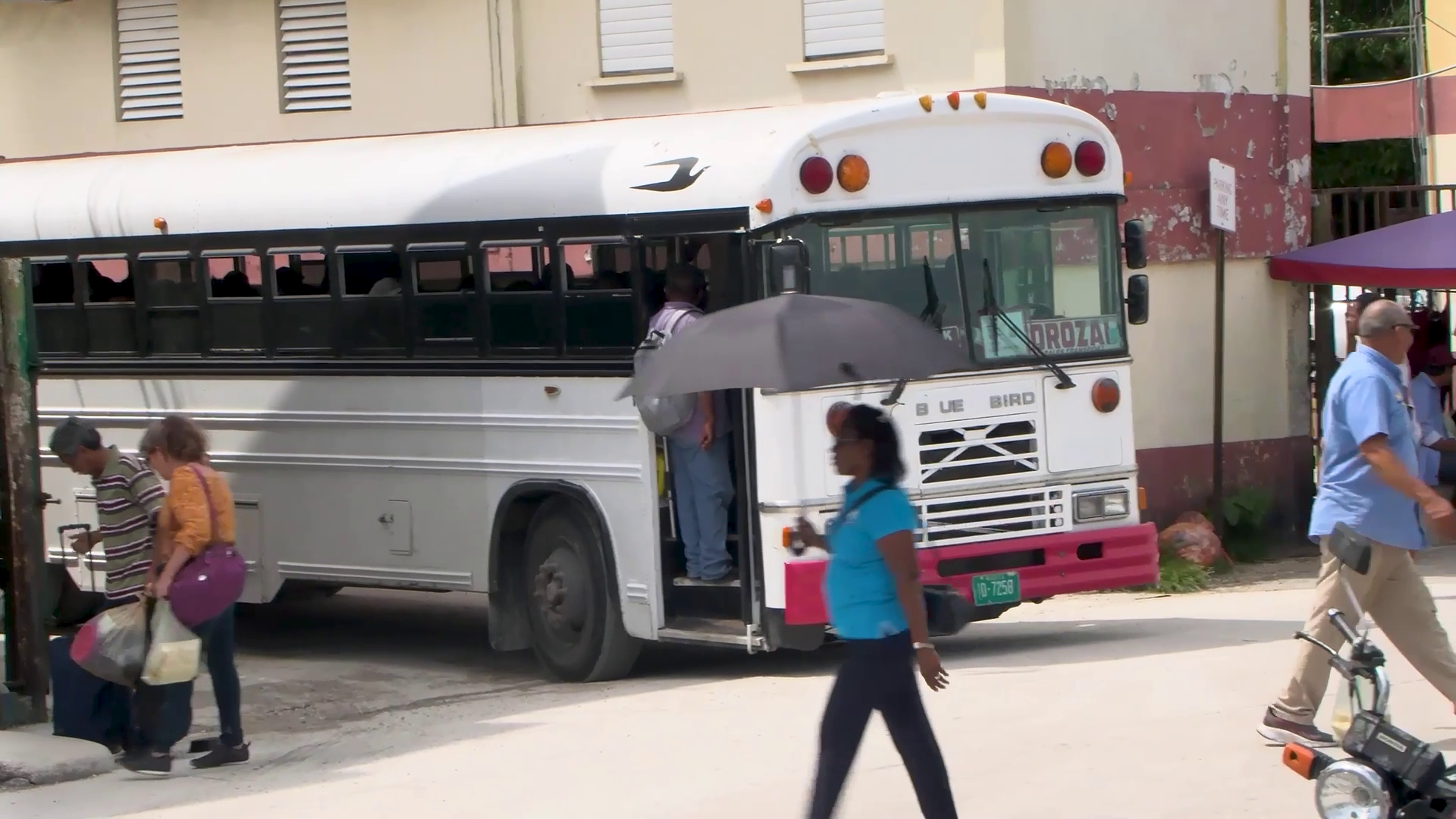
    The Belize Bus Association (BBA), which represents more than 50 operators spanning intercity highway routes, rural village services, tour routes, and school transportation, is calling on the government to give its members direct, hands-on access to the current electric bus pilot. Currently, the testing phase is limited to routes in Belize City and the western transportation corridor, and no BBA members have been permitted to operate the pilot vehicles themselves.

    In an official letter addressed to the Ministry of Transport, BBA leadership argues that firsthand real-world experience is a non-negotiable prerequisite for operators to make informed long-term investment decisions. Without direct exposure to the vehicles, the association says, members cannot accurately measure key operational metrics including total cost of ownership, routine maintenance requirements, and performance across varying route types, from dense urban streets to long-distance national highways. To address this gap, the BBA is proposing a rotation system that would allow its members to test the electric buses on a diverse range of routes, a change the group says would not only strengthen the pilot’s data but also expand access to the new green technology for commuters across the country.

    BBA president Phillip Jones emphasized that the association has sought inclusion since the project’s launch, when it was first developed under the auspices of the United Nations Development Programme (UNDP) and the United Nations. “From the inception of the EV program under the UNDP and UN we have wrote letters to the UNDP and the president and representatives in this area that we wanted to be a apart of the pilot project. However we were denied at that time,” Jones explained. “Hence the reason we find it prudent that we revisit that, because if you are saying you want the entire country to have the knowledge or use the service or go green in order for that to be the case, you need to have anyone involved and we are a major stakeholder in the bus industry. […] You can’t just be going based on analysis going second hand. We want firsthand experience.”

    But government officials say the pilot phase has already concluded, and no test vehicles are available to reallocate for broader industry testing. Transport Minister Dr. Louis Zabaneh confirmed that the government is shifting its focus away from the trial period and toward a permanent structural transition to electric bus fleets, and laid out two clear paths for BBA members looking to join the electric future. Under the first option, independent operators can join the National Bus Company (NBC), a public-private partnership aligned with the government’s green transportation policy. The second option allows operators to remain independent by forming their own collective entities and investing directly in procuring their own electric buses, with the ministry offering full access to all lessons learned during the pilot to support the transition.

    Zabaneh noted that the model of joining the National Bus Company is already gaining traction among BBA members, with recent signs of growing buy-in: after the last remaining holdout operator from southern Belize joined the NBC, two additional operators from the northern region have submitted applications to join. “So that is clearly, in my opinion, the preferred path because now you have a public private partnership that comprises government and reflects the policy of the government that they can benefit from. Or they can continue being independent operators and we can work together and share whatever knowledge we have with them,” Zabaneh explained. “The NBC is a private company, so whatever e-buses it buys is for the use for services to commuters who use NBC services. They would have to, as independent operators, organize, form a company and procure e-buses. Now, we as the ministry are very pleased to share with them what we have learnt in setting up the National Bus Company and we told them that already.”

    This content is adapted from a transcript of an evening television newscast.

  • Same Deadly Scenario Took Coach Villamil’s Father

    Same Deadly Scenario Took Coach Villamil’s Father

    The small but tight-knit football community of Belize is united in grief and support this week, after a catastrophic highway collision in Corozal left beloved former national player and youth coach Miriam Villamil with permanent, life-altering injuries. The crash, which has reignited longstanding safety concerns about unmarked agricultural vehicles on Belize’s roadways, carries an unthinkable echoes of tragedy that has deepened the shock across the country’s sporting landscape.

    On the evening of the incident, Villamil was traveling in a passenger coaster alongside a group of young aspiring footballers who had just completed a celebratory practice session. The vehicle collided head-on from behind with an unlit sugar cane truck parked along the side of the highway, according to initial accounts from the Football Federation of Belize (FFB). The impact was so severe that Villamil was trapped inside the wreckage for hours. When emergency responders finally extracted her and rushed her to Karl Heusner Memorial Hospital (KHMH), surgeons were forced to amputate one of her legs to save her life. Medics fought desperately to save her second leg, and after extensive intervention, they successfully preserved it, FFB executive member Marlon Kuylen confirmed in an interview.

    What makes this already devastating accident even more cruel is that it mirrors almost exactly the crash that killed Villamil’s father decades earlier. “It’s like deja vu all over again,” Kuylen told reporters. “Years ago, her father died in the exact same manner: the bus he was traveling in crashed into the back of a cane truck, and protruding canes penetrated his body and skull, killing him instantly. Emotionally, this tragedy is hitting our entire football family extraordinarily hard, compounded by that terrible shared history.”

    Beyond the urgent focus on Villamil’s ongoing recovery, attention has now turned to the group of young players who witnessed the horrific crash firsthand. The athletes had been in high spirits after a successful practice, excited to have been selected for a new national youth development program, when the disaster struck in an instant. “One negligent choice left Miriam’s life changed forever, and this event will leave long-term emotional and mental scars on these young kids,” Kuylen explained. “They watched their coach trapped and gravely injured, and that image will stay with them for a long time.”

    Remarkably, even in the immediate aftermath of the crash while enduring extreme pain, Villamil’s first thoughts were for the young players in her care. “Her first questions weren’t about her own condition — she kept asking, ‘What about my boys? What about the kids?’ She remembered one had suffered a broken jaw, and she insisted we check on him first,” Kuylen recalled. “That’s just who Miriam is: she puts her players ahead of everything, even when she’s facing the unthinkable.”

    In response to the tragedy, Kuylen and the FFB are calling on Belizean transportation authorities to immediately address the longstanding hazard of unlit, parked cane trucks along public roadways at night. The entire Belize football community has rallied around Villamil and the young players, organizing support for her medical costs and counseling services for the young athletes who survived the crash.

  • San Pedranos Struggle with Rising Fuel Costs

    San Pedranos Struggle with Rising Fuel Costs

    On the popular Belizean island of Ambergris Caye, what has become a quiet crisis for daily life is now erupting into open frustration, as skyrocketing fuel costs stretch household budgets to their absolute limit. For the tight-knit community of San Pedro Town, where golf carts are not a recreational luxury but the primary mode of daily transportation, even the shortest commute now comes with a steep financial cost that is eating deep into already modest incomes. Many low-wage workers on the island earn between $200 and $300 per week, and fuel expenses now claim a disproportionate share of these earnings – leaving barely enough to cover other critical needs like rent and groceries. Local resident Celestino Tzul, one of the many voices sounding the alarm over the crisis, explained that the burden has become unsustainable for working families. “When it’s your livelihood, when it’s your transportation to work and everything, you have to consider: do I keep using my golf cart? Do I need to change from golf cart to something?” Tzul said. “You take away rent, you take away the expenses on gas, and then you take away the expense of food. Some people are barely even making it through the week. The gas price is very, very high.” The crisis has been compounded by a lack of viable, affordable alternatives to personal golf cart and car travel. While local authorities recently launched a small new bus service (dubbed the “busito”) to expand public transit options, residents say the new system has failed to close the affordability gap that leaves most families dependent on personal vehicles. Residents also point to ongoing supply-side issues that have kept fuel prices artificially high, with current costs reaching as much as $14.29 per gallon. This high-cost fuel also drives frequent, unplanned maintenance expenses for the island’s fleet of aging golf carts, adding another layer of financial strain for owners. Faced with stalled relief efforts and steadily rising costs of living that show no sign of easing, community members have had enough. A group of residents is currently organizing a peaceful protest scheduled for next week, where they plan to bring their demands for action directly to policymakers. Island residents are unified in their call for national government intervention to address both the exorbitant fuel prices and the longstanding gap in affordable public transit options. Without immediate, targeted relief, residents warn that reliable transportation for work, school, and daily needs could soon become completely out of reach for low- and middle-income families across the island. This report is adapted from a transcribed evening television news broadcast focused on local Belizean issues.

  • Immigration Ministry Reports Missing Funds to Police

    Immigration Ministry Reports Missing Funds to Police

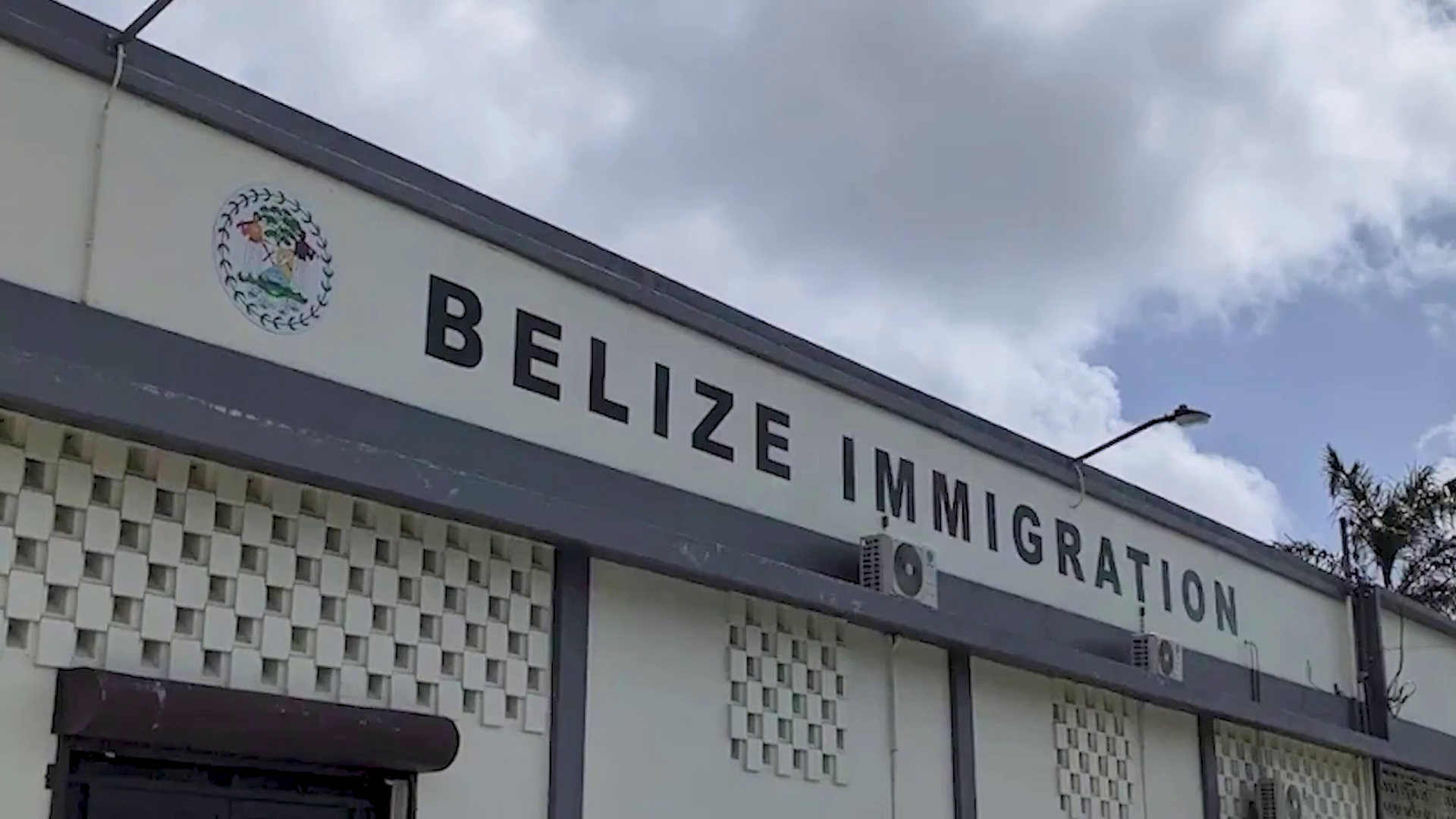
    A high-stakes internal investigation is unfolding at Belize’s Ministry of Immigration after $160,000 in public funds disappeared from the department’s Belize City headquarters, prompting senior officials to formally refer the case to national police and launch an independent financial audit.

    The incident, first disclosed in official updates on May 28, 2026, has already drawn the attention of Belize’s Cabinet, which received a full briefing following the completion of an initial preliminary review last week. Tanya Santos, Chief Executive Officer of the Ministry of Immigration, confirmed that authorities have documented multiple suspicious incidents with hallmarks of criminal activity, falling clearly within the investigative jurisdiction of Belize’s police force.

    “We highlighted instances of those activities to them so they can come in do a deeper dive, a deeper investigation and find out more details of what was going on,” Santos said in an official briefing to reporters.

    When asked whether law enforcement had narrowed the focus of the probe to a single person of interest, Santos confirmed that as of the latest update, investigators are centering their work on one individual, though she added that the scope could expand if new evidence emerges pointing to additional co-conspirators.

    Alongside the probe into the missing public funds, the ministry has also submitted a separate police report over the unexplained disappearance of two official nationality certificates, documents that are critical for processing citizenship claims and verifying legal status for Belizean residents. Senior ministry officials have stressed that they are leaving no stone unturned in the parallel investigations, committing to full transparency and a complete public accounting once probes are complete.

    Authorities have moved quickly to tighten internal financial oversight across all ministry departments in the wake of the discovery, with investigators following every potential lead to trace the missing funds and hold responsible parties accountable. This report is adapted from a transcribed broadcast transcript of Belizean evening news, with all statements verified for accuracy prior to publication.

  • CEO Santos Reveals Corruption Concerns at Western Border

    CEO Santos Reveals Corruption Concerns at Western Border

    In a bombshell revelation that has shaken Belize’s immigration sector, Chief Executive Officer Tanya Santos of the country’s Ministry of Immigration has confirmed that an internal probe launched amid widespread rumors of a coordinated worker sickout at the western border has uncovered alleged corruption incidents at the key crossing.

    The controversy traces back several weeks, when reports of a mass staff absence at the western border checkpoint sparked speculation that employees had organized a coordinated sickout to protest working conditions or agency policies. That mass absence put significant strain on border processing operations, prompting the Ministry of Immigration to launch a full internal investigation to get to the bottom of the incident.

    Following the conclusion of the probe, Santos announced that investigators found no concrete evidence to back up claims of a pre-planned, coordinated sickout. Every employee who missed work provided apparently legitimate medical documentation approving their leave, and Santos noted that as head of the agency, it is not within her authority to override certified medical excuses for absence.

    Even without proof of a coordinated action, however, Santos made clear that the timing of the mass absences, the pattern of employees returning to work immediately after the peak of the protest-related tensions, and other surrounding circumstances still raise serious questions about the true nature of the sick leave. The investigation also captured multiple complaints from frontline staff about poor working conditions and unaddressed grievances within the western border division.

    Most notably, the probe uncovered separate allegations of ongoing corruption at the western border checkpoint, a critical port of entry for trade and travel between Belize and its neighbors. Santos confirmed that the corruption allegations are now being actively investigated by immigration officials, with new oversight measures being put in place to root out misconduct.

    To address both the staff grievances uncovered in the probe and the emerging corruption claims, the Ministry of Immigration has established a new independent internal grievance committee. The multi-stakeholder body includes senior immigration staff, external administrative experts, a retired senior public officer, in-house legal counsel, and the CEO herself, designed to deliver impartial reviews of both employee complaints and allegations of institutional misconduct.

    The original on-air broadcast of this report notes that all transcribed comments from speakers who used Kriol were converted to text using a standardized spelling system to preserve accuracy for online readers.