标签: Barbados

巴巴多斯

  • Leaders urged to reject ‘small-island limits’ at Possibility Summit

    Leaders urged to reject ‘small-island limits’ at Possibility Summit

    Against a backdrop of escalating global uncertainty and overlapping cross-border crises, Barbadian Prime Minister Mia Mottley has delivered a bold call to action for the small island nation: shed outdated psychological limitations tied to geographic size and rebrand itself as a world-leading testing ground for cutting-edge innovation, arguing that incremental economic progress will never be enough to shield the country from mounting global volatility.

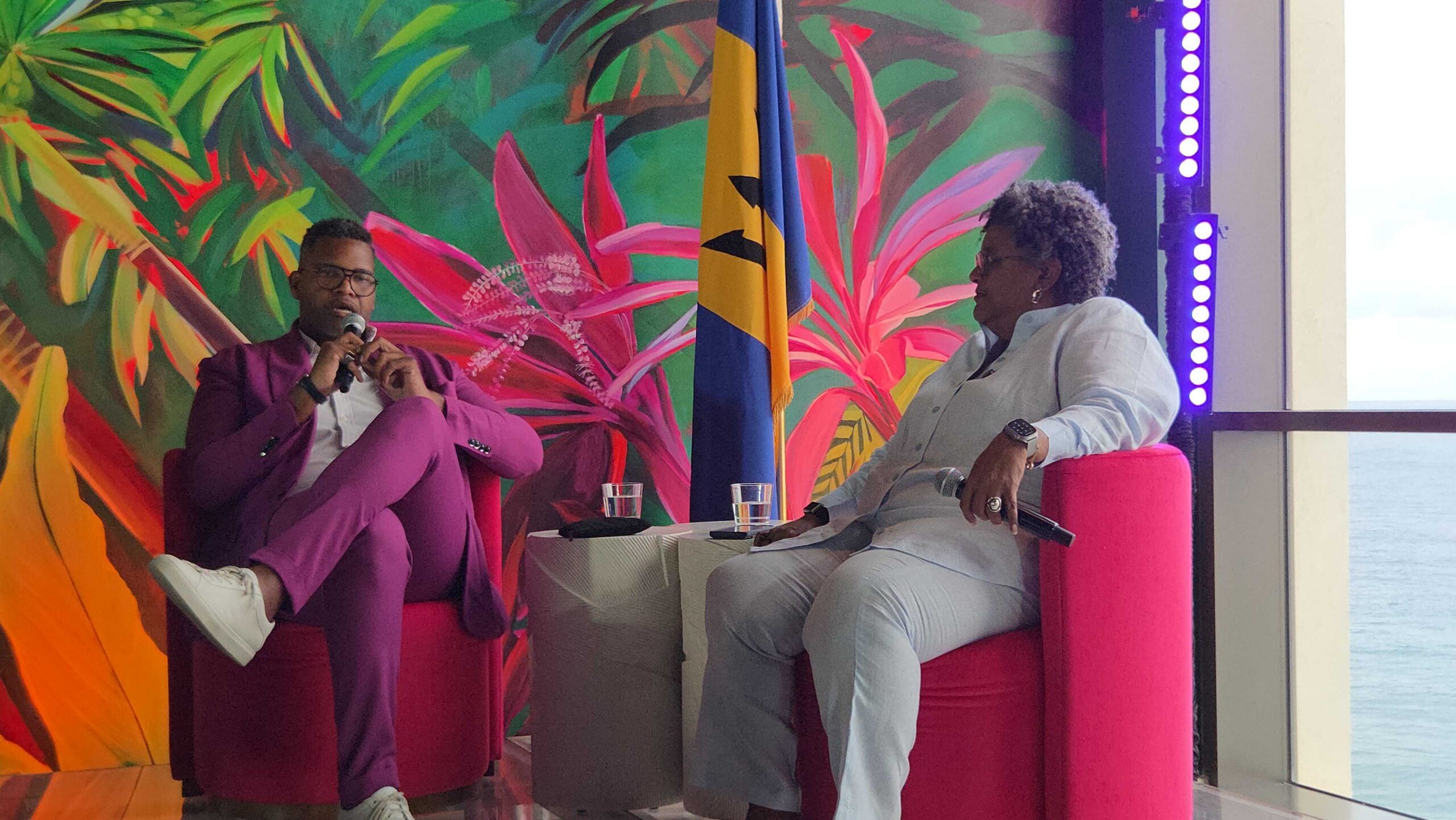
    Mottley’s remarks came during a candid, informal fireside-style dialogue with Minister of Innovation Senator Jonathan Reid, which served as the centerpiece of the national Possibility Summit. The event convened a high-profile global cohort of technology executives, United Nations officials and leading international scientists to collaboratively map out a sustainable, technology-powered development path for the Caribbean region.

    Opening the discussion, Reid turned to the foundational governance philosophy that has defined Mottley’s tenure, recalling a defining moment on the eve of her first electoral victory. At that time, Reid shared that he had considered leaving Barbados to pursue world-class professional opportunities abroad. In response, Mottley challenged him: “Why can’t you do world-class work in Barbados? Why don’t you come with me, let’s do some world-class work.” That exchange, Reid noted, has set the tone for the administration’s work over the past eight years. Reid then pressed Mottley on what fuels her relentless, often round-the-clock work ethic that sees her pushing forward with policy work as late as 3 a.m.

    Tracing her motivation back to her upbringing in a newly independent Barbados, where she was surrounded by dedicated early public servants and national icons like cricket legend Sir Garfield Sobers, Mottley explained her drive grows from an unshakable belief in Caribbean potential and a deep rejection of systemic inequity. “God has blessed me with the ability to love this country beyond anything else and to believe that we are special,” she said. “The fact that I am a young person going into public life never crossed my mind that I was young. The fact that I was a woman going into public life, it never crossed my mind… I feel passionate about the Caribbean civilization, and that is the purpose of my life.”

    The conversation soon shifted from personal conviction to tangible national development strategy. Reid noted that while Barbados has notched an extraordinary milestone of 20 straight quarters of economic expansion and cut its debt-to-GDP ratio substantially, there is a clear gap between short-term macroeconomic stability and long-term transformative change, asking Mottley to outline her long-term vision for the nation.

    Mottley stressed firmly that incremental, traditional economic gains are not enough to insulate the island from coming global disruptions. “Comfort does not give us sufficient buffer to withstand the gale force winds that are coming at us individually as a small state but collectively as a planet,” she warned. “The country has had on average 2.5 per cent growth… that’s not enough for us to do the transformation.”

    For Mottley, building genuine long-term economic resilience requires three core shifts: boosting national productivity, strengthening inclusive social capital, and restructuring the economy to deliver widespread citizen ownership of assets. She issued a blunt challenge to the local private sector over its approach to workforce treatment, stating: “If you tell me you can’t make money by treating your workers right, get out of the wrong business, shut shop and go home. Fundamental to any enterprise is in fact the workers… I feel that Barbados can continue to lead the world in showing what dignified labor producing at high levels can look like, creating opportunities for ownership.”

    Reid then turned to the balancing act of modern leadership for small island states, recalling the overlapping crises of the COVID-19 pandemic and the 2021 ash fall from the La Soufrière volcano that strained national capacity. He asked how Barbados can preserve its laid-back, distinctive cultural identity while embracing the urgency needed to capture global economic opportunities.

    Mottley acknowledged that constant uncertainty is now a permanent feature of the global order, pointing to the ongoing “polycrisis” that combines accelerating environmental degradation and intensifying geopolitical tensions. She voiced particular alarm over the rapid unregulated deployment of artificial intelligence without a coordinated global governance framework, as well as the growing fragmentation of global action to address climate change.

    Rather than giving in to pessimism, Mottley argued that pragmatic, science-backed diplomatic action is still achievable, highlighting global methane reduction efforts as a critical, actionable starting point. She emphasized that Caribbean nations cannot afford to remain passive consumers of foreign technology or collateral victims of global policy decisions made by larger powers. Instead, she argued, the region must step into a new role as the testing ground for the innovative solutions that the entire world urgently needs to build a more sustainable and resilient future.
  • Relatives, friends warned against sheltering gang members

    Relatives, friends warned against sheltering gang members

    As part of sweeping new anti-gang legislation under debate in Barbados’ House of Assembly, government ministers have issued a stark warning to family members and associates of gang affiliated individuals: knowingly sheltering criminal gang members will carry severe legal consequences, and harm communities and households across the country. The discussion centered on the Criminal Gangs (Prevention and Control) Bill, a piece of legislation crafted to crack down on gang-related activity and address gaps in existing law that have allowed criminal networks to operate with impunity.

  • PM urges parenting clubs as part of anti-gang strategy

    PM urges parenting clubs as part of anti-gang strategy

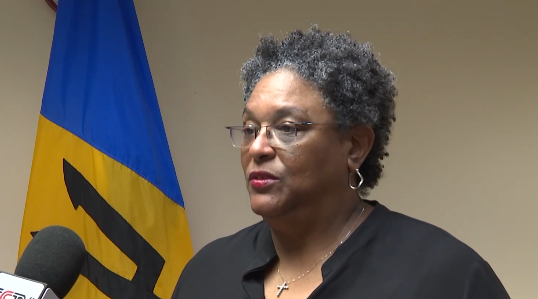
    As the Caribbean nation of Barbados grapples with a creeping spread of organized gang activity that has already claimed new lives, Prime Minister Mia Mottley, who also holds the national security portfolio, has put forward a multi-pronged strategy to curb the threat, warning that the country risks losing an entire generation to violent gang culture without collective action from families and local communities.

    Speaking during parliamentary debate on the landmark Criminal Gangs (Prevention and Control) Bill, Mottley emphasized that while Barbados’ gang problem has not reached the severity seen in neighboring regional territories, it cannot be addressed by government law enforcement alone. She pointed to deep-seated shifts in Barbadian social structures as a core root of the rising youth involvement in gangs, noting that long-held community support systems for childrearing have eroded in recent decades.

    Mottley argued that society too often makes dangerous assumptions that all parents inherently know how to raise children with consistent, firm guidance. Many modern caregivers mistakenly equate love with constant approval, she said, and fail to recognize the risks of letting pre-teen and early teen children roam public streets late at night, where they are exposed to gambling, illicit activity, and gang recruitment. These missteps have been compounded by the breakdown of extended family households and the loss of neighborhood mutual support — once cornerstones of Barbadian community life that ensured children received consistent guidance beyond their immediate household. When that collective support vanishes, she said, the void created leaves young people vulnerable to recruitment by criminal gangs.

    To rebuild that lost support network, Mottley is calling for the widespread creation of community-based parenting clubs across the country. These local groups will create structured spaces for caregivers to share guidance, learn evidence-based childrearing strategies, and support one another in navigating challenging behavioral issues with young people. Until these community clubs can be fully established and operational, the prime minister proposed the immediate launch of a national support hotline for parents struggling to manage at-risk children.

    A key provision of the new criminal gang legislation is a targeted exit strategy designed to help young people who have already joined gangs leave the organization safely. Mottley noted that gang groups often use coercion, violence, threats, and social stigma to trap members even after they recognize they made a mistake and want to exit. “Many young persons will realise that they can get in easy, and then discover that leaving ain’t so easy,” she said, explaining that the bill will create legal and support frameworks to remove the barriers that keep young people trapped in cycles of violence. The legislation also aims to dismantle the code of silence rooted in fear that allows gangs to operate, imposing harsh penalties that make gang activity unprofitable and unsustainable in Barbadian communities.

    The plan also includes a $5 million special grant facility for registered faith-based organizations to develop and run youth-focused community programs that provide positive alternatives to gang involvement for at-risk young people. Mottley stressed that these trusted local entities have a long track record of supporting child and youth development, and they will play a critical role in reaching vulnerable populations before gangs do.

    Mottley called on all lawmakers and responsible Barbadian citizens to unite behind the strategy, noting that the country had recorded a new gang-linked murder just hours before the parliamentary debate. She insisted that the nation will not surrender to what she called an “insidious culture that has no place in our jurisdiction.” Opening with a call for confronting hard truths about the scope of the problem, she argued that communities cannot allow fear to force families to choose between protecting their loved ones and speaking out about gang activity.

    “Sometimes there is that one person in the family who will not listen and sometimes you need tough love to be able to get that person to be dealt with,” she said. “Because the grandmother deserves to be able to sit on the step, if she wants to. She deserves to be out there getting little breeze if she wants to get breeze. The shopkeeper must be able to ply their trade without fearing that if ‘I got a karaoke here somebody can come and spray away bullets and therefore people ain’t coming and I ain’t earning money no more.’” Mottley concluded that these basic quality of life rights for all Barbadians are what the new strategy and legislation are fighting to protect.

  • Kaiso icons headline Ras Iley’s One Caribbean concert

    Kaiso icons headline Ras Iley’s One Caribbean concert

    The Caribbean’s most iconic calypso voices are set to take the stage this Saturday at Barbados’ Wildey Gymnasium, headlined by 95-year-old pioneer Lord Nelson, for the fourth iteration of the One Caribbean concert, a yearly initiative dedicated to breathing new life into the iconic regional art form and keeping it alive across multiple generations.

    At a pre-event media launch hosted Friday at the Hilton Barbados Resort, veteran calypso artist Ras Iley, the driving force behind the annual “Ras Iley and Friends” production, laid out the core mission of the gathering: to safeguard calypso’s cultural legacy while showcasing the immense talent that has defined the genre for decades. He explained that for many artists from his generation, the genre had fallen out of mainstream favor, with audiences and creators shifting toward newer sounds. This yearly event, he emphasized, exists specifically to reverse that trend and revitalize the tradition for new audiences.

    Among the standout names gracing this year’s lineup is Lord Nelson, born Robert Alphonso Nelson in Tobago, who will take the stage just one month before celebrating his 95th birthday. A trailblazer whose career spans more than 60 years, Lord Nelson is widely celebrated for his sharp, witty social commentary and catchy, crowd-pleasing anthems. He played a foundational role in blending traditional calypso with soul, funk, and disco, a fusion that would eventually evolve into the modern soca sound that dominates Caribbean cultural events today. His discography boasts a long list of enduring classics, including King Liar, La La, Meh Lover, Disco Daddy, Shango, and Garrot Bounce, all of which remain regular staples at Caribbean festivals and vintage calypso events decades after their release.

    Lord Nelson is far from the only legendary act set to perform. The lineup draws top talent from across the region, including beloved performers Winston “Gypsy” Peters, Edwin “Crazy” Ayoung, Austin “Superblue” Lyons, and Antigua and Barbuda’s cultural icon Sir MacLean “King Short Shirt” Emanuel. Kernel Roberts, son of the legendary calypso great Aldwyn “Lord Kitchener” Roberts, will also take the stage, alongside Barbados’ own fan favorites Anthony “Mighty Gabby” Carter, Edwin Yearwood, and Natalie “Natahlee” Burke, among other standout acts.

    Iley noted that the lineup and format of the concert are designed to resonate with multiple generations of Caribbean music fans, many of whom grew up listening to the iconic tracks these artists created. “Two or three generations have grown up with our music,” he explained, adding that the event works to carry that distinct Caribbean cultural flavor forward to new audiences.

    The veteran artist, who has spent 40 years in the calypso industry, also shared his candid concerns about the current state of the genre, arguing that many modern calypso tracks lack the musical depth, thoughtful storytelling, and intentional craft that defined the work of earlier artists. “What we’re seeing now is that calypso has become very watered down, with weak melodies that don’t stand the test of time,” he said. To illustrate his point, he pointed to the enduring popularity of 40-year-old classic tracks that still draw crowds today, noting that these older works have retained their appeal because of their thoughtful storytelling, sharp wit, intentional humor, and memorable melodies that have stood the test of time.

    Despite the many challenges that come with staging the annual event, Iley said the production has persisted thanks to the unwavering commitment of corporate sponsors and the artists themselves, many of whom participate purely out of a deep love for calypso. He admitted that the production has yet to turn a profit, explaining: “Ras Iley and Friends hasn’t made any money yet, but we’ve been able to keep going through the support of our sponsors and the artists who believe in this vision.”

    For attendees coming to Saturday’s show, Iley promised an evening full of beloved, familiar hits and an infectious, joyful energy that will bring generations of fans together. “Every single track the artists perform tomorrow is one the whole audience knows by heart,” he said. “It’s going to be a happy mood and a great vibe from start to finish.”

  • Marine spatial plan bus hits road to boost public awareness

    Marine spatial plan bus hits road to boost public awareness

    On a Friday launch event held at the Garrison, the Caribbean nation of Barbados introduced an innovative public outreach tool: a custom-branded ‘moving classroom’ designed to bridge the gap between policymakers and local communities when it comes to marine conservation and sustainable ocean management. The core mission of this mobile initiative is to expand public understanding of the Barbados Marine Spatial Plan, a national framework that will shape the future of the island’s ocean resources, and make conversations about marine policy accessible to people across every corner of the country, rather than limiting them to closed-door conference rooms and technical consultations.

    Speaking at the official unveiling, Deputy Prime Minister and Minister of the Environment Santia Bradshaw emphasized that the initiative is far more than a simple branded vehicle. For Bradshaw and the government team behind the project, the bus is a mobile educational hub that brings discussions of ocean stewardship directly to Barbadians, regardless of their location or connection to marine policy. ‘This bus is more than a vehicle. It is what we consider a moving classroom, bringing the ocean to the people of this island and to those who visit,’ Bradshaw stated during her address.

    She explained that the project will break down the barriers that have long kept discussions of marine sustainability, climate resilience, and ocean governance confined to technical documents and elite policy circles. By traveling to communities across Barbados, the bus will create space for ordinary residents to learn about the national plan, ask questions of policymakers, and contribute input that shapes how the island’s marine resources are used and protected in the decades ahead. ‘Every journey that this bus makes is another opportunity to raise awareness, to learn more about the Barbados Marine Spatial Plan, and also to look at how we can help to shape the future of our ocean space,’ Bradshaw added.

    The environment minister stressed that marine spatial planning is not an abstract technical policy that only affects industry or scientists – it is a framework that touches the daily life of every single Barbadian. As a small island nation, Barbados’ entire economy and cultural way of life are inextricably linked to the surrounding ocean, supporting critical sectors from tourism and commercial fishing to food security and household livelihoods. Effective marine planning is essential to balancing the competing demands for ocean space, from conservation and recreation to renewable energy development and economic growth. ‘At its core, the marine spatial plan is about ensuring that we use our marine space responsibly, sustainably and fairly, balancing conservation, tourism, fisheries, recreation, renewable energy, economic opportunity and climate resilience,’ Bradshaw noted.

    Minister of Finance Ryan Straughn reinforced this perspective during the event, underlining the deeply intertwined relationship between environmental stewardship and long-term national economic development. Straughn pushed back against the long-held idea that environmental protection and economic growth must be addressed as separate, often competing priorities, noting that Barbados has embraced an integrated, cross-cutting approach to national policy that recognizes the value of natural assets as the foundation of economic prosperity.

    ‘There’s no separation between finance and environmental sustainability,’ Straughn said. He pointed out that Barbados’ marine territory supports nearly every pillar of the national economy, from tourism and the fast-growing blue economy to shipping, coastal protection, private investment, recreation, and widespread livelihoods across communities. As a small island developing state that is disproportionately vulnerable to the impacts of climate change and sea-level rise, Straughn argued that Barbados has no choice but to both protect its irreplaceable marine assets and use them responsibly to support current and future generations.

    ‘We have to treasure our assets, protect those assets, but also utilise those assets to ensure that our citizens can sustain themselves and their families and communities,’ Straughn said. He concluded by noting that how Barbados manages its marine resources as an independent republic will be a defining factor in building national climate resilience and ensuring that all future development is rooted in long-term sustainability that benefits all Barbadians.

  • AG vows jail time for gang members

    AG vows jail time for gang members

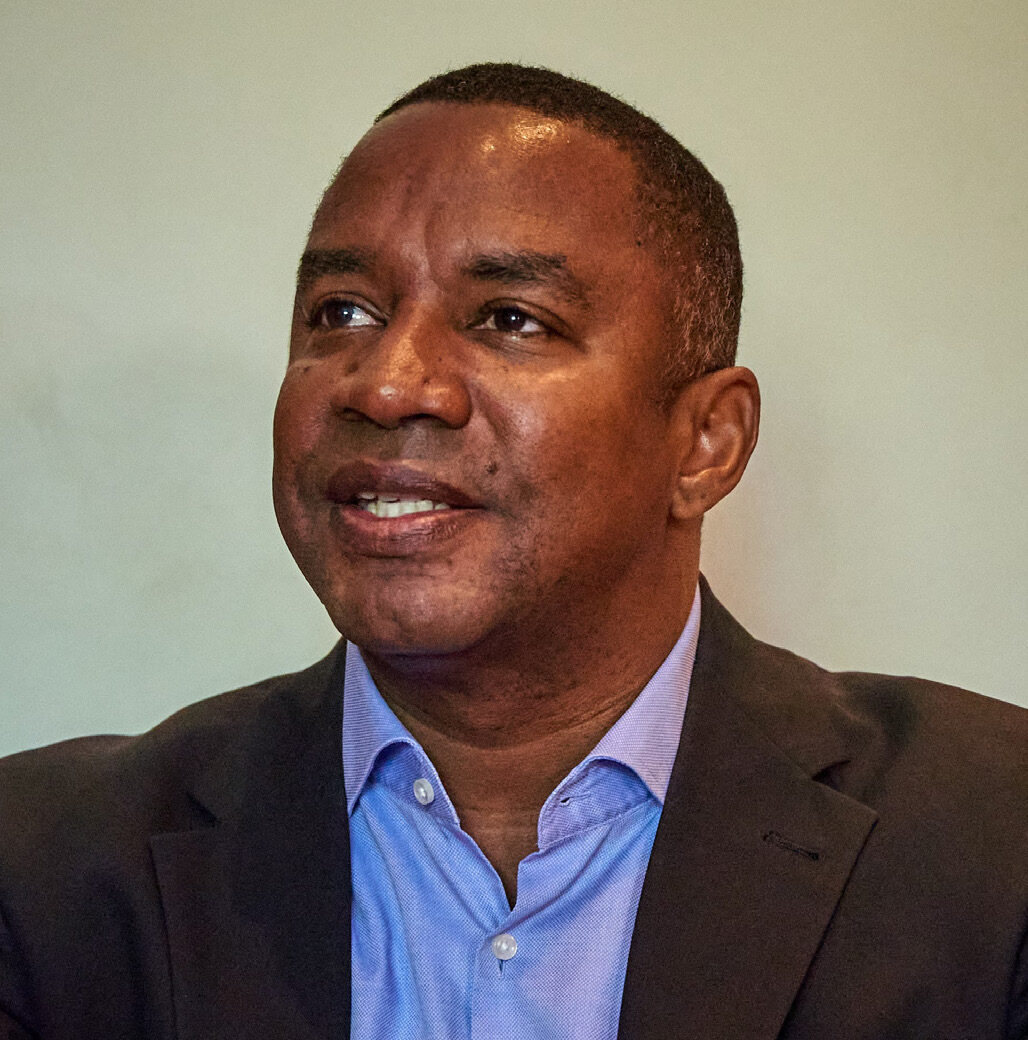
    Barbados is set to enact sweeping new legislation that will criminalize gang membership outright, as the Caribbean nation ramps up its crackdown on organized criminal activity. The Criminal Gangs (Prevention and Control) Bill, introduced to the House of Assembly by Attorney General Wilfred Abrahams on Friday, sends an uncompromising warning to anyone linked to criminal gangs: prison time is guaranteed for violators of the new law.

    “Jail, jail, jail is what awaits you if you belong to or associate with a gang,” Abrahams told legislators, emphasizing that the proposed legislation casts a broad net to capture not just core gang leaders, but anyone who actively affiliates with these criminal groups. “The government is dropping the hammer on gangs. The government is taking back control of Barbados.” Under the bill, even public displays of gang affiliation will count as admissible evidence in court. Abrahams specifically called out social media posts, noting that anyone who shares photos posing with gang signs on platforms like Instagram opens themselves up to criminal charges. “People now need to think twice about belonging to a gang. Very soon, belonging to a gang will be a stand-alone criminal offence in this country,” he added.

    To avoid misapplication of the law, Abrahams clarified the carefully drafted definition of a gang that was refined through extensive negotiations during the bill’s drafting process. Under the legislation, a gang is defined as any formal or informal grouping of three or more people organized to carry out criminal activity. The attorney general stressed that the law does not target groups of ordinary friends gathering for social purposes, and the sole determining factor for classification is ongoing participation in criminal activity.

    The bill sets out exceptionally strict mandatory minimum prison sentences to underscore the government’s zero-tolerance approach. Even basic gang membership or harboring a gang member carries a starting minimum sentence of 10 years behind bars, while more serious offenses draw penalties ranging from 15 to 35 years. Special provisions have been included to account for family relationships and maturity levels: parents, guardians and teachers acting in loco parentis will not be penalized for their natural relationships with minors who may be involved with gangs. While courts retain limited discretion to adjust mandatory minimum sentences for minors convicted under the law, that flexibility is heavily restricted, especially in cases involving the recruitment of children into gangs.

    Recruiting a minor into a gang carries harsher penalties than recruiting an adult, with sentences ranging from 10 to 25 years in prison. If the recruitment takes place on school grounds, at a place of worship, or within 500 meters of either location, the mandatory penalty jumps to between 15 and 25 years. The only exception to these mandatory minimums applies when the recruiter is also a minor, Abrahams explained.

    The legislation also expands the scope of evidence that can be used to prove gang affiliation, including self-admissions, assistance with gang activities, concealment of evidence, sharing of criminal proceeds, and public statements made on behalf of the gang. Anyone who hides weapons, disposes of evidence, or holds proceeds from gang crimes can also be prosecuted under the bill. Addressing widespread community concerns that residents of high-crime neighborhoods would be unfairly profiled as gang members based solely on their address, Abrahams confirmed the bill explicitly prohibits residence in a specific community from being used as evidence of gang membership. “We’re not targeting anybody based on where you live. We are targeting you based on what you do,” he said.

    Additional offenses covered by the bill include counseling, financing, or otherwise supporting gang criminal activity, which carry penalties of up to 25 years. Abrahams addressed concerns from the legal community, clarifying that legitimate legal representation for clients will remain protected, but anyone who facilitates gang criminal activity under the guise of legal work will be prosecuted. The bill also criminalizes tipping off gang members about upcoming police investigations, with penalties ranging from 10 to 25 years in prison for obstruction of justice.

    Retaliatory violence against witnesses, a common feature of gang-related conflict popularly referenced by the phrase “snitches get stitches,” is also targeted with harsh punishment. Anyone who retaliates against a cooperating witness faces between 15 and 30 years in prison. For law enforcement, the bill expands pre-charge detention powers, allowing police to hold suspects without a warrant for up to 72 hours, with extensions requiring judicial approval. It also introduces special protective measures for judges, magistrates, prosecutors, and jurors involved in gang prosecutions, who face elevated risks of retaliation. Threatening a judicial officer or juror carries the highest mandatory minimum sentence under the law, between 20 and 30 years imprisonment. Suspects charged under the bill will also be ineligible for bail in magistrate’s court, mirroring existing rules for firearms offenses, and must apply for bail directly to the High Court.

    Responding to critics who argue the bill prioritizes punishment over rehabilitation, Abrahams countered that the government has already invested heavily in diversion programs to steer young people away from crime, pointing to existing initiatives including the Chapman Challenge, peacebuilding programs, microfinance trust loans, and skills training. He emphasized that the purpose of this legislation is not to replace those rehabilitation efforts, but to send a clear message that gang activity will not be tolerated. “This legislation is intended to protect our communities and restore public confidence in our ability to keep citizens safe,” Abrahams said.

  • Minister: Gang recruitment targeting vulnerable young people

    Minister: Gang recruitment targeting vulnerable young people

    On Friday, the Mia Mottley administration tabled a far-reaching new anti-gang bill in Barbados’ House of Assembly, marking a decisive policy push to reverse a surge in gun-related violence and break up transnational criminal networks operating across the island nation.

    Michael Lashley, Barbados’ Minister of Legal Affairs and Criminal Justice, formally introduced the Criminal Gangs (Prevention and Control) Bill to lawmakers, framing the new legislation as a direct response to an alarming uptick in gun violence and retaliatory violent offenses disproportionately involving young Barbadians.

    Lashley outlined that the bill was crafted after extensive policy research, drawing on successful frameworks for similar anti-gang laws already implemented across fellow Caribbean nations Jamaica, Trinidad and Tobago, and The Bahamas. The drafting process also included broad consultation with legal stakeholders, including the national Bar Association, practicing attorneys, and community members who have been directly impacted by gang-related crime. This outreach directly refutes claims that the government rushed the legislation forward without sufficient public and expert input, Lashley emphasized.

    Prior to drafting, research conducted by the Criminal Justice Research and Planning Unit confirmed the urgent need for targeted anti-gang legislation, he told parliament. The unit’s on-the-ground research among inmates at Dodds Prison found clear evidence of embedded gang activity in the correctional system, with young male detainees and incarcerated people reporting they joined gangs at early ages, maintained close ties to active gang networks outside prison, or had directly participated in gang-linked criminal activity.

    The new bill is also aligned with a broader regional commitment by Caribbean community leaders to coordinate cross-border action against organized gang activity, Lashley noted. Gangs operate seamlessly across Caribbean national boundaries, he explained, making a unified “One Caribbean” approach to combating transnational criminal networks a critical priority for Barbados and its neighbors.

    Addressing widespread public and opposition concerns that the legislation could lead to unfair targeting of marginalized communities, Lashley stressed that the bill includes explicit safeguards to prevent discriminatory enforcement. Under the text of the proposed law, a person’s neighborhood of residence, family background, or regular social gathering spots cannot be used as sole evidence to prove gang association or involvement in gang-related criminal activity.

    Lashley framed the proposed legislation as clear proof of the current administration’s unwavering commitment to upholding citizen security, public safety, and the rule of law in Barbados. “This government is serious about citizen security and public safety,” he said. “We are willing to confront gang networks and criminal networks in this country frontally, and we will not back away.”

    He noted that the bill’s harsh proposed penalties are designed to act as a strong deterrent for all those involved in gang activity, targeting not only high-level gang leaders and active members, but also third parties who knowingly conceal gang-related criminal operations.

    In response to calls from the opposition Democratic Labour Party to add provisions targeting unexplained wealth linked to gang activity, Lashley pointed to existing national proceeds of crime legislation that already covers this objective. A civil asset recovery fund, already established under current law, will enable prosecutors to pursue any illicit wealth generated by gang activity once a conviction is secured under the new anti-gang bill, if it is passed into law, he explained.

    Additional key provisions of the bill include formal protections for jurors, judges, law enforcement officers, and other court personnel involved in prosecuting high-stakes gang-related cases.

    Even as the government advances this new legislation, Lashley acknowledged that new laws alone cannot resolve Barbados’ ongoing challenges with violent crime. The anti-gang bill is only one component of the administration’s broader, multi-pronged criminal justice reform agenda, he explained, which already includes delivered reforms such as expanding the number of active criminal judges and prosecutors, amending the national Firearms Act, and updating the Bail Act to streamline violent crime prosecutions.

    Lashley also disclosed that a full slate of additional crime-fighting bills is already drafted and ready for parliamentary debate in the coming months. These upcoming legislative proposals include a bill to establish specialized gun courts, new domestic terrorism legislation, and an updated Evidence Amendment Bill, he confirmed.

    Alongside legislative and enforcement action, Lashley emphasized that long-term crime prevention programs targeting at-risk youth remain the central pillar of the government’s overall strategy. Gang leaders deliberately target vulnerable young populations, he explained: unemployed youth, young people from dysfunctional or at-risk households, teens struggling with substance abuse, and adolescents with limited access to quality education.

    Data from pre-sentence reports in existing criminal cases consistently shows that warning signs of future violent offending emerge years before a person commits a serious offense, Lashley noted. Many high-risk offenders faced behavioral challenges at school, early drug involvement, and unstable home environments as early as ages 11 to 13, but lacked targeted early intervention to steer them away from criminal activity. He expressed confidence that the Ministry of Education Transformation and other national social agencies will continue expanding evidence-based early intervention programs to support vulnerable families and communities before young people become involved in crime.

    Finally, Lashley called for a fully holistic approach to national crime policy that includes dedicated support for victims of violent crime and their families, a group that is often overlooked in policy discussions focused on offenders. “Sometimes we focus on the accused, and what measures we can put in place to help them and their family,” he said. “But we also have to look at the victim and the victim’s family. The anger that comes from losing a loved one can manifest in harmful ways, so we must center their needs in a holistic approach to crime prevention.”

    Key provisions of the proposed Criminal Gangs (Prevention and Control) Bill include: creating new, specific criminal offenses for gang membership, leadership, and supporting activities that are currently not defined under Barbados law; stiff deterrent penalties for gang-related offending; the use of existing proceeds of crime laws and the established civil asset recovery fund to seize illicit gang-linked wealth; explicit anti-discrimination safeguards to prevent unfair community targeting; court-side protections for justice system personnel involved in gang cases; and expanded investigative powers for law enforcement to disrupt gang operations.

  • Plans unveiled to transform Consett Bay into multi-use fisheries, cultural hub

    Plans unveiled to transform Consett Bay into multi-use fisheries, cultural hub

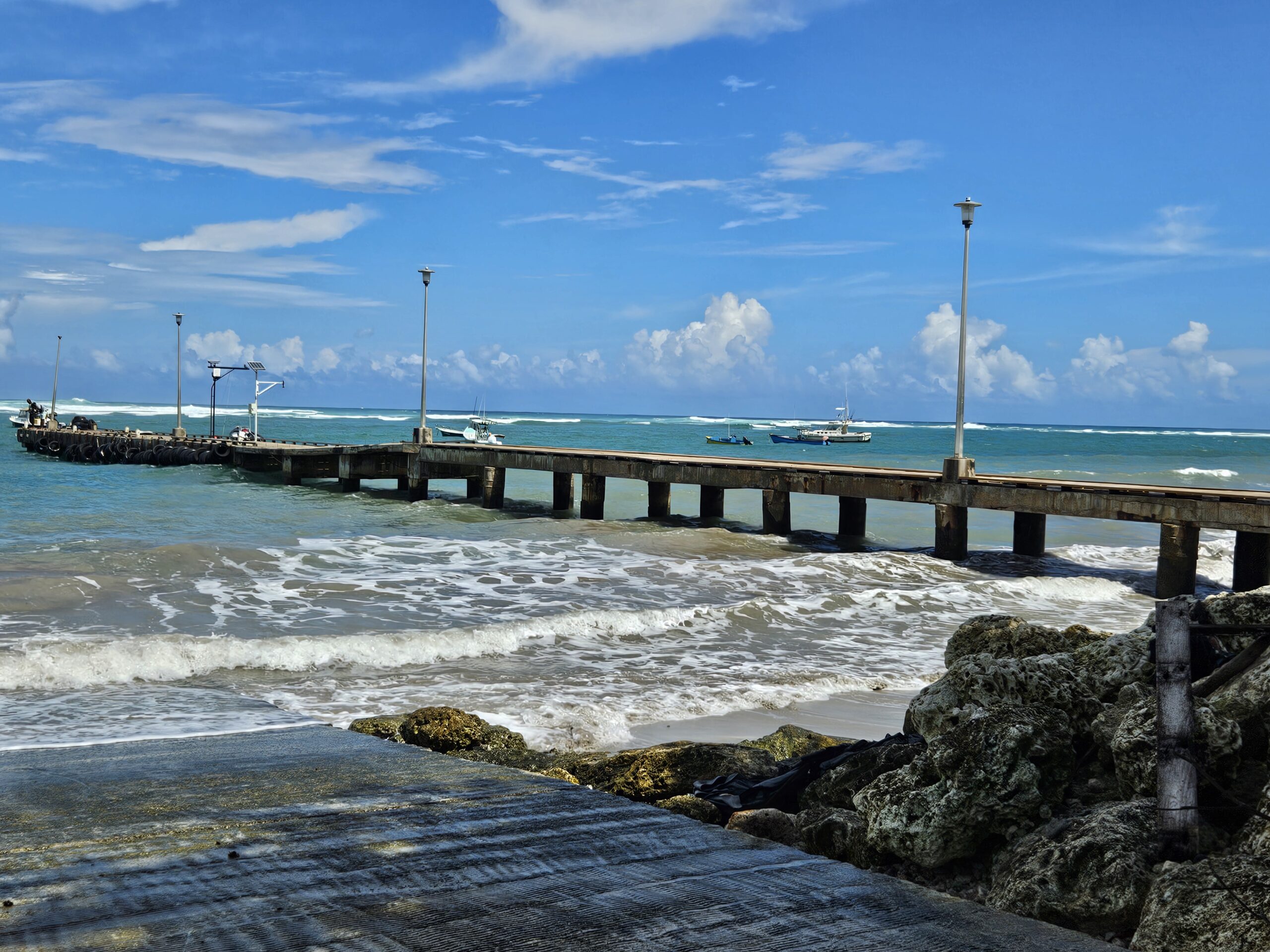
    Barbados’ government has launched an ambitious full-scale transformation project for the aging Consett Bay fishing facility, reimagining the outdated site as a modern, multi-functional hub that integrates commercial fishing operations, public recreation, and cultural activity. The project will center both international technical guidance and local community feedback to shape the final design, marking a major shift from past piecemeal maintenance work to a complete overhaul of the site.

    Deputy Prime Minister Santia Bradshaw, who also serves as Minister of the Environment and National Beautification, confirmed the government’s new approach during a public community forum, where local residents shared decades of frustrations with the facility’s current inefficiencies and failing infrastructure. One of the most vocal contributors was Paul Standard, a Martins Bay resident with direct experience working around the site’s limitations, who detailed the grueling daily challenges fisherfolk face under the current layout.

    Standard explained that fisherfolk currently rely on manual labor and outdated wheelbarrows to transport heavy catches from the end of the jetty up an inclined path to the market, navigating a confusing, awkward layout that requires multiple turns to reach the sales floor. To cut down on wasted time and physical strain, he proposed a simple but impactful reconfiguration: moving the market’s main entrance to face directly onto the jetty, and installing an electric tram system to move catches and supplies automatically. This system would not only speed up fish transfers but also allow the tram to return to service other vessels immediately, eliminating the long waits that come with manual wheelbarrow trips, and can even be used to transport heavy ice bags back to waiting fishing boats.

    Beyond layout inefficiencies, Standard highlighted critical failing infrastructure that impacts both fisherfolk and local small vendors. The facility’s existing ice machine is outdated and constantly on the brink of failure, he said, noting that it serves not just commercial fishermen but also local snow cone vendors and snack sellers that operate at community events like funerals and fairs. The current ice storage unit, which he described as a tiny 4-by-4 foot box, is far too small to meet daily demand. Standard closed his remarks by expressing cautious optimism, saying he placed faith in the new minister to deliver meaningful change that addresses longstanding unmet needs.

    Bradshaw directly responded to these concerns at the forum, reassuring attendees that community feedback will be a core guiding force for all architectural and design decisions. She shared that recent site visits with local MP Charles Griffith confirmed that the facility required far more work than initial assessments suggested, and that the site’s unique coastal location makes it ideal for a mixed-use development beyond just a working fish market.

    “Consett Bay to me lends itself to being developed as a space for recreation, for culture, for fisheries. The transformation that I see in that space for me is phenomenal,” Bradshaw said.

    To deliver a best-in-class upgrade, the government has turned to global leaders in fisheries infrastructure for technical support. Bradshaw revealed that the administration has already held discussions with the Japanese ambassador to secure targeted technical assistance for the project, noting that Japan is widely recognized as the global gold standard for sustainable, efficient fisheries infrastructure.

    The partnership with Japan will specifically prioritize two of the most pressing needs raised by local residents: replacing the outdated ice machine and expanding cold storage capacity for freshly landed catches. Meanwhile, a private sector engineering firm is already finalizing designs for upgrades to the facility’s jetty, which will be shared with the local community for additional feedback before construction begins.

    The government’s broader vision for the site addresses multiple longstanding design flaws that have held back economic activity. Currently, vendor stalls are tucked away in hidden ocean-side locations that casual visitors cannot easily find, leading many tourists and locals to leave without stopping to shop. To fix this, the ministry will rework the processing hall’s windows and layout to bring vendor operations into more visible, accessible spaces.

    Accessibility is another core priority of the redevelopment. Currently, the entire facility only has one road in and out, creating major traffic and safety challenges. Bradshaw confirmed that the project includes plans to add a second access road to create separate entrance and exit routes, improving flow for vehicles and pedestrians. The National Conservation Commission has already begun preliminary site work, carrying out clearing and beautification across the property, and the government is in the process of acquiring adjacent land to expand public parking. Upgrades will also include new public lighting and fully renovated public restroom facilities to make the space comfortable for recreational visitors as well as working fisherfolk.

  • Major plans for fight against sargassum

    Major plans for fight against sargassum

    As a massive annual sargassum seaweed bloom continues to endanger key coastal sectors across Barbados, the island nation’s government is accelerating its mitigation strategy – with a new focus on intercepting the invasive algae before it reaches shore. Deputy Prime Minister and Minister of the Environment Santia Bradshaw outlined the expanded response during Friday’s launch of an educational outreach bus focused on Barbados’ Marine Spatial Plan at the Garrison, where she emphasized the growing environmental and economic toll the persistent influx has placed on the island.

    Bradshaw noted that the recurring sargassum blooms, which have plagued Barbados’ waters since 2011, pose far-reaching threats to the country’s most valuable marine and coastal assets. “This valuable marine space also faces very real threats,” she explained. “Sargassum seaweed influxes continue to impact our beaches, fisheries, coastal communities, and tourism product, while coastal erosion exacerbated by accumulated blooms threatens our infrastructure, our ecosystems, and our vulnerable shorelines across the island. These challenges remind us why careful planning and sustainable management of our marine environment are so critical.”

    To date, the Barbadian government has already rolled out a series of coordinated onshore interventions to address the crisis. This includes hiring contract workers to carry out regular beach cleanups, and partnering with international organizations and foreign governments to scale up mechanized removal efforts for more efficient, large-scale clearance. “This includes engaging contract workers to support the cleanup efforts and collaborating with international agencies such as the UNDP and countries such as Japan to increase the use of mechanized equipment for more efficient and large-scale sargassum removal,” Bradshaw said.

    Moving beyond immediate cleanup actions, the government has spent years pursuing long-term, locally tailored solutions to the decade-long problem. Since Bradshaw took on the environment portfolio, her team has held consultations with partner nations, multilateral development bodies including the Inter-American Development Bank (IDB), and local industry and community stakeholders to develop homegrown strategies that fit Barbados’ unique coastal context.

    The next major pillar of the national strategy will be offshore collection, a proactive measure designed to cut down the volume of sargassum that actually washes up on Barbados’ coastlines. Bradshaw confirmed that government officials have already entered discussions with a team of specialized marine experts, who will work alongside local stakeholders to map out the most cost-effective, efficient operational model for offshore interception, with implementation expected to begin in the coming months.

    The shift to expanded, proactive action comes as officials warn that 2024’s sargassum bloom is on track to be one of the most severe on record. “It is clear that more systematic action is needed, especially as this year’s bloom is expected to reach record levels, affecting lives, livelihoods, and coastal communities,” Bradshaw added.

    Alongside the mitigation strategy updates, Friday’s event marked the launch of a mobile educational bus centered on Barbados’ Marine Spatial Plan. The outreach vehicle will travel across the island to raise public awareness of marine conservation issues, and reinforce the critical importance of protecting Barbados’ coastal resources for current and future generations.

  • Nexora FC reign supreme in six-a-side tournament

    Nexora FC reign supreme in six-a-side tournament

    Nexora FC outperformed 11 competing squads to claim the top prize at Empire Sports Club’s six-a-side football tournament, held as a centerpiece of the club’s 112th anniversary celebrations this week. The tight final match at Bank Hall ended in a regulation goalless draw, forcing a decisive penalty shootout where Nexora FC held firm to secure a 1-0 win over runners-up Easy on Tuesday. The official prize presentation for the top two finishers took place two days later in a short ceremony hosted at Massy Distribution.

    This year’s competition marked a break from the club’s traditional anniversary football programming, which usually sees a veteran squad take on younger team members. According to Patrina Brathwaite, Assistant Secretary of Empire Sports Club, the new six-a-side format was designed to bring fresh energy to the anniversary celebrations. “We wanted to do something different for our football celebration this year, so we developed this open 12-team tournament,” Brathwaite explained. Local brand Rude Boy stepped in as a sponsor to cover the winner’s prize purse, and Brathwaite noted that organizers already plan to host a follow-up tournament in the coming months.

    A lifelong club member who first joined when she was just nine years old, Brathwaite shared her enthusiasm for the historic Barbadian sports institution, which has fostered generations of elite athletes. “I’ve played both hockey and football here my whole life, and I truly believe it’s one of the finest clubs across Barbados,” she said. “It’s known as the home of champions – we’ve had dozens of talented cricketers develop here, many of whom went on to represent the West Indies at the international level.” Brathwaite also used the post-tournament occasion to issue an open invitation to local sports lovers, encouraging more community members to sign up as club members and take part in future programming.

    Stephen Bennett, Brand Manager for Rude Boy, echoed that commitment to local community sports, saying the brand was thrilled to partner with Empire Sports Club on the anniversary tournament. “When opportunities arise to support grassroots football and engage with local communities, Rude Boy always jumps at the chance,” Bennett stated. He also publicly recognized Katrina Pixie Brathwaite for her ongoing contributions to Barbadian community sports, calling her a consistent driving force behind local athletic initiatives. “These kinds of community-focused projects are exactly what Rude Boy wants to support,” Bennett added. “We’re committed to lifting up positive local activities that bring people together through sport, and we look forward to more partnerships like this going forward.”