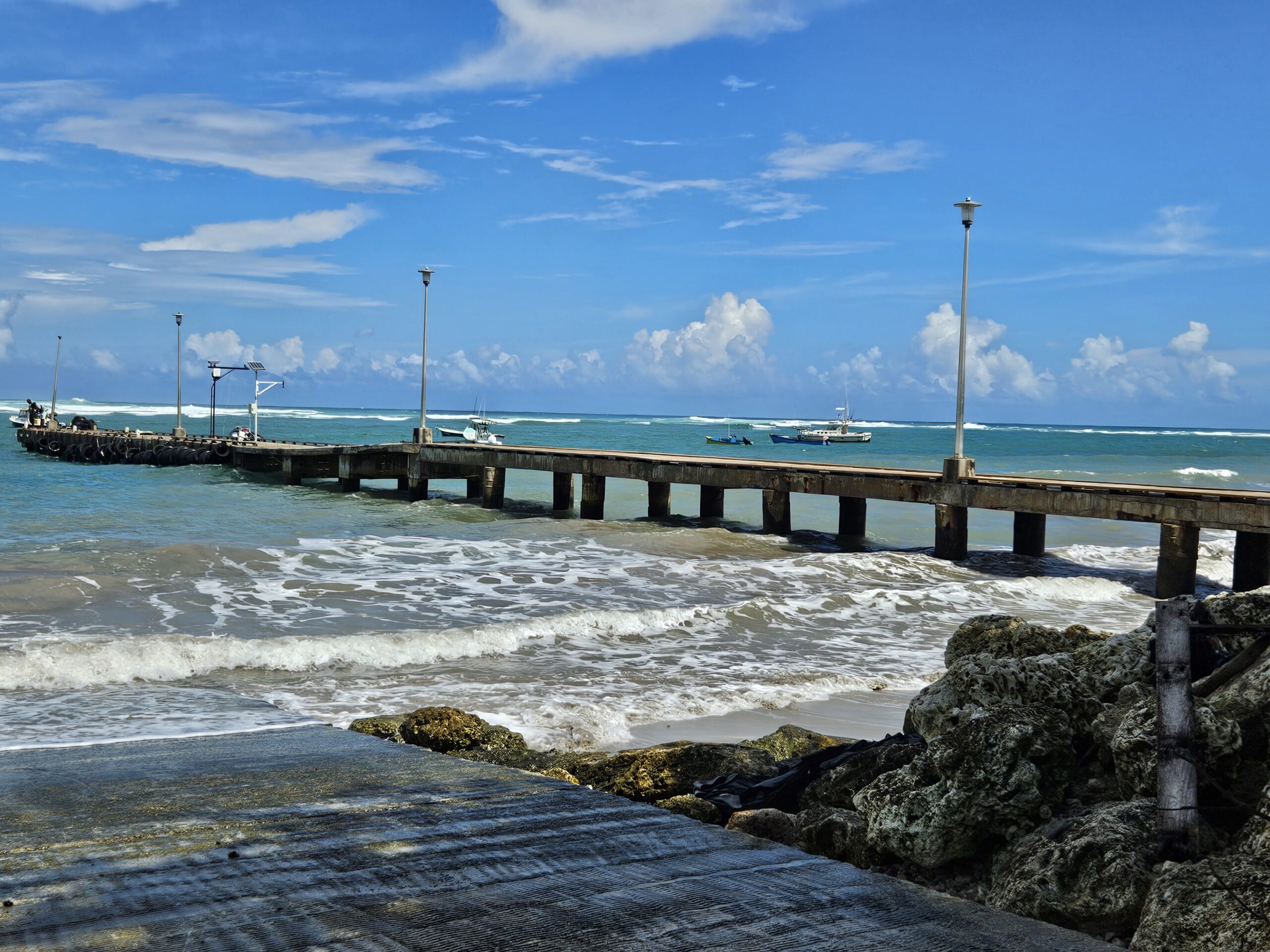
Barbados’ government has launched an ambitious full-scale transformation project for the aging Consett Bay fishing facility, reimagining the outdated site as a modern, multi-functional hub that integrates commercial fishing operations, public recreation, and cultural activity. The project will center both international technical guidance and local community feedback to shape the final design, marking a major shift from past piecemeal maintenance work to a complete overhaul of the site.
Deputy Prime Minister Santia Bradshaw, who also serves as Minister of the Environment and National Beautification, confirmed the government’s new approach during a public community forum, where local residents shared decades of frustrations with the facility’s current inefficiencies and failing infrastructure. One of the most vocal contributors was Paul Standard, a Martins Bay resident with direct experience working around the site’s limitations, who detailed the grueling daily challenges fisherfolk face under the current layout.
Standard explained that fisherfolk currently rely on manual labor and outdated wheelbarrows to transport heavy catches from the end of the jetty up an inclined path to the market, navigating a confusing, awkward layout that requires multiple turns to reach the sales floor. To cut down on wasted time and physical strain, he proposed a simple but impactful reconfiguration: moving the market’s main entrance to face directly onto the jetty, and installing an electric tram system to move catches and supplies automatically. This system would not only speed up fish transfers but also allow the tram to return to service other vessels immediately, eliminating the long waits that come with manual wheelbarrow trips, and can even be used to transport heavy ice bags back to waiting fishing boats.
Beyond layout inefficiencies, Standard highlighted critical failing infrastructure that impacts both fisherfolk and local small vendors. The facility’s existing ice machine is outdated and constantly on the brink of failure, he said, noting that it serves not just commercial fishermen but also local snow cone vendors and snack sellers that operate at community events like funerals and fairs. The current ice storage unit, which he described as a tiny 4-by-4 foot box, is far too small to meet daily demand. Standard closed his remarks by expressing cautious optimism, saying he placed faith in the new minister to deliver meaningful change that addresses longstanding unmet needs.
Bradshaw directly responded to these concerns at the forum, reassuring attendees that community feedback will be a core guiding force for all architectural and design decisions. She shared that recent site visits with local MP Charles Griffith confirmed that the facility required far more work than initial assessments suggested, and that the site’s unique coastal location makes it ideal for a mixed-use development beyond just a working fish market.
“Consett Bay to me lends itself to being developed as a space for recreation, for culture, for fisheries. The transformation that I see in that space for me is phenomenal,” Bradshaw said.
To deliver a best-in-class upgrade, the government has turned to global leaders in fisheries infrastructure for technical support. Bradshaw revealed that the administration has already held discussions with the Japanese ambassador to secure targeted technical assistance for the project, noting that Japan is widely recognized as the global gold standard for sustainable, efficient fisheries infrastructure.
The partnership with Japan will specifically prioritize two of the most pressing needs raised by local residents: replacing the outdated ice machine and expanding cold storage capacity for freshly landed catches. Meanwhile, a private sector engineering firm is already finalizing designs for upgrades to the facility’s jetty, which will be shared with the local community for additional feedback before construction begins.
The government’s broader vision for the site addresses multiple longstanding design flaws that have held back economic activity. Currently, vendor stalls are tucked away in hidden ocean-side locations that casual visitors cannot easily find, leading many tourists and locals to leave without stopping to shop. To fix this, the ministry will rework the processing hall’s windows and layout to bring vendor operations into more visible, accessible spaces.
Accessibility is another core priority of the redevelopment. Currently, the entire facility only has one road in and out, creating major traffic and safety challenges. Bradshaw confirmed that the project includes plans to add a second access road to create separate entrance and exit routes, improving flow for vehicles and pedestrians. The National Conservation Commission has already begun preliminary site work, carrying out clearing and beautification across the property, and the government is in the process of acquiring adjacent land to expand public parking. Upgrades will also include new public lighting and fully renovated public restroom facilities to make the space comfortable for recreational visitors as well as working fisherfolk.