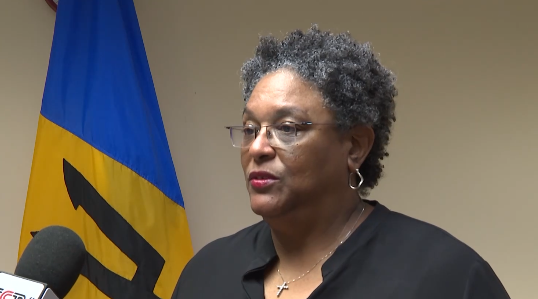
As the Caribbean nation of Barbados grapples with a creeping spread of organized gang activity that has already claimed new lives, Prime Minister Mia Mottley, who also holds the national security portfolio, has put forward a multi-pronged strategy to curb the threat, warning that the country risks losing an entire generation to violent gang culture without collective action from families and local communities.
Speaking during parliamentary debate on the landmark Criminal Gangs (Prevention and Control) Bill, Mottley emphasized that while Barbados’ gang problem has not reached the severity seen in neighboring regional territories, it cannot be addressed by government law enforcement alone. She pointed to deep-seated shifts in Barbadian social structures as a core root of the rising youth involvement in gangs, noting that long-held community support systems for childrearing have eroded in recent decades.
Mottley argued that society too often makes dangerous assumptions that all parents inherently know how to raise children with consistent, firm guidance. Many modern caregivers mistakenly equate love with constant approval, she said, and fail to recognize the risks of letting pre-teen and early teen children roam public streets late at night, where they are exposed to gambling, illicit activity, and gang recruitment. These missteps have been compounded by the breakdown of extended family households and the loss of neighborhood mutual support — once cornerstones of Barbadian community life that ensured children received consistent guidance beyond their immediate household. When that collective support vanishes, she said, the void created leaves young people vulnerable to recruitment by criminal gangs.
To rebuild that lost support network, Mottley is calling for the widespread creation of community-based parenting clubs across the country. These local groups will create structured spaces for caregivers to share guidance, learn evidence-based childrearing strategies, and support one another in navigating challenging behavioral issues with young people. Until these community clubs can be fully established and operational, the prime minister proposed the immediate launch of a national support hotline for parents struggling to manage at-risk children.
A key provision of the new criminal gang legislation is a targeted exit strategy designed to help young people who have already joined gangs leave the organization safely. Mottley noted that gang groups often use coercion, violence, threats, and social stigma to trap members even after they recognize they made a mistake and want to exit. “Many young persons will realise that they can get in easy, and then discover that leaving ain’t so easy,” she said, explaining that the bill will create legal and support frameworks to remove the barriers that keep young people trapped in cycles of violence. The legislation also aims to dismantle the code of silence rooted in fear that allows gangs to operate, imposing harsh penalties that make gang activity unprofitable and unsustainable in Barbadian communities.
The plan also includes a $5 million special grant facility for registered faith-based organizations to develop and run youth-focused community programs that provide positive alternatives to gang involvement for at-risk young people. Mottley stressed that these trusted local entities have a long track record of supporting child and youth development, and they will play a critical role in reaching vulnerable populations before gangs do.
Mottley called on all lawmakers and responsible Barbadian citizens to unite behind the strategy, noting that the country had recorded a new gang-linked murder just hours before the parliamentary debate. She insisted that the nation will not surrender to what she called an “insidious culture that has no place in our jurisdiction.” Opening with a call for confronting hard truths about the scope of the problem, she argued that communities cannot allow fear to force families to choose between protecting their loved ones and speaking out about gang activity.
“Sometimes there is that one person in the family who will not listen and sometimes you need tough love to be able to get that person to be dealt with,” she said. “Because the grandmother deserves to be able to sit on the step, if she wants to. She deserves to be out there getting little breeze if she wants to get breeze. The shopkeeper must be able to ply their trade without fearing that if ‘I got a karaoke here somebody can come and spray away bullets and therefore people ain’t coming and I ain’t earning money no more.’” Mottley concluded that these basic quality of life rights for all Barbadians are what the new strategy and legislation are fighting to protect.