标签: Antigua and Barbuda

安提瓜和巴布达

  • Health Ministry Cracks Down on Illegal Construction in Public Cemeteries

    Health Ministry Cracks Down on Illegal Construction in Public Cemeteries

    The Ministry of Health, Wellness, Environment and Civil Service Affairs of Antigua and Barbuda has issued an urgent public notice following the discovery of multiple unauthorized construction projects at the St. John’s Public Cemetery and other public burial grounds across the two islands.

    Under current regulations, any permanent modification to public cemetery land—including the construction, alteration, or installation of new tombs, headstones, boundary fences, retaining walls, concrete platforms, or any other fixed structure—cannot proceed without formal written approval from the Chief Health Inspector. This rule is firmly codified in the nation’s Public Health Act, Cap. 353, which grants authorities clear power to address non-compliant activity.

    Any unapproved work found on cemetery grounds will face immediate action: regardless of how far construction has progressed, all unauthorized structures will be halted, dismantled, and removed by authorities. Beyond the removal of non-compliant builds, individuals who carry out unapproved construction or tamper with existing graves, burial plots, or cemetery features will also face formal prosecution under the law.

    Officials have outlined clear justifications for these strict regulations. First, the rules protect the designated burial plots and the legal and emotional rights of families who have reserved plots for their loved ones. Second, they preserve the sacred, dignified character of public cemetery spaces that are meant for mourning and remembrance. Third, they allow cemetery managers to maintain accurate, up-to-date records of all burials and approved modifications to land. Fourth, they enable orderly, consistent management of public cemeteries that serve communities across the country. Finally, these regulations safeguard broader public health and safety by preventing unregulated construction that could create hazards or disrupt proper land use.

    The ministry has issued a critical warning to the public: do not accept approvals, instructions, or assurances from any individual who does not hold official authorization to grant permission for cemetery work. Before starting any construction or modification project on public cemetery land, all stakeholders must secure required approval directly from either the official Cemetery Office or the Central Board of Health.

    Any questions related to burials, family plot reservations, tombstones, fencing, retaining walls, or other cemetery projects must be submitted to the proper official authority before any arrangements are finalized or construction work begins. To enforce these rules moving forward, the ministry announced it is ramping up regular monitoring and patrols of all public cemeteries across Antigua and Barbuda, and will not hesitate to take full enforcement action against any violation of regulations.

    In closing, the ministry called on the public to cooperate with these new measures, emphasizing that shared adherence to the rules is critical to protecting the integrity, safety, and sacred dignity of Antigua and Barbuda’s public cemeteries for current and future generations.

  • Entertainer Jesse Fyah Fined $8,000 After Sexual Offence Convictions; Prosecution Appeals Sentence

    Entertainer Jesse Fyah Fined $8,000 After Sexual Offence Convictions; Prosecution Appeals Sentence

    A high-profile legal case involving Jamaican entertainer Harrison Horsford, professionally known as Jesse Fyah, has taken a new turn after prosecuting authorities launched an appeal against what they call an overly lenient fine-only sentence handed down for two violent sexual offences committed in 2020. High Court Justice Ann Marie Smith recently ordered Horsford to pay a total of $8,000 in penalties: $5,000 in direct compensation to his victim, and a $3,000 fine to the state for the convictions of serious indecency and indecent assault, avoiding the prison time that prosecutors say the crimes deserve. Each of the offences carries a maximum five-year prison sentence under local law, leading the Crown to argue the punishment fails to match the severity of Horsford’s actions and has formally filed an appeal to challenge the ruling.

    The origins of the case date back to October 27, 2020, when the victim, a woman in her early 20s who had known Horsford for several years and shared a casual past relationship with him, accepted what she thought would be a ride home from the entertainer. Instead of taking her to her residence, Horsford diverted the trip to the remote Darkwood area, claiming he needed to stop for a work meeting related to a billboard. Prosecutors confirmed during the trial that no such meeting was ever scheduled.

    Once the pair arrived at the isolated location, court evidence lays out a disturbing sequence of assaults: Horsford began initiating unwanted sexual advances that the victim repeatedly rejected. When she resisted his overtures, he kissed her against her will, grabbed her by the throat, forcibly exposed and fondled her breasts, and sexually assaulted her genital area while asserting that she belonged to him. Despite the victim’s repeated pleas to be taken home, Horsford forced her out of his vehicle and abandoned her on the side of the isolated road, leaving her distraught and stranded.

    A passing motorist eventually stopped to assist the shaken woman, who was found crying and visibly disoriented after the attack. The motorist later testified during the trial that the victim asked to be taken directly to Johnson Point Police Station to file an official report against Horsford. Horsford has maintained his innocence throughout the entire legal process. In an unsworn statement delivered from the defendant’s dock, he claimed he had only offered the woman a ride out of kindness after seeing her standing in the rain, insisting their entire interaction was amicable and he had even offered to help her find work. The jury deliberated for less than an hour before rejecting Horsford’s version of events and returning guilty verdicts on both sexual offence charges.

    In her sentencing remarks, Justice Smith called out Horsford’s harmful underlying attitude toward the victim, noting he appeared to believe the victim’s past sexual history and their previous casual relationship gave him permission to act without her consent. The judge firmly rejected this dangerous assumption, stressing in her ruling that every person has an inalienable right to refuse unwanted sexual contact, and that meaningful consent must be respected regardless of past relationships, personal history, or reputation. Horsford has been held in custody since the jury delivered its guilty verdict in May. The case was prosecuted by Crown Counsel Curtis Cornelius, while George Lake served as Horsford’s defense attorney throughout the trial. With the appeal now filed, legal observers expect higher courts will review whether the sentence is appropriate given the severity of the convictions.

  • Sir Ronald Sanders Discusses Diplomacy and U.S.-Antigua Relations with Cornell Students

    Sir Ronald Sanders Discusses Diplomacy and U.S.-Antigua Relations with Cornell Students

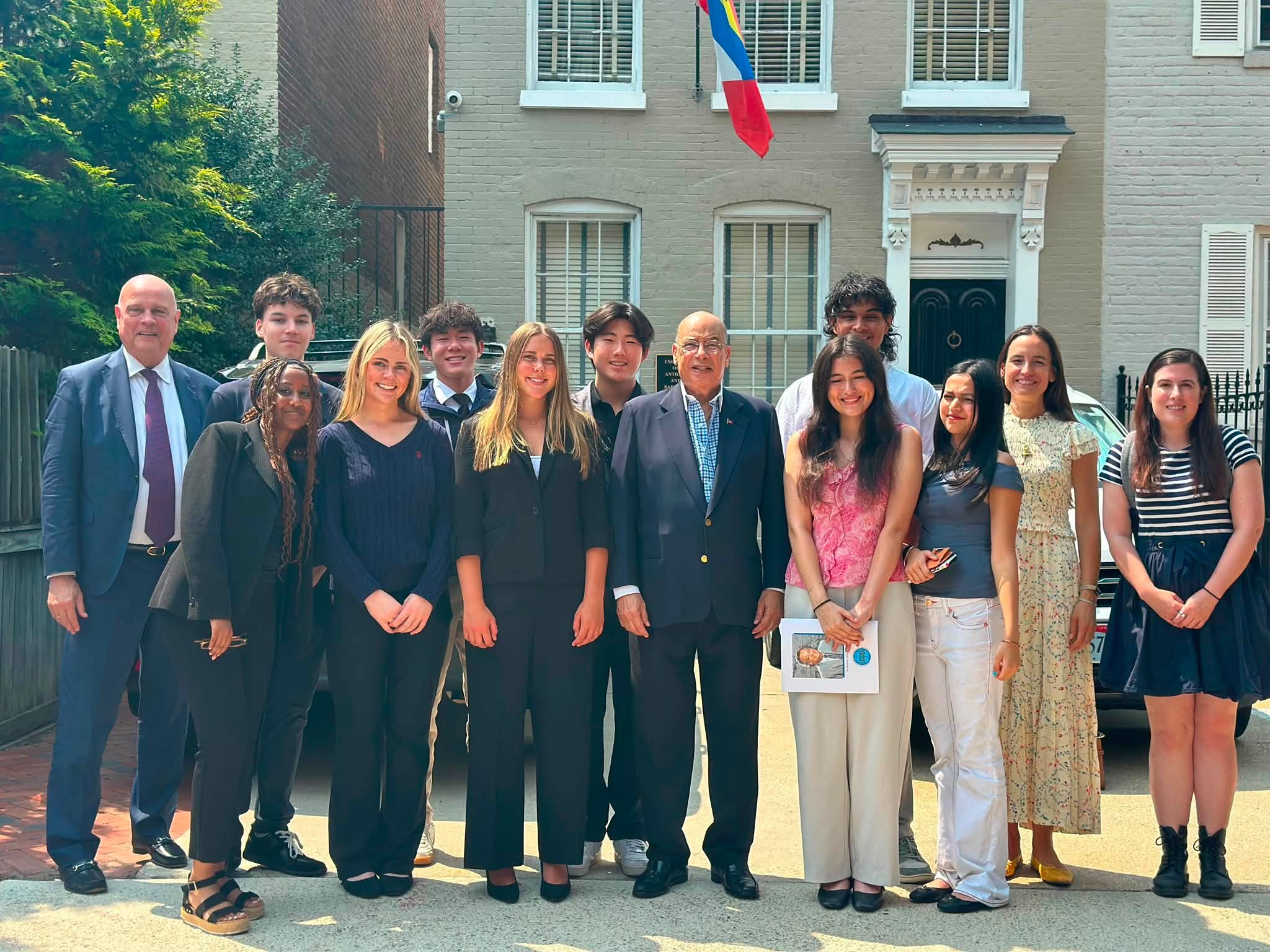
    A pivotal educational and diplomatic exchange unfolded recently at the Embassy of Antigua and Barbuda in Washington D.C., where the country’s top envoy to the United States, Sir Ronald Sanders, opened the doors of the mission to a cohort of students and faculty from Cornell University’s Brooks School of Public Policy.

    The off-campus discussion was integrated into the institute’s summer curriculum, specifically as a core activity for the “Democracy Policy in the World” course co-led by Cornell scholars Marian Vidaurri and Thomas Garrett. Bringing academic theory into direct contact with on-the-ground diplomatic practice, the session was centered on the provocative, thought-provoking central question: “Is Might Right?”

    Over the course of the dialogue, Sanders drew on his decades of diplomatic experience to unpack multiple key themes for the emerging policy leaders in attendance. He walked attendees through the daily realities of diplomatic negotiation and statecraft, detailed the longstanding collaborative relationship between Antigua and Barbuda and the United States, articulated the critical value of multilateral cooperation in addressing 21st-century global challenges, and emphasized how strong democratic governance forms the foundation of sustainable, equitable national development.

    Following the hour-long exchange, Sanders praised the gathering as a dynamic and insightful cross-generational sharing of perspectives, noting that the participating students represented an exceptionally talented cohort of the world’s future decision-makers. The event highlighted how academic institutions and small-state diplomatic missions can collaborate to expand students’ real-world understanding of global politics and bilateral relations.

  • LETTER: Increase Penalties for Selling Marijuana to Youth

    LETTER: Increase Penalties for Selling Marijuana to Youth

    A concerned local resident of Antigua and Barbuda has submitted an open letter to the nation’s government, sounding the alarm over the expanding public safety risk created by drug dealers who target underage students and teenagers with marijuana sales. In the letter, the writer is pushing for legislative adjustments that would introduce significantly harsher legal penalties for offenders who knowingly supply cannabis to minors. The writer emphasized that childhood and adolescence represent an irreplaceable, critical developmental window for all young people, where physical, emotional and cognitive growth lays the foundation for lifelong success. Early exposure to illicit drugs, the letter argues, inflicts lasting harm that goes far beyond immediate consequences: it erodes young people’s capacity to focus in school, impairs their ability to make informed, responsible decisions, and blocks them from reaching their full personal and professional potential. Long-term risks linked to underage marijuana use include higher rates of chronic addiction, plummeting academic performance, a greater likelihood of developing severe mental health conditions, and an increased chance of engaging in criminal activity well into adulthood. Unlike drug transactions between consenting adults, the sale of marijuana to minors is not a mere violation of drug laws, the writer contends. It is a predatory act that exploits the developmental vulnerability of young people, who often lack the life experience to fully grasp the long-term damage of substance use. This exploitative behavior does not only harm individual children—it puts entire families, schools and local communities at risk, and undermines the tireless work of parents, educators and youth organizations that dedicate themselves to guiding young people toward healthy, productive futures. Enforcing stricter penalties for this specific crime, the letter argues, would achieve two key goals. First, it would send an unambiguous public message that the Antigua and Barbuda government prioritizes the protection of children and the security of the nation’s long-term future. Second, harsher consequences would act as a powerful deterrent, discouraging dealers from targeting vulnerable young people for quick profit. The writer also stressed that tough enforcement alone is not enough to address the issue. Alongside stronger legal penalties, the resident is calling for sustained government investment in evidence-based drug education, community-level prevention programs, accessible youth counseling services, and local outreach initiatives that connect at-risk young people with support. A balanced, multi-pronged strategy that combines deterrence with prevention and rehabilitation, the letter argues, would let Antigua and Barbuda both protect current generations of young people and tackle the underlying root causes of underage drug use. Closing the letter, the writer reaffirmed that the nation’s youth are entitled to safe, supportive environments where they can learn, grow and chase their goals without being targeted by actors who profit from their inexperience and vulnerability. The resident formally urged the government to open a review of existing drug legislation and advance new measures that impose stricter punishments on anyone convicted of selling marijuana to school-aged children and teens. The letter closes with gratitude for the government’s ongoing work to advance the well-being of all Antigua and Barbuda residents, and a request for urgent consideration of this critical public safety issue.

  • CXC Overhauls School-Based Assessments, Phases Out SBAs for Many Subjects

    CXC Overhauls School-Based Assessments, Phases Out SBAs for Many Subjects

    As generative artificial intelligence reshapes learning landscapes globally, the Caribbean Examinations Council (CXC) has unveiled a sweeping overhaul of its long-standing School-Based Assessment (SBA) programme, introducing a revised assessment framework built to safeguard the credibility of regional qualifications amid growing AI-driven academic integrity challenges. The reforms, which will impact both the Caribbean Secondary Education Certificate (CSEC) and Caribbean Advanced Proficiency Examination (CAPE) programmes, are set to begin phased implementation starting in the 2027 academic year.

    The updated framework is the product of years of extensive consultation with education stakeholders across 21 Caribbean nations and territories, developed with the core goal of ensuring exam results continue to accurately reflect students’ independent knowledge and individual abilities. In a public statement from the council, Registrar and Chief Executive Officer Dr. Wayne Wesley emphasized that the reforms do not signal a ban on generative AI for student learning. Instead, he framed the changes as a proactive response to technological disruption that is necessary to preserve public trust in the regional assessment system.

    “CXC® will always act in the best interest of the region, even when that requires difficult decisions. The SBA has served Caribbean students well for nearly half a century, and we do not reform it lightly,” Dr. Wesley noted. “But the integrity of our qualifications is not negotiable. When the system that was designed to assess a student’s work can no longer reliably do so, we have an obligation to act, and to act decisively. That is precisely what this reformed framework represents. CXC® is cleareyed about the challenges of our time, and we are resolute in our commitment to the standard that Caribbean families, educators, and employers have come to trust.”

    Under the restructured model, the SBA will remain in place for subjects that depend on hands-on practical demonstration and project-based work to accurately measure student competency. This group includes Agricultural Science, Visual Arts, Music, Physical Education, Technical Drawing, and Food, Nutrition and Health. The council also confirmed that moderation processes for these remaining SBA programmes will be strengthened to further boost accountability.

    For primarily theory-based subjects, however, the traditional SBA model will be gradually phased out entirely. Subjects affected by this shift include core academic areas such as Mathematics, English, Caribbean History, Social Studies, Principles of Business and Information Technology. In place of the traditional out-of-classroom school-based assessment, students in these subjects will complete Paper 032, an assessment format currently used as an alternative for specific candidate groups.

    The revised Paper 032 will retain the extended learning focus of the original SBA, but will be administered under formal, supervised examination conditions to confirm work authenticity. To support this adjusted approach, students will receive their assessment topics four weeks in advance of the exam, will be granted extra time to complete the assessment, and will be permitted to bring personal reference notes into the testing room.

    CXC Director of Operations Dr. Nicole Manning explained that the redesigned assessment structure strikes a careful balance between supporting meaningful, extended learning and restoring certainty that student work is authentic. “The new, deliberate and necessary design of the SBA, preserves the spirit of extended, reflective assessment while restoring CXC’s confidence in authorship and authenticity,” Dr. Manning said. She went on to call on students, parents, and teaching staff across the region to collaborate in upholding the value of CXC qualifications, noting that the high standards of regional certification have been built through decades of collective effort and benefit all stakeholders.

    “A CXC® qualification means something. It means something to employers, to universities, to parents, families and guardians, who have invested years of commitment and sacrifice into a child’s education,” Dr. Manning said. “It is in our collective interest that we hold to this standard, which we have all worked so hard to build.”

    The council has outlined a clear phased timetable for the rollout of the new model. For CAPE candidates enrolled in non-practical theory-based subjects, Paper 032 will fully replace the traditional SBA starting with the May-June 2027 examination cycle. For CSEC candidates, a multi-year transition period has been scheduled: in 2027, individual schools will retain the option to choose between the traditional SBA and the new Paper 032 for their non-practical subject candidates. Starting with the May-June 2028 CSEC examinations, however, all non-practical subject candidates will be required to complete Paper 032.

    CXC also confirmed that existing policies around score transfer will remain consistent. Under the council’s long-standing two-year rule, previously earned SBA marks will continue to be transferable for eligible candidates, and starting in 2027, Paper 032 scores will also follow the same two-year transfer policy.

  • Police Officers to Receive Enhanced Insurance and Welfare Support, Benjamin Says

    Police Officers to Receive Enhanced Insurance and Welfare Support, Benjamin Says

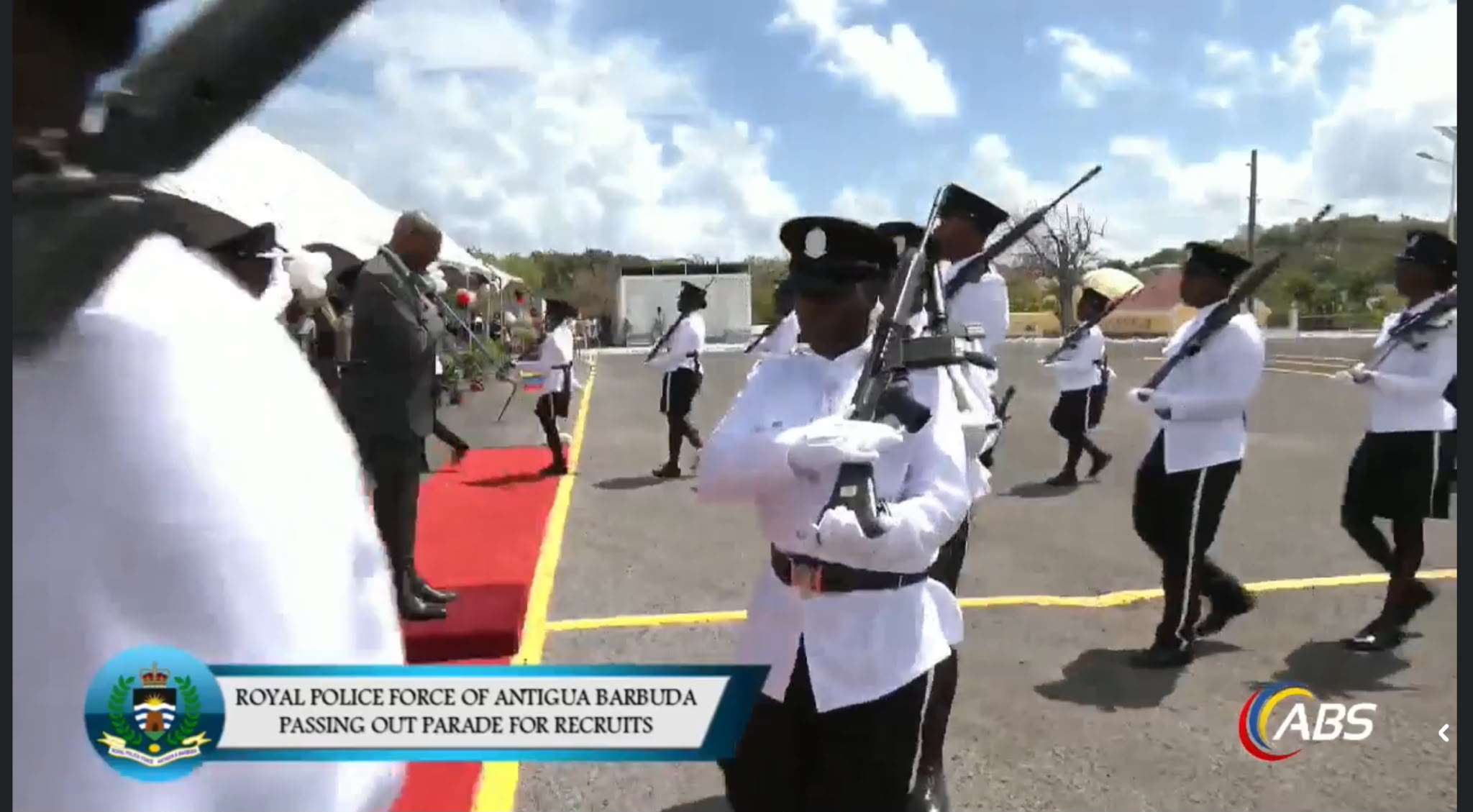
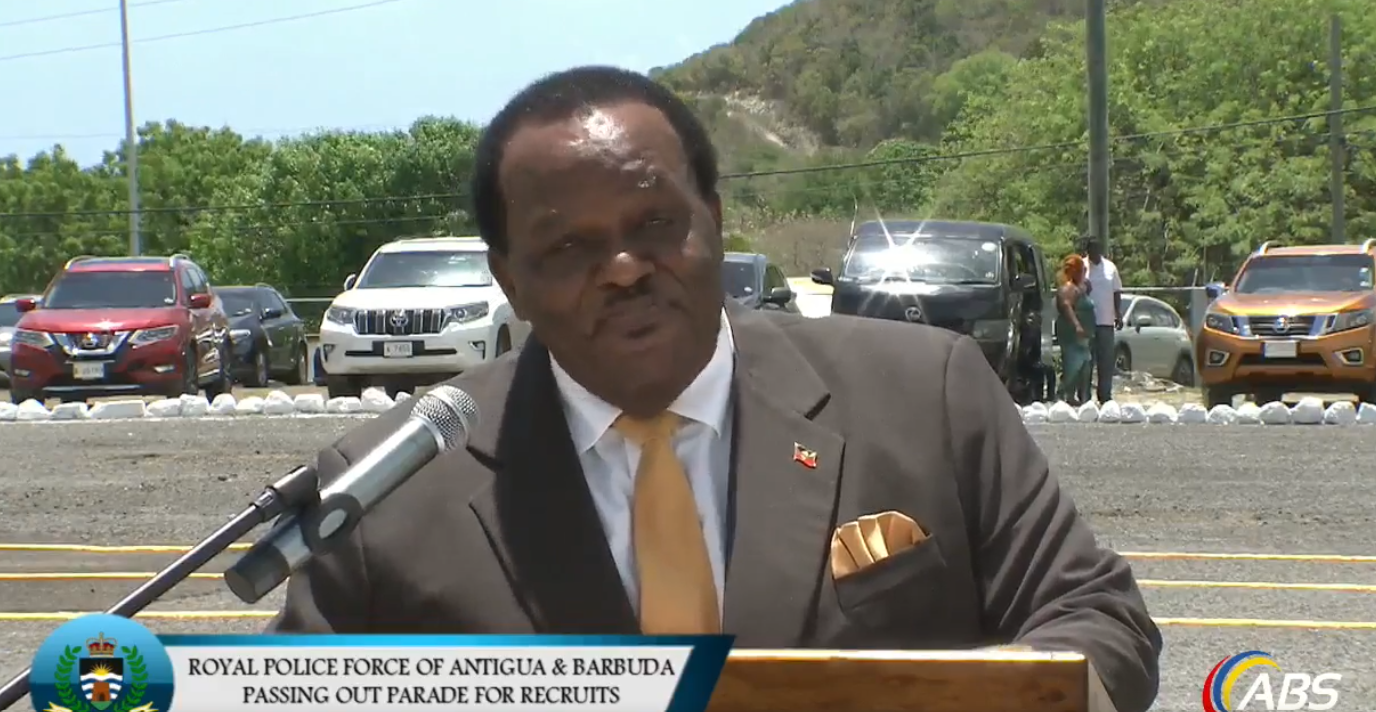
    In a significant announcement made during a landmark police graduation event, Attorney General Sir Steadroy Benjamin has formally committed the government of Antigua and Barbuda to upgrading insurance coverage and welfare benefits for the nation’s police force. Speaking as the keynote speaker at the 50th recruit graduation ceremony of the Royal Police Force of Antigua and Barbuda on Thursday, Benjamin outlined that the state carries a core obligation to safeguard the women and men who put their lives at risk daily to protect public safety.

    Benjamin stressed that policing stands among the most high-stress, dangerous professions across the country. Serving officers and their families should never be forced to face uncertainty about financial security if a line-of-duty tragedy leaves an officer injured or killed, he added. Right now, government officials are conducting a comprehensive review of existing policies, with the explicit goal of rolling out expanded insurance coverage for on-the-job injuries and more robust welfare support packages for the families of fallen or disabled officers.

    “Law enforcement officers regularly step into harm’s way to keep our communities safe, and they are fully deserving of ironclad guarantees that the state will stand by them and their loved ones when they need it most,” Benjamin told the gathered crowd of new graduates, senior police officials and government guests. He added that meaningful investment in officer welfare goes far beyond base salaries and upgraded equipment. It requires building a holistic support system that properly acknowledges the enormous personal and professional sacrifices that police officers and their families make in service to the nation.

    Beyond welfare commitments, Benjamin also highlighted the government’s broader ongoing investment in national security. He detailed that multiple initiatives are already underway to modernize the country’s police force, including the adoption of new policing technologies, expanded professional training programs for officers at all ranks, and upgrades to critical police infrastructure across the islands.

    Speaking directly to the 50 newly graduated recruits, the Attorney General urged the incoming class of officers to uphold the highest standards of integrity, professionalism, and compassion throughout their careers. He reminded the new officers that public trust in law enforcement depends not just on successful enforcement of the law, but also on how officers interact with and serve the communities they protect.

    Closing his address, Benjamin framed the new welfare commitments as a core part of the government’s broader national security strategy. Sustainable national development, he argued, relies on a professional, well-resourced police service that is prepared to address the growing complexity of 21st century security challenges. By supporting officers properly, the government is laying the groundwork for a safer, more prosperous future for all Antigua and Barbuda residents.

  • Forecasters Track Tropical Wave in Eastern Atlantic

    Forecasters Track Tropical Wave in Eastern Atlantic

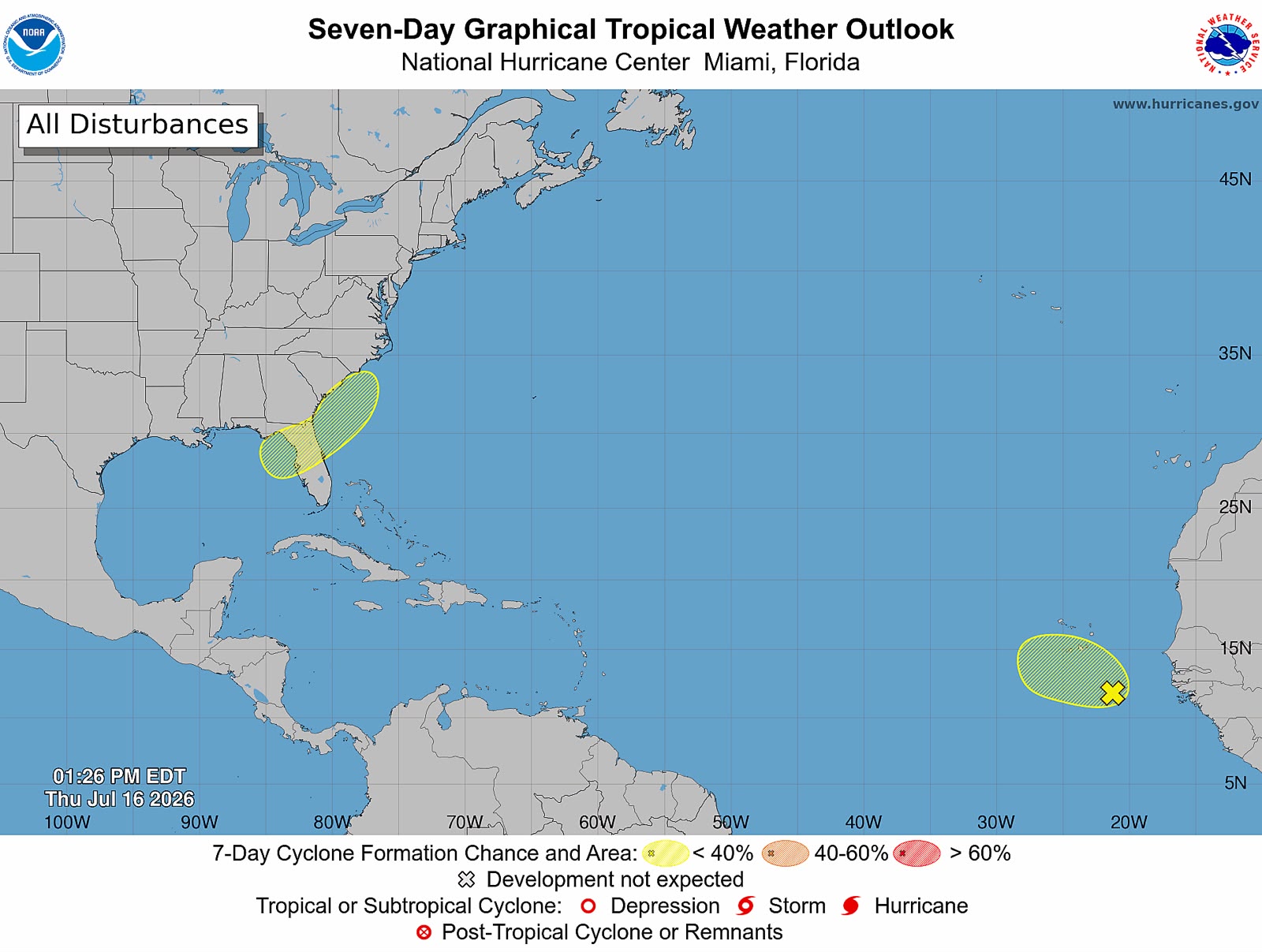
    Meteorologists at the U.S. National Hurricane Center are keeping a close watch on an emerging tropical disturbance in the extreme eastern Atlantic Ocean, though current projections indicate the system will remain weak throughout its projected west-northwest track away from the African coastline.

    Located several hundred miles southeast of the Cabo Verde Islands, the disturbance currently generates scattered, unstructured showers and thunderstorm activity across the surrounding waters. While forecasters acknowledge that minor, slow strengthening could occur over the next 48 hours, broader atmospheric conditions are expected to degrade significantly by the start of the weekend, putting a firm cap on any potential intensification.

    Tracking west-northwest at a steady speed of roughly 10 miles per hour (equivalent to 16 kilometers per hour), the system carries just a 10% probability of organizing into a tropical depression within both the next two days and the coming seven-day forecast window.

    The primary barrier to development, according to meteorologists, is the system’s expected trajectory through the dry, dust-filled Saharan Air Layer, a mass of arid atmospheric conditions that is well-documented to suppress thunderstorm formation and prevent the organization of tropical cyclones.

    As of the latest update, the disturbance poses no immediate risk to any Caribbean nations, including Antigua and Barbuda, and no adverse weather impacts are forecast for landmasses along its current path across the open Atlantic. Forecasters have confirmed they will continue daily monitoring of the system to track any unexpected changes in structure or intensity.

  • Minister Benjamin Signals Budget Support for New Police Academy

    Minister Benjamin Signals Budget Support for New Police Academy

    Amid growing calls to modernize law enforcement training in Antigua and Barbuda, Minister of Public Safety Sir Steadroy Benjamin has formally committed to placing the construction of a new state-of-the-art police academy on the agenda for this year’s national budget deliberations. The commitment comes in direct response to an urgent appeal from Superintendent Rodney Ellis, commandant of the existing Sir Wright F. George Police Academy, who has long highlighted critical gaps in the country’s current police training infrastructure.

    Speaking immediately after Ellis delivered his appeal for government investment in a purpose-built training facility during the academy’s 50th graduation ceremony, Benjamin confirmed that the request would receive full consideration during budget negotiations. “Commandant, your words didn’t fall on deaf ears,” Benjamin told Ellis during the public event. “As you spoke, I whispered to my private secretary, and she said to me, ‘Minister, we’ve got to make sure that when we have our discussions this year for the budget, provisions remain for the construction of a police complex on this very road.’” He added, “My brother, you have foreseen the future.”

    Ellis’s appeal centered on the reality that Antigua and Barbuda has made substantial public investments in key sectors including healthcare, education, and new police station infrastructure in recent years, but law enforcement training facilities have failed to keep up with the shifting demands of 21st-century policing. In an era where transnational and domestic criminal groups are adopting increasingly sophisticated tactics, Ellis argued that ongoing investment in professional development for officers is not a luxury, but a core requirement for protecting national security.

    Under Ellis’s proposal, the new academy would offer specialized, career-long training across high-priority domains that are currently underserved by existing facilities. These include leadership development for senior officers, updated legal training for frontline personnel, hands-on forensic science coursework, specialized cybercrime investigation training, and education in intelligence-led policing strategies. The plan also proposes building academic partnerships with regional higher education institutions, notably the University of the West Indies Five Islands Campus, to elevate the quality of instruction and accreditation.

    For Benjamin, the proposal carries personal as well as professional weight: the minister launched his own public service career as a member of the Royal Police Force of Antigua and Barbuda, giving him a firsthand understanding of the needs of serving officers. “Whenever I address this body, there’s a sense of oneness with me because those of you who know me would know that I started my career at the Royal Police Force of Antigua and Barbuda,” he explained.

    The ceremony where the announcement was made marked a major institutional milestone: it celebrated the graduation of the 50th cohort of recruits from the Sir Wright F. George Police Academy, and Benjamin extended formal congratulations to all new officers on achieving the milestone. While Benjamin’s comments signal clear momentum behind the proposal as the government prepares its next budget, no official timeline for construction or specific funding allocation has been released to date.

  • Valedictorian Dante Browne Urges New Police Officers to Wear Badge With Integrity and Compassion

    Valedictorian Dante Browne Urges New Police Officers to Wear Badge With Integrity and Compassion

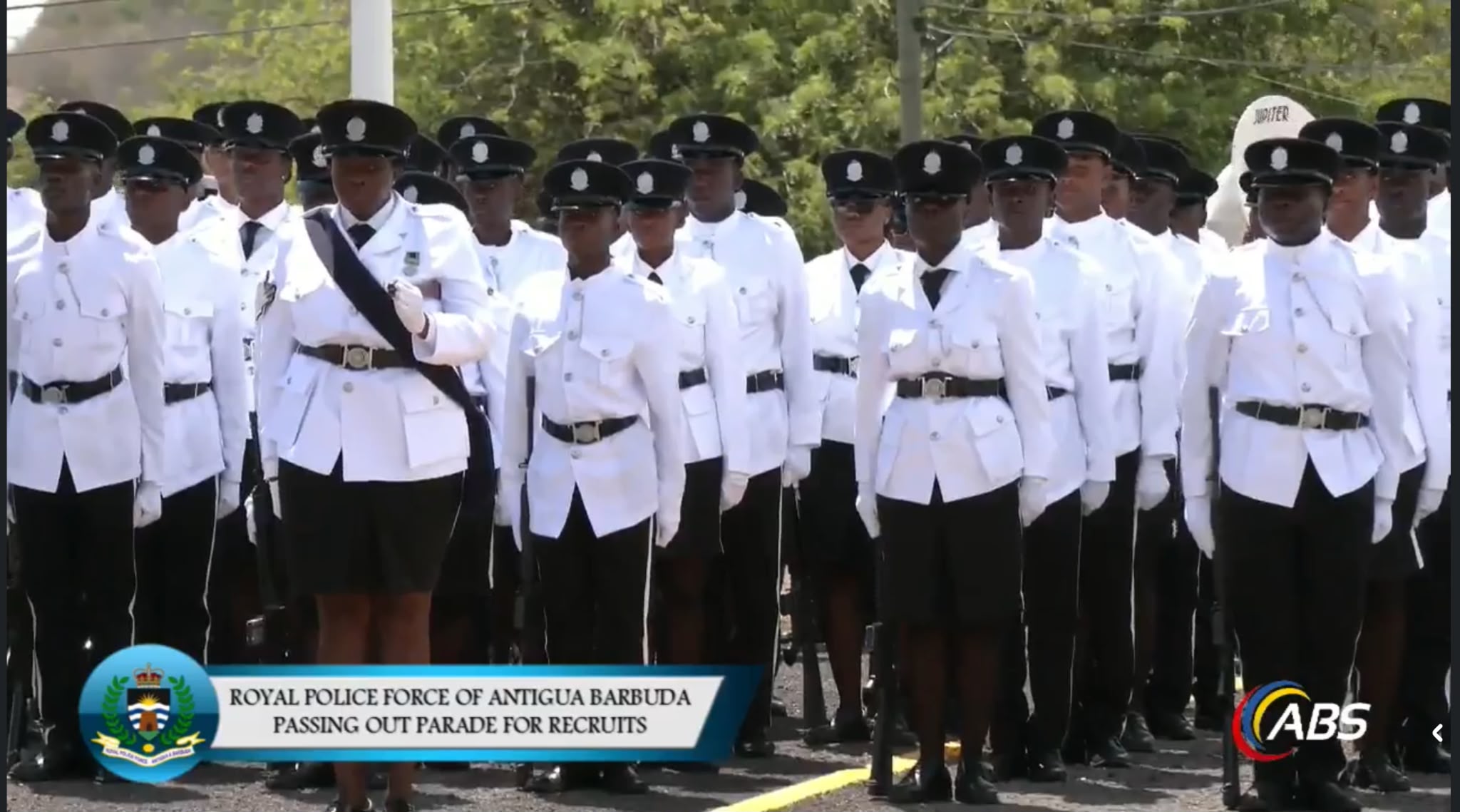
    On a celebratory Thursday at the Sir Wright F. George Police Academy, 43 newly minted officers of the Royal Police Force of Antigua and Barbuda crossed the graduation stage to cap off six months of grueling recruit training, with their class valedictorian issuing a powerful reminder that policing is first and foremost a commitment to public service, not just authority.

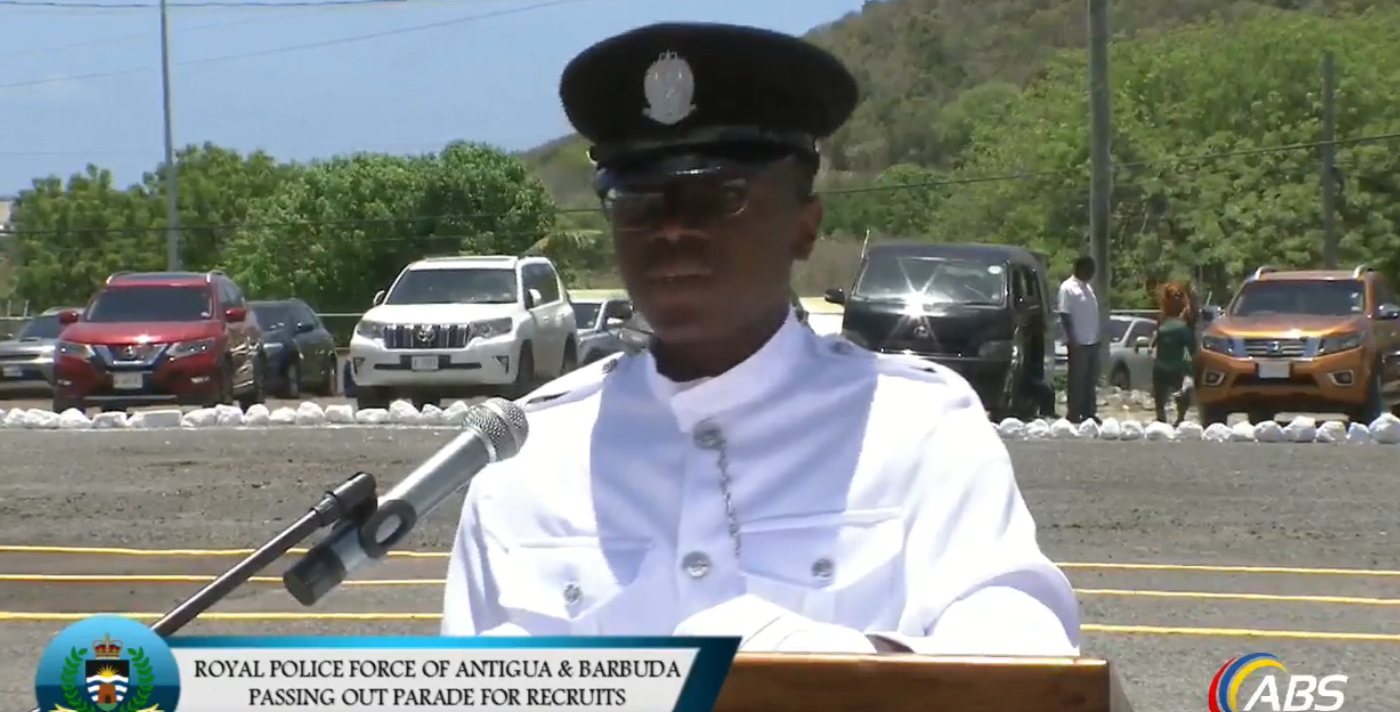
    Special Constable Dante Browne, the top-performing graduate of the force’s 50th Recruit Training Course, delivered the keynote address to his fellow graduates, guests, and police leadership, reflecting on the rigorous journey that turned a group of 54 aspiring trainees into 43 sworn officers ready to serve their communities.

    Browne opened his address by walking the audience through the humble and humbling start of the cohort’s training. When the group first arrived at the academy, most arrived confident they understood the demands of a policing career, he recalled. That illusion shattered quickly, with the first harsh command from training instructors pushing recruits into unexpected physical exertion that left many questioning their choice to join the force. He quipped that many recruits experienced the physical strain in unflattering, unforgettable ways that drew laughter from the assembled crowd.

    That early adversity, Browne emphasized, was intentional: it taught the class humility from day one and forced every trainee to confront their core motivations for pursuing a career in law enforcement. Of the 54 recruits who started the program, only 43 completed it — a attrition rate that Browne framed as a story of sacrifice, pain, and relentless perseverance. “That number tells a story — a story of pain, sacrifice and perseverance, a story of mental fortitude, of pushing forward when the body had stopped and the mind whispered doubts,” he said. “But more importantly, it is a story of purpose.”

    Over the six months of training, Browne explained, the cohort built core foundational values that extend far beyond learning to enforce the law. On the parade square, they learned precision and unwavering discipline. Through grueling daily physical training, they built resilience and learned that excuses have no place in public service. In the classroom, they developed the professional judgment needed to serve and protect communities, with instructors emphasizing that policing is at its core a people-centered profession.

    Browne specifically thanked the academy’s training team, singling out Chief Magistrate Nyoh Emmanuel and Senior Sergeant Donald Shackle for reinforcing the academy’s most critical lesson: that law enforcement work is rooted in serving people, not just writing citations or making arrests. He also extended gratitude to Commissioner of Police Everton Jeffers, the entire command staff, academy instructors, and the family members who supported the recruits through the demanding training period, noting that the graduates’ success would not have been possible without the collective sacrifice and encouragement of those around them.

    In his closing challenge to his fellow graduates, Browne reminded the cohort that the badge they now wear carries a meaning far greater than symbolic authority. “As we stand here today, we must remember that the badge we now wear is more than just a symbol of authority. It is a symbol of public trust,” he said.

    While Thursday was reserved for celebration, Browne noted that the real work of serving Antigua and Barbuda begins the moment graduates leave the academy. He urged his classmates to lead with courage when facing difficult situations, hold fast to integrity when their values are tested, and lead with compassion whenever communities need it most. He called on the new officers to support one another, hold each other accountable to the high standards of the force, and serve with unwavering honor.

    “Service is not about convenience, it is about commitment,” he said. Closing with a rallying cry for public service, Browne emphasized that nations are built not by those who take the easy path, but by those who answer the call to serve even when it requires great personal sacrifice. “When duty calls, it is not comfort that responds. It is courage, discipline and an unshakable commitment to protect and serve,” he said.

  • Royal Police Force of Antigua and Barbuda Welcomes 45 New Officers

    Royal Police Force of Antigua and Barbuda Welcomes 45 New Officers

    In a landmark ceremony marking a decades-long legacy of law enforcement training, 43 newly minted officers were formally sworn into the Royal Police Force of Antigua and Barbuda this Thursday, following the successful completion of the force’s 50th Recruit Training Course. The graduation, hosted at the Sir Wright F. George Police Academy, carried extraordinary historical weight: it comes 56 years after formal standardized recruit training was first established in the country in 1967, making this cohort a milestone for the institution. “This course is far more than just another annual graduating class,” Police Academy Commandant Superintendent Rodney Ellis emphasized in his official address. “It stands as a defining milestone in the history of recruit training for the Royal Police Force, and symbolizes generations of commitment, sacrifice, discipline, and selfless service to the people of our nation.”

    Drawing on a familiar cricket analogy to frame the academy’s 56-year evolution, Ellis noted that Sir Wright F. George, the academy’s namesake, “opened the batting” by laying the foundational framework for professional police training in Antigua and Barbuda, with every subsequent commandant building on that foundation to strengthen the institution over the decades. Ellis also highlighted a notable tradition among the academy’s leadership: the five most recent commandants have all risen to the roles of Commissioner or Deputy Commissioner of Police for the force.

    When Ellis was tapped to lead this historic 50th course earlier this year, he said he turned to faith for guidance, adopting the biblical verse Proverbs 22:6 — “Train up a child in the way he should go” — as the core guiding principle for the intensive six-month training program. “When the commissioner called me in late January to tell me I would take charge of this milestone course, I prayed to Almighty God for wisdom, strength, and guidance to lead this training to success,” he explained.

    The program began with an incoming cohort of 54 special constables, 32 men and 22 women, all seeking to transition into roles as full-time regular police officers. From their very first day on campus, recruits were pushed to their physical, mental, and emotional limits through a demanding mix of grueling physical fitness training and rigorous classroom instruction. “For many of these recruits, this level of intensity was completely unlike anything they had ever experienced before,” Ellis said. “The first few weeks tested every part of who they are.”

    The rigor of the program led to some attrition: one female recruit and one male recruit stepped down for medical reasons, two candidates had their contracts terminated over disciplinary issues, and two others resigned for personal reasons. But those who persisted showcased remarkable resilience and dedication throughout the entire six months, Ellis noted.

    Graduating officers completed 11 core training modules covering critical policing topics including departmental administration, general patrol practices, professional and personal development, the national criminal justice system, local and national laws, tactical response skills, traffic management and road safety, crime pattern analysis, criminal investigation procedures, and hands-on field training. In a unique addition tailored to the nation’s tourism-focused economy, the academy also prioritized public customer service training, with specialists from the Ministry of Tourism leading sessions on respectful, effective community and visitor engagement.

    In the end, 43 recruits met the program’s required passing threshold of 350 points out of a maximum 500, delivering an impressive overall pass rate of 95.6 percent — a result Ellis calls a testament to both the recruits’ relentless hard work and the unwavering dedication of the academy’s instructional staff. “This graduating class has demonstrated consistent competence across every single training domain, and I have full confidence in their ability to serve and protect this nation,” Ellis said. “I can assure the commissioner, the government, and the people of Antigua and Barbuda that the Royal Police Force is moving in the right direction, preparing capable officers to safeguard our communities.”

    Ellis saved special recognition for the academy’s instructors, praising their ability to produce an exceptional cohort even while operating with limited institutional resources. “Despite constrained resources, you stayed committed, professional, and resilient, and your dedication has given our nation an outstanding group of new police officers,” he said. “No amount of praise can match the effort you put in.”

    Speaking directly to the graduating officers, Ellis reminded them that their long-term success in policing will not be measured by their exam scores or physical training results, but by the trust and confidence they build with the public they serve. “The public will not remember your examination marks or your physical fitness test results,” he emphasized. “They will remember your integrity. They will remember your professionalism. They will remember how you treat them, every single day you wear the badge.”

    The academy has fulfilled its responsibility, Ellis said, by instilling in the new recruits the core values and professional standards the force demands. Now, it falls to the officers to carry forward those principles throughout their entire careers. “We have done our part by training you according to the values and standards of the Royal Police Force of Antigua and Barbuda,” he said. “Now it is your responsibility to uphold those standards, day in and day out.”

    Closing his address, Ellis quoted former British Prime Minister Winston Churchill to encourage the new officers to persist through the inevitable challenges of law enforcement work: “‘Success is not final, failure is not fatal; it is the courage to continue that counts.’” He ended by extending his best wishes to every graduate as they embark on their new careers serving the people of Antigua and Barbuda.