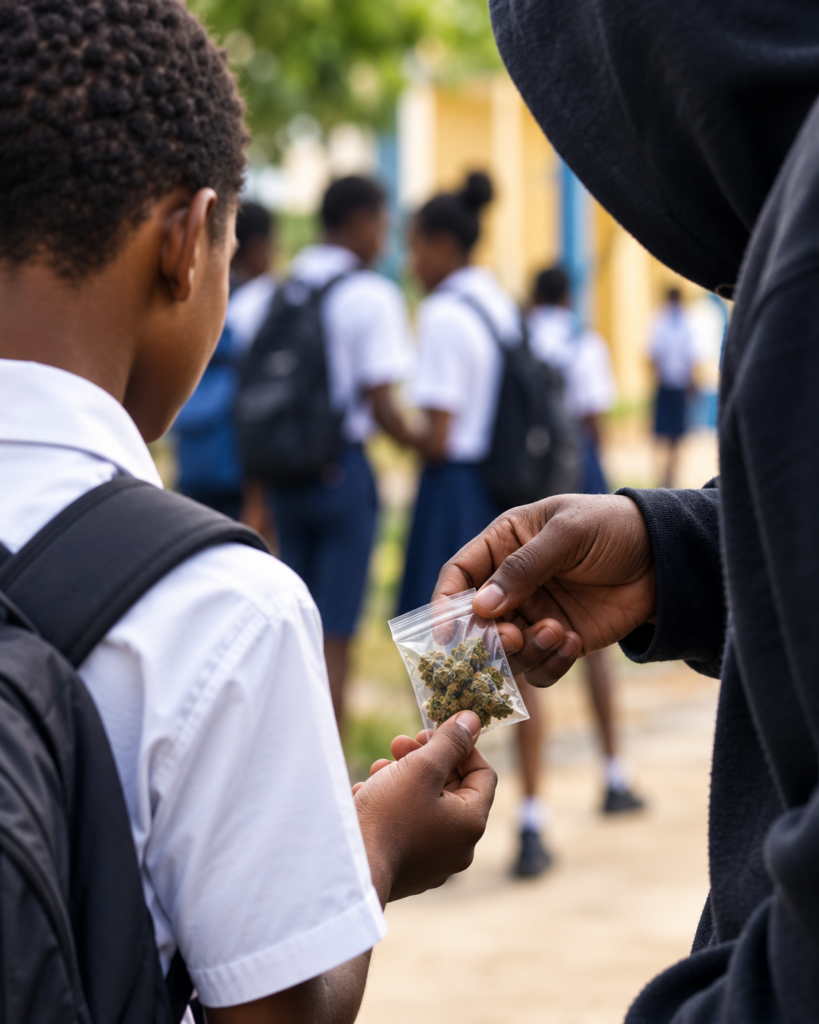
A concerned local resident of Antigua and Barbuda has submitted an open letter to the nation’s government, sounding the alarm over the expanding public safety risk created by drug dealers who target underage students and teenagers with marijuana sales. In the letter, the writer is pushing for legislative adjustments that would introduce significantly harsher legal penalties for offenders who knowingly supply cannabis to minors. The writer emphasized that childhood and adolescence represent an irreplaceable, critical developmental window for all young people, where physical, emotional and cognitive growth lays the foundation for lifelong success. Early exposure to illicit drugs, the letter argues, inflicts lasting harm that goes far beyond immediate consequences: it erodes young people’s capacity to focus in school, impairs their ability to make informed, responsible decisions, and blocks them from reaching their full personal and professional potential. Long-term risks linked to underage marijuana use include higher rates of chronic addiction, plummeting academic performance, a greater likelihood of developing severe mental health conditions, and an increased chance of engaging in criminal activity well into adulthood. Unlike drug transactions between consenting adults, the sale of marijuana to minors is not a mere violation of drug laws, the writer contends. It is a predatory act that exploits the developmental vulnerability of young people, who often lack the life experience to fully grasp the long-term damage of substance use. This exploitative behavior does not only harm individual children—it puts entire families, schools and local communities at risk, and undermines the tireless work of parents, educators and youth organizations that dedicate themselves to guiding young people toward healthy, productive futures. Enforcing stricter penalties for this specific crime, the letter argues, would achieve two key goals. First, it would send an unambiguous public message that the Antigua and Barbuda government prioritizes the protection of children and the security of the nation’s long-term future. Second, harsher consequences would act as a powerful deterrent, discouraging dealers from targeting vulnerable young people for quick profit. The writer also stressed that tough enforcement alone is not enough to address the issue. Alongside stronger legal penalties, the resident is calling for sustained government investment in evidence-based drug education, community-level prevention programs, accessible youth counseling services, and local outreach initiatives that connect at-risk young people with support. A balanced, multi-pronged strategy that combines deterrence with prevention and rehabilitation, the letter argues, would let Antigua and Barbuda both protect current generations of young people and tackle the underlying root causes of underage drug use. Closing the letter, the writer reaffirmed that the nation’s youth are entitled to safe, supportive environments where they can learn, grow and chase their goals without being targeted by actors who profit from their inexperience and vulnerability. The resident formally urged the government to open a review of existing drug legislation and advance new measures that impose stricter punishments on anyone convicted of selling marijuana to school-aged children and teens. The letter closes with gratitude for the government’s ongoing work to advance the well-being of all Antigua and Barbuda residents, and a request for urgent consideration of this critical public safety issue.