标签: Antigua and Barbuda

安提瓜和巴布达

  • Magnitude 3.2 Earthquake Reported Near Dominica

    Magnitude 3.2 Earthquake Reported Near Dominica

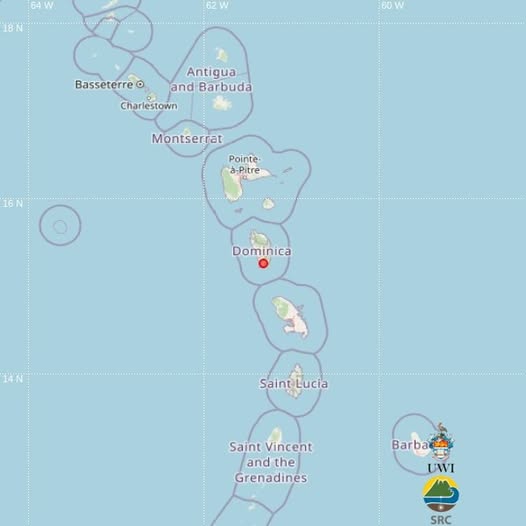
    A light magnitude 3.2 earthquake shook areas near the Caribbean island nation of Dominica in the early hours of Friday, July 17, regional seismic monitors have confirmed. According to the University of the West Indies Seismic Research Centre (UWI SRC), the tremor hit at 4:51 a.m. local time, which translates to 08:51 UTC, with its epicenter tracked to coordinates 15.26°N latitude and 61.33°W longitude. The geological event originated at a particularly shallow depth of just 5 kilometers below the Earth’s surface.

    Due to the quake’s proximity to populated areas and shallow subsurface origin, the tremor was detectable and felt by local residents. UWI SRC confirms that seismic technicians manually reviewed the event data to verify its location, magnitude, and depth before issuing the public notice. As of the latest updates from local authorities, there have been no immediate reports of structural damage, injuries, or casualties connected to the earthquake.

    In a public call for citizen science participation, the UWI SRC is urging all Dominicans who felt the shaking to submit their personal observations via the center’s official felt report system. This crowdsourced data plays a critical role in helping seismologists refine their understanding of how the earthquake propagated through local geology and what impacts it had across different communities.

    Geographically, Dominica sits within the highly seismically active eastern Caribbean zone, a region shaped by the constant movement and interaction of tectonic plates beneath the Atlantic Ocean and Caribbean Sea. This tectonic activity makes small, light earthquake events relatively common along the island chain, with most posing minimal risk to infrastructure or public safety.

  • Regional Officers Complete Close Protection Training in Antigua Ahead of CHOGM

    Regional Officers Complete Close Protection Training in Antigua Ahead of CHOGM

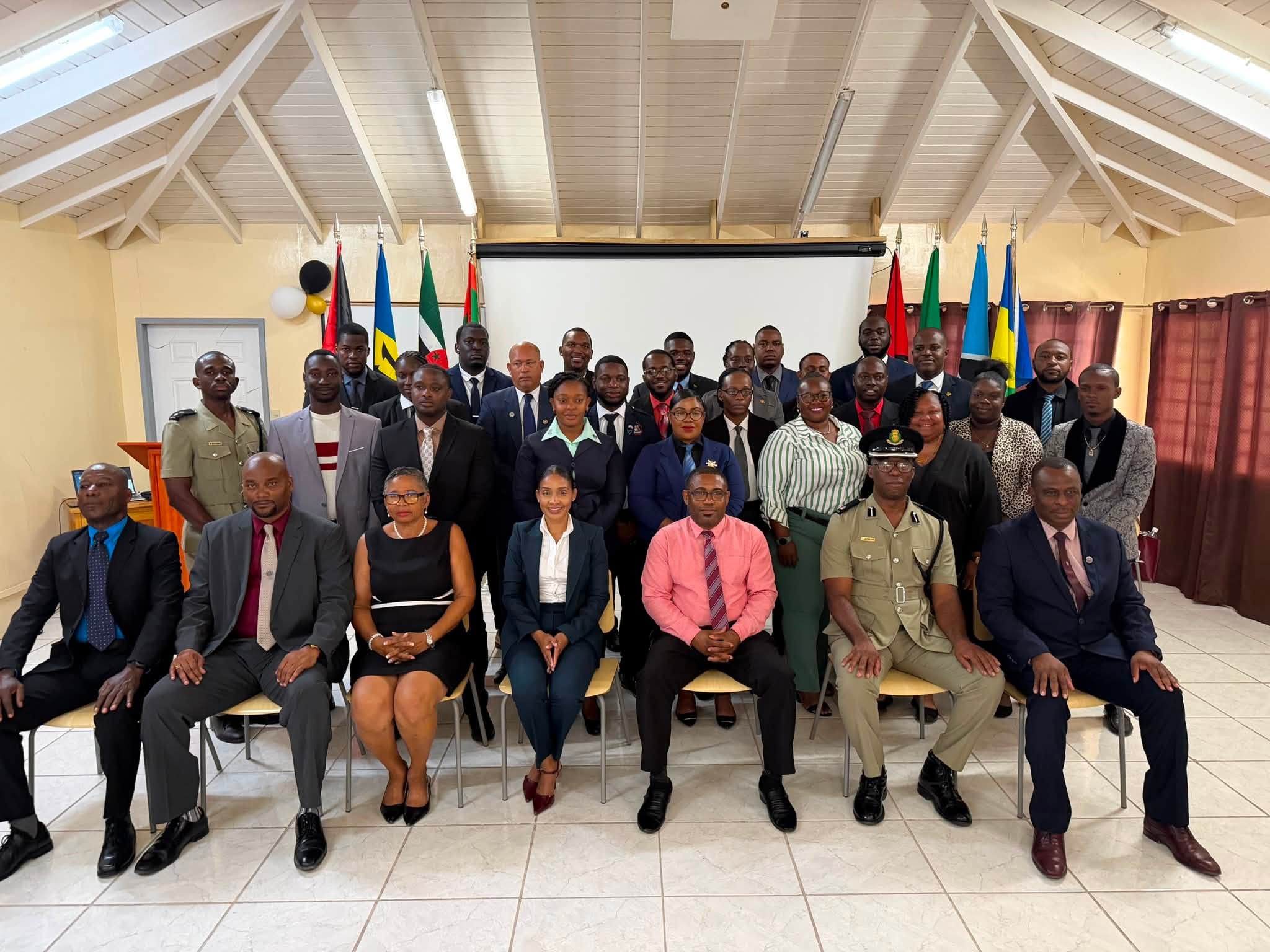
    A cohort of cross-agency and regional law enforcement personnel has wrapped up a rigorous two-week Close Protection Officer (CPO) training course hosted at the Sir Wright F. George Police Academy, marking a key milestone in security preparations for the upcoming Commonwealth Heads of Government Meeting (CHOGM) and other high-stakes national events across the region. The training initiative was developed and delivered in close partnership with the Regional Security System (RSS), a regional security coordination body that supports Caribbean nations in addressing shared public safety and security challenges. Unlike standard local training programs, this course brought together a diverse group of security professionals from multiple jurisdictions and agencies, blending local expertise with regional experience to standardize best practices for close protection operations. Participants included officers from Antigua and Barbuda’s core security agencies: the Royal Police Force of Antigua and Barbuda, the national Immigration Department, and the Customs Department. They were joined by law enforcement personnel from six other Caribbean nations: Dominica, Grenada, Guyana, St. Kitts and Nevis, Saint Lucia, and St. Vincent and the Grenadines, creating a collaborative learning environment that crossed national borders. Over the 14-day intensive program, attendees built on their existing security knowledge and refined hands-on practical skills critical to elite close protection work. Trainees covered core competencies ranging from threat assessment and route planning to emergency response protocols, all tailored to the specific security demands of protecting high-profile dignitaries and other at-risk protected persons during large international summits. Beyond technical skill building, the course delivered a secondary, equally important benefit: it deepened established regional partnerships and fostered closer working relationships between security agencies across the Caribbean. By training side-by-side, officers from different nations built personal connections and aligned on operational protocols that will streamline cooperation during cross-border security operations for major events. In a formal statement following the course’s conclusion, the Royal Police Force of Antigua and Barbuda issued a public expression of gratitude to the RSS for its partnership in developing and delivering the program, as well as to the participating instructors and all attending officers for their dedication to raising regional security standards. “Together, we continue to build a safer and more secure Caribbean,” the force emphasized in its closing statement, underlining the shared regional commitment to proactively preparing for major events and addressing evolving security challenges across the bloc.

  • “St. Kitts and Nevis Will Not Be Exposed To Criminals” – Prime Minister Drew

    “St. Kitts and Nevis Will Not Be Exposed To Criminals” – Prime Minister Drew

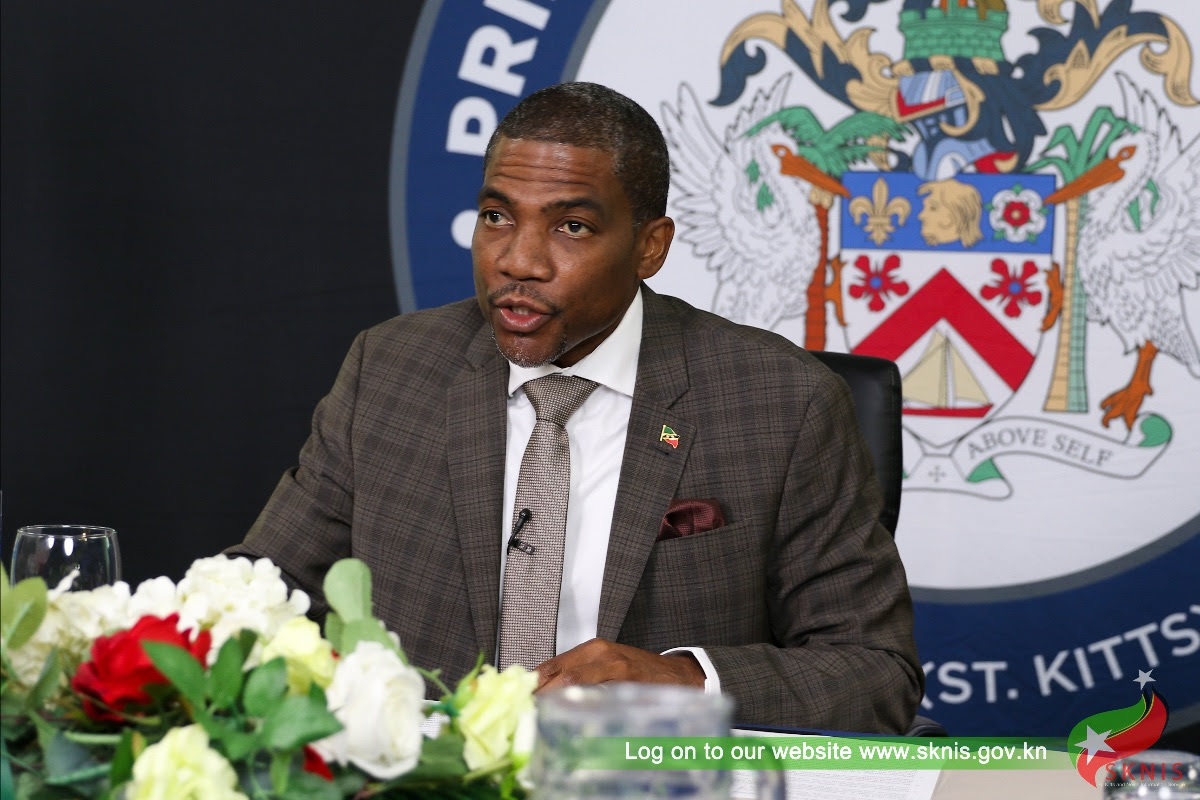
    St. Kitts and Nevis Prime Minister Dr. Terrance Drew has moved to ease public anxiety over the country’s bilateral migration cooperation arrangement with the United States, emphasizing that rigorous multi-layered screening protocols are in place to block any individuals with criminal backgrounds from entering the federation.

    The Prime Minister addressed widespread public questions about the transfer program during his monthly Prime Minister’s Round Table briefing held July 16, clarifying key details of the agreement that applies to all Caribbean Community (CARICOM) member state nationals. He stressed that St. Kitts and Nevis retains full, unilateral authority to reject any individual who fails to meet the country’s strict national security requirements, upholding the small island nation’s sovereign decision-making power over its borders.

    Dr. Drew confirmed that earlier this year, the federal government finalized arrangements to accept three CARICOM nationals being transferred from U.S. custody, a transfer first formally announced by the government in May 2026. He pushed back against circulating public speculation that the transferred individuals had been convicted of crimes, explaining that their removal from the U.S. was tied exclusively to civil immigration violations, not criminal convictions.

    Before any transfer is approved, every individual undergoes a full, multi-agency assessment covering criminal background checks, immigration eligibility, medical screenings and national security vetting, the Prime Minister explained. U.S. authorities share all available biographical, medical and criminal history data with St. Kitts and Nevis’ national security, immigration and law enforcement teams ahead of any planned transfer, to allow for a full review. The existing memorandum of understanding governing the arrangement explicitly prohibits the transfer of any individual convicted of violent felonies or sexual offenses, eliminating the risk of such individuals entering the country.

    “These are not criminals. We have no reason to lock them up or anything like that,” Dr. Drew told attendees of the briefing. He added that if post-transfer information emerges that shows an individual does not meet the agreement’s eligibility terms, the federal government is prepared to take immediate and appropriate action to protect public safety. “There will be measures taken to ensure that St. Kitts and Nevis is not exposed to any criminals,” he reaffirmed.

    The Prime Minister also noted that the International Organization for Migration (IOM) has played a key independent role in the transfer process, providing third-party oversight to confirm all proceedings align with international law, global humanitarian standards and protections for the human rights of transferred individuals.

    On the topic of program costs, Dr. Drew clarified that all expenses related to transferred individuals – including housing, food, clothing, healthcare and other basic essential needs – are covered outside of the St. Kitts and Nevis government budget. “I can say broadly that one, it didn’t cost St. Kitts and Nevis one cent, and two, we made sure that the basics were covered for these people,” he said. Cost assessments are conducted on a case-by-case basis to account for varying individual needs.

    Dr. Drew framed the transfer program as a measured effort to balance the country’s international and regional cooperation obligations with its core legal duty to protect the domestic security and national interests of St. Kitts and Nevis. He closed by offering a public assurance that the government will maintain full transparency around the arrangement, and will continue to apply the same strict immigration, security and law enforcement procedures to every individual considered for transfer under the bilateral agreement.

  • Cricket legend Sir Garfield Sobers dies at 89

    Cricket legend Sir Garfield Sobers dies at 89

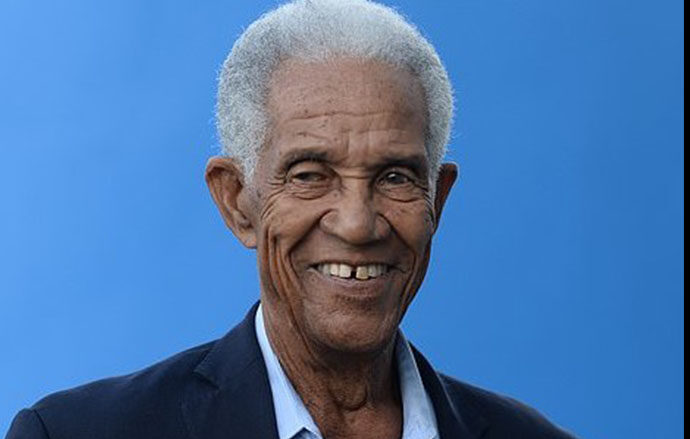
    The global cricket community is mourning the loss of one of its most iconic figures, as news confirms that Sir Garfield Sobers, the National Hero of Barbados widely celebrated as the greatest cricketer in history, has passed away at his residence at the age of 89 after a prolonged battle with illness. Reliable sources close to the matter shared with Barbados TODAY that the legendary all-rounder drew his final breath shortly after 9 a.m. local time on Friday.

    Sobers’ decorated international career spanned two decades, from 1954 to 1974, where he represented the West Indies cricket team at the highest level of the sport. One of his most enduring records came in 1958, when he scored an unbeaten 365 runs against Pakistan in a Test match – a mark that stood as the highest individual score in Test cricket for more than 36 years. Across his 93 Test matches, Sobers delivered extraordinary all-round performance, amassing a total of 8,032 runs at an impressive average of 57.78, while also claiming 235 wickets with an average of 34.03, cementing his status as one of the sport’s most complete players.

    Beyond his Test achievements, Sobers made cricket history in 1968, during his tenure as captain of English county side Nottinghamshire. Facing Glamorgan in a first-class fixture, he became the first batsman ever to hit six consecutive sixes from a single over, a feat that remains one of the most celebrated moments in cricket folklore. After retiring from international cricket in 1974, Sobers received one of the highest honors in the British honors system when he was knighted by Queen Elizabeth II in 1975 in recognition of his transformative contributions to global cricket.

    Tributes are expected to pour in from across the world in the coming days, as cricket fans, current players, and sporting institutions honor the legacy of a man who redefined what was possible on the cricket field and inspired generations of athletes.

  • JetBlue to End Antigua Service in October as Airline Reshapes Network

    JetBlue to End Antigua Service in October as Airline Reshapes Network

    U.S.-based low-cost carrier JetBlue Airways is set to cease all operations to Antigua and Barbuda by the end of 2026, marking a complete exit from the Caribbean destination as part of a strategic network reallocation to grow its Fort Lauderdale, Florida hub, multiple aviation industry publications have reported.

    Per internal company correspondence first obtained by aviation outlet The Points Guy, the airline’s final scheduled flights connecting the U.S. to V.C. Bird International Airport will depart and arrive on October 31, 2026. After that date, JetBlue will permanently stop serving the destination. This move is not an isolated cut, but a core component of the carrier’s broader JetForward business strategy, which centers on boosting long-term profitability and cementing JetBlue’s market position in its highest-priority geographic hubs.

    Industry outlet Aviation Week independently confirmed that the Antigua route is among several underperforming or low-priority destinations being cut to free up aircraft and crew resources. While JetBlue has not released a formal public statement specifically addressing its withdrawal from Antigua and Barbuda, the airline has verified its broader network restructuring plans to U.S. aviation media. A check of the carrier’s online booking system also shows no available reservations for Antigua flights after October 31, 2026, aligning with the details of the leaked internal memo.

    Per reporting from The Points Guy, customers who have already booked tickets for travel beyond the exit date will be contacted directly by JetBlue. The airline will offer either rebooking on alternative carriers or full refunds for the canceled reservations.

    JetBlue first entered the Antigua market in 2015, as part of a wider push to expand its Caribbean route network. For nearly a decade, it operated primarily nonstop service between New York’s John F. Kennedy International Airport and V.C. Bird International Airport, bringing additional competition to the U.S.-Antigua travel market. JetBlue’s exit will reduce choice for consumers and tighten competition on routes connecting the Caribbean nation to the United States. At this stage, it remains unclear whether other airlines operating in the region will step in to add extra capacity to fill the gap left by JetBlue’s departure.

  • Antigua Naval Dockyard Celebrates 10 Years of UNESCO World Heritage Inscription

    Antigua Naval Dockyard Celebrates 10 Years of UNESCO World Heritage Inscription

    On July 16, 2026, Antigua and Barbuda’s National Parks Authority (NPA) gathered to mark a landmark decade: 10 years since the Antigua Naval Dockyard and Related Archaeological Sites earned a coveted spot on the UNESCO World Heritage List. Originally inscribed at the 40th session of the UNESCO World Heritage Committee held in Istanbul, Turkey, on July 16, 2016, this 10-year milestone brings a decade of global recognition for one of the Caribbean’s most culturally significant landscapes.

    This anniversary arrives on the heels of two other momentous milestones for the region’s heritage sector: the NPA celebrated its 40th year since formal establishment in December 2024, and the dockyard itself will mark its 300th founding anniversary in September 2025. Collectively, these overlapping celebrations honor a site whose layered history stretches across three full centuries.

    Founded in 1725, the Antigua Naval Dockyard stands as a defining example of Georgian naval architecture adapted to the unique tropical conditions of the Caribbean. For nearly 200 years, it functioned as a strategic hub of maritime power, military engineering, and imperial strategy. But beyond narratives of empire and conflict, the site also bears powerful witness to the labor, ingenuity, and resilience of both free and enslaved African people, whose work carved the landscape and built the structures that survive to this day.

    After the Royal Navy withdrew from the base in 1899, the dockyard entered a new phase of transformation. Locally-led conservation efforts by the Friends of English Harbour, paired with the rapid growth of the Caribbean yachting industry in the 1960s, turned the once-abandoned naval outpost into a thriving global heritage destination. In 1984, the government of Antigua and Barbuda formally established Nelson’s Dockyard National Park and created the National Parks Authority to steward a 16-square-mile interconnected network of terrestrial and marine habitats stretching from Mamora Bay to Carlisle Bay.

    Over the past four decades, the NPA has grown into one of the Caribbean’s leading heritage management institutions. Its mandate has expanded far beyond basic maintenance of historic structures, now encompassing archaeological research, environmental conservation, sustainable tourism development, public education, and deep community engagement. Signature restoration projects, including the full rehabilitation of Clarence House and structural stabilization work at the Blockhouse Military Complex, demonstrate the organization’s commitment to preserving the site’s historic authenticity while keeping heritage assets accessible and active for modern visitors. All projects are led by skilled local craftspeople, reflecting the NPA’s investment in local capacity, community partnership, and the core belief that heritage conservation acts as a catalyst for inclusive socio-economic growth.

    The 2016 UNESCO inscription formally recognized the site’s Outstanding Universal Value as an exceptional example of 18th and 19th-century British naval infrastructure, and as a living cultural landscape that weaves together histories of naval innovation and the lived experiences of the free and enslaved people who built the dockyard. In the 10 years since that designation, the NPA has expanded its stewardship work to address pressing modern challenges, including climate change adaptation, disaster risk reduction, full archaeological documentation, long-term sustainable development planning, and enhanced visitor experiences that center local narratives.

    Community-focused initiatives, such as the 8th of March Project, have reshaped how the site’s history is shared, placing local voices, ancestral traditions, and lived experiences at the core of its public narrative. This shift ensures the dockyard is recognized not just as a collection of historic stone structures, but as a site shaped by the people whose stories continue to give it meaning today.

    “Today, the National Park is far more than a monument to the past. It is a living heritage landscape where history, culture, nature, commerce, and community coexist,” explained NPA Parks Commissioner Ann Marie Martin. “It remains an engine of sustainable tourism, a center for research and education, and a source of national pride and identity.”

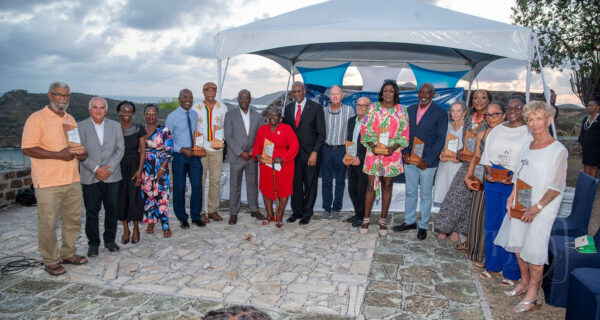
    During the July 16 anniversary ceremony, held under the official theme “A Decade Celebrating Centuries,” the NPA honored 12 individual contributors and community groups whose longstanding dedication has been critical to the site’s success. Recognized honorees included Franklyn Braithwaite MBE, GOH, OLY, Jean Weste, Paul Deeth, Elizabeth Jordan, Althea Joseph, Karl James MBE, Jennifer Byerley Bentley, Capewell William Greene II, Louise Edwards, Marinus Smith, Leslie Roberts, and the Shirley Heights Lookout community group.

    Honourable E.P. Chet Greene, the cabinet minister responsible for the National Parks Authority, used the occasion to issue a renewed call for collective commitment to heritage stewardship. “This cultural landscape is the people’s place, and beyond words, we are committed to ensuring its protection through sound policy and legislation, preserving it for future generations,” Greene said. “We remain dedicated to safeguarding our rich African heritage and ensuring that young people understand, embrace, and value the cultural legacy that surrounds them. The protection of spaces such as this demonstrates the importance of our heritage today and its continued significance for tomorrow.”

    As Antigua and Barbuda marks 10 years of UNESCO World Heritage status for the dockyard, the milestone is both a celebration of decades of progress and a renewed pledge to protect the site for future generations. Heritage conservation is an ongoing responsibility that demands ongoing innovation, cross-sector collaboration, and adaptive resilience in the face of evolving global challenges from climate change to shifting tourism patterns. The Antigua Naval Dockyard and Related Archaeological Sites belong first to the people of Antigua and Barbuda, and through its UNESCO designation, to the wider world. The National Parks Authority remains steadfast in its mission to protect, preserve, and promote this extraordinary legacy for generations to come.

  • OPINION: Why I Refuse to Remain Quiet

    OPINION: Why I Refuse to Remain Quiet

    Forty-four years after Antigua and Barbuda secured its independence in 1981, a long-time local resident and patriotic citizen has opened up about his deep disappointment with the trajectory of national development, calling out a long list of harmful government policies that have eroded the rights and livelihoods of native-born Antiguans and Barbudans.

    Looking back to the months immediately following independence, the author, Yves R. Ephraim, recalls how government officials visited his fifth-form class to recruit young people to join the national building effort. At that time, severe brain drain was already hollowing out the country’s talent pool, a trend that has only worsened over the decades: today, barely a handful of Ephraim’s former classmates still reside in the twin-island nation. To encourage young people to stay and serve, officials offered full engineering scholarships to students who would commit to working at the Antigua Public Utilities Authority (APUA) and the Public Works Department after graduation. Three of his classmates took the offer, completed their degrees, and went on to hold senior leadership roles in those two public entities.

    Ephraim himself chose a different path. Even as a teenager, he had no interest in public sector work, and turned down the scholarship to pursue his passion for electronics at one of two local private firms that offered specialized training in the field. Despite rejecting public service, he remained deeply committed to the nation he loved. Born the first child of a struggling single mother facing significant economic hardship, he had few opportunities, but he made a vow to stay in his homeland, contribute to its growth, and prove that Antigua and Barbuda’s native talent could compete with the best minds across the globe. For decades, he has persisted through systemic barriers created by bad government policy, holding onto hope that meaningful change would come during his lifetime.

    It was the government’s handling of the COVID-19 pandemic that pushed Ephraim to speak out publicly. It was during this public health crisis that he came to believe the current administration did not value the lives and rights of native Antiguans and Barbudans. He condemns the government’s forced COVID-19 vaccine mandate, which threatened to terminate the employment of public servants who refused to take what he describes as an experimental drug, stripping them of their right to work. In his view, this mandate amounted to a crime against humanity, implemented solely to reach an 80% vaccination target to prop up the country’s key tourism industry—even though the shot never prevented viral transmission, as the government had promised. Ephraim shares a personal example of the harm caused: one of his own employees suffered permanent, life-altering side effects after following the government’s public encouragement to get vaccinated. He argues that the drug caused far more harm than good, and that his greatest fear during the pandemic was not the virus itself, but the government’s seizure of extraordinary powers that eroded basic civil liberties under the guise of public safety.

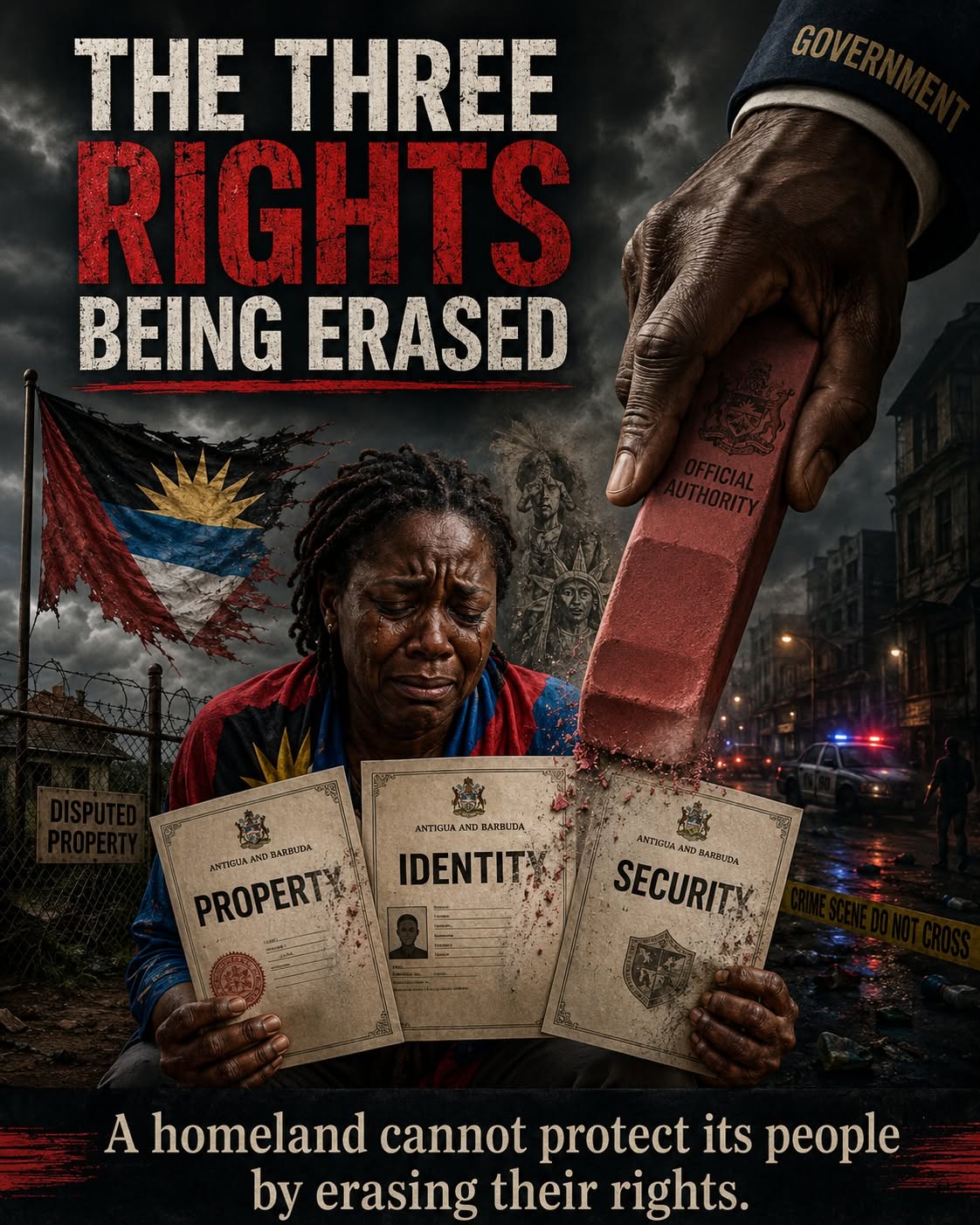
    In the years following the pandemic, Ephraim argues, a string of increasingly harmful government policies have turned the nation into what he calls a “neo-plantation,” stripping native citizens of their national identity, private property rights, and ability to build secure lives in their own homeland. He outlines 15 key grievances against the current administration, ranging from long-running infrastructure failures to dangerous concessions of national sovereignty.

    Among the most serious issues are the degradation of the country’s telecommunications infrastructure after the government confiscated spectrum rights from major providers Digicel and Flow, leaving Antigua and Barbuda with the highest per-bandwidth prices in the entire Caribbean region. He also criticizes the creation of a special economic zone in the country’s northeastern corridor that ceded national sovereignty without including any performance requirements or guarantees of economic benefits for local citizens. On Barbuda, he accuses the government of marginalizing native Barbudans and seizing their communal land to hand over to wealthy foreign investors. National legislation has also been amended to make it far easier for the government to seize private property from citizens, a policy Ephraim describes as unprecedented official theft that has become the administration’s default approach to governance.

    Other long-running failures include the botched response to the country’s chronic water crisis: 14 years ago, the government promised to fix the crisis in just 14 days, and has spent hundreds of millions of dollars to date, only to recently acknowledge that the core problem all along was outdated pipes that needed replacement. The country has also lost visa-free access to the United States for travel and education, a blow that has upended the lives of many Antiguans and Barbudans seeking medical care and academic opportunities, despite previous government assurances this outcome was impossible. Violent crime and petty theft have surged, including an epidemic of car tire theft that authorities have failed to curb, while underfunding has left both the police service and the national justice system unable to function effectively, eroding public trust in institutions.

    Ephraim also condemns the government’s policy of accepting deportees from third countries, a move he says contradicts the national interest and risks long-term destabilization. Most recently, the administration moved within 30 days of winning re-election to make Spanish an official language, and created a special desk in the Prime Minister’s office exclusively for Dominican Republic nationals, a step that formalizes the long-standing marginalization of native Antiguans and Barbudans in their own country. Proposed expansions of the Windfall Tax would hit struggling local businesses and push up prices for working households, effectively erasing any gains from recent minimum wage increases. The government has also made amnesty for undocumented immigrants a top priority, and is now considering using $50 million in unclaimed bank deposits to launch another national airline—after the failure of Antigua Airways—rather than directing the funds to fix the public hospital, boost police resourcing, or roll back the unpopular expanded Windfall Tax.

    As a native-born citizen who has spent his entire life working to contribute to Antigua and Barbuda’s development, Ephraim says he no longer believes the current government is willing to create an enabling environment that protects his core rights: the right to private property, the right to national identity, the right to live safely in his homeland, and the freedom to thrive without unnecessary government interference. Echoing the words of beloved Antiguan artist King Short Shirt, also a native of Ephraim’s home district, he declares: “nobody go run me from whey me come from!”

  • OPINION: The Colour of Our Believing

    OPINION: The Colour of Our Believing

    Modern anti-Black racism is not an inherent, natural force in human society. It was deliberately constructed across the Atlantic world over centuries – and if it was built by human hands and institutions, it can also be dismantled. This opinion piece comes from Professor C. Justin Robinson, Pro Vice-Chancellor and Principal of The UWI Five Islands Campus.

    The 2026 FIFA World Cup has reignited urgent global conversations about race and pigment-based prejudice, and one name has been at the center of that discourse: Vinícius Júnior. The Champions League-winning football star, a global icon whose talent draws the attention of millions of fans worldwide, has been targeted repeatedly with dehumanizing anti-Black abuse across European stadiums. Monkey chants, thrown bananas, and crowds mimicking apes have followed him match after match, a stark reminder that even immense wealth and worldwide fame cannot shield a Black man from systemic anti-Black racism. Across Spain, France, and the core of European football, a dark-skinned athlete at the peak of his career is still reduced to a subhuman caricature by thousands acting on a centuries-old inherited reflex.

    If one of the most visible, privileged Black athletes in the world cannot escape this degradation, Robinson argues, it is impossible to ignore the far worse fate of millions of less visible Black people. That includes the dark-skinned child growing up in a Brazilian favela, the African migrant dying at Europe’s borders, and the Black man targeted by police simply for existing while Black. Millions have no access to Vinícius’s platform, legal resources, or personal fortune; their suffering never makes global headlines, and they remain collateral damage in a system whose rules were written long before they were born.

    Robinson traces his own first encounter with this systemic programming back to his childhood in St Vincent and the Grenadines. As a boy watching global football, athletics, and cricket outside the West Indies, he found himself instinctively drawn to teams with Black players – a feeling that arose spontaneously, without instruction, but was not evidence that race is a biological destiny. Instead, it was solidarity forged by shared history, and the fact that even a child could inherit that reflex proves that skin color has long been weaponized for political and social work. It raises a fundamental question: why does the melanin in a stranger’s skin, thousands of miles away, spark a sense of kinship? Why has color become the most defining fact of identity for so many, across every corner of the globe?

    Biologically speaking, skin pigmentation is one of the most superficial human differences. The vast majority of the human genome is shared across all populations, and variation in melanin is simply an evolutionary adaptation to different levels of ultraviolet radiation: more melanin provides protection in regions with intense sunlight, while less melanin facilitates vitamin D production in sun-scarce areas. In short, skin color is nothing more than a biological sunscreen adjustment, and it tells us nothing meaningful about a person’s intelligence, character, or inherent worth. So how did this minor biological adaptation become a permanent social caste?

    While slavery, conquest, and prejudice against dark-skinned people existed in many ancient societies, European colonial empires created a historically unprecedented system that fused African ancestry, dark skin, hereditary chattel slavery, formal law, Christian theology, global commerce, and later pseudoscience into a massive transatlantic racial hierarchy. Modern, global anti-Black racism is one of the most consequential and shameful legacies the Atlantic West has given the modern world.

    Ancient Greek and Roman societies enslaved outsiders and held harsh prejudices against marginalized groups, but their divisions were based on legal status, citizenship, and culture – not a universal racial caste ranked by skin color. A dark-skinned free citizen could hold higher social standing than a pale enslaved captive; these ancient brutal societies never constructed the modern color line. Similarly, medieval European societies were focused on faith and lineage, not pigment. The so-called “Curse of Ham”, later used to justify African slavery, was a later invention: the Book of Genesis curses Canaan, not Ham, and never mentions Black skin. The association between the curse and dark skin was added centuries later to weaponize scripture for racial exploitation.

    A critical turning point came in 15th-century Iberia, where “purity of blood” laws framed Jewish or Muslim ancestry as an inherited, indelible stain that even conversion could not erase. This development coincided with Portuguese imperial expansion, which turned the capture and trade of African people into a massive Atlantic commercial enterprise. For the first time, religious difference became tied to ancestry, physical appearance, and skin color, laying the groundwork for modern racial hierarchy.

    The decisive legal development of this system happened in the Caribbean. In 1661, the Barbados Assembly passed the first comprehensive English slave code, a coercive regime governing enslaved African people that became the template for slave systems across Jamaica, South Carolina, and the entire Americas. It was crafted by English colonial planters explicitly to maximize plantation profit, not by the people it enslaved. The colony of Virginia later added two foundational refinements that cemented racial chattel: in 1662, the principle of partus sequitur ventrem declared that a child’s enslaved status followed their mother, ensuring that children born to enslaved women were born into bondage, turning enslaved women’s bodies into permanent plantation capital. Then in 1667, colonial law declared that baptism could not grant freedom to an enslaved person, closing the last loophole out of chattel slavery. With these changes, bondage became visible, hereditary, and permanent, with skin color as its immediate identifier.

    As historian Eric Williams famously argued: “Slavery was not born of racism, rather, racism was the consequence of slavery.” Plantation economies required a workforce that could be identified at a glance, whose children could be legally claimed as property, and whose status could not be changed by conversion or personal achievement. Skin color was the perfect marker: it is visible, heritable, and inescapable. Racism became the moral and ideological technology that justified the violent extraction of labor and wealth from Black bodies.

    The Enlightenment later gave this system a veneer of scientific respectability: taxonomist Carl Linnaeus assigned inherent personality traits to different supposed human “races”, and fields like craniometry, ethnology, and eugenics reworked raw prejudice into seemingly objective scientific measurement. Domination was rebranded as scholarly discovery. The United States later became the most powerful architect of this racial order: its 1790 naturalization law restricted citizenship exclusively to “free white persons”, and Jim Crow segregation, one-drop racial classification rules, and racial integrity laws cemented ancestry as a permanent legal fate. Europe built the foundational architecture of the Atlantic racial system, while the U.S. reinforced it through law and embedded it into global mass culture.

    Robinson emphasizes that this historical accounting does not assign collective inherited guilt to every individual European or American. Abolitionist movements emerged in Europe, Black resistance reshaped American society from the civil rights movement to today, and some African rulers and merchants also participated in the slave trade. But responsibility for the system rests with the institutions, powerful interests, and deliberate political choices that built it, not with individual bloodlines, and acknowledging other participants does not erase the central role of colonial states and planter regimes that constructed the system and profited the most from it.

    This history leads to an unavoidable question: what responsibility do modern inheritors of the nations that built this racial system hold today? Robinson draws a clear line between individual guilt and collective obligation: a modern Briton, French person, Spaniard, Portuguese person, or American is not morally guilty of drafting the 1661 Barbados Slave Code, but they are inheritors of the compounded wealth generated by that system. They benefit from economies whose foundational capital was extracted from Black bodies classified as legal property, and from legal and fiscal infrastructures deliberately designed to privilege their ancestors and dispossess Black communities. Only the inheritors of these imperial treasuries have the capacity to repay what their legal systems stole, and to take concrete action to address the ongoing harm that Black people face solely because of their skin color.

    The Caribbean, the region where the modern racial system was first legally codified, does not only hold the legacy of the wound – it also holds the tools to heal it. The Haitian Revolution destroyed the brutal slave regime of Saint-Domingue, and Haiti’s 1804 constitution declared all Haitians would be known by the “generic appellation of Blacks”, reclaimed the oppressive category of race as a marker of collective dignity. Caribbean thinkers including Eric Williams, C. L. R. James, Elsa Goveia, Frantz Fanon, and Sylvia Wynter were the first to explain the machinery of modern race to the world. What began as a laboratory of racial domination also became a global center of emancipatory thought and struggle.

    This legacy demands ongoing work from Caribbean communities themselves: teach the 1661 Barbados Slave Code as core Caribbean and world history, frame the Haitian Revolution as a defining turning point in global human freedom, confront colorism in schools, hiring practices, media, romantic norms, and beauty standards, replace the celebration of colonial planters in public spaces with recognition of maroons, insurgents, Black educators, and Black writers, use racial categories to expose inequality where necessary but never mistake social categories for natural fact, and pair cultural reckoning with demands for material reparations that can finally close the colonial ledger of exploitation.

    At its core, Robinson’s argument is clear: skin color is a natural biological adaptation, but racial hierarchy is a human-made artifact. It was constructed by specific institutions, in specific places, for specific exploitative purposes. This fact is not cause for fatalism – it is proof that the system can be unmade. The boy who instinctively rooted for Black players inherited a historical wound, but also a tradition of collective recognition. The Vinícius Júniors of the world, for all their wealth and fame, inherit that same wound, a reminder that no individual success can outrun systemic racial failure.

    Our collective task is not to pretend we do not see color. It is to see color without mistaking it for an inherent destiny, to remember which powers taught the modern world this harmful mistake, to do our own work of dismantling harmful cultural and institutional structures, and to insist that the nations that built the racial cage contribute to the cost of taking it down. The monkey chants targeting Black athletes will not end with individual therapy or goodwill gestures. They will only end when the global community decides that the cost of perpetuating racism is higher than the cost of finally settling the historical account.
  • Calypso Monarch Finalists Named for Antigua Carnival 2026

    Calypso Monarch Finalists Named for Antigua Carnival 2026

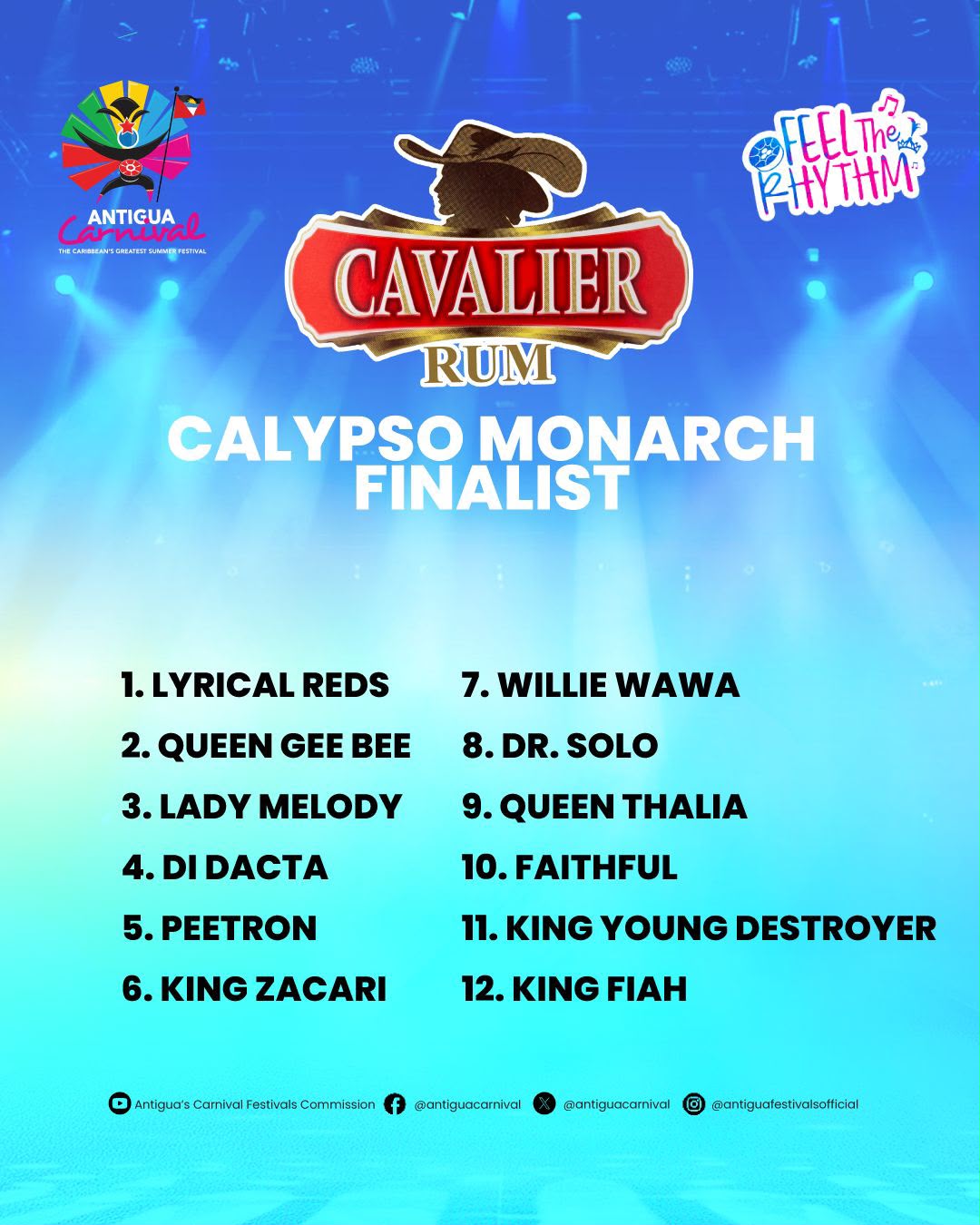
    The Antigua and Barbuda Festivals Commission has officially named the 12 talented competitors who will advance to the highly anticipated 2026 Cavalier Rum Calypso Monarch, a marquee highlight of the annual Antigua Carnival celebration.

    This year’s final lineup brings together a diverse mix of established calypso artists and rising standout performers, including Lyrical Reds, Queen Gee Bee, Lady Melody, Di Dacta, Peetron, King Zacari, Willie Wawa, Dr. Solo, Queen Thalia, Faithful, King Young Destroyer and King Fiah.

    In an official statement following the announcement, the Commission extended warm congratulations to all 12 advancing acts, acknowledging the hard work and creativity that earned each performer a spot in the final round. The commission also shared expectations that the final competition will deliver an unforgettable evening of dynamic, top-tier live performance for attendees.

    As one of the most iconic and beloved signature events of Antigua Carnival, the Calypso Monarch competition holds deep cultural significance for the nation. Unlike general performance contests, the competition centers exclusively on original lyrical compositions, rooted in the centuries-old calypso tradition that weaves sharp social commentary, vivid cultural storytelling, and engaging entertainment into a unique artistic experience.

    When the final winner is crowned, they will take over the prestigious national title from the current reigning monarch, claiming the 2026 Calypso Monarch crown as their own for the coming year.

  • LETTER: The Cost of Bureaucratic Neglect at Wallings

    LETTER: The Cost of Bureaucratic Neglect at Wallings

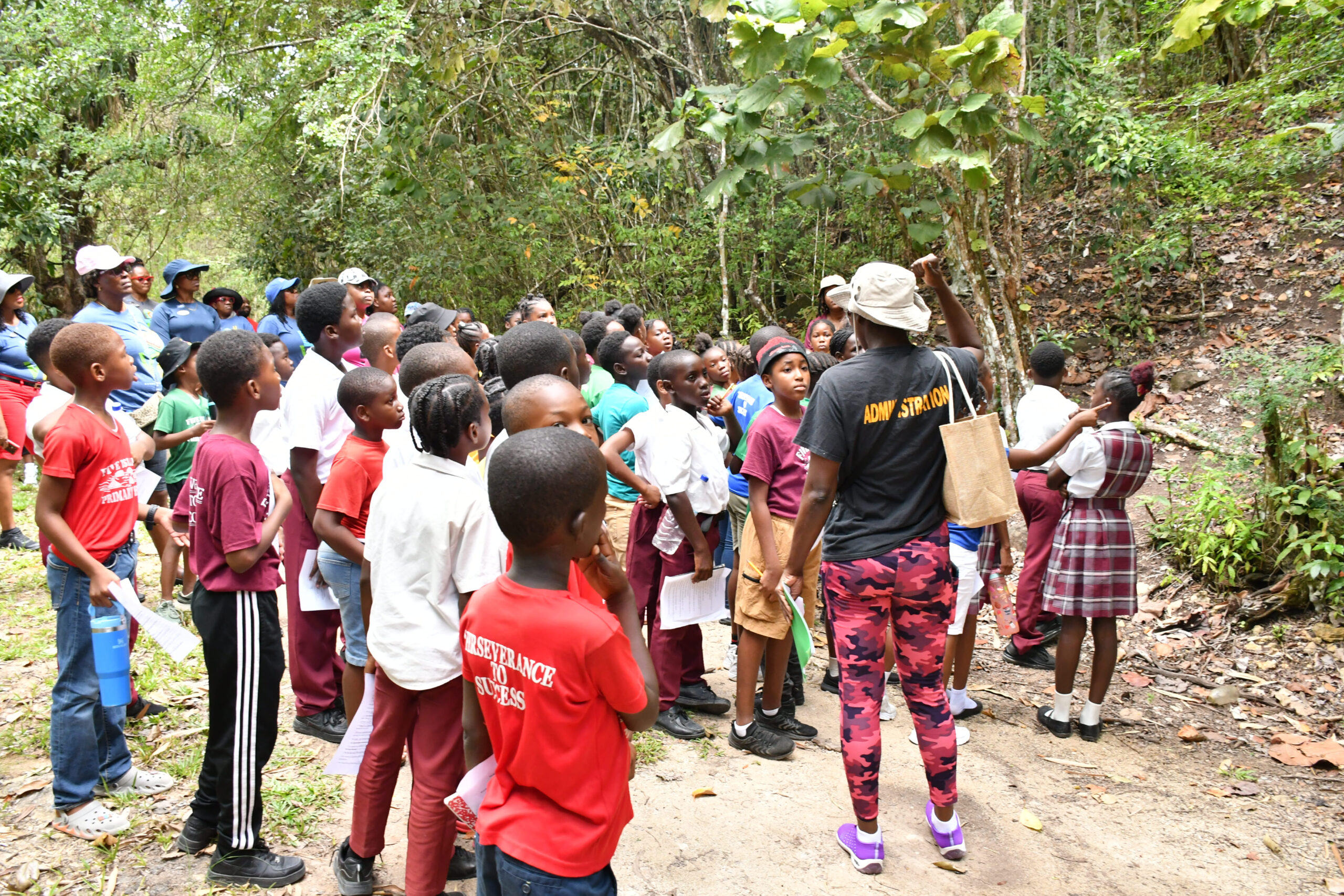
    A recent summer camp outing to Antigua’s Wallings Forest Area has exposed a devastating collapse in the once-lauded conservation site, prompting a public call out for urgent government intervention to reverse the damage. On a July 16 visit to the protected woodland, a group of camp participants witnessed firsthand the total decay of an area long celebrated as a shining example of community-driven environmental stewardship.

    Today, the forest lacks every basic amenity required to host visitors and support its own conservation. Functional restrooms, educational signage that once guided guests and explained local ecosystems, and formal visitor orientation systems have all vanished. What little organization remains exists only through the unplanned, volunteer work of former site manager Refica Attwood, who stepped in as an informal guide for the visiting camp group. Her quick thinking and on-the-spot problem-solving prevented what could have been a dangerous, disorganized disaster for the group of children in the party, according to the letter writer.

    Despite Attwood and her small volunteer team’s tireless efforts to keep the day incident-free, the visit laid bare a grim truth: decades of collaborative community conservation work have been completely undone. The once-thriving reserve is now left abandoned, trapped in a state of administrative limbo stemming from unresolved government disputes.

    The letter’s author leaves no question of where blame lies: the Antiguan government, specifically the Ministry of Agriculture, has made a catastrophic error that puts this critical ecological site at permanent risk. By allowing public-private partnership negotiations to lapse and failing to put in place a permanent, structured system for local trail wardens to maintain the site, the ministry has allowed one of Antigua’s most biodiverse “crown jewels” to deteriorate into disrepair.

    The public has a right to know how this once world-class protected reserve was allowed to crumble, the writer argues. The call to action is clear: government officials must intervene immediately, resolve the ongoing administrative disputes that have paralyzed management, and restore dedicated, organized oversight of Wallings Forest before this irreplaceable environmental asset is lost forever.