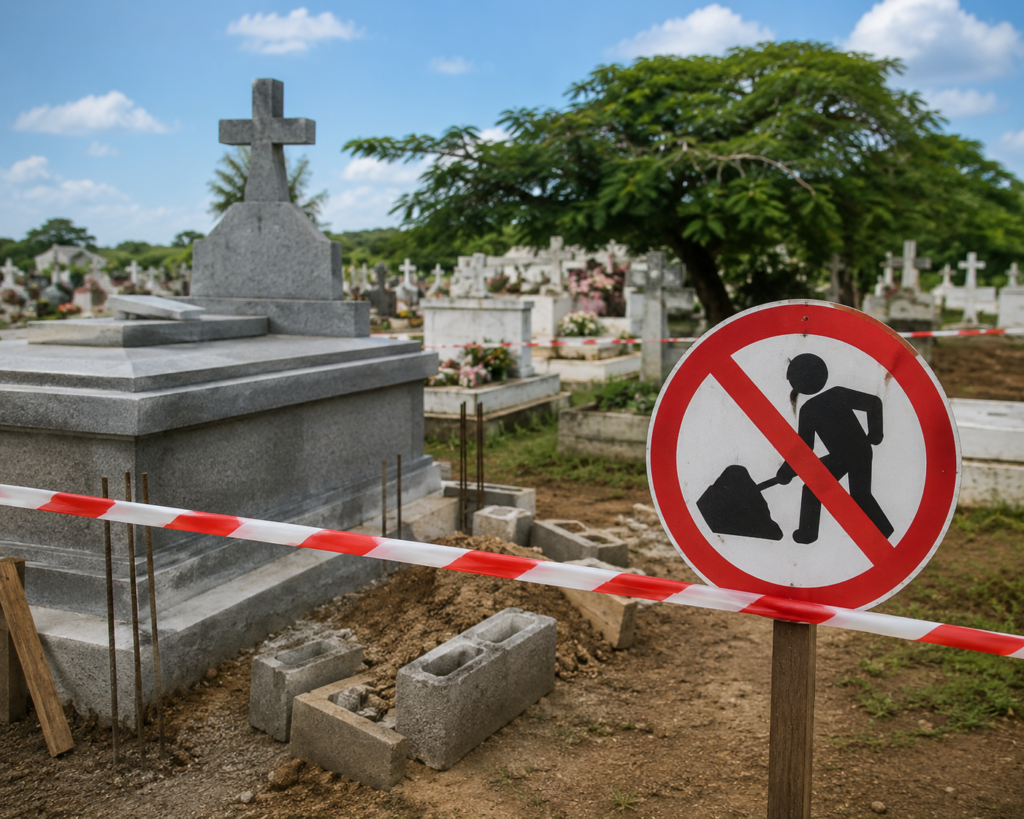
The Ministry of Health, Wellness, Environment and Civil Service Affairs of Antigua and Barbuda has issued an urgent public notice following the discovery of multiple unauthorized construction projects at the St. John’s Public Cemetery and other public burial grounds across the two islands.
Under current regulations, any permanent modification to public cemetery land—including the construction, alteration, or installation of new tombs, headstones, boundary fences, retaining walls, concrete platforms, or any other fixed structure—cannot proceed without formal written approval from the Chief Health Inspector. This rule is firmly codified in the nation’s Public Health Act, Cap. 353, which grants authorities clear power to address non-compliant activity.
Any unapproved work found on cemetery grounds will face immediate action: regardless of how far construction has progressed, all unauthorized structures will be halted, dismantled, and removed by authorities. Beyond the removal of non-compliant builds, individuals who carry out unapproved construction or tamper with existing graves, burial plots, or cemetery features will also face formal prosecution under the law.
Officials have outlined clear justifications for these strict regulations. First, the rules protect the designated burial plots and the legal and emotional rights of families who have reserved plots for their loved ones. Second, they preserve the sacred, dignified character of public cemetery spaces that are meant for mourning and remembrance. Third, they allow cemetery managers to maintain accurate, up-to-date records of all burials and approved modifications to land. Fourth, they enable orderly, consistent management of public cemeteries that serve communities across the country. Finally, these regulations safeguard broader public health and safety by preventing unregulated construction that could create hazards or disrupt proper land use.
The ministry has issued a critical warning to the public: do not accept approvals, instructions, or assurances from any individual who does not hold official authorization to grant permission for cemetery work. Before starting any construction or modification project on public cemetery land, all stakeholders must secure required approval directly from either the official Cemetery Office or the Central Board of Health.
Any questions related to burials, family plot reservations, tombstones, fencing, retaining walls, or other cemetery projects must be submitted to the proper official authority before any arrangements are finalized or construction work begins. To enforce these rules moving forward, the ministry announced it is ramping up regular monitoring and patrols of all public cemeteries across Antigua and Barbuda, and will not hesitate to take full enforcement action against any violation of regulations.
In closing, the ministry called on the public to cooperate with these new measures, emphasizing that shared adherence to the rules is critical to protecting the integrity, safety, and sacred dignity of Antigua and Barbuda’s public cemeteries for current and future generations.