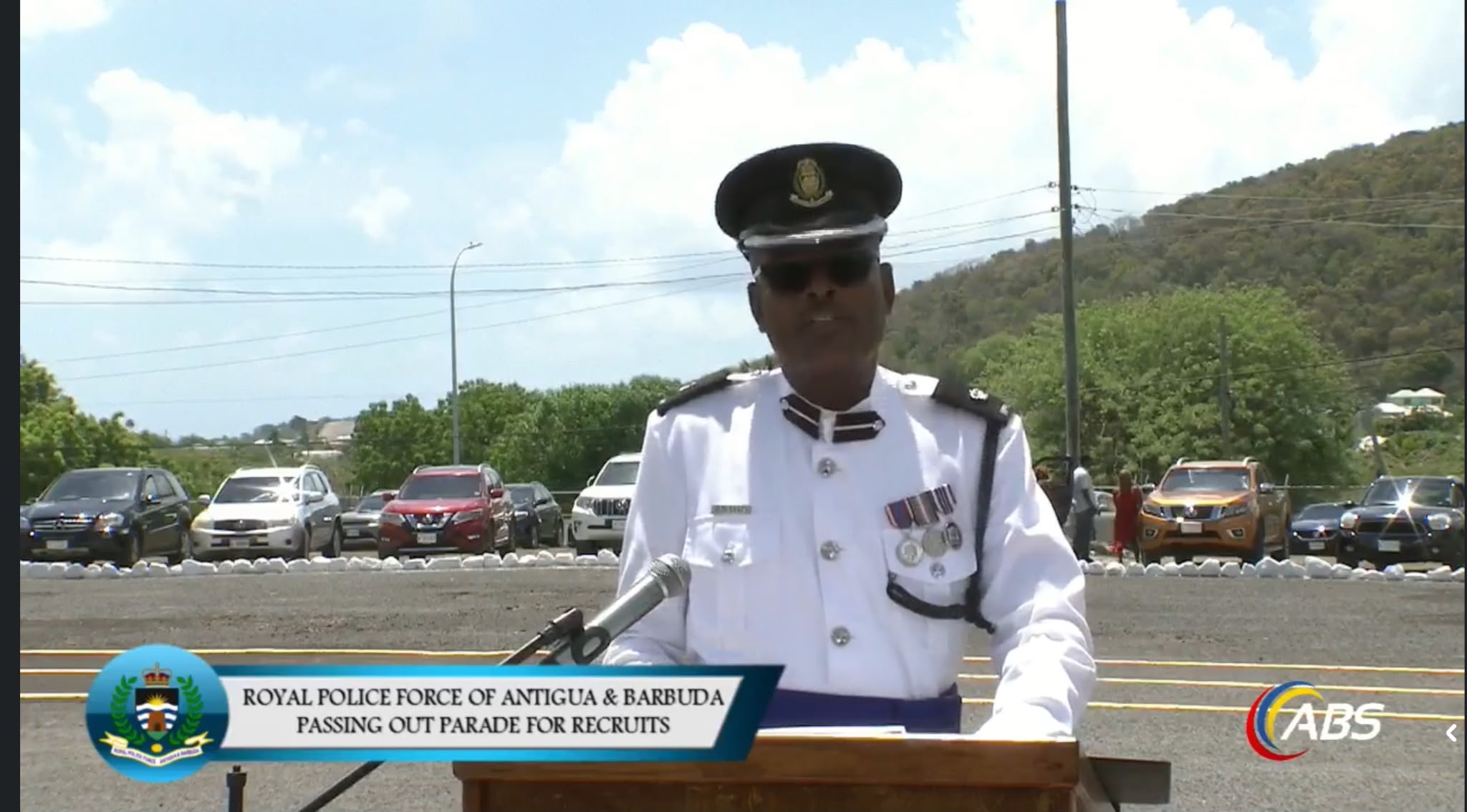
During a historic graduation ceremony for the 50th Recruit Training Course at Antigua and Barbuda’s Sir Wright F. George Police Academy, Superintendent Rodney Ellis, the facility’s commandant, has issued a formal public appeal to the national government to prioritize the construction of a purpose-built, modern police training academy on the institution’s existing site. Addressing gathered recruits, officials, and stakeholders, Ellis used the occasion of the milestone graduation to highlight a critical gap in the country’s law enforcement infrastructure: the current academy building no longer meets the evolving demands of 21st-century policing.
标签: Antigua and Barbuda
安提瓜和巴布达
-
Police Commissioner Apologises for Past Shortcomings, Pledges Greater Accountability
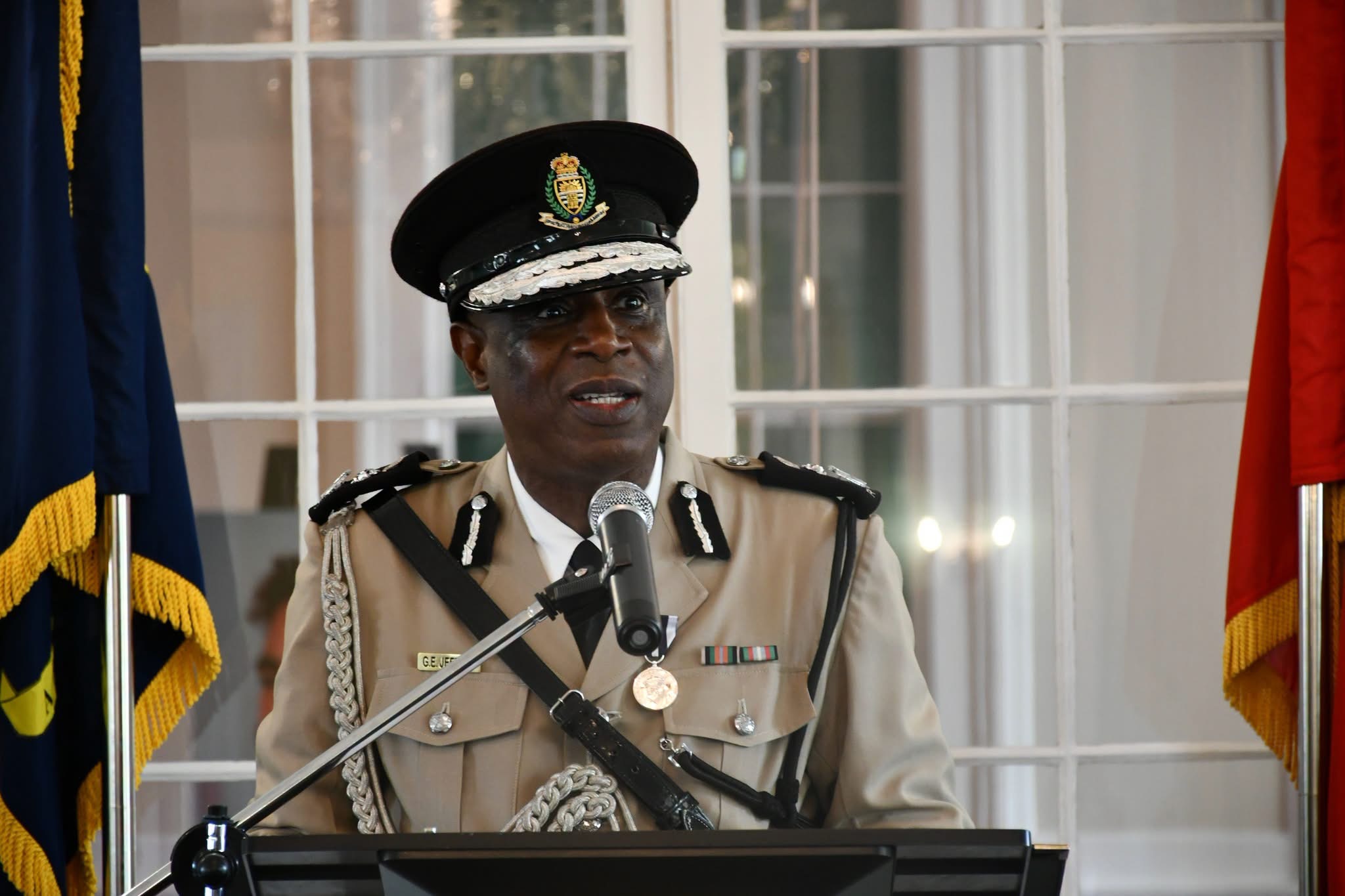
At a landmark graduation ceremony for the 50th cohort of recruit trainees at the Sir Wright F. George Police Academy, Everton Jeffers, Commissioner of the Royal Police Force of Antigua and Barbuda, delivered a rare and candid public apology to community members who have received substandard service from the force. In his remarks to 43 newly graduated officers who completed a rigorous six-month training program with an overall 95.6% pass rate, Jeffers acknowledged that the institution has repeatedly failed to meet the public’s expected standards of policing, while outlining concrete commitments to lift professionalism and institutional accountability across the force.
Jeffers opened his address by framing public service as the non-negotiable core of policing, telling the graduating class that their new role is far more than a paid job—it is a “sacred trust” placed in them by the communities they will serve. He urged every new officer to exercise their legal authority with intentional fairness, humility, compassion and unwavering integrity, emphasizing that high-quality policing depends on consistent professionalism in every single interaction with members of the public. “There are no shortcuts to providing top quality service to the public,” Jeffers told the assembled graduates and guests. “Each complaint must be properly investigated with the highest level of professionalism, courtesy and respect for the rights and dignity of everyone.”
Turning to the state of the broader force, Jeffers offered a frank assessment of past shortcomings that have eroded public trust. “As Commissioner of Police, I acknowledge that we may not always get everything right, and there have been times when our actions or service may have fallen short of the standards that are expected,” he said. Speaking on behalf of the entire Royal Police Force, he extended a formal apology to all those affected by inadequate or inappropriate conduct from force members: “Therefore, I use this platform to offer my sincerest apologies to anyone who may have been wronged, disappointed or offended by the action or conduct of any member of this organisation.”
Pushback against the idea that this public acknowledgment of flaws signals weakness, Jeffers reframed transparency as a critical step toward institutional growth. “While we are proud of the significant progress we have made over the years, we also recognise that there’s still room for improvement. We do not view this as weakness, but rather as an opportunity to grow, to learn and to serve better,” he explained.
Jeffers made clear that zero tolerance will be enforced for behavior that undermines public confidence, warning new recruits that unprofessionalism, consistent lateness, and low productivity will not be overlooked under his leadership. “As a young officer, your honesty and integrity will be tested. However, I urge you to do the right thing at all times, even when no one is watching,” he cautioned.
Closing his remarks, Jeffers reaffirmed his unwavering personal commitment to addressing systemic deficiencies within the organization. He pledged that force leadership would continue targeting weaknesses, upholding strict standards of professionalism and accountability, and working daily to deliver the high-quality service the public deserves. His overarching goal, he restated, is to build a police force that earns and retains the trust of the Antigua and Barbuda communities it serves through consistent action, transparency, and continuous improvement.
-
Commissioner Jeffers Tells New Police Officers Public Service Must Be at Heart of Policing
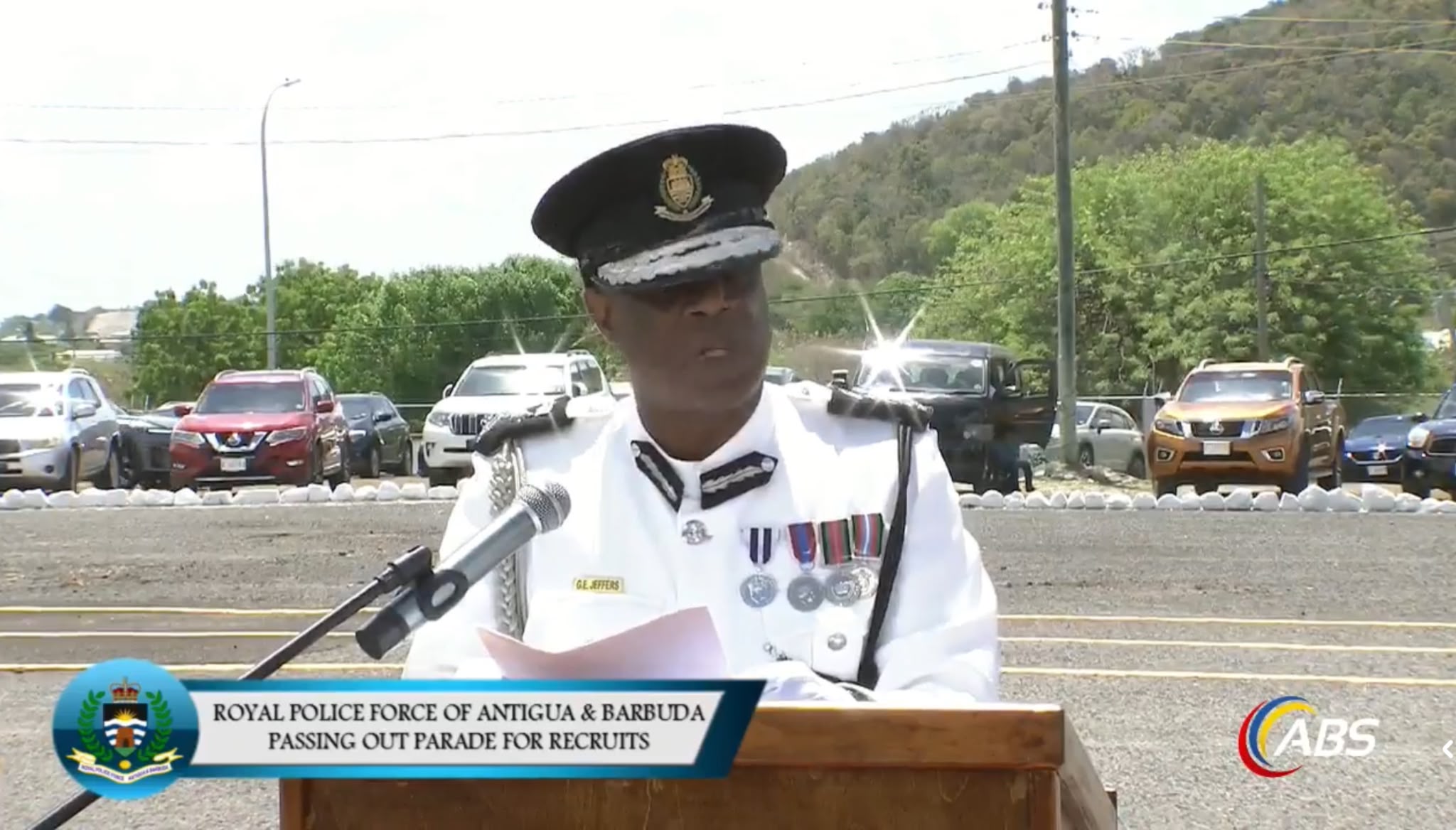
At a milestone graduation ceremony for the 50th Recruit Training Course held at the Sir Wright F. George Police Academy, Antigua and Barbuda’s top law enforcement leader has laid out clear expectations for the country’s newest class of police officers, emphasizing that public service must be the core of every officer’s career.
Police Commissioner Everton Jeffers addressed the 43 graduating recruits, who successfully completed a rigorous six-month training program to earn their placements. With an overall 95.6 percent pass rate for the course, the graduating class marks a new generation of law enforcement officers joining the Royal Police Force of Antigua and Barbuda.
Jeffers stressed that the new officers are not merely entering a traditional nine-to-five career, but accepting a public commitment that demands far more than just showing up for a paycheck. “Today, you’re not just simply receiving a certificate of completion. You are accepting a sacred trust,” he told the assembled graduates and guests. He framed the legal authority granted to police officers not as a personal privilege to be exploited, but as a weighty responsibility that must always be exercised for the good of the Antigua and Barbuda public.
“From this day forward, you are the guardians of the law, protectors of the vulnerable and ambassadors of the Royal Police Force of Antigua and Barbuda,” Jeffers said. “The authority you now carry is not a privilege for you to abuse, but a responsibility to exercise with fairness, humility, compassion and unwavering integrity.”
The commissioner made clear that technical training alone is not enough to build an effective, trusted police force. The force needs officers who bring strong personal character to their work: dependability, courtesy, empathy for community members in need, and the ability to maintain composure and professional conduct even when facing high-stakes, adversarial situations. Every interaction with the public, from investigating routine complaints to responding to emergencies, must be carried out with the highest respect for the rights and dignity of all people, he added, noting there are no shortcuts to delivering quality public service.
Jeffers also issued a firm warning that unprofessional conduct will not be tolerated within the force. Zero tolerance will apply to laziness, consistent lateness, unproductive work, and any behavior that erodes public trust in law enforcement. He acknowledged that new officers will face repeated tests of their honesty and integrity throughout their careers, and urged them to uphold ethical standards even when no oversight is present.
In closing, Jeffers called on veteran senior officers across the force to step into mentorship roles for the new recruits, noting that early career guidance is critical to helping new officers build long, successful careers. Young officers need experienced role models to show them what ethical, effective policing looks like, and senior leaders have a responsibility to prevent new recruits from straying from the force’s core values, he said.
He ended his address by reminding graduates that their police badge carries far more meaning than just a symbol of legal power. “Your badge represents far more than authority. It represents sacrifice, honour, courage and service. Wear it with humility. Protect it with integrity. Live worthy of it every single day,” he said.
-

Minister Michael Joseph Meets with Health Information Division to Strengthen Use of Health Data
In a targeted push to upgrade the nation’s healthcare framework, Michael Joseph, Minister of Health, Wellness, Environment and Civil Service Affairs of Antigua and Barbuda, has held a working meeting with the leadership and frontline staff of the Ministry’s Health Information Division. The gathering forms a key part of the government’s ongoing initiative to reinforce national health information systems, and expand the role of data in shaping public healthcare planning and high-stakes policy decisions.
During the meeting, Minister Joseph underlined that robust, reliable health data forms the backbone of both evidence-driven policy development and high-quality, responsive healthcare service delivery. He stressed that a well-functioning health information ecosystem is non-negotiable for effective governance in the health sector.
“Quality health information is the foundation of sound decision-making,” Joseph stated. “By strengthening our systems and improving how data is collected, analyzed, and shared, we can make better policy decisions that directly benefit the people of Antigua and Barbuda. Equally important, we want to ensure that this information is accessible to the public so that citizens are informed about the nation’s health status and can make healthier choices.”
Participants in the meeting also explored actionable strategies to streamline the aggregation and distribution of national health statistics. Improved data handling will allow the government to detect emerging public health trends at an earlier stage, allocate limited healthcare resources more efficiently, and design targeted public health programs that directly address the unique needs of marginalized and under-served communities across the twin islands.
Joseph further noted that expanding public access to standardized health information will not only boost government transparency in the health sector but also encourage greater active participation from residents in national health and wellness initiatives. When citizens have clear insight into community and national health outcomes, they are more likely to engage with preventive care programs and adopt lifestyle choices that improve long-term public health.
Following the discussions, the Health Information Division publicly reaffirmed its commitment to rolling out comprehensive system modernization. The division pledged to deepen collaborative work with cross-sector stakeholders across Antigua and Barbuda’s health ecosystem to build a more resilient, accessible national health information infrastructure.
For its part, the Ministry of Health, Wellness, Environment and Civil Service Affairs says it remains fully committed to advancing the transition to a fully data-driven healthcare system. This long-term effort is designed to support more informed policy and clinical decision-making, lift overall population health outcomes, and advance the well-being of all residents across Antigua and Barbuda.
-
More than 800 Canadian wildfires burning as air quality alerts extend to US
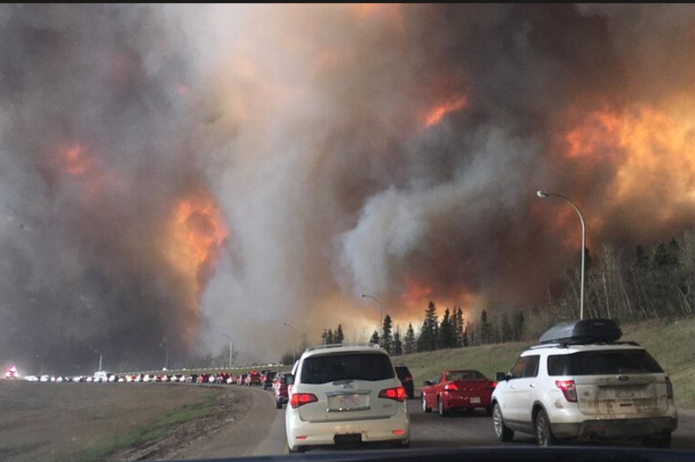
An unprecedented wave of wildfires continues to rage across Canada, sending thick toxic smoke drifting south into the United States and forcing widespread air quality warnings that stretch from the Upper Midwest all the way to the Northeast. As of Thursday, official data from the Canadian Interagency Forest Fire Centre confirms 857 active blazes are burning across the country, 23 of which ignited just within the last 24 hours. The overwhelming majority of these fires remain completely uncontained, according to the Canadian Wildland Fire Information System, creating one of the most severe wildfire seasons the nation has faced in recent memory.
The largest concentration of fires burning in northwestern Ontario has been the primary source of the dangerous smoke plumes. Thick plumes have already choked major Ontario urban centers including Thunder Bay and Toronto, while thinner concentrations of smoke at high atmospheric levels have drifted across the Great Lakes region toward New York. Forecasters say the smoke is likely to create hazy skies and unusually red-hued sunrises and sunsets across the northeastern U.S. over the coming days.
While forecasters predict widespread thunderstorms will roll across Ontario in the next few days, experts say the expected rainfall is unlikely to be heavy enough to extinguish the large, deep-seated blazes or meaningfully improve conditions. Northwesterly wind patterns will continue pushing smoke into northern U.S. states through the end of the week and into the weekend, raising concerns that poor air quality will reach New Jersey, the host site of Sunday’s World Cup final. A shift in wind direction forecast for Monday is expected to redirect smoke plumes toward Quebec, which will bring gradual improvements to air quality across the southern U.S., according to the U.S. National Oceanic and Atmospheric Administration (NOAA).
As of Thursday, air quality monitoring firm IQAir ranked Detroit, Michigan as the city with the worst air pollution in the world, with Minneapolis, Minnesota and Toronto, Canada claiming the next two spots on the list. The hazardous conditions have prompted official warnings from U.S. authorities, who classify air quality in large swathes of Michigan and Minnesota as hazardous under the U.S. Air Quality Index, urging all residents to limit outdoor activity and stay indoors as much as possible.
The cross-border pollution has sparked diplomatic friction, with four Republican U.S. House representatives from Michigan signing an open letter addressed to Canadian Prime Minister Mark Carney calling for more effective wildfire management. The letter expressed growing frustration, noting this is the third consecutive year Michigan has faced hazardous smoke from Canadian wildfires, and that lawmakers’ patience has been exhausted. “A year has passed, the season has come around again, and nothing has changed except that our patience has run out,” the letter reads.
U.S. Ambassador to Canada Pete Hoekstra struck a more collaborative tone in a statement Wednesday, praising ongoing wildfire response efforts from teams in both countries. “This challenge knows no borders. The United States will continue to coordinate closely with Canada, just as we have for more than four decades of shared wildfire emergencies,” he said.
Beyond the air quality crisis impacting densely populated urban centers hundreds of miles south, the wildfires have already caused severe disruption and damage to remote northern Ontario communities. Hundreds of residents from local First Nations communities have been forced to evacuate their homes, with shared footage showing many fleeing the isolated region by small boat. Anishinabek Nation Grand Council Chief Linda Debassige confirmed in a public statement that dozens of residential homes and community buildings have suffered extensive damage from the advancing flames.
The danger of the blazes was highlighted in dramatic footage released Wednesday that showed a freight train completely surrounded by roaring wildfire flames near Armstrong, Ontario, after the crew became trapped. Canadian National Railway quickly confirmed in a subsequent statement that all workers on the train were safely rescued via emergency response, and that rail operations through the affected region have been temporarily paused to allow for fire response and safety assessments.
-

Rocks Group Appoints Antiguan Chef Christopher Terry As Group Executive Chef
Antigua-based hospitality collection Rocks Group has announced a high-profile leadership appointment that marks a homecoming for one of the Caribbean’s most accomplished culinary talents: native Christopher Terry has stepped into the role of Group Executive Chef, tasked with steering the overall culinary vision and daily operations across all five of the group’s restaurant concepts — Sheer Rocks, Catherine’s Café, Rokuni, Fat Urchin, and Roca.
With nearly two decades of professional experience earned at some of the world’s most exclusive luxury resorts and hospitality destinations across three continents, Terry is returning to his home island after building a decorated international career that took him from regional Caribbean properties to elite dining venues in North America, and most recently, the high-end resort landscape of the Maldives.
Terry’s culinary journey first began on Antigua, where he completed his initial training at the Antigua & Barbuda Hospitality Training Institute before moving to the United States to advance his culinary education at Florida’s prestigious Johnson & Wales University. Over the years that followed, he held senior culinary leadership roles at iconic global properties including The Nautilus Maldives, Amanyara in Turks & Caicos, Hammock Cove Antigua, Sandals Barbados, Florida’s Ocean Reef Club, and Jumby Bay Island. Through every step of his career, he has built a reputation for four core pillars of his work: delivering unforgettable, tailored guest experiences, developing creative, boundary-pushing menus, mentoring emerging culinary talent, and intentionally weaving local, seasonal Caribbean ingredients into refined, world-class dining concepts.
The appointment is a meaningful full-circle moment for both Terry and Rocks Group founder Alex Grimley. The two first worked together decades earlier at Antigua’s Carlisle Bay resort, where Grimley held the role of Head Chef as Terry was just launching his professional culinary career. Their reunion comes at a key inflection point for Rocks Group, which is currently in a period of evolution and expansion of its culinary footprint across Antigua.
“Chris embodies every core value our hospitality group was built on,” shared Rocks Group Chief Operating Officer Carl Habel in a statement announcing the appointment. “He is extraordinarily talented, deeply passionate about his craft, and brings unmatched experience from some of the world’s leading luxury hospitality properties. Most importantly, he is Antiguan. His career path is an incredible example of local talent reaching global success, then choosing to bring that hard-earned expertise back home to support his community.”
Habel added that the group is particularly enthusiastic about Terry’s ability to lift up the next generation of local hospitality workers, alongside his expected contributions to culinary creativity and operational leadership across the group’s venues. For Terry himself, returning to Antigua offers a unique opportunity to give back to the regional hospitality ecosystem that launched his career, and contribute to a group that has long been a trailblazer for Caribbean dining.
In his new role as Group Executive Chef, Terry will lead culinary innovation and development across all Rocks Group restaurant concepts. He will work hand-in-hand with individual restaurant teams to continuously elevate the guest experience, while upholding the group’s commitments to quality, creativity, and sustainable sourcing — with a sharp focus on celebrating Caribbean ingredients and nurturing local culinary talent. The appointment itself underscores Rocks Group’s longstanding dedication to investing in people, growing accessible hospitality careers for local workers, and supporting the ongoing expansion of Antigua’s dynamic, fast-growing culinary sector.
-

Sir Lester Bird Medical Centre Invests US$90,000 in Laundry Upgrade
A key public healthcare facility in the Eastern Caribbean has advanced its patient safety and operational efficiency through a targeted infrastructure overhaul, investing close to $90,000 in cutting-edge laundry equipment. The upgrade at Sir Lester Bird Medical Centre (SLBMC) forms part of a broader EC$1.8 million government injection earmarked for facility-wide operational improvements across the hospital. The total investment covers far more than just the machinery itself, accounting for all secondary costs including international shipping, customs processing, logistical handling, and site modifications to prepare the existing laundry space for the new systems.
Though hospital laundry operations typically work behind the scenes, they form a foundational pillar of high-quality patient care. On any given day, SLBMC’s laundry team processes hundreds of individual linen items – ranging from patient bed sheets and pillowcases to bathroom towels and sterile surgical linens – all of which must be thoroughly disinfected, cleaned, and returned to wards and clinical departments on tight schedules. Outdated or unreliable equipment can create bottlenecks, compromise infection control, and put patients at risk, making modernization of this critical service a high priority for hospital leadership.
The centerpiece of the upgrade is a 50kg Electrolux Professional Hyvolution Barrier Washer, which alone accounts for approximately $53,700 of the total investment. Unlike standard commercial washing machines, this model is purpose-built for healthcare settings, featuring a unique dual-door design that creates a permanent physical separation between contaminated incoming linen and cleaned, processed linens throughout the entire washing workflow. This design drastically cuts the risk of cross-contamination between dirty and clean textiles, directly reinforcing the hospital’s ongoing infection prevention and control protocols.
Beyond safety improvements, the new barrier washer also incorporates smart technology to reduce resource waste: it automatically weighs each load of linen and dispenses the precise volume of detergent needed, cutting unnecessary overconsumption of water, electricity, and cleaning chemicals while still ensuring every load meets healthcare hygiene standards.
To complement the new washer, the hospital also invested in a 108-inch Electrolux Professional Industrial Ironer, valued at roughly $36,200. Engineered to support the high-volume processing demands of a busy hospital, the new ironer can handle up to 150 sheets per day, delivering consistent, high-quality finished linens while cutting down on the time staff spend on this task. Its ergonomic layout and automated smart features also reduce the physical strain on laundry team members during daily shifts, creating a safer, more comfortable working environment.
The addition of the high-capacity ironer speeds up the entire end-to-end linen processing workflow, ensuring that clinical teams and patient wards receive clean linens faster and more reliably than with the facility’s previous older equipment.
Hospital administrators note that the combined installation of the two new machines will deliver widespread benefits for both patients and staff. Beyond streamlining daily laundry operations, the upgrade strengthens infection prevention protocols, expands the facility’s total processing capacity to meet growing demand, improves the overall quality of hospital linens, and eliminates the frequent service disruptions that plagued the facility when relying on aging, outdated equipment.
This infrastructure project marks the latest step in SLBMC’s ongoing commitment to modernizing its facilities and investing in the behind-the-scenes systems that underpin high-quality patient care. While patients will never directly see the laundry facility’s daily operations, they will reap the benefits every day through cleaner linens, stronger infection control, and more reliable support services that collectively contribute to a far safer care environment.
-

Tian Winter to Lead Team Antigua at FACE OFF Following Sir Oungku’s Health Setback
Organizers of the highly anticipated musical battle event FACE OFF have confirmed that performer Sir Oungku’s health and personal well-being will always take precedence over scheduling and performance commitments, as the beloved entertainer faces an unexpected health challenge. The entire FACE OFF organizing team has extended its deepest support to Sir Oungku and his loved ones during this difficult period, sharing messages of hope for a smooth, complete, and rapid recovery. The team also expressed their eagerness to once again welcome Sir Oungku to the stage, where he has built a reputation for delivering electrifying, joy-filled performances that leave lasting memories for audiences across the globe.
For fans and followers who have reached out with questions about the future of the event, organizers have moved quickly to reassure the public that FACE OFF will proceed as planned. Stepping into the leading role to fill the gap left by Sir Oungku is experienced performer Tian Winter, who has stepped forward willingly to take on the high-stakes musical battle against Dominica’s most acclaimed talent, Triple K.
To honor Sir Oungku’s legacy with the event and reinforce Team Antigua’s competitive standing, Winter will be joined on stage by a roster of some of the biggest and most influential names in Antigua and Barbuda’s music industry. Together, the group will prepare to represent their nation with pride and carry Sir Oungku’s spirit into the upcoming clash.
In a public message shared ahead of the event, Winter called for unity among fans and supporters across Antigua, emphasizing that now is the moment to come together to keep the event’s energetic momentum alive, grow the pre-show excitement, and deliver an unforgettable evening of entertainment that honors the event’s original vision. Winter stressed that standing united, representing Antigua with national pride, and honoring Sir Oungku’s contributions are the top priorities for the entire team heading into the battle. The message closed with a note of dedication: this edition of FACE OFF is not only for the people of Antigua, but for Sir Oungku himself, and the team extended an open invitation for all fans to join them for what promises to be a historic night of music.
-

Government says nationwide CCTV rollout on track for completion by end of August
A nationwide expansion of closed-circuit television (CCTV) surveillance infrastructure is progressing as planned and is on schedule to be fully completed by the end of August, a government spokesperson has officially confirmed. The large-scale rollout, which has been underway across multiple administrative regions for several months, aims to strengthen public safety protocols, enhance rapid emergency response capabilities, and support law enforcement efforts in preventing and investigating criminal activity across the country.
Government project managers report that most installation work has already been wrapped up in urban centers and major transportation hubs, with final testing and infrastructure integration now being carried out in more remote rural and suburban locations. Officials have emphasized that the project adheres to strict data privacy regulations, with clear protocols in place to govern how surveillance footage is stored, accessed, and used to prevent misuse of personal information. While the rollout has drawn some discussion from privacy advocacy groups about the balance between public safety and individual privacy rights, government representatives reiterate that the system will deliver significant long-term benefits for community safety nationwide.
-
Antigua and Barbuda government reclaims 682 acres for redistribution to farmers
The government of Antigua and Barbuda is moving forward with a bold policy push to shore up national food security, reaffirming its commitment to redistributing hundreds of acres of long-idle government-held agricultural land to active, qualified producers. The initiative, which was first unveiled to the public several months ago, centers on reclaiming unproductive farmland that was already zoned for agricultural use but had been left untended for years.
During a post-Cabinet press briefing held Thursday, Director General of Communications Maurice Merchant shared updates from the executive branch’s deliberations, noting that Cabinet received a progress report from Agriculture Minister Anthony Smith on the ongoing redistribution program. Per Smith’s briefing, the government has successfully recovered roughly 682 acres of abandoned or underutilized agricultural parcels that had remained unproductive for more than four years.
This inventory of reclaimed land was compiled after a thorough, systematic assessment conducted by the country’s Agricultural Extension Division. The portfolio includes plots managed directly by the Extension Division, holdings overseen by the Agricultural Development Corporation, designated livestock lands, and parcels that previously had unresolved ownership disputes.
All recovered acreage has now been marked for redistribution to vetted farmers who have a proven track record of consistent, productive agricultural activity. In the first phase of the rollout, 50 pre-screened farmers will receive either entirely new land allocations or additional acreage to scale up their existing operations. The core goals of this first phase are to lift domestic food output and build greater resilience for Antigua and Barbuda’s national food system.
Merchant confirmed that candidate vetting has already been completed by the Agricultural Extension Division, with land parcels set to be allocated in the order that applications were originally submitted. To guarantee that the reclaimed land remains in active productive use, Cabinet has approved a six-month probationary period for all initial allocations. Throughout this probation window, the Ministry of Agriculture will conduct close monitoring of on-site cultivation activities, overall productivity levels, and compliance with the agreed-uped development plans for each plot. Farmers that meet the requirements of sustained, active agricultural production during their probation will be granted long-term occupancy rights to their allocated land.
This land redistribution effort forms a core pillar of the Antigua and Barbuda government’s broader national strategy to put underused agricultural assets back to work. By growing local food production, the administration aims to cut the country’s long-standing dependence on imported food goods and build a more stable, self-reliant food system for the nation.