博客

  • Martinique officieel geassocieerd lid van CARICOM

    Martinique officieel geassocieerd lid van CARICOM

    The Caribbean Community (CARICOM) has welcomed Martinique as its newest associate member, marking a key milestone in expanding cross-regional cooperation across the Caribbean bloc. The French overseas department’s formal accession took effect on June 16, 2026, after France submitted the required official accession documentation in June 2026, triggering the entry into force of CARICOM’s privileges and immunities agreement that formalizes Martinique’s new status.

    Plans for Martinique’s associate membership have been in motion for over a year: the initial accession agreement was first signed back in February 2025. With all legal and procedural hurdles now cleared, Martinique will participate as an associate member for the first time at the 51st Regular Conference of CARICOM Heads of Government, which is scheduled to run from July 5 to 8 in Gros Islet, Saint Lucia.

    Located in the eastern Caribbean, Martinique is an overseas department of France, and as an integral part of the French Republic, it is also a territory of the European Union. Its new associate membership will open doors for far deeper collaboration with CARICOM’s 15 full member states across multiple priority areas, including economic development, social policy coordination, and regional governance.

    Founded on July 4, 1973, through the signing of the Treaty of Chaguaramas, CARICOM works to advance integrated development across the Caribbean. Its core mission covers advancing regional integration, driving collaborative economic growth, aligning foreign policy priorities, supporting social progress, and strengthening joint security cooperation across member territories.

    Martinique’s accession expands the bloc’s associate member count to seven, and CARICOM frames the addition as a critical step forward in strengthening interconnectedness across the Caribbean’s linguistic communities—bringing together English-, French-, and Dutch-speaking territories of the region under deeper collaborative frameworks. For the wider Caribbean region, the move is expected to unlock new opportunities for cross-border trade, policy alignment, and shared development that benefits all coastal communities across the basin.

  • NIBTT owes $50m to vendor for Empower tech upgrade

    NIBTT owes $50m to vendor for Empower tech upgrade

    Trinidad and Tobago’s National Insurance Board (NIBTT) is confronting growing parliamentary scrutiny after confirming it holds more than $50 million in outstanding payments to a digital service vendor working on its flagship Empower digitization initiative, a project designed to overhaul the agency’s outdated service delivery and revenue collection systems.

    The details of the unpaid liability were brought to light during a Friday sitting of the Joint Select Committee (JSC) on Finance and Legal Affairs, a parliamentary panel currently conducting a review of NIBTT’s public accessibility, responsiveness, and overall service performance. Committee members have raised pointed questions about the financial sustainability of the $300 million-plus project, which is funded entirely through NIBTT’s existing contribution collections and investment returns, at a time when the agency already faces a gap between incoming contributions and outgoing benefit payouts.

    NIBTT leadership has defended the multi-phase transformation effort, arguing that the deep digitization push is non-negotiable for the agency’s long-term functionality. For decades, NIBTT has relied on slow, paper-based and manual processing systems to handle its massive annual workload: roughly 40,000 new claims and 480,000 employer submissions each year. Executive Director Niala Persad-Poliah explained that existing legislation, the NIBTT Act, prohibits the agency from using bond financing to fund capital projects like Empower, forcing the organization to draw on its operating revenue. The first two phases of the project, which launched in 2022 and wrapped up implementation in August 2024, delivered a new human capital management system and an integrated financial platform, laying the groundwork for full operational overhaul.

    Persad-Poliah also clarified the discrepancy between the original $164 million project budget and the much higher total spending to date. She noted that the initial budget only covered core hardware and software costs, excluding critical supporting expenses including consultant fees, marketing outreach, and third-party project management services. To date, $143 million in solution implementation costs plus $10.3 million in value-added tax have been paid, with ongoing annual maintenance costs set at $18 million for existing systems, rising to $50 million annually once the full project is complete. The $50.9 million outstanding payment to the lead vendor will be settled once the final phase of work is delivered, and NIBTT management has already submitted a request to its board for additional funding to cover outstanding obligations.

    The final phase of the Empower project will focus on rolling out customer-facing digital tools, including an online portal that allows claimants to track their applications in real time and access services remotely, addressing longstanding public complaints about extended processing delays. So far, roughly 1,400 employers have registered for the new portal, and Persad-Poliah has urged more businesses to adopt the digital system to speed up processing. Agency technology leaders report that user acceptance testing (UAT) for the full system is 96% complete, with final end-to-end testing now underway to verify the entire workflow from claim submission to payment disbursement.

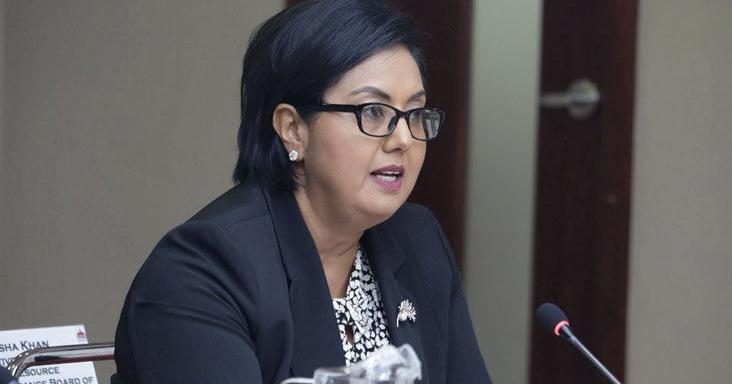
    Despite the progress, NIBTT acknowledges that thousands of claims remain backlogged, and the full public benefits of the project have yet to take effect. Human Resources Executive Director Isha Khan told the committee that the agency has reassigned existing staff full-time to backlog reduction over the past two years, used acting arrangements to fill vacant roles, and brought on external contract workers to support entry-level operations. Even with these adjustments, staff remain overburdened by the high volume of claims.

    JSC Chair Dr. Marlene Attzs, an Independent Senator, echoed committee members’ concerns, pressing NIBTT leadership for clarity on when vulnerable populations, who rely most heavily on NIBTT benefits, will see tangible improvements to service speed and accessibility. NIBTT officials reaffirmed that once fully implemented, the Empower system will dramatically expand access for people with special needs and other vulnerable groups by eliminating the need for in-person visits and reducing processing wait times.

  • Ghost boat comes ashore in Trinidad

    Ghost boat comes ashore in Trinidad

    Along the isolated southern coast of Trinidad, a stretch of shoreline leading to Icacos Point has long been a dumping ground for both natural debris and human-caused detritus. Just off Galfa Point, discarded rocket boosters jettisoned from launches at French Guiana’s space center jut from the ocean like alien monoliths. Pyrite crystals, colloquially called fool’s gold, wash up from offshore mud volcano eruptions, and further inland, visitors can find evidence of human movement: stray cattle from Venezuela, the remains of campfires in mangrove thickets left by migrants hiding before traffickers or relatives pick them up, and a constant flow of debris carried by the Orinoco River from its delta communities — from broken indigenous Warao dugout canoes to plastic waste and Styrofoam.

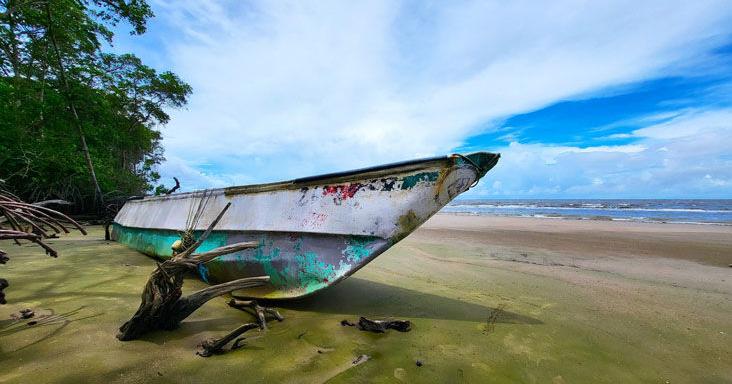
    A few weeks ago, the Atlantic Ocean delivered one more haunting artifact to this shore: an abandoned 30-foot fiberglass fishing vessel, carried by currents and left stranded by the outgoing tide. It drifted ashore undetected by local radar, and to this day, police have no record of its arrival. Cedros, the district where the boat was found, is a community bound by secrets, so locating the vessel took two days and four hours of searching after local residents declined to help.

    The boat had no engine, no fishing gear, no registration documents, and no immediate clues to its owners or how long it had drifted across the Atlantic. But subtle clues scattered across its hull and interior point to its likely origins in West Africa, tied to the deadly migrant route toward Spain’s Canary Islands.

    Its narrow, high-bowed design matches pirogues commonly used by fishermen and migrant smugglers in Mauritania and Senegal. Built with fiberglass over a timber frame, its hull is layered with peeling faded paint in white, teal, blue, gray and red — a wear pattern consistent with months of exposure to salt water and tropical sun. The green and red paint on the hull mirrors the national flag of Mauritania, and one side bears a faded stenciled marking: a clear “2”, a partial “6”, and fragmented lines that likely form “97”.

    Inside, the ocean has swept away nearly everything personal. One interior compartment is still lined with shredded blue-white-red striped tarpaulin backed by thick black plastic, standard material for protecting passengers from wind and spray. Two weathered foam fishing floats hang from the gunwale, one deeply carved with an “A”, the other with an “H” — a common practice among West African fishermen to mark ownership if gear drifts away. A tattered cloth with yellow polka dots and a bright orange underside is tied to the floats, and the bow bears a faded green painted symbol, likely a “protective eye” surrounding a religious inscription.

    The only intact personal item left behind is a tightly wrapped dark brown leather pouch tied securely to the bow. Regional experts have identified it as a grigri, also called a taweez — a protective amulet common among fishermen and migrants across Cabo Verde, Senegal, Guinea-Bissau and Mauritania. These pouches typically hold handwritten Quranic verses, prayers or blessed herbs prepared by religious leaders, carried to protect travelers and guarantee safe passage across the sea.

    Whoever carried this amulet never completed their intended journey. There is no trace of passengers: no clothing, no food containers, no identification, no human remains. Only the boat remains, and every high tide buries its hull a little deeper into the sand, with the ocean slowly erasing the last evidence of its voyage.

    Oceanographers explain that boats caught in the Canary Current before shifting into the North Equatorial Current can drift across the Atlantic to the southern Caribbean in as little as two months, with most voyages taking three to four months depending on seasonal wind patterns. This mystery boat is just the latest in a string of “ghost boats” carrying the remains of African migrants that have washed up across the Caribbean region in recent years.

    The most high-profile case dates back five years to May 28, 2021, when Tobago fishermen working off Belle Garden on the island’s windward coast made a gruesome discovery. Inside a Mauritanian fishing vessel marked AG 231 were 14 sets of skeletal remains, decomposed after months adrift. Investigators quickly confirmed the boat had originated on West Africa’s Atlantic coast, the primary departure point for migrants attempting the dangerous crossing to the Canary Islands, Spain’s southernmost Atlantic territory. Additional clues found on board left no doubt of the vessel’s purpose: West African CFA francs, euros, mobile phones, clothing, weatherproof jackets and Muslim prayer beads.

    These migrants never intended to reach the Caribbean. They never made it to Europe. After their engine failed, currents and trade winds carried them thousands of miles off course.

    Former state pathologist Dr. Eastlyn McDonald-Burris carefully documented every recovered item to preserve evidence for identification, and former assistant police commissioner William Nurse launched an investigation intended to be shared through Interpol, the International Committee of the Red Cross and diplomatic channels. But like many tragedies in Trinidad and Tobago, the case faded from public priority as new events captured attention.

    It took the persistent work of Associated Press investigative journalist Renata Brito to revive the investigation. Traveling across Trinidad and Tobago, France and Mauritania, Brito pieced together the full story of the doomed voyage. Her reporting confirmed 43 migrants boarded the boat in the Mauritanian port of Nouadhibou between January 12 and 13, 2021, hoping to reach the Canary Islands roughly 800 kilometers off the Mauritanian coast. Within days, their engine failed, leaving the boat at the mercy of currents. What happened over the 136 days the boat drifted before reaching Tobago may never be fully known, but survivor accounts of similar voyages paint a brutal picture: food runs out within days, followed by fresh water. Passengers drift under a relentless tropical sun, and many turn to drinking seawater to survive. The weak die first, and eventually the remaining survivors are too weak to cast bodies overboard.

    Thanks to Brito’s work, one family finally received answers. After she tracked down relatives in Mali, coordinated DNA testing identified one victim as 31-year-old Alassane Sow. Dr. McDonald-Burris’ autopsy listed his cause of death as undetermined, with hypothermia and dehydration from being lost at sea as the most likely causes. Sow’s remains were buried according to Islamic rites at Chaguanas Public Cemetery on March 3, 2023, with local community members gathering to pray and mourn a stranger who would not be left forgotten.

    Thirteen other victims remain unidentified. The Trinidad Express has continued to press for progress on the case, lobbying former National Security Minister Fitzgerald Hinds to prioritize diplomatic outreach and DNA matching to identify the remaining dead, but no action was taken. The responsibility now falls to current Homeland Security Minister Roger Alexander to advance the work. Families across West African villages continue to wait for news of missing loved ones, many ready to provide DNA samples to help identify their relatives.

    As for the new mystery boat washed up on southern Trinidad, it holds only questions. Perhaps somewhere in West Africa, one or more families still wonder what happened to the boat that never returned. Maybe someone will recognize the carved initials on the floats, the faded hull markings, or the leather amulet carried by a traveler who trusted it to protect them from the unforgiving Atlantic. But before any answer can come, the tide will likely reclaim the boat entirely, erasing its clues forever.

  • ‘Logistical issues’ as PM misses Caricom leaders line-up

    ‘Logistical issues’ as PM misses Caricom leaders line-up

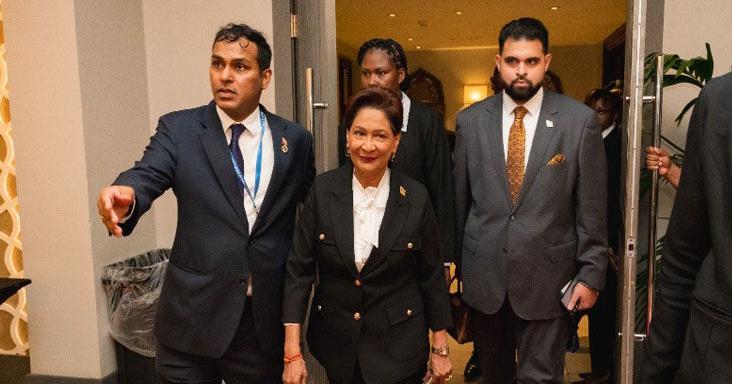
    The 51st Regular Meeting of the Conference of Caribbean Community (Caricom) Heads of Government kicked off in St. Lucia on Sunday, but the event opened with an unexpected disruption: logistical complications delayed the arrival of Trinidad and Tobago Prime Minister Kamla Persad-Bissessar, forcing her to miss the official group photograph and stage line-up that has become a longstanding tradition for regional leaders at the summit’s opening.

    Minister in the Office of the Prime Minister Nicholas Morris, who is part of the Trinidad and Tobago delegation traveling to the summit, confirmed the delay to local outlet Express via a WhatsApp message from St. Lucia. Morris clarified that despite the late arrival, Persad-Bissessar made it to the opening ceremony before outgoing Caricom Chairman Dr. Terrance Drew, Prime Minister of St. Kitts and Nevis, delivered his keynote address to assembled delegates.

    After joining the summit proceedings, Persad-Bissessar shared photographic evidence of her participation on her official social media channels, showing her alongside other members of the Trinidad and Tobago delegation during meeting sessions. While the prime minister attends the summit in St. Lucia, Works and Infrastructure Minister Jearlean John has been tapped to serve as acting prime minister back in Port of Spain, a role she has filled previously during Persad-Bissessar’s travel. The Trinidad and Tobago delegation departed the country on Sunday with a roster of senior officials, including Foreign and Caricom Affairs Minister Sean Sobers, Cabinet Ministers Nicholas Morris and Darrell Allahar, and Head of the Foreign Service Randall Karim.

    The logistical hiccup comes amid preexisting tensions between the Persad-Bissessar administration and Caricom leadership, most notably over the planned reappointment of current Caricom Secretary-General Dr. Carla Barnett. Last week, Persad-Bissessar publicly reaffirmed Trinidad and Tobago’s long-held opposition to Barnett’s reappointment, stating that her government will refuse to recognize Barnett once her current term expires this August. The prime minister has repeatedly argued that the process used to approve Barnett’s reappointment violates the Revised Treaty of Chaguaramas and Caricom’s official governance protocols.

    Despite the standoff, Barnett opened the summit on Sunday evening by outlining the bloc’s key priorities for the coming days. She told regional leaders that core discussions would center on advancing the Caribbean Single Market and Economy (CSME), including a planned rollout of full free movement of people across four member states set to launch in October 2025. Additional key agenda items include expanding regional food security frameworks, building collective climate resilience across vulnerable island nations, and expanding governance and stability support for crisis-stricken Haiti. Barnett also used her opening remarks to announce two major expansions of the bloc: Martinique has officially joined the summit as an associate member, while French Guiana is expected to formalize its own accession agreement during the course of the summit.

    This is not the first time Persad-Bissessar has publicly clashed with Caricom leadership. During the 50th Regular Meeting of Caricom Heads of Government held in St. Kitts and Nevis this past February, then-opposition leader Persad-Bissessar delivered a speech that openly criticized the Caricom Secretariat for its failure to respond to the 2022 abduction of Trinidad and Tobago national Brent Thomas from Barbados, calling the incident deeply unsettling and noting that she had never received a response to a formal letter she sent to the Secretariat requesting answers. Barnett was in the audience for the critical remarks.

    Last year, Persad-Bissessara again broke with the bloc when she openly voiced support for United States lethal airstrikes targeting alleged drug traffickers operating in the Caribbean, a position that directly contradicted Caricom’s longstanding formal commitment to preserving the region as a Zone of Peace. She also previously accused Caricom of being an unreliable partner after the bloc remained silent when the former Maduro administration in Venezuela issued territorial threats against Trinidad and Tobago.

  • Bad road blamed in driver’s death

    Bad road blamed in driver’s death

    A tragic fatal collision on a deteriorating rural bridge in Central Trinidad has left a community grieving and demanding immediate infrastructure repairs, after a recently married man became the first fatality linked to years of decaying road conditions at the site. On Saturday morning, 42-year-old Jason Ramnanan, a resident of Lange Park, Chaguanas, lost his life at the scene near the Santa Phillipa bridge along Caparo Valley Brasso Road, when his panel van collided head-on with an oncoming truck. Ramnanan, who had just married three weeks prior and was returning home after visiting family in Caparo, left behind a young child. Local residents are convinced that unaddressed road hazards — including a large unpatched pothole dug by utility workers and an uncovered manhole — directly caused the fatal crash. One long-time local resident, who requested anonymity to speak freely to reporters, explained that Saturday’s tragedy was not the first serious incident at the site. Just two weeks earlier, another local driver totaled their car after swerving to avoid the large pothole, which was dug during maintenance work carried out by the Water and Sewerage Authority (WASA). In the two weeks following that work, WASA never returned to repair the uneven roadway, residents said. Opposite the unpatched pothole, the uncovered manhole has only been secured with makeshift wooden barriers and loose caution tape, a temporary fix that does little to alert oncoming drivers to the hazard. Residents argue that Ramnanan swerved off his expected path to avoid the uncovered manhole, pushing his vehicle directly into the lane of the approaching truck. A second resident confirmed this account, noting that both Ramnanan and the truck driver swerved to avoid separate potholes on their respective sides of the narrow bridge, leading to the fatal collision. First responders were unable to extract Ramnanan from the wreckage before he succumbed to his injuries. Family members at Ramnanan’s home described him as a loving, well-liked self-employed business owner and sales representative, but declined to speak further on the tragedy. Beyond the existing road hazards, the Santa Phillipa bridge itself is already in dangerous condition: it narrows to a single unprotected lane, with no barriers to separate opposing traffic, creating constant risk of head-on collisions. “That hole caused that boy to dead. Fix that hole and fix the bridge. They have to do something now,” the first resident stated. Public Utilities Minister Barry Padarath responded to the incident in an interview with reporters, noting that preliminary video evidence reviewed by WASA indicates Ramnanan passed the area of the authority’s prior works, and the collision occurred when both vehicles attempted to cross the narrow bridge at the same time. Padarath added that officials are awaiting the final police investigative report to confirm contributing factors, but confirmed WASA will begin full restoration works at the site starting next week. Ramnanan’s death marked the first of three road fatalities across Trinidad over the weekend. Less than 24 hours before the crash, an unidentifed homeless pedestrian was struck and killed by a vehicle while crossing the Uriah Butler Highway near the Munroe Road flyover. On Sunday morning, a teenage passenger from Moruga was killed when the vehicle he was riding in crashed into a utility pole along Edward Trace in Basse Terre, leaving the teen dead at the scene. The string of deaths has prompted renewed warnings from Trinidad and Tobago Police Service road safety officials, who note that road fatalities have risen 20% year-over-year, despite increased enforcement and public education campaigns. Sergeant Brent Batson, coordinator of the TTPS Strategic Road Safety Project, said reckless high-risk driving behaviors are the primary driver of the rising fatality rate. Initial investigations into Saturday’s collision indicate one of the drivers rushed to cross the narrow bridge, a decision that had deadly consequences. Batson emphasized that collisions between passenger vehicles and large heavy goods vehicles are almost always fatal for passenger vehicle occupants, making caution the most critical tool for preventing death. “This goes to show the consequence, especially when extra heavy vehicles are involved, you’re talking about a mass of steel that the driver of a car cannot survive an impact against that type of vehicle; the risk isn’t worth it,” Batson said. Batson added that road incidents create multiple victims: even drivers who are not physically injured often suffer long-term psychological trauma that can leave them unable to drive again. As the country enters the peak of the rainy season, which makes slippery roads and hidden hazards even more common, Batson urged all drivers to adopt higher safety standards: slowing down, yielding right of way, ensuring vehicles are properly maintained with functional brakes, tires and wipers, and maintaining safe following distances. Despite police efforts to enforce safety rules and educate the public, many drivers continue to ignore basic safety rules, from wearing seatbelts to using mobile phones behind the wheel, Batson said. “Drivers have to also engage with a higher level of caution, especially when using the roadways,” he added.

  • Boost for region

    Boost for region

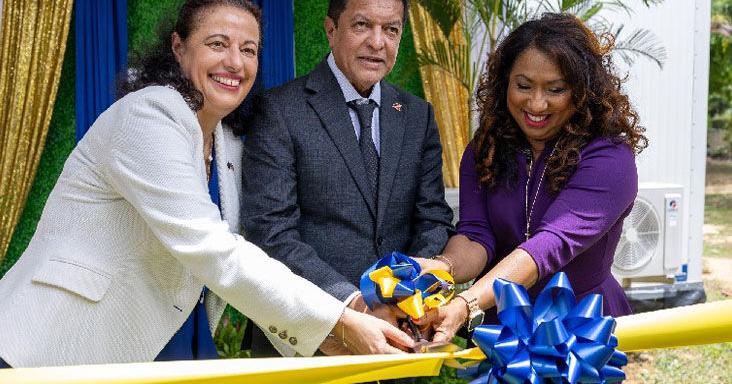
    On a recent Friday in Port of Spain, top health and diplomatic officials gathered at the Federation Park headquarters of the Caribbean Public Health Agency (Carpha) to inaugurate a landmark Regional Emergency Operations Centre, a facility designed to unify the region’s response to growing cross-border public health risks.

    Addressing the official commissioning ceremony, Trinidad and Tobago’s Minister of Health Dr. Lackram Bodoe emphasized that no Caribbean nation, no matter how prosperous or resource-rich, can tackle the increasingly complex public health threats of the 21st century in isolation. The new facility, he noted, is tailored to strengthen coordinated preparedness, response, and recovery capacity across all 26 of Carpha’s member states, and reflects Trinidad and Tobago’s enduring commitment to regional collective action.

    “Health security cannot be achieved by any one country acting alone,” Bodoe told attendees. “Our greatest strength comes from partnership: open information sharing, mutual support, and collective action that puts the well-being of all Caribbean people first. This centre is far more than a physical building—it is a symbol of the solidarity that has always guided Carpha’s work, and that will carry us through whatever public health challenges lie ahead.”

    Carpha Executive Director Dr. Lisa Indar explained that as a region made up almost entirely of Small Island Developing States, the Caribbean’s interconnected economies, open borders, and tightly linked communities leave it uniquely vulnerable to rapid spread of public health emergencies. The new operations centre will directly address this gap by enabling early threat detection, unified regional coordination, and consistent protection of population health across the archipelago.

    European Union Ambassador to Trinidad and Tobago Cécile Tassin, whose organization provided full funding for the facility’s construction and outfitting through the 11th European Development Fund Programme for Communicable Disease Prevention and Control, echoed the call for collective action. Tassin noted that the centre stands as a testament to the Caribbean’s shared commitment to protecting its people through preparedness, solidarity, and pooled expertise.

    In an official news statement released following the inauguration, Carpha framed the launch of the operations centre as a transformative milestone for regional public health capacity. Built in full alignment with the World Health Organization’s Public Health Emergency Operations Centre Framework, the facility has earned classification as a Type C Emergency Operations Centre—the highest tier of operational capability recognized by the global health body. This classification means the hub is equipped to coordinate complex, multi-country public health emergencies while providing critical support to national emergency operations centres across the Caribbean.

    Powered by Carpha’s custom-built Regional Integrated Early Warning Surveillance and Response System (RIEWSS), designed specifically for Caribbean contexts, the centre will dramatically improve the region’s ability to spot emerging threats early, maintain real-time situational awareness, and roll out faster, evidence-based responses to crises. As the central regional coordination hub, it will deepen collaboration between national ministries of health, disaster management agencies, regional bodies, and international partners. Additional core functions include deploying specialized technical response teams, coordinating emergency logistics, facilitating consistent risk communication, and maintaining a unified shared operating picture during active public health emergencies.

    The development of the centre drew directly on hard-won lessons from recent regional crises, Carpha confirmed. Events including the global COVID-19 pandemic, recurring large-scale dengue outbreaks, Hurricanes Melissa and Beryl, and a growing number of climate-linked disasters have all underscored just how critical coordinated regional action is to limiting the damage of public health emergencies.

    The operations centre operates on a scalable activation model, allowing it to shift smoothly from routine daily surveillance and monitoring to full-scale regional emergency activation when needed. It will lead coordination for responses to a wide range of events, including infectious disease outbreaks, severe weather events that carry public health risks, environmental and chemical incidents, mass gatherings, and any other event with regional or international public health implications.

    Beyond emergency response, the new hub will also strengthen Caribbean countries’ implementation of the 2005 International Health Regulations by boosting regional surveillance capacity, streamlining information management, improving cross-border emergency coordination, and raising overall operational readiness. Carpha officials emphasized that the inauguration of the centre is just one part of the agency’s ongoing commitment to advancing regional health security, ensuring all Caribbean nations are better prepared to face both existing and emerging public health threats.

  • No legal requirement

    No legal requirement

    For more than two months, Trinidad and Tobago has not held a formal post-Cabinet media briefing, sparking widespread debate over government communication practices and transparency standards. The final such briefing was held on May 7, when cabinet ministers addressed reporters on a broad spectrum of pressing public issues, from the high-profile triple homicide in Belmont’s Rifle Hill to regional security coordination following the Shield of the Americas summit, the country’s UN Security Council non-permanent seat bid, new UK visa requirements for Trinidad and Tobago citizens, and bilateral relations with neighboring Venezuela. That session was chaired by Wilfred Nicholas Morris, Minister in the Office of the Prime Minister.

    In recent interviews, two leading Trinidadian political scientists have offered divergent perspectives on the ongoing hiatus, while agreeing on a core legal point: there is no binding legal mandate requiring the government to host these formal press briefings.

    Dr. Bishnu Ragoonath, a prominent political scientist, explained that longstanding constitutional and procedural traditions frame Cabinet deliberations as inherently confidential. Cabinet meeting minutes and discussion notes are legally protected from public disclosure, he noted, and no constitutional clause or statutory law requires ministers to update the public immediately following every Cabinet gathering. Ragoonath added that post-Cabinet briefings emerged in recent decades as a voluntary practice for governments seeking to signal greater openness and align with modern good governance standards, not as a legally required obligation.

    While affirming the lack of a legal requirement, Ragoonath emphasized that transparency remains a foundational pillar of legitimate democratic governance. “I have always been one for accountability and transparency. Ethics is dependent upon integrity and accountability and transparency,” he stated. That said, he harshly criticized the current government’s broader communication strategy, arguing it is structurally inadequate and frequently fails to provide necessary context for major policy changes.

    Pointing to the recent suspension of the Military-Led Academic Training (MILAT) Programme as a key example, Ragoonath said officials only announced the termination of the program without offering any public explanation for the decision. He later learned through unconfirmed secondary sources that the program carried a price tag of roughly $135,000 per trainee, a cost that reportedly prompted the review. “If those were the facts which caused the review of the programme, come out and say it. Without giving context and without adequate background, one wonders whether or not there is a hidden agenda,” Ragoonath said.

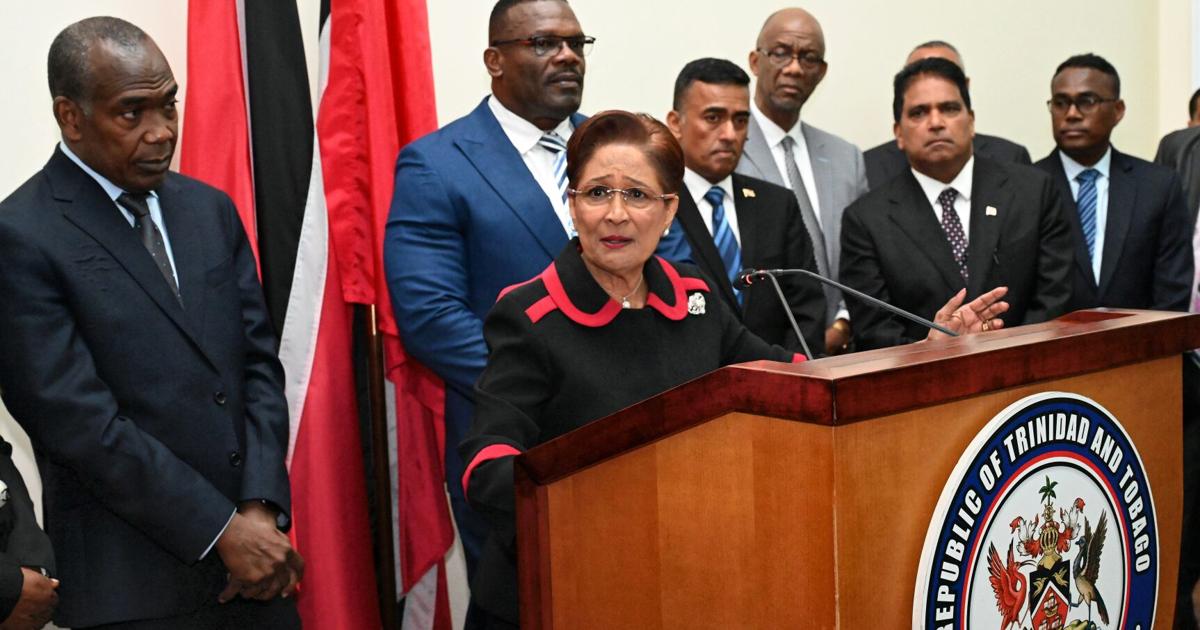
    Dr. Indira Rampersad, another respected political scientist, shared Ragoonath’s conclusion that no legal obligation exists for post-Cabinet briefings, but pushed back on the framing that the current government is failing to communicate with the public. She argued that Prime Minister Kamla Persad-Bissessar and her cabinet have maintained consistent public outreach through alternative channels, making announcements and responding to reporter questions on all major policy topics. These include the mid-year budget review, national crime reduction initiatives, regional diplomatic affairs, and the country’s successful campaign for a UN Security Council non-permanent seat.

    Rampersad noted that the government’s approach is flexible: officials share information when they have updates to deliver, through whatever format works best, rather than adhering to a rigid requirement for a formal post-Cabinet briefing every time. She also pointed to practical logistical reasons that may explain the current hiatus, noting that Cabinet meetings often run well over schedule due to crowded policy agendas, leaving little time for an immediate press briefing.

    Further, Rampersad said the public has not been left uninformed, and ministers remain accessible to journalists for questions and comments. She also reminded observers that some matters, including ongoing criminal investigations and sensitive national security issues, cannot reasonably be discussed publicly by cabinet ministers for legal and public safety reasons.

  • ‘Petty politics’ over funding

    ‘Petty politics’ over funding

    A high-profile public dispute over delayed public servant salaries has broken out in Trinidad and Tobago, with Rural Development and Local Government Minister Khadijah Ameen accusing the Port of Spain City Corporation and its mayor of prioritizing petty political gain over worker stability.

    The conflict began last week, when Port of Spain Mayor Chinua Alleyne publicly raised alarm over delayed June paychecks for the city’s monthly-paid municipal employees. Alleyne claimed the central Local Government Ministry had dragged its feet on approving June payroll funding, warning that no financial provision had even been made for salary payments beyond the month of June. He added that City Hall had repeatedly alerted national government officials that the corporation would be unable to meet its payroll obligations, but those warnings were ignored. Just one day after his initial statement, however, Alleyne updated the public via his official Facebook page that the corporation had received a funding cheque — though he clarified the sum still did not cover payroll obligations past June.

    Minister Ameen pushed back against Alleyne’s narrative while speaking to reporters at a Venezuela earthquake relief donation drive in Woodbrook earlier this week, laying full blame for the delay at the feet of the city corporation. She explained that following a mandated public service salary increase, ministry officials required updated documentation from all municipal corporations to properly recalculate and audit payroll allocations. Meetings were held with Port of Spain representatives in March and again in April to outline these requirements, but the city failed to submit the necessary paperwork on time.

    According to Ameen, the situation moved toward resolution only after the city finally submitted its first set of documents the previous Friday. Ministry staff worked through the weekend to process the submission, but a second round of documents turned in on Sunday contained errors. City officials finalized corrections on Monday, clearing the way for full funding to be disbursed.

    Ameen confirmed that the cheque the corporation received covers all salary obligations from the mid-year budget review through the end of the current financial year, meaning all affected monthly-paid workers under the Public Services Association have now received their pay. She noted that daily-paid and contract municipal workers were never impacted by the administrative backlog.

    The minister went a step further, accusing Alleyne of seeking cheap political mileage by going public with the dispute before the issue could be resolved internally. She argued that the premature publicity caused unnecessary harm to workers, sharing that one employee contacted her in tears after a local credit union halted approval on her long-awaited loan over unfounded concerns about her job security.

    Ameen also pointed to broader administrative frictions with municipal corporations controlled by the opposition People’s National Movement (PNM), claiming petty political posturing often leads PNM-led bodies to avoid routine outreach that would prevent processing delays. She emphasized that she has maintained close coordination with public service unions to protect worker interests, and stressed that no politics will be allowed to jeopardize employee pay or job security. She issued a public assurance to all municipal workers across the country that their salaries are fully secure and all outstanding administrative issues have been resolved.

  • OPEC+ kondigt bescheiden productie-uitbreiding aan temidden dalende olieprijzen

    OPEC+ kondigt bescheiden productie-uitbreiding aan temidden dalende olieprijzen

    Seven major producer nations within the OPEC+ alliance have confirmed plans to implement a modest increase to collective oil production starting in August 2026, marking the fifth straight month of output expansions for the bloc. The decision comes as global fuel prices have fallen to levels not seen since before the outbreak of the US-Iran conflict earlier this year, easing pressure on energy markets worldwide.

    The Organization of the Petroleum Exporting Countries (OPEC) and its non-OPEC partner producers, collectively known as OPEC+, made the announcement Sunday, confirming that the seven participating countries — Saudi Arabia, Russia, Iraq, Kuwait, Kazakhstan, Algeria, and Oman — will add a total of 188,000 barrels of crude per day to global markets. In an official statement, the alliance emphasized that it will continue closely monitoring market dynamics and maintain a cautious, data-driven approach to preserve global market stability.

    Global oil prices have dropped sharply over the past month, driven by growing market optimism that followed a preliminary US-Iran agreement to de-escalate their conflict. Under the terms of the tentative deal, Iran has agreed to allow unimpeded passage of commercial vessels through the Strait of Hormuz, while the United States will lift its blockade on Iranian ports. Since the agreement was reached, the volume of commercial traffic through the strategic chokepoint has risen, though it has not yet returned to pre-conflict levels.

    The Strait of Hormuz is one of the world’s most critical energy infrastructure chokepoints, carrying roughly one-fifth of global oil trade before the outbreak of the conflict. Even with the preliminary de-escalation, regional tensions remain elevated. Iran’s joint military command recently issued a warning that oil tankers must only use Iran-approved shipping routes through the strait, threatening a “forceful response” for non-compliance.

    As negotiators work to finalize a permanent peace agreement, oil prices have continued their downward trend. As of Sunday evening, Brent crude, the global benchmark for oil pricing, traded around $72 per barrel. This price point matches levels recorded just before US and Israeli strikes on Iran in February, and marks a sharp decline from the March peak of nearly $120 per barrel.

    The US-Iran conflict triggered a global energy crisis earlier this year, when the blockade of the Strait of Hormuz left even prior incremental production hikes from OPEC+ unable to offset the massive disruption to global supply. At the start of the conflict, many major Middle Eastern oil producers were forced to cut output, as export routes were effectively closed. The latest estimate from S&P Global Energy projects that full production recovery across the Persian Gulf region will not be completed until the first quarter of 2027.

    Despite falling crude prices, energy analysts have repeatedly warned that consumer fuel and goods prices will remain elevated for a long period even after a full conflict resolution, as supply chain adjustments and post-crisis reconstruction take time to fully normalize global energy markets.

  • LISTEN: Antigua and Barbuda Considering US$100 Million Chinese Loan for Housing and Renewable Energy

    LISTEN: Antigua and Barbuda Considering US$100 Million Chinese Loan for Housing and Renewable Energy

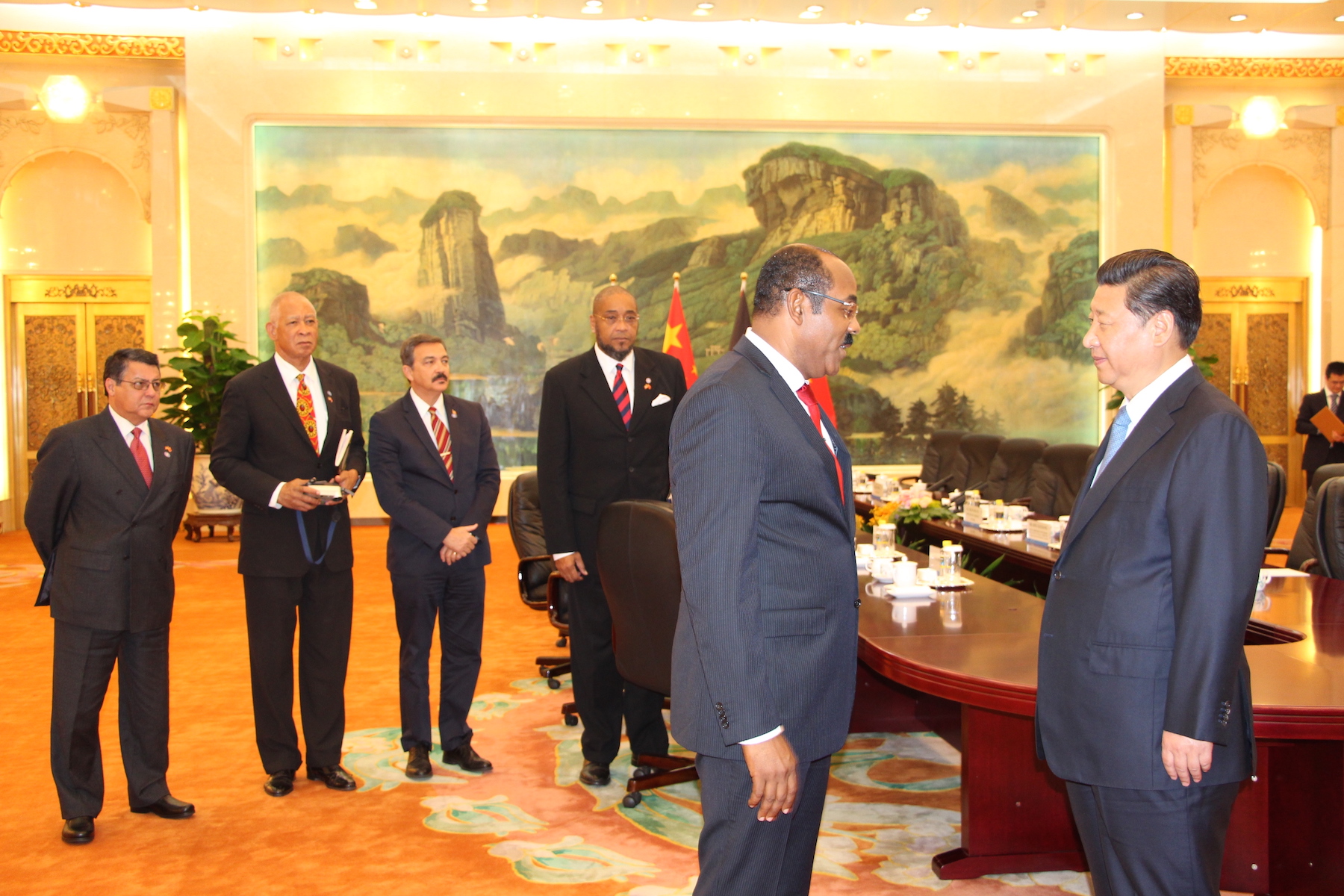
    The Caribbean nation of Antigua and Barbuda is actively exploring a new $100 million concessional loan from China to advance two key domestic development priorities: upgrading renewable energy infrastructure and expanding affordable housing stock, Prime Minister Gaston Browne confirmed in a recent public interview.

    Appearing as a guest on the local Brown and Brown Show this past Sunday, Browne framed the proposal as a feasible step forward, citing a notable improvement in the country’s fiscal position in recent years. He told listeners that Antigua and Barbuda’s debt-to-GDP ratio has dropped sharply to roughly 62%, putting it just two percentage points above the widely accepted international sustainability benchmark of 60%. This improved fiscal standing has created room for the government to take on targeted new borrowing to drive long-term growth, he argued.

    Under the draft plan being evaluated by the administration, $40 million of the requested loan would be dedicated to the construction of a utility-scale renewable energy facility, a project designed to cut the country’s reliance on expensive imported fossil fuels and lower energy costs for residents. The remaining $60 million would be channeled directly into expanding housing supply across both main islands of Antigua and Barbuda, as the country grapples with a persistent shortage of affordable quality housing.

    Browne emphasized that the current housing shortage is far larger than ongoing projects already underway can address. Currently, the government is utilizing a $20 million Chinese grant to build 100 new homes: 50 units in the Bolans community on Antigua, and another 50 on the island of Barbuda. Even with these new units coming online, the prime minister noted that the country still needs thousands of additional homes to meet unmet demand, requiring a large-scale scaling up of residential construction.

    The Antiguan leader added that his government has a long-standing policy of pursuing concessional financing from international partners to fund high-impact infrastructure and development projects, and he specifically highlighted the favorable terms of past Chinese lending. It was those low-interest terms, he said, that have helped the country steadily bring down its overall debt burden to the current improved level.

    Browne outlined the specific terms his administration would view as acceptable for the new loan: a 20-year repayment period, a 2% interest rate, and a five-year moratorium on principal payments, terms that match the favorable borrowing conditions the country has secured from China in the past.

    In a nod to multilateral openness, the prime minister also noted that the government would be equally willing to accept financing from the United States, should Washington be able to offer terms comparable to China’s concessional rates. “If they’re able to match the Chinese and we’re getting cheap money, we will borrow,” Browne stated, underscoring the government’s priority of securing the lowest-cost financing for national development regardless of the source.