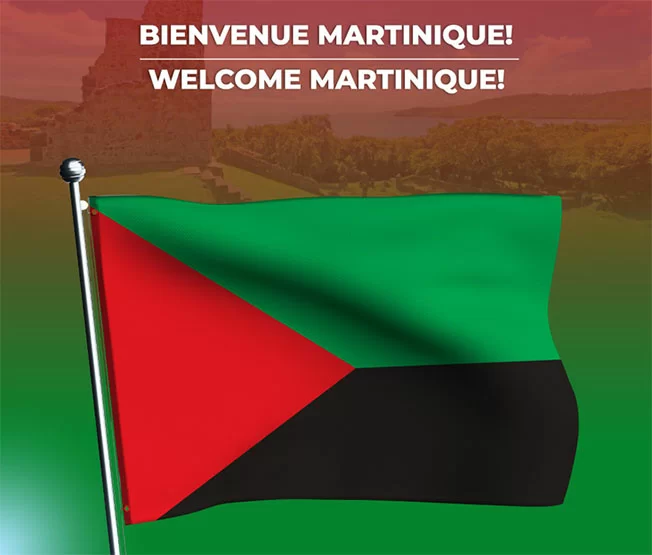
The Caribbean Community (CARICOM) has welcomed Martinique as its newest associate member, marking a key milestone in expanding cross-regional cooperation across the Caribbean bloc. The French overseas department’s formal accession took effect on June 16, 2026, after France submitted the required official accession documentation in June 2026, triggering the entry into force of CARICOM’s privileges and immunities agreement that formalizes Martinique’s new status.
Plans for Martinique’s associate membership have been in motion for over a year: the initial accession agreement was first signed back in February 2025. With all legal and procedural hurdles now cleared, Martinique will participate as an associate member for the first time at the 51st Regular Conference of CARICOM Heads of Government, which is scheduled to run from July 5 to 8 in Gros Islet, Saint Lucia.
Located in the eastern Caribbean, Martinique is an overseas department of France, and as an integral part of the French Republic, it is also a territory of the European Union. Its new associate membership will open doors for far deeper collaboration with CARICOM’s 15 full member states across multiple priority areas, including economic development, social policy coordination, and regional governance.
Founded on July 4, 1973, through the signing of the Treaty of Chaguaramas, CARICOM works to advance integrated development across the Caribbean. Its core mission covers advancing regional integration, driving collaborative economic growth, aligning foreign policy priorities, supporting social progress, and strengthening joint security cooperation across member territories.
Martinique’s accession expands the bloc’s associate member count to seven, and CARICOM frames the addition as a critical step forward in strengthening interconnectedness across the Caribbean’s linguistic communities—bringing together English-, French-, and Dutch-speaking territories of the region under deeper collaborative frameworks. For the wider Caribbean region, the move is expected to unlock new opportunities for cross-border trade, policy alignment, and shared development that benefits all coastal communities across the basin.