
The National Bank of Dominica (NBD) has publicly celebrated a landmark achievement for one of its core team members this week, as Samantha Bazil, a Wesley-based accountant employed by the national financial institution, claimed the coveted 2026 Miss Wob Dwiyet title at the official pageant hosted at the Massacre indoor facility. Bazil stood out among the full roster of contestants to take home not only the top overall crown but also two standout specialty honors: the Best in Wob Dwiyet award, which recognizes exceptional embodiment of traditional Dominican cultural attire, and the fan-voted People’s Choice Award, a testament to widespread public support for her campaign. In an official public statement, NBD leadership extended warm, enthusiastic congratulations to their longstanding staff member, noting that the entire bank community takes immense pride in celebrating her hard-earned victory. Moments after being crowned, Bazil shared her immediate reaction with local media, emphasizing that her triumph is far from a personal individual milestone. “This win does not belong to me alone – it is a victory for every member of Team NBD,” she shared, referencing the consistent encouragement she received from her colleagues throughout her pageant preparation journey. She went on to acknowledge the months of rigorous, demanding work that led to her final success, noting that every hour of effort was made worthwhile by the outpouring of community and workplace support that carried her across the finish line. Looking ahead to her one-year reign, Bazil has laid out clear, community-focused priorities centered on elevating Dominican Creole cultural visibility in her home northeastern district. She has pledged to create more accessible pathways for young people across the region to participate in future Wob Dwiyet pageants, ensuring that more local communities get the chance to send representatives to showcase their culture on the national stage. The 2026 pageant also recognized a strong cohort of other top performers: Deniscia Laurent of Petite Soufriere took the first runner-up position, sweeping three additional awards including Best Performing Talent, Best in Creole Spectacular Wear, and Miss Photogenic. Ta-Donna Cornelius, a Portsmouth resident, claimed the third-place spot, while Roseau’s Addisa Jno Baptiste rounded out the top four contestants.
博客
-
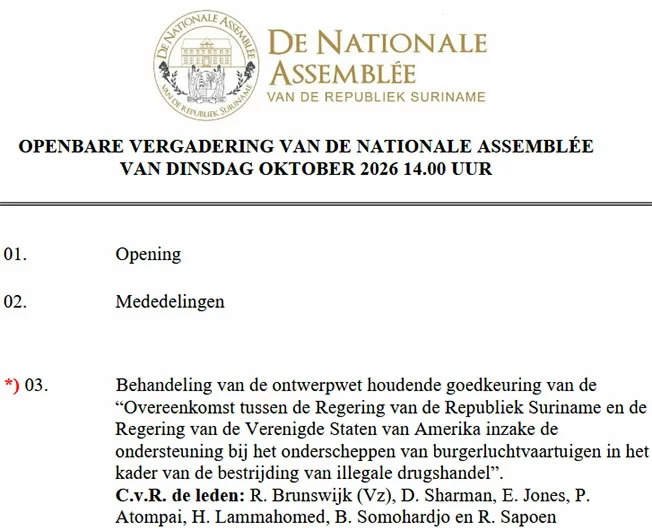
DNA behandelt overeenkomst met VS over onderscheppen verdachte drugsvliegtuigen
On October 27, the National Assembly of Suriname scheduled the plenary deliberation of a bilateral intergovernmental agreement with the United States, focused on intercepting suspected civilian aircraft involved in illicit drug trafficking, as a top legislative agenda item. The fate of the public review hinges on the finalization of the rapporteur committee’s conclusive report, led by veteran legislator Ronnie Brunswijk.
-
![FLASH : U-15 World Cup victory against Azerbaijan [4-0], Haiti qualifies](https://wp.caribscopeonline.com/wp-content/uploads/2026/10/g-48756.webp)
FLASH : U-15 World Cup victory against Azerbaijan [4-0], Haiti qualifies
Baku, Azerbaijan – October 27, 2026: The Haitian men’s U-15 national football team, nicknamed the Grenadiers, delivered a commanding 4-0 shutout victory over host nation Azerbaijan on October 26 at Baku’s Hovsan Sports Complex, locking in their spot in the knockout Round of 16 at the first-ever edition of the FIFA U-15 World Cup Festival. Entering the final Group AF group stage fixture on the heels of three consecutive wins against East Timor, Israel, and Andorra, the young Haitian squad faced a hostile home crowd that jeered their every possession, but the visitors leaned into their signature physical intensity and rapid transition play on the compact pitch to overwhelm Azerbaijan’s Odlar Yurdu defensive line from the opening whistle. Forward John Laroque of Les Cayes FC etched his name into tournament history with a blistering 16-minute hat-trick, netting goals in the 5th, 7th, and 16th minutes to put Haiti up 3-0 before Hanelson Antoine’s aggressive pressing forced an Azerbaijan own goal in the 23rd minute to extend the lead to 4-0. The Haitian backline held firm for the full 90 minutes to secure the clean sheet, capping a group stage run that saw the side amass 12 total points from 4 wins and a single opening-match 1-3 loss to group-topping Australia. Across 5 group matches, Haiti’s attack notched 17 total goals while conceding just 6, finishing second in the 6-team Group AF standings behind Australia, who posted a perfect 5-0 record with 15 points. The 14-player Haitian roster features 12 domestic talents from top Haitian youth academies and clubs, plus two players representing U.S. Major League Soccer youth sides Charlotte FC and Orlando City. Managed by head coach Raúl Valentín González Triana, the Grenadiers will next face Croatia in the Round of 16 knockout fixture scheduled for Wednesday, October 28.
-
![U-15 World Cup : 3rd win for the Grenadiers, secured in the final moments against Andorra [2-1]](https://wp.caribscopeonline.com/wp-content/uploads/2026/10/g-48755.webp)
U-15 World Cup : 3rd win for the Grenadiers, secured in the final moments against Andorra [2-1]
Baku, Azerbaijan – October 27, 2026: Competing in the historic first-ever edition of the FIFA U-15 World Cup hosted in Azerbaijan, Haiti’s youth national football squad, nicknamed the Grenadiers, secured their third consecutive group stage victory in heart-stopping fashion on October 26, edging out Andorra’s “Tricolors” 2-1 at Baku’s Hovsan Sports Complex. Entering the fixture off back-to-back wins against Timor-Leste and Israel, the Haitian side arrived at the pitch targeting a strong result to cement their standing in the competitive Group AF. Headlining the squad’s starting 11 was a mix of homegrown Haitian academy talent and North American youth league prospects, including goalkeeper Djoovinsky Succes from SLG Académie, defensive stalwarts Prasseley Lamartinière (Exafoot), Luis Alberto Étienne III (Charlotte FC) and Jean Jay Jean (Cefoj Foot Go), midfielders Hanelson Antoine (Idelo FC), Noah Desrois (Orlando City) and Christopher Charles (Les Rouleurs FC), and forward Clavens Myrthil from AS Grand-Goâve. The match kicked off with Haiti seizing immediate territorial control, and star midfielder Hanelson Antoine broke the deadlock in the 12th minute after orchestrating and finishing a fluid attacking sequence to put his side up 1-0. The tightly contested clash remained locked at that scoreline well into the second half, before Andorra’s Marc Ber found the back of the net in the 33rd minute to level the scores at 1-1, setting the stage for a tense finish that appeared destined for a draw. As the clock ticked down to the final moments of regulation play, Haiti was awarded a last-gasp penalty kick. Antoine, in exceptional form throughout the fixture, held his nerve to convert the spot kick in the 40th minute, bagging a brace and sealing all three points for the Grenadiers. Following the dramatic result, the provisional Group AF standings confirm Haiti sits in second place with 9 points from four matches, tied on points with host nation Azerbaijan but holding a slight edge in goal difference to claim the runner-up spot. Topping the group undefeated is Australia, who have earned a perfect 12 points across four outings. The rest of the group table sees Andorra in fourth with 4 points, Israel in fifth on 1 point, and Timor-Leste yet to record a point after four straight losses.
-
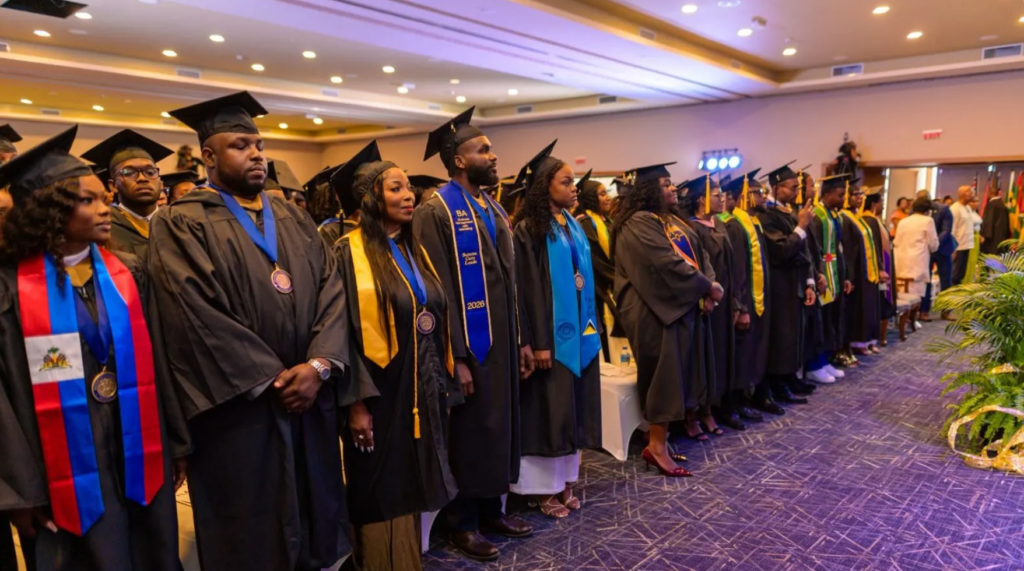
Over 40 Antigua and Barbuda Students Graduate from Monroe University
On October 18, a vibrant, cross-border graduation ceremony unfolded at the Royalton St Lucia Resort & Spa in Gros Islet, marking a major academic milestone for more than 40 learners hailing from Antigua and Barbuda as part of Monroe University’s largest regional graduating cohort. The 2026 graduating class totaled 318 high-achieving students drawn from 10+ nations across the Caribbean, North America, Central America and West Africa, including the United States, Nicaragua and Nigeria. One standout Antiguan graduate, Anthony Dorsett, distinguished himself by earning summa cum laude top honors in the Computer Networks and Cybersecurity program, and was selected to bear Antigua and Barbuda’s national flag during the ceremony’s opening Parade of Flags, a moment of immense national pride for attendees from his home nation. The celebratory event drew a distinguished guest list, led by Monroe University President Marc Jerome, alongside senior university administrative leaders, hundreds of proud family members of graduates, and prominent regional public figures. Saint Lucia’s sitting Education Minister Kenson Casimir delivered an official congratulatory address, praising the graduates’ resilience through post-pandemic academic disruptions and emphasizing the critical role of homegrown and regional tertiary institutions in building the Caribbean’s skilled professional workforce. The event’s keynote address was delivered by highly respected Caribbean academic and public health specialist Dr. Damian Eisenghower Greaves, who challenged graduates to leverage their specialized training to solve pressing local challenges ranging from digital security gaps to public health system strengthening. Established in 1933, Monroe University’s Saint Lucia campus delivers a full suite of accredited undergraduate and graduate programs spanning business administration, healthcare services, criminal justice, hospitality management and information technology, positioning itself as a leading tertiary education provider focused on accessible, career-focused learning for students across the Caribbean basin.
-
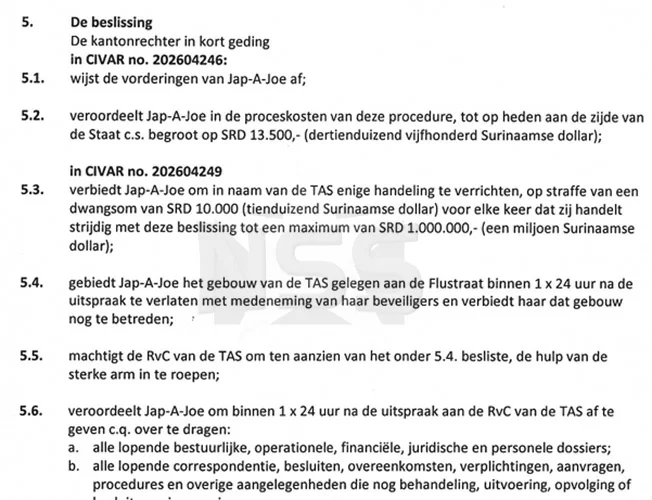
TAS-vonnis legt pijnpunten arbeidsovereenkomst Jap-A-Joe bloot; bodemrechter moet beslissen
A long-running legal tussle over leadership of Suriname’s Telecommunications Authority (TAS) has reached a partial milestone on October 27, following a summary judgment issued by subdistrict judge Robert Praag, though a core, high-stakes question remains deferred to a full substantive civil trial. While the ruling sided with TAS’s Supervisory Board (Raad van Commissarissen, RvC) to issue an immediate interim injunction barring former presidential appointee Wendy Jap-A-Joe from acting in the director role, the court declined to issue a final verdict on the legality of the 2021 employment contract she signed with the telecom regulator, placing the entire agreement on hold pending a full bench review.
-
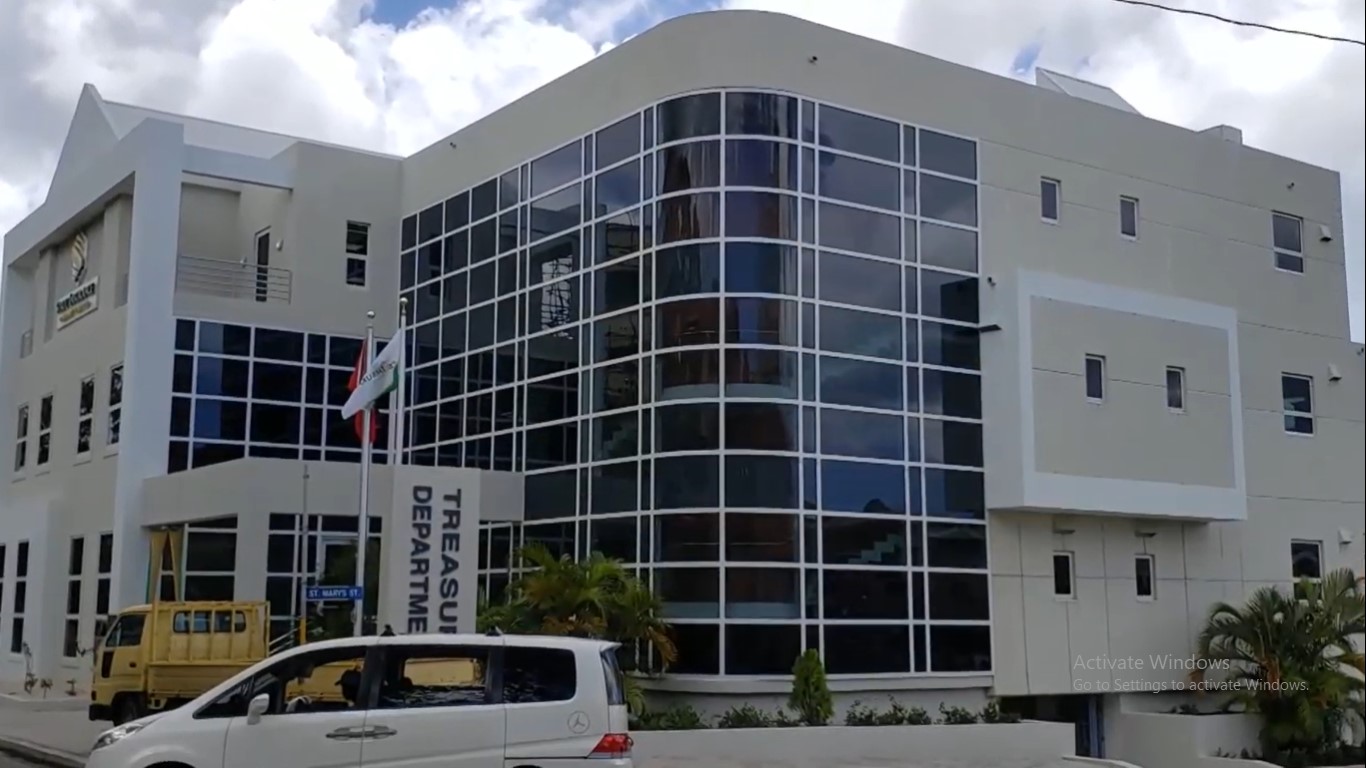
LETTER: Concerns About Public Spending and National Priorities in Antigua and Barbuda
A growing public discourse in Antigua and Barbuda is challenging the government’s proposed allocation of $60 million in pooled funds from the national Treasury and state-run public sector agencies to co-finance the construction of two new hospitality properties, as widespread unaddressed urgent national needs continue to impact daily life for local residents. Across the twin-island nation, a cascade of long-unresolved pressing public demands remains unmet: large swathes of the national road network are in a state of severe disrepair, hundreds of public school teachers are still waiting for long-overdue salary disbursements, local healthcare facilities lack life-saving essential medical equipment, and most public school classrooms have no functional air conditioning to support learning for students and staff. Compounding these gaps, regional cost-of-living inflation continues to erode household purchasing power, violent and petty crime rates remain a top public safety concern, and multiple residential communities report going weeks at a time without consistent, safe piped water access. While tourism has long served as the backbone of Antigua and Barbuda’s national economy and a core driver of job creation, concerned citizens and civic observers are demanding that the administration provide a full, public justification for diverting such a large sum of public capital toward hotel development at a moment when core public services and foundational community infrastructure are in critical need of urgent investment. Key unanswered questions include what tangible, direct benefits ordinary citizens will gain from the two new hotel projects, and what formal oversight mechanisms are in place to ensure public funds are not misallocated or wasted. Stakeholders are also pushing for full public scrutiny of the significant financial risks associated with the untested investment: if the two new hotels underperform and fail to deliver the projected revenue and return on investment, no clarity has been provided on which party will absorb the resulting losses. Local residents fear that taxpayers will be forced to take on unsustainable additional public debt to cover shortfalls, which would in turn squeeze already limited budgets for essential public services even further. Civic leaders emphasize that this debate transcends partisan political loyalties entirely, as these spending decisions have direct, material impacts on the daily livelihoods, well-being, and ability of all Antiguans and Barbudans to access their most basic needs. Regardless of individual party affiliations, the public has a fundamental right to demand full governmental accountability and leadership that centers the everyday priorities of the local population above all other considerations. Residents of the twin-island nation are calling on the government to prioritize full transparency around all public spending choices, and to reorient national budget priorities to deliver the reliable piped water networks, fully equipped public hospitals, safe low-crime communities, and properly resourced, comfortable learning environments in public schools that all citizens deserve.
-
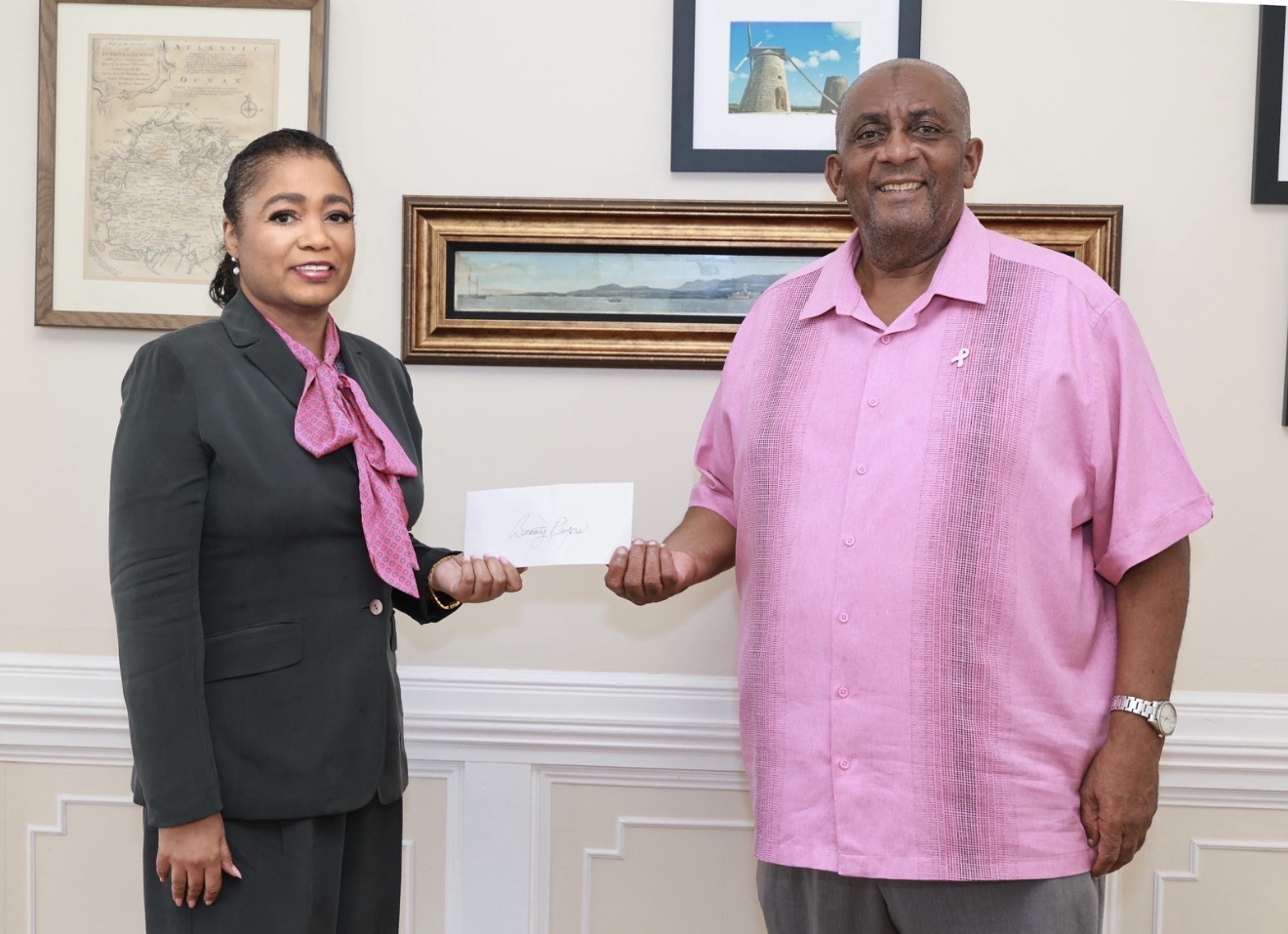
Lady Williams Presents $15,000 Cheque to Support Antigua and Barbuda Community Players Ahead of CHOGM Performances
At an official ceremony hosted at Antigua and Barbuda’s Government House, Her Excellency Lady Sandra Williams, acting in an official capacity for the Halo Foundation, formally handed over a $15,000 grant cheque to Rudolph Davis, the lead of the longstanding Antigua and Barbuda Community Players, to cover critical production and rehearsal costs for the group’s upcoming performances at the Commonwealth Heads of Government Meeting (CHOGM). During the presentation, Lady Williams voiced unwavering endorsement for the decades-old cultural troupe, emphasizing that the upcoming international gathering presents a rare, high-visibility platform to showcase the unique cultural identity, creative spirit and indigenous performance heritage of Antigua and Barbuda to hundreds of visiting diplomatic delegations and global partners. She also issued a deliberate call to prioritize the preservation of traditional local art forms, warning against sidelining time-honoured folk performance practices in favour of fleeting, trendy contemporary acts that do not reflect the nation’s distinct cultural roots. The financial support arrives at a particularly meaningful juncture for the Community Players, which is marking its 75th anniversary this year, and recently secured formal patronage from Their Excellencies Sir Rodney and Lady Williams in recognition of its seven-decade legacy of shaping the country’s cultural landscape. The troupe’s storied history includes a transformative era of leadership under Dame Yvonne Maginley, the former Director General of Tourism for Antigua and Barbuda, who took on the role of the group’s Musical Director starting in 1957. Dame Maginley was widely celebrated across the Caribbean for her pioneering work integrating local folk performance into national tourism and cultural outreach strategies. Notably, Dame Maginley was also the direct professional supervisor of a young Lady Williams early in her career, when the future dignitary completed specialized training in conference and incentive tourism in Austria. Lady Williams would later go on to earn a competitive Commonwealth Scholarship to pursue a Master’s degree in Tourism Management at the University of Surrey, building a career path deeply tied to advancing the twin goals of national cultural promotion and sustainable tourism development. The newly disbursed $15,000 allocation will be directed to finalize full cast rehearsals, procure costumes and production materials, and refine all technical elements of the troupe’s CHOGM showcase, ensuring the group can deliver a polished, authentic presentation of Antiguan and Barbudan performance art for the global Commonwealth audience.
-
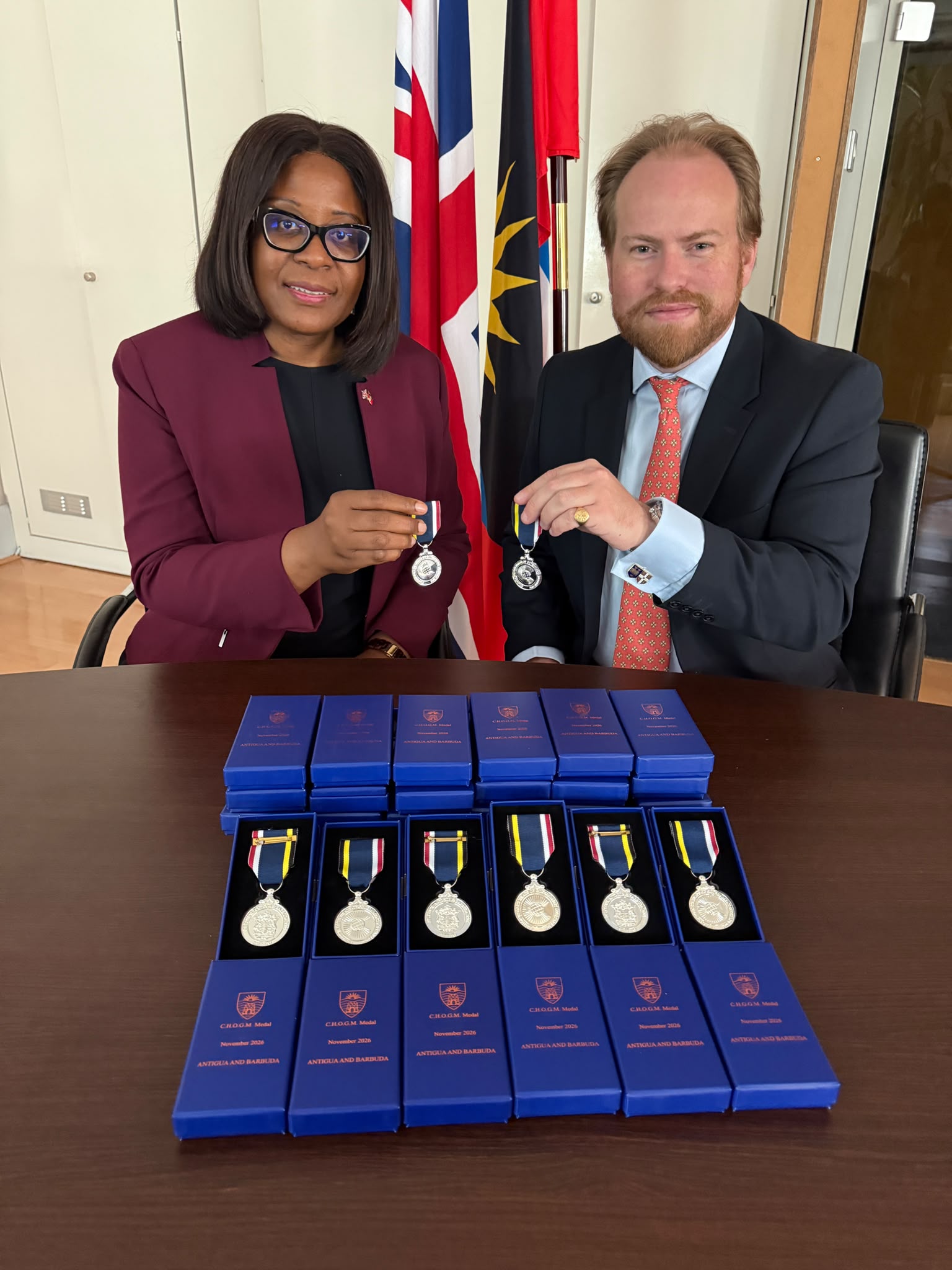
Antigua and Barbuda Receives Medals for CHOGM and 45th Anniversary Celebrations
In a landmark bilateral engagement held last month, Antigua and Barbuda’s High Commissioner to the United Kingdom, H.E. Karen-Mae Hill, finalized a collaborative agreement with Edward Hilary Davis, a senior lead at Vaughtons – the iconic British specialist manufacturer of ceremonial medals, official badges and state insignia – to produce bespoke commemorative medals for two of the nation’s most high-profile upcoming milestones: the 2026 Commonwealth Heads of Government Meeting (CHOGM) that Antigua and Barbuda will host, and the country’s 45th Independence Anniversary celebrations.
-

Overwegend zonnig en warm weer verwacht
Published at 04:37 on 27 October, the latest official meteorological outlook outlines a predominantly sunny, unseasonably warm day across the region for Tuesday, 27 October. The sun will dominate conditions for the vast majority of the day, with only isolated, temporary patches of cloud cover expected to drift across the sky at intervals, with no significant overcast periods forecast. After a calm start to the morning marked by stretches of bright sunshine and scattered light cloud formations, temperatures will climb steadily through the early hours, tempered slightly by a gentle east to north-easterly breeze that offers mild relief from building heat. The risk of any precipitation throughout the morning hours remains negligible, according to forecasters. By midday and through the afternoon, conditions will peak in warmth, with the mercury hitting a high of roughly 34°C in Paramaribo. The sweltering peak heat will feel particularly intense during the hours of maximum solar radiation, even as the east to north-easterly wind picks up to a moderate, occasionally fairly strong speed to cut through some of the humidity. While localized temporary cloud thickening may occur in small pockets of the region, the chance of rain is rated as extremely low in all current forecast models. As evening falls, temperatures will gradually cool down from the daytime peak, with skies staying mostly clear or lightly clouded, and no meaningful rain risk projected overnight. Paramaribo’s overnight low is expected to sit between 24°C and 26°C, maintaining the mild, warm conditions after sunset with the east to north-easterly wind pattern persisting.