博客

  • St. Kitts-Nevis PM chides Regional Leaders over public debate on private CARICOM matters – News Source Guyana

    St. Kitts-Nevis PM chides Regional Leaders over public debate on private CARICOM matters – News Source Guyana

    At the opening ceremony of the 51st Regular Meeting of CARICOM Heads of Government, outgoing Chairman and Prime Minister of St. Kitts and Nevis Dr. Terrence Drew delivered a stark call for renewed cohesion within the Caribbean regional integration movement, framing unity as the bloc’s most valuable strategic asset.

    Drew opened his remarks by acknowledging that regional unity had faced unprecedented scrutiny in recent months, after internal matters that are traditionally resolved behind closed doors spilled into public discourse, sparking widespread questions about CARICOM’s long-term cohesion. While he did not explicitly name the specific controversy that triggered the public rift, his comments are widely understood to reference recent public debates led by Trinidad and Tobago Prime Minister Kamla Persad-Bissessar over the reappointment of outgoing CARICOM Secretary-General Dr. Carla Barnett.

    “When I took on the role of CARICOM Chairman, there were very real concerns about the future of our community,” Drew told assembled regional leaders. “Issues that have always stayed within private discussions among heads of government were increasingly dragged into public debate. Doubts were raised about our ability to stay united. Some even questioned whether CARICOM had reached a defining turning point, one from which it might not be able to recover. These concerns were not unfounded — they were genuine.”

    Drew emphasized that before the bloc can tackle shared external challenges, it must first rebuild and strengthen the working relationships between member state leaders. He noted that the public airing of internal disagreements had sparked widespread fears that the regional movement could not weather the latest wave of internal tension.

    Over his tenure as chairman, Drew undertook a deliberate confidence-building effort: he traveled to every full member state of CARICOM to meet one-on-one with each head of government, creating space for every leader to voice their concerns openly and laying groundwork to rebuild fractured trust across the bloc.

    Looking ahead, Drew laid out a clear path to sustaining cohesion: he urged all heads of government to prioritize participation in closed-door retreats and caucuses, where internal matters can be resolved within the bloc. “These private sessions remain one of CARICOM’s greatest strengths,” he explained. “Away from press cameras and rehearsed official statements, colleagues can speak candidly with one another. That is how trust is deepened, misunderstandings are cleared up, and collective consensus is built.”

    Drew stressed that regional unity remains an non-negotiable foundation for the collective security of all Caribbean nations. He closed his remarks with a firm warning to leaders against airing internal CARICOM business through public media headlines, a practice that he argued undermines the regional movement’s global standing, and a renewed plea for all members to commit to resolving differences internally.

  • Derde helft WK 2026: Portugal vs Spanje, Generaties botsen in het Iberische duel

    Derde helft WK 2026: Portugal vs Spanje, Generaties botsen in het Iberische duel

    The final matchday of the 2026 FIFA World Cup round of 16 delivers two high-stakes clashes that blend iconic legacy, emerging talent, and unprecedented off-pitch drama, all set to shape the path to the quarterfinals. First up, the long-awaited Iberian derby at Dallas Stadium pits Cristiano Ronaldo’s Portugal against Lamine Yamal’s young, high-energy Spain, a matchup that is as much a generational battle as it is a contest between two of European football’s most successful nations. At 41, Ronaldo enters what is widely expected to be his final World Cup campaign, still pulling critical strings for his side even as his on-pitch influence has gradually waned with age. Opposite him stands 18-year-old Spanish prodigy Lamine Yamal, who has bounced back from an early tournament injury to cement his status as one of the competition’s breakout stars.

  • Robinson wins CARICOM Chairman’s Cup Elite 10K

    Robinson wins CARICOM Chairman’s Cup Elite 10K

    After nearly a decade of coming just short of the top spot, Barbadian long-distance runner Carlie Robinson secured her long-awaited breakthrough victory on Sunday, crossing the finish line first to claim the CARICOM Chairman’s Cup Elite 10K title in Saint Lucia.

    For years, Robinson has steadily built her reputation as a consistent contender at this annual elite race, but gold always remained out of reach. Heading into Sunday’s competition, the distance runner held three previous podium finishes: two third-place placements and one second-place showing. This win marks the first time she has stepped onto the highest step of the podium, a milestone that stands as one of the most defining moments of her professional running career.

    Speaking in an interview with Barbados TODAY following her win, Robinson opened up about the mix of relief and excitement she felt after crossing the finish line. “I was extremely happy with this result. I have wanted to win this race for almost ten years and it finally came to fruition for me. It was not a guarantee on Sunday,” she said.

    The experienced runner shared that the challenging race course nearly threw her plans off course before she could even contend for the top spot. “The course was very hilly, which does not play to my strength and for the first half of the race, I was concerned I would not make the podium as I was a bit behind,” Robinson explained. Despite the shaky start, she leaned into her years of training and mental toughness to turn the race around. “But I applied patience and just trusted in my fitness, and slowly I made my way back up,” she added.

    Robinson also expressed surprise and satisfaction with her final finishing time, clocking in at 39 minutes and 31 seconds. That mark stands as her fastest time ever recorded at the CARICOM 10K event, an achievement she did not expect given the hilly terrain. “I was also happy with my time – 39.31 on a challenging course, it’s my quickest time for the CARICOM 10k race and that surprised me,” she said.

    Looking back at what kept her motivated through the tough first half of the race, Robinson credited pre-race words of encouragement from her mother, who reminded her of her capabilities just 24 hours before the starting gun went off. “Last night (Saturday) my mother told me ‘you can do anything’ so I just held those words in my head and kept working through and finally got the result I wanted,” Robinson said.

    She also shared that she had made a promise to a key supporter of Barbadian athletics ahead of the race, and was eager to deliver on that commitment. “I also told Director of the National Sports Council, Neil Murrel, who is very supportive of Barbados’ involvement in this race, that I was going to bring home the win so I will be happy to let him know we got it!” she added.

    Robinson was not the only Barbadian competitor to turn in a strong performance at the event. Fellow Barbadian runner Joshua Hunte joined her at the competition, and narrowly missed out on a podium spot in the men’s Elite 10K, finishing just outside the top three in fourth place with a commendable showing.

    The 2024 CARICOM Chairman’s Cup Elite 10K is one of several headline events being held alongside the 51st Regular Meeting of the Conference of Heads of Government of the Caribbean Community, which is currently taking place in Castries, the capital of Saint Lucia. (Photo Credit: CARICOM Facebook)

  • Cluck, Cluck… Pay Up: Chicken Prices Rise

    Cluck, Cluck… Pay Up: Chicken Prices Rise

    Starting Saturday, July 6 2026, consumers across Belize are facing higher price tags for one of the country’s most popular protein sources: chicken. The Belize Poultry Association, the leading industry body representing local poultry producers, has formally enacted a market-wide price adjustment prompted by sustained increases in core production expenses that have squeezed producer margins for months.

    Under the new pricing structure, the cost of whole chicken will rise by 12 cents per pound, a change that went into effect immediately the day the announcement was released. Industry representatives explained that the adjustment is a direct response to escalating costs across every major input category for poultry farming. Key drivers include sharp upticks in the market prices of critical feed grains — corn and soybeans, which make up the bulk of chicken feed rations — as well as higher fuel costs for farm operations and transportation, and increased prices for specialized poultry premixes, the nutrient-dense additives required for healthy flock growth.

    The price increases will not be limited to whole chicken, either. The association confirmed that all other poultry-based products will see corresponding price adjustments, with the size of the increase varying depending on the specific cut of meat or level of processing applied to the product. For example, pre-packaged cut chicken breasts, marinated processed portions, and specialty poultry products may see different percentage increases compared to whole bird offerings.

    In a statement released alongside the pricing announcement, the Belize Poultry Association emphasized that the price hike was an unavoidable step to keep the local industry operational. Continued rising input costs had created unsustainable pressure on producers, the group noted, making the adjustment necessary to offset ongoing cost growth and maintain consistent supply of local poultry to Belizean consumers. The organization also closed its statement by thanking the Belizean public for its continued patronage and support of the domestic poultry sector, which is a core part of the country’s local food supply chain.

  • More Than 150 Children Join E.P. Chet Greene’s Summer Camp

    More Than 150 Children Join E.P. Chet Greene’s Summer Camp

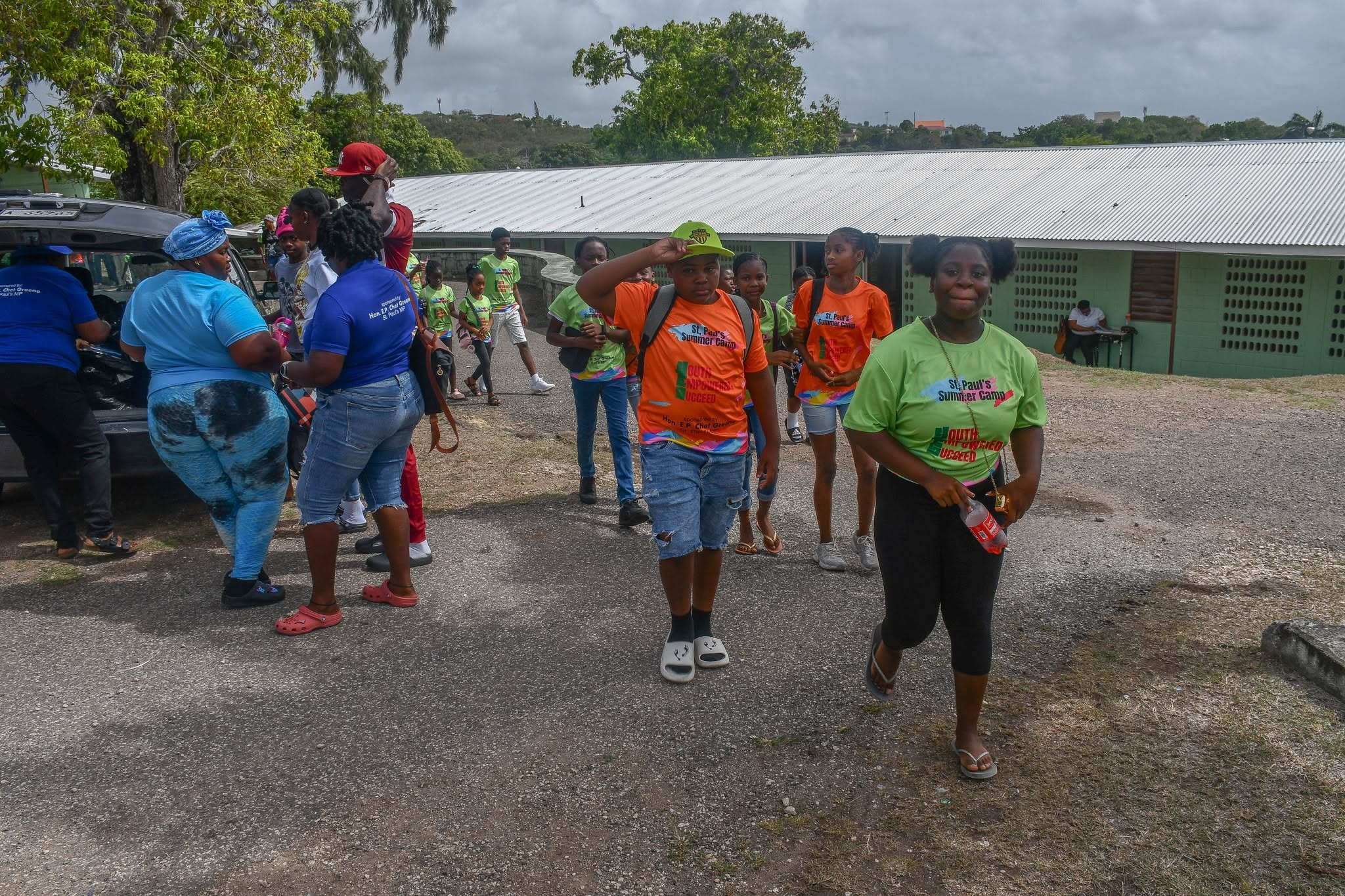
    A popular annual summer community initiative has drawn more than 150 children from across the region to participate in this year’s program organized by E.P. Chet Greene, marking one of the largest turnouts in the event’s recent history. The summer camp, designed to provide young people with a structured, engaging outlet during school break, offers a diverse lineup of activities that blend educational enrichment, physical recreation, and social skill-building tailored to different age groups. Unlike typical vacation programs that focus solely on entertainment, this initiative prioritizes creating a supportive environment where children can explore new interests, build lasting friendships, and develop confidence outside the traditional classroom setting. Local organizers have highlighted that the camp addresses a key community need for affordable, accessible youth programming during the summer months, when many working families struggle to find safe, productive care for their children. Volunteers from local community groups and partner organizations have stepped in to support the operation, leading everything from arts and crafts workshops to sports clinics and environmental education sessions. Participants have been actively engaging with all scheduled activities, with many sharing positive feedback about the opportunity to try new experiences they would not normally have access to during the school year. E.P. Chet Greene, who founded the camp years ago, has emphasized that the program’s core mission is to invest in the next generation by giving children the tools and experiences they need to grow into well-rounded community members. Organizers are already planning for next year’s camp, with expectations that participation will continue to grow as the program becomes a staple of the regional summer community calendar.

  • ‘Justice for David & Daniel’: San Pedro Rallies for Justice

    ‘Justice for David & Daniel’: San Pedro Rallies for Justice

    One week after a brutal double fatal shooting shook the small coastal community of San Pedro, Belize, dozens of local residents took to public streets again on Sunday to push for accountability and answers in the killing of local businessman David David Harmouch and security guard Daniel Jones.

    The two men were killed on June 28 when four armed suspects stormed Island Supermarket, where Harmouch’s family members also work and shop. Investigative records confirm that two additional members of the Harmouch family suffered non-fatal injuries during the attack, before the four gunmen fled the scene undetected immediately after the shooting.

    Sunday’s demonstration marked the second public call for action from the community in as many weeks. Protesters traversed the main thoroughfares of Ambergris Caye, a popular tourist and residential island that is home to San Pedro, holding hand-painted banners emblazoned with the slogan “Justice for David & Daniel”. Many participants carried printed photographs of Harmouch to honor the life of the local business leader.

    The first protest, held outside the San Pedro Police Station exactly one week before Sunday’s march, was organized by leaders of Belize’s Lebanese community, to which the Harmouch family belongs. At that demonstration, participants publicly criticized local law enforcement for what they described as a failure to pre-empt violent crime in the area, a grievance that has continued to fuel community unrest.

    As of Sunday, local police authorities confirmed their investigation into the mass shooting remains active, and several persons of interest have been taken into custody for questioning. To date, however, no formal charges have been filed against any individual in connection with the killings, leaving the community still waiting for concrete action from the justice system.

  • NEAB Calls for Stronger Anti-Corruption Measures

    NEAB Calls for Stronger Anti-Corruption Measures

    In the wake of fresh allegations of widespread financial mismanagement within Belize’s Ministries of Home Affairs and Defence, one of the nation’s prominent civil society organizations is pressing the Briceño administration to enact far bolder anti-corruption measures to address systemic gaps in public governance.

    The National Evangelical Association of Belize (NEAB) has publicly acknowledged the government’s early steps to respond to the scandal. These actions include launching a formal probe into irregular payments processed through the Smart Stream financial platform, granting paid leave to sitting ministers Oscar Mira and Florencio Marin Jr., appointing Minister Espat to take over interim oversight of the impacted ministries, and suspending the finance officer implicated in facilitating the unapproved transactions.

    Despite this initial action, NEAB leaders argue that incremental moves are not enough to repair the eroded trust between the Belizean public and their government. The organization has laid out a clear, multi-point policy demand addressed directly to Prime Minister John Briceño: first, guarantee that the ongoing investigation into the scandal is conducted thoroughly and remains entirely free from political interference; second, revise the nation’s existing Finance and Audit Act to close long-standing regulatory loopholes that have enabled improper financial activity; third, move forward with full, nationwide implementation of the United Nations Convention Against Corruption (UNCAC); fourth, pass long-awaited legislation to protect whistleblowers and reform national campaign finance rules; and finally, appoint a fully empowered new Ombudsman that can exercise all the constitutional oversight responsibilities granted to the office.

    NEAB officials emphasized that the recent allegations surrounding the “Mira Millions” controversy have laid bare critical structural weaknesses in Belize’s current financial oversight framework. The association stressed that urgent, immediate regulatory reform is non-negotiable to build stronger accountability mechanisms and drive down systemic corruption across all levels of government.

    This call for reform follows a similar push from Belize’s leading business advocacy group just one week prior. The Belize Chamber of Commerce and Industry (BCCI) submitted a 10-point reform proposal to Prime Minister Briceño, calling for comprehensive overhauls to the government’s public financial management systems in response to the procurement irregularities at the heart of the current scandal. Among the BCCI’s key recommendations are upgrades to the core SmartStream accounting platform, the implementation of more robust automated controls to flag irregular payments before they are processed, stronger independent audit protocols, and tighter, more consistent oversight of all public sector spending.

    For his part, Prime Minister Briceño has already signaled that the national cabinet will soon review a new centralized electronic procurement system, developed with technical and financial support from the Inter-American Development Bank. The Prime Minister noted that the new system is designed to boost transparency and accountability for every government procurement transaction across all departments, addressing one of the core vulnerabilities exposed by the ongoing scandal.

  • A Solar-Powered Water System?

    A Solar-Powered Water System?

    For years, residents of Pomona Village in Belize’s Stann Creek District and surrounding communities have faced crippling water shortages during the annual dry season, a persistent public health and livelihood challenge that disrupted daily life and limited local development. On Saturday, that long-running issue moved one step closer to permanent resolution, as Belize’s Ministry of Rural Transformation officially inaugurated an expanded, off-grid solar-powered water system built exclusively to address seasonal water scarcity.

    The upgraded project, backed by private sponsor RF&G Insurance Ltd., delivers far more than just a renewable energy source for water pumping. It adds a robust 40,000-litre ground-level storage reservoir, purpose-built pump house, and a backup diesel generator that guarantees uninterrupted water access even during extended grid outages or periods of low sunlight. The new infrastructure works in tandem with Pomona Village’s aging existing water network, which has for decades failed to meet rising demand from local households when rainfall slows to a stop in the dry months.

    Beyond the core construction work, the initiative also equipped Pomona’s local water management board with a full stock of new pipes, fittings, and essential plumbing materials to support future network expansion as the village’s population grows. In an official statement following the commissioning, the Ministry of Rural Transformation highlighted that the integrated system cuts operational pressure on the old network, locking in a consistent, dependable water supply for residential users even at the height of the dry season.

    Officials added that the additional materials and upgraded infrastructure do more than solve an immediate shortage: they empower the local water board to take long-term control of the village’s water resources, supporting planned growth and sustainable development for the community for years to come.

  • Trinidad and Tobago wants reappointment of CARICOM SG sent to CCJ

    Trinidad and Tobago wants reappointment of CARICOM SG sent to CCJ

    CASTRIES, St. Lucia – July 6, 2026 – A major constitutional dispute has emerged at the 51st Caribbean Community (CARICOM) Heads of Government Summit, after Trinidad and Tobago Prime Minister Kamla Persad-Bissessar formally challenged the legality of incumbent Secretary-General Carla Barnett’s reappointment, framing the objection as a defense of institutional integrity rather than a personal or political attack.

    In a 22-page confidential letter shared with regional leaders and obtained by the Caribbean Media Corporation (CMC), Persad-Bissessar laid out detailed legal objections to Barnett’s February 2026 reappointment, which was approved during a heads of government retreat in St. Kitts and Nevis. Barnett, the first woman to hold the CARICOM Secretary-General post, began her first term in August 2021.

    The Trinidad and Tobago Prime Minister emphasized that her administration’s position is not intended to sow division within the regional bloc, but to protect the constitutional order that underpins CARICOM’s legitimacy. “Regional unity cannot rest upon expediency and irregular practices masquerading as precedent. It must rest upon adherence to the rules which every Member State has freely accepted and undertaken to uphold,” Persad-Bissessar wrote.

    Persad-Bissessar outlined four core violations of the Revised Treaty of Chaguaramas, CARICOM’s founding legal framework. First, she noted that Article 24 of the treaty explicitly grants the power to appoint and reappoint the Secretary-General to the full Conference of Heads of Government, not a closed, informal heads-only retreat. While retreats may facilitate confidential discussion, she argued, they cannot replace the formal constitutional body designated to exercise appointment authority. Even though attendees of the retreat overlap with full Conference membership, she wrote, “Substance prevails over nomenclature. A body cannot acquire treaty powers merely because participants overlap with those who ordinarily constitute the treaty organ.”

    Second, Persad-Bissessar pointed out that the official communique issued after the February retreat made no mention of the reappointment decision, depriving member states of advance notice and the opportunity to prepare for deliberation on one of CARICOM’s most senior constitutional posts. She rejected arguments that past unrecorded practices justify the current process, noting “two wrongs do not make a right,” and that the principles of openness and informed participation enshrined in the treaty require explicit agenda notice for such critical decisions.

    Third, the Prime Minister highlighted that the mandatory constitutional process requiring a recommendation from the CARICOM Community Council prior to any appointment or reappointment was completely bypassed. Persad-Bissessar stressed that this requirement is not an optional procedural formality, but a core constitutional safeguard, and that reappointment falls under the same rules as a first appointment. “By bypassing the Community Council, the constitutional balance established by the Revised Treaty was displaced, and the Conference purported to exercise a power that had not yet been lawfully engaged,” she wrote.

    Fourth, Persad-Bissessar noted that the Office of the CARICOM General Counsel failed to provide adequate legal guidance to ensure compliance with constitutional requirements for representation, agenda setting, and decision-making. She argued that this omission directly contributed to the current controversy over the reappointment’s validity.

    To resolve the dispute, Persad-Bissessar has proposed two key interim and long-term measures. First, she called for an immediate expedited advisory opinion from the Trinidad-based Caribbean Court of Justice (CCJ) – CARICOM’s highest judicial body – under Article 212 of the Revised Treaty, to clarify the treaty’s requirements for Secretary-General reappointment. She emphasized that turning to the CCJ is not an act of confrontation, but a commitment to the rule of law that all member states agreed to uphold: “Resorting to the CCJ is not an act of confrontation. It is an affirmation of the very constitutional architecture that Member States created to safeguard the integrity of the Community.”

    Second, Persad-Bissessar proposed that Barnett remain in office on a month-to-month basis only until the CCJ issues its ruling, with the extension explicitly stated to not prejudice the legal positions of any member state. She also mandated full recusal for both Barnett and the CARICOM General Counsel from all proceedings related to the CCJ referral: Barnett because she has a direct personal and legal interest in the outcome of the case that creates a conflict of interest and reasonable apprehension of bias, and the General Counsel due to her role as a primary advisor to Barnett. All responsibilities related to the advisory proceedings would be transferred to the CARICOM Deputy Secretary-General or another independent party.

    The dispute has become a central agenda item for regional leaders, who began a closed-door retreat on the first working day of their four-day summit, chaired by St. Lucia Prime Minister Phillip J. Pierre. Persad-Bissessar arrived at the summit’s opening ceremony Sunday night after Barnett delivered her opening remarks, and St. Kitts and Nevis Prime Minister Dr. Terrance Drew, who spoke after Barnett’s reappointment in February, publicly praised her stewardship of the Guyana-based CARICOM Secretariat and the regional integration movement. Drew noted that Barnett “have understood the importance of preserving the impartiality of the Secretariat while faithfully implementing the decisions of heads of government,” adding that “that balance has strengthened this community, and for this, I offer, on behalf of all of us, our sincerest gratitude.”

    In closing her letter, Persad-Bissessar reaffirmed Trinidad and Tobago’s commitment to strengthening CARICOM institutions, noting that decades of regional cooperation and collective global influence depend on transparent, treaty-compliant governance. “Those achievements can only endure where the institutions of CARICOM are administered transparently and consistently with the Revised Treaty, and with the legal framework to which every Member State has committed itself,” she wrote, adding that an authoritative CCJ ruling would provide the clarity and legitimacy needed for the bloc to move forward together.


  • President Simons neemt deel aan CARICOM-top in St. Lucia

    President Simons neemt deel aan CARICOM-top in St. Lucia

    The 51st regular Conference of Heads of State and Government of the Caribbean Community (CARICOM) is currently underway in Saint Lucia, bringing together regional leaders to set collective strategic direction and advance cross-border cooperation. Suriname’s head of state, President Jennifer Simons, will open the country’s participation in the summit, traveling to the island nation on Tuesday to attend the initial proceedings before returning home the same day. Following her departure, Minister of Foreign Affairs, International Trade and Cooperation Melvin Bouva will step in to represent Suriname for the remainder of the conference, which is scheduled to conclude on July 8.

    The summit officially launched on Sunday, July 5, in the coastal town of Gros Islet, Saint Lucia. This year’s gathering is chaired by Saint Lucia Prime Minister Philip Pierre, who assumed CARICOM’s rotating presidency on July 1, taking over the role from outgoing chair Terrance Drew, Prime Minister of Saint Kitts and Nevis. The opening ceremony featured addresses from Pierre, Drew, and CARICOM Secretary-General Carla Barnett, setting the tone for days of deliberations on regional priorities.

    Ahead of the formal opening of the conference, CARICOM hosted its 19th annual Road Run/Walk community event. The activity drew both amateur recreational athletes and professional competitors from across the CARICOM region, designed to highlight the critical role of regular physical activity, sports participation, and healthy active lifestyles for regional populations.

    As the highest decision-making body of the 15-member Caribbean integration bloc, the Conference of Heads of State and Government carries substantial weight for the future of regional cooperation. During the summit, leaders will formalize the bloc’s core strategic policy frameworks, vote on binding decisions for cross-regional collaboration, negotiate new regional agreements, and align the bloc’s position on relations with global international organizations and non-CARICOM states. Per CARICOM’s long-standing governance rules, all decisions made at the conference are typically reached through consensus among participating member states.