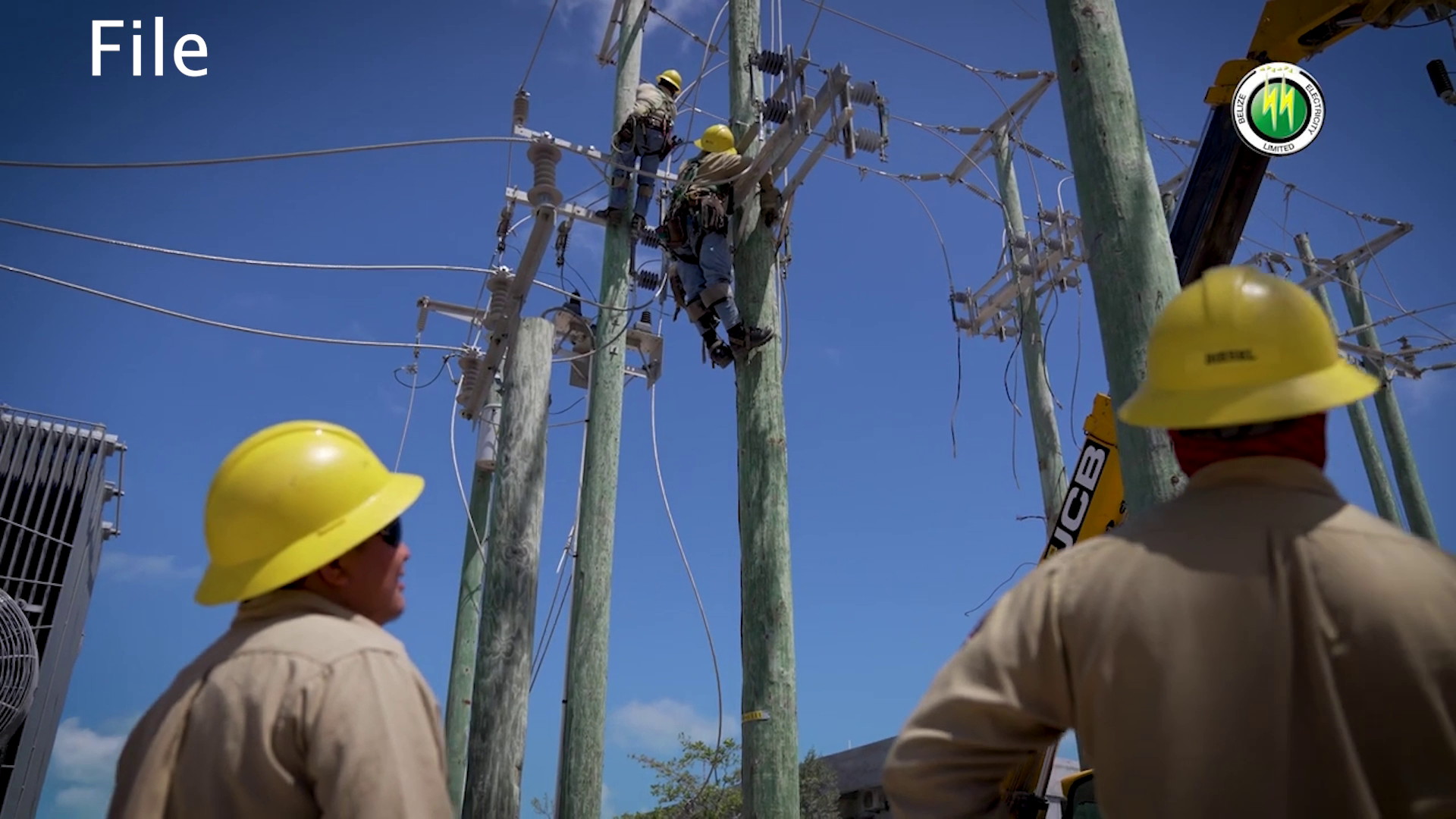
Amid a persistent national energy crisis marked by strained domestic generation capacity, unreliable imported power from Mexico, and growing public frustration over soaring electricity rates, the government of Belize is advancing a multifaceted strategy to shore up long-term energy security – including opening new regional interconnection talks with neighboring Guatemala.
Speaking to reporters on Monday, Public Utilities Minister Michel Chebat laid out the framework of the administration’s plan, confirming that the Briceno government is actively evaluating cross-border power sharing opportunities with Guatemala, a previously reported initiative now moving forward in earnest.
Chebat explained that Belize’s ongoing challenge stems from a growing mismatch between rapidly rising consumer and commercial electricity demand and stagnant domestic generation output. For years, the country has relied heavily on imported power from Mexico to close the supply gap, and that interconnection remains a critical pillar of the national grid. However, overreliance on a single external supplier has left Belize vulnerable to volatile global energy prices, unexpected supply disruptions, and external events outside the country’s control.
To address this, the government is prioritizing a transition to greater domestic energy production, a shift that Chebat acknowledged cannot be completed quickly. New generation projects require complex coordination across financing, land allocation, environmental permitting, transmission infrastructure development, procurement, and construction – all steps that take significant time. Even so, the minister emphasized that the government has moved beyond merely identifying the crisis and is actively implementing targeted solutions.
The administration’s diversified strategy includes expanding utility-scale and distributed solar generation, deploying utility-scale battery energy storage systems, boosting the investment capacity of state-linked Belize Electricity Limited (BEL), expanding energy access through microgrids and standalone off-grid systems, upgrading the national transmission and distribution network, and advancing new regional interconnection projects including the Guatemala partnership.
Alongside broader grid planning, BEL is also responding to a wave of customer complaints over sudden spikes in monthly electricity bills. Executive Chairman Lynn Young noted that not all unexpected bill increases are caused by faulty meters, a common assumption among consumers. BEL routinely deploys technicians to residential properties to investigate complaints, conducting on-site inspections of internal wiring, testing metering equipment, and analyzing historical consumption patterns.
Young explained that BEL uses specialized energy analyzers connected to customer meters to map real-time consumption, and these investigations frequently uncover faulty household appliances or hidden internal electrical issues that are driving unplanned higher energy use. Technicians also review account histories to catch unexpected unpaid arrears that can inflate a single month’s bill. Even when no residents are home, analyzers can detect abnormal consumption pointing to malfunctioning devices, allowing technicians to pinpoint the issue and help customers resolve the problem quickly.
On a separate policy matter related to electricity costs, Minister Chebat confirmed that any proposal to remove the goods and services tax (GST) from residential electricity bills will require full review and approval by the national Cabinet before moving forward.