As the 2026 academic year kicks off across Belize, most students arrive on campus brimming with excitement for new lessons, friendships and growth. But for dozens of Deaf high school students, the first week of classes has unfolded in isolation, marked by unmet accessibility needs that expose a long-simmering crisis in the country’s inclusive education system.
Across districts from Orange Walk to Belize City, parents and school administrators are raising urgent alarms over a chronic nationwide shortage of qualified sign language interpreters, a gap that has left Deaf students locked out of meaningful learning and social connection in their classrooms. Belizean outlet News Five has investigated the growing crisis, which is putting the government’s stated commitment to accessible education to the test.
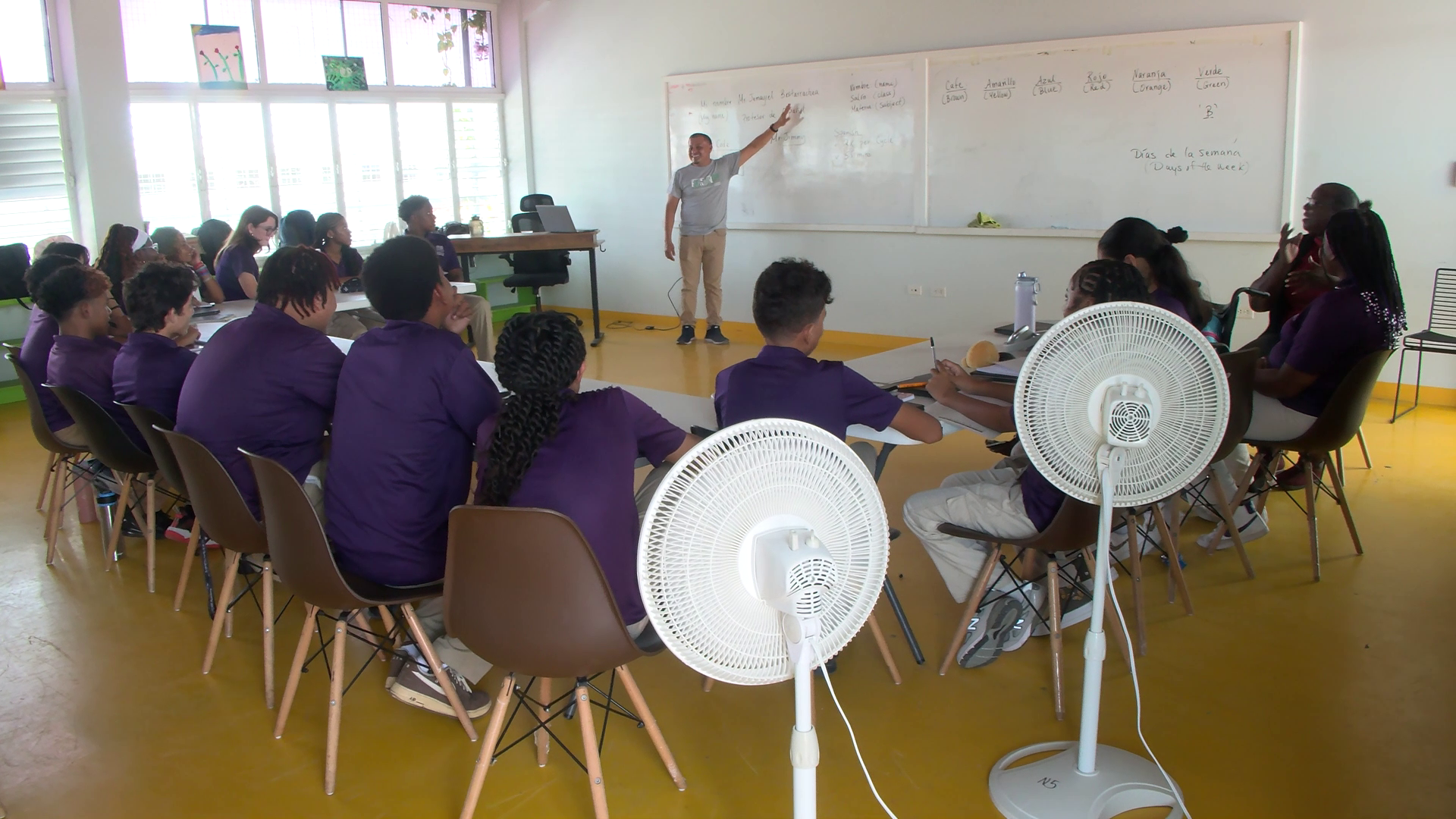
At Itz’at STEAM Academy in Belize City, third-form student Jadah Muschamp – who is Deaf – returned to school this year without the dedicated interpreter she has relied on since she enrolled three years prior. When Jadah and two other Deaf students, Maleek and Isabella, joined the school as first-formers in 2024, they shared one full-time sign language interpreter. As third-formers, the students were able to select specialized academic majors: Jadah chose Health and Sustainable Technologies, while her two peers opted for Engineering and Manufacturing. With only one interpreter on staff, the role shifted to follow the two students in their new major pathway, leaving Jadah without support.
Principal Christine Coc told News Five that school leadership spent months working to secure a new interpreter for Jadah before the start of the term, but their search came up empty. The small pool of qualified interpreters across Belize, combined with unsustainably low compensation for in-school interpreting roles, has left positions unfilled for months. When the school advertised Jadah’s open interpreter position, not a single applicant submitted an application.
To adapt, Coc says the school has leaned on basic assistive technology to bridge the gap – a captioning tool that transcribes spoken lessons onto a screen for Jadah to read, a workaround that Jadah herself says is inadequate. “Jadah needs far more additional support to process and understand complex classroom material,” Coc explained, adding that as Jadah’s course instructor, she has also adjusted her own teaching to accommodate the gap, but cannot fill the role of a trained interpreter. By the first day of classes, Jadah felt so disoriented and disconnected that she questioned whether she would be able to meet her academic goals, prompting her mother to step in.
Sophia Muschamp, Jadah’s mother and a career public officer, took an emergency day off from work to serve as an ad-hoc interpreter for her daughter on the first day of term. “This is an emergency for my child – she needs access to instruction just like every other student,” Muschamp said in an interview. “The issue isn’t that there are no interpreters at all in Belize; it’s that the pay they are offered is so low that they can’t afford to leave their current jobs to work full-time with my daughter.”
For now, Jadah has secured short-term support from an interpreter who works full-time at another Belizean school, Stella Maris, and is currently on leave. But the gap remains unresolved for the long term, and Jadah is far from the only Deaf student starting the year without access.
In Orange Walk, a first-year high school student faced the same crisis on her first day of term. Her frustrated father shared the family’s experience on social media, and her mother, Areli Alamilla, spoke with News Five about the toll the lack of support has taken on her daughter. “When she got home, she told me she felt completely alone,” Alamilla said over the phone. “She didn’t have anyone to help her navigate the simplest things – introduce herself to classmates, ask where the bathroom is, find where to eat lunch. She told me she doesn’t want to go back to school. When I told her she has to go, she just asked, ‘Who will help me? The teacher doesn’t know sign language, I can’t talk to my classmates, there’s no one there for me.’”
Alamilla has urged her daughter to return to class while joining other parents in demanding urgent action from the Ministry of Education and school leaders. For Muschamp, the call for change extends far beyond her own daughter: she is pushing for systemic solutions that will address the interpreter shortage for all Deaf students across Belize.
“I don’t like calling these students ‘special needs’ – we are all human beings,” Muschamp said. “My child is Deaf, that is just a part of who she is. She is fully capable of learning and thriving, she just needs the right support – an interpreter – to do that.”
News Five reached out to Minister of Education Francis Fonseca for comment on the crisis. In a statement, he acknowledged the barriers faced by families of Deaf and disabled students: “We absolutely appreciate the challenges parents with special needs children face and have implemented many policies aimed at providing greater support to families. Unfortunately, their children require specialized care from individuals with specific training. It is not easy to access and very costly.”
The crisis unfolding on the first week of the new school year has drawn renewed attention to gaps in Belize’s inclusive education framework, with parents and advocates warning that without targeted investment to train more interpreters and raise compensation for in-school roles, this accessibility barrier will continue to block Deaf students from equal learning opportunities.