博客

  • CPMC explains historic Carnival Queen tie, announces rule review

    CPMC explains historic Carnival Queen tie, announces rule review

    For the first time in the 72-year history of Saint Lucia’s National Carnival Queen pageant, two contestants have walked away with the crown – a historic outcome that has sparked public conversation and prompted organizers to launch a full review of the event’s competition rules.

    In an official statement released Monday, the Carnival Planning & Management Committee (CPMC) laid out a detailed breakdown of how the unprecedented joint win came together, addressing widespread public questions that emerged after Saturday’s surprise final result. The dual winners are Nyaley Lewis, representing the Bank of Saint Lucia, and Faith Edward, the contestant from the Saint Lucia Tourism Authority. Both candidates finished the competition with identical final scores, a deadlock that had never occurred in the event’s seven-decade history.

    The CPMC explained that the 2024 pageant was adjudicated by a panel of nine judges, split between six local experts and three regional specialists. Each judge was assigned to score only the competition segments that aligned with their specific areas of expertise, a framework designed to keep scoring objective and specialized. All scores were submitted digitally through certified, pre-vetted judging software, and the final results were sent to the Office of the Director of Audit for full independent verification before any announcement was made. The audit process definitively confirmed that Lewis and Edward had matching final scores.

    Once judges complete their scoring, no post-scoring deliberation is permitted under current pageant rules. The CPMC noted that this policy is intentionally structured as a safeguard, designed to eliminate any room for bias, external influence, or last-minute adjustments that could compromise the fairness of the result.

    After the dual win was announced, many members of the public questioned why a tie-break mechanism was not activated to select a single winner. In response, the organizing committee confirmed that the pageant’s official rulebook has never included a tie-break provision for first place. For 72 years, a first-place tie had never happened, so the rule was never added. The CPMC emphasized that introducing a tie-breaker after scores had already been fully audited and verified would have undermined the integrity and impartiality of the entire competition process.

    “ The only outcome consistent with the verified scores and the existing rules was to declare both delegates National Carnival Queen, ” the statement from the committee read.

    In a break with tradition that matches the historic outcome, both queens will receive the full standard winner’s package. This includes a $25,000 cash prize, a fully funded academic scholarship, and an all-expenses-paid cruise vacation. The CPMC stressed that the 2024 result is final and will not be revisited or revised.

    At the same time, the committee acknowledged that the unprecedented deadlock exposed a gap in the event’s governing rules, and confirmed that a formal review of competition policies has already begun. Any necessary rule updates, including the addition of a clear tie-break provision, will be published publicly well ahead of the next National Carnival Queen pageant to ensure that contestants, judges, and the general public have full clarity on the procedures that will govern future competitions.

  • Dainisha Eusebe set to represent Dominica in first regional competition

    Dainisha Eusebe set to represent Dominica in first regional competition

    Fresh off her historic victory in the 2026 Miss Dominica competition, Dainisha Eusebe is gearing up for her next challenge: competing on the regional stage for the coveted Miss Caribbean Culture Queen crown. Representing the vibrant coastal community of Grand Bay, Eusebe earned her spot at this regional event after claiming the Miss Dominica title in a dramatic annual pageant held on July 12, 2026, at Dominica’s Windsor Park Sports Stadium.

    This upcoming pageant, scheduled to kick off on August 3 in St Kitts and Nevis, marks Eusebe’s first appearance at a regional competition since she claimed the national title. The contest is a centerpiece cultural event of the annual Nevis Culturama Festival, a popular celebration that draws visitors and pageant fans from across the Caribbean and beyond. As she enters the final weeks of preparation, Eusebe is already generating excitement among supporters back home, who are backing her to bring the regional crown back to Dominica.

  • Skerrit credits CBI programme with driving Dominica’s development, highlights stronger oversight measures

    Skerrit credits CBI programme with driving Dominica’s development, highlights stronger oversight measures

    For three decades, Dominica’s Citizenship by Investment (CBI) Programme has stood as a cornerstone of the island nation’s socioeconomic progress, Prime Minister Roosevelt Skerrit has affirmed, framing the initiative as a transformative engine of growth that delivers critical public investment without shifting additional tax pressure onto local citizens.

    Speaking at a recent press briefing, Skerrit detailed the far-reaching impact of the program, which has unlocked financing for a wide range of high-priority public projects across the country. From climate-resilient housing units and new educational institutions to upgraded healthcare facilities, modernized roads and bridges, and large-scale climate adaptation projects, CBI revenue has covered costs that would have otherwise required major government borrowing or tax hikes. The program has also proven particularly vital in post-disaster recovery efforts, stepping in as a reliable source of capital after the island suffered repeated impacts from hurricanes and other external shocks, Skerrit added.

    Beyond core public infrastructure, CBI proceeds have fueled strategic investments in key growth sectors that expand Dominica’s economic base, including tourism infrastructure, renewable energy development, and modernized agricultural systems. Unlike traditional development financing that relies on increasing domestic tax rates to fund public projects, Skerrit emphasized, the CBI model offers a sustainable alternative that lets the government deliver progress without placing extra financial strain on local households.

    As global regulatory standards for investment migration continue to evolve, Dominica has proactively strengthened its own CBI framework to maintain international credibility, the Prime Minister noted. Key improvements include enhanced due diligence protocols, strengthened institutional governance, greater operational transparency, closer collaboration with international law enforcement agencies, and more rigorous applicant vetting processes. Most notably, Dominica has already passed legislation to launch a new regional oversight body, the Regional Regulatory Authority, which is scheduled to go into effect later this month.

    The new authority is designed to create a harmonized set of regulatory rules for CBI programs across participating Eastern Caribbean nations, standardizing oversight practices and promoting consistent high standards throughout the region. The initiative grew out of collaborative discussions among regional legal leaders during the Seventh Meeting of Eastern Caribbean Currency Union (ECCU) Attorneys General and Chief Parliamentary Counsel, held in Anguilla in May 2025. At that meeting, legal and regulatory representatives from the five Organisation of Eastern Caribbean States (OECS) member states that operate CBI programs — Dominica, Antigua and Barbuda, Grenada, St Lucia, and St Kitts and Nevis — advanced negotiations to finalize the framework for the unified regional regulator.

    Skerrit’s remarks come amid a broader regional push by Caribbean governments to strengthen the governance, transparency, and global standing of CBI programs through coordinated cross-border cooperation and upgraded regulatory standards.

  • ‘We Will Take Revenge’: Iran’s Defiant Message to U.S.

    ‘We Will Take Revenge’: Iran’s Defiant Message to U.S.

    On July 6, 2026, Iran’s national mourning for the passing of Supreme Leader Ayatollah Ali Khamenei has turned into a large-scale public demonstration of defiance against the United States and Israel, as hundreds of thousands of Iranians packed the streets of Tehran to join the multi-day funeral procession. According to reporting from NBC News, mourners in the capital filled major thoroughfares, chanting anti-U.S. and anti-Israel slogans and openly voicing calls for retaliation over the strike that killed Khamenei alongside several of his family members.

    The February 28 airstrike, jointly carried out by U.S. and Israeli forces, claimed the lives of Khamenei and his relatives, whose caskets were paraded slowly through Tehran at the start of the week-long funeral proceedings. As the procession moved across the capital, attendees waved Iranian national flags, hung anti-American signage along parade routes, and even displayed effigies of U.S. President Donald Trump to channel public anger. One attendee, Fatima Hassan, made clear the event’s charged tone in comments to NBC News, stating, “We are not here to say goodbye to him. We are here for revenge. And we will take revenge.”

    Iranian government officials have enacted widespread disruptions to daily life across the country to facilitate the state-organized mourning period. All major road routes through Tehran have been closed, the national airspace has been restricted, and most commercial and public operations have been paused through the end of the procession, which is scheduled to conclude Thursday. Following the initial procession in the capital, Khamenei’s casket will be transported across multiple religious sites for additional public mourning: first to the holy Iranian city of Qom, then to major Shiite holy sites in Iraq, before finally being interred at the Imam Reza shrine in the northeastern Iranian city of Mashhad.

    Beyond the public demonstration of anger, the funeral has brought ongoing high-stakes diplomacy between Washington and Tehran to a full halt. Key negotiations aimed at securing a permanent ceasefire to end the recent open conflict between the two nations, resolving long-standing disputes over Iran’s nuclear program, and reopening the strategically vital Strait of Hormuz will remain suspended until after Khamenei’s burial, leaving regional and global tensions at a heightened standstill.

  • IN VIDEO: Morne jaune/Riviere Cyrique Jouvé jump up

    IN VIDEO: Morne jaune/Riviere Cyrique Jouvé jump up

    The current submission of news content for processing is incomplete. Only social media sharing markers, an irrelevant HTML bookmark span element, and a link to an external image hosted at https://news-minio.triplec.cc/news/2026/07/07/b77e8389a1ed5e43634e212f31ad77e8.jpg are provided, with no substantive, text-based news reporting included. Without the core textual content of the news story that outlines events, stakeholders, context or key details, it is impossible to conduct a full structured analysis, rewriting, or classification of the reported topic. Users are required to provide the complete text of the target news article to receive the requested processing services.

  • Is Your Voter Registration Up to Date?

    Is Your Voter Registration Up to Date?

    With the 2027 municipal election just months away, election officials have formally launched a two-month window that allows relocated voters to update their registration information to avoid being disenfranchised at the polls. The Elections and Boundaries Commission confirmed that the 2026 Transfer of Electors Period kicked off on July 1, and will remain open to all eligible voters through August 31 of this year.

    For residents who have changed their residential address within the jurisdiction, updating registration is a critical step to guarantee their vote is counted in the correct electoral division. Any voter who fails to complete this process before the August 31 deadline risks losing the ability to cast a valid ballot in their new local constituency, election officials warned.

    To complete a transfer application, eligible voters must visit their local Elections and Boundaries Office in person during operating hours before the closing date. Applicants are required to provide one valid form of official identification, which includes an existing Voter Identification Card, a valid Social Security Card, a current passport, or a state-issued driver’s license.

    A key eligibility requirement for all transfer requests stipulates that applicants must have resided at their new address for a minimum of two months prior to submitting their application. Election commission representatives emphasized that updating voter rolls ahead of the 2027 municipal vote is a foundational step to maintaining the accuracy of the electoral process, ensuring every eligible citizen can exercise their constitutional right to vote. Voters are encouraged to complete their transfers well in advance of the late August deadline to avoid last-minute processing delays.

  • Green aiming to end season on a high after 200m win

    Green aiming to end season on a high after 200m win

    One of the most anticipated moments of this year’s Barbados Grand Prix delivered beyond expectations on Sunday, as rising American sprint star Jaden Green put on a dominant display of speed to take gold in the men’s 200-meter event. Crossing the finish line with an impressive time of 20.46 seconds, Green now waits for official confirmation that his run will be ratified as a new United States national junior record.

    Shortly after stepping off the track, the sprinter – who competed for the Panthers team at the meet – spoke exclusively to Barbados TODAY, reflecting on his performance with a calm mix of satisfaction and ambition. “I executed my strength really well through the race,” Green shared. “I put in all the hard work in training, and I’m grateful it paid off here today. The time could have been a little quicker, but this is still a personal best for me, so I have a lot to be thankful for.”

    Looking ahead to the rest of the competitive season, Green has high-stakes events on his calendar: the NACAC Under-23 Championships and the World Athletics Under-20 Championships, both scheduled for later this year. The young athlete also opened up about balancing elite sprint training with his college commitments, noting that while the transition has brought its share of challenges, he has worked through the hurdles to keep his performance on track.

    The day’s event saw a full slate of exciting sprint results across men’s and women’s categories. In the women’s 200-meter race, Kemba Nelson of the Eagles claimed the top spot with a winning time of 23.03 seconds. The women’s 100-meter event went to Semira Killebrew of the Lions, who finished first in 11.54 seconds, while Omari Lewis of the Falcons took home the men’s 100-meter gold with a 10.10-second run.

    Veteran sprint star Sada Williams, gearing up to defend her Commonwealth Games title later this season, picked up a win in the women’s 400-meter for the Lions, clocking a solid 50.84 seconds to warm up for her upcoming title defense. The headline name of the competition, Olympic medalist Kirani James of Grenada, made just his second start of the season in the men’s 400-meter, crossing the line in fourth place with a time of 46.08 seconds. The race itself was won by Justin Robinson of the Lions, who took gold with a 44.99-second finish.

    When all points were totaled across every event, the Eagles team claimed the overall team title at the Grand Prix, finishing with a cumulative 122 points. They were followed closely by the Lions in second place with 115 points, while Green’s Panthers team landed in third with 102 points, and the Falcons rounded out the standings in fourth with 88 points.

  • USA’s Balogun clear to play World Cup match tonight as FIFA rejects Belgium’s appeal

    USA’s Balogun clear to play World Cup match tonight as FIFA rejects Belgium’s appeal

    Ahead of the highly anticipated 2026 FIFA World Cup round-of-16 matchup between the United States and Belgium, global soccer’s governing body has dealt a final blow to the Belgian Football Association’s last-ditch effort to block US forward Folarin Balogun from featuring in the match. FIFA has officially ruled the Belgian federation’s challenge over the player’s suspended one-match red card ban as inadmissible, clearing the way for Balogun to take the pitch.

    The controversy stems from an incident in the US Men’s National Team’s final group-stage fixture against Bosnia and Herzegovina on July 1, where Balogun was sent off with a straight red card. By rule, a straight red card typically carries an automatic one-match suspension that would force the player to miss the US’ knockout round opener. However, FIFA’s Disciplinary Committee made the decision to suspend the ban for a one-year period, a move that immediately drew pushback from Belgium ahead of their Monday clash.

    The Royal Belgian Football Association (RBFA) submitted an official appeal to challenge the ruling, claiming it had not received a clear explanation for why the suspension was paused and argued it had no alternative but to question Balogun’s eligibility. On matchday Monday, FIFA released its final ruling on the appeal, confirming that the Belgian federation lacks the legal standing to challenge the Disciplinary Committee’s decision.

    In its official statement, FIFA noted: “The FIFA Appeal Committee has rendered a request submitted by the Royal Belgian Football Association (RBFA) as inadmissible in relation to the FIFA Disciplinary Committee’s decision to suspend for one year the match suspension imposed on United States national team player Folarin Balogun after his dismissal for a direct red card during the FIFA World Cup 2026 match between the United States and Bosnia and Herzegovina.”

    To address any potential concerns over conflicts of interest, FIFA also clarified that Neil Eggleston, the chair of the FIFA Appeal Committee who holds US citizenship, recused himself entirely from the deliberations and did not take part in the final decision. The governing body reiterated that the core basis for rejecting the appeal is procedural: the RBFA was not a participating party in the original disciplinary proceedings against Balogun, and therefore has no legal right to appeal the outcome.

    The high-profile dispute even spilled over into political circles ahead of the ruling. FIFA President Gianni Infantino confirmed on Monday that he had held a discussion about the Balogun case with US President Donald Trump, during which Infantino made clear that all decisions regarding the striker’s eligibility would be reached independently by FIFA’s judicial bodies, free from external influence.

    With the appeal officially dismissed, the path is now fully clear for Balogun to lead the US attacking line in the decisive round-of-16 showdown. FIFA’s ruling reaffirms a core principle of its disciplinary process: only direct parties to original disciplinary proceedings are eligible to challenge committee decisions, blocking third-party teams from altering eligibility rules ahead of knockout-stage matches.

  • Kritiek op onderzoek naar vissterfte neemt toe

    Kritiek op onderzoek naar vissterfte neemt toe

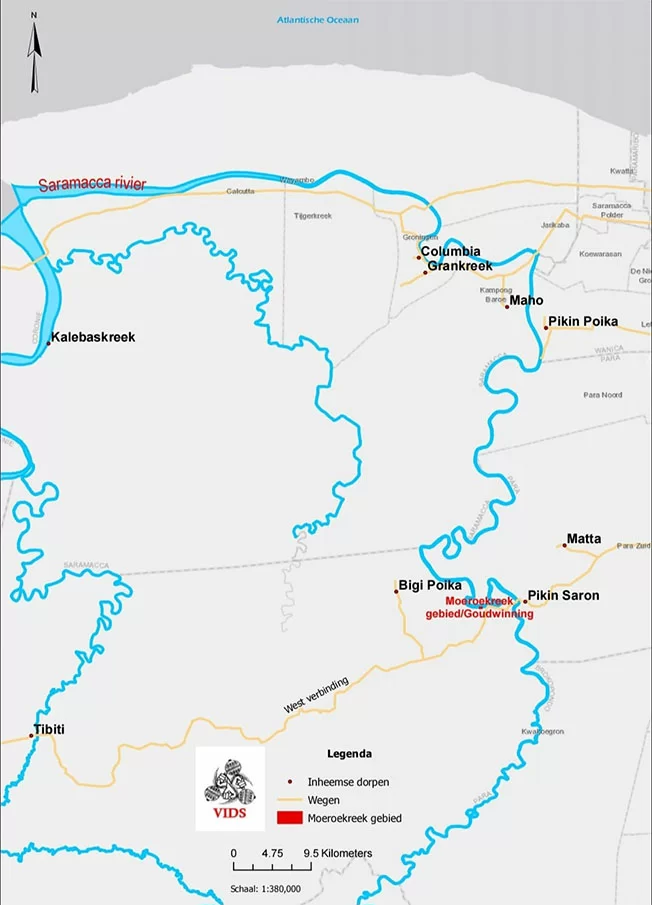
    Unrest is escalating among Indigenous villages dotted along Suriname’s Saramacca River, as deepening discontent spreads over the flawed approach authorities are taking to an ongoing investigation into a recent mass fish die-off. That is the core message from Joan Van der Bosch, village head of Pikin Poika, who laid out the severe harm the fish death has inflicted on local residents and publicly criticized the government’s handling of the crisis during a recent press conference.

    The latest wave of anger was sparked by a recent meeting with Suriname’s National Environmental Authority (NMA), where officials confirmed that affected Indigenous communities are required to provide practical logistical support for supplementary sampling at test sites the communities themselves proposed. According to the NMA, this extra round of testing demands access to a boat, fuel, and local guides from the communities, with the follow-up investigation initially scheduled to start this past Thursday.

    This demand has sparked outright resistance from local villages. While the NMA says it has already allocated significant resources to the ongoing probe, Indigenous leaders argue it is unacceptable that communities forced to bear the brunt of an environmental disaster they did not cause should also have to cover the logistical costs of investigating it. To date, the NMA has stated that supplementary testing at the requested sites cannot move forward until Pikin Poika arranges the required transportation, with no new sampling timeline set until that requirement is met.

    As the investigation stalls, the tangible impacts of the mass fish death grow more severe by the day. The village council of Columbia, located in the Saramacca region, has sounded an urgent alarm over the crisis: local fishermen have lost their primary source of income, as they refuse to go out on the river over safety concerns. Food security across the region is also faltering: fish has grown extremely scarce, prices have spiked sharply, and many residents refuse to eat river-caught fish over fears of unaddressed health risks. Families have also stopped letting children swim in the river’s waters, prompting local leaders to call on the national government to deliver immediate financial and food support to affected fishermen and their households.

    For the Indigenous communities involved, the conflict over the investigation also highlights a broader, longstanding issue: their lack of meaningful input into processes that directly impact their ancestral lands. Leaders note that while authorities often pay lip service to hearing community concerns, Indigenous groups are rarely given actual decision-making power over policies and projects that shape their home territories.

    The current meeting followed a formal letter Van der Bosch sent the previous Monday to NMA Director Vanessa Gefferie, where she outlined widespread frustration over the lack of communication and transparency surrounding the fish death, which has roiled multiple Saramacca River communities over the past weeks. During the subsequent meeting, NMA officials acknowledged that communication around the crisis had fallen short, and agreed that all future contact with affected communities would go through the Association of Indigenous Village Heads in Suriname (VIDS), the representative body for Indigenous communities in the country.

    Van der Bosch emphasized that the crisis extends far beyond a standard environmental issue, touching on core rights to health, food security, and economic survival for the Indigenous groups that have lived along the river for generations. “We live in harmony with nature, and we depend on it directly for our survival,” she wrote in her letter. “When that nature is poisoned, our very existence is threatened.”

    VIDS also used the meeting to push for a meaningful role for Indigenous knowledge in the investigation, arguing that local observations and traditional ecological expertise must be systematically integrated into ongoing analysis of the fish die-off. The NMA has indicated it is open to incorporating this local knowledge into the probe.

    The investigation was launched earlier this month after the National Coordination Center for Disaster Management received formal reports of the mass fish death. To date, the NMA has collected water samples that are currently being tested by the Suriname Food and Agriculture Laboratory (FILAP), while tissue samples from dead fish have been sent to the national Veterinary Inspection Institute for analysis.

  • St. Kitts-Nevis PM chides Regional Leaders over public debate on private CARICOM matters – News Source Guyana

    St. Kitts-Nevis PM chides Regional Leaders over public debate on private CARICOM matters – News Source Guyana

    At the opening ceremony of the 51st Regular Meeting of CARICOM Heads of Government, outgoing Chairman and Prime Minister of St. Kitts and Nevis Dr. Terrence Drew delivered a stark call for renewed cohesion within the Caribbean regional integration movement, framing unity as the bloc’s most valuable strategic asset.

    Drew opened his remarks by acknowledging that regional unity had faced unprecedented scrutiny in recent months, after internal matters that are traditionally resolved behind closed doors spilled into public discourse, sparking widespread questions about CARICOM’s long-term cohesion. While he did not explicitly name the specific controversy that triggered the public rift, his comments are widely understood to reference recent public debates led by Trinidad and Tobago Prime Minister Kamla Persad-Bissessar over the reappointment of outgoing CARICOM Secretary-General Dr. Carla Barnett.

    “When I took on the role of CARICOM Chairman, there were very real concerns about the future of our community,” Drew told assembled regional leaders. “Issues that have always stayed within private discussions among heads of government were increasingly dragged into public debate. Doubts were raised about our ability to stay united. Some even questioned whether CARICOM had reached a defining turning point, one from which it might not be able to recover. These concerns were not unfounded — they were genuine.”

    Drew emphasized that before the bloc can tackle shared external challenges, it must first rebuild and strengthen the working relationships between member state leaders. He noted that the public airing of internal disagreements had sparked widespread fears that the regional movement could not weather the latest wave of internal tension.

    Over his tenure as chairman, Drew undertook a deliberate confidence-building effort: he traveled to every full member state of CARICOM to meet one-on-one with each head of government, creating space for every leader to voice their concerns openly and laying groundwork to rebuild fractured trust across the bloc.

    Looking ahead, Drew laid out a clear path to sustaining cohesion: he urged all heads of government to prioritize participation in closed-door retreats and caucuses, where internal matters can be resolved within the bloc. “These private sessions remain one of CARICOM’s greatest strengths,” he explained. “Away from press cameras and rehearsed official statements, colleagues can speak candidly with one another. That is how trust is deepened, misunderstandings are cleared up, and collective consensus is built.”

    Drew stressed that regional unity remains an non-negotiable foundation for the collective security of all Caribbean nations. He closed his remarks with a firm warning to leaders against airing internal CARICOM business through public media headlines, a practice that he argued undermines the regional movement’s global standing, and a renewed plea for all members to commit to resolving differences internally.