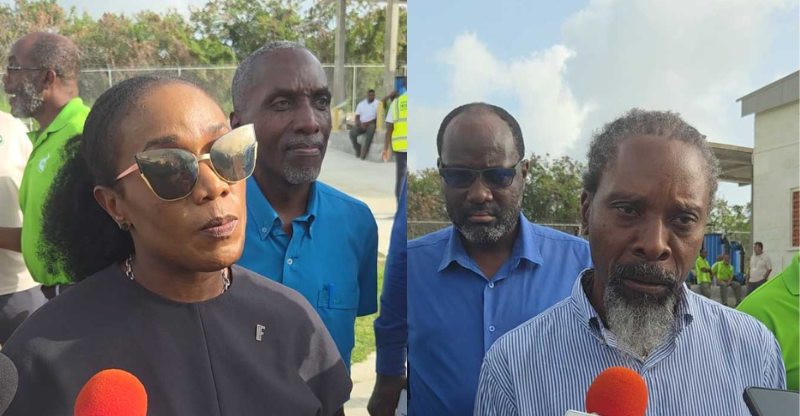
Barbados authorities have launched a full criminal investigation after dozens of oil-filled barrels were discovered dumped in tall grass in the Belle area, prompting the activation of the country’s national oil spill response protocol over severe threats to the island nation’s drinking water supply. The incident was first publicly revealed by Minister of Economic Affairs and Planning Marsha Caddle during a regularly scheduled site update from the Barbados Water Authority (BWA) this Tuesday, where she condemned the unauthorized dumping as a reckless, dangerous act that puts the entire public at risk.
“What we actually uncovered is that unidentified actors dumped multiple barrels of crude oil in the Belle region,” Caddle told reporters during the update. “This was a deliberate act: the barrels were hidden in dense high grass, out of public sight, which suggests malicious intent. Everyone needs to understand that this type of action harms every single one of us. It endangers the drinking water our children rely on at school, and it compromises a critical public resource. This is completely irresponsible behavior.”
Caddle called on anyone engaging in illegal waste dumping in environmentally sensitive areas to stop immediately, noting that law enforcement and environmental agencies are fully committed to identifying and holding those responsible accountable. “We need to put a stop to this kind of reckless activity, and we are confident that the ongoing investigation will deliver answers,” she added.
Alex Ifill, the BWA’s Manager of Water Resources, confirmed that the national spill protocol was put into effect immediately after the dumped barrels were reported to authorities. “As soon as the incident was confirmed, we activated all provisions of the national oil spill response framework,” Ifill stated. He explained that the island’s Environmental Protection Department (EPD) is leading the investigative phase of the response, with priorities including tracing the origin of the barrels, identifying the parties responsible, and determining whether criminal prosecution will be pursued once the investigation concludes.
“This incident was far from a minor offense: it could have caused catastrophic, long-lasting damage to Barbados’ entire freshwater supply,” Ifill emphasized. “That is why identifying those responsible and holding them accountable is a top priority for all agencies involved.”
Following the discovery, the BWA has moved quickly to upgrade security and surveillance across all of its production and pumping facilities, as the dumped barrels were found in an area closely connected to the island’s water distribution network. BWA Chief Executive Officer Peter Thompson told reporters that while the authority already had camera surveillance at most key facilities, additional monitoring equipment has been rolled out across at-risk areas in the wake of the dumping. Not all remote sites have camera coverage yet, but the authority is actively expanding its surveillance footprint.
Beyond fixed camera systems, Thompson revealed that the BWA is currently evaluating drone surveillance as a low-cost solution to monitor large, remote areas that are hard to cover with ground-based equipment. “Drone technology would allow us to patrol these sensitive areas far more efficiently and at a lower cost than traditional security patrols,” he explained. “It’s an option we’re seriously considering to fill gaps in our current monitoring.”
Thompson expressed deep frustration with the illegal dumping, stressing that any harm to the island’s water resources affects every resident of Barbados, regardless of where they live. “I want every person in this country to stop and think about what they’re doing when they choose to dump waste illegally. This isn’t dumping in another country that doesn’t affect us—any contamination of our water resources comes right back to our own homes, our own families, and our own friends,” he said. “It was incredibly disheartening to see that instead of using official, regulated waste disposal channels, people chose to dump this hazardous material in an area that is so critical to our water supply.”
Moving forward, the BWA will implement more frequent patrols of all sensitive facilities and introduce stronger layered security measures to prevent similar incidents from occurring in the future. “We have clear concerns about what happened here, but we’re taking action: more frequent monitoring, better security, and a renewed focus on protecting our most vital natural resource,” Thompson confirmed. As of Tuesday, investigations into the identity of those responsible for the dumping are ongoing.