博客

  • Iconic Laborians Centre, Anse Kawet Crafters Gift Shop unveiled

    Iconic Laborians Centre, Anse Kawet Crafters Gift Shop unveiled

    Last Friday marked a landmark milestone for cultural preservation and community development in Laborie, as officials and local stakeholders gathered for the official inauguration of two upgraded community assets: the Iconic Laborians Centre and the Anse Kawet Crafters Gift Shop. Hosted at the existing Papel Craft Centre, the opening ceremony celebrated the transformation of a once-modest underutilized space into a contemporary, interactive hub dedicated to celebrating local heritage, amplifying community storytelling, and fostering shared regional pride.

    This transformative initiative was brought to fruition through a collaborative cross-sector partnership under the umbrella of the Community Business Revitalisation Project, bringing together local community organizations and international stakeholders. The project received core financial backing from Taiwan’s Ministry of Agriculture, paired with widespread grassroots support from the Laborie community that anchored the development process from concept to completion.

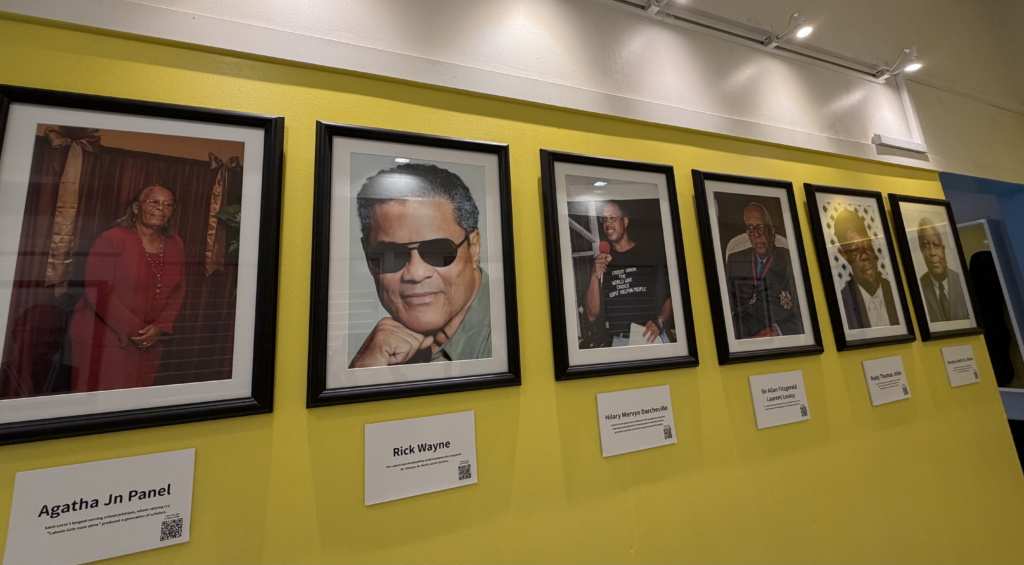
    At the core of the new Iconic Laborians Centre is a permanent tribute to 13 distinguished local figures who have left indelible, lasting impacts on the Laborie community and beyond. The honorees include Dame Calliopa Pearlette Louisy, the 13th Governor-General of Saint Lucia; former politician Sir Allan Fitzgerald Louisy; and prominent community leaders, educators, artists and public figures Rudy Thomas John, Joseph “Ives” Simeon, Dr Donatus “Keith” St Aimee, Dr Emsco Remy, Rick Wayne, Hilary Mervyn Darcheville, Yves Renard, Dr Velon Leo John, Pascal Watson Louis, Agatha Jn Panel and Desmond Collymore.

    Louis Tsou, project manager for the Community Business Revitalisation Project, emphasized that the redevelopment went far beyond cosmetic upgrades. “This special space has evolved from a basic display room into a modern cultural venue that is well designed, interactive and full of stories,” Tsou explained. To move beyond static exhibits, the upgraded centre integrates both physical and digital storytelling tools to deepen visitor engagement. A standout innovative feature is the addition of QR codes next to each honoree’s profile, which allow visitors to access audio recordings of biographical and personal stories, bringing the legacies of iconic Laborians to life in an immersive format.

    The project also prioritized long-term operational sustainability, with a community-funded donation system installed to support ongoing maintenance and programming, ensuring the centre can serve the community for decades to come.

    Parallel to the centre’s redevelopment, the Anse Kawet Crafters Gift Shop also completed a full renovation, repositioning the space from a simple retail outlet to an extension of the site’s cultural experience. Visitors can purchase handcrafted local goods while learning about the region’s artisanal traditions, tying craft production to the broader community history celebrated at the centre.

    Augustine Dominique, executive officer of the Laborie Development Foundation, reflected that the project’s journey to completion stretches back nearly 10 years. “Nearly a decade ago, the Dame Pearlette Louisy Legacy Committee… envisioned a space for the stories of our most distinguished sons and daughters to be preserved and celebrated,” Dominique shared. The founding vision was always to create a permanent tribute to local trailblazers whose work transformed the Laborie community and extended its influence far beyond the region.

    “ The centre was conceived as a beacon of identity and heritage,” Dominique said, noting that the decade-long effort came to fruition through “careful planning, community efforts and international cooperation.” He described the finished space as “a gallery of memory and meaning,” designed to ensure that “large stories will continue to be told and [local trailblazers] celebrated” for generations.

    Government representatives echoed the importance of the new centre, noting that cultural preservation requires ongoing engagement beyond the walls of the venue. Alva Baptiste, Saint Lucia’s External Affairs Minister and the representative for the Laborie constituency, stressed that passing these legacies on to younger generations is the most critical step to ensuring they endure. “We must continue to tell our young people about these great icons that shaped our lives,” Baptiste said. “Placing them in a room is good but continuing to speak about them will allow their legacy to live on.”

  • Where Is the Sargassum Response for Belize City?

    Where Is the Sargassum Response for Belize City?

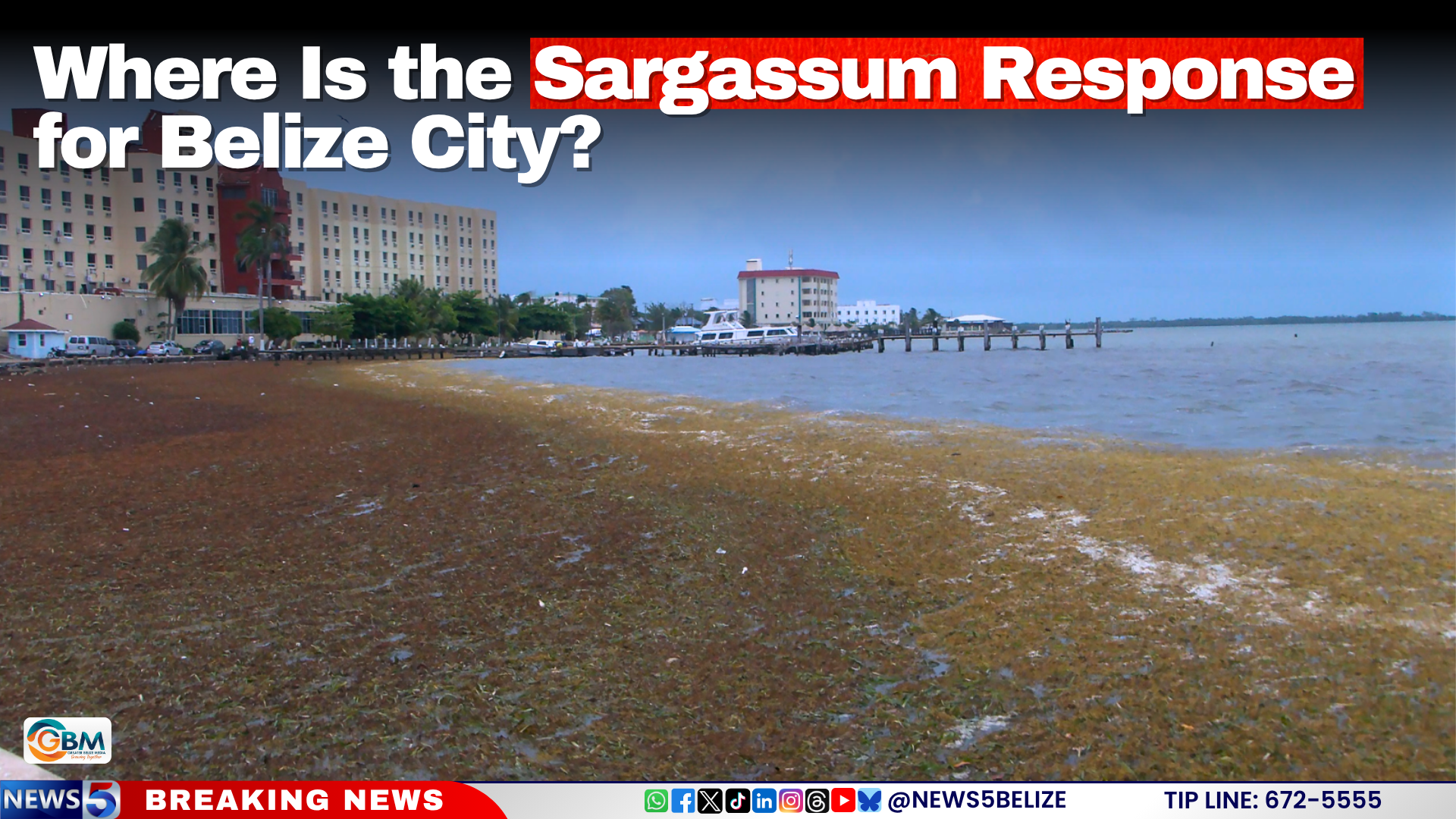
    For weeks, thick mats of invasive sargassum seaweed have been continuously washing onto the shores of Belize City, creating a growing public and economic crisis that local residents and business operators say can no longer be overlooked. Currently, most official clean-up initiatives are concentrated on the country’s tourism-focused offshore cayes, leaving Belize City’s urban coastline largely untended and rapidly deteriorating according to community members.

    Samantha Pagoada, acting general manager of the local Golden Bay Resort Hotel, explained that the sargassum blight was initially limited to isolated stretches of the city’s shoreline, far from her business operations. But over the course of recent weeks, the expanding seaweed mats have crept steadily closer to the resort’s property, forcing the management to explore solutions independently. Pagoada has announced the resort’s readiness to collaborate with any public or private group to organize a community-led clean-up effort, stressing that swift intervention is critical to address the crisis.

    “We are open to partnering with any stakeholder to carry out clean-up work, no matter the scope,” Pagoada stated in an interview. “Action needs to happen quickly.” For the resort, the most pressing concern right now is not the pungent odor that comes with rotting sargassum, but the irreversible damage to the scenic ocean views that guests pay a premium to experience.

    That is not the case for other nearby businesses, where the foul stench of decomposing seaweed is already disrupting daily operations and driving customers away. One local business employee spoke with News Five, describing the smell as overwhelmingly unpleasant. “I really hope the government steps in and does something about this, because it’s devastating for local business,” the employee explained. “When tourists arrive and catch a whiff of this odor, they refuse to sit at outdoor seating areas to eat or relax, which cuts straight into our revenue.”

    As community pressure builds for a official response, Belize residents can tune into News 5 Live at 6 p.m. this evening to hear the official position and upcoming plans from the Belize City Council on the growing sargassum crisis.

  • ‘One of the Region’s Highest’: Inside Saint Lucia’s gender-based violence crisis

    ‘One of the Region’s Highest’: Inside Saint Lucia’s gender-based violence crisis

    For decades, the specific names and cases change, but the grim, recurring headlines about gender-based violence (GBV) in Saint Lucia have stayed the same. Reports of women murdered by current or former romantic partners, children forced to grow up surrounded by routine domestic abuse, and survivors who suffer in silence for years before seeking help — or choose never to report their abuse at all — have become normalized.

    Despite sustained public outcry and repeated demands for systemic intervention, GBV remains a pervasive, devastating public crisis across the small Caribbean island nation. Even as experts acknowledge that official records are far from complete, the available data paints a troubling picture of a problem that is far more widespread than most citizens and policymakers recognize.

    Data collected in 2015 from three key Saint Lucian institutions — the Royal Saint Lucia Police Force, the Department of Gender Relations, and the Women’s Support Centre — recorded 419 reported cases of violence committed by current or former intimate partners per 100,000 women across social service agencies. That same year, the now-defunct Division of Human Services and Family Affairs recorded 1,268 reported cases of violence against girls per 100,000 girls. Gender-based violence advocates widely agree that these official counts represent only a small fraction of the total actual incidents that occur across the country.

    This pattern of underreporting aligns with global research, which consistently finds that most victims of intimate partner violence never come forward. Common barriers include fear of violent retaliation from abusers, economic dependence on perpetrators, deep-seated social shame, worries about losing custody of or endangering their children, and widespread lack of trust in the national justice system to hold abusers accountable.

    The most alarming finding comes from 2020 United Nations research on global gender-based violence. The UN Global Database on Violence Against Women ranked Saint Lucia among the countries with the highest recorded femicide rates in Latin America and the Caribbean. The database estimates that 4.4 out of every 100,000 women in Saint Lucia are killed as a result of gender-based violence. Femicide, defined as the intentional killing of women specifically because of their gender, is most often committed by intimate partners or family members. Notably, Saint Lucia’s legal system does not currently recognize femicide as a distinct criminal offense, but international bodies continue to track these deaths because they almost always follow long histories of escalating domestic abuse and coercive control.

    For a small island nation with a total population of fewer than 200,000 people, this high ranking — which places Saint Lucia alongside far larger nations also grappling with endemic violence against women — is a sobering wake-up call.

    Ironically, one of the single biggest barriers to addressing the GBV crisis is the lack of comprehensive, standardized national data. Without regular, nationwide prevalence studies, policymakers are forced to rely on fragmented data from police reports, hospital admissions records, and social service agency case files, each of which captures only a partial view of the full scope of abuse.

    UN Women confirms that Saint Lucia continues to face significant gaps in gender-disaggregated data, especially regarding violence against women. These gaps make it nearly impossible to accurately track long-term trends, measure the effectiveness of existing intervention programs, or understand the true scale of abuse across the country. Researchers warn that without reliable, complete data, the country is stuck in a reactive cycle: authorities only intervene after violence has already escalated into fatal or life-threatening harm.

    Global research consistently confirms that femicide is almost never a random, unforeseen event. Joint research conducted by UN Women and the United Nations Office on Drugs and Crime (UNODC) found that women murdered by intimate partners almost always experience months or even years of escalating abuse before their deaths — including physical violence, repeated threats, stalking, emotional abuse, and coercive control over their daily lives. The two UN agencies characterize femicide as “the most extreme and preventable form of violence against women,” noting that targeted early intervention by families, communities, and state institutions can save lives before violence turns fatal.

    Campaigners against GBV argue that framing the crisis solely as a law enforcement issue ignores the deeper structural and social roots of the problem. Systemic gender inequality, harmful cultural social norms, economic disempowerment that leaves women dependent on abusers, childhood exposure to domestic violence, and inadequate support services for survivors all create an environment where abuse can go unchallenged and escalate.

    While Saint Lucia has made incremental progress in recent years — strengthening domestic violence legislation and expanding support services through organizations like the Women’s Support Centre and the Department of Gender Relations — advocates emphasize that prevention work must begin long before a survivor feels forced to contact police. They are calling for targeted increased investment in public education to challenge harmful norms, expanded accessible counselling services for survivors and at-risk communities, evidence-based early intervention programs, improved systematic national data collection, and stronger legal accountability for perpetrators of abuse.

    As advocates often note, official statistics can only ever tell a small part of the story. Behind every police report is a survivor who has endured unthinkable harm. Behind every court-ordered protection order is a family grappling with crisis. And behind every femicide statistic is a woman whose death was likely preceded by clear, unaddressed warning signs that could have led to intervention if systems had been in place to act.

  • Barbadians warned against complacency in hurricane season

    Barbadians warned against complacency in hurricane season

    As the Atlantic hurricane season gets underway, a top Barbadian emergency management consultant is sounding the alarm, pushing local residents to set aside overconfidence and take personal ownership of hurricane preparedness — even with forecasters projecting a milder-than-usual storm cycle this year.

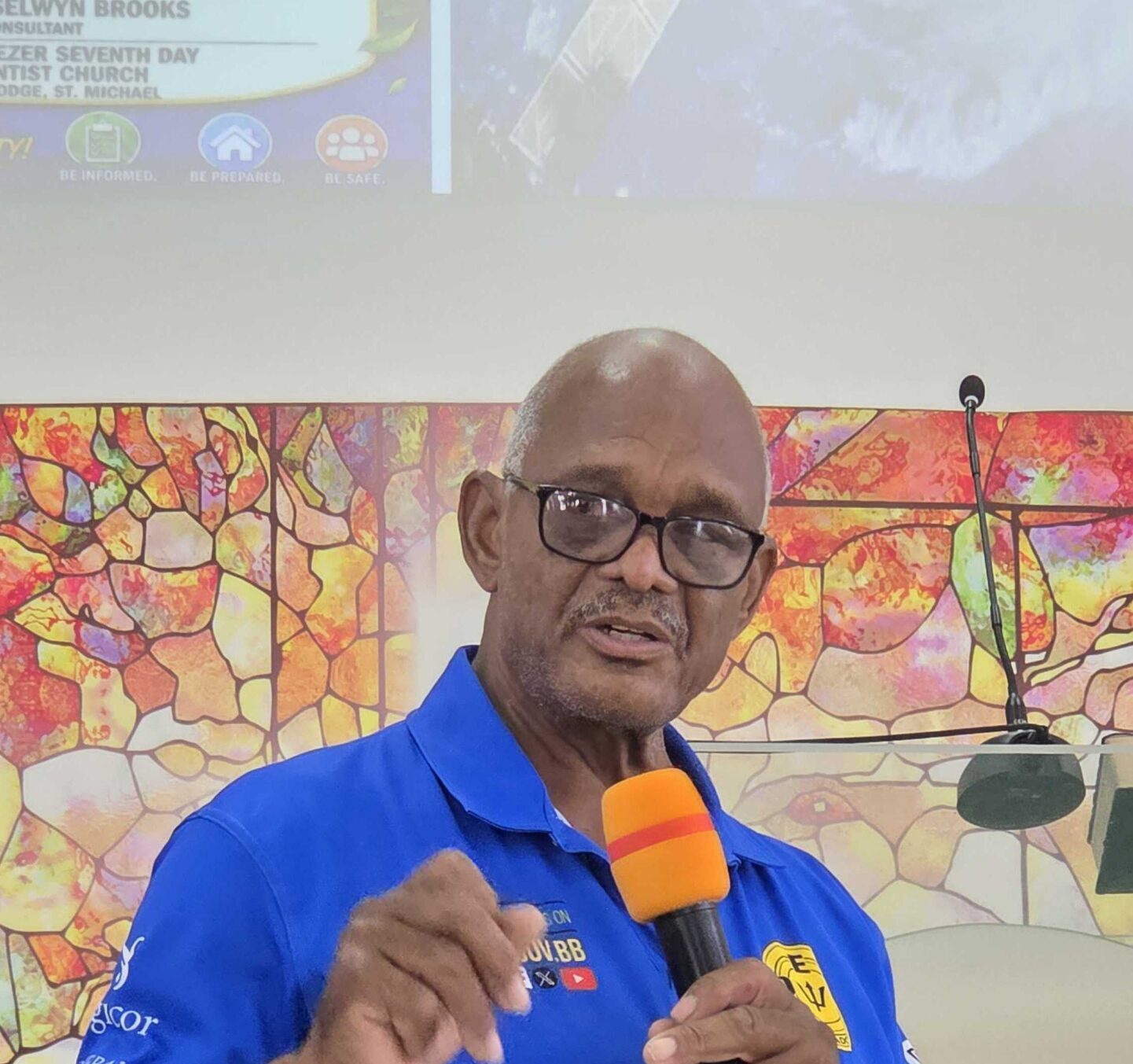
    Selwyn Brooks, a consulting specialist with Barbados’ Department of Emergency Management (DEM), emphasized a stark, often overlooked truth for Caribbean communities: it only takes a single destructive hurricane to upend lives and destroy property, regardless of how the full season is predicted to pan out.

    Current climate forecasts call for 8 to 14 named storms in the 2024 Atlantic hurricane season, with just 1 to 3 projected to strengthen to Category 3 strength or higher. But this relatively positive projection, Brooks warned, is no excuse for cutting corners on preparation. He pointed to a widespread culture of complacency across Barbados, where many residents grow frustrated after investing time and money into preparedness measures that go unused in a given season. “You hear people say, ‘You made me buy all these supplies and nothing ever happened. You made me trim trees and clear my property and nothing came of it,’” Brooks noted. But he pushed back firmly on that mindset: “It is always better to be prepared and face no storm, than to be caught off guard when a storm does arrive. Emergency supplies do not spoil, and the day will come when Barbados is hit. This is not a question of if we will face a major weather system — it is a question of when.”

    A core part of Brooks’ message is a push to shift long-held public assumptions about who bears responsibility for hurricane readiness. For years, many Barbadians have operated under the belief that hurricane preparation is solely the job of the government or the DEM, but Brooks argued that individual households must take proactive steps before a storm forms off the coast. These steps include reinforcing home structures to withstand high winds, clearing clogged drainage ditches that can trigger flooding, and trimming overgrown tree branches that could turn into dangerous projectiles during a storm.

    To illustrate his point, Brooks shared an anecdote from a recent interaction with a resident living at the base of a hill. The woman complained that her front yard repeatedly flooded during heavy rain, and told Brooks she knew the cause: plastic bags, grass clippings, and other household debris had blocked the nearby storm drain. When Brooks asked if she had ever cleared the blockage herself, her response revealed the common mindset he is working to change: “That’s not my job. Call my Member of Parliament.”

    “The point I am making is that in many cases, we ourselves contribute to our own flooding risk,” Brooks explained to attendees at a DEM public meeting held at the Ebenezer Seventh-day Adventist Church in Eden Lodge. “We need to embrace shared responsibility and get every member of the community involved. Now is the time to walk around your property, identify potential hazards, and take steps to reduce your risk before a storm arrives.”

    Beyond physical prep work, Brooks also stressed the critical importance of adequate property insurance for all homeowners, urging residents to cover both their home’s physical structure and the personal contents inside. Many people make the mistake of only purchasing a structure-only policy, he noted, which leaves personal property unprotected if a storm hits. He also advised homeowners to update their coverage regularly as they acquire new furniture, electronics, and other valuables to ensure full protection.

    Brooks also made a point to reach out to owners of chattel houses — the traditional timber movable structures common across Barbados — many of whom wrongly assume they cannot get insurance for their properties. He explained that local insurance providers now offer tailored coverage plans for these structures, with flexible monthly payment options designed to make premiums more accessible for low- and middle-income households. “Insurance companies want to stay in business, so they have adjusted their products to make it easier than ever for chattel house owners to get covered,” he said. “All that is required for most policies is that your home’s foundation is fully enclosed, which meets the standard for most chattel houses across the island.”

    To drive his message home, Brooks pointed to the devastating hurricane damage that has ravaged neighboring Caribbean nations in recent years, including Jamaica, Dominica, and Grenada. He also reminded Barbadians of the recent impact of Hurricane Beryl, which caused millions of dollars in damage to the island’s commercial fishing fleet just months prior, as a reminder that storm risk is never zero — even in years with mild seasonal forecasts.

  • Flow Launches “We Live For This” Summer Campaign

    Flow Launches “We Live For This” Summer Campaign

    St. John’s, Antigua – On July 6, 2026, leading Caribbean telecommunications provider Flow kicked off its highly anticipated 2026 summer promotional campaign, titled “We Live For This,” inviting customers from across Antigua and Barbuda to join the “Win All Summer” initiative packed with exclusive rewards and experiential prizes. Running through the entire months of July and August, the campaign is crafted around the most iconic summer traditions that make the season special in Antigua and Barbuda, from the high-octane matches of the Caribbean Premier League (CPL) cricket tournament to the vibrant celebrations of Carnival, live music festivals, local community gatherings, and the cherished downtime spent with family and friends. At its core, the campaign is built on Flow’s newly launched three-year official partnership with the CPL, one of the Caribbean’s most beloved and widely followed sporting events. This collaboration not only ties the promotion to a major regional cultural touchstone but also lets customers access unique, high-value offers throughout the summer season. To earn entry into prize draws, customers simply need to have or sign up for eligible Flow prepaid mobile plans, postpaid mobile contracts, or residential and business broadband services. Beyond digital entry and prize giveaways, the campaign will engage customers directly through in-person activations across the islands. These include interactive events at Flow retail locations, community roadshows, on-site free giveaways, and local partnership engagements, designed to give all customers multiple accessible ways to join the fun regardless of how they access Flow services. Wayne Hull, Country Manager for Flow Antigua and Barbuda, emphasized the organic alignment between the new CPL partnership and the campaign’s core mission. “Our new partnership with the CPL gave us the perfect foundation to build a campaign around what people genuinely look forward to each summer,” Hull explained. “Cricket, Carnival, music, community are the moments that bring us together. ‘We Live For This’ is how we reward customers for choosing Flow and put them closer to the experiences they love, right through to the CPL Finals in Barbados.” As the leading telecommunications and entertainment provider across the Caribbean region, Flow delivers a full suite of connectivity and content services, including mobile communications, broadband internet, television, and digital solutions to both residential households and commercial businesses. Guided by core commitments to innovation, accessible value, and deep community engagement, Flow’s mission is to connect Caribbean people to the people and experiences that matter most to them. Flow operates under the umbrella of Liberty Caribbean, previously known as C&W Communications, which is managed by Liberty Latin America. Liberty Caribbean ranks as one of the top communications and technology providers across the Caribbean, with active operations in more than 20 regional markets. It delivers broadband, mobile, video, and voice services to residential consumers through its two main consumer brands, Flow and BTC. Via its B2B arm, Liberty Business, the firm also provides enterprise-level connectivity, cloud infrastructure, cybersecurity, and data center services to private businesses and government agencies, supporting long-term economic growth across the region as digital transformation accelerates. With a 150-year legacy of serving Caribbean communities, Liberty Caribbean remains deeply rooted in the region, focused on maintaining robust, reliable networks, delivering personalized local customer support, and building tailored solutions that meet the unique needs of Caribbean people and local communities.

  • UWI, Caribbean Telecommunications Union sign agreement to advance regional digital development

    UWI, Caribbean Telecommunications Union sign agreement to advance regional digital development

    Two leading Caribbean institutions have launched a structured, long-term partnership to drive inclusive regional digital transformation, following the formal signing of a Memorandum of Understanding (MoU) that codifies decades of informal collaboration. On May 28, 2026, leaders from The University of the West Indies (UWI) and the Caribbean Telecommunications Union (CTU) finalized the agreement at the Sagicor Cave Hill School of Business and Management, located on UWI’s Cave Hill Campus in Barbados.

    The partnership establishes a formal, coordinated framework for joint action on the most pressing digital priorities facing Caribbean nations, moving beyond the ad-hoc collaboration that has defined the two organizations’ relationship for years. Prior collaborative work has already included UWI’s technical and research contributions to CTU-led policy drafting, regional capacity-building programs, artificial intelligence governance frameworks, and cross-regional digital standardization efforts.

    Under the terms of the new MoU, the partners will expand their cooperation across eight core areas: digital policy development and regulatory design, evidence-building research to inform public decision-making, professional upskilling and capacity building, multi-stakeholder engagement, policy advocacy, joint resource mobilization, and the rollout of coordinated regional digital strategies.

    Sandrea Maynard, Pro Vice-Chancellor for Global Affairs at UWI, emphasized that the agreement reflects a shared commitment to centering regional leadership in addressing the Caribbean’s digital future. “This MoU makes clear that our shared digital challenges and opportunities cannot be addressed by individual nations acting alone – they require coordinated, regional action,” Maynard explained. “Through this partnership, we are committing to align policy frameworks, build the skills and infrastructure the region needs, and ensure Caribbean voices are not sidelined in global conversations about digital and data governance. This collaboration is ultimately about advancing sustainable development, strengthening regional resilience, and claiming agency for Caribbean nations in the digital age.”

    Rodney Taylor, Secretary-General of CTU, noted that combining UWI’s world-class academic research capabilities with CTU’s established track record in regional digital policy leadership will leave the region far better equipped to respond to the fast-evolving pace of technological change. “This partnership brings complementary strengths to the table: UWI’s deep expertise across research and education, and CTU’s on-the-ground experience shaping regional policy. As we grapple with emerging issues from AI advancement and data governance to cybersecurity and digital infrastructure resilience, this collaboration will not just help the Caribbean keep up with global changes – it will let us help shape those changes,” Taylor said. “Most importantly, this MoU moves us beyond talk to tangible action, delivering outcomes that advance sustainable development and improve lives across the Caribbean.”

    The agreement comes at a critical juncture for the region, as digital transformation has become a core driver of economic growth, efficient public service delivery, climate adaptation resilience, and global market competitiveness. Institutional leaders note that by merging UWI’s robust research capacity with CTU’s policy and coordination leadership across the Caribbean telecommunications sector, the partnership is designed to ensure the region’s digital transition is inclusive and delivers equitable, long-term benefits for all Caribbean communities.

    With a physical presence across multiple Caribbean nations through its five campuses, UWI will support CTU’s work across research, training, policy advisory services, and international engagement. The MoU marks a key shift from occasional, project-based collaboration to a sustained, coordinated long-term strategy, with a focus on proactively shaping the region’s digital future rather than just reacting to technological shifts.

    Implementation of the agreement is already underway, with a clear slate of early priorities set by both partners. First on the agenda is a joint Regional AI Forum scheduled to take place in Trinidad on July 23 and 24, 2026. Following that, the partners will advance work on digital governance and regional policy harmonization during CTU ICT Week 2026, set to run from September 20 to 24 in French Guiana. Additional early actions include operationalizing UWI’s new Institute for Intelligent Systems, Governance and Human-Centred Technology (INSIGHT), and expanding cross-regional skills development through the UWI–ITU Academy Training Centre, a separate existing initiative in partnership with the International Telecommunication Union (ITU).

    UWI officials emphasized that the rapid launch of these concrete initiatives demonstrates the partners’ commitment to moving quickly from agreement signing to tangible impact, laying the groundwork for lasting digital development and resilience across the Caribbean region.

  • Derde helft WK 2026: Spanje na matige wedstrijd langs Portugal: 0-1

    Derde helft WK 2026: Spanje na matige wedstrijd langs Portugal: 0-1

    On a tense Monday evening at the 2026 World Cup, neighboring rivals Spain and Portugal faced off in a knockout round clash that would go down to the final seconds, ultimately ending in heartbreak for Portugal and star forward Cristiano Ronaldo, as a late injury-time goal from Mikel Merino secured a 1-0 win for La Roja.

    The match got off to a fast-paced, entertaining start, with both sides trading dangerous opportunities in the opening 10 minutes. Spain’s Mikel Oyarzabal carved out the first clear chance of the game, but his weak effort failed to test Portuguese goalkeeper Diogo Costa. Down the other end, Portugal’s Joao Cancelo looked dangerous cutting in from the right flank, though his strike missed the target. Oyarzabal would get another good look at goal shortly after, but he pushed his shot wide of the post.

    In the 12th minute, Ronaldo had Portugal’s first great opening to break the deadlock, but Spain keeper Unai Simon made a sharp save to push the effort out for a corner, keeping the scores level. Four minutes later, 16-year-old prodigy Lamine Yamal tested Costa, who managed to parry Yamal’s initial shot but left a loose rebound in the box. The Portuguese shot-stopper would recover quickly, though, pulling off a second reflex save to deny Alex Baena’s follow-up effort.

    Spain continued to control possession and create half-chances for the rest of the first half, but failed to find the final touch to put one in the back of the net. In the 42nd minute, it was Portugal who came closest to breaking the deadlock: Nuno Mendes fired a powerful goal-bound strike that was deflected onto the crossbar by Spain’s Pedro Porro, sparing La Roja from going into halftime a goal down.

    The second half saw a sharp drop in tempo, with both sides sitting deeper and hesitant to concede a decisive goal. Chances were few and far between for the opening 25 minutes of the half, until Pedri crafted a clear goalscoring opportunity for Spain, only for Costa to tip his effort around the post for a corner. Minutes later, Baena was gifted a golden opportunity after a sloppy turnover from the Portuguese defense, but the Spanish midfielder produced a tame shot straight at Costa, who collected it easily.

    With 90 minutes completed and six minutes of stoppage time added on, it looked like the sides were headed for extra time. But just into the added period, substitute Mikel Merino latched onto a perfectly placed cross from fellow substitute Ferran Torres, and slotted the ball past Costa to put Spain up 1-0. Portugal threw everything forward in the final minutes of stoppage time searching for an equalizer, and came within inches of leveling the score in the dying seconds, when Bernardo Silva got his head on a cross just over the crossbar.

    The final whistle blew moments later, confirming Spain’s place in the World Cup quarterfinals and ending Portugal’s campaign, as well as what may be the final World Cup appearance for five-time Ballon d’Or winner Cristiano Ronaldo. Spain will now face the winner of the knockout round match between Belgium and tournament co-hosts the United States in the next round of the competition.

  • DASCI awards scholarships to 47 students in Dominica and Florida

    DASCI awards scholarships to 47 students in Dominica and Florida

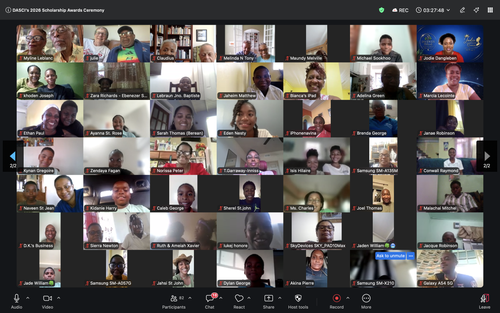
    On June 27, 2026, Dominica America Scholarship & Culture, Inc. (DASCI), a Florida-based nonprofit dedicated to expanding educational access and preserving Dominican cultural heritage, distributed 47 need-based scholarships to eligible students across Dominica and the United States during a virtual awards ceremony. This year’s disbursement marks 23 consecutive years of the organization’s flagship scholarship program, which has grown from a small community initiative to a cross-regional support system empowering young learners.

    This year’s cohort of recipients includes 44 students transitioning from primary to secondary education across nine public and private primary schools in Dominica. Each of these students will receive a one-time grant of US$750, equivalent to roughly EC$2,000, to cover the costs of school supplies, uniforms, tuition fees and other expenses associated with moving to secondary school. An additional three students pursuing post-secondary education at Florida high schools — St. Lucie West Centennial High School and Treasure Coast High School — have each been awarded US$1,000 grants to support their college preparatory studies.

    DASCI is a registered 501(c)(3) nonprofit organization composed primarily of Dominican expatriates residing in Florida. Since its founding, the group has centered its mission on two core goals: opening new educational pathways for young people connected to Dominica, and safeguarding Dominican cultural traditions among diaspora communities. The entire scholarship program is funded through voluntary membership fundraising initiatives and donations from third-party supporters, including long-time partners David Shillingford, the Marie Family Dominica Educational Fund, and the John and Nancy Donnelly Family Fund.

    Recipients hail from nine primary institutions across Dominica, with the largest cohort coming from Convent Preparatory School (12 recipients), followed by Christian Union Primary School (6), Ebenezer Seventh-day Adventist Primary School (5), Mahaut Primary School (5), Massacre Primary School (5), St. Mary’s Primary School (4), Berean Christian Academy (3), Coulibistrie Primary School (3), and Pioneer Preparatory School (1). The full list of awardees has been published on DASCI’s official website for public reference.

    Organizers emphasized that the program would not be possible without the close partnership of school administrators, who identify high-achieving, low-income students and encourage them to submit applications. Claire Nola Stedman, principal of Mahaut Primary School, one of the participating schools, voiced her strong support for the initiative in the wake of this year’s awards announcement. “We greatly appreciate the support that DASCI continues to provide to Dominican students as they transition to secondary school,” Stedman said. “This scholarship will undoubtedly assist these students and their families as they prepare for the next stage of their educational journey.”

    For recipients like Ahjani Toussaint, a graduating student from Ebenezer Seventh-day Adventist Primary School, the financial support removes a major barrier to continued learning. “Receiving this scholarship means a lot to me and my family,” Toussaint shared. “This generous support greatly eases my school expenses, allowing me to continue learning and dedicating myself to my long-term goals.”

    Delivering the event’s keynote address, Jodie Dublin-Dangleben expanded on this year’s program theme: “Innovators, Leaders and Changemakers.” She framed the core values the program seeks to nurture, explaining, “Innovators solve problems by creating new ideas; leaders solve problems by bringing people together, and changemakers solve problems by taking action and making a difference.”

    Looking back on 23 years of operation since the scholarship program launched in 2003, DASCI officials reported that the organization has now awarded a total of 232 grants worth more than US$162,950 — approximately EC$442,718 — to students across Dominica and the U.S. diaspora. As the organization marks its 23rd anniversary, it reaffirmed its long-term commitment to nurturing the next generation of leaders and changemakers through sustained educational investment, operating under its official motto “Forward We Go.”

    For students and community members looking ahead, DASCI has already released preliminary details for its 2027 Scholarship Programme. Planning for the next cycle will kick off in January 2027, when participating schools will be finalized. Full details on eligibility requirements, application procedures and participating institutions will be posted to the DASCI official website, with applications open to eligible students through May 31, 2027. Individuals interested in supporting the program through financial donations can also contribute via the organization’s website, and those seeking additional information can contact DASCI directly by email at info@daschimigration.org.

  • Ronaldo’s World Cup Farewell Ends in 1-0 Defeat to Spain

    Ronaldo’s World Cup Farewell Ends in 1-0 Defeat to Spain

    The 2026 FIFA World Cup has delivered one of its most poignant early knockout stage moments, as Cristiano Ronaldo’s historic six-tournament World Cup journey came to a bittersweet close on July 6, with Portugal suffering a dramatic 1-0 last-minute defeat to Spain in the Round of 16.

    Just 24 hours before the high-stakes clash, the 41-year-old Portuguese legend confirmed that the 2026 tournament would mark his final appearance on the World Cup stage with the Portuguese national team. For almost the full 90 minutes, the two European giants fought a tight, deadlocked battle, with both defenses holding firm against wave after wave of attacking pressure. Neither side could find a breakthrough until deep into second-half stoppage time, when Spain converted the decisive chance that sealed their spot in the tournament’s quarterfinals.

    With the result finalized, Spain will next take on the winner of the previous Round of 16 match between the United States and Belgium, with their quarterfinal fixture scheduled for July 10 in Los Angeles. For Ronaldo, however, the defeat brings a quiet, understated end to a decades-long international career that includes a record six consecutive World Cup appearances.

    Despite the early exit, the Portuguese captain leaves the 2026 tournament with a new historic milestone to his name: he is now the first player in men’s World Cup history to score in six consecutive World Cup tournaments. Across Portugal’s 2026 campaign, he netted three goals total, including a crucial penalty against Croatia in the Round of 32 that marked his first ever knockout-stage goal in World Cup competition.

    Speaking to reporters the day before his final World Cup match, Ronaldo reflected on his legacy, emphasizing that he had no regrets over his decades-long career. “Whatever happens tomorrow, Cristiano will leave with a clear conscience, not 100%, but 1,000%. Because I’ve given everything in football,” he said.

  • Roster cuts leave Grenada’s elite junior athletes sidelined

    Roster cuts leave Grenada’s elite junior athletes sidelined

    The 2026 North American, Central American and Caribbean Athletics Association (NACAC) U18 and U23 Championships are set to kick off in Tlaxcala, Mexico, running from July 10 to 12. But ahead of the prestigious regional competition, Grenada’s track and field community has been rocked by widespread cuts to the country’s national delegation, leaving top young athletes, coaches and families grappling with profound disappointment.

    Shortly after releasing an initial 25-athlete roster on June 11, 2026, the Grenada Athletics Association (GAA) has cut more than half of the selected competitors, according to multiple sources within the local athletics fraternity. While an official revised final roster has not been published publicly, some of the nation’s most in-form standouts have already been confirmed as among those cut from the traveling squad.

    The list of deselected athletes reads like a who’s who of Grenada’s top emerging talent. Phillip Mitchell, the current reigning champion of the 100m event at the InterCol, National and Whitsuntide Games, was removed from the team. Horizontal jumper Crystophe Calliste was also cut — a particularly devastating blow, after he was pulled from Grenada’s roster for the recent OECS Championships in St Kitts specifically to conserve his fitness for the NACAC event. Shantay Augustine, a sprint hurdler who earned five All-American honors during the 2026 U.S. collegiate indoor and outdoor seasons and returned home to defend her Whitsuntide title this year, was also informed she would not travel. Nicholas Frederick, a CARIFTA 800m silver medalist, was also cut, along with a number of other athletes who have not been publicly named.

    For these young developing athletes, the sudden reversal of their selection represents a major setback to their athletic growth and access to critical international competition experience. Speaking on condition of anonymity, one affected athlete described the news as a heavy blow. “The NACAC deselection was a punch because I’ve also had a great season,” they said. “The exposure and competition would’ve been another shot at the national record for me, and I would’ve given a good showing regardless. But again, they want their best team, and I assume I’m not one of the best, so…”

    GAA administrators have justified the drastic cuts by pointing to severe financial and logistical barriers, most notably the costs and complications associated with securing Mexican travel visas for the full delegation. “They said it was a visa issue and too expensive to carry everyone, so they pick who they want to go with,” a second deselected athlete told reporters.

    Beyond the immediate financial strain, local coaches and track and field analysts argue that the roster cuts expose a long-running structural weakness in Grenada’s domestic athletics scheduling. Currently, the GAA holds its annual National Championships each March, with the Whitsuntide Games in May closing out the local competitive season. This outdated structure forces selection committees to pick teams based on early-season form or historical performance data, rather than the current peak fitness levels athletes would have in July, when the NACAC event is held.

    This framework runs counter to modern global scheduling standards established by World Athletics. In 2019, the global governing body introduced a unified National Championships Window during the summer, restructuring its world rankings system to award far more points to athletes who compete in their national championships during this period. The change was designed to encourage elite overseas-based athletes to return home for national selection events when they are at their competitive peak. Critics of Grenada’s current schedule argue that moving the national championship to later in the summer would allow selectors to more accurately assess current form and build stronger teams for international events held close in time to the domestic season. Local stakeholders have pushed for decades to extend the domestic season to align with the global championship window, but there has been almost no institutional action to reform the schedule outside of a failed trial in the early 2000s.

    In its official explanation for the cuts, the GAA specifically highlighted the high costs of travel and accommodation required to send the entire roster to collect the biometric data required for Mexican visa applications. But that justification has been called into question by stakeholders, who point to Mexican immigration rules that waive the visa requirement for any traveler holding a valid multiple-entry visa from Canada, the United States, Japan, the United Kingdom, or any Schengen Area member state. Multiple of the initially selected athletes are student-athletes based in the U.S. who already hold active valid U.S. visas, meaning they would not need an additional Mexican visa to enter the country, raising questions about why the entire roster was facing the same biometric travel costs.

    The GAA called an emergency meeting with affected athletes and their parents on July 2 to lay out the financial challenges facing the association. The formal confirmation of the cuts arrived the next morning, distributed via WhatsApp broadcast message to the deselected competitors.

    “Good morning, please be informed that due to challenges outlined in our meeting last evening, it became necessary to revise the NACAC U18/U23 team. After careful consideration, you have unfortunately been removed from the final team. We sincerely apologise for this disappointment and understand that this news may be difficult to receive,” the message read. “We would like to thank you for your commitment, dedication, and the effort you have invested in preparing for this competition. We encourage you to remain focused on your training and continue working towards your goals. There will be many opportunities next season to earn selection to future national teams, and we are confident that your hard work will continue to place you in contention. Thank you for your understanding, and we wish you every success in your continued athletic development. Kind regards.”

    With the drastically reduced delegation set to depart for Mexico this week, many of Grenada’s most promising young track and field talents have already shifted their focus to the 2027 competitive season, left waiting for another chance to represent their country on the regional stage.