分类: politics

  • Kantonrechter wijst ontslagverzoek EBS tegen vakbondsleider Hellings af

    Kantonrechter wijst ontslagverzoek EBS tegen vakbondsleider Hellings af

    A Dutch-language Surinamese court ruling delivered on May 14 has delivered a major legal victory to organized labor in the country, turning down a request from state-owned utility N.V. Energie Bedrijven Suriname (EBS) to terminate the employment contract of Marciano Hellings, a long-serving EBS employee and leader of the company’s primary workers’ union. This latest decision marks the second time EBS has failed to secure judicial approval to remove Hellings from his role, with the full written judgment made public the day after the ruling.

    The legal battle is the most recent development in a years-long bitter conflict between EBS’ executive leadership and Hellings, who has worked at the state-run energy provider since 2011 and currently serves as president of the EBS workers’ union Organisatie van Werknemers Suriname (OWOS). Tensions between the two sides have flared repeatedly over the past several years, resulting in disciplinary action, multiple administrative suspensions, union-led work stoppages, and a series of overlapping legal disputes.

    The most recent chapter of the conflict began in July 2025, when EBS’ executive board fired Hellings on the spot. Company leadership justified the immediate dismissal by citing a series of Facebook posts and public comments Hellings made that harshly criticized EBS management, particularly its chief executive officer Leo Brunswijk. In one post, Hellings referred to Brunswijk as a “clown” — a description EBS classified as a severe personal insult that destroyed the professional trust required for the working relationship.

    However, Suriname’s Labor Inspectorate immediately challenged the dismissal. The regulatory body argued that Hellings’ critical comments were made in his formal capacity as a union president, not as an ordinary rank-and-file employee, and that union activity and protected speech within that role carry enhanced legal protections under Surinamese labor law. Following the Inspectorate’s objection, the national Dismissal Commission also rejected EBS’ application for a formal termination permit, ruling that the company had failed to provide sufficient credible evidence to justify ending Hellings’ employment.

    Unwilling to accept the prior rulings, EBS escalated the dispute to the cantonal court, filing a new petition to secure a court-ordered termination of Hellings’ employment contract. The company reiterated its claim that the professional trust between management and Hellings had been irreparably broken by his public criticism, social media activity, and alleged workplace-related incidents.

    In its final judgment, the cantonal court conducted a critical review of every element of EBS’ case, finding major flaws in the company’s argument. The judge noted that many of the historical incidents EBS cited to support termination were either too old to be considered valid grounds or had already been resolved through prior legal proceedings and mediation efforts. The court also emphasized that both sides contributed to the escalating conflict, not just Hellings.

    The ruling pointed out that EBS itself took a series of aggressive actions against Hellings that deteriorated the working relationship over time, including reassigning his job role, imposing multiple disciplinary penalties, restricting his access to company property, and placing him on repeated unpaid suspensions. Because of this, the court found that the current tense situation cannot be blamed solely on Hellings.

    The judge also weighed Hellings’ 15-year tenure at EBS, his valuable technical expertise in the energy sector, and his legitimate role as an elected workers’ representative in its final deliberation. The court concluded that EBS had failed to prove the existence of an urgent, compelling reason that would make continuing Hellings’ employment impossible.

    In the final outcome, the cantonal court ruled that terminating Hellings’ employment contract was not legally justified, rejected EBS’ petition in full, and ordered the state-owned energy company to cover all legal costs associated with the case.

    This ruling marks the second consecutive legal win for Hellings in his ongoing dispute with EBS management, and it underscores the persistent deep tensions between the OWOS union and the leadership of one of Suriname’s most critical state-owned infrastructure providers.

  • Johnny Kasdjo toegelaten tot DNA: focus op verantwoordelijkheid en daadkracht

    Johnny Kasdjo toegelaten tot DNA: focus op verantwoordelijkheid en daadkracht

    On May 14, Suriname’s National Assembly confirmed its return to full membership following the formal swearing-in of Johnny Kasdjo, a member of the VHP party. Kasdjo fills the vacant seat left by the passing of former parliamentarian Chan Santokhi on March 30, closing a six-week gap in the legislature’s representation.

    After completing the required oath of office and passing the mandatory credentials review, Kasdjo received welcomes and congratulations from lawmakers across every parliamentary faction. Speakers across party lines acknowledged the unusual circumstances of his appointment, noting the weight of responsibility he carried stepping into the role mid-term. Lawmakers emphasized that parliamentary service is far from a simple honor, requiring consistent time, immense energy, and significant personal sacrifice. Many also centered their remarks on the shared value of cross-party collaboration and the core mandate of all elected officials: serving the people of Suriname. Leaders of the VHP faction expressed particular relief at restoring the party to full legislative strength, and voiced unanimous confidence in Kasdjo’s ability to deliver for constituents.

    The centerpiece of the day’s proceedings was Kasdjo’s maiden address to the assembly, and the new lawmaker immediately set himself apart from standard political convention. Rejecting the flowery, empty rhetoric that defines many first speeches, Kasdjo opened with a stark, unflinching commitment: he would not come to the legislature with grand, unfulfillable promises that do nothing for ordinary people. “I do not come here with big promises I cannot keep. Suriname has already had enough of that,” he stated, laying out a clear marker for his policy approach and governing style from day one.

    Kasdjo went on to outline the harsh daily realities that millions of Surinamese residents navigate, issues he argues have been ignored by the political establishment for too long. He called attention to the growing exodus of young people, who now feel forced to build their futures outside of Suriname due to limited opportunity at home. He also highlighted the struggles of elderly Surinamese, who after decades of hard work still cannot make ends meet on their retirement benefits. Finally, he spoke of local small business owners, who are constantly stymied by bureaucratic red tape and pervasive economic uncertainty that makes long-term planning impossible. None of these crises, Kasdjo stressed, can continue to be pushed aside for political convenience.

    The new parliamentarian argued that the Surinamese public has grown tired of political posturing and is now counting on elected leaders to deliver tangible, measurable results. To that end, he summarized his governing approach in three core pillars: listen to the people, act decisively on critical issues, and accept full accountability for outcomes. Rejecting the traditional model of lawmaking that happens exclusively behind closed committee room doors, Kasdjo pledged to remain rooted in community life. “I am the man who will go out into the streets. I will go into the neighborhoods. I will listen to the people who do not sit in these meeting rooms, but who feel the consequences of every decision we make here,” he said.

    Kasdjo emphasized that effective policy cannot only exist on printed government documents—it must improve daily life for all Surinamese, a standard he will hold for every proposal that comes to the floor. He added that Suriname urgently needs leaders willing to make difficult, unpopular choices when they serve the public good, even when those choices make political life more complicated. Closing his address, Kasdjo reiterated his core motivation: he did not seek a seat in the National Assembly for prestige or personal power, but out of a deep sense of responsibility to the constituents who placed their trust in him.

  • Tiffany Strann-Peters Sworn In as Senator as Female Representation Grows

    Tiffany Strann-Peters Sworn In as Senator as Female Representation Grows

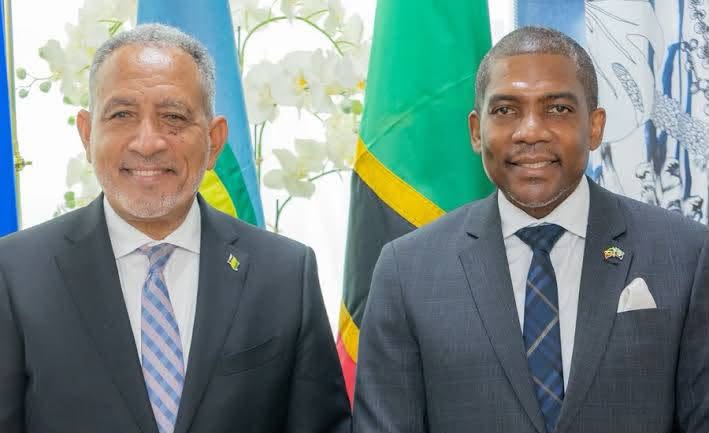
    In a formal ceremonial event held at Government House on Wednesday, Tiffany Anthea Lauren Strann-Peters officially took office as a new Government Senator, a milestone that senior national officials have framed as a transformative step forward for gender parity in Antigua and Barbuda’s legislative branch.

    Governor General Sir Rodney Williams, the country’s highest ceremonial official, emphasized that Strann-Peters’ appointment carries far broader national weight than a single individual’s career advancement. With her swearing-in complete, the count of women serving in the nation’s Senate has climbed to six, marking a notable jump in female representation in the upper parliamentary chamber.

    When combined with the two women already holding seats in the Lower House, women now occupy eight of the 3 total seats in Antigua and Barbuda’s national Parliament — one of the highest shares of female legislative representation the country has ever seen in its modern history.

    Sir Rodney characterized this growing gender balance as both a meaningful milestone and an encouraging sign for the country’s democratic development. He stressed that expanding women’s participation in public governance does more than just improve representation — it also strengthens institutional effectiveness and brings a wider range of lived experiences and perspectives to critical national policy decisions.

    Beyond legislative impacts, Sir Rodney noted that the milestone sends a resounding message to young women and girls across Antigua and Barbuda: positions of leadership, public service, and national influence are accessible to anyone willing to serve with unwavering integrity and a commitment to excellence.

    During the ceremony, Strann-Peters completed three updated constitutional oaths: the Oath of Allegiance, the Oath of Office, and the Oath of Secrecy. Senior officials explained that the inclusion of these updated oaths underscores Antigua and Barbuda’s longstanding commitment to its constitutional independence and the core principle of accountability for all public office holders.

  • Senator Joel Rayne Sworn In as Parliamentary Secretary

    Senator Joel Rayne Sworn In as Parliamentary Secretary

    In a rapid progression of political responsibility that has drawn attention across Antigua and Barbuda, newly minted Senator Joel Anderson Rayne took the oath of office as Parliamentary Secretary for the Ministry of Finance, Corporate Governance and Public Private Partnerships on Wednesday. The formal swearing-in ceremony was hosted at Government House, just days after Rayne’s initial appointment to the country’s upper legislative chamber, marking an expanded mandate for public service.

    Governor General Sir Rodney Williams led the ceremony and emphasized that the early promotion of Rayne to this junior ministerial post signals the administration’s strong trust in the new appointee’s ability and dedication to delivering for Antigua and Barbuda’s citizens. Barely one week after his Senate appointment on May 8, Rayne now takes on a broad portfolio of responsibilities, ranging from supporting core ministerial administrative work to coordinating parliamentary engagement and streamlining day-to-day government operations.

    Addressing gathered attendees, which included sitting cabinet ministers, fellow senators, senior public officials, and members of Rayne’s family, Sir Rodney laid out the high expectations for the role, noting that it demands consistent discipline, unwavering dedication, and a consistent commitment to diligent public service. “Before even taking his seat for the first official sitting of the Senate, he has already been entrusted with this additional critical duty and a broader scope of service to the people of our nation,” the Governor General stated.

    A notable constitutional shift accompanied Wednesday’s ceremony, one that officials have framed as a meaningful step toward aligning oaths of office with national sovereignty. The updated constitutional oath administered to Rayne now requires allegiance to the Constitution and laws of Antigua and Barbuda, replacing the longstanding requirement to pledge allegiance to the British monarchy. This adjustment marks a quiet but significant milestone in the country’s constitutional evolution, underscoring the ceremony’s broader significance beyond a single political appointment.

  • Belize’s Campaign Finance Reform Is Still MIA and Election Season Is Already Here

    Belize’s Campaign Finance Reform Is Still MIA and Election Season Is Already Here

    As Belize enters the final stretch of preparation for upcoming municipal elections, a long-deferred and contentious policy issue has returned to the national spotlight, sparked by a small, targeted campaign gesture from a local opposition politician. In early May 2026, United Democratic Party (UDP) caretaker Edward Broaster rolled out a $2 gas subsidy for local constituents, a move that appeared routine on its surface but quickly reignited long-simmering public debate over a gaping hole in Belize’s election regulation framework: the complete lack of mandatory campaign finance disclosure rules.

    With less than 10 months remaining before voters head to the polls, the status of campaign finance transparency in Belize remains identical to what it was ahead of the 2020 general election: there is no legal requirement for political candidates or parties to disclose who is funding their campaigns, leaving voters with no insight into the financial backers shaping election outcomes.

    The promise of sweeping campaign finance reform is not a new talking point for the current ruling People’s United Party (PUP). Long before the PUP won control of government, when current Prime Minister John Briceño served as opposition leader, he laid out a clear four-part framework for what the promised reform legislation would include. Briceño outlined that the bill would first establish formal legal definitions and universal operational standards for registered political parties. Second, it would settle the core question of what funding model is allowed for election campaigns, with three frameworks — strictly private funding, strictly public funding, and a mixed public-private model — all under consideration, alongside new rules to restrict the types of donations that parties can accept.

    When the PUP took power, reform advocates initially saw tangible momentum toward turning that promise into law. By May 2021, Briceño publicly pledged that the full reform legislation would be passed before the end of the year, with formal support already secured from two of the country’s most influential non-governmental bodies: the Belize Chamber of Commerce and Industry (BCCI) and the National Trade Union Congress (NTUC). The BCCI even took the extraordinary step of drafting its own full proposed bill and presented the text to the public, in a push to pressure the government to move forward. Then-BCCI President Marcelo Blake explained at the time that the group’s goal was to outline the key components of meaningful reform for media and the public, then collaborate with the Briceño administration to turn the draft into enforceable law.

    The NTUC, the country’s leading union federation, also threw its full institutional weight behind the reform push, with its leadership making clear the high stakes of closing the campaign finance transparency gap. NTUC President Ella Waight argued that the current anonymous system opens the door to persistent corruption, a particularly unacceptable outcome in a small country with limited public resources. Waight warned that without donation limits and disclosure rules, wealthy individuals, large corporations and powerful business interests can fund major parties during election cycles, then expect favorable policies and favors in return after candidates take office, leaving public resources misallocated to reward donors rather than serve the broader public.

    Five years after that high-profile push, that clear warning has not resulted any tangible policy change. Years of public consultations, multiple draft proposals, and repeated public promises from political leaders have failed to produce a single enforceable campaign finance reform law on the books. Political critics across the spectrum argue that the lack of progress is no accident: both of Belize’s major ruling parties benefit from the current opaque system, which allows them to keep their donors hidden and their campaign spending unaccountable to voters, giving them little incentive to alter the status quo ahead of the 2026 vote.

  • ‘Love SVG’ targets 100 projects to upgrade tourism product by November

    ‘Love SVG’ targets 100 projects to upgrade tourism product by November

    On May 14, 2026, St. Vincent and the Grenadines’ Minister of Tourism, Civil Aviation and Sustainable Development Kishore Shallow made a key policy announcement during a press briefing held in Villa: the island nation is rolling out a six-month nationwide tourism enhancement initiative dubbed “Love St. Vincent and the Grenadines” (Love SVG), with the ambitious goal of delivering at least 100 priority infrastructure and service improvement projects ahead of the 2026/27 tourism season kicking off this November.

    Unlike fragmented, agency-specific tourism upgrades that the country has rolled out in the past, this new campaign is built on a cross-sector collaboration model that brings together government departments, statutory bodies, private industry stakeholders and local communities. Shallow emphasized that the six-month timeline was deliberately scheduled to align with the tourism off-season, allowing the country to complete upgrades without disrupting visitor experiences, and wrapping up all work just as the high season gets underway.

    At its core, the initiative aims to upgrade tourism-related facilities and services across both the main island of St. Vincent and the smaller Grenadines islands. Shallow shared that the tourism ministry and its partner agencies have already shortlisted more than 120 candidate projects, which will be narrowed down to a final, achievable list of exactly 100 projects that will run from the announcement date through the end of October 2026. Shallow noted that the targeted number of 100 was chosen intentionally to keep the initiative focused and deliverable, rather than overextending on unfeasible commitments.

    Projects cover a wide spectrum of scales and needs, ranging from small, high-impact basic amenity upgrades to large-scale infrastructure overhauls. To address common visitor complaints, the campaign will prioritize adding waste disposal bins at popular tourist sites, increasing on-site staffing for public facilities, and delivering customer service training for frontline tourism workers. Long-stalled high-profile projects will also be prioritized for completion, including the long-overdue renovation of Fort Charlotte — a major heritage attraction that has been closed to the public since 2023. Additional planned upgrades include improvements to the Dark View Falls recreational area and the little-known Pavement waterfall site on the windward coast, with a number of new projects also earmarked for popular tourism destinations across the Grenadines.

    Permanent Secretary Tamira Browne framed the Love SVG campaign as a pivotal shift from long-term development vision to tangible on-the-ground action. She described the initiative not as a standalone marketing slogan, but as an integrated component of the country’s broader national development strategy, calling for a “whole-of-government and whole-of-society” commitment to the campaign’s success.

    To ensure broad participation, a structured project submission and reporting framework has been created for all participating sectors. Starting May 15, 2026, all line ministries and state agencies will receive a simplified project submission form, which will also be distributed to private sector businesses and community organizations through local media outlets. Browne explained that projects of all sizes are eligible: from micro-projects such as installing new public recycling bins across the islands to large-scale engineering works focused on beautifying public spaces.

    All participating sectors are being given clear participation targets: every government ministry and statutory body is expected to deliver a minimum of five projects aligned with the campaign’s core goals of boosting sustainable recycling, cutting litter, improving nationwide cleanliness, beautifying public spaces, and preparing the country for the upcoming high tourist season. Private sector entities are also invited to meet similar targets, or opt to adopt and upgrade specific tourist sites under the programme.

    The campaign organizes all proposed projects into five core priority categories: natural attractions and eco-tourism sites, heritage and cultural landmarks, transport and access infrastructure, hospitality service quality upgrades, and community-focused and community-led tourism initiatives.

    Shallow outlined the phased timeline for the initiative: between May and June 2026, the project management team will finalize the 100 selected projects and secure all required funding and resources to deliver the work. The second phase will consist of full-scale execution of all projects simultaneously. Shallow highlighted a secondary, equally important benefit of the large-scale programme: widespread job creation. With hundreds of upgrade projects running across the country, hundreds of local workers will be hired to support the work, injecting immediate economic stimulus into local communities. Shallow confirmed that the overall investment in the campaign will total millions of dollars, with all final work wrapping up in October 2026 to leave the country fully prepared to welcome visitors for the new 2026/27 tourism season.

  • Incabide raises RD$562.8 million in Dominican Republic’s first asset forfeiture auction

    Incabide raises RD$562.8 million in Dominican Republic’s first asset forfeiture auction

    In a landmark milestone for public institutional reform in the Dominican Republic, the National Institute for the Custody and Administration of Seized, Confiscated and Extinction of Ownership Assets (better known by its acronym Incabide) has successfully concluded its inaugural public auction, raising 562.8 million Dominican pesos through the sale of assets seized and confiscated under the nation’s Asset Forfeiture Law 60-23.

    The auction offered 143 disparate assets to prospective bidders, split between 52 real estate holdings and 48 movable items ranging from vehicles to equipment. Of the total inventory, 100 assets found buyers, marking a 68% overall sales success rate. The vast majority of revenue came from real estate transactions, which generated 550.17 million Dominican pesos, while movable assets contributed an additional 12.67 million Dominican pesos. Four properties received no acceptable bids and were declared unsold, and a further 43 unclaimed assets will be held for future auction rounds planned by the institute.

    Incabide officials noted that the event drew robust engagement from a diverse pool of participants, including both private individual bidders and domestic corporate entities. From the opening listing process to the final bid confirmation and transfer of ownership, the entire auction operation was carried out under strict standards of transparency, full legal compliance, and ongoing independent institutional oversight, the institute confirmed.

    This successful first auction, Incabide leadership emphasized, is more than a one-off financial event: it serves as concrete proof of the institution’s commitment to delivering efficient, accountable management of assets seized through the nation’s forfeiture legal framework. The proceeds from the sale will ultimately support public institutional strengthening across the Dominican Republic, advancing efforts to streamline state asset management and reinforce governance standards.

  • Dominican Republic and Canada hold third Political Consultations Meeting

    Dominican Republic and Canada hold third Political Consultations Meeting

    Diplomatic delegations from the Dominican Republic and Canada gathered in Santo Domingo on Thursday for their third bilateral Political Consultations Meeting, an event designed to reinforce structured cross-border dialogue and extend collaborative work across a slate of high-priority sectors. The talks covered a broad range of mutually beneficial partnership areas, spanning cross-border trade, direct foreign investment, international tourism, expanded air transportation links, and coordinated regional security efforts.

    Leading the two delegations were senior foreign policy officials from both governments: Francisco A. Caraballo, Vice Minister of Bilateral Foreign Policy for the Dominican Republic, and Glen Linder, Deputy Minister for the Americas at Global Affairs Canada. In addition to the core foreign affairs leadership, the Dominican delegation included senior representatives from multiple national government agencies, including the Ministry of Finance, the Ministry of Energy and Mines, and the Ministry of Industry, Commerce and Micro, Small and Medium Enterprises (MSMEs), reflecting the wide scope of cooperation on the meeting’s agenda.

    A key focal point of the discussions centered on the ongoing situation in neighboring Haiti, a topic of shared regional concern for both nations. Following the closed-door talks, both sides reaffirmed their shared commitment to moving forward with coordinated joint initiatives designed to deliver tangible, practical outcomes that benefit citizens of both the Dominican Republic and Canada. The meeting also served as an opportunity to reflect on the long-standing diplomatic relationship between the two countries, which this year marks the 72nd anniversary of formal ties, officially established on April 22, 1954. Officials from both delegations emphasized that bilateral relations remain robust and productive, laying a strong foundation for future collaboration across all priority areas.

  • Jamaica to host UN WIPO director general on historic visit

    Jamaica to host UN WIPO director general on historic visit

    Nearly a quarter-century after the World Intellectual Property Organization (WIPO) helped Jamaica launch its national intellectual property office, the Caribbean nation is preparing to welcome the WIPO director-general for the first time in 24 years. Daren Tang, recently reappointed to a second term leading the global IP body, will undertake an official five-day visit to Kingston from May 16 to 20, 2026, in a move that officials call a landmark step for Jamaica’s innovation-focused economic agenda.

    The visit is being coordinated by Jamaica’s Ministry of Industry, Investment and Commerce (MIIC) through its Jamaica Intellectual Property Office (JIPO), in partnership with the Ministry of Foreign Affairs and Foreign Trade. Over the course of his trip, Tang will hold discussions with a broad cross-section of Jamaican stakeholders, including senior government leaders, local innovators, small business entrepreneurs, creative creators, women in leadership, and IP sector representatives. The itinerary centers on strategic dialogues exploring how Jamaica can expand its IP framework to drive broader economic growth.

    In an official statement released Friday, MIIC Minister Senator Aubyn Hill emphasized that the high-profile visit underscores Jamaica’s growing commitment to building a modern, globally competitive economy rooted in robust intellectual property protections. “This visit reflects Jamaica’s emergence as a forward-looking economy that recognizes what ideas, innovation, brands and creativity can deliver for national prosperity,” Hill explained. He noted that more Jamaican creators and business owners are now registering trademarks to protect their ventures, developing new marketable products, and positioning themselves to compete on the global stage. To support this shift, Hill added, Jamaica has been updating its IP legislation, modernizing national IP systems and aligning its rules with key international agreements, all to reinforce the country’s standing as an attractive hub for investment and innovation.

    Two key ceremonial signings of letters of intent will serve as the centerpiece of Tang’s visit, marking new commitments to build Jamaica’s national IP capacity and institutional infrastructure. On May 18, Tang will join Foreign Minister Senator Kamina Johnson Smith to sign an agreement establishing a cooperative partnership between the WIPO Academy and Jamaica’s Foreign Service Institute. The three-year program will deliver structured IP training and skills development to Jamaican diplomats and public officials, strengthening the country’s ability to participate effectively in global IP negotiations and multilateral policy forums.

    Immediately after that ceremony, Tang and Hill will sign a second letter of intent between WIPO and JIPO. This agreement paves the way for the establishment of a national Intellectual Property Training Institution (IPTI) in Jamaica, under the umbrella of the WIPO Academy’s global IPTI network. The new institution will focus on expanding education, training and capacity building for Jamaica’s entire innovation and IP ecosystem, with cooperative activities scheduled to launch in 2027.

    This visit carries particular historical weight: it is the first trip to Jamaica by a sitting WIPO Director General since 2002, the same year JIPO opened as Jamaica’s official national IP office. Back then, then-WIPO chief Dr Kamil Idris traveled to Kingston to help officially launch JIPO, a milestone that kickstarted decades of progress for Jamaica’s IP landscape. WIPO provided critical support for JIPO’s founding and has continued to back the expansion of Jamaica’s IP framework over the past 22 years.

    Lilyclaire Bellamy, JIPO’s current Executive Director, highlighted the dramatic transformation Jamaica has undergone in the IP space since that 2002 launch. “We have modernized our national IP framework, deepened engagement across local stakeholders, and acceded to multiple landmark international IP treaties,” Bellamy noted. Those agreements include the Madrid Protocol for international trademark registration, the Patent Cooperation Treaty, the Hague Agreement for industrial design protection, and the Marrakesh Treaty expanding access to published works for people with visual and print disabilities. She added that WIPO’s long-running support has helped cement IP’s role as a strategic driver of innovation, business expansion, increased exports, and broader national prosperity for Jamaica.

    Tang’s visit comes on the heels of his reappointment as WIPO Director General in April 2026 for a second term, a vote of confidence from the global community in his leadership of the international IP system. Since taking office in 2020, Tang has prioritized initiatives to make IP systems more accessible and relevant to underrepresented groups, including small businesses, women innovators, and young creators. Under his direction, WIPO has increasingly framed IP as a core catalyst for innovation, entrepreneurship, technological advancement, and inclusive economic development — a mission that grows more urgent as transformative emerging technologies such as artificial intelligence reshape industries and economies around the world.

  • Police investigating ‘security matter’ at Trinidadian airport

    Police investigating ‘security matter’ at Trinidadian airport

    PORT OF SPAIN, Trinidad – Trinidad and Tobago’s national security apparatus is navigating two linked high-profile security incidents that have intensified partisan debate over the government’s ongoing state of emergency (SOE), which is scheduled to expire next month. The Trinidad and Tobago Police Service (TTPS) issued a formal statement Friday confirming that a security-related incident involving a cargo plane at Piarco International Airport was first reported Thursday, and is now the focus of an ongoing multi-agency investigation led by state security bodies.

    According to the TTPS, the irregularities that prompted the response were uncovered during routine security checks implemented under the country’s existing heightened security posture tied to the SOE. Police confirmed that the aircraft was immediately secured, all crew members have been accounted for, and all relevant national security units were activated in line with established response protocols. While the TTPS declined to release specific operational details, citing active investigation protocols and international security obligations, local media reports have identified the cargo plane as Ukrainian-registered, claiming explosive materials were discovered on board.

    In its statement, the TTPS moved quickly to reassure the public that at no point did the incident pose any danger to traveling passengers, ongoing airport operations, or the broader Trinidad and Tobago public. Officials emphasized the situation was always calm, fully contained, and managed in line with professional security standards. The force added that no further details can be published at this time due to the active status of the investigation, but additional information will be released when it is deemed safe and appropriate to do so.

    This airport incident comes on the heels of a separate security controversy that erupted earlier this week, when Attorney General John Jeremie revealed that a national security incident linked to a gang member had occurred the previous Friday, prompting the implementation of enhanced security protections for all members of parliament and a small number of senior government officials.

    Police Commissioner Allister Guevarro later backed up Jeremie’s disclosure, confirming that the TTPS had responded to a security event that required elevated protective measures at Parliament and for specific government officials. Guevarro noted that the response was a precautionary measure aligned with national security protocols, and declined to share further operational details, specific information on the incident or individuals involved, in line with national security confidentiality requirements. He stressed that the TTPS continuously reassesses all potential risks and adjusts protective measures as needed to safeguard national institutions and all citizens.

    However, the main opposition party, the People’s National Movement (PNM), has rejected the government’s account of the parliamentary incident, accusing the ruling administration of manufacturing a security crisis to justify extending the SOE, which is set to end next month.

    Opposition Chief Whip Marvin Gonzales told reporters that he remained in Parliament until late the Friday in question, and neither he nor any other opposition legislator experienced any disruptions to proceedings, nor observed any visible heightened security protocols around the building. Gonzales called the incident claim “a great and grand deception” led by the attorney general, noting that when lawmakers left Parliament that evening, there was no visible increased security presence, and no officials had briefed opposition members or the opposition leader about any specific threat targeting parliamentarians. He added that most government officials had left the building early for another engagement, further undermining claims of an elevated security threat.

    Gonzales reiterated that the entire narrative is a deliberate political maneuver by the government to lay the groundwork for a three-month extension of the state of emergency. He also directly appealed to the police commissioner not to allow his office to be co-opted as a propaganda tool for the ruling government.