分类: politics

  • Leacock defends decision to put police in schools

    Leacock defends decision to put police in schools

    The government of St. Vincent and the Grenadines is moving forward with a controversial plan to station full-time regular police officers at all schools across the country, defying growing public criticism from legal and community leaders who warn the policy will militarize the nation’s education system. Deputy Prime Minister and National Security Minister St. Clair Leacock confirmed the policy’s progression in an interview with local broadcaster NBC on Wednesday, announcing that two Assistant Commissioners of Police, Benzil Samuel and Hezron Ballantyne, will oversee the rollout and management of school security operations nationwide.

    Currently, only a subset of St. Vincent and the Grenadines’ schools have dedicated security personnel, Leacock explained. Larger campuses with 300 or more enrolled students currently rely on auxiliary police officers, but the minister argued these part-time and less trained personnel are stretched too thin to address rising safety concerns, and their authority is often not respected by students in the way that sworn regular police officers would be.

    The plan has drawn sharp pushback from prominent local voices, including Jomo Thomas, a well-known lawyer and social commentator. Thomas has argued that deploying uniformed police to school campuses does nothing to address the root causes of youth violence, and instead risks turning academic institutions into securitized spaces that mirror the punitive school environment seen in many United States public schools. He went so far as to label the proposal a “horrible suggestion” that erodes the foundations of a open, supportive learning environment.

    Leacock pushed back against these criticisms in his Wednesday remarks, emphasizing that the new police deployment is designed not just to crack down on student misbehavior, but to stabilize overall public safety across school campuses and their surrounding communities. While opponents argue that no police presence belongs in educational spaces, the minister made clear the government rejects this position, noting that the policy was developed through months of evidence-based engagement with education leaders and community stakeholders.

    Leacock explained that the national police high command has held extensive consultations with school principals, parent-teacher associations across the country, and completed independent site assessments to confirm the scope of safety challenges. He added that school leaders themselves have repeatedly requested law enforcement intervention to address ongoing issues that educators do not have the training or authority to resolve.

    The core goal of the new deployment, Leacock said, is to curb the unacceptable patterns of dangerous behavior that have plagued public spaces, including school campuses, in recent weeks. The minister declined to overstate the scale of the challenges facing the school system, but noted that the issues are already an open secret among the public, with principals regularly flagging growing concerns including weapons possession on campus, drug trafficking among students, and violent confrontations that put staff and peers at risk.

    Asked who should address these threats if not law enforcement, Leacock questioned why the public would expect untrained teachers to enter dangerous confrontations with students armed with weapons, or forgo routine searches to intercept contraband before it enters campus. Addressing these complex safety threats is the core responsibility of specialized, trained law enforcement, the minister concluded, reaffirming that the government will not abandon the plan despite continued opposition.

  • Government Warns Essential Workers Must Report on Public Holidays

    Government Warns Essential Workers Must Report on Public Holidays

    During a weekly meeting held Wednesday, the Cabinet of Antigua and Barbuda addressed two key administrative matters that touch on public sector operations and labor regulations, issuing clear guidance aligned with existing national legislation.

    First on the meeting agenda was a review of labor protocols governing employment obligations when public holidays fall on regular workdays. Cabinet members moved to reaffirm the long-standing provisions outlined in the Antigua and Barbuda Labour Code, placing specific emphasis on requirements for workers in critical essential service roles.

    The body stressed that any employee who has been formally rostered or scheduled to work on a recognized public holiday remains obligated to report to their post and fulfill their assigned job duties. Ministers underscored the outsized importance of essential services to the nation’s day-to-day function, noting that consistent, uninterrupted access to these services is a non-negotiable need for the general public. Without the steady operation of these critical roles, the government would be unable to meet basic public needs even during holiday periods, the meeting concluded.

    The government also emphasized that consistent adherence to pre-approved work schedules and operational standards is fundamental to upholding efficiency, service continuity, and broad public trust in the country’s core national services. Upholding these rules does not undermine worker protections, officials noted, but rather ensures that the public does not lose access to life-sustaining and community-critical services during holidays.

    In a second key decision coming out of the Wednesday meeting, Cabinet reviewed a detailed technical assessment submitted by the Ministry of Works, focused on the structural safety of the building that houses the Office of National Drug Control Policy (ONDCP). Following a comprehensive technical inspection of the structure’s systems, integrity, and compliance with safety codes, the Ministry of Works formally deemed the building safe for continued employee occupancy and regular daily operations.

    Acting on the findings of this assessment, Cabinet directed that all ONDCP employees will continue to carry out their regular daily functions and responsibilities from their current established work environment, with no immediate relocation or operational changes required.

    Beyond these two specific matters, the Antigua and Barbuda government used the meeting to reaffirm its overarching commitment to balancing two core priorities: upholding efficient, continuous operation of public services across both islands of the nation, while also guaranteeing safe, suitable working conditions for all public sector employees across all government departments and agencies.

  • HOLA! Cabinet Approves Spanish as Antigua and Barbuda’s Official Second Language

    HOLA! Cabinet Approves Spanish as Antigua and Barbuda’s Official Second Language

    The twin-island nation of Antigua and Barbuda has greenlit a transformative policy that will position Spanish as its official second language, rolling out mandatory Spanish instruction across all levels of the public education system from early childhood through secondary schooling. The landmark decision, announced by Director General of Communications Maurice Merchant during a post-Cabinet media briefing on Thursday, forms a cornerstone of the government’s broader agenda to boost regional integration and forge stronger economic and diplomatic bonds with neighboring Spanish-speaking nations, most notably the Dominican Republic.

    Under the policy mandate, the Cabinet has charged the Ministry of Education, Science and Technology with redesigning the national curriculum for preschool, primary, and secondary education to embed Spanish as a core academic subject, placing it on equal footing with staple disciplines such as English and mathematics. This initiative stands as one of the most ambitious education and cultural integration projects advanced by the current administration in recent years, rooted in deep historical and social ties between the two Caribbean nations.

    Merchant emphasized that the push to adopt Spanish also stems from the longstanding cross-border cultural exchanges, people-to-people connections, and meaningful contributions that the Dominican diaspora has made to Antigua and Barbuda’s social and economic development. To complement the language policy, the Cabinet has given formal approval to the Dominican Republic Integration Programme, known by its acronym DRIP, a comprehensive strategy designed to strengthen collaboration across economic, cultural, and institutional domains.

    The DRIP initiative is set to advance bilateral cooperation in key sectors including trade, tourism, and educational exchange, while also improving support services for Dominican citizens residing in Antigua and Barbuda. Merchant noted that the policy is designed to be mutually beneficial: as Antigua and Barbuda expands Spanish access for its own population, it is expected that Dominican residents and institutions will in turn increase engagement with English language learning.

    In a further move to streamline services for Spanish-speaking communities, the Cabinet has approved the creation of a dedicated Spanish Desk within the Office of the Prime Minister. The new office will serve as a central hub to assist Spanish-speaking residents and remove barriers to accessing government public services. During the briefing, ABS political correspondent Alicia George pressed for clarity on whether the mandatory requirement would extend to all school levels, and Merchant confirmed that Spanish will be a required core subject across every tier of the public education system.

    The Ministry of Education has been given the dual responsibility of developing the new standardized curriculum and sourcing qualified educators to meet the demand for expanded Spanish instruction. Government officials noted that recruitment efforts will be open to both locally trained educators and teaching professionals from across the Caribbean region. As of the official announcement, the Cabinet has not released a formal public estimate of the total costs associated with curriculum redesign, teacher training, and program rollout.

  • China en VS zoeken balans tussen competitie en samenwerking

    China en VS zoeken balans tussen competitie en samenwerking

    On Wednesday, former U.S. President Donald Trump launched an official state visit to China, opening a full day of high-stakes diplomatic talks with Chinese President Xi Jinping that touched on everything from bilateral cooperation to sensitive geopolitical issues.

    The visit opened with a ceremonial welcome, including a formal military review held at Beijing’s Tiananmen Square, setting a solemn tone for the discussions between leaders of the world’s two largest economies. During opening remarks, both heads of state underscored their shared commitment to building a stable, constructive, and strategic bilateral relationship, even as they addressed long-standing points of disagreement.

    President Xi opened his remarks by acknowledging the growing uncertainty and rapid transformation reshaping today’s global order, posing two fundamental questions that frame the future of U.S.-China ties: Can the two nations co-develop a new model of relations between major global powers? Can they set aside differences to collaborate on pressing transnational challenges and bring greater stability to the world? Xi expressed hope that working with Trump would turn 2026 into a historic milestone for advancing bilateral relations.

    On the topic of economic cooperation and trade, negotiation teams from both sides reached positive, actionable outcomes. Xi emphasized that even amid existing differences and tensions, dialogue rooted in equality and mutual respect has delivered tangible results. He reaffirmed that U.S. companies have long played a key role in China’s reform and opening-up process, and that the Chinese market will only grow more accessible to American businesses moving forward. “China welcomes deepened mutually beneficial cooperation between the United States and China,” Xi stated, noting that the door of China’s market will keep opening wider to foreign, and particularly American, enterprises. He added that the framework of a “constructive, strategic, and stable relationship” agreed by both leaders is no empty slogan, but a concrete roadmap to guide bilateral ties in the coming years, with core goals of sustaining long-term peace, keeping differences manageable, and delivering fruitful collaboration.

    For his part, Trump called the state visit a tremendous honor, offering warm praise for Xi Jinping and the Chinese people. He described the current U.S.-China relationship as the strongest it has ever been, and reiterated his commitment to resolving outstanding differences through dialogue while deepening cross-border cooperation. Trump was accompanied by a delegation of senior American business leaders, who publicly expressed their confidence in the long-term potential of the Chinese market during the visit.

    Beyond economic and trade issues, the two leaders exchanged in-depth views on a range of pressing regional and global issues, including the ongoing conflict in Ukraine, tensions in the Middle East, and security on the Korean Peninsula. Both leaders also expressed mutual support for each other’s presidencies of this year’s APEC and G20 summits, signaling alignment on advancing multilateral cooperation this year.

    One of the most sensitive topics on the meeting agenda was the Taiwan question. Xi emphasized that the issue of Taiwan remains the most core and consequential topic in U.S.-China relations, and requires careful, prudent handling to avoid escalation and open conflict. “Taiwan independence and peace across the Taiwan Strait are mutually exclusive,” Xi warned.

    To wrap up the official day of talks, Xi hosted Trump for a symbolic visit to the Temple of Heaven, a historic imperial complex in central Beijing that dates back to the Ming and Qing dynasties, where emperors once held rituals to pray for national peace and bountiful harvests. The cultural outing was widely interpreted as a symbolic gesture representing the two nations’ shared desire for peace, mutual understanding, and collaborative progress.

  • ASP Frankie Thomas Wins Top Caribbean Community Policing Award

    ASP Frankie Thomas Wins Top Caribbean Community Policing Award

    A senior law enforcement official from Antigua and Barbuda has earned one of the Caribbean’s most prestigious awards for excellence in community-focused policing, cementing the region’s reputation for dedicated public safety work.

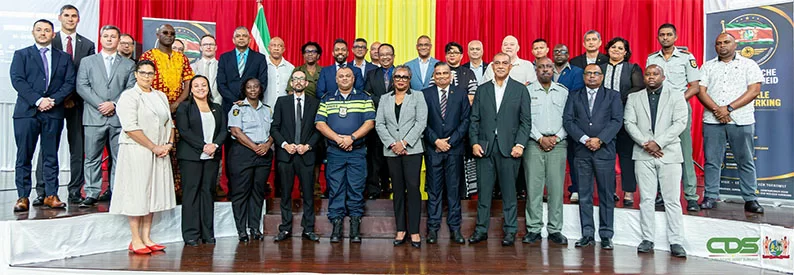
    Assistant Superintendent of Police Frankie Thomas of the Royal Police Force of Antigua and Barbuda was awarded the Amalgamated Security Services Limited (ASSL) Top Caribbean Community Policing Award at an official ceremony hosted jointly by the Association of Caribbean Commissioners of Police (ACCP) and ASSL in Paramaribo, Suriname, on May 12.

    In remarks delivered after accepting the award, Thomas spoke of his mixed feelings of excitement and humility at being selected for the regional honor. He dedicated the recognition to his mother, his longtime biggest supporter, as well as everyone who has lifted him up during his entire career in law enforcement.

    Beyond expressing gratitude, Thomas reaffirmed his ongoing commitment to deepening the collaborative ties between local police forces and the communities they serve. He urged fellow officers both within the Royal Police Force of Antigua and Barbuda and across the Caribbean to prioritize police-public partnerships, framing these connections as a core pillar of boosting public safety and building lasting public trust in law enforcement.

    Thomas also offered thanks to divine providence for the opportunity, and extended special appreciation to organizers ASSL and ACCP for selecting him for the distinguished prize. He singled out former Royal Police Force Commissioner Atlee Rodney, now Deputy Director of the Regional Security System (RSS), for years of steady guidance and encouragement, and also recognized current police leadership, his team, and fellow colleagues for their unwavering support throughout his career.

    The annual ASSL/ACCP Regional Recognition Awards Program was launched back in 2015 as a collaborative initiative between the two organizations. The program was created to shine a spotlight on exceptional Caribbean law enforcement officers who demonstrate outstanding performance in policing, public safety advancement, and community engagement work. The awards are split into three distinct categories: the Top Caribbean Community Policing Officer, which recognizes work to strengthen police-community ties; the Top Caribbean Crime Fighter, which honors officers with extraordinary success in crime detection and investigation; and the Top Caribbean Career Move, which celebrates major professional milestones and advancement within the law enforcement field.

    Following the announcement of Thomas’s win, Royal Police Force Commissioner Everton Jeffers offered warm, sincere congratulations to the assistant superintendent, praising him for bringing regional acclaim to the entire Royal Police Force of Antigua and Barbuda. The service’s top administration also commended Thomas for his years of dedication, consistent professionalism, and unwavering commitment to community-centered policing, extending well wishes for continued success in all his future work in law enforcement.

  • US drops $15,000 visa deposit for foreign fans with World Cup tickets

    US drops $15,000 visa deposit for foreign fans with World Cup tickets

    In a move aimed at facilitating fan attendance for the upcoming 2026 FIFA World Cup co-hosted by the United States, Canada, and Mexico, the Trump administration has announced that it will waive the mandatory $15,000 visa deposit requirement for football fans traveling from 50 pre-designated restricted countries, so long as visitors hold valid match tickets for the tournament.

    Five countries that have successfully qualified for the June 11 tournament – Algeria, Cape Verde, Ivory Coast, Senegal, and Tunisia – fall within the group of 50 nations originally subject to the bond rule. “We are waiving visa bonds for qualified fans who bought World Cup tickets,” Assistant Secretary of State for Consular Affairs Mora Namdar confirmed in an official statement shared with the BBC.

    The controversial visa bond requirement was first rolled out in August of last year as part of a 12-month pilot program tied to the administration’s broader immigration enforcement agenda. According to official documentation published by the U.S. State Department, the policy was designed to cut down on rates of visa overstays and address cases where applicant screening and vetting data was deemed incomplete. The full deposit would be refunded to visitors once they departed the U.S. at the end of their approved stay. Prior to this new announcement, only participating World Cup players and coaching staff had been granted exemption from the bond rule; ordinary ticket-holding fans were not included until Wednesday’s official update.

    Global governing body FIFA has praised the decision, framing it as evidence of productive ongoing collaboration between the organization and the Trump White House to deliver a standout 2026 tournament. “The announcement demonstrates the ongoing collaboration with the White House to deliver a successful, record-breaking and unforgettable global event,” FIFA said in a statement, adding, “We are grateful to the Administration for the ongoing partnership.”

    Despite the new exemption for fans, several key restrictions remain in place for travelers from the affected group of countries. Travelers from Iran and Haiti still face full entry bans to the U.S., though players and coaches from both nations are exempt for tournament-related travel. Fans from Ivory Coast and Senegal, both of which earned qualification for 2026, still face partial travel restrictions under the administration’s expanded entry ban policy. Human rights organizations have previously raised repeated concerns about the disproportionate impact of the bond policy and broader entry restrictions on vulnerable travelers, warning that the rules create unnecessary barriers to global participation in the world’s biggest sporting event.

  • Opposition Leader criticises move to put police in schools

    Opposition Leader criticises move to put police in schools

    A growing political debate over how to address school violence in St. Vincent and the Grenadines has intensified, with opposition leader Ralph Gonsalves becoming the latest high-profile figure to reject the current government’s proposal to deploy uniformed police officers to campuses across the country. Gonsalves, a former national security minister and prime minister whose Unity Labour Party ended a 25-year incumbency after November’s general election, laid out his criticism of the policy during a Wednesday interview on Star Radio’s *Morning Commed* program.

    Gonsalves argued that stationing permanent police personnel in schools is a misdirected, heavy-handed response that will ultimately create more problems than it solves, rather than getting to the root of disciplinary and violence issues. He stressed that instead of rushing to implement the security measure, the country must first hold a comprehensive, sustained national conversation and open consultation to build a consensus on how to tackle school violence.

    The opposition leader’s stance aligns with earlier public criticism from Jomo Thomas, a former House of Assembly speaker, practicing lawyer, and prominent social commentator. Thomas has warned that embedding police in school campuses risks pushing the national education system toward militarization, creating a pervasively securitized learning environment that mirrors the model seen in many U.S. public schools — where students are routinely screened through metal detectors and electronic gates, and patrolled by armed security personnel.

    National Security Minister St. Clair Leacock, who first announced the policy, has framed the deployment as a necessary response to growing public concern over school violence. Under the government’s plan, two Assistant Commissioners of Police, Benzil Samuel and Hezron Ballantyne, will oversee the new school security initiative.

    Gonsalves drew a clear distinction between the government’s full deployment plan and a limited advisory role: he noted that having a senior police officer attached to the Ministry of Education to provide guidance on safety issues is a reasonable measure that he does not oppose. Where the plan fails, he argued, is in its refusal to address the underlying socioeconomic and educational root causes of school unrest. Without addressing these foundational issues, he said, even increased on-campus security will fail to resolve safety problems, and the policy itself will become a new problem requiring additional fixes down the line.

    Drawing on his experience leading the country through the 2005 introduction of universal secondary education, Gonsalves explained that expanding access to secondary schooling brought a more diverse student population to campuses, alongside a more complex set of challenges. Many students now grapple with unstable home environments rooted in socioeconomic inequality, while others live with undiagnosed or unaddressed learning differences such as attention-deficit/hyperactivity disorder (ADHD) and dyslexia. To properly support these students, he argued, the government should prioritize training teachers to identify learning needs and allocate dedicated resources to support struggling students, rather than turning to armed security.

    Gonsalves pushed back against the narrative that SVG’s schools are overrun by gang activity, a framing he said is being used to justify the heavy-handed policy. While he acknowledged that serious disciplinary issues and isolated incidents of student violence do occur — and that teachers deserve to work in safe environments — he emphasized that the problem has been exaggerated to support a policy that is not proportional to the actual scale of the challenge. The former prime minister added that he remains connected to school communities across the country, and his on-the-ground understanding does not match the alarmist narrative being pushed by the current administration. He concluded that if the government moves forward with the plan, it will only introduce new, unintended problems that the country will be forced to address later.

  • Kamla says Trinidad won’t recognise Barnett as CARICOM SG after August

    Kamla says Trinidad won’t recognise Barnett as CARICOM SG after August

    A deep public rift has emerged within the Caribbean Community (CARICOM) over the reappointment of Secretary-General Carla Barnett, with Trinidad and Tobago’s Prime Minister Kamla Persad-Bissessar issuing an unyielding pledge that her nation will cease recognizing Barnett in the role once her initial five-year tenure concludes this August. Despite a majority of regional leaders confirming Barnett’s reappointment for a second five-year term, Persad-Bissessar has emphasized that Port of Spain’s position is non-negotiable.

  • Officials given extra protection

    Officials given extra protection

    Trinidad and Tobago’s top law enforcement official has confirmed that a gang member from Belmont triggered a national security incident last Friday, prompting immediate upgrades to security protocols at the national Parliament and expanded personal protection for several senior government officials. The revelation came during parliamentary debate over the 2026 Parole Bill, delivered Monday by Attorney General John Jeremie, with official confirmation later provided by Police Commissioner Allister Guevarro in response to queries from local outlet the Express.

    Jeremie told lawmakers that he received explicit authorization from the police commissioner to make the incident public. “I am authorised by the Commissioner of Police to say that last Friday, that a member of one of those gangs in that community sparked a national security incident, such that all of us in this Parliament were protected to a higher degree and certain officials in the Government were given additional protection,” Jeremie stated, noting he had confirmed the disclosure directly with Guevarro ahead of his remarks. Neither official has released further details on the nature of the incident or the specific protective adjustments implemented, citing national security confidentiality requirements.

    When contacted by the Express for additional context, Guevarro verified the event but declined to share operational specifics. “I can confirm that the Trinidad and Tobago Police Service responded to a security-related matter last Friday which required enhanced protective measures at Parliament and for a small number of Government officials,” he said. “The TTPS acted out of an abundance of caution and in accordance with established national security protocols. Given the nature of the matter, and consistent with our obligations under national security, I am not at liberty to disclose operational details of the incident, the TTPS’ response, or specifics regarding individuals. What I can assure is that the TTPS continues to actively assess all risks and will adjust protective measures as required to ensure the safety of our national institutions and our citizens.”

    Notably, the security alert coincided with an official two-day visit to Port of Spain by India’s Minister of External Affairs Subrahmanyam Jaishankar, who met with lawmakers at Parliament, held bilateral diplomatic talks, and oversaw a donation of laptops to local school children during his trip.

    Jeremie’s announcement of the incident came as he defended recent remarks by Defence Minister Wayne Sturge, who last week linked the high-profile murders of a nine-year-old girl in Morvant and a two-year-old boy in Belmont to ongoing gang violence in constituencies held by the opposition People’s National Movement (PNM). The exchange has reignited heated political debate over the government’s response to rising gang-related crime across the country.

    Opposition Member of Parliament Stuart Young, who represents the Port of Spain North/St Ann’s West constituency, formally requested last week that Guevarro order police to interview Sturge to extract details on who he believes is responsible for the children’s killings. In his address, Jeremie framed the government’s anti-crime push as an open “war” against organized criminal elements, acknowledging that the conflict would bring setbacks and tragic losses.

    “And quite recently we have had in fact a couple truly terrible days, days in which we saw the murder of innocent children, a nine-year-old girl, a two-year-old baby. We grieve with these families and we grieve with all of the families who experience inexplicable loss of loved ones in this community,” he said.

    Pointing to the ongoing and recently renewed state of emergency (SoE) across the country, Jeremie called the measure the administration’s formal “declaration of war” against gangs. He emphasized that the government is pursuing a multifaceted strategy to achieve long-term public safety, rejecting the chaotic governance he claimed marked the PNM’s final term in office. “Our targets in this war are gangs, criminal enterprises,” he said.

    The Attorney General called out specific gang activity in Belmont neighborhoods including Belle Eau Road and Serraneau Road — areas where he and Sturge both grew up — as well as in Westmoorings, Goodwood Park, and other unnamed constituencies. He repeatedly criticized Young, who served as National Security Minister from 2018 to 2021 and was a member of the National Security Council when Trinidad and Tobago posted a record-high annual murder toll in 2024. Jeremie labeled Young’s tenure a legacy of “failure, bloodshed, and empty rhetoric,” echoing Sturge’s recent description of Young as the worst national security minister in the nation’s recent history, adding only that there was open debate over whether Young’s successor was even less effective.

    Jeremie noted that the current United National Congress (UNC) administration has recorded 325 murders in 2025, and acknowledged that the battle against gang crime will not be resolved quickly. Even so, he highlighted ongoing progress made by Sturge, Homeland Security Minister Roger Alexander, and the TTPS in dismantling criminal networks. He argued that gang-related violence escalated steadily after the PNM took office in 2015, and said the current UNC government is committed to dismantling the criminal foundations the previous administration allowed to take root.

    Drawing on his personal ties to the Belmont community, Jeremie noted that he and Sturge were raised in the area, where he was cared for by a local resident while his parents worked, and that Sturge has direct, lived experience with the impact of gang activity on local families. “No red sneakers and red cap and red jersey can make you a citizen of Belle Eau Road and Serraneau Road,” he said, dismissing Young’s connection to the community.

    He accused the PNM of allowing unregulated gun trafficking, drug trade, and disinvestment that left young people marginalized and vulnerable to gang recruitment, creating the current crisis the nation now faces. In contrast, he said the UNC government is working to build a fair, effective justice system and launch targeted community programs to engage at-risk youth and prevent further violence.

  • Young hits ‘loose’ security handling

    Young hits ‘loose’ security handling

    A heated political debate has erupted in Trinidad and Tobago over the handling of national security, after Attorney General John Jeremie made a startling revelation in parliament last week. Jeremie confirmed that a gang member triggered a major national security incident last Friday, which required heightened security protocols for all sitting parliamentarians and extra protection for senior government officials.

    Following this disclosure, local newspaper The Express reached out to multiple opposition Members of Parliament to gather their reactions to the unprecedented news. Among those contacted was Stuart Young, the opposition MP representing Port of Spain North/St Ann’s West, who launched a scathing attack on the current Kamla Persad-Bissessar-led administration.

    Young blasted the government for what he described as a careless approach to matters of critical national security. He told reporters that he and other opposition lawmakers had no prior knowledge of the alleged threat cited by the Attorney General, raising urgent questions about transparency and risk management. “The AG alone knows what he was speaking about. I certainly was not aware of any incident to which he referred,” Young said. “What is worrying is the Kamla Persad-Bissessar Government’s handling of national security and the loose manner in which they throw about alleged matters of national security.”

    Young further questioned whether gang activity has grown so emboldened under the current ruling United National Congress (UNC) administration that parliament itself faced an unreported threat. “He should be asked exactly whether it is that gangs in Trinidad and Tobago are now so brazen under the UNC that the Parliament was under a threat that we were not informed of,” he added.

    Young’s sentiment was echoed by Keith Scotland, opposition MP for Port of Spain South, who also confirmed he had no advance information about the incident referenced by Jeremie.

    The row comes just days after Defence Minister Wayne Sturge publicly acknowledged that constituencies controlled by the opposition People’s National Movement (PNM) are among the areas worst affected by ongoing gang violence. In response to the emerging controversy, Opposition Chief Whip Marvin Gonzales confirmed to The Express that he plans to deliver a full, comprehensive response to the situation during a planned news conference scheduled for this week.