分类: politics

  • Police investigating ‘security matter’ at Trinidadian airport

    Police investigating ‘security matter’ at Trinidadian airport

    PORT OF SPAIN, Trinidad – Trinidad and Tobago’s national security apparatus is navigating two linked high-profile security incidents that have intensified partisan debate over the government’s ongoing state of emergency (SOE), which is scheduled to expire next month. The Trinidad and Tobago Police Service (TTPS) issued a formal statement Friday confirming that a security-related incident involving a cargo plane at Piarco International Airport was first reported Thursday, and is now the focus of an ongoing multi-agency investigation led by state security bodies.

    According to the TTPS, the irregularities that prompted the response were uncovered during routine security checks implemented under the country’s existing heightened security posture tied to the SOE. Police confirmed that the aircraft was immediately secured, all crew members have been accounted for, and all relevant national security units were activated in line with established response protocols. While the TTPS declined to release specific operational details, citing active investigation protocols and international security obligations, local media reports have identified the cargo plane as Ukrainian-registered, claiming explosive materials were discovered on board.

    In its statement, the TTPS moved quickly to reassure the public that at no point did the incident pose any danger to traveling passengers, ongoing airport operations, or the broader Trinidad and Tobago public. Officials emphasized the situation was always calm, fully contained, and managed in line with professional security standards. The force added that no further details can be published at this time due to the active status of the investigation, but additional information will be released when it is deemed safe and appropriate to do so.

    This airport incident comes on the heels of a separate security controversy that erupted earlier this week, when Attorney General John Jeremie revealed that a national security incident linked to a gang member had occurred the previous Friday, prompting the implementation of enhanced security protections for all members of parliament and a small number of senior government officials.

    Police Commissioner Allister Guevarro later backed up Jeremie’s disclosure, confirming that the TTPS had responded to a security event that required elevated protective measures at Parliament and for specific government officials. Guevarro noted that the response was a precautionary measure aligned with national security protocols, and declined to share further operational details, specific information on the incident or individuals involved, in line with national security confidentiality requirements. He stressed that the TTPS continuously reassesses all potential risks and adjusts protective measures as needed to safeguard national institutions and all citizens.

    However, the main opposition party, the People’s National Movement (PNM), has rejected the government’s account of the parliamentary incident, accusing the ruling administration of manufacturing a security crisis to justify extending the SOE, which is set to end next month.

    Opposition Chief Whip Marvin Gonzales told reporters that he remained in Parliament until late the Friday in question, and neither he nor any other opposition legislator experienced any disruptions to proceedings, nor observed any visible heightened security protocols around the building. Gonzales called the incident claim “a great and grand deception” led by the attorney general, noting that when lawmakers left Parliament that evening, there was no visible increased security presence, and no officials had briefed opposition members or the opposition leader about any specific threat targeting parliamentarians. He added that most government officials had left the building early for another engagement, further undermining claims of an elevated security threat.

    Gonzales reiterated that the entire narrative is a deliberate political maneuver by the government to lay the groundwork for a three-month extension of the state of emergency. He also directly appealed to the police commissioner not to allow his office to be co-opted as a propaganda tool for the ruling government.

  • US seeks to indict Cuba’s ex-president Raul Castro — media

    US seeks to indict Cuba’s ex-president Raul Castro — media

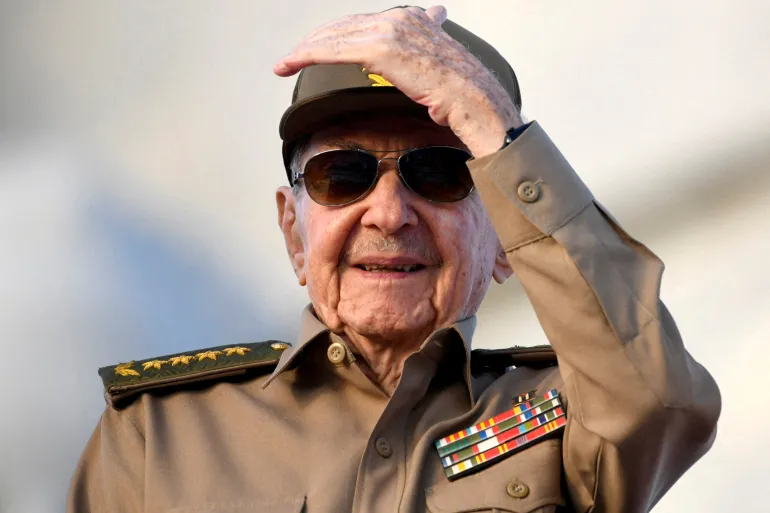
    Escalating long-standing political pressure on Cuba’s communist government, the United States is moving forward with plans to indict 94-year-old Raul Castro, the island nation’s former president and younger brother of revolutionary leader Fidel Castro, multiple US media outlets reported Thursday. The development marks a sharp new turn in a rapidly deteriorating relationship between the two neighboring countries, which has deepened amid widespread crippling power outages across Cuba traced back to a strict fuel blockade imposed by the Trump administration.

    Donald Trump, who served as US president from 2017 to 2021, has repeatedly made clear his goal of forcing the collapse of Cuba’s communist government, a stance that has guided his administration’s sweeping reversal of diplomatic detente built by his predecessor. Raul Castro, who stepped into the national presidency following Fidel Castro’s retirement, oversaw the landmark 2015 normalization of relations between Washington and Havana brokered under the Obama administration—an historic breakthrough that unraveled completely after Trump took office.

    According to reporting from CBS News, which cited unnamed senior US officials with direct knowledge of internal deliberations, the potential indictment centers on the 1996 downing of two small civilian aircraft piloted by anti-Castro activists. At the time of the incident, Cuban authorities stated the planes had violated Cuban airspace, a claim that has remained a point of contention between the two countries for nearly three decades.

    When reached for comment by Agence France-Presse following the media reports, the US Department of Justice declined to provide any immediate confirmation or response on the matter. The looming legal action against Raul Castro, who retired from the Cuban presidency in 2018 and stepped down as head of the Communist Party of Cuba in 2021, comes as Cuban residents continue to grapple with widespread economic instability and infrastructure failures worsened by decades of US trade sanctions.

  • President Abinader returns to Dominican Republic after official visits to Panama and Guyana

    President Abinader returns to Dominican Republic after official visits to Panama and Guyana

    Dominican Republic President Luis Abinader touched back down in the nation’s capital of Santo Domingo on Thursday, wrapping up a two-stop official diplomatic tour that took him first to Panama and then to Guyana. The trip centered on two core goals: drawing new foreign direct investment to the Caribbean nation and expanding bilateral cooperation across key economic and energy sectors, yielding a landmark agreement for joint oil exploration by the end of his travels.

    Abinader kicked off his international itinerary in Panama, where he took the stage as the keynote speaker for the World Free Zones Congress. During his address, he laid out a compelling case for global businesses to choose the Dominican Republic as their next investment hub, spotlighting the country’s unique competitive advantages in both advanced manufacturing and high-technology sectors. Beyond his conference appearance, the president held one-on-one bilateral talks with Panamanian President José Raúl Mulino, and also convened a series of roundtable discussions with leading private sector executives from both nations. These conversations focused on breaking down trade barriers and expanding two-way export volumes to strengthen economic ties between the two countries.

    From Panama, Abinader traveled onward to Georgetown, the capital of Guyana, where he was formally greeted by Guyana’s Prime Minister Mark Phillips and Foreign Minister Hugh Todd ahead of a high-level meeting with Guyanese President Mohamed Irfaan Ali. The working visit concluded with a formal signing ceremony for a new bilateral cooperation agreement, crafted specifically to advance joint exploration activities in the oil and gas sector.

    Immediately after his arrival back in Santo Domingo, Abinader traveled directly to the National Palace to resume his daily presidential duties. Officials close to the president noted that the tour reflects the Dominican government’s sustained, strategic push to expand global partnerships, attract much-needed foreign capital, and unlock new growth opportunities across the energy, trade, and broader economic development sectors.

  • Indotel and Ministry of Defense sign agreement to strengthen cybersecurity

    Indotel and Ministry of Defense sign agreement to strengthen cybersecurity

    In a significant step to shore up the Dominican Republic’s national digital and strategic security, the Dominican Institute of Telecommunications (Indotel) and the nation’s Ministry of Defense have formalized a wide-ranging cooperation agreement focused on upgrading core telecommunications infrastructure, enhancing cyber defense capabilities, and modernizing national strategic security systems.

    The binding agreement was officially signed by Guido Gómez Mazara, president of the Indotel Board of Directors, and Carlos Fernández Onofre, the Dominican Republic’s Minister of Defense, during a formal ceremony in Santo Domingo. Under the terms of the new partnership, the two government bodies will collaborate across multiple critical domains, including advancing radio spectrum monitoring protocols, streamlining national frequency management practices, rolling out more robust proactive interference prevention measures, and coordinating unified responses to growing cyber and technology-based threats targeting the nation.

    A key deliverable of this inter-institutional alliance is the establishment of a new dedicated technical unit whose exclusive mandate will be advancing initiatives in telecommunications security and cyber defense. Beyond this specialized unit, the partners have also laid out plans to launch a Binational Border Monitoring Center, a purpose-built facility designed to detect unauthorized and illegal signal interference along the country’s border, track unauthorized drone activity, and streamline inter-agency coordination to respond quickly to emerging security risks in border regions.

    Additional provisions of the agreement outline shared use of existing institutional infrastructure to expand both telecommunications coverage and national surveillance reach across the country. The partnership also includes dedicated support for advancing digital transformation efforts and expanding access to virtual education programs within Dominican military academic institutions. Senior government officials involved in the agreement emphasized that this cross-agency alliance will do more than address immediate security gaps: it will consolidate the Dominican Republic’s technological sovereignty and deliver far-reaching improvements to the protection of the nation’s critical communications infrastructure, which serves as a backbone for all government and commercial activity across the country.

  • Election observers call for independent voting authority

    Election observers call for independent voting authority

    The Commonwealth Observer Group, which has monitored Bahamian electoral processes since 2017, has issued a stark call for comprehensive, long-overdue reform of The Bahamas’ election infrastructure, a day after releasing its preliminary findings from the most recent national vote. Though the current Davis administration has taken incremental steps to modernize the country’s electoral system, the international monitoring team argues far deeper changes are needed across three critical areas: election management frameworks, digital voting technology, and national media coverage rules.

    Leading the observer mission is former Jamaican Prime Minister Bruce Golding, who emphasized that many key reform recommendations put forward after previous observation missions have sat unaddressed for years. Golding pushed for the creation of a permanent domestic oversight body tasked with systematically reviewing findings from international observer groups and implementing actionable changes, a core recommendation the Commonwealth has put forward for decades.

    One of the most high-priority proposals the group has reintroduced is the establishment of an independent national election management body. Golding noted that 24 years have passed since the last national referendum on the issue, a timeline that he says makes it long past time to revisit the question for Bahamian voters. This call comes on the heels of weeks of formal complaints from Bahamian opposition parties, which have raised widespread concerns about the Parliamentary Registration Department’s management of the recent electoral process, including doubts over the accuracy and integrity of the national voter register and inadequate pre-election consultation and preparation.

    While Golding praised multiple elements of the recent election — including the peaceful conduct of voting on election day, the professionalism of political party agents, and robust security arrangements across polling sites — the mission documented a series of persistent operational failures. These included widespread reports of voters being incorrectly assigned to constituencies, omitted entirely from voter rolls, and significant logistical breakdowns during last month’s advance polling period.

    Golding outlined a series of immediate adjustments for the Parliamentary Registration Department, urging officials to apply lessons learned from the advance poll to all future electoral events. Key fixes include revising the number of voters assigned to individual polling stations, improving crowd control protocols, adjusting staffing deployment, adding clearer directional signage, accelerating the distribution of certified voter lists to political parties and returning officers, and strengthening proactive communication with both the public and political stakeholders about operational changes.

    When asked about the potential for fixed election dates to resolve some scheduling and planning challenges, Golding noted the mission had not thoroughly evaluated the policy, but explained that the reform carries both benefits and drawbacks. “A situation may arise in a country which demands a return to the electorate and it may not necessarily be a good thing for that necessity to be imprisoned by the fact that the election date is fixed,” he said, “At the same time, a fixed election date does provide some predictability so that people can plan.”

    Additional procedural reforms recommended by the group include publishing preliminary voter lists online to enable public verification and correction of errors, and moving from optional to mandatory biometric voter identification cards for the next national election. Golding commended the Davis administration’s rollout of optional biometric cards as a positive step toward modernization, but said full mandatory adoption is needed to eliminate roll inaccuracies.

    One of the most concerning trends the mission identified is a persistent drop in voter turnout, a shift from The Bahamas’ historical record of high voter participation before the dual shocks of Hurricane Dorian and the COVID-19 pandemic. “This time around, there’s no COVID. We don’t have a hurricane and based on the preliminaries of the turnout, it seem to be somewhere in the region of 56 percent. That worries me,” Golding said. He noted that declining turnout is a regional trend across the Caribbean, and urged Bahamian political parties to investigate the root causes of growing voter alienation. To reverse the decline, Golding proposed launching a robust cross-platform public information campaign that uses both traditional and social media months ahead of the next election to boost voter awareness and engagement.

    On media issues, the group acknowledged that press freedom is generally respected across The Bahamas, but documented significant public unease over the governing administration’s arrangements at the state-owned Broadcasting Corporation of The Bahamas (BCB) in the lead-up to the election. The Commonwealth restated its long-standing recommendation that ZNS, the national public broadcaster, provide equal access and balanced, impartial coverage to all registered political parties and candidates, regardless of incumbency.

    The mission also received multiple reports of close, overlapping ties between private media outlet owners and the country’s major political parties, raising concerns about widespread implicit and explicit biased coverage. To address this, the group recommended that private media organizations collaborate to create an independent self-regulating media association for industry professionals, alongside a formal code of ethical conduct to guide political coverage.

    Golding also flagged issues around the recent redistricting process that created two new parliamentary constituencies, arguing that the final boundary map was drawn to benefit the incumbent Davis administration. “The delimitation of constituencies under this arrangement has the potential to confer an unfair advantage in election outcomes,” he said.

    Closing his presentation of preliminary findings, Golding congratulated re-elected Prime Minister Philip Davis on his victory, and commended all Bahamian voters for turning out and casting their ballots in a peaceful, orderly manner. A full, detailed final report from the Commonwealth observer mission will be published at a later date.

  • Golding criticises lack of campaign finance laws

    Golding criticises lack of campaign finance laws

    Unaddressed gaps in campaign finance regulation have left Bahamian elections persistently vulnerable to undue monetary influence, according to Bruce Golding, former Jamaican Prime Minister and head of the Commonwealth Observer Group. In a public press conference held at the British Colonial Hotel, where the group released its preliminary evaluation of the upcoming 2026 Bahamian general election, Golding issued sharp criticism of successive Bahamian governments’ failure to advance long-promised reform despite repeated warnings from international observer missions.

    Golding noted that the need for updated campaign finance rules has been flagged by international monitoring teams for years, with no meaningful legislative action ever following these repeated calls. During his remarks, he joked that even if global monitoring bodies continued sending observer delegations to the Bahamas for another 100 years, the same unheeded recommendations would be repeated year after year. He emphasized that international bodies alone lack the leverage to force the necessary changes. “The people of The Bahamas need to make this their business. It is their democracy. It is their future,” Golding said. “Politicians can afford not to listen to the Commonwealth Secretariat, but they cannot refuse to listen to their own constituents. That is why real progress depends on the level of civic activism Bahamian citizens choose to exercise.”

    The push for campaign finance reform is not a new conversation in Bahamian politics: major parties from across the ideological spectrum have repeatedly promised to advance the policy when campaigning, but have never followed through on those pledges once in power. Most recently, current Prime Minister Philip “Brave” Davis confirmed in 2024 that campaign finance reform was not a priority for his administration, despite earlier commitments to move the legislation forward. Golding observed that this pattern—opposition parties embracing reform with great urgency, only to abandon the issue once they win power—is a common trend across many Commonwealth nations.

    This election cycle has brought the absence of regulation into sharp relief, as reports have emerged of widespread candidate distribution of gifts and vouchers to voters, a practice critics widely characterize as explicit vote buying. Off the record, sources from the opposition Free National Movement (FNM) have alleged that the ruling Progressive Liberal Party (PLP) poured massive amounts of unregulated campaign funding into outreach across the country.

    Golding warned that small jurisdictions like the Bahamas, which have relatively small voter rolls per constituency, are particularly susceptible to this kind of monetary influence and illicit vote buying. Wealthy candidates or well-funded parties can easily calculate the exact number of votes they need to secure a win, then deploy unrestricted financial resources to buy that support directly, he explained. “This is something that worries us,” Golding added.

    To address these systemic gaps, Golding outlined a series of key policy recommendations. First, he called for mandatory registration of all political parties, arguing that these organizations wield enormous public influence and cannot be allowed to operate with anonymous backing. He also proposed legally mandated caps on individual and corporate political donations, binding limits on overall campaign spending for both parties and individual candidates, and significant enforceable sanctions for any violations of these rules. Additionally, Golding recommended adopting a formal code of conduct for all political parties and candidates to regulate campaign behavior, particularly to curb the spread of personal attacks against opponents that have become increasingly common on social media platforms.

  • Cuba power grid back online after huge blackout

    Cuba power grid back online after huge blackout

    HAVANA, Cuba — After days of widespread outages that plunged large swathes of the Caribbean nation into darkness, Cuban authorities announced full restoration of national electricity service on Friday. However, the country’s long-running energy crisis remains far from resolved, with critical oil supplies completely exhausted and key aging power infrastructure still out of commission.

    With a population of 9.6 million, Cuba has grappled with plummeting energy reserves in recent weeks, a situation exacerbated by a broad U.S. energy embargo that took effect in January. Data collected by Agence France-Presse shows that roughly 65 percent of the country lost power simultaneously during peak outage conditions on Tuesday. On Wednesday, Cuban Energy Minister Vicente de la O Levy confirmed in an appearance on state television that the nation’s stored oil reserves had been fully depleted.

    By Thursday, power cuts persisted across seven of Cuba’s 15 administrative departments. The national electric utility UNE confirmed Friday that it had successfully reconnected the entire national grid, but rolling scheduled outages remain in place to cope with limited generation capacity. The country’s largest and most critical thermoelectric plant — a workhorse of Cuba’s aging energy system that supports most baseline power generation — remains offline following an unexpected mechanical breakdown.

    The widespread blackouts sparked immediate public frustration, with small-scale protests breaking out across the country. A resident of the Havana suburban neighborhood San Miguel del Padron told AFP that local residents staged a cacerolazo — a protest where demonstrators bang pots and pans — on Wednesday evening. Multiple additional small demonstrations were reported in residential neighborhoods across the capital, according to on-the-ground accounts collected by the news agency.

    The energy shortage has further inflamed long-running geopolitical tensions between Havana and Washington. Cuban leaders squarely blame the decades-old U.S. blockade for creating and worsening the acute energy crisis, while U.S. officials argue that mismanagement by the Cuban communist government is the root cause of the crisis.
    Bilateral relations have remained at a low point during the Trump administration, which has expanded harsh economic sanctions on Cuba and publicly raised the possibility of taking control of the island nation. Even amid this frosty atmosphere, formal intergovernmental discussions continue behind the scenes. A high-level diplomatic meeting held in Havana on April 10 marked the first time a U.S. government plane had landed in the Cuban capital since 2016. On Thursday, CIA Director John Ratcliffe held talks with senior Cuban government representatives in Havana. The Cuban government has framed the rare high-level visit as a potential step toward easing long-standing bilateral tensions.

  • Davis pledges to unite country as he is sworn in for second term as PM

    Davis pledges to unite country as he is sworn in for second term as PM

    In a historic break with decades of Bahamian political tradition, Prime Minister Philip “Brave” Davis has been officially inaugurated for a second consecutive term, one day after his Progressive Liberal Party (PLP) secured a landslide victory in the country’s general election. The swearing-in ceremony, held at Government House, formalized Davis’ new mandate after the PLP captured 32 of 49 parliamentary seats? No, correct: PLP won 33 of 41 total seats in Tuesday’s vote, a dominant margin that ended a 30-year cycle where Bahamian voters ousted sitting administrations after just a single term.

  • Holness departs Jamaica for official engagement in Turks and Caicos Islands

    Holness departs Jamaica for official engagement in Turks and Caicos Islands

    In a scheduled official trip departing from Kingston on Friday, Jamaica’s Prime Minister Dr. Andrew Holness has left the island nation bound for the Turks and Caicos Islands. The core purpose of his visit is to take part in the high-profile official opening ceremony of Sandals Resorts International’s newly completed Treasure Beach Village, a luxury hospitality development expected to boost regional tourism ties between the two Caribbean territories.

    Holness’ travel itinerary confirms he will remain in the Turks and Caicos for the opening event before making his return journey to Jamaica, with his arrival back on the island scheduled for Sunday.

    To ensure uninterrupted governance throughout the Prime Minister’s temporary absence, the Jamaican government has activated its pre-established line of succession. Dr. Horace Chang, who holds multiple senior positions including Deputy Prime Minister, Minister of National Security and Minister of Peace, has assumed full responsibility for leading the government during Holness’ time out of the country. This arrangement aligns with standard protocol for Caribbean heads of government when traveling abroad for official engagements, guaranteeing that all state functions and administrative operations continue without disruption.

  • Xi Warns Trump on Taiwan as U.S.-China Talks Focus on Global Tensions

    Xi Warns Trump on Taiwan as U.S.-China Talks Focus on Global Tensions

    On May 14, 2026, the first day of high-level bilateral talks between Chinese President Xi Jinping and U.S. President Donald Trump concluded in Beijing, bringing the world’s two largest economies together to address a raft of pressing global and bilateral issues against a backdrop of longstanding geopolitical friction. The summit opened with formal ceremonial welcomes, followed by closed-door bilateral discussions, a state banquet held at Beijing’s iconic Great Hall of the People, and cultural excursions across the capital, with a second day of negotiations scheduled ahead of Trump’s departure on Friday.

    In his address at the state banquet, President Xi framed the bilateral relationship between China and the United States as the most consequential bilateral partnership for global stability and prosperity. He stressed that both nations bear a shared responsibility to manage ties responsibly, noting, “We must make it work and never mess it up.” Yet Xi also issued a firm, clear warning on the Taiwan issue, which has remained the single most sensitive flashpoint in U.S.-China relations for decades. Xi identified Taiwan as the most important core issue in bilateral ties, cautioning that any mismanagement of the question would trigger a “very dangerous situation” with far-reaching consequences for both countries and the broader Asia-Pacific region.

    The long-running dispute over Taiwan remains a persistent source of friction: Beijing views the self-governing island as an inalienable part of Chinese territory and has repeatedly pledged to achieve reunification, reserving the right to use military force if necessary. The United States, meanwhile, maintains unofficial diplomatic and security ties with Taipei, and continues to supply defensive military equipment to the island under its longstanding one-China policy framework. Following the first day of talks, U.S. Secretary of State Marco Rubio reaffirmed that Washington’s Taiwan policy remains unchanged, emphasizing that any unilateral, forced alteration to the status quo across the Taiwan Strait would damage the interests of both China and the United States.

    Beyond the Taiwan issue, the first day of talks focused heavily on the escalating regional conflict involving Iran and its cascading risks to global energy security. Senior White House officials confirmed that both leaders reached a shared agreement that the Strait of Hormuz, the strategic waterway through which roughly a fifth of global oil supplies pass each day, must remain open to commercial shipping and must not be militarized by any party.

    Rubio added that U.S. negotiators brought up longstanding American concerns over Iran’s nuclear development program during the discussions, though the U.S. side did not formally request direct intervention or assistance from China on the issue. Chinese representatives, for their part, reiterated Beijing’s longstanding public position that it opposes the development of nuclear weapons by Iran, aligning with the international community’s non-proliferation goals.

    A notable feature of President Trump’s visit is the delegation of top American business leaders accompanying him, including high-profile figures Tesla and SpaceX CEO Elon Musk, Apple CEO Tim Cook, and NVIDIA CEO Jensen Huang. Trump told reporters during the trip that the executives joined the visit to demonstrate respect for bilateral commercial ties and to work toward strengthening economic cooperation between U.S. firms and Chinese partners. The talks are expected to produce further clarity on bilateral economic and trade commitments when negotiations conclude on Friday.