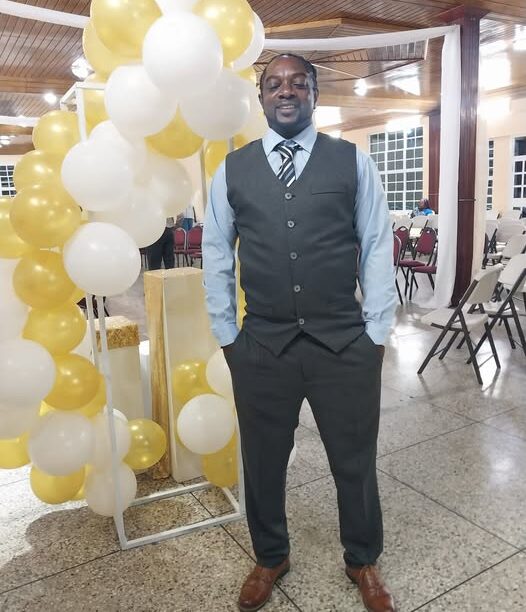
As voters in Dominica’s Roseau North constituency prepare to cast their ballots in Monday’s by-election on September 7, independent candidate Sherman Boston has staked his campaign on three core priorities: cross-political unity, expanded local job creation, and tangible, community-focused development. A 10-year veteran of the Roseau City Council and a self-described “real street soldier,” Boston has built his campaign around the mantra of “country before party,” rejecting partisan tribalism in favor of practical solutions to the constituency’s long-unaddressed issues.
分类: politics
-
Surinamerschap mag geen voorrecht voor enkelen worden
Eight months have passed since 14 Surinamese nationals living across the globe published an open letter addressed to Suriname’s president, chair of the National Assembly, and minister of foreign affairs. On September 7, the body will finally deliberate on a proposed new Surinamese nationality law, a bill initiated to address the status of elite athletes of Surinamese origin who seek to represent the country on international sports stages. While the bill presents a long-awaited solution for these athletes, the proposal also creates a pivotal, historic opportunity for the National Assembly to build a fair and lasting relationship with the entire Surinamese diaspora.
Surinamese identity is not defined by class, profession, achievement or social standing. Descent from a Surinamese ancestor does not depend on an individual’s career, level of education, income or personal accomplishments. A world-class athlete holds no greater claim to Surinamese identity than a nurse, teacher, skilled laborer, student, manual worker or retiree of the same descent. Why would a professional footballer be granted citizenship recognition when his own sibling, who shares the same ancestral roots, is denied? Who gets to decide what profession, degree or achievement meets the arbitrary threshold for citizenship? Tying Surinamese nationality to these factors immediately creates systemic inequality, arbitrary decision-making, and preferential treatment. Surinamese citizenship is not a trophy awarded for exceptional performance; it is a status rooted in ancestry, identity, and connection to the nation of Suriname.
International nationality law follows two core principles: jus soli, which grants citizenship based on place of birth, and jus sanguinis, which grants citizenship based on ancestral descent. The Surinamese diaspora includes all people of Surinamese origin residing outside the country’s borders, regardless of their current nationality or country of residence. For this reason, new legislation cannot be exclusively targeted at people of Surinamese descent living in the Netherlands; it must equally apply to Surinamese communities in the United States, Canada, Australia, and every other country where descendants of Surinamese migrants have settled.
For the diaspora, jus sanguinis must be the foundational principle of the new law. Any individual who can prove Surinamese ancestry and meets clear legal requirements should be granted automatic entitlement to Surinamese citizenship directly through the statute. Lawmakers retain the authority to define how many generations qualify for the program, how close the ancestral link must be, and what official documentation is required to verify descent, with strict checks to confirm identity and ancestral origins.
Critics have raised questions about the current proposal framed around elite athletes: if a player is granted citizenship for life after competing in just one or two matches for Suriname, he receives permanent status based on his sport that is denied to his sibling with identical Surinamese ancestry. If citizenship is revoked when an athlete retires, suffers a career-ending injury, or is no longer selected for national teams, nationality effectively becomes a temporary sports contract. There is also no justification for giving athletes priority over nurses, teachers, entrepreneurs and skilled workers who share the same Surinamese descent.
The core conclusion is clear: while demand to resolve the status of athletes created the catalyst to reform Suriname’s nationality law, sport can never be the legal basis for granting citizenship. That basis must be provable Surinamese ancestry, with equal eligibility requirements applied to all people of Surinamese origin, regardless of their profession or achievements.
Fears that opening citizenship to diaspora members will erode Suriname’s national identity among people with no real connection to the country are understandable, but well-crafted legislation can eliminate this risk. The proposal is not an open invitation for anyone in the world to claim Surinamese citizenship; it only applies to a clearly bounded group of people with verifiable Surinamese roots. Objective eligibility criteria, strict anti-fraud measures, and a robust registration system will protect Suriname’s national interests and integrity.
For people of Surinamese descent holding Dutch nationality, the legal structure of the new law is particularly critical. Under current Dutch regulations, voluntary acquisition of a second nationality can lead to loss of Dutch citizenship in most circumstances. For this reason, lawmakers must carefully design the law to grant Surinamese citizenship by operation of law for those who meet the ancestry requirements, rather than requiring a standard naturalization application process. The registration process will only serve to confirm identity and ancestry, and formalize the existing legal right to citizenship. The framework must also be reviewed by independent nationality law experts before adoption, to ensure no individual accidentally loses their Dutch or other existing citizenship due to poorly drafted legal language.
It is also important to clarify what this nationality reform does not cover. This amendment will not provide government-funded remigration support, nor will it automatically grant recipients access to public housing, land, employment, government subsidies, or social welfare benefits. Suffrage is also not addressed through this legislation. Nationality, residency, remigration, social benefits, and voting rights are distinct legal issues that require separate legislative consideration.
To streamline engagement with the diaspora, the establishment of a dedicated Diaspora Directorate is a logical next step. This body would coordinate registration processes, service delivery, knowledge sharing, investment attraction, and collaboration with diaspora organizations. Its role is to connect the diaspora to Suriname and implement policy, not to judge which people of Surinamese descent are valuable enough to deserve citizenship based on their profession, wealth, or athletic achievements.
As National Assembly members prepare for Monday’s vote, they face a fundamental, historic choice. They can either approve a law that divides Surinamese people of the same descent into hierarchical classes based on achievement, or they can pass legislation that unites all Surinamese through a framework of equal rights. Surinamese citizenship should never depend on winning a medal, holding a degree, occupying a senior position, or earning a high income. On September 7, the National Assembly has the opportunity to choose equality over exclusion, and a unifying national vision over a temporary, narrow exception. Let the historic message from the National Assembly be this: being Surinamese does not end at Suriname’s border.
-
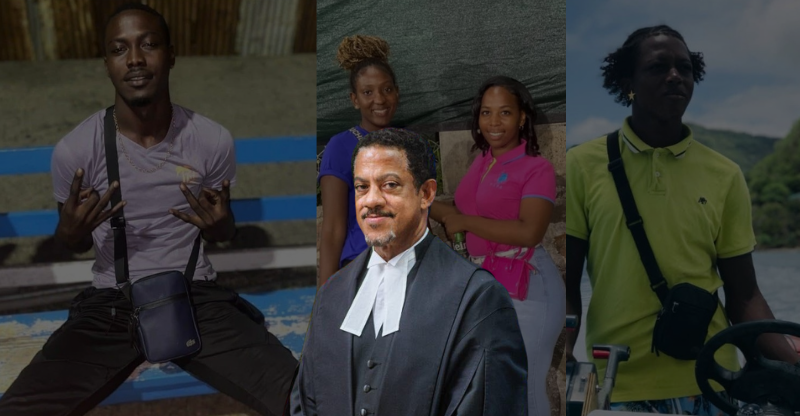
Mario Michel to lead Commission of Inquiry into deadly boat collision
A fatal maritime accident that shook Saint Lucia earlier this year will now be the subject of a formal, independent investigation, after government officials formally established a four-member Commission of Inquiry to probe the circumstances of the incident. The collision, which occurred off the coast of Anse Cochon on July 18, left four people dead — Mhakeida Nestor, Debbie Dolor, Marley William, and Tyrone Elivique — and multiple other passengers injured.
At the helm of the investigative body will be retired judge Justice Mario Michel, whose appointment came following formal advice from the country’s Cabinet to Acting Governor General Felix Finisterre. The official designation was formally announced through an Extraordinary Government Gazette released to the public this Thursday. Joining Michel on the commission are three other appointed members: maritime sector specialist Cuthbert Didier, retired police Superintendent Kentry Frederick, and current Assistant Commissioner of Police Luke De Freitas. To support the commission’s operations, attorney Shahida Charlemagne-Octave has been named legal counsel, and retired public servant Lenita Joseph will fill the role of commission secretary.
The inquiry carries a broad mandate beyond simply determining what led to the July collision. Beyond examining the sequence of events and contributing factors that caused the fatal accident, the commission is also tasked with conducting a top-to-bottom review of Saint Lucia’s existing legal framework governing maritime accidents. It will also assess current operational procedures and safety protocols for both maritime activity and accident investigations in the country’s waters.
A key deliverable for the body is a set of evidence-based policy and legislative recommendations, which are intended to guide the drafting of an updated, modern Maritime Act for the island nation. All public sittings for the inquiry will be hosted at the Parliament Chamber, and officials have opened avenues for public participation: any member of the public may submit written evidence to the commission, or request an opportunity to give oral testimony directly to the panel.
The investigation is set to officially get underway on September 8, with a final deadline for the submission of the commission’s full report to the Governor General set for March 8, 2027. That final document will be required to include a full accounting of the inquiry’s proceedings, its formal findings on the collision, and the detailed reasoning behind all of its conclusions and recommendations.
-

Map showing Africa’s true size backed by UN vote
On September 4, at the United Nations headquarters in New York, the UN General Assembly passed a landmark resolution that marks a major shift in global cartographic practice, backing the widespread adoption of world maps that accurately reflect the true size of Africa and other global regions. The vote ended with 164 member nations supporting the measure, only the United States voting in opposition, and six countries choosing to abstain.
This resolution is the culmination of a years-long African-led advocacy campaign called #CorrectTheMap, which has sought to challenge the centuries-long dominance of the deeply inaccurate Mercator projection. Developed in 1569, the Mercator projection systematically distorts land mass size: it makes territories farther from the equator appear far larger than their actual geographic dimensions, while shrinking the apparent size of equatorial and tropical regions, most notably Africa. On a standard Mercator map, Greenland appears roughly the same size as Africa, even though the African continent is 14 times larger than the Greenland ice sheet. Backers of the campaign note that Africa is so vast that it could easily fit the entire land area of the United States, China, India, Japan, Mexico, and most of Europe within its borders, with additional space left over. A public petition on Change.org in support of the initiative gathered more than 11,000 signatures from global supporters.
The movement gained institutional traction in August 2025, when the African Union officially endorsed the #CorrectTheMap initiative and tasked the West African nation of Togo with leading diplomatic efforts to bring the issue to the UN. Togo’s diplomatic team spearheaded the resolution drafting and negotiation process ahead of the General Assembly vote. Ahead of the ballot, Togo’s Foreign Minister Robert Dussey emphasized that maps are far more than simple geographic references: they shape global public education, collective cultural imagination, and how societies perceive global power dynamics.
Advocates of the resolution have hailed the outcome as a historic turning point. Fara Ndiaye, Deputy Executive Director of Senegal-based public health and advocacy group Speak Up Africa, shared that she felt profound joy and slight surprise at the overwhelming support for the measure. Speaking in an interview with France 24, Ndiaye explained that cartography and systems of geographic representation have always been intertwined with global power structures, shaping how communities perceive global influence and presence. She noted that while many alternative, more accurate map projections have existed for decades, the Mercator projection has retained its unchallenged dominance for centuries, meaning the UN’s vote carries clear political weight.
“Choosing a projection is not a technical detail. It’s really, truly, a political act,” Ndiaye stressed. When asked about the significance of former European colonial powers voting in favor of the resolution, she highlighted that this is the first time in history that 164 nations have collectively committed to prioritizing geographic accuracy in global mapping. She commended Togo, Dussey, and all partner organizations for turning the idea of a fairer map into a formal global agreement, echoing Dussey’s core assertion that “a fair world begins with a fair map.”
Crucially, the UN resolution does not ban the Mercator projection or formally mandate that it be replaced by the Equal Earth projection, a popular equal-area design first released in 2018. Instead, the non-binding measure encourages governments, educational institutions, international bodies, and major technology companies to adopt equal-area projections like Equal Earth when illustrating the relative size of continents. It also calls for expanded public education around the inherent challenges of mapping a spherical planet on a flat surface, and the trade-offs between different cartographic approaches.
-
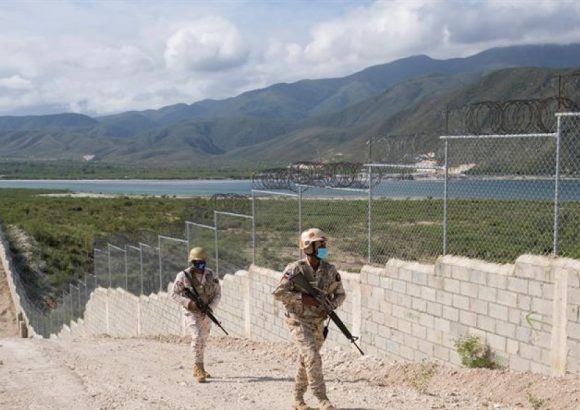
The Dominican Republic is building a new fence on its border with Haiti to curb smuggling.
The Dominican Republic has launched a new phase of its comprehensive border security strategy, starting construction on a 14.5-kilometer fortified perimeter fence along its southern shared border with Haiti, the nation’s Ministry of Defense confirmed in an official statement released Saturday. The new infrastructure project, which will reach a total height of 3.9 meters, includes six purpose-built watchtowers, 35 culverts, and seven-meter-wide patrol lanes running along both sides of the fence to boost military mobility and surveillance capabilities. The construction is taking place in Hoya de Enriquillo, a district of Independencia Province that the Dominican government identifies as one of the most critical and historically challenging points on the entire shared border. For decades, this region has struggled with persistent unregulated cross-border activity, including large-scale smuggling of contraband goods. As the location of one of the largest formal binational trade markets between the two countries, the new infrastructure is designed to crack down on illicit activity while fostering more organized, transparent, and rule-compliant cross-border commerce, according to the defense ministry. The patrol lanes, a core component of the project, are engineered to allow security forces to deploy faster and respond more effectively to any emerging security threat along this section of the border. This new construction is the second phase of the broader national ‘Strong Border’ initiative, an all-encompassing government strategy aimed at upgrading security, modernizing infrastructure, and driving sustainable development across the entire Dominican-Haitian border region. Similar fortified fence segments were already completed in previous phases in Jimaní Province, and to date, approximately 55 kilometers of border fencing has been finished across the country: 38 kilometers along the northern border, with additional segments in the central province of Elías Piña and southern provinces of Independencia and Pedernales. Beyond physical fencing, the ‘Strong Border’ plan integrates multiple layers of security, from increased military presence to cutting-edge surveillance technology and coordinated inter-agency cooperation. According to Dominican Minister of Defense Carlos Antonio Fernández Onofre, the full project includes 1,500 solar-powered security lights, fiber-optic communications infrastructure, AI-enabled smart surveillance cameras, and a network of drones all operated from a central command center run by the Ministry of Defense. Backing this technology and infrastructure is a deployment of roughly 11,000 trained military personnel along the entire border defense line, supported by specialized surveillance and patrol equipment to reinforce security operations. The new fence construction comes as the Dominican government continues to implement a sweeping deportation policy launched in October 2024, which targets a goal of repatriating 10,000 undocumented Haitian migrants per week to curb irregular immigration. Official government data shows that between January and July 2024 alone, Dominican authorities deported more than 250,000 undocumented Haitian nationals back to Haiti, a country currently grappling with a widespread multidimensional political, economic, and humanitarian crisis.
-
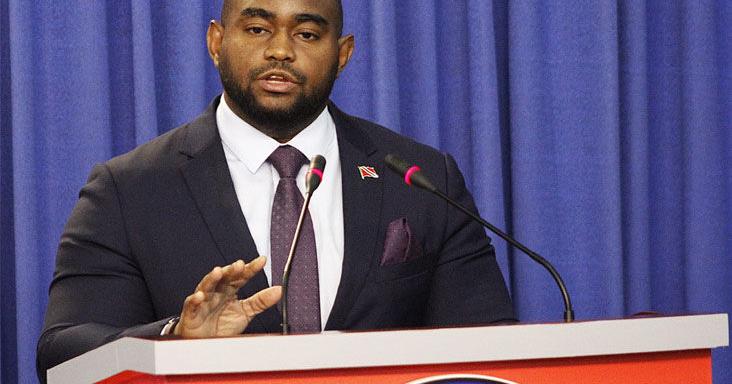
Sobers: We’ll get the work done
After years of stalled diplomatic and technical engagement, Trinidad and Tobago and Venezuela have taken a landmark step to reset their bilateral relationship, announcing the establishment of a joint commission designed to break long-standing inertia and advance collaborative work on issues of shared importance to both nations.
Trinidad and Tobago’s Minister of Foreign and Caricom Affairs, Sean Sobers, outlined in a recent telephone interview with local outlet *Express* that the new body’s technical working group will enable both governments to map out priority action items and deliver tangible outcomes aligned with the needs of their respective populations. According to Sobers, the joint commission will address cross-ministerial issues that have remained unresolved and untouched for years, long before the current United National Congress (UNC) administration took office last year.
Public servants from the recent Trinidad and Tobago delegation to Caracas, including Permanent Secretary and head of the country’s Foreign Service Randall Karim, have already initiated outreach to their Venezuelan counterparts to complete the foundational technical work required to launch the commission and bring it into full operation. “We will work it out; what we prioritise will be actioned and we will get the work done, and I am certain that both countries are poised for huge progress on several varying fronts,” Sobers said of the initiative.
In addition to the joint commission announcement, the bilateral talks yielded mutual reciprocal visit invitations: Sobers confirmed that Trinidad and Tobago has extended an official invitation to Venezuela’s Minister of People’s Power for Foreign Affairs and Foreign Trade Felix Plasencia to visit the twin-island nation, while Plasencia has extended a corresponding invitation for Trinidad and Tobago’s government ministers and officials to travel to Venezuela for further in-depth bilateral negotiations.
Sobers praised the warm and extraordinary hospitality extended to the Trinidad and Tobago delegation during its Caracas visit. Upon arrival in the Venezuelan capital, the delegation was greeted by Raul Li Castro, Venezuela’s Vice-Minister of Foreign Affairs for Latin America and the Caribbean, alongside other senior government officials. The delegation then proceeded to “Casa Maria”, the headquarters of Venezuela’s Ministry of Foreign Affairs and Foreign Trade, where Sobers and Plasencia held more than five hours of extensive substantive talks, running from 11 a.m. to 4 p.m.
Sobers emphasized that the wide range of topics covered during the talks had been dormant for years, predating the UNC administration that took office in 2025. Aligning with the joint official statement released by both nations’ foreign ministries last Thursday, Sobers confirmed that the two countries are now formally charting a new era of cooperative relations.
He pushed back against criticism from opposition lawmakers from the People’s National Movement (PNM), who he claimed have sought to undermine the current administration’s diplomatic efforts, saying the government would not be distracted by opposition noise and disruption. He also warned the public to guard against fake news and misinformation that may be spread by the opposition, stressing that “This team is going to get Trinidad and Tobago and Venezuela working again to deal with all the issues for the benefit for all our peoples.”
During the talks, Venezuelan officials also formally thanked Trinidad and Tobago for the critical humanitarian assistance it provided following the devastating earthquake that claimed the lives of more than 6,000 people in Venezuela. On behalf of Trinidad and Tobago Prime Minister Kamla Persad-Bissessar, Sobers assured Plasencia that the country remains ready to provide emergency assistance whenever and wherever it is needed in the future.
Sobers also addressed opposition questions over why he, rather than the Minister of Energy or Minister of Trade, led the diplomatic mission to Venezuela, responding bluntly: “Don’t blame me if my leader has confidence in me.” He defended the role of the Ministry of Foreign Affairs, noting that in any national government, the foreign ministry holds a core responsibility to maintain expertise on issues that cut across all cabinet portfolios, especially when those issues intersect with the country’s international relations.
He went on to criticize the diplomatic approach of the previous PNM administration, arguing that it failed to follow proper diplomatic protocols and concentrated key diplomatic engagements exclusively among a small group of senior government officials rather than routing negotiations through the formal, established structure of the Ministry of Foreign Affairs. “That was the kind of upside-down approach that existed before over a near decade. You had Stuart Young and (Dr Keith) Rowley being the ones to go out there and having discussions, so you had a situation where a lot of things would have happened in silos and vacuums and people don’t know about it,” he explained.
-

Martinique – St. Kitts & Nevis PM In Country For Medical Treatment For Stroke
In a development that has drawn regional attention across the Caribbean, St. Kitts and Nevis Prime Minister Dr. Terrance Drew is currently undergoing medical evaluation and treatment outside his home country following unconfirmed reports of a stroke, with updated public information shared as of September 5, 2026.
The chain of events began on August 30, when the 49-year-old prime minister was first admitted to the local Joseph N. France General Hospital after complaining of persistent discomfort, nausea and severe headache. After an initial assessment, treating clinicians advised Drew to travel abroad to access more specialized diagnostic services and ongoing monitoring, in line with standard care protocols for complex neurological symptoms.
According to local media reports based in Martinique, Drew was transferred to the intensive care unit of the University Hospital of Martinique on the evening of August 31, where he received immediate targeted care from specialist medical teams. The reports note that after several days of treatment, Drew’s condition stabilized significantly, and medical professionals do not anticipate any long-term lasting health impacts from the incident. The prime minister later confirmed he received initial care in Martinique before proceeding to South Florida for more comprehensive follow-up examinations, a step he said was intended to ensure a full and accurate diagnosis.
Notably, the suspected stroke diagnosis first reported by Martinican media has not been formally verified by either the Government of St. Kitts and Nevis or Drew’s personal medical team. In a national address delivered to the people of St. Kitts and Nevis on September 3, Drew offered public reassurance, stating that he remained fully conscious, his condition was stable, and he was keeping positive spirits as medical teams completed their work. He stopped short of disclosing a formal clinical diagnosis during the address.
Per the Martinique-based media accounts, Drew expressed public gratitude to the medical staff who provided his initial care in the French Caribbean territory. Moving forward, he is expected to raise the topic of Martinique’s specialized regional healthcare capacity with fellow leaders of the Caribbean Community (CARICOM), to highlight the island’s growing role as a hub for advanced medical services for smaller Caribbean nations that lack some specialized resources.
News of Drew’s sudden illness sparked an immediate outpouring of support and concern from across the Caribbean political landscape and general public. Among those to publicly share well wishes for his speedy recovery were St. Kitts and Nevis Opposition Leader Mark Brantley and multiple senior government officials from other regional blocs and member states.
To ensure the continuity of governance during the prime minister’s absence for medical care, Deputy Prime Minister Dr. Geoffrey Hanley has stepped in to handle day-to-day government operations. Government spokespeople have repeatedly emphasized that all state functions and public services are continuing as normal, with no disruptions to legislative or executive business.
Drew’s recent public update has helped ease anxiety among citizens of the twin-island nation, who have been following updates on his health closely. Official sources note that additional details regarding Drew’s condition and timeline for his return to St. Kitts and Nevis will be released to the public once his medical team completes all ongoing assessments and reaches a final care plan.
-
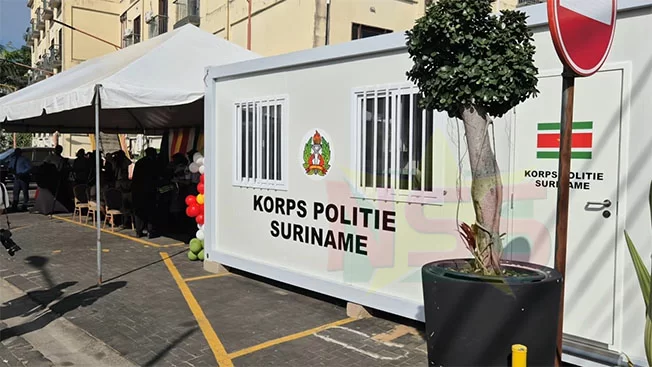
Eerste van vijf politieposten in veiligheidszone Paramaribo geopend
PARAMARIBO, Suriname – September 5, 2026 – Suriname has launched an innovative public-private partnership to expand visible policing and cut emergency response times in the heart of Paramaribo, with the first of five new police assistance and control posts opening on the parking grounds of the Ramada Hotel & Casino. The partnership was developed to address two longstanding barriers to public safety expansion: a widespread lack of suitable government-owned land for new infrastructure, and no allocated budget for police facility maintenance in the 2026 national fiscal plan.
The initiative forms the core of the first official ‘safety zone’ announced earlier by President Jennifer Simons. The designated security corridor stretches from the entertainment district along Sommelsdijckstraat to the Waterkant promenade adjacent to the Central Market, with five new police outposts planned across the area to increase officer presence. Justice and Security Minister Harish Monorath explained that the core goal of the project is to make policing more visible to residents, visitors and businesses, while drastically cutting response times to emergency calls in the busy downtown district. Ultimately, officials say the new network will help build greater public confidence in urban safety across Paramaribo’s city center.
Acar Mehdi, chief executive officer of Ramada Hotel & Casino, welcomed the partnership and emphasized the private sector’s commitment to supporting public safety goals. “We are always ready to support the government, particularly the Ministry of Justice and Security,” Mehdi stated. He also noted that the Turkish government places high priority on deepening bilateral collaboration with Suriname, adding that a large official Turkish delegation is scheduled to visit Suriname this November to mark the 50th anniversary of formal diplomatic relations between the two nations.
Minister Monorath expressed gratitude for the private sector’s willingness to collaborate on the public safety project, noting that the partnership reflects the government’s commitment to centering private sector initiative in solving pressing public challenges. He addressed public speculation that the location of the first outpost grants preferential treatment to Ramada Hotel & Casino, clarifying that the unusual public-private model was born of necessity rather than favoritism. “This is not a preferential arrangement. There is no reason to question why we placed it at Ramada’s parking lot: the government simply has almost no vacant suitable land left to use,” Monorath explained.
Beyond limited land availability, the minister added, the government also faces systemic challenges maintaining existing police infrastructure. “Second, we had to figure out how we would sustain these posts long-term,” he said. “Because in our budget, at least for 2026, there is no allocation for maintenance. That’s why we already see many existing police assistance and control posts across the country in deplorable condition.”
Monorath confirmed that the remaining four outposts across the safety zone will most likely also be located on privately owned land, with preliminary target locations including Wakapasi, the Tax Office building, Paramaribo’s historic downtown district, and the Waterkant near the Central Market. Once fully completed, the network is expected to transform public safety delivery in one of Paramaribo’s busiest tourist and commercial hubs.
-
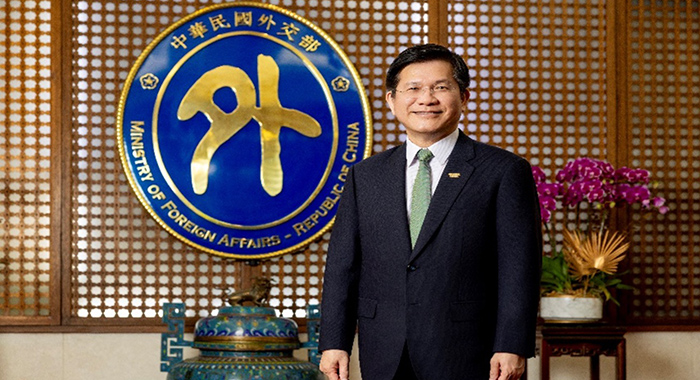
Restoring trust: Taiwan’s rightful place in the free world
Authored by Dr. Lin Chia-lung, Minister of Foreign Affairs of the ROC (Taiwan), this opinion piece outlines growing threats to the global rules-based framework, arguing that authoritarian powers are actively eroding long-standing international safeguards to rewrite global norms in their favor. Even core UN Charter principles — including the peaceful resolution of disputes and the ban on the threat or use of military force — are now facing open, brazen violations.
The global community now stands at a defining crossroads, Lin argues. Global actors can either coordinate to uphold international justice, defend the rule of law, and preserve global peace and security, or allow the existing world order to collapse, taking with it the global protections for freedom, self-determination, and democratic governance. This stark choice is most visible in the Indo-Pacific’s first island chain, where regional security has come under mounting pressure from China. According to Lin, China has consistently deployed gray-zone tactics — ranging from military intimidation and cyberattacks to economic coercion — to unilaterally alter existing regional rules and norms.
As a frontline defender of freedom and democracy, Taiwan remains committed to upholding the cross-strait status quo. But Lin emphasizes that preserving regional peace and stability is not exclusively a Taiwanese interest; it is a shared priority for the entire international community.
The Taiwan Strait stands as one of the world’s busiest maritime shipping routes and a critical artery for global supply chains. Its importance to global security and economic prosperity has been repeatedly highlighted in official statements from the G7, as well as in multilateral and bilateral meetings between the United States, Japan, the United Kingdom, Australia, New Zealand, and other like-minded nations. A growing global coalition has publicly emphasized the indispensable value of maintaining cross-strait peace and stability.
Lin also draws attention to another growing threat to the integrity of the rules-based order: China’s deliberate distortion of United Nations General Assembly Resolution 2758. Adopted in 1971, the resolution only addresses China’s seat representation at the United Nations; the original text makes no mention of Taiwan, does not rule on Taiwan’s political status, and does not bar Taiwan from participating in the UN system. Despite this, Lin argues that China has falsely conflated Resolution 2758 with the so-called “one China principle,” using the misrepresented resolution to block Taiwan’s access to the UN and other international intergovernmental bodies. If this distortion is left unchallenged, Lin warns, it will set a dangerous legal precedent that could be used as a pretext for future military aggression against Taiwan across the Taiwan Strait.
Even though Taiwan is currently excluded from UN membership, Lin stresses that Taiwan remains committed to contributing positively to global collective action. Taiwan’s unique strengths in advanced manufacturing, disaster response, and public health create meaningful opportunities to support global public goods, he notes.
Taiwan has pursued what Lin calls a “value-added, integrated foreign policy” centered on deepening democratic alliances, advancing collective security, and building global economic resilience. In partnership with like-minded nations, Taiwan works to advance democratic governance, human rights, and individual freedom across the globe. As a global leader in semiconductor manufacturing, artificial intelligence, and cutting-edge technology, Taiwan is committed to developing supply chains that are secure, resilient, and not dependent on authoritarian regimes, Lin says.
Through the Diplomatic Allies Prosperity Project, Taiwan also works to foster shared economic growth with its diplomatic partners. Taiwan shares its technical expertise and resources to develop technology-focused development projects with partner nations, helping them address local development challenges and build domestic capacity.
Concrete examples of these successful collaborations, Lin notes, include the development of an integrated national healthcare information system with Paraguay, the construction of a strategic oil reserve facility in Eswatini, and a partnership with Palau National Hospital to roll out smart healthcare infrastructure. These initiatives have improved local data management and operational efficiency, strengthened national energy security, supported industrial growth, and advanced the UN Sustainable Development Goals in partner nations.
Khalilur Rahman, President-elect of the upcoming 81st United Nations General Assembly, has identified restoring global trust in multilateral institutions and managing UN institutional transformation as the core themes of his presidency. Lin confirms that Taiwan fully shares these goals and stands ready to contribute to achieving them.
Lin argues that restoring global confidence in the United Nations must start with fair and equitable treatment of all members of the international community. True institutional transformation cannot be achieved when a constructive, reliable stakeholder is unjustly locked out of the system, he says.
Lin closes with a call on the international community to uphold core principles of inclusive multilateralism, leaving no nation behind, peaceful dispute resolution, and the rejection of threats or the use of force. These are the foundational values that underpin the rules-based international order, and they must be applied consistently, without exception, he argues.
“The free world needs Taiwan — and a stronger, more credible United Nations needs Taiwan’s meaningful participation,” Lin writes. Working collaboratively with Taiwan will strengthen global collective security, boost global economic and technological resilience, and expand the global capacity to push back against authoritarian pressure. Ensuring Taiwan’s meaningful participation in the United Nations system is therefore a critical step toward building a more inclusive, secure, resilient, and rules-based global order, Lin concludes.
Disclaimer: The opinions expressed in this piece are solely those of the author, and do not necessarily represent the official views or editorial position of iWitness News. Op-eds can be submitted to [email protected] for consideration.
-
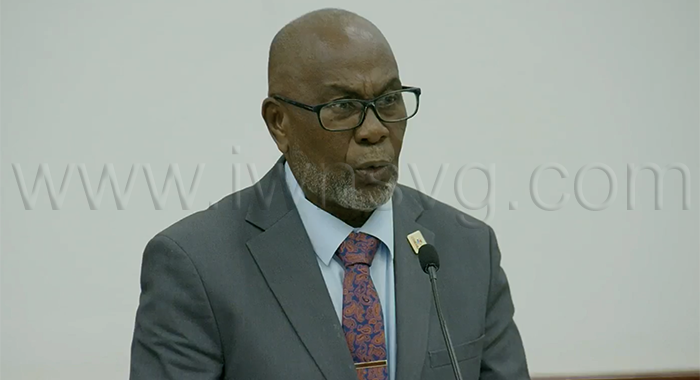
Other cops not committed to security agendas should also quit — Leacock
In a landmark address to Parliament Thursday, St. Vincent and the Grenadines Deputy Prime Minister and National Security Minister St. Clair Leacock has issued a clear call for senior police officers unwilling to advance the new administration’s public safety agenda to follow the lead of departing colleagues and leave their posts, as the government pushes forward with a sweeping restructuring of the Royal St. Vincent and the Grenadines Police Force (RSVGPF) to curb rising gun violence and homicides.
Since the New Democratic Party took power in November, at least two high-ranking officers have opted not to serve under the new administration and requested early retirement or leave, which the government granted, Leacock told lawmakers. He declined to name the departing officers, but made clear that more personnel changes are on the table if sitting leaders fail to meet performance expectations. “It may well be that there are one or two more who should take that example and go home and make room for others who want to do it,” Leacock said. “If they don’t deliver, believe in me, I’ll make the recommendations for those who want to serve this nation and this administration faithfully well, to be put into position. I wouldn’t hesitate in it.”
Leacock’s remarks mark the most explicit public signal yet that the new government intends to reshape top police leadership amid widespread public anxiety over violent crime. The address also served as a defense of the changes his administration has already implemented over its first nine months in office, and a sharp critique of the force’s previous leadership structure.
Current substantive Police Commissioner Enville Williams is currently on seven months’ paid leave, with Trevor Bailey appointed to serve as acting commissioner. Leacock implicitly criticized Williams’ tenure, saying the permanent commissioner took six months to recognize that his deputy deserved to accompany him on international work trips, a practice that left the deputy sidelined on too many occasions. In contrast, Leacock praised Bailey and Rapid Response Unit (RRU) head Nolan “Grandpa” Dalloway for their consistent, real-time performance on reporting crime trends to his office.
To boost operational capacity, Leacock laid out plans to reallocate new police recruits: 30 incoming trainees will be assigned to the Special Service Unit and another 30 to the RRU, a move designed to rebuild the specialized units and increase the number of uniformed officers conducting on-foot patrols across communities. Leacock also confirmed he has already identified preferred candidates to fill key leadership roles in specialized units, including the Special Services Unit and the narcotics division.
A former uniformed officer with a decade of experience training new police recruits as a lecturer, Leacock framed his leadership of the national security portfolio as a deliberate effort to fix long-standing institutional weaknesses in the RSVGPF. “I’m in this job now for about nine months, and I applied for it because I was confident I can do it better than my predecessor. And so far, I’m doing exactly that,” he told Parliament.
Despite pushing for personnel changes, Leacock struck a balance by pledging to professionalize the force and reduce routine political interference in day-to-day police operations. He noted that promotions going forward will be based on performance evidence rather than partisan political ties, even though the administration has not yet completed a full year in office to conduct formal annual performance reviews. Leacock described his role as setting policy direction and receiving operational updates, while uniformed police professionals remain in charge of executing frontline work, singling out acting Assistant Commissioner Benton Smith for his strong human resource leadership.
The personnel changes come as part of the government’s broader one-year strategic crime reduction plan, centered on intelligence-led, targeted policing, aggressive crackdowns on illegal firearms trafficking, strengthened criminal investigations that prioritize forensic evidence, expanded police presence and patrols across communities, deployment of new surveillance tools including drones and closed-circuit cameras, and deeper community policing engagement with schools, churches, youth groups and local business associations.
Leacock emphasized that the New Democratic Party administration views recent gun violence and homicide incidents as a critical national priority, noting that the success of any anti-crime strategy depends heavily on the quality of police leadership and officer morale — two factors directly tied to the ongoing personnel shakeup in the RSVGPF’s top ranks.