分类: politics

  • Cuba’s president warns of ‘bloodbath’ if US takes military action

    Cuba’s president warns of ‘bloodbath’ if US takes military action

    Fresh geopolitical friction between Havana and Washington has sparked alarming new warnings from Cuba’s top leader, who cautioned that any U.S. military incursion into the island nation would trigger an unprecedented humanitarian catastrophe. In a public statement posted to the social platform X on Monday, Cuban President Miguel Díaz-Canel stressed that any invasion would leave behind a bloodbath with consequences that cannot be calculated or reversed.

    Díaz-Canel pushed back against long-standing U.S. narratives framing Cuba as a security threat, emphasizing that the Caribbean nation has never held aggressive intentions or plans toward any sovereign state, including the United States — a fact he said the U.S. government has long been aware of. He added that Cuba is already enduring a multifaceted campaign of aggression from the U.S. that has stretched across decades, and that the island retains every legitimate right to defend itself against any further military attack. Even so, he noted that pretense of an imminent Cuban threat cannot be honestly or logically used to justify a full-scale war against the Cuban people.

    Current relations between the two nations are hovering near their lowest point in more than 30 years, driven by a steady escalation of pressure from the Trump administration and a deepening domestic energy crisis that has crippled daily life on the communist-governed island. Last week, Cuba’s energy ministry confirmed that a last-minute emergency donation of crude oil from Russia had been fully exhausted, leaving the country with no buffer to avoid extended, widespread power outages for the foreseeable future.

    Escalating its campaign of pressure just days later, the Trump administration rolled out a new package of sanctions on Monday targeting core institutions of the Cuban government, including the country’s lead intelligence agency and national interior ministry. Secretary of State Marco Rubio confirmed in an official statement that additional punitive measures will be rolled out in the coming days and weeks as the administration ramps up its push for regime change. The new sanctions also name 11 senior Cuban officials, including the country’s Minister of Justice and Deputy Minister of the Revolutionary Armed Forces, who will face asset freezes and travel restrictions.

    Another significant economic blow hit the island over the weekend, when Reuters reported that two of the world’s largest container shipping firms, Germany’s Hapag-Lloyd and France’s CMA CGM, have suspended all cargo services to and from Cuba to comply with the new Trump administration trade rules. CNN has reached out to both companies for official comment on the decision.

    Industry analysts warn that the shipping suspension will exacerbate the severe food insecurity that has already left millions of Cubans struggling to access basic goods. For decades, the contraction of Cuba’s domestic agricultural sector and long-standing economic mismanagement have left the country dependent on imports for the majority of its food consumption. Even iconic Cuban products that were once core export commodities — including sugar, coffee, and tobacco — are now imported in large volumes to meet domestic demand.

    In recent months, Trump has repeatedly signaled his goal of ending the decades-long communist rule in Cuba, publicly predicting the imminent collapse of the Castro-era regime during multiple press briefings.

  • PM Browne Urges Speaker to Maintain Order, Fairness and Firmness in Parliament

    PM Browne Urges Speaker to Maintain Order, Fairness and Firmness in Parliament

    The first formal sitting of Antigua and Barbuda’s newly elected Parliament got underway on Monday, marking a key milestone in the country’s democratic cycle following recent general elections. The session opened with the official swearing-in of all elected Members of Parliament, followed by a uncontested vote that confirmed Osbert Frederick’s return to the post of Speaker of the House, with Philmore Benjamin selected to serve as Deputy Speaker.

    In his opening address to the chamber, Prime Minister Gaston Browne extended warm congratulations to both Frederick and Benjamin on their new appointments, before laying out the core expectations for their leadership of the parliamentary body. Browne emphasized that the House of Representatives stands as the cornerstone of the nation’s democratic system, describing it as a sacred space where elected representatives exercise the responsibility entrusted to them by voters.

    Browne specifically urged Frederick to carry forward his proven record of upholding the chamber’s dignity, order and institutional integrity. He noted that during Frederick’s previous term as Speaker, he faced repeated challenges from opposition lawmakers, but consistently maintained a steady approach rooted in fairness and unwavering firmness. The prime minister called on Frederick to sustain this tradition in the new term, stressing the critical need to prevent parliamentary proceedings from descending into disarray that would undermine the institution’s credibility.

    “I have full confidence that both you and Deputy Speaker Benjamin will discharge your important duties with distinction over this coming parliamentary term,” Browne added in closing his remarks.

    Shortly after his confirmation, Frederick addressed the chamber to express his gratitude to lawmakers from all parties for the unanimous confidence they placed in him by returning him to the post unopposed. “I regard this opportunity to serve as both a profound honor and a great privilege,” Frederick said, adding that he prayed for divine wisdom and strength to carry out his duties effectively for the benefit of all Antiguans and Barbudans.

    As the inaugural sitting drew to a close, Frederick took a moment to extend congratulations to all newly elected members of Parliament on their victory at the polls. He also extended a special welcome to a group of students from Jennings Secondary School, who were observing the sitting from the public gallery as part of an educational outreach program. Encouraging the next generation of leaders, Frederick told the students that with dedication and public service, many of them could one day hold seats in the very chamber they were observing.

  • ‘Citizenship for sale’

    ‘Citizenship for sale’

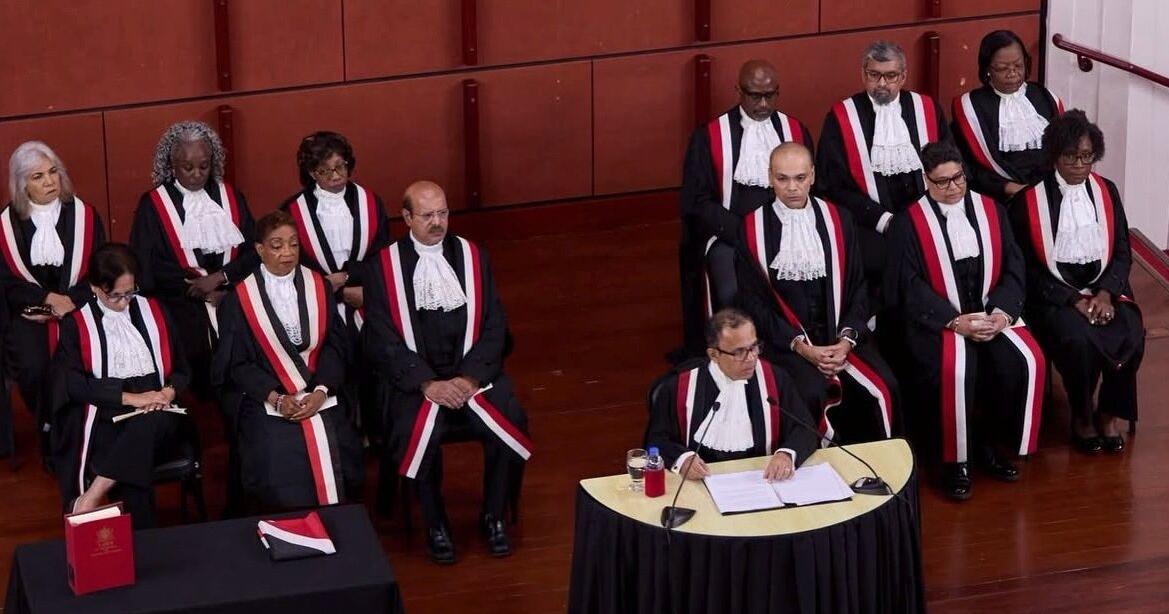
    A widespread, years-long corruption scheme involving bribes for immigration benefits has been exposed at Trinidad and Tobago’s Immigration Division, according to Homeland Security Minister Roger Alexander, who has launched sweeping reforms to dismantle the network and root out systemic graft.

    Within days of assuming his role, Alexander uncovered the racket, which saw corrupt officials extort hundreds of thousands of dollars from applicants by withholding processed documents—some already signed by the minister—and demanding illicit payments before releasing them. The scheme touched every tier of immigration services: from illegal resale of blocked online passport appointment slots, to six-figure bribes for work permits, residency status, and full citizenship. Alexander described the division as “rotten to the core”, noting that decades of weak oversight, lack of accountability, and opaque processes allowed the network to operate undetected.

    Among the most alarming allegations revealed by the minister are reports that Immigration officials accepted undeclared in-kind bribes from Chinese nationals, including custom-built residential properties in North Trinidad, in exchange for granting residency approval without mandatory entry interviews. Alexander also confirmed that many applications from Caribbean nationals have sat unprocessed for up to 10 years, while bribing applicants received accelerated, often unvetted approval. Many illicit cash transactions, he added, were conducted in plain sight outside a private car park in central Port of Spain, with officers using third-party intermediaries to avoid direct traceability.

    Beyond internal graft, Alexander exposed questionable exclusive contracting arrangements with an unnamed international firm that locked the Immigration Department into a binding partnership, despite the availability of more cost-effective, competitive alternatives for services including passport production. The minister also reported deep-seated insubordination, with senior staff intentionally withholding ministry directives and even blocking entry of foreign nationals on private orders, rather than official government instruction.

    Since uncovering the scheme, Alexander has implemented immediate structural changes: multiple senior officials have been placed on administrative leave pending investigation, all document processing and ministerial signature workflows are now monitored daily, and the government has launched recruitment to fill long-vacant staffing positions that allowed the corrupt status quo to persist. The Trinidad and Tobago Police Service and Cyber Crime Unit are leading the ongoing criminal investigation, with Prime Minister Kamla Persad-Bissessar, chair of the National Security Council, fully briefed and committed to zero tolerance for corruption.

    Alexander issued a public call for whistleblowers—both Immigration employees and members of the public—to come forward with information, guaranteeing the option for anonymous reporting. He announced long-term modernization plans to prevent future graft, including a transition from machine-readable passports to secure e-passports that will increase transaction transparency and accountability. The minister warned that any official continuing corrupt practices would face severe legal consequences, stating bluntly that those convicted would continue their “work” from jail cells. He added that the government has no intention of reversing course or ignoring the long-standing rot, and that investigators are close to breaking open the full extent of the network ahead of formal police interviews with persons of interest.

  • Widower files suit against AG, NCRHA

    Widower files suit against AG, NCRHA

    In a historic first for the twin-island nation of Trinidad and Tobago, a wrongful death lawsuit alleging vaccine-induced fatal injury has been filed at the nation’s High Court, naming both the national government via the Office of the Attorney General and the North Central Regional Health Authority (NCRHA) as defendants. The case centers on the tragic death of 26-year-old Alisha Kanna Seebaran, a waitress from Curepe who passed away in May 2023, two years after experiencing a catastrophic neurological reaction to her first dose of Pfizer’s mRNA COVID-19 vaccine.

    According to court filings submitted by Seebaran’s husband, Nicholas Francis—who is bringing the claim on behalf of his late wife—Seebaran received her initial vaccination at an NCRHA-run mass vaccination clinic in Arima on October 6, 2021. Within just 48 hours of the injection, she developed sudden paralysis on the left side of her body. She was quickly admitted to the Eric Williams Medical Sciences Complex (EWMSC), where clinicians diagnosed her with transverse myelitis, a rare inflammatory disorder that targets the spinal cord and can cause permanent nerve damage.

    Francis launched the formal lawsuit at the San Fernando Sub-Registry earlier this month, after more than a year of failed attempts to resolve the dispute outside of the judicial system. Court records show Francis submitted a mandatory pre-action protocol letter to both named defendants in April 2024, but the process stalled amid repeated delays from NCRHA officials and complete silence from the Attorney General’s Office. It was not until November 2025 that NCRHA finally issued a formal response, denying all allegations of negligence and rejecting any causal connection between the Pfizer vaccine and Seebaran’s terminal illness. Francis’ legal team argues that this official position directly contradicts internal conclusions reached by NCRHA’s own treating medical staff.

    To back up their claim of a direct causal link, the legal team has cited peer-reviewed medical research published in the international journal Cureus in February 2022. The paper, co-authored by a consultant neurologist who directly treated Seebaran, documented four confirmed cases of post-vaccination neurological illness in Trinidad and Tobago—including Seebaran’s case—and concluded that the adverse events were “likely due to the vaccines.” Subsequent medico-legal reports prepared by both local and international independent medical consultants have echoed this finding, the court filings confirm.

    Beyond the claim of medical negligence, the lawsuit also challenges the legality and constitutionality of key planks of the Trinidadian government’s 2021 COVID-19 public health policy, specifically the controversial “Safe Zone” regulations that barred unvaccinated people from entering most workplaces and public spaces. Court documents outline that Seebaran was personally hesitant to receive the COVID-19 vaccine, but felt she had no other choice to keep her job as a waitress. Her lawyers reference public statements made by then Prime Minister Dr. Keith Rowley and then Minister in the Office of the Prime Minister Stuart Young during the September 2021 rollout of the Safe Zone policy, which made clear that access to employment and public life would be restricted for unvaccinated residents.

    Francis’ legal argument holds that when the State conditions access to work and basic public participation on receiving a medical intervention, it takes on legal responsibility for any harm that results from that intervention. The case raises sweeping constitutional questions about the boundaries of public health emergency policy, the duty of care the government owes to its citizens, and the legal requirements for informed consent. Key legal questions the court will rule on include whether official government descriptions of COVID-19 vaccines as “safe and effective” were misleading to the public, whether consent obtained under the implicit threat of unemployment counts as legally valid informed consent, and whether constitutional civil rights protections can be lawfully restricted during a public health crisis.

    Francis is seeking both compensatory damages for the death of his wife and formal court declarations that would set binding legal precedent on issues of state accountability, informed consent, and public health communications for future cases. The litigation is being supported by the Trinidad and Tobago Civil Advocacy Network (TTCAN), a local civil society group that provided support to Seebaran after she suffered her initial injury. Francis is represented by a three-attorney team led by Kingsley Walesby, with co-counsel Alvin Ramroop and Stephanie Rajkumar.

  • Government announces arrival of deportees from US

    Government announces arrival of deportees from US

    BASSETERRE, St. Kitts – Following weeks of intense public debate over the federation’s bilateral migration agreement with the United States, the government of St. Kitts and Nevis has officially confirmed that the first group of third-country nationals deported from the U.S. have arrived in the country as of Tuesday, May 19, 2026.

    Three individuals, citizens of fellow CARICOM member states Jamaica and Belize, completed the transfer from U.S. jurisdiction to St. Kitts and Nevis on the scheduled date, according to an official statement released by the St. Kitts-Nevis Information Service (SKNIS).

    To date, government officials have chosen not to release public details about the logistical coordination of the transfer or the temporary accommodation arrangements for the three deportees while they remain in the federation. The operation is being carried out fully under the terms of a formal Memorandum of Understanding (MOU) negotiated between the St. Kitts and Nevis federal government and the U.S. government, which outlines protocols for the transfer of CARICOM third-country nationals held by U.S. authorities.

    The government’s statement clarifies that under the binding terms of the MOU, the entire transfer process incurs no financial cost to the St. Kitts and Nevis government. All three individuals have already completed mandatory screening through the federation’s standard immigration and national security protocols, and will receive the same immigration status and legal residency provisions that apply to all CARICOM nationals residing in St. Kitts and Nevis.

    The arrival marks the first concrete implementation of the agreement, which gained public attention earlier this year when Prime Minister Dr. Terrance Drew formally announced St. Kitts and Nevis would join a growing list of CARICOM territories that have signed similar arrangements to accept deportees from the United States. At the time of the announcement, Drew stressed that the policy strictly limits acceptance to CARICOM nationals with no prior criminal convictions, a provision the government has reaffirmed this week.

    In his earlier remarks to reporters at a Round Table discussion, Drew emphasized that the MOU was carefully negotiated to align with the federation’s sovereign interests, and made explicit that St. Kitts and Nevis would not accept any deportees who are citizens of Haiti, a key carve-out to address public concerns over the policy.

    The SKNIS statement added that domestic stakeholders have been fully involved in the process from the start: all relevant national security, immigration, and law enforcement agencies have participated in planning and screening for the transfer. Before the individuals arrived, U.S. authorities shared full biographical, medical, and criminal background records with St. Kitts and Nevis officials to enable full vetting.

    Officials confirmed that the three individuals were transferred not due to criminal convictions in the U.S., but for violations of U.S. immigration law. Under the terms of the agreement, the deportees retain the right to choose whether to return to their respective home countries at their own discretion, so long as they comply with the immigration laws of Jamaica and Belize respectively.

    In closing, the government of St. Kitts and Nevis reaffirmed its ongoing commitment to responsible migration governance, upholding its agreed international obligations, and protecting public safety and national sovereignty. Officials urged members of the public to only seek updates and information from official government sources to avoid misinformation about the program and future transfers.

  • Cuba waarschuwt voor ‘bloedbad’ bij Amerikaanse militaire actie na drone-rapport

    Cuba waarschuwt voor ‘bloedbad’ bij Amerikaanse militaire actie na drone-rapport

    Rising geopolitical friction between the United States and Cuba has reached a new boiling point this week, after uncorroborated claims of Cuban drone preparations against US interests triggered a fierce public warning from Cuban President Miguel Díaz-Canel. Speaking on the social platform X Monday, Díaz-Canel made clear that any US military aggression against the island nation would result in a devastating bloodbath, with unforeseeable ripple effects that would undermine regional peace and stability across the Caribbean. He also emphasized that Cuba has never posed a genuine threat to US national security, framing the recent allegations as a manufactured pretense for foreign intervention.

    The current crisis was sparked by an Axios report citing unnamed intelligence sources, which claimed Cuba has acquired more than 300 military drones and held internal discussions about deploying them against the US naval base at Guantanamo Bay, American military vessels, and Key West, Florida. Cuban officials have roundly rejected the report as a deliberate fabrication crafted by US interests to justify a potential military incursion into Cuban territory.

    Even as the island grapples with a deep, ongoing economic crisis that has left millions facing widespread scarcity, ordinary Cuban residents in Havana have expressed unified resolve to resist any foreign attack. “Cuba is a strong nation, Cubans are brave, and we are not unprepared,” 57-year-old Havana resident Sandra Roseaux told reporters. “Even if we are hungry, if they come, they will have to fight, because Cuba will not back down from responding.”

    Tensions between Washington and Havana have climbed sharply in recent months, driven largely by a US decision to cut off energy supplies to Cuba starting in January. The move came in response to the arrest of Venezuela’s president, a close regional ally of Cuba, and has already triggered severe fuel shortages across the island, leaving residents with only sporadic, limited access to electricity.

    Last week, Reuters also reported that the US Department of Justice is preparing criminal charges against former Cuban leader Raúl Castro connected to the 1996 downing of two humanitarian aircraft flown by anti-Castro groups. The development marks a significant escalation of pressure on Cuba, echoing the harsh anti-Cuban policy pursued by former US President Donald Trump’s administration.

    Cuban Foreign Minister Bruno Rodríguez reaffirmed that Cuba, like any sovereign nation, retains the full right to legitimate self-defense against external aggression under the UN Charter and established international law.

    Public opinion among ordinary Cubans remains split slightly on the path forward even as unity around self-defense holds. While many echo the hardline resolve of Roseaux, 58-year-old Ulises Medina called for diplomatic engagement to de-escalate the crisis. “It would be wrong for the US to invade Cuba, just as it would be wrong for Cuba to invade the US,” Medina said. “They need to reach an agreement and negotiate. That said, Cuba will defend itself—this nation will never be surrendered.”

    For older Cubans who have lived through decades of US-Cuban tension, the commitment to sovereignty runs deep. Eighty-seven-year-old Jorge Villalobos summed up the widespread sentiment of resolve: “The Cuban people will never allow anyone to interfere in our country. We know how to defend ourselves, even if all we have are sticks and stones.”

  • Column: Eén jaar later: neks no kenki, tra fas’ no de, a new pasi lasi

    Column: Eén jaar later: neks no kenki, tra fas’ no de, a new pasi lasi

    Almost 12 months have passed since Suriname’s 2025 general elections, and the catchy campaign slogans that carried opposition parties to power have faded into memory. Today, the core question facing the nation after its historic power transition is simple: what tangible change has actually been delivered? The entire 2024 electoral campaign was built around the promise of radical transformation – not incremental tweaks to governance, but a full break from the dysfunctional patterns of the past.

    The National Democratic Party (NDP), led by now-President Jenny Simons, campaigned on the rallying cry “Kenki a systeem” – “Change the system.” Its core platform pledged to root out systemic corruption, end patronage politics and crack down on political self-enrichment. Other opposition parties echoed this promise of a new direction: the NPS ran on “A new pasi” – “A new path” – while the A20 bloc campaigned on “Tra fasi de,” or “Another phase.”

    But one year on, an uncomfortable truth has emerged: while campaign slogans have changed, the culture of governance in Suriname has barely shifted. The irony of the current situation is almost painful. The same parties that spent years criticizing the previous administration’s overreliance on unelected commissions, political advisor appointments, cronyism and nepotism now find themselves unable to break free from those exact same mechanisms. President Simons has appointed one new commission after another, with some political figures holding seats on multiple overlapping bodies.

    Blunders have already marred appointments to supervisory boards at state-owned enterprises, and internal tensions have plagued the ruling coalition from its first day in office. Divisions within the NDP itself are also already visible to the public. To preserve the coalition’s 34-seat majority, political expediency and superficial unity have been prioritized over the promised clean-up of governance – a dynamic that is exactly how old, dysfunctional systems perpetuate themselves.

    During the campaign, President Simons repeatedly argued that corruption in Suriname had never been worse, and that the entire national system required fundamental overhaul. This was no offhand comment: it was a sweeping moral indictment of the country’s long-standing governing culture. For that very reason, Suriname’s citizens are fully justified in asking what concrete changes have actually been made to that system. Real change is not measured in words alone; it must show through in governing style, institutional transparency, decisive action and ethical leadership by example.

    No reasonable voter expects miracles in just 12 months. Suriname’s economic challenges are deeply rooted, and no incoming administration could reverse decades of damage in a single year. It would be unfair to demand such rapid results. But what citizens do have a right to expect is clear direction, a sense of momentum, urgency, and the tangible feeling that governance is being done differently. That feeling is largely absent today.

    Even now, when citizens raise concerns about persistent problems, the default response from the new administration is to blame the previous government. It is true that the prior administration bears responsibility for many of the issues facing the country today, but this excuse has a clear expiration date. Notably, the previous Santokhi administration relied on the exact same defense for four years after it took power from an earlier NDP government, continually pointing to the damage it inherited. The risk of this tactic is significant: it leads governments to focus more on explaining problems than on solving them.

    When a new government takes control of a nation, it also takes full responsibility for addressing its challenges. After a reasonable transition and evaluation period, an administration must take firm control of the agenda and clearly communicate its policy course. That kind of decisive leadership is sorely lacking at present. For many Surinamese, President Simons is too rarely visible during public crises, and government-wide communication remains weak, fragmented and reactive. At a time when citizens face daily uncertainty from flooding, rising prices and administrative confusion, clear public communication is not a secondary luxury – it is a core function of leadership. The current practice of having the president interviewed only by her own spokesperson is unacceptable, amounting to preaching only to committed party insiders. If full press conferences are not possible, the president should still deliver direct public statements to the nation, and should not rely on interviews with her own staff.

    The most stark example of this lack of preparedness and change comes from the recent severe flooding across the country. As large swathes of Suriname stood submerged, the Ministry of Public Works was found to have only a single long-arm excavator available to respond to the emergency – one machine for the entire nation. This shortcoming raises fundamental questions: how can a country that has known for decades that it is highly vulnerable to extreme rainfall be so poorly prepared for a predictable disaster? Why was no early warning sounded? Where is the long-term infrastructure planning? Where is the coordinated crisis management? It is exactly in moments like this that the public can see whether real systemic change has occurred.

    So far, what Suriname’s public has observed are the same old familiar political reflexes: backroom compromises to hold the fragile coalition together, caution to avoid inflaming internal tensions, controversial political appointments that raise questions of patronage, and leaders who respond faster to internal party pressure than to public frustration.

    Perhaps this is the hardest truth one year after the 2025 elections: systems do not change automatically just because a campaign slogan promises they will. A system only transforms when those in power are willing to set aside their own political comfort and prioritize broad institutional reform. That is the real test facing Simons’ government today. Surinamese voters did not just vote for new faces last year; they voted overwhelmingly for a fundamentally different way of governing.

  • Kanhai: Pg deed juist door niet naar DNA te gaan

    Kanhai: Pg deed juist door niet naar DNA te gaan

    A prominent Surinamese defense attorney has launched sharp criticism of the flawed political discourse surrounding the National Assembly’s planned questioning of the country’s Prosecutor General, arguing the top law enforcement official acted entirely correctly by refusing to appear in person before the parliamentary committee.

    Speaking on the popular current affairs radio program *Bakana Tori* hosted by Cliff Limburg on Lim FM, Irvin Kanhai warned that active participation by the Prosecutor General in the National Assembly’s deliberations over potential impeachment proceedings against three former cabinet ministers would irrevocably “poison” the future criminal trial from a legal perspective. “If I were representing those former ministers in this case, I would immediately file a legal objection with the court over this improper interference,” Kanhai stated during the interview.

    Kanhai emphasized that under existing Surinamese law, the National Assembly is only empowered to assess whether any potential prosecution would threaten public order and national stability, and is explicitly prohibited from delving into the substantive details of the criminal investigation dossier. He noted that parliamentarians’ demand to question the Prosecutor General on granular investigation details directly contradicts the legal boundaries laid out in the nation’s legislation.

    The attorney further pointed out that the three former officials in question have not even been formally designated as criminal suspects, as they have not yet been officially served with impeachment. For this reason, Kanhai argued, the Prosecutor General is under no obligation to disclose strategic, case-sensitive investigation details. Revealing such information, he added, would effectively compromise the entire prosecution by letting the defense see the prosecution’s full hand ahead of trial.

    Kanhai also took aim at the broader political debate surrounding the controversy, chiding parliamentarians to more carefully read the very legislation they enacted. He acknowledged that if lawmakers are unsatisfied with the Prosecutor General’s performance and wish to remove her from office, existing law provides clear pathways to do so — but those pathways require following proper constitutional procedures, not bypassing legal norms for political expediency.

    “Put your concerns in writing, send the formal petition to the court president, and initiate the legitimate removal process. Instead, all we get is empty political chatter,” Kanhai said, highlighting the lack of meaningful, procedure-compliant action from lawmakers. He also warned that open, public debate about constitutional bodies and ongoing criminal cases inflicts lasting damage to the reputation of Suriname’s core state institutions. While Kanhai confirmed that inter-branch communication on broad policy matters is appropriate and healthy, he stressed that political bodies should never interfere with active criminal matters that are yet to be adjudicated by the courts.

    Kanhai closed by reiterating the dangers of allowing the Prosecutor General to become substantively involved in political decision-making tied to an ongoing criminal case. “This kind of interference hands defense attorneys a ready-made argument to claim later that the entire legal process was compromised from its earliest stages,” he concluded.

  • 223rd Anniversary of the Haitian Flag : Message from former Ambassador Bocchit Edmond

    223rd Anniversary of the Haitian Flag : Message from former Ambassador Bocchit Edmond

    On the eve of the 223rd anniversary of the creation of the Haitian national flag, former Haitian Foreign Minister and former Ambassador Bocchit Edmond issued a public message to all Haitian people at home and abroad, calling for a return to the founding spirit that birthed the world’s first Black republic to pull the nation out of its current crisis.

    Two centuries and two decades ago, in the midst of a revolution against colonial slavery, Haiti’s founding fathers united to create what would become the enduring symbol of Haitian identity: the iconic bicolor national flag. Edmond emphasized that this banner is far more than a stitched combination of two pieces of fabric. It represents the historic, unyielding choice of the Haitian people to claim freedom, national dignity and collective unity in the face of brutal, dehumanizing oppression. Credit for crafting the original flag, he recalled, goes to Catherine Flon, whose skilled hands and passionate commitment sewed the first banner that would become a global symbol of liberation for all oppressed peoples.

    Today, as the nation marks this milestone, Edmond said, the legacy of that founding act demands more remembrance than ever. While the flag itself has survived centuries of upheaval and challenge, the Haitian nation is currently navigating one of its darkest periods in modern history. The country is fractured by ongoing instability, he acknowledged, describing Haiti as being “in tatters” — but he stressed that the same people who overcame impossible odds to win freedom and found a nation can rebuild once again.

    Edmond called on every Haitian citizen to come together, comparing national reconstruction to re-stitching the torn fragments of the flag itself. He urged Haitians to combine their strength, intellect and collective will to revive the unity that gave birth to the Haitian Republic, noting that while the nation’s founding leaders broke the physical chains of slavery, the current generation’s task is to break the modern chains of division, national indifference and collective despair.

    “Haiti deserves to live. Haiti deserves to be a livable place for all its sons and daughters, wherever they may be on this earth,” Edmond said. Closing his message with the Creole phrase “Solèy la dwe klere pou tout Ayisyen alawon badè” — meaning the sun must shine for all Haitians across the world — he called on the public to honor the sacrifice of Haiti’s founding ancestors not just with ceremonial words, but with tangible action focused on unity, solidarity and national reconstruction. He closed with rallying cries: “Long live Haiti! Long live the Haitian flag! Long live solidarity! Long live national dignity!”

  • Belize Reframes Migration as National Opportunity

    Belize Reframes Migration as National Opportunity

    Nearly 10 years in the planning, Belize is breaking with conventional narratives around cross-border movement, launching a landmark national process to codify a new approach that positions migration as a core driver of national progress rather than a crisis to manage.

    On May 18, 2026, government leaders, international collaborators and local stakeholders convened in the capital city of Belmopan to kick off the first national consultation phase for the country’s inaugural Migration and Development Policy. The multi-day engagement will stretch across four major population centers: Belmopan, Belize City, Bella Vista and the popular coastal hub of San Pedro, with a week of structured dialogue designed to inform a holistic policy framework that integrates migration planning across national security, labor markets and social service systems.

    Opening the gathering, Immigration Minister Kareem Musa framed the consultation as a long-awaited turning point for the small Central American nation. “It is my honor to stand before you today as we open this first National Stakeholder Consultation on the Belize Migration and Development Policy, a milestone that our ministry, government and this country have been working on for almost a decade,” Musa told attendees. “I want to begin with something simple but important. Migration is not a problem to be solved. It is a reality to be managed wisely, humanely and strategically — and for too long, Belize has been navigating that reality without a comprehensive national policy to guide us.”

    Tanya Santos, chief executive officer of the Ministry of Immigration, expanded on the holistic vision guiding the new policy, noting that migration can no longer be reduced to a narrow border security concern. “Migration can no longer be considered just a border issue. It is a labor issue, a health issue, an education issue, a demographic issue and a national development issue,” Santos said. “The development of a Migration and Development Policy is Belize’s formal recognition of this reality.”

    This public consultation phase comes as Belize adapts to shifting regional migration patterns, and the inclusive stakeholder process is intended to ensure the final policy addresses the needs and perspectives of communities across the country. Once finalized, the framework will be the first formal national policy guiding migration management in Belize’s modern history, aligning cross-sector planning with the country’s long-term social and economic development goals.

    This report is adapted from a transcript of an evening television news broadcast, with transcribed Kriol language statements adjusted to follow standard English spelling conventions for digital publication.