
In a historic step forward for worker rights and labor standards across the Central American nation, Belize has formally passed a new, comprehensive Occupational Safety and Health Act that expands protective safeguards for employees and codifies clear, updated safety responsibilities for all employers. The government officially announced on Wednesday that the Occupational Safety and Health Act 2026 has been fully enacted and gazetted, framing the new legislation as a contemporary regulatory framework designed to raise baseline workplace health and safety standards across every sector of the national economy. Unlike fragmented previous regulations, this new law applies universally to all workplaces across both the public and private sectors, covering a wide range of work environments that have historically lacked consistent oversight—from high-risk construction sites and heavy industrial facilities to in-home domestic work positions and a portion of modern remote work setups. Under the terms of the legislation, employers are now legally mandated to implement reasonable proactive measures to eliminate or reduce risks to their workforces. These requirements include regular mandatory risk assessments of work sites, systematic management of identified workplace hazards, strengthened systems for reporting workplace accidents and occupational diseases, and the rollout of evidence-based preventive measures to mitigate harm before incidents occur. For workers, the act delivers a suite of enhanced legal protections that address longstanding gaps in Belize’s labor regulations. Most notably, workers are now protected from employer retaliation and reprisals when they file reports about unsafe working conditions, and they have gained the explicit legal right to refuse work assignments when they hold a reasonable belief that the task poses an imminent and serious threat to their health or personal safety. The legislation also establishes two new permanent national bodies to oversee enforcement and policy development: the National Occupational Safety and Health Advisory Committee, which will guide strategic policy direction, and the dedicated Occupational Safety and Health Inspectorate, which will be tasked with conducting routine workplace inspections, monitoring compliance with the new standards, and rolling out related public safety initiatives. Additional provisions of the act set out strict new regulations for the handling, storage and exposure mitigation of hazardous substances, toxic chemicals and dangerous biological agents. It also formalizes increased worker participation in safety governance by requiring or supporting the establishment of workplace-level Safety and Health Committees and elected Safety and Health Representatives, giving workers a direct voice in shaping on-site safety practices. While the legislation has already been formally enacted, government officials confirmed that the full framework will not go into effect immediately. Instead, all provisions will be rolled out in a phased sequence through formal commencement orders issued by the responsible government minister. This staggered approach is designed to give authorities time to put all necessary administrative and institutional infrastructure in place before active enforcement begins. The Belizean Labour Department has been named the lead agency overseeing the entire implementation process. Its responsibilities include building out the new Occupational Safety and Health Inspectorate, drafting secondary regulations and industry-specific codes of practice, carrying out nationwide public education campaigns to inform both employers and workers of their new rights and obligations, training new inspectors and workplace stakeholder groups, and developing digital and administrative systems for compliance tracking and incident reporting. Government leaders characterize the new law as one of the most meaningful advancements in worker protection that Belize has seen in the past several decades. They added that successful implementation will rely on active cross-stakeholder collaboration, bringing together employers, organized labor unions, professional industry organizations, civil society groups and worker representatives to bring the framework’s protections to life across the country’s workplaces.
分类: politics
-
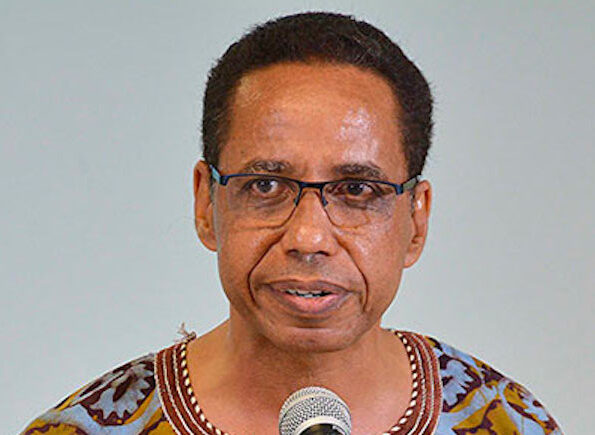
Envoy backs Jamaican reparations push
A decades-long fight for reparations for the transatlantic chattel slave trade has taken a groundbreaking new step, as CARICOM’s top ambassador has voiced full regional backing for Jamaica’s formal legal push against the United Kingdom, voicing confidence that the British Privy Council will formally rule that racialized chattel slavery was never lawful under historic English law.
As a constitutional monarchy that retains King Charles III as its official head of state, Jamaica has taken advantage of a unique constitutional provision to file a formal petition requesting the monarch refer three critical legal questions about slavery and British legal responsibility to the Judicial Committee of the Privy Council – the Caribbean nation’s highest appellate court. The three landmark questions cut to the core of the reparations debate: whether the mass seizure, forced transatlantic transport, and chattel enslavement of African people was ever legally valid under English law; whether these systematic abuses committed on Jamaican soil violated existing international law standards of the era; and whether the United Kingdom holds a binding legal obligation to provide reparative compensation to the people of Jamaica.
In an interview with Barbados TODAY Wednesday on the sidelines of the Barbados @ 60 Timeline launch held at Pelican Village, CARICOM Ambassador to the regional bloc David Comissiong made clear that Jamaica’s unprecedented action has the full solidarity and backing of all 15 CARICOM member states. “Jamaica’s presentation of this petition to King Charles III does not come as a surprise to us in CARICOM. In fact, CARICOM has given Jamaica its solidarity and support,” Comissiong confirmed.
The ambassador explained that Jamaican legal teams identified this little-used constitutional pathway specifically for current constitutional monarchies in the Caribbean, which allows petitions to be submitted directly to the reigning British monarch to request advisory opinions on core legal questions from the Privy Council. Comissiong noted that the question of slavery’s legal status under British law stands as the foundation of Jamaica’s entire legal push. “One of the questions they have placed is, was slavery legal under British law at the time that it was practised in the British Empire back in the 19th, 18th, 17th century,” he said.
Comissiong acknowledged that Jamaica’s strategy carries both advantages and limitations, particularly for CARICOM states that have already transitioned to republican status, such as Barbados. Former constitutional monarchies that have cut formal ties to the British crown no longer have access to this same constitutional legal avenue. For these republics, the core principle of the reparations movement centers on self-determination: achieving full sovereignty and national self-repair as a foundational form of reparative action. “For those of us who have become republics, we are conscious that a fundamental principle of reparations is the self-help, self-repair remedy of reappropriating your full nationhood, sovereignty, and self-determination,” he explained.
Even with these considerations, Comissiong emphasized that Jamaica’s petition could mark a turning point for the entire regional reparations movement that has been building for decades. “If the King responds positively, and if those three questions are put to the Privy Council, and if the Privy Council gives a positive answer, particularly in relation to that question about the illegality of slavery when it was practised, that will be a very big victory and a big step forward for our reparations cause,” he said.
The ambassador also offered a clear note of caution, stressing that even a favorable ruling affirming slavery’s illegality would not automatically result in tangible compensation for Jamaican people. “That by itself will not deliver reparations. It is one thing to declare that slavery was illegal back then, but it’s another thing to go from that to actually establish and win a judgment for actual payment of compensation,” he noted. Still, he reaffirmed that a formal ruling from the Privy Council would represent a transformative symbolic and legal victory for the movement. “I have no doubt that they will come to the conclusion that slavery, certainly the racialised chattel slavery that was inflicted on our ancestors, was never legal under the constitutional regime of Britain,” Comissiong said.
Looking ahead, the regional movement is preparing for a major gathering next month: Barbados will host a landmark CARICOM reparations conference from September 17 to 19, bringing together all strands of the global reparations movement to coordinate strategy. Comissiong explained that the conference will create a critical space to align the overlapping initiatives of CARICOM, the African Union, Ghana, and Jamaica to build a cohesive, collective strategy to advance the global reparations campaign forward. “This conference will give us an opportunity to pull together all the different strands of the reparations movement that have really come to the fore over the last year or so… plan the next [steps] collectively to take forward our reparations campaign,” he said.
-
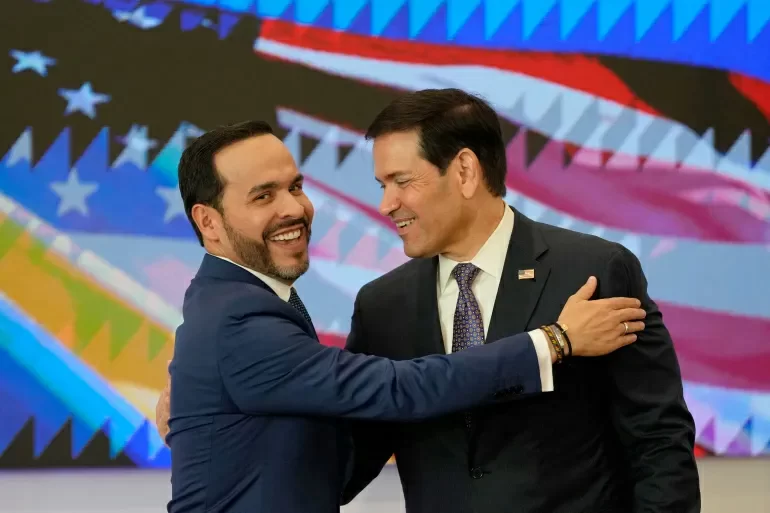
Marco Rubio start tour door Latijns-Amerika in strijd om Amerikaanse invloed
U.S. Secretary of State Marco Rubio arrived in Colombia on Tuesday, marking the first stop of his multi-nation tour across Latin America, a trip designed to strengthen ties with pro-U.S. regional leaders and shore up Washington’s long-standing influence in the Western Hemisphere. The visit comes on the heels of a major political shift in Bogotá, after conservative Colombian President Abelardo de la Espriella — a U.S.-aligned former lawyer — won recent presidential elections, turning a page on the tense relationship between Washington and his left-wing predecessor Gustavo Petro. Since taking office, de la Espriella has pivoted to a hardline crackdown on drug cartels and organized crime, ending peace negotiations with armed rebel groups that defined Petro’s tenure.
During this visit, Rubio and de la Espriella met in Barranquilla, a key Colombian Caribbean port city, for a signing ceremony that highlighted the deepening bilateral partnership. In the weeks since de la Espriella assumed office, Colombia has ramped up aerial counter-narcotics operations and authorized expanded joint military exercises with U.S. forces. The country has also formally joined the Shield of the Americas, a Trump-administration led alliance focused on combating transnational drug trafficking.
While the official core priority of Rubio’s stop is boosting counter-narcoterrorism cooperation, the two leaders are also set to discuss post-disaster reconstruction following the devastating August 10 earthquake that struck Colombia’s major coffee-growing region. The quake killed more than 330 people and leveled critical public and private infrastructure, prompting de la Espriella to formally request U.S. support, including a temporary suspension of Colombian customs duties to lower reconstruction costs and speed up recovery efforts.
Rubio’s three-nation tour, which will also include stops in Ecuador and Peru, comes amid a sweeping conservative wave across Latin America that has followed Donald Trump’s return to the U.S. presidency in January 2025. In recent years, voters across Argentina, Bolivia, Chile, Costa Rica and Honduras have elected right-wing governments aligned with U.S. policy priorities, creating a favorable landscape for Washington to advance its regional agenda.
The Trump administration has openly stated its goal of reasserting U.S. hegemony in South America, building on the 19th-century Monroe Doctrine and rebranding the framework as the “Donroe Doctrine” in a nod to the current U.S. president. Rubio, a Cuban-American politician with long-standing ties to hardline anti-communist and pro-U.S. regional policy, is the primary architect of this new strategy, which is now enshrined in Washington’s updated National Security Strategy.
After wrapping up his meetings in Colombia, Rubio will travel to Ecuador to meet with President Daniel Noboa, where the two sides will discuss ongoing joint operations to disrupt drug trafficking networks, including the notorious criminal group Los Choneros. The U.S. has already led a year-long campaign of airstrikes targeting suspected drug smuggling vessels in the Caribbean and Eastern Pacific, a campaign that has left more than 200 people dead and drawn widespread international criticism over insufficient evidentiary standards and widespread human rights concerns.
The final stop on Rubio’s tour will be Peru, where right-wing pro-U.S. leader Keiko Fujimori has held the presidency since July, cementing another pro-Washington government in the region.
-
Joshua Francis rejects Skerrit’s claim that Roseau North result is vote of confidence
Following the Dominica Labour Party’s (DLP) victory in the September 7 Roseau North by-election, a sharp political debate has emerged over how to frame the results, with opposition leader Joshua Francis challenging Prime Minister Roosevelt Skerrit’s attempt to cast the win as a nationwide endorsement of the incumbent government.
Joshua Francis, head of the United Progressive Party (UPP), launched his rebuttal in an official statement released days after the vote, centering his argument on the unusually low voter turnout recorded in the constituency. Official electoral data shows the constituency has roughly 7,489 registered voters, but only 2,595 electors cast ballots in the by-election, translating to a turnout rate of just 34.6%. Preliminary vote counts put DLP candidate Ashma McDougall’s total at 1,506 votes — a figure that equals only one-fifth of all registered voters in the seat, Francis pointed out.
Contrary to Skerrit’s framing of the outcome as a broad vote of confidence, Francis argued that the low participation rate is far more indicative of widespread voter disengagement and dissatisfaction with the current administration than it is an endorsement of government policy. While Francis explicitly extended congratulations to McDougall and confirmed the UPP respects the formal outcome of the by-election, he rejected the prime minister’s efforts to inflate a single constituency win into a national mandate for the DLP.
Francis tied his criticism to a slate of ongoing, unresolved issues that he says continue to harm Dominican communities and households. These include skyrocketing cost of living, stagnant employment opportunities, underinvestment in neighborhood infrastructure and services, accelerating youth outmigration, and a lack of government transparency and accountability. He emphasized that these unaddressed concerns far outweigh the symbolic weight of one by-election victory.
The UPP leader’s pushback came directly in response to post-election comments from Skerrit, who claimed that the Roseau North constituency had “spoken for the whole country” and that the result proved the Dominican government was “on the right track.” Francis pushed back against that narrative, arguing the by-election result should not be treated as a blank cheque that lets the administration avoid accountability or ignore pressing public needs. Instead, he called on the DLP government to prioritize raising worker salaries and wages, expanding accessible job opportunities, and refocusing governance on tangible improvements to ordinary Dominicans’ quality of life.
Ahead of the September 7 contest, the UPP joined other opposition forces in a coordinated opposition cooperation effort, throwing its official endorsement behind United Workers Party candidate Daniel “Danny” Lugay. In his full public statement, Francis doubled down on framing Skerrit’s claims as political spin, noting that nearly two out of three registered voters chose to stay home on election day — what he called a clear signal of growing public apathy, frustration, and eroding trust in the country’s political establishment.
“That is not a resounding endorsement. It is a warning,” Francis wrote in the statement, adding: “Prime Minister, you won a by-election — not a blank cheque, not a national mandate and certainly not proof that Dominicans are satisfied. The UPP rejects this political spin. Dominica deserves improvement in salaries & wages, jobs and leadership that improves people’s lives. United in purpose. Committed to change. Putting Dominica first.”
-

Central Bank Stands by Dismissal of Employee After $27K Payout
Nearly three years from now, on September 9, 2026, a workplace dispute at one of Belize’s key financial institutions has sparked debate over procedural fairness versus institutional responsibility for workplace safety. The Central Bank of Belize has publicly clarified its stance following a ruling from the Essential Services Arbitration Tribunal, which ordered the bank to pay former senior clerk Dapheen Bowen close to $27,000 in compensation for her unjustified dismissal.
In an official statement released the same day as the tribunal’s decision, the central bank confirmed that it does not challenge the procedural findings that ruled against it. The tribunal determined that the bank failed to follow the formal disciplinary processes outlined in its Collective Bargaining Agreement when it terminated Bowen’s employment, a procedural misstep that the bank has not directly disputed.
Despite acknowledging the procedural error, the financial regulator remains firm in its support of the original decision to terminate the senior clerk’s contract. The core of the conflict stems from a WhatsApp message posted by Bowen, which bank leadership interpreted as a reference to using a firearm in the context of expressing frustration with her working environment.
“The Central Bank has always maintained that references suggesting the use of a firearm against others, particularly in the context of workplace frustrations, to be a serious matter,” the institution emphasized in its statement. Officials argue that regardless of procedural missteps, workplaces cannot overlook conduct that could generate fear among staff, erode mutual trust between colleagues, or spark legitimate security concerns for the organization and its employees.
The bank added that its position aligns with a broader principle: all employers must retain the authority to respond appropriately to any behavior that raises valid questions about workplace safety and institutional security. The case now raises broader questions about the balance between employee rights, procedural labor protections, and an institution’s obligation to maintain a safe working environment for all its staff.
-
Skerrit Says UWP lost more than half its Roseau North support since 2019
Following the Dominica Labour Party’s (DLP) decisive victory in the September 7 Roseau North by-election, Prime Minister Roosevelt Skerrit has publicly broken down the shifting electoral tides in the constituency, pointing to a dramatic collapse in support for the opposition United Workers Party (UWP) between the 2019 general election and the 2026 special vote.
In a media briefing held September 9 at the Roseau Financial Centre’s conference room, Skerrit presented vote breakdowns showing the UWP has lost more than half of its electoral backing in the constituency in just seven years. Official figures from the 2019 general election put the UWP’s vote total at 2,134 in Roseau North. By the 2026 by-election, that number plummeted to just 998 — a drop of roughly 53% overall.
By comparison, the ruling DLP saw a far more modest decline in its vote share over the same period. The party secured 1,638 votes in 2019, and dropped only to 1,473 in the September 2026 contest, marking a far smaller erosion of its local support base.
The by-election was called to fill a vacant parliamentary seat for Roseau North. DLP candidate Ashma McDougall claimed victory in the contest, beating both UWP challenger Daniel Lugay and independent candidate Sherman Boston to take the position as the constituency’s new Parliamentary Representative. Skerrit’s analysis of the vote shifts underscores the growing traction of the DLP in the constituency, even as the opposition struggles to retain its traditional voter base.
-
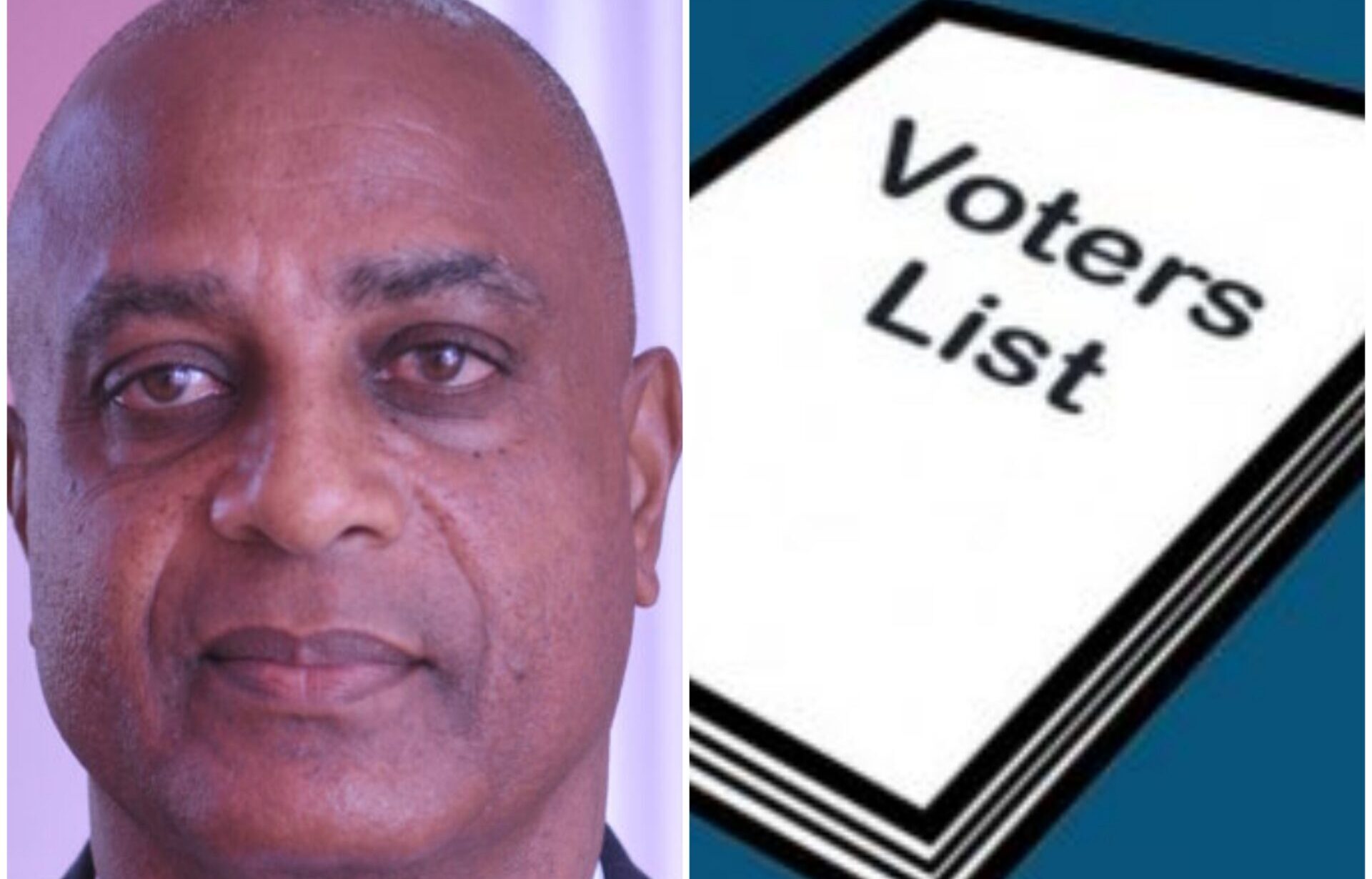
UWP’s Daniel Lugay raises concerns over voter confirmation process in Roseau North
As the United Workers Party (UWP) contender for the Roseau North Constituency, former parliamentary representative Daniel Lugay has emerged as a prominent critic of Dominica’s ongoing voter confirmation process, leveling serious claims of procedural mismanagement, unnecessary barriers for eligible voters, and potentially inequitable treatment of supporters across political lines.
Lugay first flagged the issue to investigative journalist Richie Ferrol during an interview this Wednesday, outlining how his team’s preliminary review uncovered a glaring gap: roughly 500 constituents from Roseau North who had formally submitted voter confirmation applications were entirely missing from the first official list of confirmed voters published on the Electoral Office’s public website. Following this discovery, Lugay says he reached out to the Electoral Commission on multiple occasions to flag the discrepancy, but has yet to receive a resolution that addresses his concerns.
Beyond the missing names, Lugay detailed widespread accounts of confusing, poorly communicated procedural hurdles that have left eligible applicants stranded mid-process. He pointed to his own wife’s experience as a clear example: she submitted her confirmation application at the exact same time as Lugay, only to be notified later that she was required to produce a marriage certificate to move forward. Lugay questioned why electoral officials, who already had his wife’s contact information on file, failed to reach out immediately to request the missing documentation when she first submitted her materials. While the certificate was ultimately provided and her ID card was issued, the delay and lack of proactive communication underscores deeper systemic issues, he argued.
Another unnecessary barrier Lugay highlighted involves requirements for travel documentation. He says eligible voters who hold valid, unexpired traditional passports are still being ordered to upgrade to machine-readable electronic passports before their confirmation can be finalized, a step he calls completely unjustified.
In Lugay’s view, the drawn-out, overly complex process – which has stretched on for more than a year, far longer than voter registration drives in larger Caribbean nations that complete the work in mere months – is directly responsible for the low number of confirmed voters on the latest electoral roll. He added that widespread voter frustration with the cumbersome process has likely driven down turnout enthusiasm, noting that roughly 40,000 Dominicans cast ballots in the 2019 General Election. Many eligible voters, he claimed, have essentially “revolted” against the unnecessarily convoluted confirmation exercise by opting out of the process entirely.
The most serious allegation Lugay put forward centers on unequal access to assistance for voters with expired documentation. He claims that supporters of the ruling Dominica Labour Party are receiving targeted help to secure new passports when their old documents expire, and has raised questions about where the funding for this assistance comes from. Without presenting concrete public evidence, Lugay suggested that public state resources may be improperly diverted to fund this partisan support.
He stressed that any taxpayer-funded assistance for passport acquisition should be extended equally to all Dominican citizens, regardless of which political party they support. “If you’re paying for passports, you’re paying for passports, and you make passports available to every citizen of the Commonwealth of Dominica,” Lugay said. He added that universal, equal access to this support would create a fair, level playing field for all candidates and ensure no eligible voter is disenfranchised simply because they face barriers to obtaining required documentation.
-
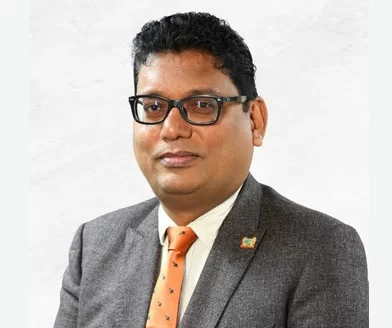
Gajadien: Verhoging directeur aanhouden om doorwerking naar politieke top te voorkomen
On September 9, Asis Gajadien, leader of the VHP parliamentary faction, submitted an urgent formal request to Suriname’s President Jennifer Geerlings-Simons, calling for a temporary hold on a planned 15 percent salary adjustment for the Director of General Administration. The core goal of this request is to prevent the pay raise from triggering automatic incremental salary increases for the president and other senior political officeholders, a consequence that would stem from existing statutory linkage rules embedded in current public administration law.
Gajadien has emphasized that his appeal does not target salary adjustments for general civil servants across the public sector. He confirmed that the planned 15 percent pay increase for all other eligible public employees should proceed in full as scheduled. The request exclusively targets the Director of General Administration position due to its unique legal pay linkage to the presidency, a structural connection that has sparked calls for reform.
The parliamentarian sent the urgent letter to the president on Wednesday, routed through Ashwin Adhin, Speaker of the National Assembly (DNA). Under the current legal framework, the president’s official salary is explicitly tied to the pay level of the Director of General Administration. Any adjustment to the director’s pay therefore automatically flows through to the presidency, and under additional separate legal provisions, the change then cascades to set pay for all other political officeholders across the government.
Gajadien argues that this automatic statutory linkage is no longer aligned with principles of good governance. He pointed out that during parliamentary deliberation on the Law on Monetary Provisions for the President, he already proposed amending the legislation to set the president’s salary as a fixed, explicit monetary amount in statute, rather than keeping it dependent on the pay of a career civil service position.
Currently, a private member’s bill is being prepared to permanently end this automatic cross-linked pay system. If passed, the legislation will set the president’s salary as a specific, legally defined amount. Going forward, any salary adjustments for other public administration roles would only serve as an indicative reference point, and would no longer trigger automatic indexing of the presidency’s pay or that of other political officeholders.
Pending parliamentary review and approval of this reform bill, Gajadien is asking the president to issue a resolution to temporarily suspend the 15 percent salary adjustment for the Director of General Administration. This temporary pause would prevent the automatic cascading pay increases for the president and other linked political positions from taking effect ahead of the planned legal change.
Once the private member’s bill is debated and approved, Gajadien notes that the Director of General Administration’s salary can be adjusted in line with general public sector salary trends as planned, without the change automatically impacting the pay of political officeholders.
The VHP faction leader added that the temporary hold would leave the existing legal foundation for the pay system fully intact during the transition period. He has asked the president to consider his request in the broader public interest, citing commitments to greater transparency, proper public administration, and a careful, orderly legal transition to the new pay framework.
-

Minouche Bromet neemt vanaf 15 september leiding SZF over
On September 9, public health authorities in Suriname announced a key leadership transition at the nation’s Staatsziekenfonds (SZF), the country’s public state health insurance fund. Starting September 15, Minouche Bromet will step into the role of acting general director to steer the organization while formal appointment processes are finalized.
Internal stakeholders have already been notified of the leadership change: SZF staff received word of the transition via an internal memorandum on the same day the announcement was made, and Marciano Djanam, chair of the SZF board of directors, was formally briefed by relevant ministry officials.
André Misiekaba, Minister of Public Health, Welfare and Labor (VWA), confirmed that he has officially put Bromet forward as the nominee for the permanent position of general director of the SZF. This nomination aligns fully with Article 16 of the statutes governing the State Health Fund Foundation, the legal framework that structures the agency’s operations.
The decision to appoint an acting director ahead of final formal confirmation is rooted in a commitment to preserving organizational continuity. With the formal appointment process still requiring final completion, the interim appointment ensures no disruption to the SZF’s core public health services and daily operations. During her acting tenure, Bromet will oversee all day-to-day management of the fund, carrying out her duties in strict accordance with the foundation’s governing statutes.
Bromet’s move to the permanent general director role remains contingent on two key milestones: the completion of all legally required formal procedural steps, and the final approval of Suriname’s Council of Ministers. Once both requirements are satisfied, the nomination will be finalized and Bromet will take on the permanent leadership position.
-

Sherman Boston blames Electoral Office for disorganization during Roseau North by-election
In the wake of the recently concluded September 7 Roseau North by-election, independent contender Sherman Boston has raised sharp criticisms over widespread organizational failures in the electoral process, claiming that systemic missteps led to voter confusion and disenfranchisement across the constituency.
Speaking exclusively to investigative journalist Richie Ferrol on September 8, one day after polls closed, Boston argued that the Electoral Office had ample time to prepare for the by-election and failed to deliver a smoothly coordinated voting process. He emphasized that procedural inconsistencies and poor planning eroded public trust in the island’s electoral system, going as far as to note that some registered voters were ultimately blocked from casting their ballots entirely due to the disarray.
Boston singled out the Goodwill Primary School polling station as a primary example of these failures, where large numbers of voters struggled to locate their assigned voting areas. He recalled that the chaotic situation only prompted emergency intervention late in the day: “Actually at three o’clock on polling day, Mr. Duncan Stowe, the chairman of the electoral commission, and three young ladies came in and took two photos of the middle with signs to the Goodwill Primary School grounds, providing proper signage, as people appeared confused as to where to find the polling stations. This was done to reduce the chaos that was developing.”
The independent candidate stressed that issues with election organization were not limited to his own on-the-ground observations, noting that multiple other stakeholders and voters had also submitted reports of similar problems across other polling locations.
Beyond logistical failures, Boston outlined the broader structural challenges independent candidates face when competing against nominees from established political parties. He explained that a large share of voters still rely on major political parties for information and political guidance, creating a high barrier to entry for non-partisan candidates looking to build support. Boston also accused major parties of treating voters as tools to advance their own ideological goals and consolidate power, rather than prioritizing the long-term well-being of the general public.
Boston went on to detail the inherent structural advantages he claims his two opponents held in the race. He alleged that the winning candidate, from the governing Dominica Labour Party (DLP), gained an unfair edge through the ruling party’s access to state infrastructure and public financing, which the party used to build and maintain its popularity among voters. “I mean, out of the three candidates, one had the backing of a political party that literally bought its popularity through government structures. The current government has access to the country’s financing; you cannot shy away from that,” Boston alleged.
As for his other opponent, Boston noted that the United Workers Party (UWP) nominee benefited from decades of built-up support and a long-established political base in Roseau North, where the UWP has historically been considered the dominant political force. “The other opponent had an inherited popularity in the UWP and was supposed to be a stronghold in the Roseau North Constituency. It ended badly for them because, I mean, certain times you have to look outside yourself,” he asserted.
These existing partisan power structures, Boston argued, created a fundamentally uneven electoral landscape that put an independent candidate like him at an unavoidable disadvantage from the start of the campaign.
Despite the final outcome that saw DLP candidate Ashma McDougall win the seat and retain the party’s majority in parliament, Boston says the results should push major political parties to engage in serious introspection. He specifically pointed to the UWP, noting that the party had what could have been a clear path to victory but made strategic choices that undermined its chances.
McDougall’s win closes the latest chapter in Roseau North’s political history, cementing the DLP’s continued parliamentary control in the constituency.