分类: politics

  • Senior Customs officer faces 77 charges in $58k bribery case

    Senior Customs officer faces 77 charges in $58k bribery case

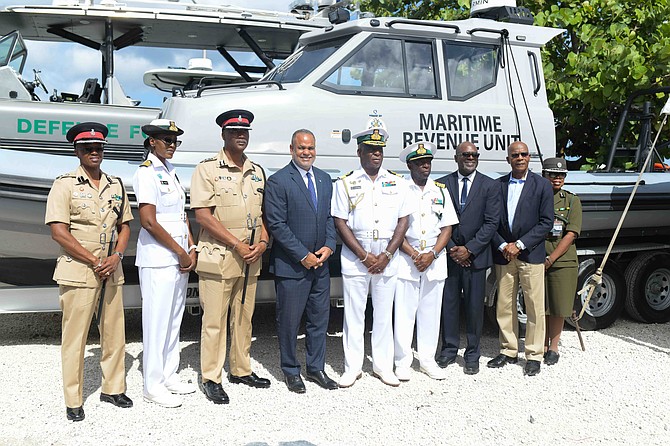
    A high-ranking official with the Bahamas Customs Department has been formally arraigned on dozens of serious corruption charges, marking a high-profile case of alleged public sector malfeasance in the island nation. Pamela Williams, a chief customs revenue officer who was stationed in Exuma during the period of the alleged offenses, appeared before Freeport Magistrate Uel Johnson on Tuesday to answer to 77 criminal counts connected to more than $58,000 in illicit payments solicited from a local Bahamas-based business and an American citizen.

    Court records detail that the alleged illegal activity unfolded over a two-year span, running from March 2023 through April 2025. The sprawling list of charges includes 19 counts of bribery, 19 counts of extortion, 19 counts of money laundering, 19 counts of fraud by false pretences, and one final count of fraudulent breach of trust. In total, prosecutors allege Williams wrongfully obtained $58,045: $56,320 from Coastal Systems Bahamas Ltd, and $1,725 from American national Geoffrey C Lawes.

    According to prosecution arguments, Williams leveraged her formal authority as a senior public servant to solicit the unauthorized payments, acting without legal justification or legitimate work-related purpose. For the extortion charges, prosecutors claim she intentionally secured multiple cheques made out directly to her from both entities, knowing she had no legal right to demand the funds.

    The money laundering charges center on allegations that Williams deliberately concealed the illicit proceeds by depositing the cheques into her personal Royal Bank of Canada accounts. Cheques from Coastal Systems Bahamas, totaling more than $56,320, were deposited into an RBC account held under her name, while three Bank of America cheques from Lawes were also moved into her personal Canadian bank account to hide the criminal origin of the funds, prosecutors say.

    On the fraud charges, the prosecution claims Williams obtained the cheques with clear intent to defraud both the Bahamas Customs Department and the Bahamian government, which are the rightful owners of all legitimate customs revenues.

    During the court hearing, it took Magistrate Johnson nearly an hour to read through the full list of 77 charges, requiring a mid-proceeding pause to drink water. Wearing light-wash jeans and a white blouse, Williams appeared composed throughout the lengthy proceeding, with relatives believed to be her sisters sitting quietly in the back of the courtroom. After the hearing concluded, Williams left the court building in a vehicle with a blanket pulled over her head to shield her from press and public view.

    Standard legal procedure meant Williams was not required to enter a formal plea at this initial hearing. Magistrate Johnson denied bail for Williams, though the court informed her defense attorney Ernie Wallace that he could file a subsequent bail application with the Bahamas Supreme Court. The case was prosecuted by Corporal Kenton Smith, and has been adjourned until September 26, when voluntary bill of indictment proceedings are scheduled to begin.

  • WATCH: Swaby hits back at Morgan over road funding criticism

    WATCH: Swaby hits back at Morgan over road funding criticism

    KINGSTON, Jamaica — A sharp public conflict has erupted between Kingston’s top municipal leader and a national government minister over the controversial proposed One Road Authority, with accusations of personal attacks and unaddressed infrastructure funding crises taking center stage.

    The dispute began when Kingston Mayor Andrew Swaby publicly raised pressing questions during a May 13 sitting of the Kingston and St Andrew Municipal Corporation (KSAMC). Swaby argued that key details about the new authority remain undisclosed, specifically whether the institutional shift would resolve the chronic underfunding that has left local bodies unable to properly maintain and repair the road networks under their jurisdiction. He doubled down on the claim that local authorities consistently operate without budget allocations large enough to meet their road management mandates.

    That criticism drew a swift rebuke this week from Robert Nesta Morgan, the Jamaican minister with oversight for public works. Morgan dismissed Swaby’s comments as contradictory and factually inaccurate, calling for pushback on what he framed as misleading claims from the municipal leadership.

    But in his response to Morgan’s public criticism, Swaby has accused the minister of relying on a pattern of personal aggression to deflect legitimate policy scrutiny. The mayor argued that Morgan’s outburst fits a long-standing pattern: whenever a public figure raises constructive criticism of government policy, Morgan responds with personal attacks rather than substantive policy debate. As evidence, Swaby cited a 2023 incident where he claims Morgan attempted to publicly embarrass Opposition Leader Mark Golding after Golding raised concerns about Jamaica’s solid waste management crisis.

    At the core of Swaby’s questioning is an urgent demand for clarity: will the newly proposed One Road Authority actually deliver increased financial resources to local authorities like KSAMC, which manages 70 percent of all roads across the Kingston and St Andrew region?

    The mayor laid bare the stark scope of the funding gap facing his administration, revealing that KSAMC receives an average of just JMD 85 million per month from parochial revenue funds to cover all road-related work across the parishes. That allocation falls far short of what is needed: individual road repairs in the region cost between JMD 6.5 million and JMD 8 million apiece, meaning the current monthly budget only allows the municipal corporation to repair between 10 and 13 roads — despite there being 40 municipal divisions across Kingston and St Andrew that require constant maintenance.

    Complicating the budget crunch further, Swaby explained that the 85 million monthly allocation is not dedicated solely to road work. The funds must also cover hurricane disaster preparedness, public employment programs, and a wide range of other core municipal responsibilities. Even if the entire monthly budget were redirected to road repairs, he added, it would still not meet the overwhelming maintenance needs of the region’s road network. Swaby also noted that KSAMC often carries out unbudgeted repairs on roads formally overseen by the National Works Agency (NWA) in downtown Kingston’s busy commercial districts, stretching the already thin budget even further.

    Beyond the One Road Authority debate, Swaby also called attention to the unfair distribution of property tax revenue across Jamaican government bodies. He revealed that local authorities receive only 7.5 percent of all total property tax collections, with the bulk of funds directed instead to the National Solid Waste Management Authority. The mayor closed his remarks with a call for collaborative, substantive policy dialogue, urging Morgan to abandon personal attacks and work alongside elected officials to address the pressing infrastructure needs of Jamaican citizens.

    “I’m not satisfied with the state of roads in Kingston and St Andrew and that is the reason why I am speaking up,” Swaby said. “We were both elected to serve in the best interests of Jamaicans. Let us spend our time doing that, other than calling names or describing persons.”

  • ‘China heeft de touwtjes in handen’: waarom Putin’s bezoek aan Beijing na Trump ertoe doet

    ‘China heeft de touwtjes in handen’: waarom Putin’s bezoek aan Beijing na Trump ertoe doet

    In a carefully timed sequence of high-stakes diplomacy that underscores China’s growing influence on the global stage, Russian President Vladimir Putin is set to arrive in Beijing on Tuesday for a landmark summit with Chinese President Xi Jinping, marking the 25th anniversary of the 2001 Treaty of Good-Neighborliness and Friendly Cooperation between the two nations. While the commemoration forms the official centerpiece of the meeting, analysts widely agree that the true significance of this Wednesday gathering stretches far beyond a simple anniversary celebration, shaped heavily by its placement just days after U.S. President Donald Trump concluded his own high-profile summit with Xi in China.

    Putin’s visit was formally announced immediately following Trump’s departure from China, where the American leader touted broad new trade agreements with Beijing but offered little tangible evidence of progress on the world’s most pressing geopolitical flashpoints, including cross-strait tensions over Taiwan and the ongoing Israel-U.S. military conflict against Iran. This timing works distinctly to Russia’s advantage, analysts note, as it reinforces Putin’s confidence that Beijing has no plans to dilute its close bilateral ties with Moscow amid shifting Western pressure. For China, the back-to-back visits of the leaders of the world’s two most prominent rival powers to the U.S. serves as a clear diplomatic statement: it demonstrates that China, as a major global power, can engage with competing powers on its own sovereign terms.

    Both nations currently face sweeping Western economic and political sanctions, and both view the Trump administration’s unpredictable foreign policy as reckless and destabilizing. Over the past decade, Beijing and Moscow have built a deep, comprehensive strategic partnership, and analysts do not expect any major overhauls to this relationship during Putin’s current visit. Even so, the gathering itself makes clear that China is actively cementing its position in an increasingly fragmented global order.

    Experts note that while no major diplomatic breakthroughs are anticipated from the summit, the two sides are expected to further deepen their already robust strategic cooperation, particularly in the economic and defense sectors. Key areas of mutual benefit include China’s pursuit of discounted access to Russian energy exports, while Russia has grown increasingly dependent on Chinese technology, most notably for unmanned aerial drone systems.

    A key dynamic shaping the meeting, analysts emphasize, is that the visit holds far greater strategic importance for Putin than it does for Xi. Following the costly and protracted war in Ukraine that has isolated Moscow internationally, Russia has shifted into the role of the junior partner in the bilateral relationship, and is widely believed to be seeking additional military support from Beijing. One senior foreign policy analyst notes that China currently holds all the leverage in negotiations, meaning Putin, like Trump before him, will come to Beijing to seek concessions rather than dictate terms.

    At the same time, analysts warn against framing the Sino-Russian relationship as purely hierarchical. Both nations share a core common goal: building a multipolar global order that rejects the dominance of a single hegemonic power that imposes its will on other sovereign states.

    The consecutive back-to-back summits with Trump and Putin above all highlight China’s deliberate self-positioning as an indispensable neutral mediator in an increasingly divided world. Beijing frames itself as a neutral power without permanent enemies, even as it maintains its close strategic alignment with Moscow.

    The ongoing Israel-U.S. conflict against Iran has disrupted global energy markets, hitting China’s economy harder than it has impacted Russia. While Russia sees short-term economic benefits from the market disruption, both nations share a long-term goal of regional stability and an end to the conflict. The recent Trump-Xi summit made clear that China refused to grant Trump’s key demand: backing U.S. efforts to end Iran’s regional influence through force. Moscow has welcomed this stance, as it confirms China will not abandon Russia’s close regional partners including Iran.

    The war in Ukraine will certainly feature heavily in closed-door talks, but analysts agree China has no plans to pressure Russia to accept any specific negotiated outcome. Beijing has positioned itself as a willing neutral mediator in the conflict, but it also has no interest in seeing Russia suffer a humiliating defeat that would undermine its strategic standing.

    While the visit is unlikely to produce major headline-grabbing diplomatic breakthroughs, it leaves one conclusion inarguable: by hosting the leaders of the United States and Russia back-to-back on its own soil, China has cemented its status as an indispensable power at the center of the modern global political landscape.

  • Somohardjo vraagt om openbare hoorzitting: Volk heeft recht op transparantie

    Somohardjo vraagt om openbare hoorzitting: Volk heeft recht op transparantie

    A Surinamese politician facing potential prosecution over alleged official misconduct is calling for full public transparency ahead of his parliamentary hearing, demanding the proceeding be opened to public viewing to allow citizens to follow the process firsthand.

    Bronto Somohardjo, a member of the National Assembly of Suriname representing the Progressive People’s Party (PL), is one of three former cabinet ministers that the Public Prosecution Service has moved to initiate criminal proceedings against, a step that requires formal parliamentary approval under the country’s Law on the Incrimination and Prosecution of Political Office Holders. The two other former ministers in the case are Riad Nurmohamed, and Gillmore Hoefdraad, who remains a fugitive from authorities.

    In a formal written request submitted to Rabin Parmessar, chair of the special parliamentary commission tasked with hearing testimony from the accused politicians, Somohardjo has pushed for an open, public hearing. He argues that Suriname’s general public holds an inherent right to maximum transparency for a high-stakes proceeding that has drawn widespread public attention across the country.

    “As an elected people’s representative, I hold the position that the public must have the opportunity to follow the hearing and my responses to questions directly,” Somohardjo stated in his request. “I have nothing to hide.” He added that he stands ready to provide full cooperation to the National Assembly’s special commission throughout the process.

    The final decision on whether to open Somohardjo’s hearing to the public rests with the full National Assembly and the special oversight commission. Per the current official schedule, the hearing is set to convene at 11:00 a.m. local time this coming Friday.

  • Putin prijst ‘ongekende’ Russisch-Chinese samenwerking

    Putin prijst ‘ongekende’ Russisch-Chinese samenwerking

    Ahead of his two-day official state visit to Beijing starting May 19, Russian President Vladimir Putin has hailed the bilateral relationship between Moscow and Beijing as having reached a truly unprecedented level, marking this trip as his 25th official visit to China. The high-profile meeting comes hot on the heels of a recent visit to China by U.S. President Donald Trump, underscoring the shifting dynamics of great power diplomacy in 2026.

    In a pre-visit video address, Putin emphasized that regular top-level summits and reciprocal visits between the two leaders are critical to unlocking what he described as the boundless potential of bilateral cooperation. He added that the Russia-China partnership is rooted in three core principles: mutual trust, equal respect for one another’s interests, and a shared commitment to upholding national sovereignty and territorial integrity for both states.

    Widely framed as an all-weather strategic partnership, Russia and China’s alliance has persisted and deepened despite sustained diplomatic and economic pressure from Western capitals. While China has maintained its public stance as a neutral peace broker in the ongoing Russia-Ukraine conflict, both leaders have repeatedly reaffirmed mutual backing on core foreign policy priorities, expanding collaboration across political, economic, and humanitarian spheres in recent years.

    Regional security analysts, including Ian Storey from Singapore’s ISEAS-Yusof Ishak Institute, project that the Beijing summit will send a clear, unmistakeable message that long-running U.S. efforts to drive a wedge between Moscow and Beijing are doomed to fail. For China, the meeting also serves a key diplomatic goal: positioning the country as a stable, predictable global power at a time of widespread global uncertainty marked by escalating trade disputes, protracted regional conflicts, and ongoing global energy crises.

    Economic ties between the two nations have grown dramatically in recent years, with bilateral trade volume surpassing the $200 billion threshold, a milestone Putin highlighted as tangible proof of the strength of the bilateral economic bond. Today, nearly all bilateral trade transactions are settled in Russian rubles and Chinese yuan, a shift that aligns with both countries’ efforts to reduce dependence on Western-dominated reserve currencies. High on the summit’s agenda is progress on major cross-border energy infrastructure projects, most notably the continued expansion of the Power of Siberia 2 gas pipeline, a landmark project that remains in active negotiations over final pricing agreements.

    Power of Siberia 2 is designed to redirect large volumes of Russian natural gas that were previously exported to European markets eastward to meet China’s growing energy demand, a strategic reorientation of Russia’s energy trade following its 2022 invasion of Ukraine.

    Beyond energy and trade cooperation, the two countries are also deepening cultural and educational ties. Recent initiatives such as the Russia-China Year of Education have strengthened academic and people-to-people links, while a newly implemented reciprocal visa-free travel regime has removed barriers to tourism, business exchanges, and cross-border civilian interactions.

    Against a backdrop of the U.S. grappling with ongoing challenges to de-escalate conflicts in Ukraine and the Middle East, Beijing is leveraging this high-profile diplomatic summit to reinforce its global image as a reliable pillar of global stability. The talks will also cover enhanced coordination and cooperation within multilateral frameworks that both countries belong to, including the United Nations, the BRICS bloc of emerging economies, and the Shanghai Cooperation Organization.

    Closing his pre-visit remarks, Putin expressed confidence that the deepening partnership between Russia and China will not only deliver greater prosperity and security for both of their peoples, but also contribute to broader stability across the entire globe.

  • Malaka Parker Calls on Government Senators to Play Their Part To Uphold Scrutiny and Accountability Role

    Malaka Parker Calls on Government Senators to Play Their Part To Uphold Scrutiny and Accountability Role

    In a formal ceremony held at Government House this Monday, veteran legislator Malaka Parker took the oaths of office, allegiance and secrecy to begin her new term as an opposition member of the Senate of Antigua and Barbuda, immediately calling on majority government senators to honor the upper chamber’s core mandate of legislative revision, scrutiny and executive accountability.

    Deputy Governor General Sir Clare Roberts officiated the swearing-in, which was attended by a crowd of United Progressive Party supporters, labor union leaders, and Parker’s close family and friends. This marks a return to parliamentary service for Parker, who previously held a government-aligned Senate seat from 2009 to 2014, a tenure that has shaped her perspective on the upper house’s institutional role.

    In her first public remarks after taking office, Parker emphasized that government senators, who hold a majority in the chamber, carry the primary responsibility for upholding the Senate’s foundational purpose. “What I’m asking in this moment is for the government senators to function in the true spirit of what that chamber is supposed to represent,” Parker stated. “Who are in the majority and it is they who should really lead this idea of revision, of scrutiny, of holding the lower house to some level of accountability.”

    Reflecting on her return to the parliamentary halls, Parker framed her new appointment as both a humbling honor and a weighty public trust. “I remain humble, and it is an awesome, awesome responsibility to stand in the halls of Parliament,” Parker said. “I treat it with reverence. I treat it with respect.” She committed to serving the people of Antigua and Barbuda conscientiously throughout her upcoming term, joining fellow opposition senators Chester Hughes, Jonathan Wenner and Ashworth Azille on the opposition bench.

    Offering guidance ahead of Parker’s tenure, Sir Clare urged the newly sworn senator to anchor her work in core ethical values: “integrity, discipline, diligence, humility and a sincere desire to contribute positively to the development of Antigua and Barbuda and its people.” The appointment fills the latest opposition seat in the Senate, reshaping the body’s opposition caucus ahead of upcoming legislative work.

  • MP Kiz Johnson Vows Continued Service After Taking Parliamentary Oath

    MP Kiz Johnson Vows Continued Service After Taking Parliamentary Oath

    St Philip’s South has a new formally seated representative in national parliament, as Kiz Johnson completed the mandatory Parliamentary Oath on Monday and publicly pledged to bring unwavering dedication to his constituents. In an official statement released immediately after the swearing-in ceremony, Johnson framed the milestone as a profound honor that comes with deep, intentional responsibility rather than a mere ceremonial achievement. Unlike a symbolic title, Johnson emphasized that his position as a Member of Parliament represents a binding promise to lift up the needs and priorities of every community across the constituency. Johnson shared that he entered office carrying the collective hopes, concerns, and ambitions of the people he was elected to serve, adding that he would never treat his public duties as a casual or taken-for-granted role. The Parliamentary Oath stands as the formal, constitutional step that all elected representatives must complete to officially assume their legislative and representative responsibilities in the national governing body. Closing his statement with a rallying call for forward progress, Johnson declared, “The work continues — The Bold Way FWD,” signaling his commitment to immediate, ambitious action on behalf of his constituents.

  • PM says Ministers should resign if they are not fully committed to the task

    PM says Ministers should resign if they are not fully committed to the task

    Fresh off a landslide re-election victory that locked in a fourth consecutive term for his administration, Prime Minister Gaston Browne of Antigua and Barbuda has launched a stark crackdown on unprofessional conduct among his cabinet ministers and senior government officials, demanding that any public servant who cannot stay focused and engaged during official meetings resign immediately.

    Speaking in an interview with local outlet Pointe FM, Browne outlined a new push for heightened discipline and professional accountability across the executive branch, calling out a range of distracting, unproductive behaviors that he says have become unacceptable in his government. Among the most common issues he highlighted were excessive smartphone use and persistent inattentiveness that pulls officials away from critical government business being discussed at meetings.

    “If you want to drop sleep and you can’t keep your head up, then leave it,” Browne told host, emphasizing that roles in public office demand full commitment from the people who hold them. He argued that any elected official or public servant who is unwilling or unable to maintain full focus during official proceedings does not deserve to keep their position of public trust.
    Browne doubled down on the criticism, noting that far too many officials spend entire meetings glued to their mobile devices instead of contributing to policy discussions. All public servants and elected representatives, he stressed, have a responsibility to remain attentive and deliver productive outcomes for the citizens who elected them.
    In a revealing anecdote that underscores the scope of the issue, Browne shared that he had personally observed a sitting cabinet minister playing the popular computer card game Solitaire mid-meeting just recently, exposing the complacency he is now working to root out of his administration.

    The prime minister’s remarks come as part of a broader conversation about governance and accountability, unfolding just weeks after the Antigua and Barbuda Labour Party (ABLP) secured a decisive victory in the April 30 general election. The party won 15 out of the nation’s 17 available parliamentary seats, granting Browne’s administration an overwhelming governing majority in the national legislature.

    Browne has repeatedly warned his caucus and cabinet that the lopsided election win does not give the party permission to grow complacent. Instead, he has repeatedly called on ministers and members of parliament to raise their performance standards, tighten operational discipline, and work continuously to preserve the public trust that delivered their historic election majority.

  • The Homeland of José Martí

    The Homeland of José Martí

    On the anniversary of José Martí’s historic struggle for Cuban sovereignty, writer Enrique Ubieta Gómez revisits the founding father’s timeless ideological legacy, framing it as a living call to resistance amid ongoing geopolitical tensions in the Americas. Published on May 19, 2026, the reflection opens with a vivid evocation of Martí, the iconic independence leader: galloping across history on his white steed, revolver in hand toward the sun, his words already etched forever into Cuba’s collective identity through letters, speeches, and poetry.

    Martí’s core vision tied Cuban independence not just to national self-determination, but to the broader freedom of all Latin American peoples and even global geopolitical balance. In his final letters before falling in battle, he laid out his existential mission clearly: he risked his life to prevent the United States from expanding its power across the Antilles, a foothold that would let it extend imperial control over all of Our America. “To prevent the opening in Cuba, through annexation to the imperialists there and the Spanish, of the path that must be blocked, and which we are blocking with our blood, of the annexation of the peoples of Our America to the turbulent and brutal North that despises them,” he wrote. He further argued that a free Antilles would preserve the independence of the Americas, protect the standing of independent nations across the region, and help stabilize global power dynamics. This framing reflected a core truth that defined his legacy: a nation that oppresses another can never itself be free.

    More than a century after Martí’s death, Gómez argues that the cycle of imperial expansion Martí predicted has not concluded. What historians call the century of imperialism, born with the 1898 Cuban War, remains in its unstable death throes in the 21st century, its core contradiction— the clash between exploited and exploiting nations, as identified by Che Guevara—still unresolved. Due to its unique geographic position, centuries-long tradition of anti-colonial resistance, and almost 70 years of sustained independent sovereignty after its revolution, Cuba stands at the center of this long historical struggle. Strategically located at the gateway to the Americas, Cuba is often described as a key to the region; Gómez expands this metaphor, noting the island also acts as a pivot that can open or close paths forward for all humanity.

    For Martí, the concept of “homeland” was far more than geographic territory. As early as 16, in his dramatic poem *Abdala*, he rejected the idea of homeland as trivial attachment to soil: “it is not the ridiculous love for the land / Nor for the grass our feet tread.” Instead, he defined it as “the invincible hatred for those who oppress it, / It is the eternal resentment toward those who attack it,” rooted in the idea that homeland is the space where human dignity takes root. This commitment led him to declare as a young man: “I would prefer (…) that the first law of our republic be the Cuban people’s devotion to the full dignity of humankind.” When he returned to Cuba in 1878, he rejected a compromised peace treaty that abandoned independence, declaring: “They think I am returning to my homeland! My homeland lies in so many open graves, in so much lost glory, in so much honor lost and sold! I no longer have a homeland —until I conquer it.”

    Martí’s vision of homeland extended beyond national borders, rooted in a universal commitment to human dignity. “Conscience is the citizenship of the universe,” he declared while living in Mexico in 1876, asserting that justice anywhere is the concern of all people. For Martí, a homeland is not merely a piece of land: it is the collective space where a community builds a shared project of dignity and equality for all. As he wrote, “Homeland is humanity, it is that portion of humanity that we see most closely and in which we were born; and it should not be allowed that with the deception of the holy name useless monarchies, bloated religions or shameless and starving politics be defended.”

    Historically, the fight for Cuban independence emerged alongside the rise of U.S. imperialism—two competing projects, sharing geography and timeline, but rooted in opposing values. Gómez notes that Martí warned early on against Latin American leaders and populations dazzled by North American material prosperity. As far back as 1871, he wrote in his notebook: “American laws have given the North a high degree of prosperity, and have also raised it to the highest degree of corruption. They have turned it into a commodity to make it prosperous. Cursed be prosperity at such a cost!” Over time, his rejection of U.S. imperial ambition only deepened.

    Today, as the imperial cycle that Martí identified enters its final, most dangerous phase, Gómez reaffirms Cuba’s enduring commitment to his vision: “We have conquered the Homeland, imperfect but luminous, ours, and we will know how to defend it. As yesterday, it is Homeland or Death.” Closing with the same vivid imagery that opened the reflection, Gómez evokes Martí’s eternal presence: he returns, galloping on his white steed, revolver in hand toward the sun, the fervent young revolutionary forever, repeating the defiant verses of *Abdala* that still ring true for a people defending their sovereignty:

    Neither laurel nor crowns are needed
    He who breathes courage. For they threaten
    Free Nubia, and a tyrant wants
    To subdue her as a vile slave to his dominion.
    Let us rush to the fight, and let our blood
    Prove to the conqueror that it is shed
    By breasts that are altars of Nubia,
    By arms that are her forts and walls!

  • A new party could emerge from the UPP’s crushing election defeat, PM predicts

    A new party could emerge from the UPP’s crushing election defeat, PM predicts

    Following a devastating loss in the April 30 general election, Antigua and Barbuda’s main opposition United Progressive Party (UPP) is at risk of fracturing into factions, according to sitting Prime Minister Gaston Browne. In an interview with local outlet Pointe FM, Browne outlined how growing internal discontent over party leadership and recent Senate appointments has laid the groundwork for a breakaway movement that will launch a separate political entity outside the UPP structure.

    Browne, whose government secured a decisive victory over the opposition last month, claimed that disillusioned members of the UPP already see the once-competitive party as a politically damaged brand, no longer capable of mounting a serious challenge to the ruling administration. “I understand that they have plans to start a new party,” the prime minister stated during his remarks on the future of the country’s opposition landscape. “What is going to happen is that those individuals are going to coalesce and they’re going to see the UPP as a damaged brand and form a new party.”

    The prime minister also cast doubt on the ability of current Opposition Leader Jamale Pringle to reverse the party’s sliding fortunes and hold its remaining members together. Pringle, who was the only UPP candidate to win a parliamentary seat in the April vote, retaining his All Saints East and St. Luke constituency, faces an uphill battle to quell internal unrest, Browne argued. “To hold the UPP together, it’s unlikely that Pringle can hold the party together, and they’re likely to splinter and create a new institution,” he said.

    Drawing a parallel to his own political tenure, Browne recalled similar internal divisions that rocked the Antigua and Barbuda Labour Party (ABLP) shortly after he took the party’s leadership. At that time, small breakaway factions split from the ABLP, but ultimately none of the new groups gained enough traction to displace the original party, he noted.

    As of press time, the United Progressive Party has not issued any official public statement responding to Browne’s predictions of an imminent split.