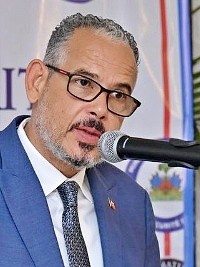
In a landmark step to lay the groundwork for 2026 inclusive national elections, Haitian Prime Minister Alix Didier Fils-Aimé has formally inaugurated a countrywide training program designed to reinforce electoral security and guarantee the credibility of upcoming votes for key judicial and public authority posts. The initiative, conducted under the official oversight of Haiti’s Ministry of Justice and Public Security (MJSP), aligns directly with the three core policy priorities the prime minister outlined for his administration: eliminating the threat of armed gang activity to restore national security, revitalizing Haiti’s struggling economy, and delivering free, fair, transparent, and inclusive elections by the end of the year. The first phase of the training program focuses on equipping three key stakeholder groups with the tools to uphold electoral integrity: government commissioners, justices of the peace, and uniformed personnel from both the Armed Forces of Haiti (FAd’H) and the Haitian National Police (PNH). Initial training sessions are being rolled out in three strategic municipalities: Port-au-Prince, the nation’s capital, Petit-Goâve, and Croix-des-Bouquets, with plans for a phased expansion that will reach all 146 of Haiti’s municipalities in the coming months. Alongside the training initiative, the Haitian government has also earmarked more than 3 billion gourdes in public funding to support participating political parties and electoral coalitions, a move designed to level the playing field for all candidates. During the launch ceremony, Prime Minister Fils-Aimé delivered a firm, uncompromising rebuke to gang activity, stressing that the Haitian state would never retreat from its duty to protect national territory and would never cede control of any region to armed criminal groups. “We will combat money laundering systematically, and we will not allow dirty money to infiltrate our electoral process and corrupt our ballot boxes,” the prime minister stated. To deliver on this promise, his administration will establish a dedicated specialized judicial unit focused on investigating and prosecuting financial crimes, with a specific mandate to block illicit financing from influencing election outcomes. The prime minister also paid public tribute to the courage and sacrifice of police and military personnel currently deployed to retake residential neighborhoods held by armed gangs, urging security forces to apply the highest level of rigor to pursuing and penalizing any violations of electoral law. Reaffirming the government’s commitment to collaborative governance throughout the electoral process, Fils-Aimé noted that all planning is being carried out in close consultation with Haiti’s Provisional Electoral Council (CEP), civil society organizations, and registered political parties. He closed with a solemn reminder to all electoral stakeholders of their core obligation: “You have only one leader: the Haitian people. It is to them alone that you owe loyalty, discipline, and impartiality.”
分类: politics
-
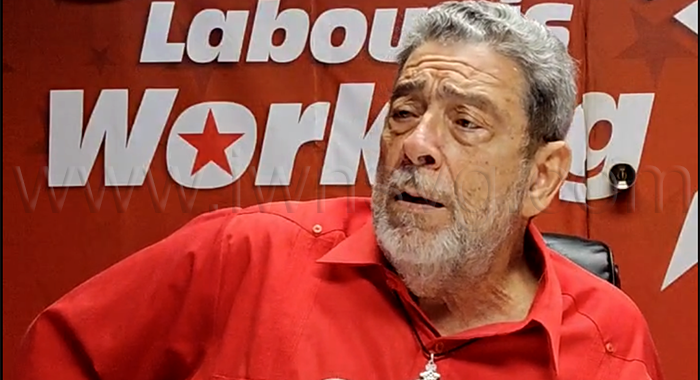
Gonsalves says police force ‘now entirely politicised’
A controversial fast-track promotion of a former partisan political official to a senior leadership role in the Royal St. Vincent and the Grenadines Police Force is at the center of growing political tension, with opposition leader Ralph Gonsalves labeling the plan entirely unacceptable and warning it will deepen what he calls systemic partisan infiltration of the national constabulary.
National Security Minister St. Clair Leacock first made public Brenton Smith’s planned promotion as part of a broader reshuffle of the police force’s top command on Wednesday. Smith’s path to this anticipated senior appointment traces back to 2021, when he was one of hundreds of public sector workers terminated under Gonsalves’ Unity Labour Party (ULP) government, which enforced a COVID-19 vaccine mandate that removed unvaccinated public employees from their posts.
After his dismissal, Smith stepped into a top partisan role, serving as general secretary of the then-opposition New Democratic Party (NDP). Following the NDP’s landslide general election victory on November 27, the new administration fulfilled a campaign pledge to reinstate all workers dismissed under the previous government’s vaccine mandate, restoring their full employment benefits. Smith returned to his role in the police force as part of this policy.
What makes Smith’s planned promotion extraordinary is the size of the rank jump: instead of advancing sequentially through the traditional hierarchy of assistant superintendent and superintendent, he will move directly from his current rank of inspector to the senior position of assistant commissioner of police (ACP), skipping three intermediate ranks entirely. On Wednesday, Gonsalves addressed the plan during a caller segment on his popular weekly radio show *Morning Comrade*, broadcast on Star FM, after a listener cited Leacock’s announcement that Smith would also be tapped to lead critical human resources operations within the force.
Gonsalves stressed that his criticism centers on institutional principle, not a personal attack on Smith. He emphasized that the proposed leap would be an unprecedented break from longstanding police protocol and fundamentally unfair to veteran officers who remained in service and climbed the ranks gradually while Smith left to pursue full-time partisan political activity.
“I have no objection to him returning to his post — other workers dismissed under the mandate were reinstated, and that is the policy the new government put in place, that is their right,” Gonsalves said. “But there is no justification for moving him straight from inspector over multiple intermediate ranks directly to the ACP. You simply cannot skip assistant superintendent, superintendent, and all the intervening steps to land at a senior command post. I do not believe the public of this country will accept this unfair outcome lightly.”
The opposition leader warned that if the promotion moves forward, it will trigger significant unrest both among the general public and within the rank-and-file of the police force. “Vincentians have a deeply held belief in fairness in public service,” he noted. “When the public sees an unfair appointment, they will speak up. And serving officers who have spent decades working their way up the ranks will also object to this. This decision will carry major repercussions, far-reaching repercussions.”
Gonsalves called on the independent Police Service Commission (PSC), which holds formal authority to approve senior police appointments, to reject the plan, saying he would be gravely disappointed if the body endorsed the accelerated promotion. “I know the chairman and all members of the PSC personally, and I cannot imagine that, with proper legal and procedural advice, they would endorse such an irregular decision. This is fundamentally a question of merit and seniority. There are only four ACP posts in the force, and when vacancies open, appointments should go to officers who have worked their way up through the system, not to former political officials who just returned to the force.”
Gonsalves drew a clear distinction between Smith’s proposed promotion and the planned elevation of two other senior officers, Trevor “Buju” Bailey and Dwayne Bailey, who are set to be promoted to deputy commissioner of police. He stated he holds the Bailey brothers in high professional regard, noting that their promotions follow traditional hierarchical advancement: Dwayne Bailey was promoted to superintendent by the PSC during the ULP administration, and Trevor Bailey already holds the ACP post, so his elevation to deputy falls well within normal procedural bounds.
“The promotions for the Bailey brothers are completely reasonable and aligned with constitutional and regulatory frameworks, which outline the prime minister’s role in appointing commissioner and deputy commissioner posts,” Gonsalves explained. “Smith’s jump is on an entirely different footing — it combines an unprecedented accelerated promotion with recent full-time partisan political activity with the ruling party.”
Gonsalves also questioned the procedural decision to have the sitting national security minister announce individual senior promotions, rather than releasing the announcement through the PSC, the body legally responsible for police personnel decisions. “I held the national security portfolio and oversaw the police force for years under the ULP government, and I have never seen a sitting minister personally announce individual promotions of this sort. This makes clear that the entire police force is now being politicized from the top down, after the NDP took office in November,” he added.
-
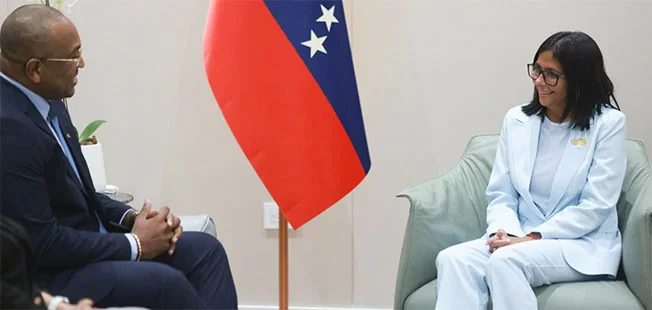
Bouva bespreekt economische samenwerking met Venezolaanse leiding
On a working visit to Venezuela, Melvin Bouva, Suriname’s Minister of Foreign Affairs, International Trade and Cooperation, held high-level talks with interim Venezuelan President Delcy Rodríguez focused on expanding and deepening diplomatic and economic ties between the two Caribbean-South American nations. The meeting, held in the Venezuelan capital of Caracas, centered on boosting collaborative projects across a suite of strategic priority sectors, including energy, agriculture, fisheries, tourism, education, and capacity building for the oil and gas industry.
Bouva’s visit was arranged at the invitation of his Venezuelan counterpart, and aligned with broader regional integration goals and the advancement of South-South cooperation, a framework that fosters knowledge and resource sharing among developing nations. Both delegations framed the Caracas meeting as a pivotal milestone in the ongoing development of bilateral relations between Suriname and Venezuela, with both sides confirming their commitment to expanding existing partnership frameworks and advancing joint projects that deliver mutual benefits to their populations and economies.
Dialogue during the talks also addressed core regional priorities: the delegates emphasized the critical role of inclusive economic growth, expanded cross-border trade, and sustained regional stability for long-term development across the broader area. Both sides further underlined the urgent need for long-term sustainable cooperation across both the Caribbean region and the Amazon basin, two ecologically and economically vital areas shared by the two nations.
During the discussions, Bouva reaffirmed Suriname’s commitment to deepening its partnership with Venezuela, noting that the two sides will work to turn diplomatic understandings into concrete agreements that drive shared economic growth, advance regional integration, and strengthen long-term sustainable diplomatic ties. Both Suriname and Venezuela concluded the meeting by reaffirming that open, constructive dialogue, mutual respect for national sovereignty, and strategic cross-border collaboration remain foundational to advancing shared interests across the South American region.
-
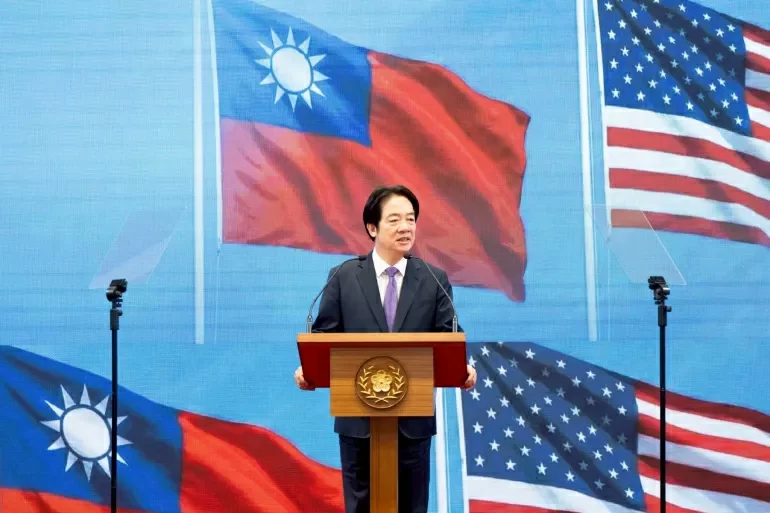
President Lai: Taiwan geeft zijn vrije en democratische levenswijze niet op onder druk
Fresh off high-stakes talks between U.S. and Chinese leaders that centered heavily on the Taiwan issue, Taiwanese President William Lai Ching-te has issued a clear rebuke of mounting pressure from Beijing, pledging the island will never be forced to abandon its democratic system and sovereign status.
In a social media post laying out his administration’s stance, Lai emphasized that Taiwan has no intention of provoking or escalating conflict across the Taiwan Strait. At the same time, he made clear the island will not sacrifice its national sovereignty, dignity, and free democratic way of life in the face of external coercion. Lai reiterated that Taiwan has long been a committed defender of the cross-strait status quo, and is not the party seeking to alter the current arrangement. He went so far as to name China as the fundamental source of regional instability in the area.
Beijing has long claimed Taiwan as an integral part of its territory, and has repeatedly threatened to use military force to achieve unification if the island formally moves toward independence. The Taiwan question remained a core, contentious topic during the recent summit meeting between U.S. President Donald Trump and Chinese leader Xi Jinping.
According to Chinese state media, Xi described the Taiwan issue as the single most sensitive core question in bilateral relations between Washington and Beijing. He warned that improper handling of the question could trigger severe conflict that would put the entire bilateral relationship at irreversible risk.
While the United States has not formally recognized Taiwan as an independent sovereign state, successive U.S. administrations have maintained robust unofficial support for the island, including through billions of dollars in arms sales and consistent diplomatic statements that imply Washington would intervene to defend Taiwan in the event of a Chinese attack.
Following his closed-door summit with Xi, Trump told reporters that Xi holds extremely firm opposition to any move toward Taiwanese independence. The U.S. president, however, declined to commit to approving a new $11 billion arms sales package to Taiwan that has already cleared approval from the U.S. Congress. “I haven’t approved it yet. We’ll see what happens,” Trump told reporters.
For his part, Lai framed U.S. security cooperation and arms deliveries to Taiwan as critical foundational elements for sustaining regional peace and stability. He argued that these commitments are not just a security guarantee from the U.S. to Taiwan, but also serve as the most effective deterrent to actions that would undermine peace and stability across the Taiwan Strait and broader Indo-Pacific region.
-
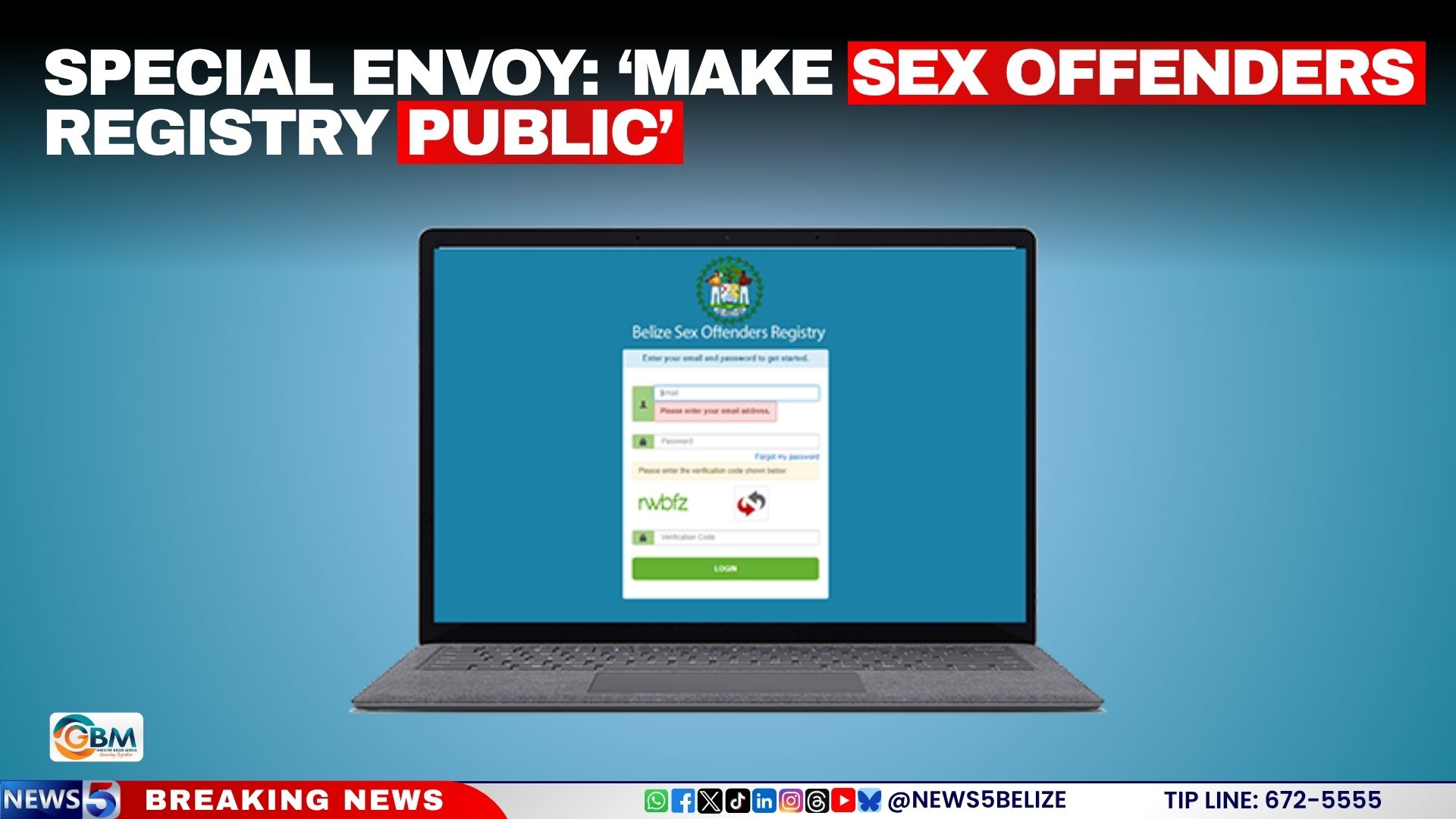
Special Envoy: ‘Make Sex Offenders Registry Public’
Amid a swell of public anger over recent sexual assault allegations involving influential figures in public trust positions, Rossana Briceño, a special envoy based in Belize, has reignited national debate over offender transparency by calling for the country’s existing closed sex offender registry to be opened to full public access.
Briceño argues that no longer should convicted sex offenders – regardless of whether they hold positions of power as teachers, law enforcement officers, or other public-facing roles – be able to conceal their criminal histories behind the current restricted registry system. Her call to action centers on three core pillars: increased accountability for convicted offenders, greater governmental transparency around public safety data, and enhanced protective measures for vulnerable communities, particularly children.
Currently, Belize maintains an internal registry of convicted sex offenders overseen jointly by the Ministry of Home Affairs and the national Police Department. Unlike systems in many other jurisdictions that allow public access, this database remains completely closed to general citizenry, with access limited exclusively to authorized law enforcement personnel and a small number of selected childcare institutions.
Briceño emphasizes that the current policy of keeping offender identities hidden creates unnecessary danger for children. By opening the registry to the general public, she says, communities gain the most effective tool available to proactively protect their most vulnerable members and prevent future victimization.
Briceño’s statement has sparked widespread discussion across social media platforms, with the vast majority of online commenters expressing clear support for the proposal. One supporter framed the demand as a critical public safety priority, noting “Yes, we need this, and we need the punishment so strong that others will think twice to hurt any of our children.”
Even among commentators who back the push for a public registry, however, there have been calls for clearer policy details. Many have pressed for clarification on practical implementation questions, including whether new geographic restrictions will be put in place to bar offenders from living within set distances of schools, daycare centers and other child-focused facilities, as well as how user-friendly and widely accessible the public database will be for ordinary citizens.
-
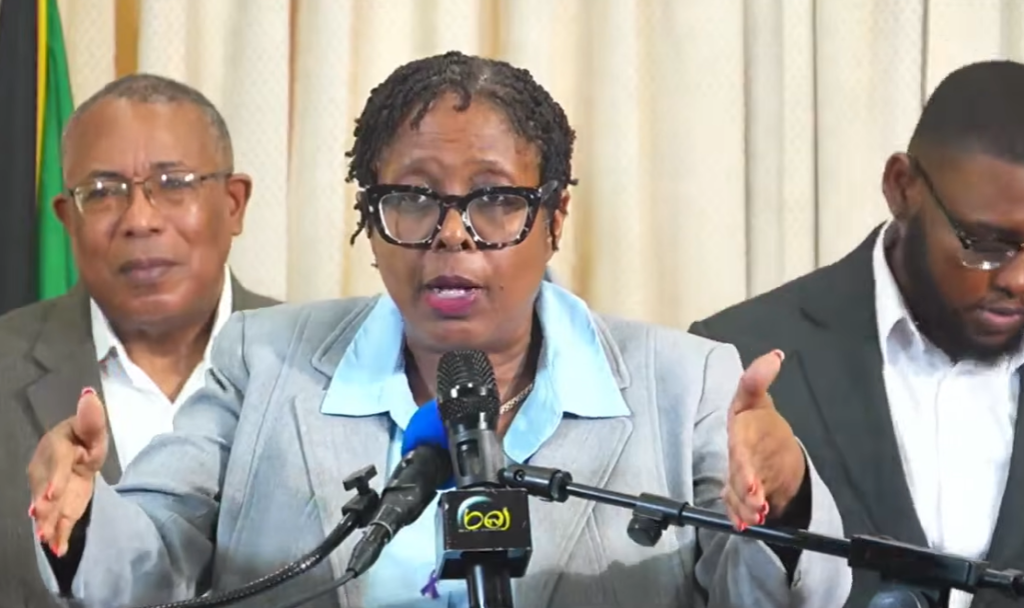
‘A wicked act’, says Brown Burke after AG flags slow use of hurricane funds
KINGSTON, Jamaica — Jamaica’s main opposition party has launched a scathing rebuke of the national government after a damning auditor general report revealed that just a tiny fraction of donated hurricane relief funds have actually been deployed to support affected communities. As of February 23, 2026, the Office of Disaster Preparedness and Emergency Management (ODPEM) had only spent $26.2 million of the $1.44 billion raised in donations following the catastrophic Category 5 Hurricane Melissa — that equals less than 2% of the total pledged funds. The opposition People’s National Party (PNP) has labeled this gross under-spending a deliberate “wicked act” against vulnerable Jamaican households still reeling from the storm’s destruction.
Addressing reporters at a PNP press briefing on Monday, Dr. Angela Brown Burke, the party’s spokesperson on Social Protection and Social Transformation, emphasized that the slow disbursement of critical relief resources is particularly unacceptable given the unprecedented scale of damage Hurricane Melissa left in its wake.
“Most Jamaicans have not forgotten just how extensive the harm from this storm was. Late last year, the Red Cross calculated that more than 156,000 residential properties suffered damage, and close to 90,000 families were directly impacted by the hurricane,” Brown Burke told journalists.
“Even if every dollar donated had been put to use immediately, there would still have been an unmet gap in support for affected families. That makes it all the more outrageous that $1.44 billion in relief is sitting untouched with no clear plan to get it to the people who need it. This is nothing short of a wicked act against our most vulnerable citizens,” she added.
The shadow cabinet minister went on to stress that all donations were earmarked explicitly for delivering urgent shelter and life-saving assistance to survivors of the storm. In her view, the auditor general’s independent review lays bare deep, systemic failures in governance, financial oversight, and public accountability across the entire national hurricane relief program.
“The findings are damning: millions of dollars in funds and critical relief supplies cannot be independently traced or verified, and the Jamaican citizens who need support most are left completely without protection,” Brown Burke said.
The real-time audit of the Hurricane Melissa Relief Initiative, which also reviewed financial management and procurement processes under the government’s flagship Roof Restoration Programme (ROOF), uncovered a host of additional accounting irregularities. Audit investigators found that $34 million worth of roofing materials earmarked for home repairs cannot be properly accounted for, due to widespread missing signed delivery slips and official goods received notes. On top of that, more than $141.1 million in recorded committed expenditure has no supporting, verified payment documentation on file.
Brown Burke has issued a series of clear demands to the ruling government to address the audit’s findings, starting with full public transparency. She is calling on authorities to publish a complete, detailed list of all ROOF programme beneficiaries, including parish-level breakdowns of recipients and clear documentation of the eligibility criteria used to select which households receive support.
“We also require independent, third-party verification of all completed home repair work that the government has reported. That is non-negotiable. We are already hearing reports of discrepancies: homeowners who repaired their own properties using a mix of personal savings and limited government assistance check their parish office records, only to find the work is incorrectly listed as completed by the Jamaica Defence Force. These inconsistencies need to be sorted out immediately for the public to trust this process,” Brown Burke explained.
She also called on government agencies to extend greater dignity and respect to Jamaican families that have been forced to stay in emergency shelters after their homes were destroyed or damaged by Hurricane Melissa. Closing her remarks, Brown Burke urged the ruling administration to prioritize the needs of storm survivors.
“I am calling on the Government to find its conscience, and commit to doing better by the Jamaican people who rely on this support,” she said.
-
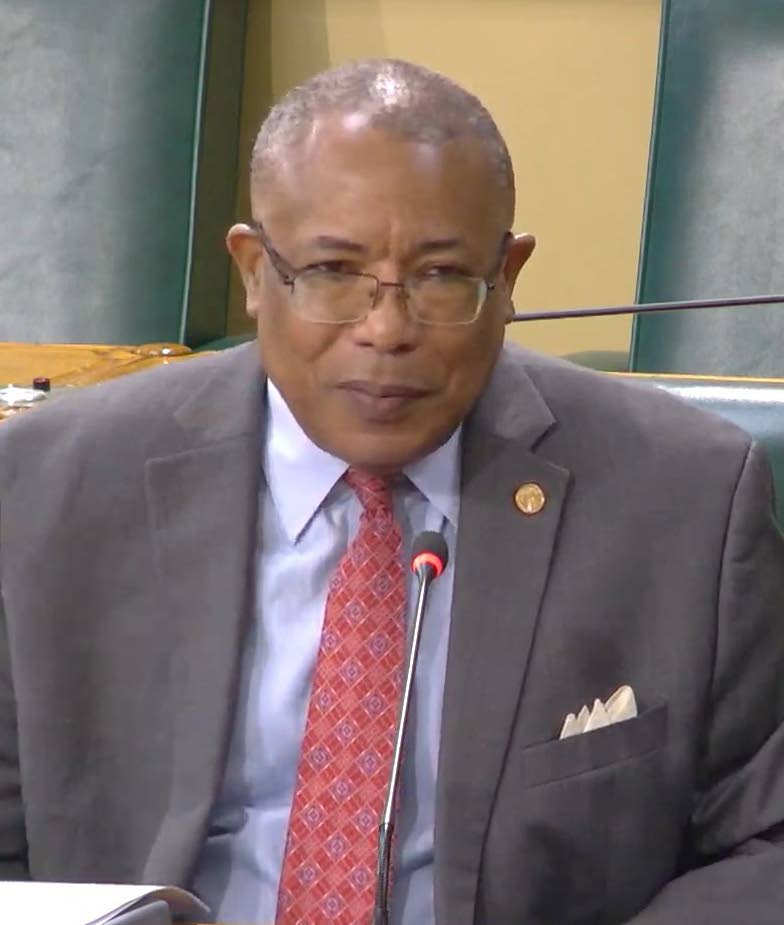
Hylton calls on gov’t to provide immediate update on hurricane-donated goods
KINGSTON, JAMAICA – Jamaica’s main opposition figure for trade, industry and global logistics, Anthony Hylton, has issued an urgent demand for the national government to publicly disclose full details of uncollected hurricane relief goods currently held in storage at the country’s ports and cargo terminals. Hylton’s call for accountability comes on the heels of a damning report from the Auditor General’s Department, formally presented to Jamaica’s Parliament last Tuesday, that laid bare major gaps in disaster relief management following Hurricane Melissa.
The audit’s findings paint a striking picture of mismanagement: by February 23, 2026, the Office of Disaster Preparedness and Emergency Management (ODPEM) had received a total of JMD 1.44 billion in donations earmarked for survivors of Hurricane Melissa, but had only allocated and spent JMD 26.2 million – a mere 1.8 percent of the total funds committed to relief efforts. Further audit data revealed that as of the same cutoff date, ODPEM retained roughly JMD 569.6 million and USD 5.9 million in active hurricane donation accounts. Alarmingly, this balance includes unspent funds carried over from prior Hurricane Beryl relief operations: JMD 138.8 million and USD 101,974 that had gone unused even before fundraising for Hurricane Melissa launched.
Speaking at a press conference hosted by the People’s National Party (PNP) on Monday, Hylton warned that the botched handling of international donations risks long-term harm to Jamaica’s global standing. “When Hurricane Melissa hit, Jamaica rightfully appealed to the global community for urgent support, and we received that generosity. But instead of delivering that aid to the people who needed it, we have trapped those donations and put donors through a prolonged bureaucratic and financial nightmare,” Hylton explained. “This does lasting reputational damage that goes far beyond our borders, and it erodes the trust that future donors will have in Jamaica’s ability to manage international assistance effectively.”
Hylton emphasized that small local Jamaican businesses and diaspora-led humanitarian groups – which moved quickly to mobilize and ship critical supplies in the immediate aftermath of the storm – are among the hardest hit by the delays. Many of these organizations lack the deep financial reserves to cover months of unexpected storage fees at port facilities, and few have the legal expertise to resolve contractual disputes with freight and logistics operators over the held goods, he added.
Beyond the immediate call for transparency, Hylton laid out three key demands from the Opposition. First, the government must immediately publish a full public accounting of all donated goods that remain uncollected in storage or have been abandoned at Jamaican ports and cargo facilities, including a full accounting of any perishable goods that spoiled in storage and were ultimately disposed of in landfills. Second, Hylton called for the creation of a targeted relief program that will either waive accumulated storage fees charged to donors or fully reimburse those who have already paid the costs. Finally, the Opposition is demanding that the government draft and publish a formal, comprehensive disaster response protocol ahead of the start of the 2026 Atlantic hurricane season. This protocol must cover end-to-end processes for customs clearance, port handling, cold chain storage for perishable supplies and medical products, and coordinated partnerships with freight operators to prevent a repeat of the post-Melissa mismanagement, Hylton said.
-
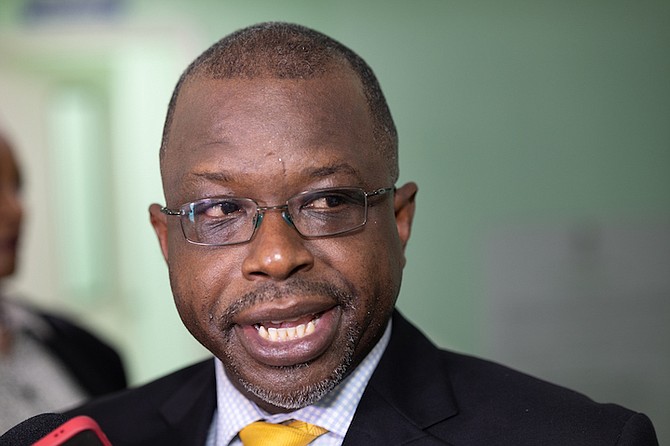
New Attorney general Munroe dismisses conflict concerns
Following the Progressive Liberal Party’s landslide victory in last week’s Bahamian general election, where the party secured 32 of the 41 available parliamentary seats, a new cabinet has taken shape, bringing with it questions around potential ethical conflicts for one top appointee.
Wayne Munroe, the newly sworn-in Attorney General and Minister of Legal Affairs, is pushing back against growing public concerns that his decades-long legal career — marked by multiple high-profile lawsuits against the Bahamian government and extensive representation of defendants charged by state agencies — will create unacceptable conflicts of interest in his new role leading the country’s legal framework.
Munroe is no stranger to top government office: he previously served as Minister of National Security under the Progressive Liberal Party, and held the Freetown parliamentary constituency seat for years. In a notable twist from the election results, he became the only nominated cabinet member to fail to retain his seat in last week’s vote. Despite the election outcome for his constituency, the party tapped him for the critical attorney general role, and he was officially sworn in during a formal ceremony at Government House this past Friday.
In a press briefing immediately after the ceremony, Munroe leaned into his extensive legal background as a strength for the role, rather than a liability. Over his decades in private practice, Munroe built his reputation handling complex civil and constitutional litigation, including multiple cases brought against the government. Beyond private practice, he has also previously served as a sitting Supreme Court judge and led the Bahamas Bar Association as its president, giving him deep cross-sector experience across the country’s legal ecosystem.
Addressing the conflict of interest claims directly, Munroe shared a lighthearted observation from peers to frame the conversation. “Someone made a joke and said, if I have to be in court, they prefer for me to be representing the government than suing the government,” he told reporters. “If I’m not in government, I’m going to go back to the business that I do, which is civil and constitutional litigation.”
When pressed on whether any of his past lawsuits against the government remain active, Munroe clarified that he had stepped away from active private practice four and a half years ago, leaving no ongoing personal litigation against the state. For any potential future matters that involve legal work from his former law firm, he committed to following standard ethical protocols: “You recuse yourself,” he said, confirming he would step aside from any matters where a conflict could arise.
Munroe’s appointment fills the role left vacant by former Attorney General Ryan Pinder, who signaled his departure from the post back in January. At the time, Pinder told reporters that while he had not formally stepped down earlier, his tenure had come to a formal end, and he had no plans to remain in frontline Bahamian politics, quipping, “Don’t hold your breath” for a return to elected office.
The appointment comes as the new Progressive Liberal Party government settles into its mandate, with the leadership banking on Munroe’s decades of cross-cutting legal experience to guide the country’s legislative and regulatory agenda over the coming term.
-
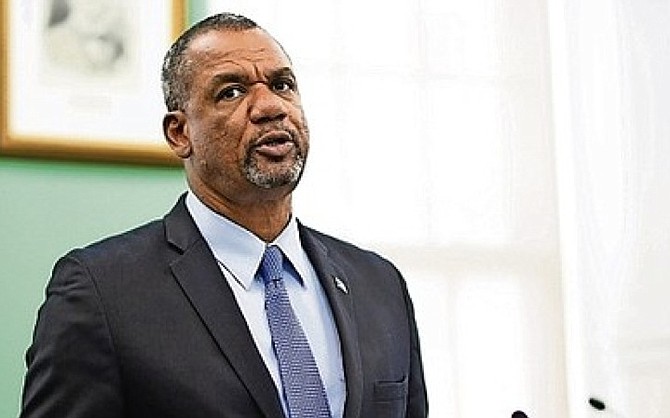
Prime Minister names Jerome Fitzgerald to Cabinet post
Nearly a decade after a high-profile corruption scandal helped sink the Progressive Liberal Party (PLP) in a landslide 2017 electoral defeat, Jerome Fitzgerald — the Bahamian politician whose career has long been tied to that controversy — has been tapped to return to the national Cabinet, where he will oversee the country’s economic affairs.
Fitzgerald, a former member of parliament for the Marathon constituency and ex-education minister who is set to be appointed a senator, was officially sworn into office on Saturday as Prime Minister Philip “Brave” Davis launched his second term in office. His comeback to top-level government is not a sudden surprise, however: over the PLP’s previous term, Fitzgerald served as a senior advisor in the Prime Minister’s Office, where insiders say he wielded outsized behind-the-scenes influence, and he also managed the PLP’s successful 2024 re-election campaign.
Fitzgerald’s most damaging political controversy emerged on the eve of the 2017 general election, when leaked internal emails revealed he had lobbied heavily for multi-million-dollar brokerage, trucking, and limousine contracts tied to the massive Baha Mar resort development for a company founded by his father. The scandal became a central talking point for the opposition Free National Movement (FNM), which campaigned heavily on allegations of widespread PLP corruption. The FNM went on to win that election in a historic landslide, and Fitzgerald lost his Marathon parliamentary seat.
The leaked correspondence showed Fitzgerald requested a $20,000 monthly stipend from original Baha Mar developer Sarkis Izmirlian, claiming the funds would cover medical expenses for his ailing father. In a 2014 email, he pressed Baha Mar executives to direct brokerage and shipping business to Bahamas Cargo and Logistics, his father’s firm, after earlier overtures had only resulted in a one-time contract for 40 containers.
“Unfortunately despite all efforts by you and promises to me by Daniel Liu (CCA’s vice president) that we would receive the brokerage and trucking work, we have not apart from a one time deal to move 40 containers. I do not know why, I am disappointed, but I have accepted it and moved on,” Fitzgerald wrote in the message. “I know that the interior Furniture and Fittings should begin arriving shortly, and I would really wish to now establish a relationship between Baha Mar and Bahamas Cargo and Logistics Limited (“BCL”) where all ports of entry can be advised that BCL is to collect the paperwork and clear shipments for Baha Mar. It is my hope that the relationship will continue when the hotel opens and we will again be the broker and trucker for this property as we were for so many years.”
Izmirlian ultimately forwarded the email to his senior leadership team, noting that all contracts should be awarded based on competitive cost and demonstrated capability, not political pressure. At the height of the scandal, Fitzgerald denied abusing his office to steer contracts to himself or his family. He clarified at the time that he held no ownership stake in BCL and never personally held a contract with Baha Mar or its affiliates, arguing he only followed up on his father’s pre-existing business discussions after his father fell ill. He maintained that no contract ever materialized from his outreach.
The Baha Mar controversy is not the only scandal that marked Fitzgerald’s past tenure in government. In 2012, an underground fuel leak at a Rubis service station in his Marathon constituency released approximately 12,000 gallons of unleaded gasoline. The leak was detected in late December 2012, and a subsequent investigation by global environmental consulting firm Black & Veatch found local residents had been exposed to potentially dangerous toxins, including benzene, a confirmed human carcinogen. Though the firm’s final report was completed in February 2014, it was not released to the public until April 2015, after months of sustained public pressure and a heated town hall meeting with angry stakeholders. Marathon residents and local business owners expressed outrage over the delay, with critics accusing the PLP government of suppressing the report and failing to warn affected communities about the public health risks in a timely manner. Multiple local families ultimately filed legal action against Rubis Bahamas and the service station’s former operator.
Fitzgerald’s return to senior public office first stirred controversy back in 2021, when the Prime Minister’s Delivery Unit announced on social media that he would serve as the unit’s senior policy advisor and head. The announcement was quickly deleted, and while initial OPM sources claimed the appointment had not been finalized, the office later confirmed Fitzgerald had joined the team without offering details on his specific role. Prime Minister Davis has long defended Fitzgerald, dismissing the Baha Mar controversy as “no harm” and “no foul” in 2021 comments to reporters, saying he has full confidence in Fitzgerald’s ability to help guide the country. Davis argued he was seeking out the most capable Bahamians to advance his policy agenda, and that Fitzgerald was one of the people he trusted to deliver results. When pressed specifically on the 2017 Baha Mar scandal, Davis questioned the premise of the question, repeating that there was no wrongdoing tied to Fitzgerald’s actions.
Following Saturday’s swearing-in ceremony, Fitzgerald said he had worked closely with Davis and the full Cabinet over the past five years, praising Davis as a leader with a “heart of gold” and noting the pair had secured significant progress during the last term, even as much work remains to address national challenges. Over the past three months, Fitzgerald said he had traveled extensively across the Bahamas, speaking directly with thousands of citizens to better understand their challenges, aspirations, and desire for a government that creates pathways for all Bahamians to learn, earn, and build personal wealth. That commitment, he said, will be at the center of his work leading the country’s economic portfolio. He also noted he is optimistic about the Bahamas’ future, pointing to high youth turnout and engagement in the recent election as a promising sign, and emphasized that young people should remain actively involved in government planning and decision-making moving forward.
-
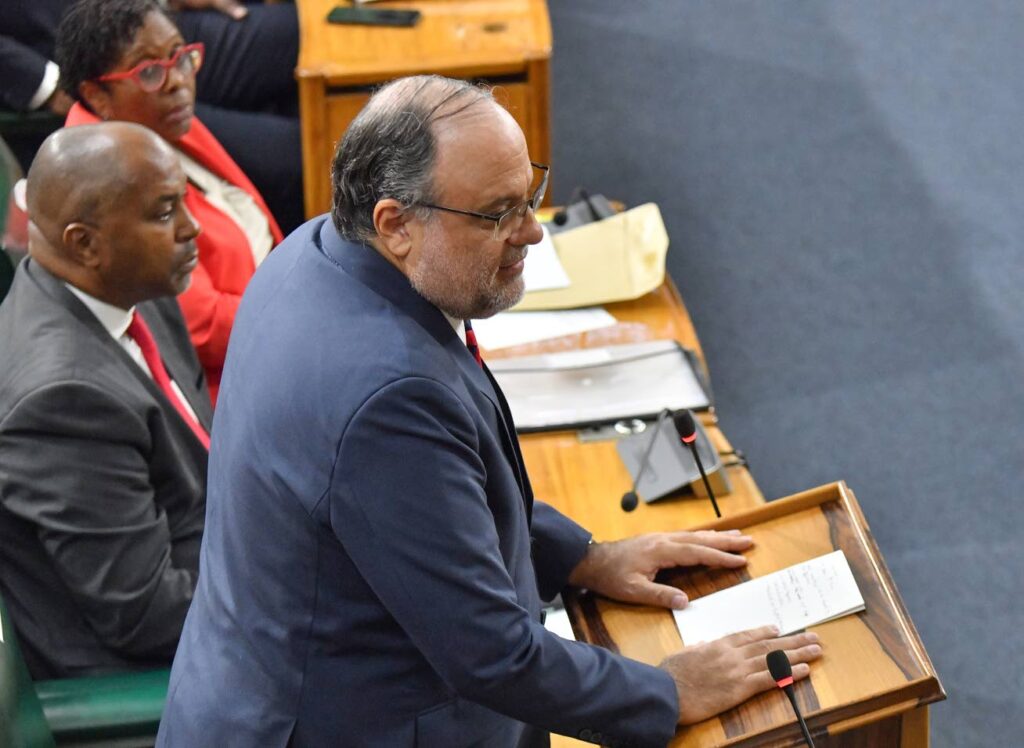
Golding demands immediate tabling of IC report on FLA
KINSON, Jamaica — Jamaica’s Opposition Leader Mark Golding is pressing parliamentary authorities to publicly table a long-completed investigative report from the country’s Integrity Commission (IC) into misconduct allegations at the Firearm Licensing Authority (FLA) when the House of Representatives convenes for its next sitting.
In a formal correspondence sent to House Speaker Juliet Holness this Monday, Golding outlined that the IC finalized and submitted the probe report to Parliament all the way back on March 30, 2026, yet the document has never been brought before the full chamber for public review. Citing a recent investigative piece published by *The Sunday Gleaner*, Golding confirmed that the speaker has already received official notification from the IC that the report centers on claims of systemic corruption, improper conduct, and administrative irregularities across multiple core FLA operations. These problematic areas include the issuing, modification, and cancellation of firearm licenses, as well as mismanagement in the storage of seized and held firearms and ammunition at the authority’s facilities.
Golding emphasized that the ongoing delay in releasing the report has become a pressing issue of major public concern. As a government statutory body endowed with broad, critical regulatory responsibilities, the FLA is inherently bound to principles of public accountability and transparent scrutiny, he argued.
“This protracted failure to disclose the report is a serious and dangerous breach of public trust. The FLA is not a private individual — it is a public institution with statutory mandate over high-stakes regulatory functions. There is an undeniable and overwhelming public interest in bringing any improper or irregular practices in its operations to light, so that corrective action can be taken,” Golding wrote in the letter.
The opposition leader also pushed back against common justifications for withholding the document centered on ongoing related court proceedings. In a democratic system, he contended, transparency and open public debate must take priority, and active litigation does not provide a valid reason to keep the report hidden from constituents.
“Ongoing court proceedings cannot serve as a legal or appropriate justification for continuing to withhold this report from the public. In this context, it is important to highlight that courts have long affirmed that open public discourse and constructive criticism are foundational to a functioning democracy. Public bodies are expected to accept scrutiny, rather than leveraging legal processes to block transparency, evade accountability, and silence public oversight,” Golding noted.
He referenced a landmark UK legal precedent, *Derbyshire County Council v Times Newspapers*, in which courts ruled that permitting public authorities to file defamation claims over harm to their institutional reputation would have a severe chilling effect on free public expression — a outcome the judiciary has consistently refused to allow.
Golding concluded that unless a specific, binding court order explicitly prohibits the report’s release, there are no legal or ethical grounds to delay tabling it any further.
“As Leader of the Opposition, it is my formal duty to call for this report to be tabled when the House next meets. I trust that in your role as Speaker, you will fulfill your own duty to ensure this action is carried out when the chamber convenes next Tuesday afternoon.”