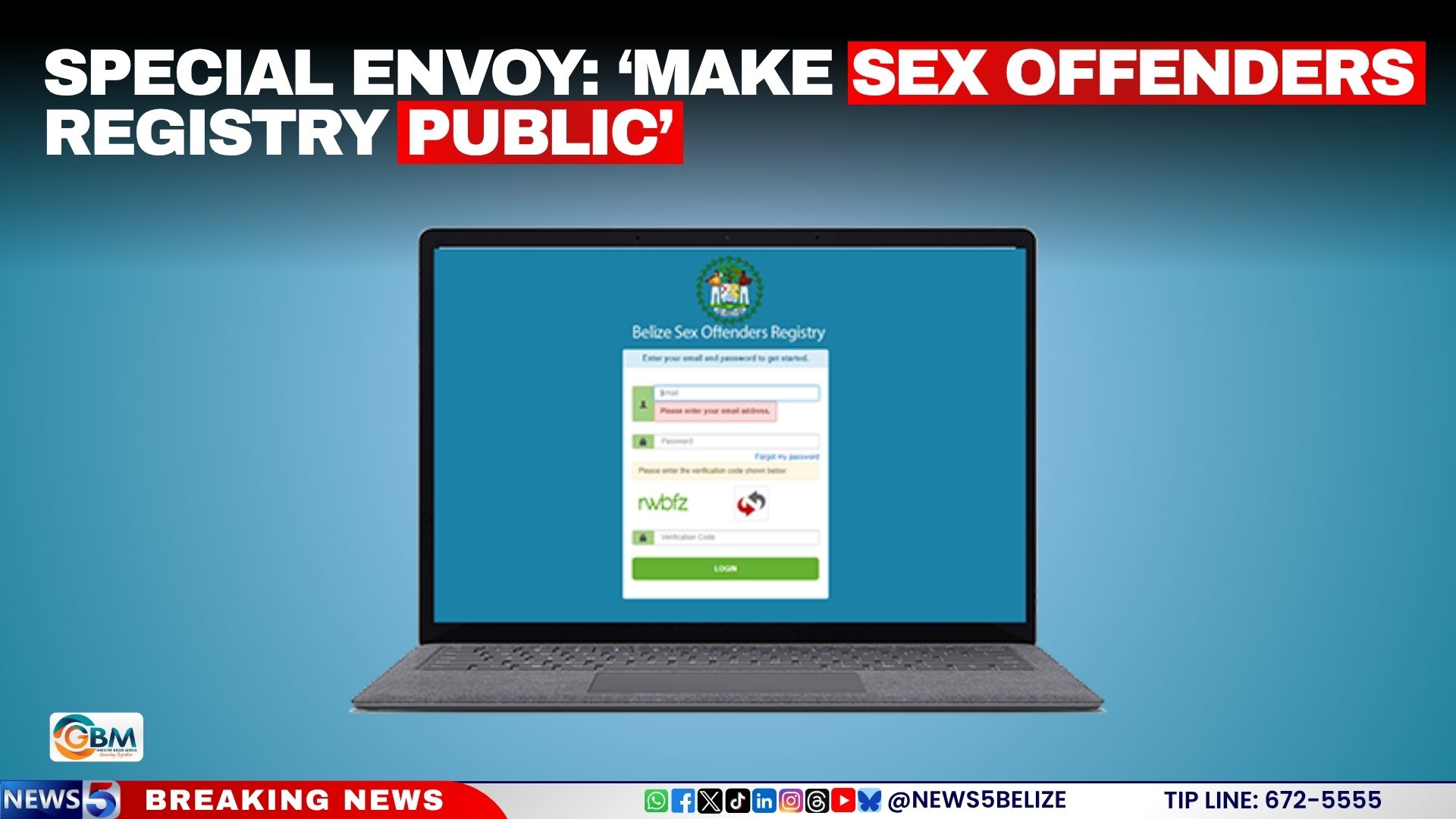
Amid a swell of public anger over recent sexual assault allegations involving influential figures in public trust positions, Rossana Briceño, a special envoy based in Belize, has reignited national debate over offender transparency by calling for the country’s existing closed sex offender registry to be opened to full public access.
Briceño argues that no longer should convicted sex offenders – regardless of whether they hold positions of power as teachers, law enforcement officers, or other public-facing roles – be able to conceal their criminal histories behind the current restricted registry system. Her call to action centers on three core pillars: increased accountability for convicted offenders, greater governmental transparency around public safety data, and enhanced protective measures for vulnerable communities, particularly children.
Currently, Belize maintains an internal registry of convicted sex offenders overseen jointly by the Ministry of Home Affairs and the national Police Department. Unlike systems in many other jurisdictions that allow public access, this database remains completely closed to general citizenry, with access limited exclusively to authorized law enforcement personnel and a small number of selected childcare institutions.
Briceño emphasizes that the current policy of keeping offender identities hidden creates unnecessary danger for children. By opening the registry to the general public, she says, communities gain the most effective tool available to proactively protect their most vulnerable members and prevent future victimization.
Briceño’s statement has sparked widespread discussion across social media platforms, with the vast majority of online commenters expressing clear support for the proposal. One supporter framed the demand as a critical public safety priority, noting “Yes, we need this, and we need the punishment so strong that others will think twice to hurt any of our children.”
Even among commentators who back the push for a public registry, however, there have been calls for clearer policy details. Many have pressed for clarification on practical implementation questions, including whether new geographic restrictions will be put in place to bar offenders from living within set distances of schools, daycare centers and other child-focused facilities, as well as how user-friendly and widely accessible the public database will be for ordinary citizens.