分类: politics

  • Opmerking Jarbandhan over ‘politieke kleur’ pg leidt tot commotie in DNA

    Opmerking Jarbandhan over ‘politieke kleur’ pg leidt tot commotie in DNA

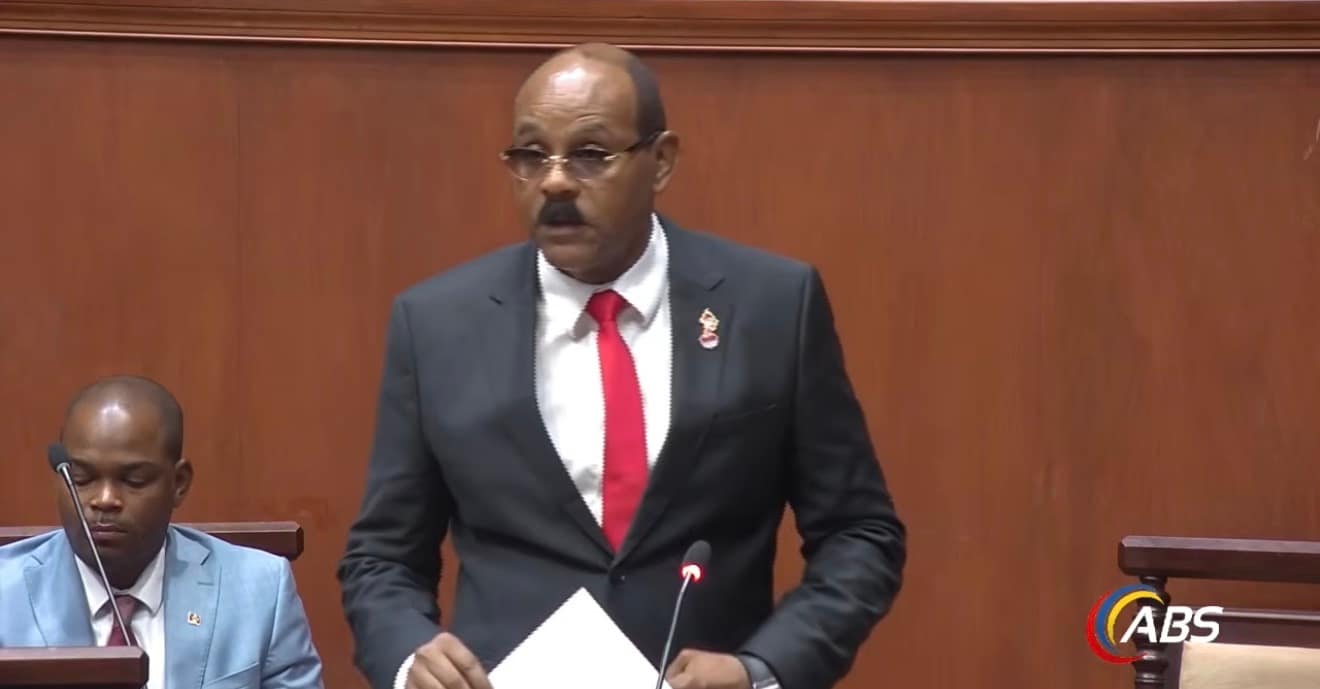
    A political firestorm engulfed Suriname’s National Assembly (DNA) on Tuesday following controversial remarks by VHP Assembly member Ameerani Jarbandhan regarding the Prosecutor-General’s alleged political leanings. The parliamentary session, initially convened to debate judicial reform bills, rapidly devolved into heated exchanges concerning the politicization of independent state institutions.

    Jarbandhan’s commentary emerged during deliberations on legislative amendments concerning the Public Prosecutor’s Office. While addressing case backlogs attributed to resource constraints, expertise shortages, and operational limitations within law enforcement, the assembly member questioned whether proposed changes—including adjustments to the Prosecutor-General’s retirement age—concealed ulterior motives. She explicitly suggested these amendments might represent a subtle effort to remove the official, potentially linked to her political convictions.

    The controversy deepened with revelations that ruling coalition members (BEP, ABOP, PL) had previously supported raising the retirement age from 65 to 70 in 2024, only to reverse their position through current legislative initiatives. Jarbandhan framed this reversal as a threat to separation of powers, warning that implementing drastic judicial changes without broad national consultation jeopardizes constitutional integrity.

    Assembly Chairman Ashwin Adhin intervened decisively, declaring any discussion of the Prosecutor-General’s political affiliation fundamentally unacceptable. “The Prosecutor-General exists outside political discourse,” Adhin asserted. “As an independent institution lacking representation in this chamber, she merits protection rather than political characterization.” His admonition to maintain technical and policy-focused debate was reinforced by cross-party objections, including suspension requests from VHP member Cedric van Samson and neutrality reminders from NDP leader Rabin Parmessar.

    Post-recess, acting VHP leader Dew Sharman attempted damage control by distancing his party from Jarbandhan’s phrasing. Attributing her comments to “juvenile enthusiasm,” Sharman emphasized institutional rather than personal scrutiny should guide deliberations. He proposed retracting or reformulating problematic statements to preserve parliamentary decorum.

    Tensions reignited when PL leader Bronto Somohardjo explicitly associated the Prosecutor-General with VHP affiliations, prompting VHP member Krishna Mathoera to demand corrective action. Mathoera condemned political labeling of absent independent officials as “unacceptable, improper, and inappropriate,” urging audio review of contentious statements—a request ultimately denied as Somohardjo refused retraction.

  • DEA praises Dominican Republic’s cooperation against organized crime

    DEA praises Dominican Republic’s cooperation against organized crime

    In a significant demonstration of international security cooperation, Michael A. Miranda, Special Agent in Charge of the Drug Enforcement Administration’s Caribbean Division, has publicly acknowledged the Dominican government’s steadfast support for joint initiatives targeting narcotics trafficking, financial crimes, and transnational criminal organizations. During high-level discussions with Dominican authorities, Miranda specifically highlighted President Luis Abinader’s unwavering dedication to eradicating corruption as fundamental to enhancing judicial integrity, institutional accountability, and national security effectiveness.

    The high-level working session with Vice Admiral José M. Cabrera Ulloa, who leads the National Directorate for Drug Control (DNCD), served as a platform to recognize the Dominican Republic’s operational partnership in investigating, apprehending, and dismantling sophisticated criminal networks specializing in synthetic narcotics. This bilateral engagement occurred under the umbrella of the United States’ comprehensive ‘Protect, Prevent and Support’ initiative, designed to counter the devastating regional and global consequences of fentanyl and analogous synthetic substances.

    Both nations reaffirmed their strategic partnership and mutual dedication to coordinated programs, including the Fentanyl Free America campaign, underscoring the critical importance of intergovernmental coordination in preserving lives and fortifying hemispheric security architectures. The meeting included comprehensive evaluations of joint operational achievements throughout the previous year and established strategic objectives for 2025 to intensify efforts against drug trafficking, money laundering, and associated criminal activities.

  • Atompai lijnrecht tegen fractieleider: geen CCJ en wel college van pg’s

    Atompai lijnrecht tegen fractieleider: geen CCJ en wel college van pg’s

    In a significant parliamentary debate on judicial reform, Surinamese Assemblymember Poetini Atompai of the National Party of Suriname (NPS) has articulated a controversial position regarding the nation’s judicial future. During Tuesday’s session, Atompai explicitly rejected joining the Caribbean Court of Justice (CCJ) as Suriname’s final appellate court, instead proposing an alternative arrangement with the Supreme Court of the Netherlands featuring a specialized Surinamese chamber.

    Atompai’s argument centered on historical and substantive legal alignment, noting that Suriname’s judicial system fundamentally derives from Dutch legal traditions. He emphasized that Surinamese courts already routinely reference Dutch jurisprudence in practice. The parliamentarian shared firsthand experiences from his tenure as former chairman of the Surinamese Police Union, alleging political interference in the Public Prosecutor’s Office by former President Chan Santokhi.

    The NPS representative characterized the CCJ option as politically motivated and pragmatically challenging for many Surinamese citizens due to geographical distance and substantial costs. While acknowledging that a fully independent Surinamese Supreme Court remains a long-term aspiration, Atompai maintained that this would only become viable after substantial organizational and substantive strengthening of the domestic judicial system.

    Additionally, Atompai vigorously advocated for establishing a College of Attorneys-General to replace the current single Attorney-General structure. He argued that concentrated power in one individual poses significant risks to judicial independence and oversight. A multi-member governance model based on the primus inter pares principle would, in his view, enhance transparency and prevent political influence.

    These positions notably diverge from those expressed by NPS faction leader Jerrel Pawiroredjo just one day earlier, creating visible tension within the coalition. VHP acting faction leader Dew Sharman immediately questioned whether Atompai represented personal opinions or official party policy, noting contradictory messages from the same political faction.

    Atompai responded sharply to the interruption, defending intra-party diversity of thought. He asserted that his party maintains space for individual viewpoints without enforcing uniform positions, contrasting this with what he implied were more rigid disciplinary approaches in other parties. The parliamentarian emphasized NPS’s tradition of internal debate and open opinion formation, which he credited for the party’s historical significance in national governance.

  • Druk op Guyanese parlementsvoorzitter om mediabeperkingen op te heffen

    Druk op Guyanese parlementsvoorzitter om mediabeperkingen op te heffen

    Guyana’s parliamentary authorities have ignited widespread condemnation from media organizations and journalists after implementing stringent new regulations that severely limit press access to legislative proceedings. The controversial measures, enacted by Parliamentary Speaker Manzoor Nadir, impose dual restrictions: drastically reducing the number of journalists permitted in the chamber while simultaneously banning all television cameras from news organizations.

    The backlash erupted immediately following Tuesday’s announcement, with particularly fierce criticism emerging across social media platforms. On an official Facebook post by Guyana’s Parliament, media professionals challenged the institution’s justification for the new rules. Parliament officials had claimed that designated press seating remained consistently unoccupied, supporting their decision with a late-night photograph showing empty chairs. Journalists quickly refuted this assertion, explaining that the image was captured after reporters had left to file their stories, calling the representation deliberately misleading.

    Further objections center on the prohibition of independent video recording. Journalists now depend exclusively on the legislature’s official livestream, which they describe as technically unreliable with frequent interruptions and substandard quality. Additionally, promised video clips of debates have consistently failed to materialize, leaving news organizations without crucial visual documentation.

    Former executives of the Guyana Press Association have joined the chorus of dissent, accusing Parliament of deliberately misleading the public and openly characterizing the restrictions as censorship. The institution’s reference to 2020 COVID-19 protocols as justification has been dismissed by critics as both inappropriate and deceptive.

    Multiple journalists report that these measures represent not temporary adjustments but systematic limitations on media access. They warn that excluding cameras and minimizing physical presence of independent media establishes a dangerous precedent that fundamentally undermines democratic oversight and transparency in governmental operations.

  • Senators Urge Social Security Board to Take a Stance on BTL

    Senators Urge Social Security Board to Take a Stance on BTL

    In a significant development within the ongoing Speednet-Telemedia dispute, independent senators have escalated their campaign by directing attention toward the Social Security Board (SSB). Legislators are demanding that the SSB exercise its authority as a major shareholder to safeguard workers’ financial contributions, potentially through legal intervention.

    Union Senator Glenfield Dennison articulated the urgency of immediate action during recent statements. He emphasized that the SSB possesses both the legal standing and fiduciary responsibility to seek injunctive relief from the Supreme Court if Belize Telemedia Limited (BTL) is deemed to be acting against shareholder interests.

    “Social Security, being a shareholder, has standing in law to go before the Supreme Court for injunctive relief whenever they feel BTL is not acting in their best interest,” Senator Dennison stated. “We want to urge the Social Security Board to pay attention. Notwithstanding the fact that the majority of members are government-appointed, you have a fiduciary duty to the workers.”

    The senator’s appeal underscores concerns that the current telecommunications deal jeopardizes worker investments. As approximately a one-third shareholder in Digi, the SSB holds substantial influence and access to critical information that positions it uniquely to take formal action.

    Regarding citizen involvement, Senator Dennison acknowledged that private individuals theoretically have legal pathways under the Telecoms Act and PUC Act but noted practical limitations. “You can’t go to the Supreme Court and say ‘I want an injunction because I feel like this is no good,’” he explained, highlighting that successful legal action requires detailed evidence typically available only to insiders and major stakeholders like the SSB.

  • Guyanese President Wraps State Visit as Ties to Belize Deepen

    Guyanese President Wraps State Visit as Ties to Belize Deepen

    In a significant diplomatic development, Guyanese President Dr. Irfaan Ali has concluded a substantive three-day state visit to Belize, marking a new chapter in bilateral relations between the two Caribbean nations. The visit, which commenced on February 1, 2026, featured extensive high-level engagements aimed at strengthening regional cooperation.

    President Ali received full ceremonial honors upon his arrival at Philip Goldson International Airport, where he was formally greeted by representatives from Belize’s Ministry of Foreign Affairs and honor guards from the Belize Defense Force. The diplomatic proceedings reached their pinnacle during a special parliamentary session on Monday, where President Ali addressed the National Assembly, underscoring the shared vision between both nations.

    The visiting delegation conducted strategic tours of key economic establishments in the Cayo District, including Santander Sugar Limited and Quality Poultry Products Headquarters, highlighting the commercial dimension of the strengthened partnership.

    The most consequential outcome emerged through the finalization of multiple cooperation frameworks spanning critical sectors including regional security, educational exchange, tourism development, technological innovation, and bilateral investment. These agreements establish concrete mechanisms for collaborative crime prevention, expansion of scholarship programs, enhancement of tourist flows, and digital transformation of government services utilizing artificial intelligence solutions.

    Both governments have further committed to advancing negotiations on a formal bilateral investment treaty while increasing coordination on environmental challenges, particularly biodiversity conservation and climate resilience initiatives.

    Although the agreements constitute political commitments rather than legally binding instruments, leadership from both countries emphasized their substantive importance in advancing Caribbean integration and long-term regional development objectives. President Ali departed from Belize with full ceremonial honors, concluding a visit that both nations characterize as fundamentally transformative for their bilateral relationship.

  • Elections : The Government reiterates its commitment to the elections (Video)

    Elections : The Government reiterates its commitment to the elections (Video)

    In a significant address during the 35th edition of the Mardis de la Nation on February 3rd, 2026, Minister Delegate Joseph André Gracien Jean reaffirmed the Haitian government’s steadfast dedication to advancing the nation’s electoral process. Speaking from the Prime Minister’s office, the official overseeing electoral and constitutional matters outlined comprehensive measures demonstrating institutional commitment to democratic renewal.

    The government’s strategy centers on a modernized electoral framework, evidenced by a substantially revised Electoral Decree comprising 414 articles across 70 pages. This legislative foundation enables three transformative initiatives: decentralization of the Tabulation Center, implementation of diaspora voting mechanisms, and enhanced participation of women in electoral processes. A complementary electoral calendar provides the temporal architecture for these democratic exercises.

    International cooperation forms another pillar of Haiti’s electoral preparations, with recent signing of a Memorandum of Understanding between Haiti’s Provisional Electoral Council (CEP) and Mexico’s National Electoral Institute (INE). This bilateral agreement facilitates knowledge transfer and technical collaboration.

    Domestically, the Ministry of Justice has initiated a substantial capacity-building program, engaging 1,770 members across 240 political organizations. This initiative precedes upcoming registration processes for political parties and systematic updating of the electoral register.

    Financially, the state has allocated approximately $83 million specifically for the 2025 electoral process, focusing on technical modernization and general election organization. Current available balances stand at $41.6 million, administered by a tripartite steering committee comprising the CEP President, Minister of Planning, and United Nations Development Programme representative, ensuring transparent fiscal oversight.

  • Environment Ministry rejects court ruling on Jaragua National Park

    Environment Ministry rejects court ruling on Jaragua National Park

    SANTO DOMINGO – In a significant environmental policy confrontation, the Dominican Republic’s Ministry of Environment and Natural Resources (MMARN) has formally repudiated a judicial ruling mandating boundary alterations to the Jaragua National Park to facilitate tourism expansion. The Ministry declared its intention to exhaust all legal remedies to overturn Amparo Judgment No. 0030-1643-2025-SSEN-00786, contending that the judicial directive improperly utilizes a compliance injunction mechanism to reconfigure a federally protected zone.

    The legal dispute originated from litigation initiated by a private enterprise seeking to invoke Law No. 266-04 on properties situated within the park’s confines. The Ministry emphasized that the region is safeguarded under the nation’s most stringent environmental preservation statutes, notwithstanding its concurrent designation as a Tourist Hub. Official statements from MMARN cautioned that the court’s decision not only contravenes the Dominican constitutional framework but also infringes upon core environmental legislation, including the General Law of the Environment (64-00) and the Sectoral Law on Protected Areas (202-04).

    Environmental authorities issued a stark warning that affirming such a judicial precedent would critically undermine the stability and integrity of the National System of Protected Areas. The Ministry reiterated its unwavering dedication to preserving Jaragua National Park’s ecological sanctity and protecting the nation’s natural heritage, underscoring that ecological conservation constitutes an indispensable priority for both contemporary citizens and posterity.

  • The decisive battle: when the war is for your mind

    The decisive battle: when the war is for your mind

    In an age where geopolitical conflicts extend beyond conventional warfare, nations increasingly engage in economic coercion and ideological battles. The recent Executive Order signed by the United States government on January 29, 2026, represents a significant escalation in this modern conflict paradigm. Declaring a “National Emergency,” the order imposes comprehensive sanctions against any nation supplying petroleum products to Cuba, marking the latest development in a prolonged campaign of economic pressure.

    This policy continuation reflects strategies identified decades earlier when Commander Fidel Castro warned of psychological and economic warfare tactics targeting sovereign nations. The current administration’s justification—labeling Cuba as a “malign threat” to regional stability—contradicts established intelligence assessments confirming the island nation poses no genuine security risk to the United States.

    The practical consequences of this intensified blockade manifest most severely in humanitarian terms. Medical shortages plague Cuban healthcare facilities, with critical medicines, equipment, and transportation fuel becoming increasingly scarce. Elderly patients, children, and those requiring ongoing medical treatment bear the disproportionate burden of these sanctions, creating what critics characterize as systematic economic torture against civilian populations.

    Beyond bilateral relations, the Executive Order asserts extraterritorial jurisdiction by dictating terms to third-party nations regarding their engagement with Cuba. This approach challenges fundamental principles of national sovereignty and establishes concerning precedents in international law that could potentially be applied against other nations in future conflicts.

    Despite these pressures, Cuba maintains its constitutional framework that has recently evolved to recognize private property rights and economic modernization initiatives. The Cuban government reiterates its openness to diplomatic dialogue conducted on equal footing while asserting its right to establish international partnerships free from external coercion.

    The ultimate battleground, however, remains psychological resilience. Historical evidence suggests that societies preserving collective determination and ideological clarity ultimately withstand even the most severe economic sieges. The current confrontation extends beyond material resources to encompass the preservation of national identity and self-determination in the face of sustained pressure campaigns.

  • Inside the $5.8M Makeover of Belize’s National Assembly

    Inside the $5.8M Makeover of Belize’s National Assembly

    Belmopan’s National Assembly Building has emerged from its most comprehensive renovation in fifty years, marking a significant milestone in Belize’s governmental infrastructure. The transformative $5.8 million project, funded through a strategic partnership between Taiwan and the Belizean government, has successfully merged contemporary functionality with the building’s distinctive architectural heritage.

    The extensive modernization effort addressed longstanding accessibility and efficiency concerns throughout the three-story structure. A newly installed elevator now provides universal access, while reconfigured first-floor spaces consolidate key operations including the offices of the Speaker of the House and Senate President. The building’s workflow has been radically improved with updated filing systems and optimized workspaces for parliamentary staff.

    Within the main chamber, legislators now benefit from ergonomic seating replacing outdated wooden chairs, enhanced lighting systems, and a refreshed layout designed to accommodate extended parliamentary sessions. Adjacent members’ rooms for Government, Opposition, and Independent Senators feature new furnishings complemented by artwork from Belize’s national collection.

    The renovation extended to public and press areas, with the third-floor gallery receiving improved seating configurations and wheelchair accessibility. Media representatives now enjoy dedicated workspace, eliminating previous conditions that forced journalists to work from cramped corners or tile floors.

    Taiwan contributed $1.5 million through a grant mechanism, with the Belizean government investing the remaining $4.2 million to complete the comprehensive modernization while preserving the building’s historical character. The project faced scrutiny regarding its budgetary allocation, though officials maintain the investment was necessary to bring critical parliamentary infrastructure into the modern era while maintaining the building’s structural identity.

    The upgraded facility officially commenced operations during Monday’s joint sitting, representing both a practical enhancement to democratic functions and a preservation of national heritage for future generations.