分类: politics

  • Peru: Fujimori leidt eerste ronde presidentsverkiezingen terwijl hertelling voortduurt

    Peru: Fujimori leidt eerste ronde presidentsverkiezingen terwijl hertelling voortduurt

    As Peru’s post-general election vote counting stretched into its third day on Tuesday, political tensions have surged across the Andean nation, sparking parliamentary investigations and unsubstantiated claims of widespread electoral fraud. With roughly 80% of ballots now counted, the identity of the candidate that will face conservative frontrunner Keiko Fujimori in the June 7 presidential runoff remains uncertain.

    Fujimori, a former congresswoman and daughter of late former Peruvian president Alberto Fujimori, currently holds a narrow lead in official vote tallies with 16.8% of the vote. No candidate has secured the 50% of support required for an outright first-round victory, meaning Fujimori – who is making her fourth bid for the country’s highest office – is all but guaranteed a spot in the second round of voting.

    A tight and shifting race for second place has unfolded behind the frontrunner, according to data from Peru’s National Office of Electoral Processes (ONPE), the country’s independent electoral authority. Right-wing former Lima mayor Rafael Lopez Aliaga sits in second position with roughly 12% of the vote, just a single percentage point ahead of center-left candidate Jorge Nieto, who holds 11%. Left-wing congressman Roberto Sanchez trails closely in fourth place with just over 10% of counted ballots.

    As the slow counting process drags on, accusations of electoral fraud have grown louder from trailing candidates. Lopez Aliaga has already publicly decried what he calls “brutal fraud”, and he earned public backing from Sanchez on Tuesday, who also raised questions about the integrity of the voting process. Neither candidate has presented concrete evidence to support their fraud claims to date.

    Critics have drawn parallels between the current slow counting process and previous elections in the copper-rich South American nation, recalling that former president Pedro Castillo was not officially confirmed as the winner until eight days after the 2021 second round vote.

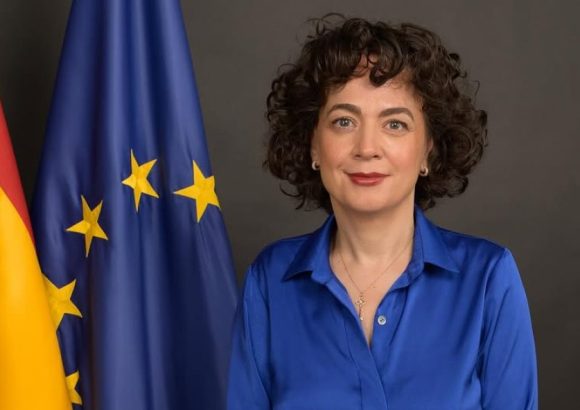
    European Union electoral observers, who monitored Sunday’s first round vote, have acknowledged significant logistical issues during the electoral process but found no concrete evidence to support the widespread fraud claims that have circulated since polling opened. “There have been clear problems,” said Annalisa Corrado, head of the EU’s electoral observation mission to Peru. “But we have not found objective elements that support the narrative of fraud.”

    The extended counting period follows major logistical disruptions to ballot distribution on polling day Sunday. The issues forced election officials to extend voting hours into Monday for more than 50,000 eligible voters, concentrated mostly in parts of Lima, the national capital that is home to roughly one-third of Peru’s total electorate.

    ONPE head Piero Corvetto was summoned before Peru’s parliament this week to explain the delays to the vote counting process. He denied that serious irregularities had taken place, framing the distribution issues as an isolated error in the rollout of electoral materials. Corvetto also issued a public apology for the disruptions to voting and counting.

    He emphasized that both the presidential and parliamentary elections presented unprecedented challenges for voters and electoral officials alike, particularly amid years of sustained political unrest that has eroded public trust in national institutions and left many voters disillusioned with the political class.

    Long-running political instability remains one of the most pressing issues facing Peru, regardless of the final election outcome. The country has seen multiple presidents turnover in recent years, creating widespread skepticism that any new administration will be able to complete a full five-year term. Repeat impeachments, high-profile corruption scandals, and fragile legislative coalitions have made it nearly impossible for recent administrations to serve out their full terms.

    The current interim president, José Balcázar, was appointed by parliament in February after legislators removed his predecessor José Dina from office. Dina had served only four months in office before being ousted over a scandal involving secret meetings with a Chinese business executive.

  • LETTER: Barbuda Youth Voter Calls for Shift Beyond Land Debate Ahead of Election

    LETTER: Barbuda Youth Voter Calls for Shift Beyond Land Debate Ahead of Election

    Ahead of upcoming elections in Barbuda, a young first-time voter who grew up in a family deeply engaged in land rights discussions has issued a public call for an end to the ongoing divisive debate over land policy that has dominated local political discourse. Raised in what she describes as an “all green” household, where land issues have been a central topic of conversation especially during election cycles, the voter says she has grown increasingly frustrated with the misinformation, public confusion, and constant political drama that have shrouded the land conversation for far too long.

    In her public message, the young voter pushes back against the singular focus on land that has defined much recent political rhetoric, arguing that land on its own cannot solve the many challenges facing the people of Barbuda. “Land alone cannot feed us, land alone cannot build a future, and land alone cannot secure the next generation,” she writes, challenging political actors and community members alike to broaden their policy priorities ahead of casting their ballots.

    Instead of continuing to cycle through the same unproductive debates that have failed to deliver meaningful progress for years, the voter urges her fellow Barbuda residents to wake up to the need for a broader, more future-focused approach to governance. She encourages the community to shift focus toward long-term priorities that will shape the quality of life for generations to come, including public health, sustainable development, and intergenerational progress.

    Rejecting the status quo that has kept the island trapped in repetitive, unproductive political patterns, the first-time voter stresses that continuing to accept the same cycle of division and unmet promises will not improve outcomes for any community member. She calls on all eligible voters to stop settling for incremental, ineffective change and to reject the political distractions that have pulled focus away from the issues that truly matter to daily life and long-term prosperity.

    Closing her message with a firm call to action, the voter emphasizes that the future of Barbuda hinges on delivering serious, bold political transformation that meets the evolving needs of the island’s people. “Enough is enough,” she declares, demanding an end to unproductive political drama and a new era of forward-thinking governance.

  • Labour Department Reminds Employers to Grant Four Hours Paid Time Off to Vote

    Labour Department Reminds Employers to Grant Four Hours Paid Time Off to Vote

    As Antigua and Barbuda prepares for an upcoming electoral event, the Office of the Labour Commissioner has issued a formal public reminder to all employers across the nation regarding their legal obligations to support worker participation in the democratic process. Under the terms of Section 34 of the Representation of the People (Amendment) Act 2001, every business and organization must grant all registered voters on their payroll a guaranteed block of four consecutive hours off from work to cast their ballot on polling day. Critically, this time off must be provided with no reduction to an employee’s regular pay, and no financial penalties, disciplinary action, or other repercussions can be imposed on workers for taking this legally protected leave.

    The legislation also outlines clear penalties for employers that fail to comply with this mandate. Any employer that directly or intentionally refuses to grant the required voting time, or uses intimidation, undue influence, or any other underhanded tactic to interfere with an employee’s right to vote is considered guilty of a criminal offence. Following a summary conviction, non-compliant employers face a maximum fine of three thousand Eastern Caribbean dollars, or a custodial sentence of up to twelve months in prison.

    This reminder underscores the government’s commitment to protecting accessible voting for all citizens, removing workplace barriers that could prevent eligible voters from exercising their constitutional right to participate in elections. By codifying paid time off for voting into law, Antigua and Barbuda’s legislative framework aims to ensure that working residents do not have to choose between earning a paycheck and participating in the democratic process.

  • Abinader inaugurates ExpoSostenible 2026 in Santo Domingo

    Abinader inaugurates ExpoSostenible 2026 in Santo Domingo

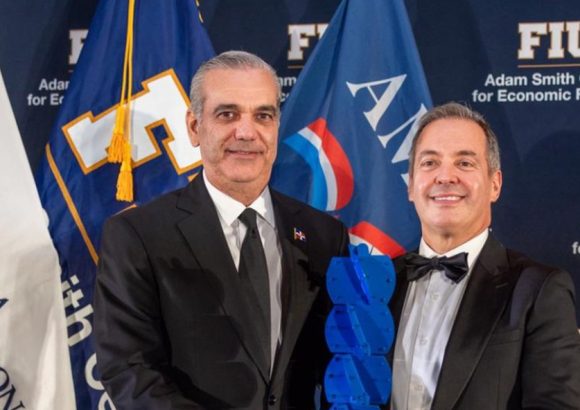
    Santo Domingo, Dominican Republic — Dominican Republic President Luis Abinader has officially opened ExpoSostenible 2026, a landmark sustainability event that runs through April 16 at the iconic Hotel El Embajador in the nation’s capital. The multi-day gathering is designed to cement the Dominican Republic’s status as a leading center for sustainability action across the Latin American and Caribbean region. Organized by the Santo Domingo Economic and Social Development Council, the event brings together a diverse cross-section of stakeholders, including senior government representatives, private sector leaders, representatives from global international organizations, and civil society advocates, all united to tackle interconnected global challenges spanning economic inequality, climate change, and social inequity.

    In his keynote remarks at the opening ceremony, President Abinader underscored the urgent need to reorient national and regional development trajectories, arguing that robust economic expansion cannot come at the cost of environmental stewardship. He emphasized that the Dominican Republic has made a binding commitment to transitioning to a more resilient, inclusive, and forward-thinking sustainable development model that balances growth with the protection of natural resources for future generations. Over the course of the event, attendees will take part in a dynamic program of expert panels, keynote addresses from global sustainability leaders, and interactive dialogue sessions. The core goal of these sessions is to move beyond abstract discussion and co-develop concrete, actionable policy and business proposals, while strengthening cross-border collaboration on sustainability priorities.

    One of the most high-profile participants at the gathering is Nobel Peace Prize laureate Rigoberta Menchú, who centered her remarks on the often-overlooked human core of global sustainability efforts. Menchú used her platform to call for systemic, inclusive policy reforms that center the needs of marginalized and vulnerable communities, which disproportionately bear the brunt of climate change despite contributing the least to global emissions. Beyond discussions, ExpoSostenible 2026 is designed to drive tangible on-the-ground action through a range of targeted initiatives, including the EcoHub innovation space, dedicated networking zones, and structured business matchmaking programs. These platforms work to foster cross-sector alliances, accelerate the development of innovative sustainability solutions, and unlock new sustainable investment opportunities across the region.

  • Experts urge the use of all renewable energy sources

    Experts urge the use of all renewable energy sources

    On Tuesday, April 15, 2026, Cuban President Miguel Díaz-Canel Bermúdez, who also serves as First Secretary of the Central Committee of the Communist Party of Cuba, held a high-level meeting with leading energy transition experts and scientists to review years of collaborative progress between the nation’s higher education institutions and government ministries on advancing renewable energy development.

    The meeting, moderated by Deputy Prime Minister Eduardo Martínez Díaz, brought together key senior officials including Deputy Prime Minister Inés María Chapman Waugh, Minem (Ministry of Energy and Mines) head Vicente La O Levy, MES (Ministry of Higher Education) leader Walter Baluja García, and CITMA (Ministry of Science, Technology and Environment) director Armando Rodríguez Batista. Additional university leaders joined the discussion remotely via videoconference to share on-the-ground insights from their local projects.

    The initiatives under review are coordinated by the National Group of Universities for Renewable Energy Sources and Energy Efficiency, known locally by its Spanish acronym GNUFRE. The collaborative network was founded in 2019, five years after Cuba approved its landmark national Policy for the Prospective Development of Renewable Energy Sources and the Efficient Use of Energy through 2030. What began with seven founding institutions from Sancti Spíritus, Villa Clara, Havana, the Technical University of Havana (CUJAE), Oriente, Cienfuegos and Matanzas has since expanded to include all Cuban higher education institutions with existing renewable energy research capacity. Today, beyond research and development, GNUFRE supports public consultation for the proposed national Energy Transition Law and accompanying regulations, and leads the higher education system’s cross-institutional energy transition project. The network is the formal backbone for collaborative work between the Ministry of Energy and Mines and the Ministry of Higher Education to leverage domestic resources and homegrown technology for clean energy production.

    During the meeting, GNUFRE coordinator Dr. Manuel Alejandro Rubio Rodríguez, a professor at the Marta Abreu Central University of Las Villas, presented a slate of near-term actionable projects spanning multiple renewable energy pathways. One of the flagship initiatives showcased was the Martí Project, Cuba’s first domestic effort to produce biomethane for transportation via covered lagoon biodigesters. Additional biogas-focused projects include the Managuaco biogas initiative, which aims to build a distributed network of Cuban-manufactured biodigesters to supply livestock-derived biogas for household use; the La Pastora demonstration project, which retrofits a wastewater treatment system with a Cuban-designed hybrid biodigester fitted with a rubber membrane; and a recovery project for the biodigester at the Heriberto Duquesne sugar mill.

    Dr. Rubio also outlined a broad proposal to develop the full value chain and market for solid biofuels made from domestic forest biomass, including wood chips and pellets. The plan prioritizes deploying these fuels for industrial ovens, residential cooking, construction material production, and process steam generation. Drawing on Cuba’s existing Bioenergy Atlas and proven experience using biomass burners in rice mills, working groups are currently finalizing regulatory frameworks that include incentives to draw private and community stakeholders into the supply chain.

    The meeting devoted particular attention to a transformative proposal for Cuba’s sugar industry: a new technology and operating model that reimagines the sector as a core pillar of the nation’s energy transition. Under the plan, the restructured sugar industry would leverage surplus biomass to generate flexible, sustainable baseload electricity to support the broader transition away from fossil fuels. The reoriented sector would be fully self-sufficient in fuel, using domestically produced biomethane and alcohol, and could also provide fuel for heavy transport vehicles that are not easily electrified. Additionally, the model would generate protein byproducts to support domestic meat production, linking Cuba’s top two national priorities: energy sovereignty and food security.

    Following nearly an hour of in-depth debate among attendees, President Díaz-Canel highlighted the depth of existing technical expertise and accumulated practical experience across the country’s renewable energy research community. He stressed, however, that greater cross-institutional and cross-ministerial integration is critical to move these projects from pilot stages to widespread national adoption. Remarking that food and energy are the nation’s two most urgent priorities, Díaz-Canel noted the deep interconnectedness of the two goals, echoing the link laid out in the sugar industry proposal. He called on the Minem-MES partnership to accelerate efforts to unify all ongoing initiatives and deliver tangible progress on renewable energy adoption across the country.

  • The workshop commemorating the 65th anniversary of the first major defeat of imperialism in the Americas began

    The workshop commemorating the 65th anniversary of the first major defeat of imperialism in the Americas began

    On Tuesday, a landmark academic workshop launched at Havana’s Fidel Castro Ruz Center, bringing together senior Cuban political, military and historical leaders to commemorate the 65th anniversary of Cuba’s victory at the Bay of Pigs, a defining defeat for foreign imperialist intervention. The event is also part of broader national activities marking the battle’s anniversary and the centennial birth anniversary of Fidel Castro Ruz, Cuba’s iconic revolutionary Commander-in-Chief.

    The opening session drew senior representatives from across Cuba’s governing institutions, including Yuniasky Crespo Baquero, head of the Ideological Department of the Central Committee of the Communist Party of Cuba. Attendees also included leaders from the Cuban state, national government, Union of Young Communists, Ministry of the Interior, and Revolutionary Armed Forces (FAR).

    From the opening moments of the gathering, participants reached a unified consensus: convening the workshop 65 years after the 1961 military victory is a deliberate act of reaffirmation. The freedom Cuba secured through that battle, attendees agreed, must be defended actively every single day, and the example of the people’s resistance in 1961 continues to guide the nation’s current path forward.

    The workshop’s opening keynote address, titled *The United States Armed Forces and the Mercenary Invasion of Playa Girón: The Naval Base at Guantánamo*, was delivered by Dr. René González Barrios, director of the Fidel Castro Ruz Center. In his remarks, Barrios broke down the dynamics of the 66-hour battle, noting that the Cuban victory rested on two core strengths: innovative tactical deployment, and a seamless fusion of the revolutionary forces’ experience in irregular combat with conventional warfare tactics.

    Turning to the contemporary global landscape, Barrios noted that today’s geopolitical order is defined by shifting power alignments among major global powers and the gradual decline of U.S. imperial influence. He pointed to the outcome of recent U.S.-backed military aggression against Venezuela, including attempts to oust the nation’s legitimately elected president, as evidence that any new interventionist adventure in the Americas—including against Cuba—would face the same failed outcome. Barrios added that the 32 Cuban fighters who lost their lives in the Bay of Pigs battle demonstrated to the world the unwavering resolve of Cubans: they fight without fear, certain of eventual victory and rooted in the invincible power of their ideological convictions.

    After the keynote, attendees screened *Death to the Invader*, a vintage Latin American newsreel produced by the Cuban Institute of Cinematographic Art and Industry (ICAIC). A panel discussion followed in the venue’s La Plata multipurpose room, featuring three targeted presentations on different dimensions of the 1961 invasion. Andrés Zaldívar Diéguez, president of the Provincial Executive Committee of the Cuban Union of Historians (UNHIC), opened the panel with an overview of the background of Operation Pluto, the codename for the U.S.-backed invasion plan. Colonel Raidel Vargas Ortega, representing the FAR Center for Military Studies, followed with an analysis of the structure of the U.S.-organized mercenary brigade and the full details of the invasion plot. Finally, Pedro Etcheverry Vázquez, director of the State Security Center for Historical Research, presented on the parallel counter-insurgency campaigns Cuban forces waged against pro-invasion militias in April 1961.

    The opening day of the workshop concluded with the launch of a new edited volume, *Bay of Pigs: 65 Years After That Socialist April*, published by Ocean Sur and compiled by Elier Ramírez Cañedo, Deputy Head of the Ideological Department of the Communist Party Central Committee. Ramírez Cañedo explained that the volume is designed primarily to educate younger generations of Cubans, but will offer valuable insight for general readers as well. The book integrates original speeches by Fidel Castro Ruz, rare archival images, and a detailed day-by-day chronology of the 1961 invasion and its aftermath. Ramírez Cañedo emphasized that the work is intended not as a static memorial to past victory, but as a living resource to encourage further historical research. “We should not treat this history as a talisman of the past,” he said, “but as a mobilizing force to transform the present.”

  • Bondsvoorzitter BBS Biswan ontslagen na manipulatie examencijfers rekruten

    Bondsvoorzitter BBS Biswan ontslagen na manipulatie examencijfers rekruten

    In a disciplinary action announced this Tuesday, Suriname’s Minister of Justice and Police Harish Monorath has immediately removed Elio N. Biswan, chair of the Security and Assistance Service Suriname (BBS) union, from his post. The termination, categorized as a severe disciplinary penalty, was issued in full compliance with Suriname’s current civil service legislation.

    An internal probe conducted by the BBS Interim Management Team (IMT) uncovered serious professional misconduct on Biswan’s part during his 2024 tenure as secretary of the examination committee for the BBS 2023 basic training program. Investigations confirm that Biswan independently and intentionally altered failing grades of multiple trainee recruits to passing marks. This manipulation allowed the candidates to bypass required requirements for exemptions or retests, and incorrectly marked their training as successfully completed.

    Beyond altering existing scores, the investigation found Biswan had pre-promised recruits he would adjust their results, and even went so far as to fabricate official grade transcripts that did not match the original assessments submitted by training instructors. IMT investigators have classified these actions as a grave breach of institutional integrity and a clear case of abuse of public office.

    In response to the uncovered irregularities, the IMT has moved to correct the process, granting all affected recruits the opportunity to take official re-examinations so they can properly and legitimately complete their mandatory training.

    Minister Monorath determined the proven violations were severe enough to warrant the harshest possible disciplinary outcome, with the termination executed under Article 61 Paragraph 1 Subsection j and Article 69 Paragraph 2 Subsection e of Suriname’s Personnel Act.

    As of Wednesday morning, it remains unclear whether additional criminal proceedings will be launched against Biswan following the conclusion of internal disciplinary handling.

    Shortly after receiving his termination notice at approximately 11:00 PM Tuesday, Biswan called an urgent emergency general membership meeting for Wednesday morning. In his announcement, Biswan claimed the dismissal was an attempt to silence him, arguing the action was retaliation for his public criticism of current BBS leadership.

  • EZOTI en districtscommissarissen bundelen krachten voor strengere marktcontroles

    EZOTI en districtscommissarissen bundelen krachten voor strengere marktcontroles

    In a strategic move to strengthen nationwide economic regulation and market governance, Suriname’s Ministry of Economic Affairs, Entrepreneurship and Technological Innovation (EZOTI) has announced plans to sharpen economic activity oversight by forging deeper formalized partnerships with district commissioners across the country. The initiative, aimed at building a more coordinated, holistic approach to regulatory monitoring and enforcement, was finalized during a recent working meeting attended by senior ministry officials and district representatives.

  • Police Engage as Indian Creek Dispute Escalates

    Police Engage as Indian Creek Dispute Escalates

    A years-long dispute over land tenure and community leadership in Belize’s Indian Creek has boiled over into open confrontation, pushing government officials to deploy police to the area to de-escalate rising unrest marked by property damage and targeted intimidation. The conflict has split the tight-knit community into two deeply divided camps: one faction backs the traditional local alcalde system, which advocates for Maya customary land rights aligned with longstanding Indigenous tenure practices, while the other supports the elected village council, which pushes for individual, nationally recognized land titles identical to those held by landowners across the rest of the country.

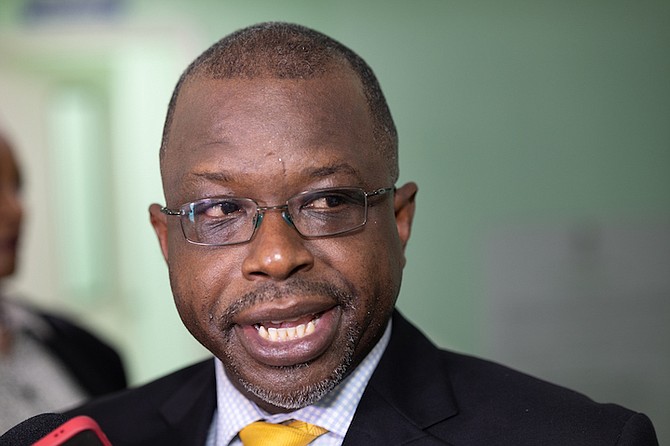
    Dr. Louis Zabaneh, Belize’s Minister of Indigenous Peoples’ Affairs, confirmed that law enforcement has been on the ground responding to the unrest since tensions first flared into violence. Recent incidents have included trespassing and vandalism at the private property of the village council chairman, as well as tampering with a field station operated by the Ya’axché Conservation Trust, a leading local environmental and land rights organization. The conflict has been simmering for decades, but recent escalations have raised alarms across national and regional stakeholders.

    Minister Zabaneh emphasized that community leaders from both factions had committed to peaceful negotiation just weeks before the outbreak of violence. Just two months prior, he had held a productive meeting with representatives from both sides, and just two weeks before the confrontation, another senior cabinet minister had brokered a second agreement to resolve differences through dialogue rather than confrontation. He has now issued an urgent appeal to all residents to honor these earlier commitments, warning that years of structured negotiation could be undermined by violent retaliation that would only deepen divides and harm community members.

    Zabaneh also stressed that a formal institutional process already exists to address the core land rights dispute, tied to a consent order from the Caribbean Court of Justice (CCJ) that outlines a path to formalize Indigenous land claims across Belize.

    Beyond the community’s internal divisions, new controversy has emerged over the unauthorized issuance of hundreds of land certificates, a move that has thrown national efforts to formalize Maya land rights into chaos. According to analysis from the Ya’axché Conservation Trust, local alcalde leadership has already issued 280 individual land certificates to community members, far more than the number initially reported to government officials.

    Christina Garcia, executive director of Ya’axché Conservation Trust, explained that the issuance of these certificates directly clashes with ongoing national negotiations between the Government of Belize and the Maya Leaders Alliance over a formal Maya Land Tenure Policy and accompanying land rights legislation. While these policy and legal frameworks, which outline a structured, agreed-upon process for recognizing and registering collective and individual Maya land rights, have not yet been finalized or approved by all parties, the unilateral action by the alcalde has pre-empted this national process.

    Garcia noted that the lack of clear, agreed-upon procedural guidance has sparked widespread confusion and frustration, extending beyond Indian Creek to affect private landowners and leaseholders across the Toledo District. Despite the escalation, she reaffirmed her organization’s commitment to dialogue, stating that Ya’axché stands ready to resume joint negotiations with Indian Creek community leaders, government representatives, and other stakeholders to craft a lasting solution that aligns with national policy and legislation and benefits all parties involved.

    The situation has drawn urgent criticism from regional landowner associations, who are calling for additional security deployment to stem rising violence. Toledo Private and Lease Landowners Limited has sent an official letter to Minister Zabaneh demanding the immediate deployment of additional security forces to the area. The association’s letter documents escalating volatile activity, including organized mob action, targeted attacks on private homes, and direct threats against both community leaders and Ya’axché field station staff. Tensions have been further amplified in recent days following the unexplained disappearance of the alcalde who led the certificate issuance effort.

    This report is a transcript of an evening television newscast, with all Kriol-language remarks transcribed using a standard spelling system for accessibility.

  • Minister Defends Disciplinary Action Against Immigration Officers

    Minister Defends Disciplinary Action Against Immigration Officers

    More than a week after a coordinated mass sickout disrupted critical border operations along Belize’s western boundary with Guatemala, the fallout from the industrial action continues to escalate, with the conversation now centering squarely on questions of institutional accountability and proper labor procedure.

    In the wake of the widespread absence that threw immigration processing at the border into chaos, multiple participating officers have been placed on administrative leave pending an internal review, a move that has left simmering tensions running high across the entire Immigration Department. The Belizean Prime Minister has already formally labeled the coordinated sickout an illegal work stoppage, prompting a swift pushback from the Belize Public Service Union (PSU), which has threatened to launch legal action against the government, claiming immigration officials overstepped their authority in issuing the administrative leaves.

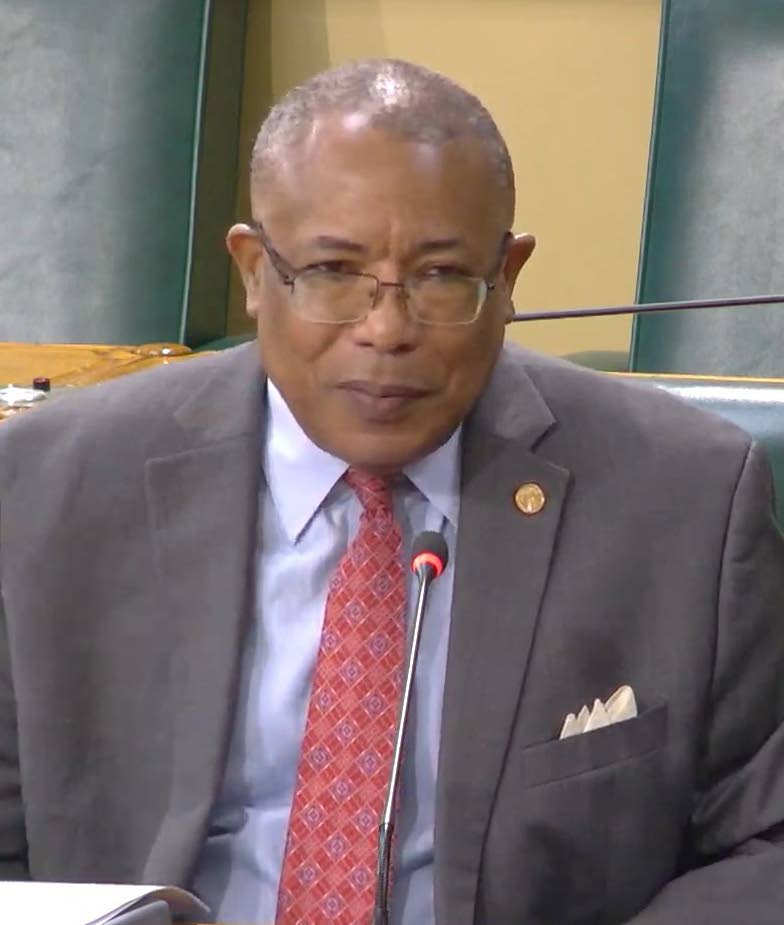
    But in a recent press briefing, Public Service Minister Henry Charles Usher pushed back against the union’s claims, asserting that the government’s disciplinary actions are fully grounded in established public service regulations. Usher emphasized that while public sector employees retain the right to voice workplace concerns, all grievances must follow the formal, legislated process laid out for public sector disputes.

    Addressing the PSU’s premature claims that conclusions of wrongdoing have already been reached against the officers, Usher noted that no final findings have emerged from the ongoing internal investigation led by the Ministry of Immigration. He explained that some officers did submit required medical documentation for their absences, consistent with existing regulations, but the department remains obligated to review the circumstances of the coordinated mass absence to determine if rules were broken.

    Usher outlined the formal grievance process that applies to all public sector disputes: any workplace complaint must first be raised and resolved at the parent ministry level, before being elevated to the Ministry of Public Service if a resolution cannot be reached, and finally sent to the independent Public Service Commission if upper levels also fail to broker an agreement. The minister clarified that the administrative leave assignments currently in place are not punitive in themselves, but a standard procedural step required to allow investigators to conduct a full, impartial review without interference.

    “I don’t see any laws being broken in our current actions,” Usher stated. Echoing the union’s call for due process, he confirmed that the government fully intends to grant all implicated officers the right to present their side of the story once the investigation’s preliminary findings are complete, consistent with regulatory requirements. Any unresolved disputes will follow the established escalation process, moving from the Ministry of Immigration to the Ministry of Public Service and beyond if necessary, he added.