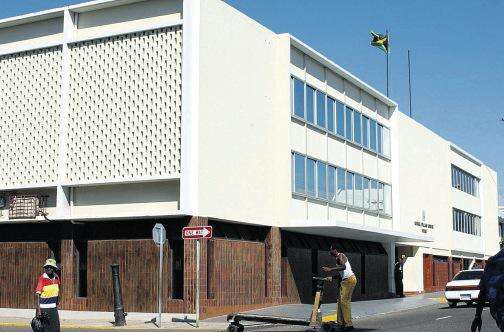
KINGSTON, Jamaica — Jamaica’s bicameral Houses of Parliament has issued an official statement confirming it has received five investigative reports from the national Integrity Commission, confirming the documents have not yet been placed before either the lower House of Representatives or the upper Senate for formal debate and review. The parliamentary body clarified in the Monday statement that the submissions are currently moving through internal processing protocols, overseen by the legislature’s presiding officers, and that existing legislation governing the anti-corruption watchdog does not mandate a fixed deadline for the public tabling of these reports. The confirmation comes amid mounting public pressure from Opposition Leader Mark Golding, who has publicly demanded that a specific IC probe into the country’s Firearm Licensing Authority (FLA) be tabled during the House of Representatives’ next sitting. Golding has openly rejected arguments that ongoing court proceedings connected to the FLA investigation provide legal justification for withholding the report from public view. In line with statutory confidentiality requirements that apply to all IC reports before they are formally tabled, parliamentary officials noted they cannot disclose any details about the content of the five received reports. This includes refusing to confirm or deny the subject matter of any submission, any findings or policy recommendations included in the documents, or whether any specific individuals or entities are referenced in the investigations. While Parliament acknowledged it is aware of both the opposition’s correspondence regarding the FLA report and the ongoing related court proceedings, it emphasized its constitutional authority to manage its own internal procedural rules, including the process for laying submitted documents before the full legislature. “The Integrity Commission Act does not prescribe a specific timeline or procedure for the tabling of reports submitted to Parliament. The reports will therefore be dealt with in accordance with Parliament’s constitutional, legal and procedural responsibilities,” the statement read. Closing out its official comment, the legislature reaffirmed its institutional commitment to core governance principles of transparency, public accountability, and full adherence to national law, adding that no further substantive updates will be released to the public at this stage of processing.
分类: politics
-
President announces new REOs
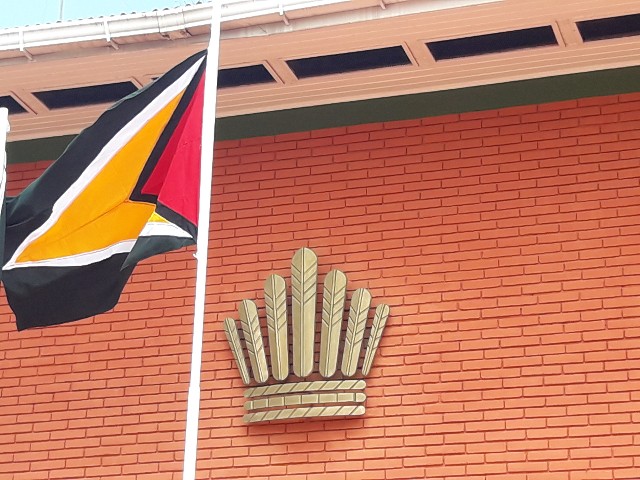
On May 17, 2026, the Office of the President of Guyana confirmed that President Irfaan Ali has formally given approval for the national government’s slate of regional executive officer (REO) appointments across the country’s administrative regions. This personnel adjustment forms a core part of the government’s broader push to strengthen grassroots governance across Guyana, with the newly installed and retained leaders tasked with forging close collaborative ties with regional governing bodies, locally elected democratic institutions, and grassroots community groups. Their core mandates will be threefold: to sharpen the efficiency of regional governance frameworks, speed up the rollout of priority development programs, and raise the quality of public services accessible to ordinary Guyanese citizens across all areas of the country. Among the appointments confirmed, Karl Singh will retain his position as REO for Guyana’s Region Nine, bringing institutional continuity to the region’s ongoing development work. In an official statement accompanying the announcement, the Guyanese government reaffirmed its long-term commitment to building state institutions that meet three key benchmarks: professionalized operational standards, responsiveness to community needs, and a core focus on centering public well-being in all governance work. These institutional improvements are designed to lay the groundwork for inclusive, equitable development that reaches every corner of Guyana, leaving no region or community behind in the country’s broader economic and social progress. The appointment process underscores the administration’s priority of aligning regional leadership with its national development agenda, ensuring that local governance outcomes directly reflect the needs and priorities of Guyana’s population.
-
PM Says APUA Will Phase In Fuel Variation Increase as Government Continues Subsidies
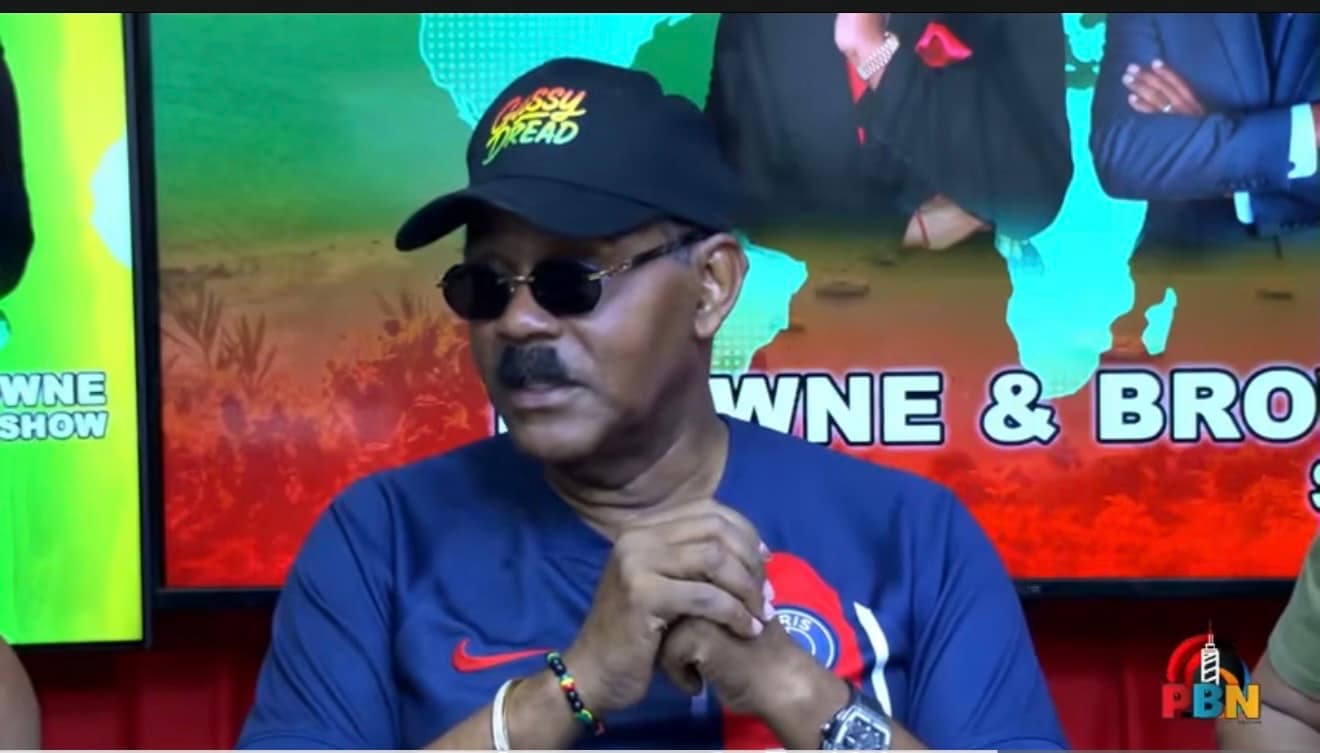
As Antigua and Barbuda confronts mounting public and political pressure over skyrocketing residential electricity bills, Prime Minister Gaston Browne has announced that the Antigua Public Utilities Authority (APUA) will roll out a planned fuel adjustment charge increase incrementally rather than imposing the full burden on consumers immediately. The policy shift comes in response to sustained volatility in global crude oil markets that has driven up regional energy costs across the Caribbean.
-
Government to Use Public Works Employees in National Clean-Up Push
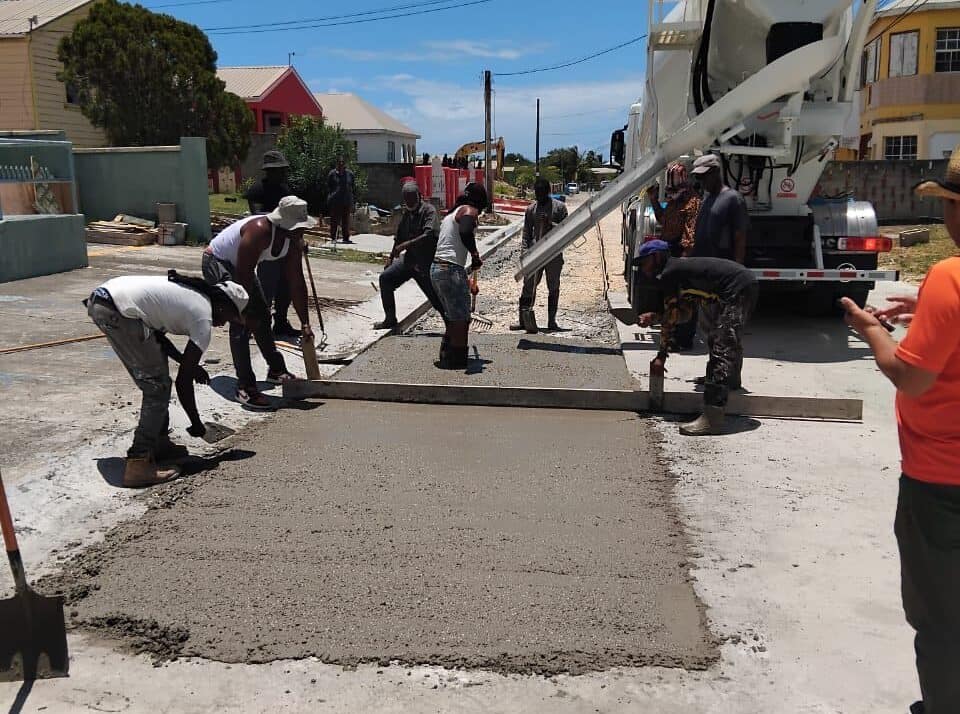
Weeks following the Antigua and Barbuda Labour Party’s historic fourth consecutive general election victory, the island nation’s administration has launched an ambitious national initiative to refresh public spaces and upgrade the country’s overall visual appeal. Prime Minister Gaston Browne announced in a recent interview on local radio outlet Pointe FM that hundreds of workers recently hired by the country’s Public Works Department will be reassigned to support this island-wide clean-up and beautification effort. Browne confirmed that the Public Works Department intentionally expanded its workforce in the months leading up to the April 30 general election, and the newly added staff will now take the lead on critical environmental maintenance and public property upkeep projects across both main islands. “Public Works have taken on a few hundred individuals in the last few months,” Browne shared during the interview. “I’ve said to them that they should be utilized to help to keep the country clean.” The national clean-up initiative is just one component of a broader government-wide infrastructure and improvement program that includes full road upgrades, targeted landscape overhauls, the demolition and removal of abandoned, derelict structures, and expanded beautification work across high-traffic public areas. Browne emphasized that the administration’s goal extends beyond basic waste and blight removal: the project seeks to intentionally enhance the natural and built environment of Antigua and Barbuda for both residents and visitors. Beyond clearing blight and cleaning public lands, the government has additional plans to expand landscaping along all major arterial roads and key public gathering spaces, including a large-scale program to plant native flowering plants and fruit trees across these sites. The announcement comes as the newly re-elected Labour Party government moves forward on pre-election pledges to upgrade national infrastructure and improve quality of life for citizens across the country. Administration officials note that the initiative will both deliver immediate visible improvements to the nation and create short-term employment opportunities for local workers, aligning with the government’s post-election priorities for inclusive growth.
-
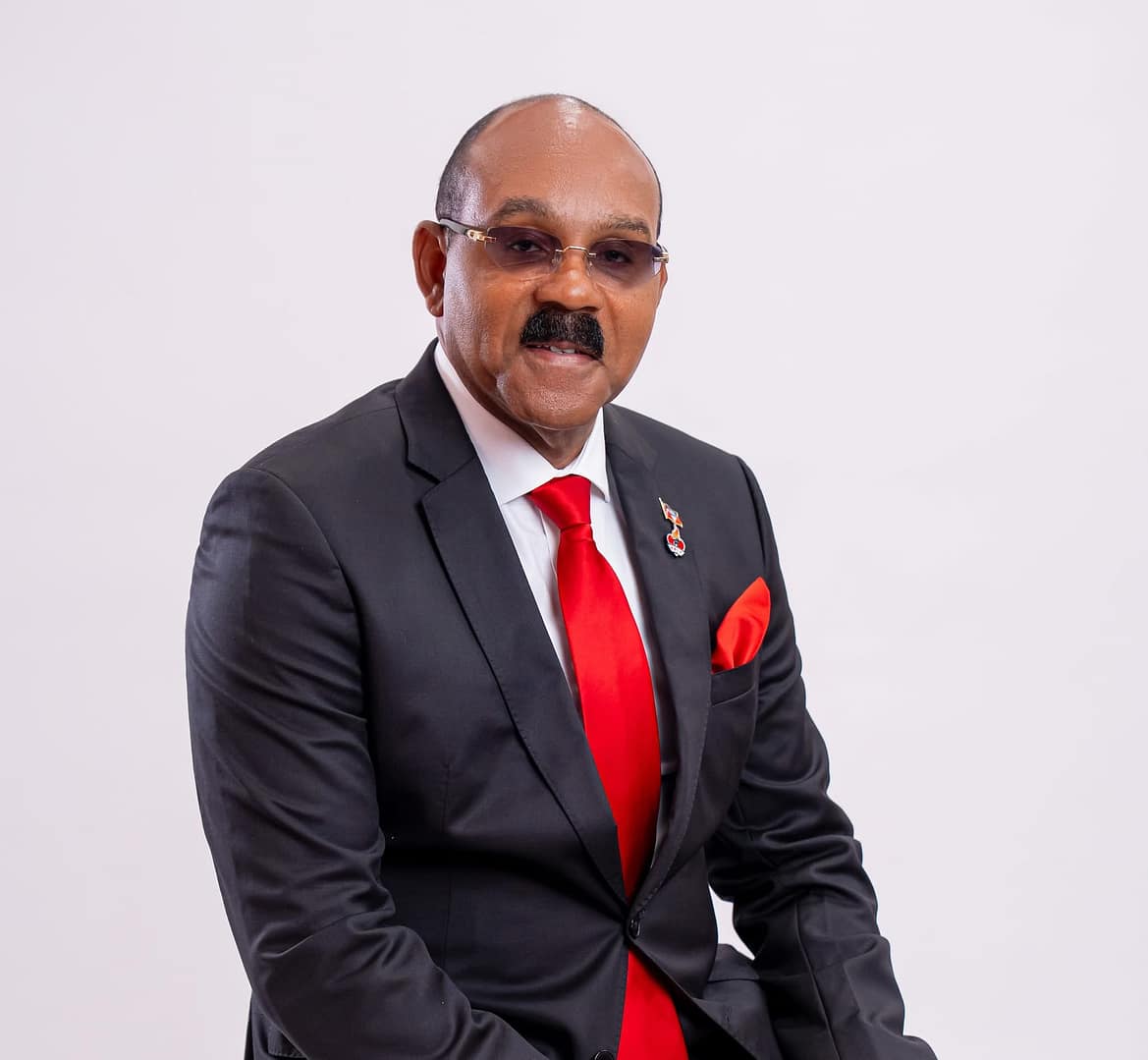
PM Browne Says Recent U.S. Visit Disproves Claims of U.S He’s Wanted in the U.S
For years, political rivals of Antigua and Barbuda Prime Minister Gaston Browne have circulated persistent false claims that he was barred from entering the United States—either due to being a person of interest to U.S. law enforcement or because his visa had been revoked. These allegations have repeatedly surfaced ahead of national elections, most recently during the island nation’s latest general election cycle. Now, Browne is pushing back forcefully against this misinformation, pointing to his official recent trip to New York as irrefutable proof that the claims are entirely unfounded.
In an interview aired on local station Pointe FM, Browne laid out the details of his U.S. visit that directly contradict years of opposition rhetoric. During the trip, he received standard official security accommodations for a sitting head of government, including escort services from U.S. Secret Service agents. “The very United States government provided me with security,” Browne explained to listeners. “Secret Service met me at the airport, several agents accompanied me everywhere I went, and an officer was posted outside my hotel throughout my stay.” He noted that this level of official coordination would never have been possible if the opposition’s claims of a revoked visa or active warrant were true.
The prime minister recounted that even ordinary members of the public expressed surprise at his open travel, after years of consuming unsubstantiated speculation online. One member of the public approached him immediately upon his arrival to note the disconnect between the visible trip and the widespread misinformation: “Wait, I thought they said you can’t go to the United States because they revoked your visa,” the woman told him, according to Browne.
Browne emphasized that these false claims have had real impact on Antigua and Barbuda’s electoral politics, noting that large numbers of voters have been swayed by the misinformation in past election cycles. The spread of false claims grew particularly acute during and after the COVID-19 pandemic, he said, adding that even outright lies circulated ahead of the 2023 general election were widely accepted as fact by segments of the voting public.
Beyond countering political misinformation, Browne’s New York visit centered on critical international policy work. The trip was organized around the Global Citizen NOW summit, where the prime minister took part in high-level discussions focused on pressing global priorities: strengthening climate resilience for small island developing states, expanding access to renewable energy, reforming sustainable development financing, and advancing global equity. He also held a series of preparatory meetings with leaders from philanthropy, the clean energy sector, and global policy circles, in anticipation of Antigua and Barbuda’s upcoming role hosting the 2026 Commonwealth Heads of Government Meeting.
-
PM Browne Says Foundation Is Being Laid for Future OECS Political Union
The push for deeper integration across the Eastern Caribbean has gained a high-profile endorsement, as Antigua and Barbuda Prime Minister Gaston Browne has laid out a vision for a future political union among member nations of the Organisation of Eastern Caribbean States (OECS).
Speaking during an interview with local outlet Pointe FM, Browne — who currently holds the chairmanship of the Eastern Caribbean Currency Union — argued that decades of coordinated economic and functional policy have already created a strong, viable foundation for OECS countries to build toward ever-closer political alignment.
“I would love to see, eventually, that we set the platform based on increased cooperation among OECS countries, that we could have a political union in the future,” Browne told listeners. “I may not be around to see it completed, but I am of the view that it is the closest subgrouping, certainly in the hemisphere, to move towards having a political union.”
The prime minister stressed that the immediate goal is not to rush into formal political unification today, but rather to lay the policy and institutional groundwork that will allow coming generations to advance the project to its final stage. He pointed to a range of existing cross-border collaborative efforts, including coordinated monetary policy, joint planning for transportation networks, and shared energy development initiatives, as proof that integration already delivers tangible benefits for regional populations.
Browne argued that deeper, broader integration would cut administrative and operational costs across the region while also improving the quality of public services available to residents of OECS member states. He outlined a series of near-term cooperation initiatives that build on existing progress, including proposals for a shared regional airline, centralized joint procurement systems for public sector goods and services, and cross-border partnerships to expand renewable energy generation across the Eastern Caribbean.
To further streamline resource use and eliminate redundant overhead, Browne also proposed that OECS nations explore consolidating diplomatic representation overseas. He noted that many small OECS states maintain separate diplomatic missions in the same countries, a practice that wastes limited financial and human resources. As an example, he pointed to representation in Canada, asking: “There’s no reason why we each have to have a mission in Canada,” suggesting that joint, shared diplomatic missions managed collectively by OECS member states would deliver the same level of service at a far lower cost to national governments.
-

PM Browne Says Unclaimed ECCB Deposits To Help Fund Proposed OECS Airline
As chair of the Eastern Caribbean Currency Union, Antigua and Barbuda Prime Minister Gaston Browne has put forward a creative funding plan to advance a long-discussed goal of the Organisation of Eastern Caribbean States (OECS): the launch of a homegrown regional airline. In an interview with local outlet Pointe FM, Browne outlined that unclaimed, dormant deposits currently held by the Eastern Caribbean Central Bank could provide a substantial portion of the startup capital required for the new carrier.
According to Browne, the total pool of unclaimed funds held in the regional banking system amounts to roughly 50 million U.S. dollars, a significant share of which would be allocated to the airline project. To address concerns over depositor rights, the prime minister emphasized that the proposal does not permanently seize funds from rightful owners or their heirs. Under the planned framework, approximately 10 percent of the unclaimed deposits will remain reserved at the central bank at all times, and the government will retain full responsibility for honoring any future claims submitted by depositors or their beneficiaries. “It doesn’t take away the right for somebody to come subsequently say they want the money,” Browne explained in his remarks.
The proposed regional airline is far more than an isolated infrastructure project, Browne noted. It is a core component of the OECS’s broader agenda to deepen economic integration, strengthen cross-border collaboration, and improve intra-regional connectivity across the Eastern Caribbean subregion. OECS leaders have been holding ongoing discussions to refine the initiative, which aligns with wider cooperation efforts across multiple critical sectors including transportation, cross-border trade, energy development, and public procurement. Browne added that regional governments are actively exploring additional mechanisms to pool collective resources, cut overlapping administrative costs, and unlock greater efficiency through expanded collaboration across all member states of the bloc. For his part, the prime minister expressed clear optimism about the project’s path forward, stating, “I’m hoping that we can get that effected.”
-
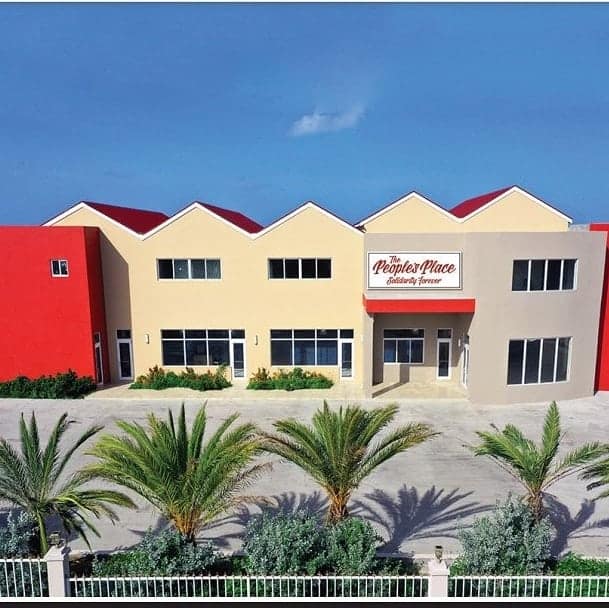
ABLP Leader Says Unspent ABLP Campaign Funds Will Be Invested Following Election Victory
Fresh off securing a landslide fourth consecutive term in the April 30 general election, where the Antigua and Barbuda Labour Party (ABLP) claimed 15 out of 17 available parliamentary seats, party leader and sitting Prime Minister Gaston Browne has outlined a prudent long-term strategy for managing leftover campaign funds: rather than diverting the remaining capital to short-term political activities, the party will invest the sizable sum to strengthen its institutional foundations.
In an interview with local outlet Pointe FM, Browne explained that deliberate, forward-looking financial planning has been a core part of the ABLP’s election strategy for cycles. Rather than exhausting every dollar raised from campaign contributions during the election period, the party routinely sets aside a fixed portion of funds for ongoing institutional development, a practice that has already delivered tangible benefits for the organization.
Past savings from previous election cycles, Browne noted, funded the construction of the party’s central headquarters at the People’s Place, as well as the installation of energy-efficient solar panels that have cut the building’s long-term electricity costs. For the 2024 post-election surplus, the party has opted for a different approach: with no new major infrastructure projects like a headquarters on the agenda, the ABLP has purchased a government bond with the funds to generate steady long-term returns for the party.
Browne pushed back against implicit suggestions that the party might misuse campaign funds for corrupt purposes such as voter bribery, noting that if the leadership’s goal was simply to distribute cash to party members and candidates, it would have split the entire raised sum and spent all funds during the campaign. Instead, the party prioritized building durable organizational assets to eliminate the heavy reliance on ad-hoc fundraising between election cycles, creating more stable operations for the ABLP over time.
In addition to the bond investment, Browne unveiled a new cultural project for the party: the creation of an ABLP museum dedicated to preserving the organization’s history. The space will house key historical records and iconic vehicles once used by two of the party’s most influential former leaders, Sir Lester Bird and Vere Cornwall Bird Jr., preserving the party’s legacy for current members and future researchers.
-

President wil landbouw- en waterprojecten bespreken met Braziliaanse ambtgenoot Lula
Suriname’s President Jennifer Simons is set to travel to Brazil this month alongside a government delegation, where she will hold high-level talks with Brazilian President Luiz Inácio Lula da Silva focused on expanding cross-border partnership in agriculture, securing foreign investment for Suriname’s water management systems, and advancing the development of the South American nation’s agrarian infrastructure.
For the Simons administration, advancing food security, growing agricultural export volumes, and modernizing the country’s farming sector sit at the top of its policy priorities, the Surinamese leader confirmed. In comments shared through her spokesperson Roberto Lindveld, Simons emphasized that since her administration took office, agricultural development has been positioned as a central pillar of national governance. When the new leadership of Suriname’s Ministry of Agriculture, Livestock and Fisheries (LVV) assumed their posts, they inherited a sector riddled with systemic challenges, she added.
“When we took office, the entire ministry was facing widespread problems. Multiple senior directors had to be detained, critical agricultural machinery was absent, and dysfunction affected nearly every part of the department,” Simons stated. Stabilizing the troubled sector required extensive time and effort, but Simons noted that multiple key agricultural development initiatives are now gaining momentum. One early success she highlighted is the recently launched Markoesa Outgrowers project, which marks the first visible progress after months of administrative and structural reform.
A core focus of Suriname’s broader agricultural modernization push is the overhaul of water infrastructure in the western district of Nickerie, a key agricultural region for the country. Simons singled out the full replacement of the aging Wakay water pumps and the comprehensive upgrading of the district’s entire water management network as a flagship infrastructure project.
“My administration is committed to delivering this project. Right now, my team and I are working through details with potential financiers and the relevant minister to finalize all planning,” Simons explained. She added that technical design work for the initiative is on track to be completed within roughly one month. Once blueprints are finalized, the tender process will open for contracts including the procurement of new pumping equipment and other critical infrastructure components.
To ensure the project is delivered to global standards, Simons confirmed that both local specialists and international experts will be brought in to support implementation. The Surinamese president specifically highlighted plans to leverage Dutch expertise in water management, a field where the Netherlands has decades of global leadership.
“We know the Netherlands is a global leader in water management, and its specialists have deep, proven expertise in these types of infrastructure projects,” Simons said. “That is why we are working to assemble mixed teams of local and international experts to bring the best possible knowledge to advise us on this work.” Simons set an ambitious timeline, expressing her expectation that the upgraded water infrastructure in Nickerie will be fully completed within 18 to 24 months.
After the infrastructure overhaul is finished, the Simons administration plans to introduce reforms to Suriname’s water board legislation. The proposed regulatory changes will require system users to contribute to the ongoing maintenance of the upgraded water networks, ensuring long-term functionality. “Right now, the existing infrastructure has been severely neglected, so our first step is to get it back into working order before we implement the new maintenance framework,” Simons noted.
-
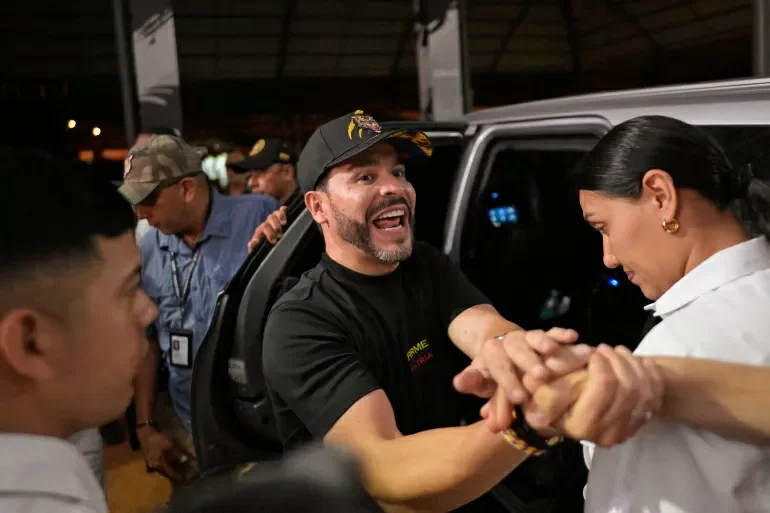
Colombia: Twee campagneleden vermoord temidden van toenemende verkiezingsgeweld
Just 14 days before Colombia’s May 31, 2026 presidential election, the country has been shaken by a fatal attack that left two senior members of a presidential campaign dead, renewing long-simmering concerns over political violence that has marred the lead-up to the contentious vote.
The attack took place in central Meta Department, a region long plagued by rebel activity and illicit cocaine trafficking. Armed men on motorcycles shot and killed Rogers Mauricio Devia Escoba, the former mayor of Cubarral, and his political advisor Eder Fabian Cardona Lopez on the evening of Friday, according to an announcement from right-wing presidential candidate Abelardo de la Espriella, whose campaign the two men worked for. De la Espriella honored the fallen pair as dedicated defenders of Colombian democracy and individual freedom.
Colombia’s national citizen rights ombudsman has sounded the alarm that this killing, combined with a string of other recent attacks targeting political figures including a former mayoral candidate, poses a severe threat to the integrity of the upcoming election. “Violence, threats, and intimidation damage public debate, raise risks for political leaders, and weaken democratic society,” the ombudsman said in an official statement following the attack.
The wave of pre-election violence has emerged as a defining issue in the race to succeed outgoing President Gustavo Petro, Colombia’s first left-wing head of state. Current polling puts left-wing senator Ivan Cepeda, who has run on a platform of continuing Petro’s policy agenda and pushing for a negotiated resolution to the country’s long-running armed conflict, in the lead with 37% to 40% of voter support. De la Espriella, a populist right-wing candidate who has drawn comparisons to El Salvador’s Nayib Bukele and Argentina’s Javier Milei, trails in second place with just over 20% support, followed by center-right senator Paloma Valencia.
Public safety has remained the top flashpoint issue of the campaign, with pre-election aggression stretching back months. At least three presidential candidates have received explicit death threats and now travel with heavy, permanent security details. Last year, Aida Quilcue, Cepeda’s running mate and a prominent Indigenous rights activist, was briefly abducted by a dissident rebel faction that split from the FARC rebel group after the organization signed a landmark 2016 peace deal with the Colombian government. In an even deadlier incident, presidential candidate and sitting senator Miguel Uribe was shot at a campaign rally in Bogotá in June 2025, and died from his injuries two months later.