分类: politics

  • Committee formed to find permanent solution for WASCO challenges

    Committee formed to find permanent solution for WASCO challenges

    The Saint Lucian government has initiated emergency measures to address the profound crisis at the Water and Sewerage Company (WASCO), with Prime Minister Philip J. Pierre confirming the establishment of a specialized Cabinet committee. This high-level group, comprising both ministers and technical experts, has been mandated to devise a permanent resolution to the utility’s escalating operational and financial difficulties.

    During a recent press briefing, Prime Minister Pierre characterized WASCO’s condition as critically unsustainable, necessitating immediate yet strategically planned government intervention. He acknowledged that the company’s deteriorating state has reached an inflection point where decisive action is no longer optional.

    The Prime Minister contextualized the current efforts by referencing historical reform attempts under a previous Saint Lucia Labour Party administration, which similarly recognized the untenability of WASCO’s traditional operational model. The present administration is now evaluating multiple proposals to secure the utility’s future.

    Highlighting the severity of the situation, Pierre disclosed that WASCO is mired in ‘dire debt,’ surviving only through substantial government subsidies. He revealed a monthly financial injection of $1.1 million over the past year, funded exclusively through the Citizenship by Investment Programme (CIP), to prevent total collapse.

    Beyond immediate financial support, Pierre addressed Saint Lucia’s broader water infrastructure challenges, estimating that comprehensive rehabilitation of WASCO would require approximately $200 million. While urging citizens to implement practical water harvesting solutions to alleviate pressure on national supply systems, the Prime Minister emphasized that institutional recovery would demand significant time and capital investment. He concluded that sustainable reform must combine systemic overhaul with community-level water conservation practices.

  • Mining districts must benefit directly from earnings- APNU’s Sharma Solomon

    Mining districts must benefit directly from earnings- APNU’s Sharma Solomon

    In a significant parliamentary address, Opposition APNU legislator Sharma Solomon has called for a radical restructuring of revenue distribution from Guyana’s extractive industries. The former Mayor of Linden advocated for mining districts to receive direct financial benefits from sector earnings to drive local human development initiatives.

    Speaking during debates on the national GY$1.558 trillion budget, Solomon emphasized the urgent need for a new social contract between mining regions and the central government. His proposal specifically targets Regions 1 (Barima-Waini), 7 (Cuyuni-Mazaruni), 8 (Potaro-Siparuni), 9 (Upper Takatu-Upper Essequibo) and 10 (Upper Demerara-Upper Berbice) – areas rich in mineral resources but historically characterized by inadequate reinvestment and limited autonomy.

    The parliamentarian pointed to successful Indigenous Amerindian communities already benefiting directly from gold mining revenues as evidence that such models can work effectively. He further cited international precedents from Canada and Australia where mining districts receive direct financial benefits from extraction activities.

    Solomon’s comprehensive framework includes legal recognition of community engagement tied to mining permits, establishment of local employment quotas, specialized training programs, procurement targets, and dedicated community funds. “We must ensure that mining wealth returns to these communities in tangible, transformative ways,” he asserted, highlighting the principle of reciprocity between resource extraction and local investment.

  • Gregor Nassief calls for nationwide campaign to restore voter registration amid concerns about electoral reform

    Gregor Nassief calls for nationwide campaign to restore voter registration amid concerns about electoral reform

    Dominica’s democratic foundations are facing unprecedented strain as the nation enters its eleventh month of suspended voter registration, prompting grave concerns from business leaders and political opposition alike. Prominent entrepreneur Gregor Nassief has sounded the alarm through a powerful public appeal published February 3rd on Dominica News Online, characterizing the ongoing registration freeze as a fundamental threat to electoral integrity.

    The crisis stems from the Electoral Commission’s November announcement that voter registration would be temporarily halted pending implementation of a new technological system. Despite this lengthy suspension, Nassief notes that prospective registrants continue to be turned away with officials citing unprepared technology. This administrative paralysis particularly affects young first-time voters seeking to exercise their constitutional rights.

    Nassief contextualizes this development within Dominica’s broader electoral reform process, noting that while reforms were passed in March 2025 to strengthen democratic institutions, critical recommendations from Sir Denis Byron remain unaddressed. These include campaign finance regulations, residency requirements, anti-bribery safeguards, equitable media access, and limitations on state resource utilization during campaigns.

    The business leader has called for a nationwide, cross-party campaign involving civil society to ensure all eligible voters can register, demanding prompt remediation of what he terms an ‘eleven-month breach of law.’ He issued a stark warning that calling snap elections during this registration suspension would constitute ‘an abomination of our democratic institutions.’

    Echoing these concerns, the United Progressive Party (UPP) under Joshua Francis’ leadership released a February 4th statement condemning the suspension as a clear violation of electoral law. The party specifically referenced Section 17(1) of the Registration of Electors Act (2025), which mandates continuous registration of qualified electors.

    The UPP highlighted a January 12, 2026 incident where a citizen was denied registration due to unready software, arguing such administrative failures not only disenfranchise voters but expose the government and Electoral Commission to serious legal consequences including constitutional challenges and judicial review.

    Both Nassief and the UPP emphasize that the Prime Minister’s constitutional authority to call elections at any moment creates particular urgency, as suspended registration could lead to widespread disenfranchisement. They have called for immediate registration resumption, public explanation from the Electoral Commission, government accountability, and independent review of the electoral reform process.

    Civil society organizations, legal professionals, and international observers are being urged to monitor the situation closely, with stakeholders emphasizing that true electoral reform must not only be fair but must be perceived as fair while maintaining full legal compliance.

  • Mahdia’s Mayor, Deputy Mayor pull back resignations

    Mahdia’s Mayor, Deputy Mayor pull back resignations

    In a surprising political reversal, Mahdia Mayor Eslyn Romascindo-Hussain and Deputy Mayor Akita John have formally withdrawn their resignations just days after submitting them, citing personal reasons. The unexpected turnaround occurred without public explanation, though sources indicate significant political considerations influenced the decisions.

    According to informed sources, the ruling People’s Progressive Party Civic (PPPC) faced potential complications if the resignations proceeded. Mayor Romascindo-Hussain, as a constituency-elected councilor, would have triggered a mandatory by-election, while Deputy Mayor John’s departure would have reduced the party’s council representation to three seats.

    In her February 2 recission letter, Mayor Romascindo-Hussain stated she had made her decision ‘after careful consideration,’ pledging to ‘continue to serve the citizens of Mahdia to the best of my abilities.’ Her original resignation cited three years of council work that had caused her ‘physical and mental health to be unstable.’

    Deputy Mayor John similarly revoked her resignation, which had been scheduled to take effect February 7. Her original resignation to Local Government Minister Priya Manickchand explained that the position’s demands had ‘become increasingly challenging’ and were significantly impacting her personal life.

    The mayor has since addressed speculation about political motivations behind the reversal, issuing a statement denying any interference from Junior Minister Pauline Sukhai and reaffirming her commitment to the PPPC. She appealed to unknown persons to cease spreading false information regarding her decision-making process.

  • Cuba is not a threat to the USA, says ambassador to Ecuador

    Cuba is not a threat to the USA, says ambassador to Ecuador

    In a recent virtual address, Cuba’s ambassador provided a comprehensive historical analysis of US-Cuba relations, tracing the escalation of tensions to the 1959 revolutionary victory led by Fidel Castro. The diplomat emphasized that Cuba’s assertion of its sovereign rights to independence and self-determination fundamentally transformed the bilateral relationship.

    The ambassador detailed Cuba’s resilience through six decades of economic sanctions and external pressure, highlighting three distinct revolutionary phases: initial profound social transformations, subsequent economic diversification efforts, and survival through the Special Period following the Soviet Union’s collapse. Despite these challenges, the representative identified key national strengths including remarkable social cohesion, a structured planned economy, and strategic international partnerships.

    Central to the address was the characterization of the US economic blockade as the principal impediment to Cuba’s development, exacerbating domestic shortcomings while failing to achieve its political objectives. The ambassador asserted that the sanctions regime has ultimately strengthened national unity rather than undermining the revolutionary government.

    Concluding on a diplomatic note, the Cuban official reiterated Havana’s willingness to engage in constructive dialogue with Washington based on mutual respect and sovereign equality. The ambassador simultaneously urged the international community to promote accurate information about Cuba’s reality while strengthening cooperation and solidarity mechanisms.

  • As the Cuban medical saga unfolds – is Saint Lucia torn between friends and comrades?

    As the Cuban medical saga unfolds – is Saint Lucia torn between friends and comrades?

    Saint Lucia’s Prime Minister Philip J. Pierre is navigating complex diplomatic waters as mounting pressure from the United States threatens the island nation’s longstanding medical cooperation with Cuba. The situation presents what Pierre characterizes as an “existential threat” to Saint Lucia’s healthcare system, which has relied on Cuban medical professionals for decades.

    The Trump administration, with Secretary of State Marco Rubio leading the charge, has intensified policies opposing Cuban medical brigades in the Caribbean. The US government alleges these programs violate international labor standards and has threatened sanctions against participating nations. This stance has put Saint Lucia in a precarious position, balancing its “excellent relationship” with the United States against critical healthcare needs.

    Since 2001, the Cuban Medical Brigade has become an integral component of Saint Lucia’s healthcare infrastructure, performing over 15,000 surgical interventions through their renowned eye care program alone at no cost to patients. The partnership extends beyond immediate medical care, with many Saint Lucian physicians and biomedical engineers receiving training in Cuban institutions.

    Health Minister Moses Jn Baptiste acknowledges the potentially devastating impact of losing Cuban medical support, stating that “gaps would emerge” if these professionals were forced to leave. The government is simultaneously pursuing alternative sources for both medical personnel and scholarships while maintaining current arrangements.

    The historical context adds complexity to the situation. Saint Lucia first established diplomatic relations with Cuba in 1979 under the Saint Lucia Labour Party government, despite Cold War tensions that saw other Caribbean nations shun Castro’s government. Now, with changing regional leadership and renewed US pressure, Prime Minister Pierre must chart a course that preserves both international relationships and essential healthcare services.

    Pierre emphasizes that Saint Lucia maintains no dispute with US policy but must “make alternative arrangements” to protect its national interests. The government has already responded to US inquiries, reaffirming compliance with international law while defending the legitimate employment conditions of Cuban doctors working in Saint Lucia.

  • Trump Says U.S. “Starting to Talk to Cuba”

    Trump Says U.S. “Starting to Talk to Cuba”

    In a significant geopolitical development, U.S. President Donald Trump revealed on Saturday that his administration has initiated diplomatic communications with Cuba, even as Washington intensifies economic pressure tactics against the Caribbean nation. The announcement came during an impromptu press briefing where Trump stated, “We’re starting to talk to Cuba,” though he provided no specific timeline or substantive details regarding the nature or agenda of these preliminary discussions.

    This diplomatic overture coincides with the administration’s aggressive campaign to disrupt Cuba’s energy supply chain through coordinated sanctions. Recent executive actions have targeted oil shipments from Venezuela and Mexico—historically Cuba’s primary fuel providers—as part of a calculated pressure strategy. Trump articulated his belief that these measures would compel Cuban leadership to negotiate, asserting that the current government was “ready to fall” and that sustained pressure would inevitably yield a favorable agreement.

    “It doesn’t have to be a humanitarian crisis,” Trump contended. “I think they probably would come to us and want to make a deal. So Cuba would be free again.”

    The administration’s hardline approach has drawn international criticism, particularly from Mexican President Claudia Sheinbaum, who condemned the recent executive order imposing tariffs on nations supplying oil to Cuba. Sheinbaum warned that such actions could precipitate a humanitarian disaster while reaffirming Mexico’s commitment to continuing humanitarian assistance.

    Further condemnation came from Belizean Opposition Leader Tracy Panton, who characterized the fuel blockade as “collective punishment” rather than targeted sanctions. Panton emphasized the devastating potential impact on critical infrastructure including healthcare facilities, water purification systems, food preservation capabilities, and transportation networks—all dependent on reliable energy access.

  • ‘No apologies’

    ‘No apologies’

    Jamaica’s Energy and Telecommunications Minister Daryl Vaz has issued a robust defense of his decision to authorize emergency procurement of Starlink satellite devices during Hurricane Melissa’s devastation in October 2025, directly challenging the Auditor General’s findings of procurement violations. The $12-million acquisition of 200 units has sparked a heated political confrontation regarding emergency protocols versus procedural compliance.

    Minister Vaz asserted that the catastrophic communications breakdown following the hurricane justified immediate action beyond standard bureaucratic channels. ‘I make no apologies for ensuring the Government could secure available devices rapidly for distribution to state agencies and recovery teams,’ Vaz declared, referencing official emergency procurement guidelines that permit extraordinary measures during genuine crises.

    The Auditor General’s compliance audit, however, determined that procurement procedures were circumvented. The report revealed that ministerial instruction rather than the Office of Disaster Preparedness and Emergency Management (ODPEM) director general initiated the process, with devices delivered before formal approval documentation was completed. Additionally, the audit found numerous units remained unused months after purchase, with inventory management deficiencies and compatibility issues involving European-style plugs.

    Opposition spokesman Phillip Paulwell has demanded transparency, highlighting contradictions in government statements regarding donated versus purchased units. ‘Jamaicans are entitled to clear and consistent answers,’ Paulwell stated, emphasizing that telecommunications decisions during emergencies ‘must be unimpeachable and fully compliant with the law.’

    Vaz countered by accusing the opposition of political opportunism, noting that opposition members themselves had requested and received Starlink devices during the crisis. ‘The accountability that Paulwell and the Opposition demand may therefore begin with the devices that they received,’ Vaz remarked, characterizing the criticism as disingenuous.

    The minister maintained that the moral imperative of saving lives outweighed procedural concerns during the national emergency. ‘If even one life was saved, or even one family rescued as a result of the decision taken then it would have been worth it,’ Vaz concluded, defending his actions as necessary during Jamaica’s ‘most vulnerable and fragile’ period.

  • Cuba willing to talk to US ‘without pressure’ as fuel shortage continues

    Cuba willing to talk to US ‘without pressure’ as fuel shortage continues

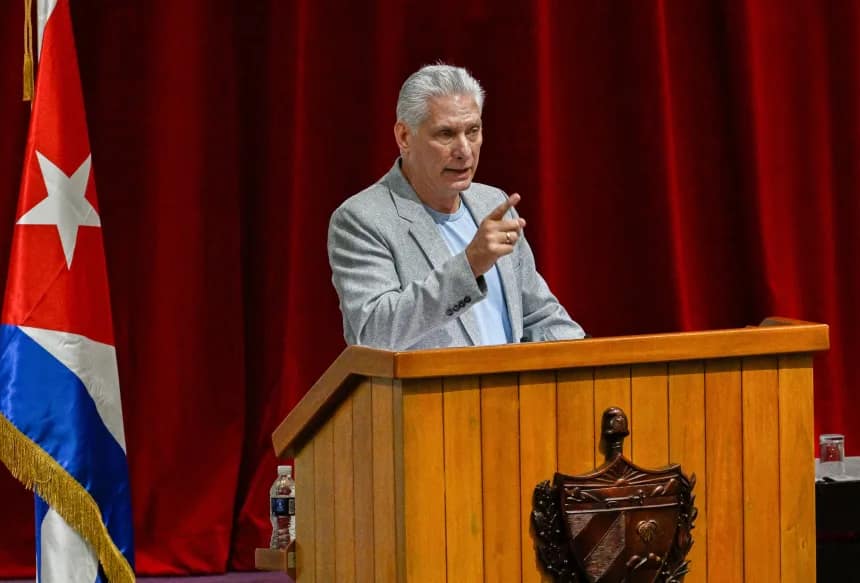
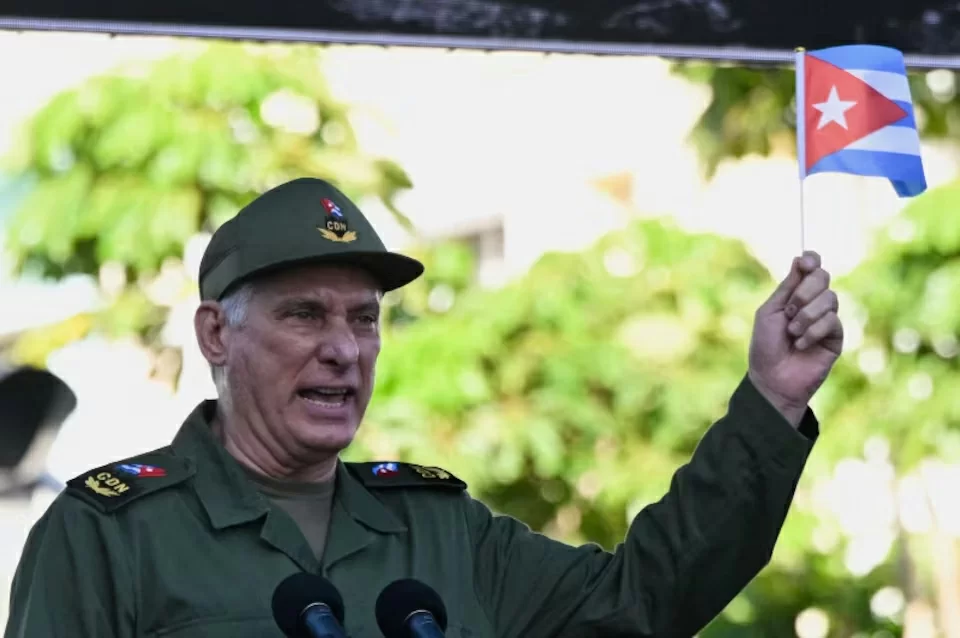
    HAVANA, Cuba — In a firm national address broadcast on state media Thursday, Cuban President Miguel Diaz-Canel declared his nation’s readiness to engage in diplomatic talks with the United States, but strictly on condition of mutual respect and without external pressure. This statement comes as a direct response to recent threats from US President Donald Trump, who has aggressively threatened to sever Cuba’s oil access and predicted the collapse of its communist government.

    President Diaz-Canel emphasized that any potential dialogue must be conducted between equals, respecting Cuba’s sovereignty, independence, and right to self-determination without interference in its internal affairs. This position directly counters Trump’s public urgings for Havana to ‘make a deal before it is too late’—a proposition the Cuban government maintains does not constitute genuine negotiation.

    The escalating tension occurs against a backdrop of severe economic and energy distress in Cuba. The nation, already grappling with its worst economic crisis in decades, faces acute fuel shortages that have crippled power generation. An electrical grid failure earlier Thursday left hundreds of thousands in eastern Cuba without electricity for hours, highlighting the vulnerability of its infrastructure.

    This crisis has been exacerbated by the US’s recent actions in Venezuela, Cuba’s primary historical oil supplier. Following a US military operation that ousted Venezuelan leadership, Trump claimed control over the nation’s oil reserves and vowed to starve Cuba of fuel, threatening tariffs on any third country attempting to supply the sanctioned island.

    While the White House, through spokeswoman Karoline Leavitt, asserted that diplomacy is ongoing and that the Cuban government is ‘on its last leg,’ Havana continues to deny the existence of formal negotiations. International support appears limited; Mexican President Claudia Sheinbaum stated her country is pursuing diplomatic channels to resume oil shipments to Cuba but will not risk triggering punitive US tariffs.

    President Diaz-Canel acknowledged the gravity of the fuel situation, noting that energy production from traditional generators has been ‘zero for weeks,’ but insisted that ‘Cuba is not alone.’ He pointed to the current pressure as validation of Cuba’s efforts to transition toward renewable energy and reduce foreign dependence. While Cuban officials squarely blame decades of US sanctions for the crisis, independent observers also cite poor economic management and a pandemic-induced tourism collapse as contributing factors to the nation’s dire situation.

  • Gov’t promises faster cyber reforms after Opposition criticism

    Gov’t promises faster cyber reforms after Opposition criticism

    Jamaica’s government has acknowledged significant delays in updating national cybersecurity legislation, with Minister Dr. Andrew Wheatley admitting the Opposition’s concerns about the country falling behind evolving digital threats were justified. The concession came as the House of Representatives approved amendments to the Cybercrimes Act on Tuesday, following criticism that the nearly three-year revision process had left the nation vulnerable to advanced cybercriminal activities.

    During parliamentary debates, Opposition members highlighted how rapidly advancing technologies—including artificial intelligence tools, sophisticated online fraud schemes, and digital impersonation tactics—had already outpaced the legislative provisions under review. They argued that criminal elements had adapted to new technologies while Parliament deliberated on outdated recommendations from the 2023 Joint Select Committee.

    Minister Wheatley, responding while closing the debate, recognized the validity of these concerns and pledged a fundamental shift in legislative approach. “The Government accepts the broader point. Technology moves quickly and the law must not be allowed to move slowly,” he stated, committing to more frequent and responsive review cycles rather than extended periods between updates.

    However, Wheatley also elaborated on the complexities involved in cyber legislation reform, explaining that effective measures require careful balancing of multiple factors beyond simply adding new offenses to statute books. “It requires careful alignment of enforcement powers, prosecutorial practicality, constitutional safeguards, and coherence with other laws, especially where amendments touch issues like consent, privacy, public interest and sensitive data,” he noted.

    The government’s new approach signals recognition that traditional legislative timelines are incompatible with the rapid evolution of digital threats, including AI-generated content, online extortion schemes, and anonymous smear campaigns that exploit legal loopholes.