Almost 12 months have passed since Suriname’s 2025 general elections, and the catchy campaign slogans that carried opposition parties to power have faded into memory. Today, the core question facing the nation after its historic power transition is simple: what tangible change has actually been delivered? The entire 2024 electoral campaign was built around the promise of radical transformation – not incremental tweaks to governance, but a full break from the dysfunctional patterns of the past.
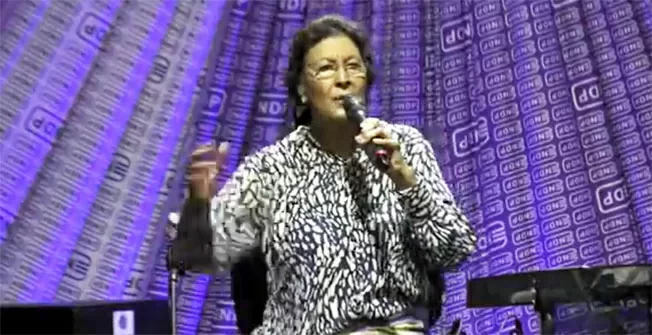
The National Democratic Party (NDP), led by now-President Jenny Simons, campaigned on the rallying cry “Kenki a systeem” – “Change the system.” Its core platform pledged to root out systemic corruption, end patronage politics and crack down on political self-enrichment. Other opposition parties echoed this promise of a new direction: the NPS ran on “A new pasi” – “A new path” – while the A20 bloc campaigned on “Tra fasi de,” or “Another phase.”
But one year on, an uncomfortable truth has emerged: while campaign slogans have changed, the culture of governance in Suriname has barely shifted. The irony of the current situation is almost painful. The same parties that spent years criticizing the previous administration’s overreliance on unelected commissions, political advisor appointments, cronyism and nepotism now find themselves unable to break free from those exact same mechanisms. President Simons has appointed one new commission after another, with some political figures holding seats on multiple overlapping bodies.
Blunders have already marred appointments to supervisory boards at state-owned enterprises, and internal tensions have plagued the ruling coalition from its first day in office. Divisions within the NDP itself are also already visible to the public. To preserve the coalition’s 34-seat majority, political expediency and superficial unity have been prioritized over the promised clean-up of governance – a dynamic that is exactly how old, dysfunctional systems perpetuate themselves.
During the campaign, President Simons repeatedly argued that corruption in Suriname had never been worse, and that the entire national system required fundamental overhaul. This was no offhand comment: it was a sweeping moral indictment of the country’s long-standing governing culture. For that very reason, Suriname’s citizens are fully justified in asking what concrete changes have actually been made to that system. Real change is not measured in words alone; it must show through in governing style, institutional transparency, decisive action and ethical leadership by example.
No reasonable voter expects miracles in just 12 months. Suriname’s economic challenges are deeply rooted, and no incoming administration could reverse decades of damage in a single year. It would be unfair to demand such rapid results. But what citizens do have a right to expect is clear direction, a sense of momentum, urgency, and the tangible feeling that governance is being done differently. That feeling is largely absent today.
Even now, when citizens raise concerns about persistent problems, the default response from the new administration is to blame the previous government. It is true that the prior administration bears responsibility for many of the issues facing the country today, but this excuse has a clear expiration date. Notably, the previous Santokhi administration relied on the exact same defense for four years after it took power from an earlier NDP government, continually pointing to the damage it inherited. The risk of this tactic is significant: it leads governments to focus more on explaining problems than on solving them.
When a new government takes control of a nation, it also takes full responsibility for addressing its challenges. After a reasonable transition and evaluation period, an administration must take firm control of the agenda and clearly communicate its policy course. That kind of decisive leadership is sorely lacking at present. For many Surinamese, President Simons is too rarely visible during public crises, and government-wide communication remains weak, fragmented and reactive. At a time when citizens face daily uncertainty from flooding, rising prices and administrative confusion, clear public communication is not a secondary luxury – it is a core function of leadership. The current practice of having the president interviewed only by her own spokesperson is unacceptable, amounting to preaching only to committed party insiders. If full press conferences are not possible, the president should still deliver direct public statements to the nation, and should not rely on interviews with her own staff.
The most stark example of this lack of preparedness and change comes from the recent severe flooding across the country. As large swathes of Suriname stood submerged, the Ministry of Public Works was found to have only a single long-arm excavator available to respond to the emergency – one machine for the entire nation. This shortcoming raises fundamental questions: how can a country that has known for decades that it is highly vulnerable to extreme rainfall be so poorly prepared for a predictable disaster? Why was no early warning sounded? Where is the long-term infrastructure planning? Where is the coordinated crisis management? It is exactly in moments like this that the public can see whether real systemic change has occurred.
So far, what Suriname’s public has observed are the same old familiar political reflexes: backroom compromises to hold the fragile coalition together, caution to avoid inflaming internal tensions, controversial political appointments that raise questions of patronage, and leaders who respond faster to internal party pressure than to public frustration.
Perhaps this is the hardest truth one year after the 2025 elections: systems do not change automatically just because a campaign slogan promises they will. A system only transforms when those in power are willing to set aside their own political comfort and prioritize broad institutional reform. That is the real test facing Simons’ government today. Surinamese voters did not just vote for new faces last year; they voted overwhelmingly for a fundamentally different way of governing.