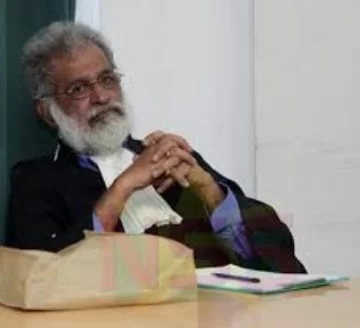
A prominent Surinamese defense attorney has launched sharp criticism of the flawed political discourse surrounding the National Assembly’s planned questioning of the country’s Prosecutor General, arguing the top law enforcement official acted entirely correctly by refusing to appear in person before the parliamentary committee.
Speaking on the popular current affairs radio program *Bakana Tori* hosted by Cliff Limburg on Lim FM, Irvin Kanhai warned that active participation by the Prosecutor General in the National Assembly’s deliberations over potential impeachment proceedings against three former cabinet ministers would irrevocably “poison” the future criminal trial from a legal perspective. “If I were representing those former ministers in this case, I would immediately file a legal objection with the court over this improper interference,” Kanhai stated during the interview.
Kanhai emphasized that under existing Surinamese law, the National Assembly is only empowered to assess whether any potential prosecution would threaten public order and national stability, and is explicitly prohibited from delving into the substantive details of the criminal investigation dossier. He noted that parliamentarians’ demand to question the Prosecutor General on granular investigation details directly contradicts the legal boundaries laid out in the nation’s legislation.
The attorney further pointed out that the three former officials in question have not even been formally designated as criminal suspects, as they have not yet been officially served with impeachment. For this reason, Kanhai argued, the Prosecutor General is under no obligation to disclose strategic, case-sensitive investigation details. Revealing such information, he added, would effectively compromise the entire prosecution by letting the defense see the prosecution’s full hand ahead of trial.
Kanhai also took aim at the broader political debate surrounding the controversy, chiding parliamentarians to more carefully read the very legislation they enacted. He acknowledged that if lawmakers are unsatisfied with the Prosecutor General’s performance and wish to remove her from office, existing law provides clear pathways to do so — but those pathways require following proper constitutional procedures, not bypassing legal norms for political expediency.
“Put your concerns in writing, send the formal petition to the court president, and initiate the legitimate removal process. Instead, all we get is empty political chatter,” Kanhai said, highlighting the lack of meaningful, procedure-compliant action from lawmakers. He also warned that open, public debate about constitutional bodies and ongoing criminal cases inflicts lasting damage to the reputation of Suriname’s core state institutions. While Kanhai confirmed that inter-branch communication on broad policy matters is appropriate and healthy, he stressed that political bodies should never interfere with active criminal matters that are yet to be adjudicated by the courts.
Kanhai closed by reiterating the dangers of allowing the Prosecutor General to become substantively involved in political decision-making tied to an ongoing criminal case. “This kind of interference hands defense attorneys a ready-made argument to claim later that the entire legal process was compromised from its earliest stages,” he concluded.