分类: politics

  • IMF Presses Government to Reform Fragmented Social Assistance System

    IMF Presses Government to Reform Fragmented Social Assistance System

    The International Monetary Fund (IMF) has issued a compelling call for the government of Antigua and Barbuda to undertake a comprehensive overhaul of its social assistance infrastructure. A recent Article IV consultation mission concluded that the existing framework, dispersed across five distinct ministries, is critically flawed. This administrative fragmentation is resulting in significant operational redundancies, diminished targeting accuracy, and overall inefficiencies in service delivery to citizens.

    A cornerstone of the IMF’s recommendation is the urgent establishment of a unified, centralized beneficiary database. This integrated system is deemed vital for enabling authorities to accurately identify eligible recipients, thereby eliminating coverage gaps and minimizing wasteful overlap between various aid programs. The Fund emphasized that without enhanced inter-agency coordination, the nation’s constrained public resources are being diluted, severely undermining the support available to vulnerable households. These communities continue to face heightened exposure to global economic volatility and escalating costs of living.

    Furthermore, the IMF underscored that modernizing this social protection network is not merely an operational improvement but a fundamental step toward bolstering fiscal sustainability and national economic resilience. Successful reform hinges on overcoming institutional barriers and fostering unprecedented cooperation among ministries. The ultimate goals are to ensure life-saving benefits reach those most in need and to strengthen accountability in the management of public finances.

  • The third-party deportee bazaar: a tailor’s guide to hemming the truth

    The third-party deportee bazaar: a tailor’s guide to hemming the truth

    The memory of a childhood spent in a tailor’s shop near the sea provides an unexpected lens through which to examine contemporary political theater. The author’s father, a craftsman of sartorial illusions, often remarked that a suit constitutes a falsehood worn upon the body—much like the superhero costumes in comic books that conceal ordinary men beneath extraordinary facades.

    This childhood observation finds disturbing resonance in today’s geopolitical landscape, where national leaders have perfected the art of political tailoring. These modern statesmen don impeccably crafted power suits with silk ties and cufflinks worth more than average monthly salaries, yet behave like hostages reciting prepared statements. They participate in what diplomats euphemistically term ‘strategic dialogues’ but what essentially function as imperial summonses—receiving instructions before returning home to perform elaborate political theater.

    The parallel to Orwell’s Ministry of Truth becomes increasingly apparent. Much like the civil servants who systematically rewrote historical records to align with the Party’s current positions, contemporary leaders engage in verbal acrobatics regarding deportation policies. They simultaneously claim to have always accepted deportees, never accepted deportees, and magnanimously considered accepting deportees as their own humanitarian initiative.

    The current deportation theater presents a particularly stark example of this phenomenon. Nation A issues directives to Nation B’s leader without consultation or negotiation, employing the language of command rather than diplomacy. The recipient of these demands then returns home to reframe coerced compliance as voluntary participation in regional resettlement initiatives, carefully weighing options that were never truly optional.

    This constitutes the geopolitical equivalent of being dragged behind the woodshed for a beating, then limping back to claim one fell down stairs—while expecting observers to applaud the narrative. The craftsmanship would impress any tailor: perfectly constructed lies without loose threads or misplaced stitches.

    The disturbing evolution beyond traditional deception lies in leaders being fitted for political costumes they never chose, made from fabrics they would never select, in sizes that never properly fit. Unlike the tailor’s clients who actively chose their deceptions, today’s leaders parade in ill-fitting political garments while insisting they represent haute couture. The true horror emerges not from the lies themselves, but from the leaders’ apparent belief that their ill-fitting suits actually fit—a testament to the Orwellian efficiency of modern political manipulation.

  • Gonsalves criticises spending he defended in gov’t

    Gonsalves criticises spending he defended in gov’t

    In a striking display of political irony, Opposition Leader Ralph Gonsalves has launched scathing criticism against Prime Minister Godwin Friday’s administration for allocating EC$2.1 million for official vehicles and repairs to the Prime Minister’s residence. This condemnation comes nearly 15 years after Gonsalves himself, during his premiership, defended similar expenditures totaling EC$1.5 million for his fourth SUV and residential renovations.

    During Thursday’s parliamentary debate on the 2026 Estimates of Revenue and Expenditure, Gonsalves sarcastically referenced the allocation, comparing the potential outcome to ‘Donald Trump’ standards while recalling how his own spending was previously labeled ‘Saddam Palace.’ The opposition leader acknowledged the official residence required repairs when he vacated in November after two decades of occupancy but maintained it remained ‘liveable.’

    The current allocation includes EC$600,000 for prime ministerial vehicles—imported duty-free but valued at EC$1.3 million with duties—which Gonsalves deemed unnecessary given the ‘perfectly functioning’ vehicles from his tenure that had ‘another couple of years going for them.’

    The debate echoes strikingly similar criticisms from 2011 when then-opposition MP St. Clair Leacock—now Deputy Prime Minister—condemned Gonsalves’ expenditures, stating he was ‘getting too expensive to mind’ and operated ‘like a government within a government.’ Leacock had highlighted multiple vehicle acquisitions and substantial renovation funds totaling over EC$1 million.

    Prime Minister Friday, in his concluding remarks, revealed that upon assuming office, he discovered the residence required significantly more than ‘cosmetic changes’ and was ‘not in a state to move in.’ He explained the vehicle allocation predated his administration and reflected security protocols requiring at least two vehicles, noting he currently drives a smaller vehicle without complaint.

    The exchange highlights enduring tensions between governing and opposition parties regarding executive spending priorities, with both sides demonstrating remarkably similar arguments when their political positions reversed.

  • LETTER: Gangrene in the Opposition: The UPPs Terminal Unravelingz

    LETTER: Gangrene in the Opposition: The UPPs Terminal Unravelingz

    In the political landscape of Antigua and Barbuda, the fundamental role of an opposition party is to provide citizens with a viable governmental alternative. This duty requires substantive policy platforms, inspirational leadership, and organizational maturity. The United Progressive Party (UPP) currently fulfills none of these democratic functions. Instead, it has become an institution in its terminal phase, characterized by internal warfare between former leader Harold Lovell and current leader Jamale Pringle. This conflict represents not a healthy competition of ideas but rather the final convulsions of a moribund political entity.

    The power struggle within UPP transcends ideological differences, revealing itself as purely personal ambition devoid of policy substance. Lovell’s attempt to reclaim leadership from Pringle demonstrates not strategic revitalization but desperate maneuvering within a sinking organization. The party’s internal divisions have been exacerbated by Chairman Giselle Isaac’s divisive leadership, which has transformed the chairman’s role from impartial arbiter to partisan weapon. Under this governance, internal procedures have become public spectacles where personal vendettas override organizational integrity.

    This internal decay manifests as a critical failure in political responsibility. While Antigua and Barbuda face significant challenges including economic diversification needs, climate vulnerability, and geopolitical pressures, the opposition offers only cacophony instead of constructive solutions. The party’s discourse prioritizes titular authority over substantive governance plans, demonstrating profound disregard for national interests.

    The current state of UPP resembles medical gangrene—a necrotizing condition that has progressed from limb to core. Palliative measures cannot salvage an organization with self-destruction encoded in its institutional DNA. The only remedy is complete political amputation, allowing space for new opposition formations to emerge.

    The citizens of Antigua and Barbuda deserve an opposition focused on national development rather than personal grievances. The UPP has proven institutionally incapable of fulfilling this democratic function. Its collapse appears irreversible, with fragmentation too severe for reconciliation. Civil society must now demand and cultivate a new, development-centered political force untainted by this toxic legacy. Continuing to hope for UPP’s reformation would constitute acceptance of political gangrene as normalcy—an unacceptable betrayal of the nation’s future.

  • Additional Deputy COP among 66 positions for National Security Ministry

    Additional Deputy COP among 66 positions for National Security Ministry

    The government of St. Vincent and the Grenadines has unveiled a significant expansion of its national security apparatus, creating 66 new positions within the Ministry of National Security. This strategic move comes in response to mounting public concerns over cross-border criminal activities, firearms and narcotics trafficking, and a troubling exodus of police personnel from the force.

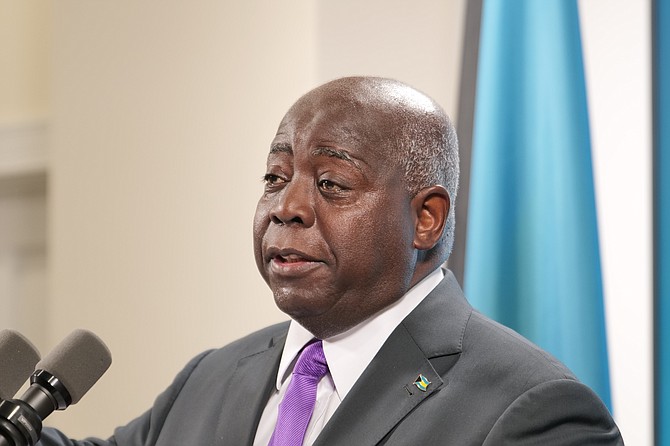
    During last week’s presentation of the Estimate of Revenue and Expenditure, Prime Minister Godwin Friday revealed that the majority of these new positions will be allocated to the police force. The expansion includes the creation of an additional Deputy Commissioner of police, bringing the total number to two and substantially reinforcing the command hierarchy that currently oversees four Assistant Commissioners.

    The comprehensive staffing enhancement encompasses various ranks throughout the law enforcement structure: one Superintendent of police, two Inspectors, three Station Sergeants, four Sergeants, six Corporals, twenty Constables, and four Traffic Wardens. Prime Minister Friday emphasized the critical need for traffic management personnel, noting the severe congestion challenges in Kingstown that often make walking more efficient than driving.

    The Coast Guard Service, operating as the maritime division of the police force, will receive substantial reinforcement through the addition of two Chief Petty Officers, three Petty Officers, two Leading Seamen, and two Able-Body Seamen.

    Immigration services will see six new officer positions created to handle increased operational demands at both the new Kingstown Port and Argyle International Airport. Additionally, the National Emergency Management Organisation (NEMO) will benefit from five new posts, including one Community Field Officer to strengthen Grenadines operations, one Facilities Officer, and three Light Equipment Operators.

    During the Estimates Debate on January 29, 2026, Deputy Prime Minister and Minister of National Security St. Clair Leacock provided candid insights into the challenges facing the constabulary. Having consulted extensively with senior officers including the Commissioner of police, his deputy, assistant commissioners, and the Police Welfare Association, Leacock revealed concerning attitudes within the ranks, including one senior officer who requested 80 days leave without formal greeting or explanation.

    The Deputy Prime Minister, drawing on his background as a former major in the SVG Cadet Force and commandant of the Auxiliary Police Force, committed to building a modern police service ‘from the ground up.’ He condemned the practice of officers being allegedly manipulated by political interests and emphasized the need to eliminate promotion barriers based on political beliefs, stating that no officer should remain a constable for 25 years due to such considerations. Leacock pledged to foster an esprit de corps that understands proper conduct in a contemporary police force.

  • Taiwan bolsters resilience in SVG with US$3m social relief grant

    Taiwan bolsters resilience in SVG with US$3m social relief grant

    In a significant demonstration of international cooperation, Taiwan’s Ambassador to St. Vincent and the Grenadines, Fiona Huei-Chun Fan, formally presented a substantial US$3 million social relief grant to the Caribbean nation’s government on Tuesday. The ceremonial handover was attended by high-ranking officials including Prime Minister Godwin Friday and multiple cabinet ministers, highlighting the importance both nations place on this bilateral relationship.

    This financial contribution, equivalent to EC$8,064,600, is specifically designated to support the Social Relief Project initiated by the St. Vincent and the Grenadines government. Taiwanese officials characterized the donation as reflecting their commitment to social equity and stability objectives aligned with the United Nations Sustainable Development Goals. The funding mechanism represents a strategic investment in Vincentian communities, aiming to directly strengthen social institutions and assist families across the nation.

    Prime Minister Friday expressed profound appreciation for Taiwan’s consistent support, acknowledging previous infrastructure collaborations including the Kingstown Modern Port and Arnos Vale Acute Care Hospital. He emphasized that this particular grant constitutes a vital ‘investment in people’ rather than physical infrastructure, with funds directed toward addressing real community needs.

    The leadership of both nations articulated a shared vision for expanded cooperation, particularly in developing St. Vincent’s blue economy, fishing industry, and agricultural sectors. They reaffirmed common values including democratic governance, rule of law, and mutual commitment to international institutions. Ambassador Fan noted Taiwan’s gratitude for St. Vincent’s support in international forums, enabling Taiwan to share its expertise globally.

    This diplomatic engagement occurs as the two nations approach the 45th anniversary of their formal relations established in 1981, with both parties expressing commitment to deepening policy coordination and delivering tangible outcomes that promote mutual prosperity and shared success.

  • PM Browne and Minister Browne Lead Antigua and Barbuda’s First-Day Engagements at the World Governments Summit

    PM Browne and Minister Browne Lead Antigua and Barbuda’s First-Day Engagements at the World Governments Summit

    Prime Minister Gaston Browne has initiated a comprehensive series of high-level diplomatic engagements at the World Governments Summit 2026, demonstrating Antigua and Barbuda’s proactive approach to global governance collaboration. The opening day featured significant bilateral discussions aimed at fostering international cooperation and economic development.

    Concurrently, Minister Maria Browne conducted pivotal talks with senior executives from JETEX, a premier global private aviation enterprise specializing in luxury travel services and Fixed Base Operations. The dialogue centered on transforming Antigua and Barbuda into a premium hub for private aviation, leveraging the nation’s advanced infrastructure, discreet environment, and exceptional hospitality services. JETEX representatives committed to an onsite evaluation visit within weeks to advance the potential partnership.

    In a separate diplomatic engagement, Prime Minister Browne met with Botswana President Duma Gideon Boko, praising Botswana’s remarkable political stability and sound economic governance. Both leaders proposed establishing joint technical committees to facilitate knowledge exchange in public sector capacity building and sovereign wealth fund management for social welfare enhancement. Botswana specifically sought expertise from Antigua and Barbuda’s acclaimed Citizenship by Investment Program, recognizing its exemplary implementation framework.

    The Prime Minister’s agenda concluded with multiple international media appearances ahead of his scheduled participation as a featured panelist in summit sessions addressing the future of tourism. The delegation received substantial support from Ambassador Theon Ali, Special Envoy Armand Arton, and Climate Ambassador Ruleta Camacho-Thomas throughout these multilateral discussions with CARICOM counterparts and global leaders.

  • Leacock says police are victims of SVG’s political culture

    Leacock says police are victims of SVG’s political culture

    St. Vincent and the Grenadines’ Deputy Prime Minister and National Security Minister St. Clair Leacock has declared that comprehensive reorientation is essential to depoliticize the nation’s police force. Speaking on state-owned NBC Radio, the minister emphasized his unique qualifications for the portfolio, citing his background as a behavioral scientist, management specialist, and former commandant of the St. Vincent Cadet Force.

    Minister Leacock’s statements come amid growing public concern over serious crimes, particularly murders, following the November general elections that resulted in a landslide victory for the New Democratic Party (NDP) over the Unity Labour Party (ULP). The political shift has intensified calls from citizens and NDP supporters for structural changes within police leadership.

    The minister revealed he has received extensive recommendations regarding appointments to key positions including Commissioner of Police but cautioned against hasty personnel changes. Leacock attributed current challenges within the force to what he described as a damaging political culture that has compromised proper policing protocols.

    “The police force and its leadership are themselves victims of the political culture,” Leacock stated. “Officers often feel obligated to respond to political directives rather than apply proper police protocols.”

    Leacock outlined his vision for transforming the constabulary into a more effective organization through systematic reform. His approach includes developing specialized training regimes, implementing new leadership development programs, and creating distinct career pathways for enlisted officers versus those pursuing command positions. The minister stressed that meaningful institutional change requires careful planning and cannot be achieved within short-term political timelines.

  • OPINION: No Administration Is Perfect – But This One Is Close

    OPINION: No Administration Is Perfect – But This One Is Close

    In democratic systems, robust criticism serves as an essential mechanism for governmental accountability. While no administration operates without flaws, a comprehensive evaluation of Antigua and Barbuda’s current leadership reveals a pattern of effective crisis management and substantive achievement under Prime Minister Gaston Browne’s Antigua Barbuda Labour Party (ABLP).

    Governing during unprecedented global challenges, the ABLP administration has demonstrated remarkable resilience in navigating multiple crises simultaneously. The COVID-19 pandemic presented existential threats to tourism-dependent economies worldwide, yet Antigua and Barbuda implemented strategic border controls, employment preservation measures, and social support systems that facilitated faster recovery than many comparable nations.

    Economic stewardship represents another significant accomplishment, with the government addressing inherited fiscal constraints through sophisticated debt restructuring rather than austerity measures. This approach has yielded improved credit ratings, renewed investor confidence, and tangible infrastructure developments including port modernization and airport expansion projects that generate employment and stimulate local commerce.

    The administration’s social policy initiatives have produced meaningful improvements in housing accessibility and land ownership opportunities for ordinary citizens. Simultaneously, sustained investments in healthcare infrastructure and educational access demonstrate commitment to human capital development despite limited national resources.

    On the international stage, Antigua and Barbuda has emerged as a vocal advocate for climate justice, reparations, and debt reform, amplifying the concerns of small island developing states within global forums. This diplomatic engagement has enhanced the nation’s visibility and negotiating leverage.

    While critics rightly note concerns regarding governmental tone and specific policy decisions, the fundamental question remains which leadership possesses demonstrated crisis management capabilities and economic governance competence. The evidence suggests that despite imperfections, the ABLP administration has provided stability, directional clarity, and measurable progress during exceptionally challenging circumstances.

  • Opmerking Jarbandhan over ‘politieke kleur’ pg leidt tot commotie in DNA

    Opmerking Jarbandhan over ‘politieke kleur’ pg leidt tot commotie in DNA

    A political firestorm engulfed Suriname’s National Assembly (DNA) on Tuesday following controversial remarks by VHP Assembly member Ameerani Jarbandhan regarding the Prosecutor-General’s alleged political leanings. The parliamentary session, initially convened to debate judicial reform bills, rapidly devolved into heated exchanges concerning the politicization of independent state institutions.

    Jarbandhan’s commentary emerged during deliberations on legislative amendments concerning the Public Prosecutor’s Office. While addressing case backlogs attributed to resource constraints, expertise shortages, and operational limitations within law enforcement, the assembly member questioned whether proposed changes—including adjustments to the Prosecutor-General’s retirement age—concealed ulterior motives. She explicitly suggested these amendments might represent a subtle effort to remove the official, potentially linked to her political convictions.

    The controversy deepened with revelations that ruling coalition members (BEP, ABOP, PL) had previously supported raising the retirement age from 65 to 70 in 2024, only to reverse their position through current legislative initiatives. Jarbandhan framed this reversal as a threat to separation of powers, warning that implementing drastic judicial changes without broad national consultation jeopardizes constitutional integrity.

    Assembly Chairman Ashwin Adhin intervened decisively, declaring any discussion of the Prosecutor-General’s political affiliation fundamentally unacceptable. “The Prosecutor-General exists outside political discourse,” Adhin asserted. “As an independent institution lacking representation in this chamber, she merits protection rather than political characterization.” His admonition to maintain technical and policy-focused debate was reinforced by cross-party objections, including suspension requests from VHP member Cedric van Samson and neutrality reminders from NDP leader Rabin Parmessar.

    Post-recess, acting VHP leader Dew Sharman attempted damage control by distancing his party from Jarbandhan’s phrasing. Attributing her comments to “juvenile enthusiasm,” Sharman emphasized institutional rather than personal scrutiny should guide deliberations. He proposed retracting or reformulating problematic statements to preserve parliamentary decorum.

    Tensions reignited when PL leader Bronto Somohardjo explicitly associated the Prosecutor-General with VHP affiliations, prompting VHP member Krishna Mathoera to demand corrective action. Mathoera condemned political labeling of absent independent officials as “unacceptable, improper, and inappropriate,” urging audio review of contentious statements—a request ultimately denied as Somohardjo refused retraction.