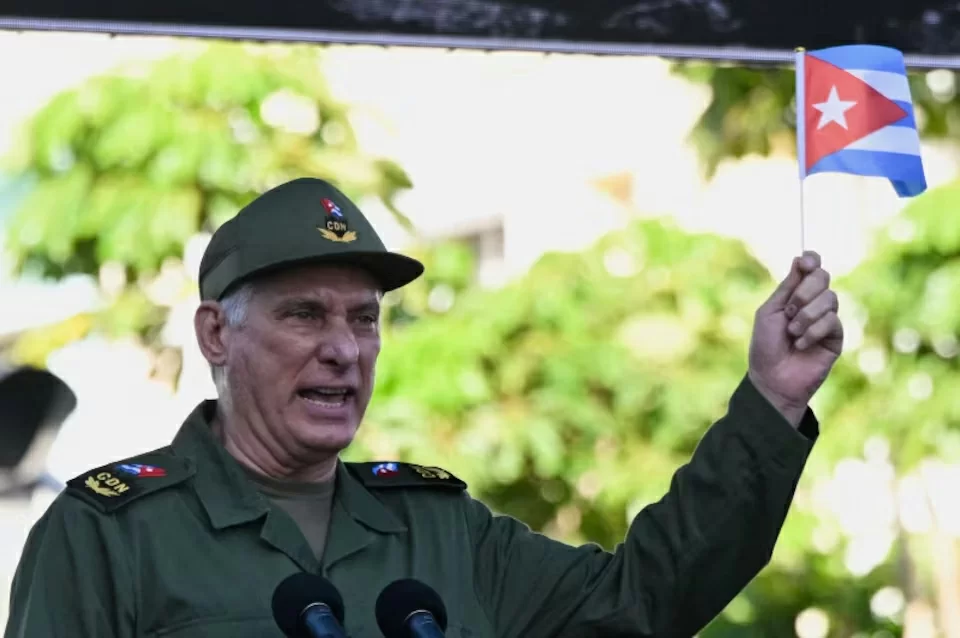
Rising geopolitical friction between the United States and Cuba has reached a new boiling point this week, after uncorroborated claims of Cuban drone preparations against US interests triggered a fierce public warning from Cuban President Miguel Díaz-Canel. Speaking on the social platform X Monday, Díaz-Canel made clear that any US military aggression against the island nation would result in a devastating bloodbath, with unforeseeable ripple effects that would undermine regional peace and stability across the Caribbean. He also emphasized that Cuba has never posed a genuine threat to US national security, framing the recent allegations as a manufactured pretense for foreign intervention.
The current crisis was sparked by an Axios report citing unnamed intelligence sources, which claimed Cuba has acquired more than 300 military drones and held internal discussions about deploying them against the US naval base at Guantanamo Bay, American military vessels, and Key West, Florida. Cuban officials have roundly rejected the report as a deliberate fabrication crafted by US interests to justify a potential military incursion into Cuban territory.
Even as the island grapples with a deep, ongoing economic crisis that has left millions facing widespread scarcity, ordinary Cuban residents in Havana have expressed unified resolve to resist any foreign attack. “Cuba is a strong nation, Cubans are brave, and we are not unprepared,” 57-year-old Havana resident Sandra Roseaux told reporters. “Even if we are hungry, if they come, they will have to fight, because Cuba will not back down from responding.”
Tensions between Washington and Havana have climbed sharply in recent months, driven largely by a US decision to cut off energy supplies to Cuba starting in January. The move came in response to the arrest of Venezuela’s president, a close regional ally of Cuba, and has already triggered severe fuel shortages across the island, leaving residents with only sporadic, limited access to electricity.
Last week, Reuters also reported that the US Department of Justice is preparing criminal charges against former Cuban leader Raúl Castro connected to the 1996 downing of two humanitarian aircraft flown by anti-Castro groups. The development marks a significant escalation of pressure on Cuba, echoing the harsh anti-Cuban policy pursued by former US President Donald Trump’s administration.
Cuban Foreign Minister Bruno Rodríguez reaffirmed that Cuba, like any sovereign nation, retains the full right to legitimate self-defense against external aggression under the UN Charter and established international law.
Public opinion among ordinary Cubans remains split slightly on the path forward even as unity around self-defense holds. While many echo the hardline resolve of Roseaux, 58-year-old Ulises Medina called for diplomatic engagement to de-escalate the crisis. “It would be wrong for the US to invade Cuba, just as it would be wrong for Cuba to invade the US,” Medina said. “They need to reach an agreement and negotiate. That said, Cuba will defend itself—this nation will never be surrendered.”
For older Cubans who have lived through decades of US-Cuban tension, the commitment to sovereignty runs deep. Eighty-seven-year-old Jorge Villalobos summed up the widespread sentiment of resolve: “The Cuban people will never allow anyone to interfere in our country. We know how to defend ourselves, even if all we have are sticks and stones.”