分类: politics

  • PM Browne Warns Ministers Against Underperformance at First Cabinet Meeting of New Term

    PM Browne Warns Ministers Against Underperformance at First Cabinet Meeting of New Term

    On Wednesday, Gaston Browne, Prime Minister of Antigua and Barbuda, brought together the newly elected administration’s Cabinet for its inaugural meeting, laying out a clear, people-centered guiding framework for the government’s incoming term rooted in four core values: accountability, national unity, humble governance, and dedicated public service.

    Opening the gathering for full Cabinet ministers and Ministers of State, Browne stressed that the renewed electoral mandate voters granted his administration comes with amplified obligations: the government must deliver concrete, visible quality-of-life gains for both citizens and long-term residents of the twin-island nation. The Prime Minister outlined the administration’s non-negotiable policy priorities, noting that all work will center on upgrading the country’s roadway network, expanding access to consistent, reliable water access for all communities, speeding up affordable and sustainable housing development projects, strengthening underpinning public healthcare and education systems, and upgrading general public infrastructure across both islands.

    Browne challenged every member of the Cabinet to model exceptional, forward-thinking leadership, pointing to the administration’s accumulated governing experience and institutional capacity to leave a legacy as one of the most effective governments in Antigua and Barbuda’s modern history. “The people did not send us here to make empty promises — they sent us here to deliver results,” Browne told attendees. “We must operate with clear purpose, relentless intensity, and unwavering discipline to keep lifting living standards for every community across our nation.”

    Throughout the meeting, the Prime Minister repeatedly emphasized that accountability and consistent high performance will be required across every government ministry. He made clear that bureaucratic inefficiency and failure to meet policy targets will not be tolerated in the new term, urging all elected officials to stay actively embedded in their portfolios, their constituencies, and the communities they represent, while maintaining open, regular lines of communication with the public.

    Browne also highlighted the critical role of humble, grassroots-focused governance, encouraging ministers and members of parliament to remain accessible and closely connected to the electorate that put them in office. Senior leaders within the administration echoed Browne’s priorities, offering guidance to first-time and younger ministers and parliamentarians, urging them to continuously grow their leadership, communication, and governance capabilities while staying rooted in their core mission of public service.

    A key point of emphasis for the Prime Minister was the need for unbroken unity across the governing bloc. He warned against internal factional division and self-serving individualism, reminding the group that the administration’s longstanding political strength comes from collective decision-making and a shared commitment to inclusive national progress.

    In addition to setting governing principles, Cabinet members held discussions on actionable strategies to deepen public participation in governance, including expanding frequent community outreach programs, regular constituency-specific meetings, and open town hall sessions that give residents direct input into policy decision-making. In a nod to the demanding nature of public office, Browne also encouraged all administration members to prioritize their own physical and mental health and well-being, so they can maintain the energy and focus needed to carry out their responsibilities effectively.

    The inaugural meeting closed with all Cabinet members reaffirming their shared commitment to work diligently and collaboratively to advance the government’s national development agenda and deliver measurable, meaningful progress for the people of Antigua and Barbuda over the coming term.

  • Call for ministers to resign

    Call for ministers to resign

    A second horrific mass killing in just two weeks has plunged Trinidad and Tobago into renewed outrage over the ruling administration’s failed national security policies, with senior opposition lawmakers demanding the immediate departure of the country’s top two security officials.

    The latest tragedy unfolded in Belmont, where a triple shooting left a two-year-old child dead, two adult men killed, and a mother fighting for her life in critical care. This attack comes only 14 days after another mass shooting in Morvant that claimed four lives, including a nine-year-old child.

    Stuart Young, opposition Member of Parliament for Port of Spain North/St Ann’s West, was among the first to issue a blunt call for resignations, targeting Minister of Defence Wayne Sturge and Minister of Homeland Security Roger Alexander. Young slammed the ruling Kamla Persad-Bissessar-led government over its singular approach to surging violent crime: repeated declarations of states of emergency (SoE).

    “For most of this administration’s tenure, the country has been locked under some form of state of emergency,” Young noted. “We are now on the third iteration of a United National Congress state of emergency, and mass killings continue without any slowdown. This government has no actual plan to curb violence, and it is ordinary law-abiding citizens who bear the cost.” He called the killing of the innocent toddler “unforgivable,” adding that the government’s failure on national security is now undeniable to the entire population.

    Young also lashed out at Phillip Alexander, a junior minister in the Ministry of Housing, over what he called a blatantly politicized Facebook rant targeting his Belmont constituents in the wake of the shooting. “This deranged official, paid by the prime minister using taxpayer dollars, is adding insult to injury for families already reeling from senseless loss of life,” Young wrote on his own Facebook page. “No amount of empty, foolish ranting from government officials will give citizens any sense of safety or reassurance right now.”

    Kareem Marcelle, opposition MP for Laventille West, framed the back-to-back killings of children as part of a deeply alarming, terrifying trend that has numbed communities to unthinkable violence. “We have reached the point where even these heinous acts no longer shock us,” Marcelle wrote in a social media statement. “Our youngest children are being killed before they even get the chance to grow up and chase their dreams.”

    Marcelle drew a direct line between the latest death and a recent child killing laid to rest just days prior: “Just this past Friday, we buried young J’Layna. Less than a week later, another family is now forced to bury two-year-old Akini, along with his unfulfilled dreams and hope for the future. My heart breaks for these families. We are heading down a road from which we cannot return if we do not act now.” He extended his deepest condolences to the loved ones of all three victims, and added his prayers for the wounded mother’s full recovery.

    Marvin Gonzales, opposition MP for Arouca/Lopinot, joined the calls for Roger Alexander’s removal, describing the homeland security minister as an “embarrassment” and a “national failure” who has been distracted from his core duty of keeping citizens safe. Gonzales also pushed for an end to the ongoing state of emergency, arguing that the policy has become an empty charade. “As of 2026, we have spent 97 days under this current state of emergency, and the country has already recorded 130 murders this year,” he noted. “It is past time for the government to end this farce and restore the constitutional rights of the Trinidad and Tobago people.”

  • Alexander vows action against killers

    Alexander vows action against killers

    In the wake of a shocking triple homicide in Belmont that claimed the life of a two-year-old boy and triggered opposition demands for his ousting, Homeland Security Minister Roger Alexander has pushed back firmly against calls for his removal, vowing to fulfill his mandate to tackle the nation’s deepening gang-related crime crisis.

    Speaking in a phone interview with the Express on Thursday, Alexander gave a public guarantee that all individuals linked to the recent killings would face full legal consequences, while appealing directly to community members to share intelligence with local law enforcement to help crack down on criminal activity.

    The minister launched a counterattack on the opposition People’s National Movement (PNM), the party that led the country for a decade before the current United National Congress Government took office one year ago. Alexander argued that the same figures now demanding his resignation are the same officials who allowed gang activity and organized crime to spread unchecked across the country over ten years in power. He called the PNM’s calls for his removal deeply ironic, noting that gangs grew in influence and territorial control during the party’s tenure.

    Alexander also pointed to the opposition’s recent decision to block the Zones of Special Operations (ZOSO) Bill, a piece of legislation he said would have enabled targeted, direct intervention in high-crime communities that the opposition claims to represent. He accused opposition lawmakers of abandoning the very constituents who voted them into office, saying, “They have the audacity to speak about who should go and who shouldn’t go. They should have gone ten years ago. They left this problem for us.”

    While the minister acknowledged that the current administration and law enforcement agencies have made tangible progress in reducing criminal activity, he admitted that decades of systemic neglect cannot be reversed overnight. Describing the nation’s crisis as a deeply rooted “disease”, Alexander stressed that the government is committed to ongoing, systematic treatment of the problem.

    When pressed to address public anger over continued gang killings even as the country operates under a national state of emergency (SoE), Alexander clarified that officials never marketed the SoE as a one-size-fits-all solution to the crime problem. Instead, he framed the measure as just one critical tool in a broader, multi-pronged strategy designed to restore law and order to troubled communities.

    Alexander explained that the emergency measures became necessary after the previous administration left the national crime-fighting infrastructure in a state of severe disrepair. He listed a litany of systemic failures inherited by the current government: crumbling physical infrastructure, critical shortages of police personnel, limited operational mobility, unreliable telecommunications systems, and minimal integration of modern crime-fighting technology. Rebuilding these broken systems to reach full operational capacity, he said, requires the government to secure significant new resources, and all components of the national security strategy must work in sync like a well-functioning clock. “A clock can’t work with parts missing so it’s my responsibility to fix it, and that’s what this Government is doing,” he noted.

    Alexander pushed back on criticism that the current government has had enough time to turn the tide of crime, pointing out that the UNC has only held office for 12 months, compared to the PNM’s decade-long tenure. “In one year they wanted us to fix what they took their time to destroy and as it relates to crime what they fed and gave life to and encourage the gang culture,” he said.

    Contrary to common public misunderstanding, Alexander said the SoE does not impose restrictions on civilian movement. Instead, it grants law enforcement expanded authority to collect intelligence and target high-risk criminal networks. He added that more suspects have already been detained under the current SoE than were held during the previous national emergency declaration.

    Repeating his appeal for public cooperation, Alexander noted that multiple anonymous channels exist for community members to share tips about criminal activity. For residents too afraid of gang retaliation to come forward directly, he suggested passing information through contacts outside their communities or even through family and friends living abroad to ensure it reaches police safely.

    While police have already received significant amounts of intelligence, Alexander explained that investigators require sufficient tangible evidence to bring strong cases against suspected criminals and secure convictions in court. He lamented the ruthless nature of modern gang violence, noting that gang members prioritize loyalty to their criminal organizations over the safety of their own families and loved ones. “Because you’re committing crimes and then going home to sleep. The other persons involved, other persons who are victims, who are targets, obviously they will target you and by extension, your family,” he said, highlighting the collateral harm that community-wide inaction allows to continue.

  • India minister begins two-day visit

    India minister begins two-day visit

    A new chapter of deepened bilateral cooperation between India and Trinidad and Tobago (T&T) is set to unfold this week, as India’s Minister of External Affairs Dr. Subrahmanyam Jaishankar commences a high-stakes two-day official visit to the Caribbean nation. This stop forms part of Jaishankar’s broader 9-day regional tour encompassing Jamaica, Suriname, and Trinidad and Tobago, running from May 2 to 10, aimed at advancing mutually beneficial ties across the Caribbean. The visit is rooted in the momentum generated by Indian Prime Minister Narendra Modi’s official trip to T&T in July of last year, which saw a suite of bilateral memoranda of understanding (MoUs) signed to expand partnership. According to T&T’s Foreign and Caricom Affairs Minister Sean Sobers, Jaishankar’s visit will turn those signed agreements into tangible, on-the-ground action, with both governments sticking closely to the implementation timeline agreed 12 months prior.

    Jaishankar’s packed official itinerary kicks off this afternoon at T&T’s Parliament building, where T&T Prime Minister Kamla Persad-Bissessar will deliver an official welcoming address. Following the opening ceremony, the two top leaders will hold formal bilateral talks to align on shared priorities. After discussions, the delegation will move to the Rotunda Gallery for a formal MoU exchange ceremony and the official handover of a batch of laptops donated as part of people-to-people cooperation.

    On the second day of the visit, Saturday, the joint delegation will travel to Nelson Island, where both leaders will deliver public remarks and unveil a commemorative plaque honoring shared historical ties. Next on the schedule is a ribbon-cutting ceremony for a new agro-processing facility at Namdevco in Brechin Castle, Couva, marking progress in agricultural development cooperation. A flagship initiative of the visit will follow: the official launch of T&T’s National Prosthetics Programme in the town of Penal, where Persad-Bissessar will deliver the keynote address and unveil a second commemorative plaque for the program. The visit will wrap up with two key engagements: an official lunch reception hosted by Persad-Bissessar in Penal, and a community reception at the Mahatma Gandhi Institute for Cultural Cooperation in Mt Hope, where Jaishankar will meet and interact with members of the large Indian diaspora community in T&T.

    India’s Ministry of External Affairs has framed the entire regional tour as an effort to sustain the pace of high-level political engagement with the three Caribbean nations, while strengthening longstanding partnerships rooted in South-South cooperation and shared development goals. In a pre-visit op-ed published in a T&T newspaper Wednesday, Jaishankar outlined his priorities for the talks, noting that discussions will center on delivering concrete, actionable outcomes and accelerating the rapid expansion of bilateral economic engagement between India and T&T.

    He highlighted that bilateral trade between the two nations has seen a dramatic upswing in recent years, having nearly doubled over the past five years to hit a current annual volume of US$350 million. Against a backdrop of global economic turbulence and volatile commodity markets, Jaishankar noted that energy cooperation has emerged as a central pillar of the bilateral relationship, with growth prospects only strengthening in coming years. Trade is also expanding steadily across a range of other key sectors, including healthcare and pharmaceuticals, automotive manufacturing, industrial machinery, iron and steel, and textiles and apparel. Notably, Jaishankar added, Trinidad and Tobago has become the first country in the Caribbean region to agree to roll out India’s United Payment Interface (UPI), a digital platform that enables low-cost, seamless cross-border digital payments.

    Looking ahead, Jaishankar emphasized that the two nations hold immense untapped potential for expanded cooperation, a potential amplified by India’s far-reaching economic and technological transformation over the past decade. He noted that many of India’s homegrown development experiences can offer actionable, relevant models to support T&T’s own national development agenda. Key areas of mutual interest for future collaboration include the development of digital public infrastructure, frameworks for expanding access to affordable medical care, cutting-edge agricultural technologies, and specialized training modules for public sector professionals. “My expectation is that more conversations on changes under way will generate new ideas for our bilateral agenda,” Jaishankar added, signaling a forward-looking approach to deepening the decades-long partnership between the two nations.

  • Column: 160 jaar volksvertegenwoordiging. Maar wie vertegenwoordigt het volk nog?

    Column: 160 jaar volksvertegenwoordiging. Maar wie vertegenwoordigt het volk nog?

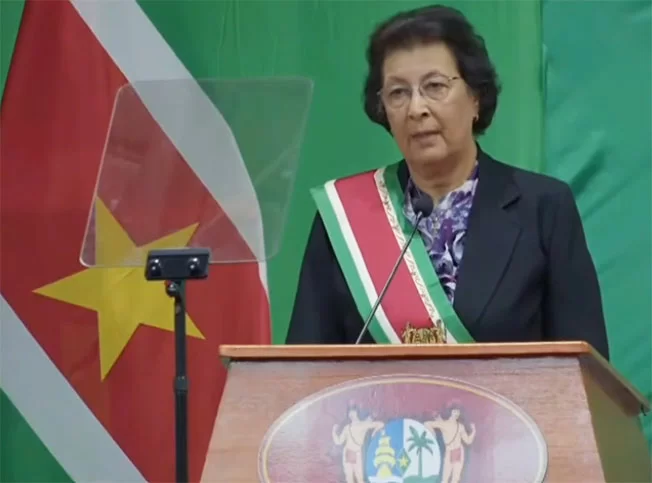
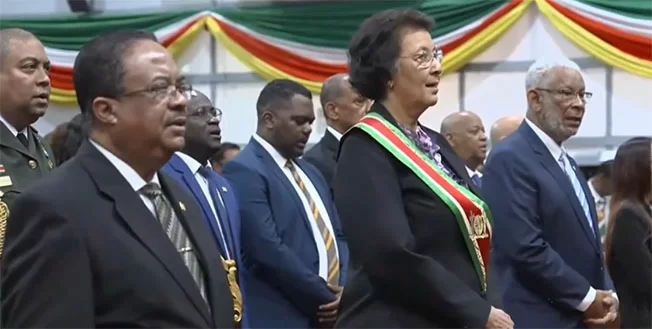
    On May 8, Suriname marks a major historical milestone: 160 years of institutional popular representation. This occasion is rightly a source of national pride, but it also demands unflinching reflection. Beyond the formal ceremonies and celebratory speeches planned for Wednesday’s extraordinary public parliamentary session, a pressing, uncomfortable question lingers: Who truly represents the Surinamese people in 2026?

    The trajectory of Suriname’s representative institution stretches back to the colonial-era Koloniale Staten established in 1866. After decolonization, it evolved into the Staten van Suriname, then the parliament of the independent Republic of Suriname, and today it exists as the National Assembly. Across all these iterations, the core mission has remained unchanged: to serve as a body that amplifies the public voice, oversees executive power, and guides the nation’s development. The 160th anniversary, therefore, is a natural moment to ask a fundamental question: How much of this original mission has been realized, and how much has slipped out of reach?

    Today, what too often plays out in the National Assembly is not the pure practice of popular representation, but a perpetual political battlefield where governing coalitions and opposition factions hold one another in a constant stalemate. The governing bloc acts largely as an extension of the executive branch, and partisan loyalty consistently outweighs the broader public interest. Public parliamentary debates have devolved little more than scripted political theater, where positions are predictable before any representative takes the floor.

    Recent years have only reinforced this grim picture. Political intrigue has become commonplace, with lawmakers frequently crossing the floor between factions. Backroom deals are rarely explained to the public, even as their impacts ripple across society. These trends have not strengthened public trust in representative institutions—they have eroded it dramatically. It is true that the assembly continues to formally function: laws are still passed, sessions are still held. But legislation itself is no achievement if it fails to improve the daily lives of ordinary Surinamese citizens. The question remains unanswered: How does this formal policymaking translate to tangible change beyond the walls of the parliamentary building?

    For years, the most pressing daily concerns of Surinamese society have remained unaddressed: affordable public housing, accessible public healthcare, quality education, and reliable social services. These are not abstract policy talking points—they are concrete, urgent worries for working people. And it is on these issues that the public ultimately judges the performance of its representative body.

    Equally fundamental is the National Assembly’s core oversight mandate. In theory, the body is the highest institution tasked with checking executive power. But in practice, the effectiveness of that oversight is increasingly open to question. Has the assembly truly forced the executive branch to deliver full transparency? Has it meaningfully improved governance across the country? Or has this critical role been weakened by the pressure of partisan loyalty and pre-negotiated coalition agreements?

    For all these reasons, the 160th anniversary of popular representation is not an occasion for unbroken celebration and nostalgic pride alone. It is a moment to openly acknowledge what needs to improve—even what needs fundamental change. Reform begins with the standards we set for people entering parliament. It is past time to have a more serious conversation about the profile of effective representatives, moving beyond basic eligibility requirements to focus on core qualifications and accountability. A representative should be more than a partisan candidate or a party loyalist; they must demonstrate proven commitment to public service, broad life experience in civil society, strong general knowledge, and at minimum a solid educational background.

    Even after candidates take office, the work of improving representation does not end. Every new cohort of parliamentarians should complete mandatory, structured training as a core part of their duties. Training in public administration, media engagement, and issue-specific preparation for sectoral committees is not an unnecessary luxury—it is a fundamental requirement. Without targeted knowledge and preparation, parliamentary oversight will always remain superficial, and legislation will always be vulnerable to gaps and misalignment with public needs.

    Beyond individual qualifications, it is also time to re-examine the institutional structure of the National Assembly itself. Important steps toward modernization were already taken during the tenure of former speaker Jennifer Simons, and that progress must be continued. One critical question to consider: Should the speaker of the National Assembly be an independent figure, selected from a pool of candidates put forward by all contesting parties? This would be a figure who stands above partisan politics, meets strict standards of authority, expertise, and governing experience. Such a reform could significantly strengthen the quality of parliamentary leadership and the overall performance of the body as a collective political institution.

    A parliament that only acts on partisan reflex quickly loses its meaning. A representative body that is out of touch with the concerns of the people it serves loses its legitimacy. That is why this 160th anniversary is less a celebration and more a critical wake-up call. The occasion is not just an opportunity to reflect on what popular representation has been over 160 years—it is a challenge to reclaim the original promise of the institution: to be the true voice of the Surinamese people, not the voice of parties and coalitions.

  • The Executive Order of May 1st and the blockade measures announced today increase the harm to the Cuban population and reinforce the threat of aggression

    The Executive Order of May 1st and the blockade measures announced today increase the harm to the Cuban population and reinforce the threat of aggression

    In a scathing official statement released on May 7, 2026 from Havana, Cuba’s Ministry of Foreign Affairs issued an unreserved rejection of a new executive order signed by the White House on May 1 that ramps up the decades-long U.S. economic, financial and commercial blockade of the island nation to never-before-seen, extreme levels.

    Beyond rejecting the core executive order, Cuban officials also condemned a follow-up action from the U.S. Department of the Treasury dated May 7, which added two major Cuban entities — state-run groups Gaesa and MoaNickel S.A. — to the U.S. List of Specially Designated Nationals. This designation marks the first coercive penalty implemented under the terms of the new May 1 executive order.

    Cuba’s foreign ministry describes the expanded measures as a brutal act of deliberate economic aggression that vastly expands the harmful extraterritorial reach of the long-standing U.S. blockade. Under the new rules, the U.S. can impose secondary sanctions on foreign companies, global banking institutions and third-country entities even when their commercial activities have no direct or legitimate connection to U.S. markets or operations.

    The statement outlines that these new restrictions will deal additional severe damage to Cuba’s already strained national economy, which has still been reeling from the devastating impact of a U.S.-led oil blockade imposed on January 29 this year that effectively paralyzed all fuel imports into the country.

    The Cuban government further accuses U.S. authorities of acting as a self-appointed global policeman, in open and flagrant violation of core tenants of international law and the fundamental principles governing free global trade in goods and services. The new measures, officials argue, directly and explicitly attack the sovereign right of all sovereign nations to establish or maintain economic, commercial and financial ties with Cuba, regardless of their own foreign policy priorities.

    Top U.S. leadership, particularly the Secretary of State, has engaged in widespread blackmail and intimidation campaigns to force the entire international community to comply with the U.S. blockade, according to the statement. No nation is immune from these threats, which Cuban officials frame as part of a decades-long campaign of harm against the Cuban people that amounts to an ongoing act of genocide. The end goal of the escalation, they say, is to force Cuba into complete isolation from global economic and financial systems.

    In a formal warning to the global community, Cuban officials emphasized that this act of aggression against the Cuban economy and its population will only achieve the destructive outcomes Washington intends if sovereign, independent nations choose to surrender to U.S. intimidation. The statement expresses confidence that the international community will not passively accept illegal U.S. regulatory overreach, will not surrender their sovereign equality, and will not leave their domestic businesses, citizens and financial institutions unprotected from unfair U.S. coercion.

    The statement notes that the global community has repeatedly opposed and condemned the nearly 70-year campaign of harm the U.S. has waged against the Cuban people. Cuban officials denounce the latest aggressive measures as criminal in nature, designed to push the entire Cuban population into hunger and desperation, and to trigger a large-scale social, economic and political collapse across the country. They also reject what they identify as a deliberate U.S. strategy to manufacture a humanitarian crisis in Cuba, as a pretext to justify even more dangerous actions against the island, including potential military aggression.

    Cuba reaffirmed that it will continue to use all international forums to denounce the illegal blockade, and called on the entire global community to stand against this latest escalation. The statement frames the new measures as a dangerous step forward in Washington’s long-standing goal of exerting total domination and control over Cuba’s national destiny, a move that violates the fundamental independence and sovereignty of all nations around the world.

  • Key Meeting Yields Breakthrough in San Marcos Land Dispute

    Key Meeting Yields Breakthrough in San Marcos Land Dispute

    A months-long simmering land conflict between Maya residents of San Marcos Village in southern Belize’s Toledo District and a private landowner has taken a major step toward resolution, following a productive high-level negotiation hosted by the national government this week. The small community, which counts just under 1,000 residents deeply rooted in centuries-old Maya cultural heritage, has been locked in a standoff over a section of land that villagers argue falls within their traditional communal territory. The dispute is not an isolated incident: it reflects a decades-long, widespread struggle for formal recognition of Indigenous land rights across southern Belize that has risen in urgency in recent months, with tensions threatening to escalate into open conflict prior to this week’s talks.

    On Wednesday, May 6, 2026, Belize’s Minister of Indigenous People’s Affairs Dr. Louis Zabaneh convened stakeholders at his ministry’s headquarters in Belmopan, bringing together elected leaders from San Marcos, representatives of the Toledo Alcalde Alliance (TAA) and the Maya Leaders Alliance (MLA), and legal representatives for the private landowner involved in the conflict. The meeting concluded with a binding, multi-step agreement designed to de-escalate tensions and establish a clear, formal process to resolve the boundary dispute. The core of the agreement commits both sides to a three-week waiting period during which technical surveyors from Belize’s Ministry of Natural Resources will conduct an independent on-the-ground assessment to map and formally demarcate the exact contested area. Dr. Zabaneh noted that both sides had agreed to abide by the initial survey result as a foundation for further negotiations. The agreement also comes as the government launches a long-promised formal review of national land rights legislation for Maya communities.

    Just two days before the San Marcos meeting, Dr. Zabaneh confirmed, the first convening of the cross-sectoral land rights review panel took place. The panel is structured to ensure equal representation: two government appointees will work alongside two leaders selected directly by the Maya leadership to review draft legislation addressing communal land title claims. Once the panel finalizes its revisions, the draft will advance to a Cabinet subcommittee before being introduced to the House of Representatives for a full vote. Dr. Zabaneh emphasized that this formal legislative process is the only legitimate path to securing formal land rights, and called on all stakeholders to avoid unilateral action or premature claims of absolute ownership while the process moves forward. The MLA has scheduled a community meeting with San Marcos residents this coming Friday to walk through the details of the new agreement and answer resident questions, with further updates expected after that gathering.

    Beyond the San Marcos breakthrough, Dr. Zabaneh addressed two other pressing controversial cases involving Indigenous community leadership in southern Belize during the same press briefing. The first is an alleged abduction of Marcos Canti, First Alcalde of the Indian Creek community, which occurred three weeks prior to the briefing. To date, no definitive official report or update on the incident has been released to the public, leaving many unanswered questions about what transpired, and whether a formal police report was ever filed. Dr. Zabaneh acknowledged that the lack of information has fueled widespread public uncertainty and even skepticism within government, noting that the ministry has formally requested an update from Minister of Home Affairs Kareem Musa, who is working with the Belize Police Department commissioner to conclude the ongoing investigation. The ministry expects a full public report will be released as soon as the probe is complete.

    The second open case involves a viral video that purportedly shows a sitting village alcalde from another southern Belize community committing a violent assault against a resident of his community. Dr. Zabaneh confirmed that the Office of Indigenous People’s Affairs has launched a formal investigation into the incident, and ministry staff will travel to the community in the coming days to conduct on-the-ground interviews and gather evidence. The minister stressed that the government maintains a zero-tolerance policy for all forms of violence in Indigenous communities, regardless of the underlying context of the conflict. “Violence can never be the answer to solve anything, regardless of what the circumstance may be,” Dr. Zabaneh told reporters. “As a country we cannot condone using violence for whatever, whether it is domestic violence or something going on in a village. Absolutely zero tolerance for that. We have to find a way to work and communicate with each other, and that is the way how we solve problems.” Local journalists will continue to follow all three cases, and will publish full updates as new information becomes available.

  • Politics Fuel Debate Over Gas Relief; Zabaneh Defends Government

    Politics Fuel Debate Over Gas Relief; Zabaneh Defends Government

    As global fuel market volatility continues to squeeze household budgets across small developing nations, a political dispute over consumer fuel relief has erupted in Belize, centered on a unilateral initiative launched by an opposition politician. The conflict began when United Democratic Party (UDP) figure Edward Broaster, representative for the Belize Rural Central constituency, rolled out an independent fuel assistance program for local constituents, drawing sharp pushback from ruling party officials who have labeled the effort a self-serving political stunt.

    Dr. Louis Zabaneh, the governing People’s United Party (PUP) Area Representative for Dangriga, openly challenged Broaster’s approach in a recent press interaction, stopping short of rejecting the goal of easing consumer burden but questioning the scope and intent of the single-constituency program. In his remarks, Zabaneh acknowledged that any targeted support aimed at reducing cost-of-living pressures for Belizean households is a welcome gesture in principle, even when launched by an opposition politician. But he argued that localized, constituency-only relief cannot match the scale of responsibility that falls to an elected national government, which is obligated to deliver support to every community across the country rather than just one electoral district.

    Zabaneh extended a direct invitation to Broaster to expand his initiative beyond Belize Rural Central, noting that sky-high fuel prices are a universal strain hitting every corner of Belize, not just a single constituency. “I would invite him to use his resources across the country. If he is able to do that, everybody needs relief. So, not just BRC, let’s do it all. Come to Dangriga and do that, we would love that,” Zabaneh stated. He pushed back against any implicit criticism that the current administration lacks compassion for struggling families, pointing out that the global energy market pressures driving Belize’s high fuel prices are completely outside of the national government’s control. Small, open economies like Belize are uniquely vulnerable to spillover shocks from international market volatility, he explained, meaning relief efforts that deliver national impact require millions of dollars in public spending that only a state can mobilize. He emphasized that the Briceño administration has already been working to mitigate the impact of these global headwinds for all Belizean citizens to the best of its ability.

    When asked whether he would back calls for Broaster to publicly disclose his program’s donors and total operating budget, Zabaneh declined to dive into detailed demands, but raised concerns about the political timing and motivation of the initiative. “I would not want to get into all of that and what he is doing. In this environment, in any environment where you are having a crisis, you should never do it for personal and political gain. If you do something out the kindness of your heart then great, but it does not have to cross the line where we are saying, if I can do it here then it should be done across the board,” Zabaneh said.

    The ruling party’s criticism extends beyond Zabaneh: News Five reached out to incumbent PUP Belize Rural Central Area Representative Dolores Balderamos-Garcia for comment, who also rejected the opposition’s program, describing it outright as a calculated “political gimmick.” Local journalists with News Five plan to deploy on the ground in Belize Rural Central on the following day to assess what real impact, if any, Broaster’s program has delivered to local constituents. This report is adapted from a transcript of an evening television news broadcast.

  • Who’s in the Dark Over Caye Caulker Police Station Plans?

    Who’s in the Dark Over Caye Caulker Police Station Plans?

    A long-running public dispute over the planned new police station on the Belizean island of Caye Caulker has entered a new phase, this time centered on accusations of poor communication between local elected leaders and national representatives. As of May 7, 2026, the Caye Caulker Village Council has publicly claimed that it has received no updates on stalled construction timelines for the controversial facility, leaving local governing bodies completely in the dark about the project’s status. However, Andre Perez, the area representative for Belize Rural South, is pushing back hard against those claims, arguing that all delays stem from logistical bottlenecks rather than intentional lack of outreach.

    In detailed comments responding to the council’s concerns, Perez explained that the construction halt was never a secret to local leadership. He confirmed that the project’s contractor was temporarily pulled away to complete work on a parallel police station build in the inland community of Bella Vista, and coordinating the shift of workers, heavy machinery, and construction supplies to the remote island location required significant lead time. Crucially, Perez announced that mobilization for the Caye Caulker project officially kicked off on the morning of May 7, with construction crews already on site to resume work. He dismissed the council’s complaints as overblown, emphasizing that both the council and the broader community were kept informed of the delay at every step.

    The dispute also extends to a second core demand from the village council: a formal transfer of ownership for the project’s land parcel to the local governing body. Perez has confirmed that this request cannot be accommodated under the current terms of the project’s funding. The entire build is financed through a loan agreement with the Central American Bank for Economic Integration (CABEI), which requires that all infrastructure built under the program remain under the formal ownership of a Government of Belize ministry or department – in this case, the Belize Police Department. Perez noted that without adhering to this requirement, the CABEI funding would never have been approved, and the project would never have moved forward. He emphasized that the facility will permanently serve the Caye Caulker community as a police station regardless of formal ownership, and that construction is set to ramp up in earnest over the coming days. Outlets will continue to provide updates as the project progresses.

  • Politiebond spreekt van ernstige verstoring overleg met korpsleiding

    Politiebond spreekt van ernstige verstoring overleg met korpsleiding

    A major rift has emerged between Suriname’s national police leadership and the Suriname Police Union, after the union launched a forceful protest over the sudden termination of a high-stakes negotiating session between the two parties last Wednesday.

    The breakdown of talks, held on May 6, centered on a disagreement over the participation of one union board member who has been temporarily suspended from active police duty pending an ongoing internal investigation. Police leadership took the firm position that the suspended member was not eligible to join the consultation as a representative of the union. When no compromise could be reached on the issue, senior police leaders exited the meeting room early, bringing the entire session to an unplanned close.

    In an official protest letter addressed to National Police Chief Melvin Pinas, union chairman Revelino Eijk has labeled the incident a “serious incident” that inflicts lasting damage on the institutional relationship between police command and the country’s police labor organization. Eijk emphasized that the abrupt end to talks has put the entire framework of social negotiation between the two sides under severe strain, leaving a slate of critical issues related to the welfare of rank-and-file officers and organizational development completely unaddressed.

    The union has pushed back firmly against police leadership’s stance, noting that the suspended board member attended the meeting in their capacity as a democratically elected representative of the labor union, not as an active duty police officer. The union maintains that the authority to decide the composition of its own negotiating delegation rests exclusively with the union itself, not with police management.

    To back its position, the organization cites Article 4 of Suriname’s 2016 Law on Trade Union Freedom, adopted on December 15 that year. The legislation explicitly prohibits employers from implementing discriminatory measures against trade union board members or representatives. The union argues that police leadership’s actions create the clear impression that the board member is being treated unequally and subjected to restricted treatment solely because of their role in the union.

    Eijk stressed that walking away from the table does nothing to foster a mature, constructive working relationship between the two sides. Differences of opinion could have been worked through through open dialogue, the union says, without shutting down the entire consultation process entirely. The incident represents a serious disruption to social dialogue that undermines healthy labor relations, mutual institutional respect, and productive collaborative work, the union added.

    This is not the first time the union has raised concerns about the dynamic between the two organizations: Eijk noted that the union has previously reminded police leadership of the critical importance of mutual respect, open communication, and respectful institutional engagement in the partnership between the two groups. The union is now calling for future negotiating sessions to be held in an environment rooted in professionalism, mutual respect, and open, constructive dialogue. A copy of the protest letter has also been sent to Harish Monorath, Suriname’s Minister of Justice and Police, for further review.