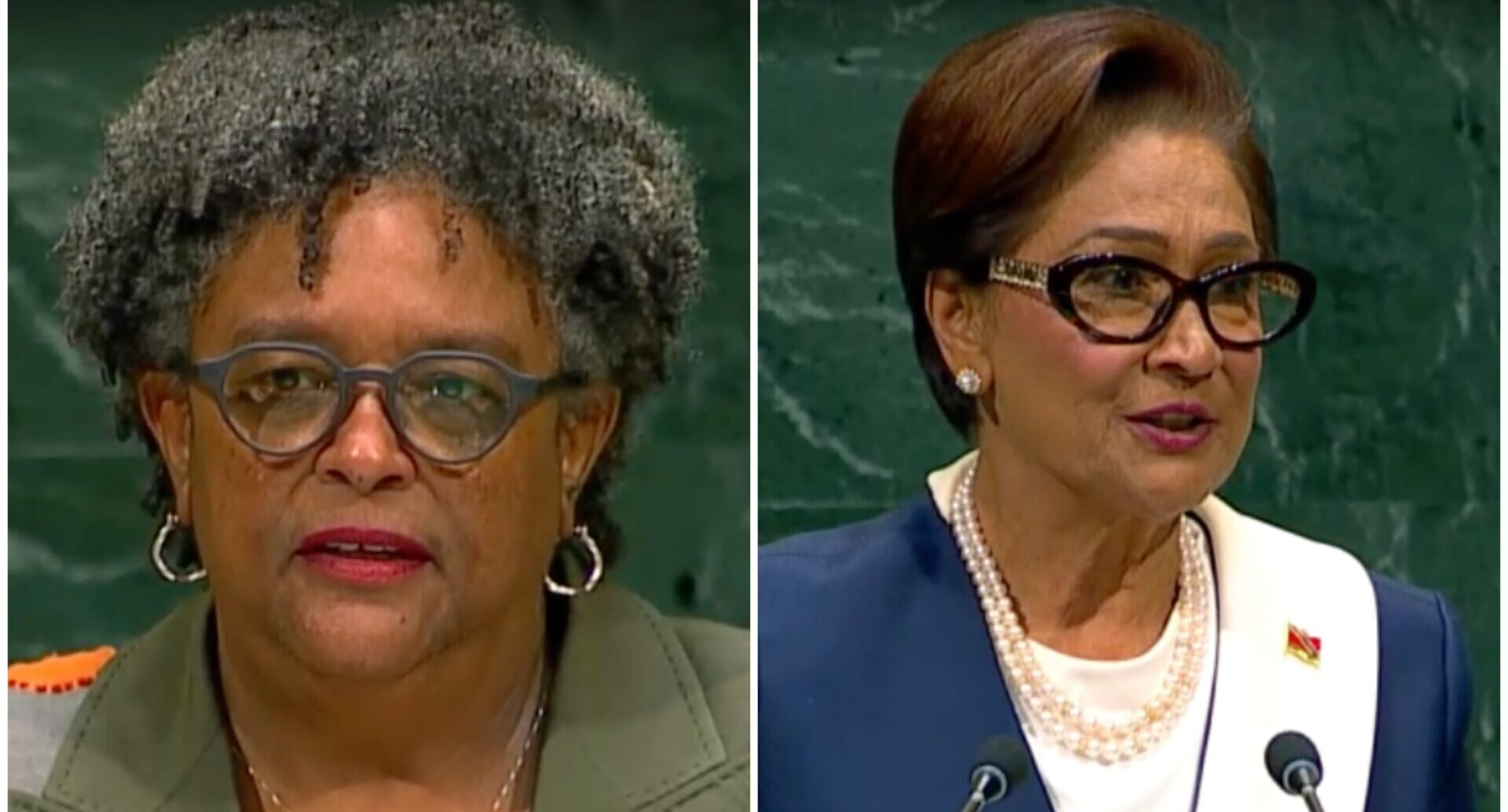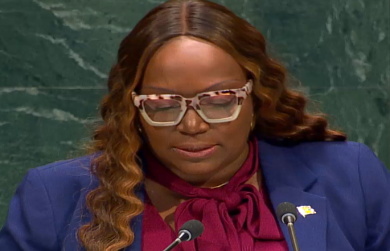
Against the backdrop of the 81st United Nations General Assembly (UNGA), Grenada’s delegation chair Ingrid Jackson used her address to the global body on Monday to amplify urgent calls for multilateral cooperation on a series of pressing global and regional issues, opening with deep concern over the humanitarian crisis unfolding in Cuba. The island nation’s top representative at the assembly drew specific attention to the lasting toll of unilateral U.S. economic pressure and the ongoing energy blockade, policies first ramped up during the Trump Administration when Washington imposed harsh targeted sanctions on Havana in an attempt to force regime change.
Jackson emphasized that the global community cannot turn a blind eye to the growing hardship facing ordinary Cuban households, with vulnerable groups including children, elderly people and low-income communities seeing their living conditions deteriorate further with every day the diplomatic and economic impasse remains unresolved. “Our humanitarian conscience cannot be indifferent to the circumstances of ordinary households, particularly children, the elderly and other vulnerable persons whose difficulty deepens with each passing day that the present impasse remains unresolved,” Jackson told assembled delegates.
In line with this humanitarian framing, Jackson called for constructive dialogue centered explicitly on the well-being of the Cuban people, urging a path toward tangible sanctions relief, improved living standards and expanded economic opportunity. She noted that progress requires both Havana and Washington to confront what she described as “very difficult but not insurmountable challenges”: ending punitive sanctions, lifting the decades-long embargo and blockade against the Cuban public, and advancing targeted domestic reforms that support ongoing public well-being — reforms that Jackson confirmed are already underway in Cuba.
Shifting focus to reform of the UN’s multilateral system, Jackson announced that Grenada joins the entire Caribbean Community (Caricom) bloc in unreservedly backing Guyanese Ambassador Carolyn Rodrigue-Birkett’s candidacy for United Nations Secretary-General. Caricom leaders have formally endorsed Rodrigue-Birkett as the region’s candidate, and Jackson highlighted her extensive track record of diplomatic leadership, including distinguished service as Guyana’s foreign minister and permanent representative to the UN. Her career, Jackson argued, demonstrates unwavering commitment to diplomatic dialogue and cross-border cooperation.
“The Caribbean has long demonstrated that size does not determine the strength of our ideas, the quality of our leadership or the values of our contribution to the international community,” Jackson said. She added that Rodrigue-Birkett is eminently qualified to represent all UN member states, and her election would mark a historic milestone for the Caribbean, as well as a powerful confirmation that small island developing states (SIDS) can contribute meaningfully to leadership at the highest levels of global multilateral governance.
Turning next to the ongoing security and humanitarian crisis in Haiti, Jackson reiterated Caricom’s call for the timely renewal of the mandate for the Gang Suppression Force (GSF), alongside full, rapid deployment of the force in close partnership with the Haitian National Police. She stressed that the mission must receive adequate personnel, sustainable financing, modern equipment and full logistical support to carry out its mandate effectively, with clear, enforceable human rights safeguards built into all operations.
These security interventions, Jackson argued, are a critical foundation for creating the conditions necessary to hold credible, free, fair and inclusive elections led entirely by Haitians, strengthen national governance institutions and restore constitutional rule to the country. Rejecting common narratives that frame Haiti as a failed state, Jackson emphasized that the country holds an unfulfilled promise to its people that the international community must honor with purposeful, sustained action rather than temporary pity. Even as the global community prioritizes resolving the security crisis, she added, life-saving humanitarian assistance must remain a core pillar of all intervention efforts.
Jackson framed the 81st UNGA, which convenes under the official theme “Restoring Trust, Managing Transformation: a United Nations that delivers for all,” as occurring at a moment of unprecedented global transformation. While the interconnected challenges facing the world are complex, she noted, they also present a rare opportunity to renew global commitments to cooperation and craft practical, people-centered solutions that improve quality of life across all nations.
For Grenada, Jackson explained, restoring trust in multilateralism requires moving beyond empty rhetorical declarations to tangible, actionable delivery. “Restoring trust means demonstrating through our actions that international cooperation produces results. It means listening to one another. It means respecting the voices of small states as much as those of large ones. It means building genuine partnership, and it means ensuring that every country has the opportunity to pursue its legitimate development aspirations,” Jackson said.
Grenada approaches the UNGA with a spirit of partnership, optimism and constructive engagement, Jackson confirmed, and remains firmly committed to the core purposes and principles of the UN Charter, international law, peaceful dialogue and the peaceful resolution of cross-border disputes. “In an increasingly interconnected world, cooperation is not merely desirable, it is indispensable,” she said, adding that the systemic transformation global leaders advocate for internationally must also be reflected in domestic policy agendas.
At home, Jackson outlined, Grenada is advancing an ambitious, long-term development roadmap ahead of its 75th anniversary of independence, rooted in an unwavering commitment to people-centered transformation. For the small island nation, this means building climate and economic resilience while expanding opportunity, growing the national economy while protecting fragile ecosystems, and embracing digital and technological innovation while upholding core human values.
As a SIDS, Jackson noted, Grenada has extensive firsthand experience building resilience to external shocks, but decades of experience have made clear that resilience cannot be built after a disaster strikes. “We must invest before the storm, prepare before the emergency bill, before the damage is done and finance resilience before countries are forced to borrow simply to rebuild what they have lost,” she said.
This proactive approach requires expanded global cooperation on climate adaptation, disaster preparedness, climate-resilient infrastructure and accessible climate financing, Jackson argued. She pushed back against framing SIDS as merely victims of climate change, noting that these nations have emerged as global leaders and laboratories for innovative resilience-building strategies.
Climate action remains one of the most critical areas where collective global effort can drive profound, positive change, Jackson emphasized. Grenada remains fully committed to strengthening resilience and advancing sustainable, low-carbon development, but she warned that policy ambition without tangible implementation is nothing more than empty aspiration. For vulnerable climate frontline states, she added, global climate commitments must be paired with reliable access to the financial and technical resources needed to deliver on those promises.
Jackson called for climate financing to be made more accessible, predictable and responsive to the needs of frontline states. “Our objective should not simply be to help vulnerable countries recover from the next disaster. Our objective must be to transform vulnerability into resilience and resilience into sustainable opportunity,” she said.
This shift toward vulnerability-aware development must also extend to reform of the international financial system, Jackson argued. She welcomed growing global recognition that national development and vulnerability cannot be measured by income alone, noting that the United Nations’ Multidimensional Vulnerability Index offers a critical framework to more accurately account for the unique structural challenges facing SIDS.
Grenada’s vulnerabilities, like those of other small island states, are shaped by disproportionate exposure to climate change, extreme natural disasters, volatile external economic shocks and other structural barriers that cannot be adequately captured by per capita income metrics alone. For this reason, Jackson encouraged all UN member states, development partners and international financial institutions to adopt vulnerability-informed approaches to development financing. Expanded access to concessional financing, climate finance, disaster risk financing and innovative financial instruments, she argued, can help vulnerable nations move from chronic vulnerability to proactive resilience, and from post-disaster recovery to long-term, sustainable inclusive growth.