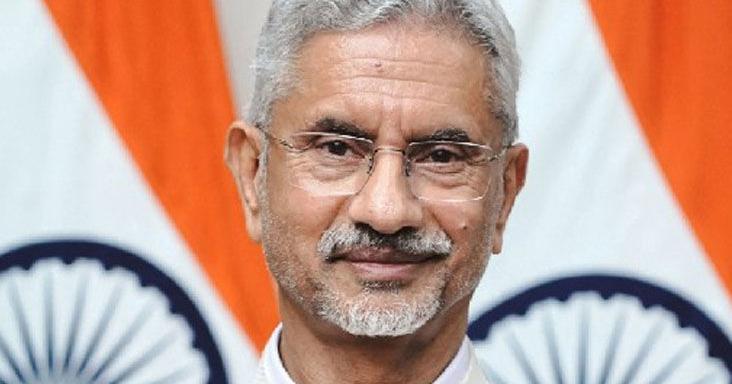
A new chapter of deepened bilateral cooperation between India and Trinidad and Tobago (T&T) is set to unfold this week, as India’s Minister of External Affairs Dr. Subrahmanyam Jaishankar commences a high-stakes two-day official visit to the Caribbean nation. This stop forms part of Jaishankar’s broader 9-day regional tour encompassing Jamaica, Suriname, and Trinidad and Tobago, running from May 2 to 10, aimed at advancing mutually beneficial ties across the Caribbean. The visit is rooted in the momentum generated by Indian Prime Minister Narendra Modi’s official trip to T&T in July of last year, which saw a suite of bilateral memoranda of understanding (MoUs) signed to expand partnership. According to T&T’s Foreign and Caricom Affairs Minister Sean Sobers, Jaishankar’s visit will turn those signed agreements into tangible, on-the-ground action, with both governments sticking closely to the implementation timeline agreed 12 months prior.
Jaishankar’s packed official itinerary kicks off this afternoon at T&T’s Parliament building, where T&T Prime Minister Kamla Persad-Bissessar will deliver an official welcoming address. Following the opening ceremony, the two top leaders will hold formal bilateral talks to align on shared priorities. After discussions, the delegation will move to the Rotunda Gallery for a formal MoU exchange ceremony and the official handover of a batch of laptops donated as part of people-to-people cooperation.
On the second day of the visit, Saturday, the joint delegation will travel to Nelson Island, where both leaders will deliver public remarks and unveil a commemorative plaque honoring shared historical ties. Next on the schedule is a ribbon-cutting ceremony for a new agro-processing facility at Namdevco in Brechin Castle, Couva, marking progress in agricultural development cooperation. A flagship initiative of the visit will follow: the official launch of T&T’s National Prosthetics Programme in the town of Penal, where Persad-Bissessar will deliver the keynote address and unveil a second commemorative plaque for the program. The visit will wrap up with two key engagements: an official lunch reception hosted by Persad-Bissessar in Penal, and a community reception at the Mahatma Gandhi Institute for Cultural Cooperation in Mt Hope, where Jaishankar will meet and interact with members of the large Indian diaspora community in T&T.
India’s Ministry of External Affairs has framed the entire regional tour as an effort to sustain the pace of high-level political engagement with the three Caribbean nations, while strengthening longstanding partnerships rooted in South-South cooperation and shared development goals. In a pre-visit op-ed published in a T&T newspaper Wednesday, Jaishankar outlined his priorities for the talks, noting that discussions will center on delivering concrete, actionable outcomes and accelerating the rapid expansion of bilateral economic engagement between India and T&T.
He highlighted that bilateral trade between the two nations has seen a dramatic upswing in recent years, having nearly doubled over the past five years to hit a current annual volume of US$350 million. Against a backdrop of global economic turbulence and volatile commodity markets, Jaishankar noted that energy cooperation has emerged as a central pillar of the bilateral relationship, with growth prospects only strengthening in coming years. Trade is also expanding steadily across a range of other key sectors, including healthcare and pharmaceuticals, automotive manufacturing, industrial machinery, iron and steel, and textiles and apparel. Notably, Jaishankar added, Trinidad and Tobago has become the first country in the Caribbean region to agree to roll out India’s United Payment Interface (UPI), a digital platform that enables low-cost, seamless cross-border digital payments.
Looking ahead, Jaishankar emphasized that the two nations hold immense untapped potential for expanded cooperation, a potential amplified by India’s far-reaching economic and technological transformation over the past decade. He noted that many of India’s homegrown development experiences can offer actionable, relevant models to support T&T’s own national development agenda. Key areas of mutual interest for future collaboration include the development of digital public infrastructure, frameworks for expanding access to affordable medical care, cutting-edge agricultural technologies, and specialized training modules for public sector professionals. “My expectation is that more conversations on changes under way will generate new ideas for our bilateral agenda,” Jaishankar added, signaling a forward-looking approach to deepening the decades-long partnership between the two nations.