分类: politics

  • Caddle advocates for a worker-focused benefits system

    Caddle advocates for a worker-focused benefits system

    A landmark proposal aimed at rethinking social security for Barbados’ evolving workforce is currently advancing through parliamentary debate, promising to close critical protection gaps for gig workers, freelancers and people holding multiple jobs. The National Portable Benefits Framework, tabled by St George North Member of Parliament Toni Moore as a Private Members Resolution, is designed to delink worker benefits from individual employers, ensuring coverage stays with people across every stage of their working lives.

    Minister of Economic Affairs and Planning Marsha Caddle has emerged as a key proponent of the plan, explaining that the proposed system would allow multiple employers to contribute to a single worker’s benefits account at the same time, creating an uninterrupted stream of coverage that moves with the employee from role to role. The framework covers core social security supports, including retirement pensions, maternity benefits, disability assistance and other forms of worker protection, upending the traditional model that ties eligibility to permanent employment with a single organization.

    Caddle framed the proposal as a necessary evolution of policy that balances two critical national goals: labor protection and national productivity. The minister noted that the government is already moving to establish a new Competitiveness and Productivity Commission, acknowledging that Barbados currently faces systemic challenges in boosting productivity across all sectors, not just among individual workers. She argued that productivity and worker security are not opposing goals – instead, workers perform far better when they can count on predictable, consistent access to benefits, a stability the current system fails to deliver for non-traditional workers.

    Drawing on her own professional experience working as an independent consultant, Caddle called out outdated biases in key institutions that exclude flexible workers. She explained that financial institutions still routinely assess creditworthiness based on a borrower’s employer rather than their actual income or reliability, a system that reduces non-traditional workers’ worth to their association with a single entity. She described this outdated mindset as a leftover “plantation mentality” that has no place in a modern economy where work patterns are rapidly shifting.

    The framework, Caddle emphasized, is more than a policy change – it is a societal shift that challenges government bodies, financial institutions and communities to adapt to new ways of working. It requires more nuanced, flexible systems that can accommodate diverse work arrangements, a complexity that she says is necessary to build an inclusive economy that serves all workers.

    To implement the portable benefits model, Caddle confirmed that revisions to the current Employment Rights Act will likely be required, as existing legal definitions of “employer” and “employee” are too rigid to fit flexible work arrangements. The proposed system also shifts a degree of responsibility for benefits management to workers themselves, ensuring that coverage is no longer controlled entirely by a single employer that can cut off access when a worker changes roles. Instead, workers will take a more active role in managing their own benefits, coordinating contributions from multiple clients or employers to maintain continuous coverage.

    Finally, Caddle highlighted that successful rollout of the policy will depend on robust public outreach and education led by the National Insurance and Social Security Service (NISSS), to ensure all workers understand how the new system operates and how they can access their benefits. The House of Assembly resumed debate on the resolution Friday, moving the transformative proposal one step closer to potential implementation.

  • MP Ron Redhead set to take over ICT portfolio from 1 June

    MP Ron Redhead set to take over ICT portfolio from 1 June

    In a public announcement made during the official launch of the International Girls in ICT Day–AI Innovation Challenge this past Friday, Grenada Prime Minister Dickon Mitchell revealed a key shift in cabinet leadership: long-serving legislator Ron Redhead, the Member of Parliament for St George North East, will assume full responsibility for the country’s ICT portfolio starting June 1. Currently, Mitchell himself oversees Grenada’s ICT and digital transformation strategy, a responsibility he has held alongside multiple other high-level cabinet posts that include Prime Minister, National Security, Public Administration, Infrastructure and Information. A formal official statement confirming Redhead’s appointment is scheduled to be released by the Prime Minister in the coming days.

    Redhead first entered public office following the National Democratic Congress’ (NDC) historic 9-6 election victory in June 2022, where he won his seat for St George North East. After the NDC took power, he was appointed Minister of State for Youth and Sports, a position he stepped down from during the government’s 2024 cabinet reshuffle. At the time of that reshuffle, administration officials clarified that the departure would allow Redhead to complete his university degree while continuing to carry out his duties as an elected Member of Parliament. Now, he is set to rejoin the cabinet ahead of his upcoming graduation.

    At the end of this month, Redhead will graduate from St George’s University, having completed his academic program while balancing the full demands of his parliamentary role. Prime Minister Mitchell emphasized the significance of this achievement during his announcement, framing Redhead’s journey as a powerful example of lifelong learning and persistent goal pursuit even amid challenging circumstances. “He has a unique story to share,” Mitchell noted. “I highlight this because it’s important for us to understand that we can work and continue to educate ourselves and continue to pursue our dreams, even in pretty difficult circumstances.”

    Mitchell argued that Redhead’s experience combining senior public policymaking and ongoing higher education leaves him uniquely positioned to lead Grenada’s digital development. “The fact that he is a Member of Parliament, the fact that he’s a politician, the fact that he is responsible for policymaking, is all the more reason why he recognised the need to pursue and continue his education,” Mitchell added. The Prime Minister also emphasized that the portfolio shift will bring much-needed dedicated focus to Grenada’s expanding ICT and digital transformation agenda. Unlike the current arrangement where the portfolio is held by the Prime Minister alongside multiple other major responsibilities, Redhead will have no conflicting high-priority duties, allowing him to devote full attention to advancing the country’s digital goals. “I’m sure he’ll be happy to take on his new portfolio. I’m sure those members of the ICT team will be happy to have a minister who has the time and no competing priorities to ensure that we can continue to push ICT and the digital transformation in Grenada,” Mitchell said.

    A well-known younger figure within the ruling NDC party, Redhead has not yet commented on his upcoming appointment: attempts by reporters to reach him for a statement on Friday were unsuccessful.

  • UDP’s Edward Broaster Calls PM’s Fuel Tax Cut “Peanuts”

    UDP’s Edward Broaster Calls PM’s Fuel Tax Cut “Peanuts”

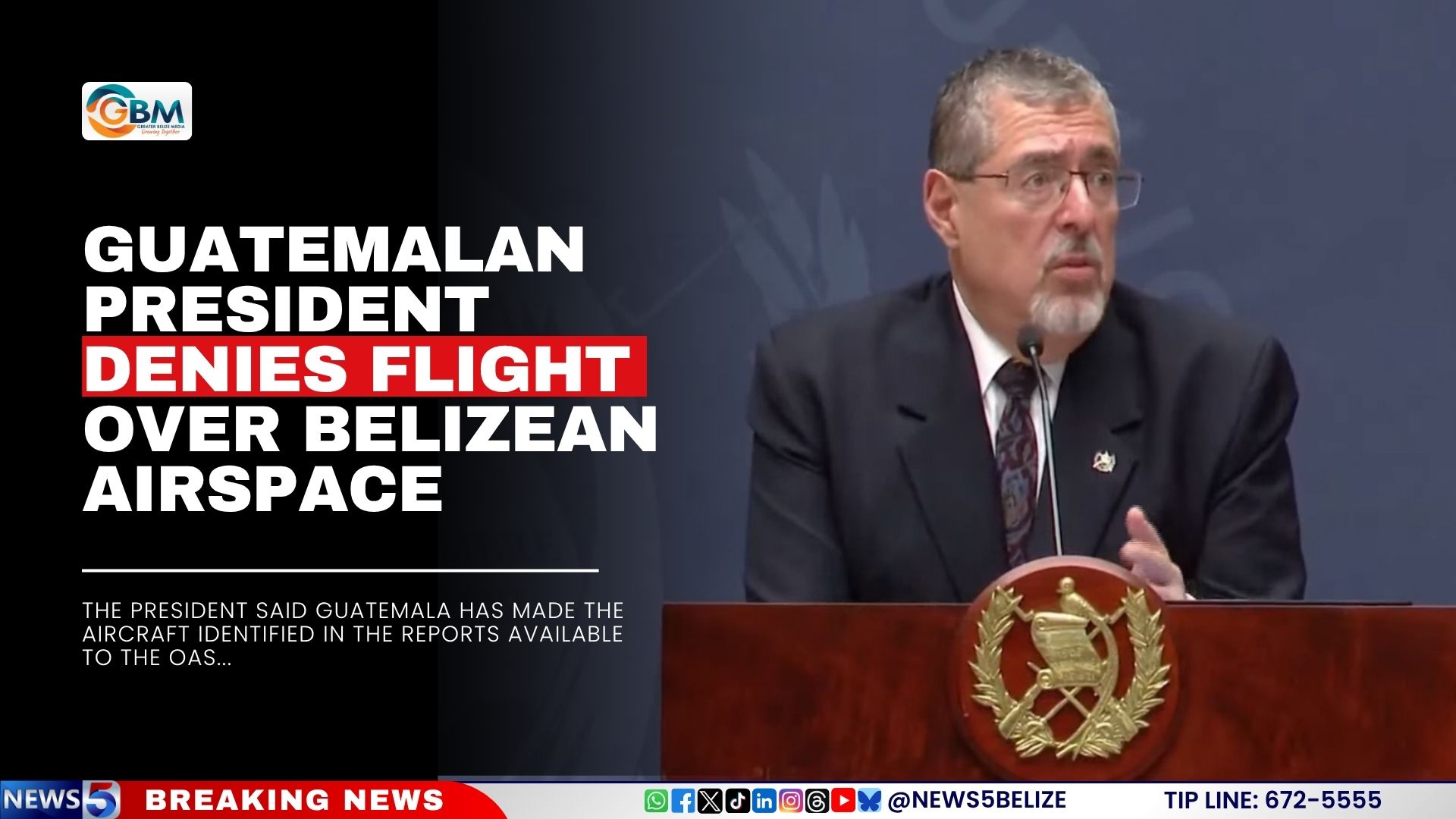
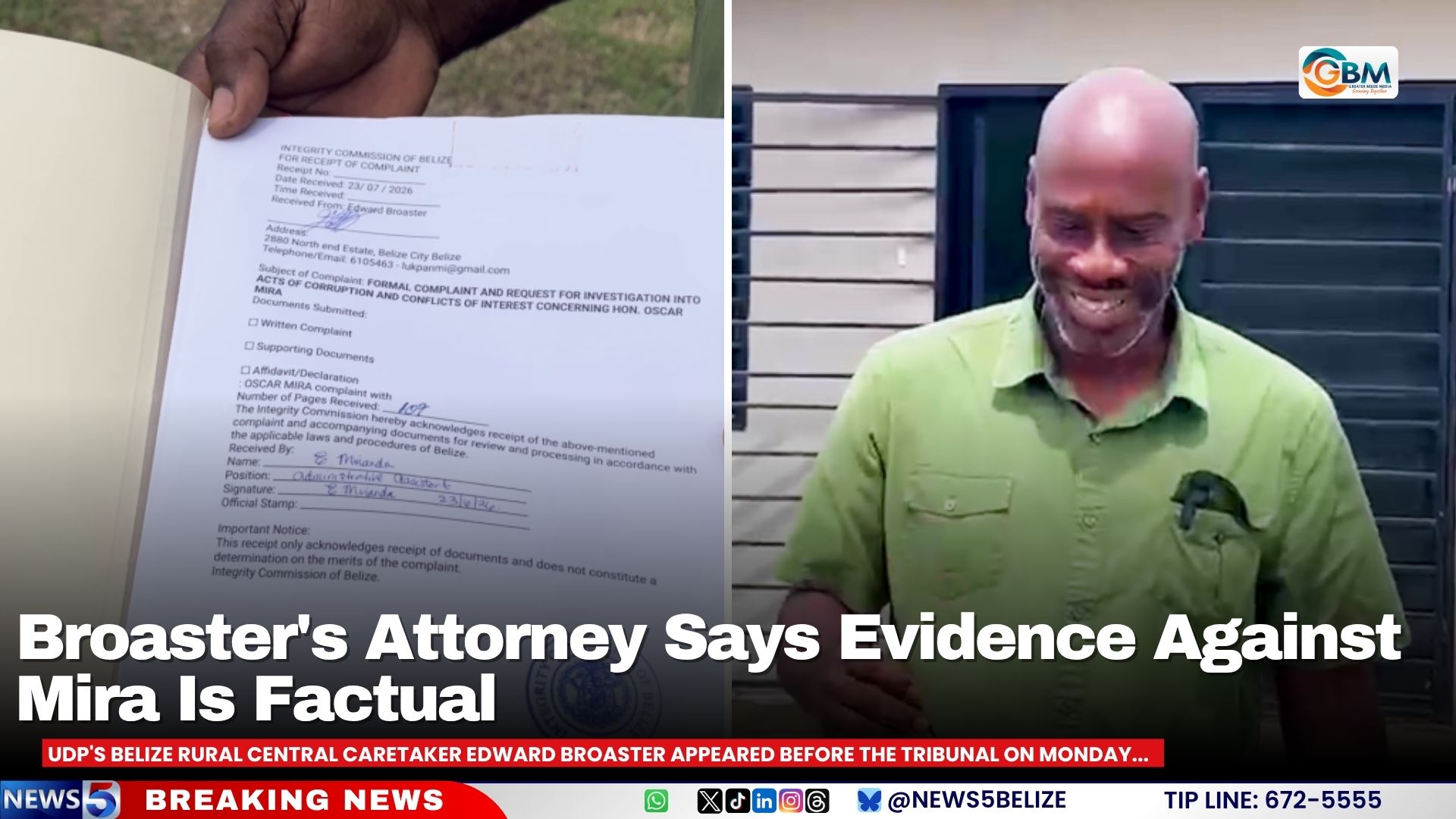
    On May 8, 2026, political tensions over fuel pricing in Belize flared up after United Democratic Party (UDP) caretaker candidate for Belize Rural Central Edward Broaster publicly dismissed Prime Minister John Briceño’s recently announced fuel tax cut as nothing more than “peanuts” — a negligible gesture that fails to address the crippling cost pressures facing working-class Belizeans.

    Broaster made the critical remarks during a local event at the Northern Gas Station in his constituency, where he personally rolled out a temporary $2 per gallon fuel subsidy for local residents, covering costs for up to 10 gallons per qualifying vehicle. During the event, he argued that the prime minister has deliberately chosen to leave the most burdensome fuel levies untouched, even after announcing a 68% cut to the national excise tax on fuel. In Broaster’s view, the remaining environmental taxes and general sales tax (GST) applied to fuel are what continue to squeeze household budgets for ordinary working people across the country.

    “That is giving the government the big bite from the fuel that the prime minister refused to touch,” Broaster told attendees. “He can’t blame it on the war.”

    The local subsidy initiative has sparked pushback from ruling party politicians, who have framed Broaster’s move as a cynical political stunt. Dolores Balderamos-Garcia, the sitting Area Representative for Belize Rural Central, has already dismissed Broaster’s program as a blatant “political gimmick” designed to score cheap votes ahead of potential elections. Additionally, Dr. Louis Zabaneh, the Area Representative for Dangriga, had previously challenged Broaster to expand his fuel relief program to a national scale — a call Broaster has rejected, arguing that meaningful national relief is the responsibility of the incumbent administration, not individual opposition politicians.

    Broaster doubled down on his criticism of the Briceño government, arguing that the administration has failed to deliver the substantive cost-of-living relief it promised to voters. “They really don’t care about the people,” he said. “They’re the ones who have the power to reduce fuel prices across the board.”

    In additional comments made during an interview earlier this week, Broaster revealed that he is already developing a follow-up initiative: a week-long fuel relief program specifically targeted at public bus commuters, who rely on fuel-powered transit for daily travel to work, school, and essential services.

  • Guyana appeals to ICJ for “clear”, final, binding judgement to avoid Venezuela from continuing Essequibo claim

    Guyana appeals to ICJ for “clear”, final, binding judgement to avoid Venezuela from continuing Essequibo claim

    On Friday, 8 May 2026, Guyana presented its penultimate and closing oral arguments before the United Nations’ highest judicial body, the International Court of Justice (ICJ) based in The Hague, Netherlands, pushing for a definitive resolution to its decades-long territorial dispute with neighboring Venezuela.

    Guyanese officials expressed cautious optimism that the ICJ will formally uphold the legal validity of the 1899 Arbitral Award, the document that originally established the full land boundary between the two South American nations. Attorney General Anil Nandlall emphasized that any vague or qualified ruling from the court would create an opening for Venezuela to perpetuate its territorial claims against large portions of Guyana’s sovereign land.

    “It is essential that the court’s judgment directly, explicitly and unambiguously affirms the validity of the 1899 award in its integrity and the boundary which it established, and elucidates the ineluctable legal consequences which flow therefrom,” Nandlall told the court. “Any ambiguity or qualification in the court’s judgment will inevitably be seized upon by Venezuela as a basis for continuing to lay vast swaths of Guyana’s sovereign territory.”

    Carl Greenidge, Guyana’s designated agent to the ICJ, wrapped up the country’s oral arguments by laying out a series of specific demands for the court’s final ruling. Most notably, Greenidge called on the ICJ to order Venezuela to withdraw its military forces from Ankoko Island, a territory legally recognized as part of Guyana under the 1899 award that has been occupied by Venezuelan troops since 1966.

    Greenidge asked the court to issue a valid, binding judgment confirming that the boundary set out in the 1899 award and a 1905 supplementary agreement stands as the official international border between the two countries. Under this framework, he added, the court should explicitly confirm Guyana’s full sovereignty over all territory falling on its side of the border, and formally obligate Venezuela to respect that sovereignty and territorial integrity.

    Citing Venezuela’s repeated failure to comply with two previous ICJ provisional orders issued on 1 December 2023 and 1 May 2025, Greenidge pressed the court to include mandatory enforcement measures in its final ruling. Beyond the withdrawal from Ankoko Island, he asked the ICJ to require Venezuela to abandon all claims of sovereignty over any Guyanese territory as defined by the 1899 award, and to refrain from any actions that violate Guyana’s sovereign rights.

    Greenidge reiterated Guyana’s legal demand that Venezuela revoke all domestic measures that assert control over claimed Guyanese territory, including national laws, executive decrees, and administrative actions that purport to annex or administer land under Guyanese sovereignty. Specifically, he called for the repeal of Venezuelan legislation that purports to absorb Guyana’s Essequibo Region into Venezuelan territory and extend Venezuelan legislative, executive, and judicial jurisdiction over the area.

    Greenidge also demanded that Venezuela dissolve all state entities created to exercise control over claimed Guyanese territory, most prominently the Venezuelan High Commission for the Defense of Guayana-Esequiba, along with all related executive, legislative, and administrative agencies. He added that Venezuela should be ordered to end social welfare programs and ongoing population censuses targeting the Essequibo region, as well as halt all military activities carried out to advance Venezuela’s territorial claims.

    In a final demand, Greenidge stated the court should require Venezuela to stop public claims and state educational curricula that frame the 1899 Arbitral Award as invalid or fraudulent, and that portray Venezuela as having been wrongfully deprived of the Essequibo Region. Venezuela would also be required to revise all official national maps that incorrectly depict any part of Guyana’s territory as Venezuelan territory, and remove all incorrect materials from public institutions, Greenidge said.

    Venezuela is scheduled to present its final oral arguments in the case next Monday, bringing the public phase of the historic proceeding to a close before the ICJ begins deliberations to issue its final binding ruling.

  • NaRRA brings heat to the Senate

    NaRRA brings heat to the Senate

    Long stereotyped as the more measured, low-temperature chamber of Jamaica’s bicameral parliament, the Senate transformed into a charged political battlefield on Friday, as sharp ideological clashes erupted over the deeply contentious National Reconstruction and Resilience Authority (NaRRA) Bill. The legislation, which the ruling government is pushing to fast-track in the wake of last October’s catastrophic Category 5 Hurricane Melissa, has split the upper house along partisan lines, pitting demands for urgent disaster recovery against warnings of unchecked executive overreach.

    On one side, government senators frame the NaRRA Bill as a critical, transformative intervention to address the unprecedented devastation left by the storm, which damaged or destroyed infrastructure equal to 56% of Jamaica’s entire annual gross domestic product. On the other, opposition lawmakers have launched a relentless campaign against the legislation, arguing that it concentrates dangerous levels of power in the executive branch, erodes critical oversight safeguards, and sets the stage for future constitutional crises similar to past controversial government policies.

    The most heated exchanges of the day centered on the opposition’s demand that the bill be referred to a joint select committee for expanded cross-party scrutiny and public consultation. Opposition leaders argue that any legislation of this magnitude, which will reshape how post-disaster recovery is governed for years, requires broad input from civil society and communities before it can be signed into law. Government senators have rejected these calls as unworkable, arguing that the urgent timeline of post-disaster reconstruction—paired with the impending start of a new Atlantic hurricane season—leaves no room for months of delay that a lengthy consultation process would bring.

    Leader of Opposition Business in the Senate Donna Scott-Mottley led the charge against the bill, drawing a direct parallel between the NaRRA legislation and the polarizing National Identification and Registration Act (NIDS), which was ultimately struck down in whole or in part by Jamaica’s Constitutional Court over constitutional violations. Scott-Mottley warned that the government is repeating a dangerous pattern of rushing sweeping, high-stakes legislation through parliament despite widespread pushback from civil society groups and the opposition, while refusing to accommodate amendments or address legitimate concerns.

    She stressed that Jamaicans have every reason to fear granting broad, unaccountable powers to a new standalone authority, particularly given the administration’s history of facing successful constitutional challenges to major legislation. Scott-Mottley also directly refuted the government’s core argument that extraordinary new powers are needed to speed up recovery, pointing out that six months after Hurricane Melissa, thousands of impacted residents are still living in inadequate temporary housing, including converted school buildings, despite the existence of existing state disaster response agencies.

    “Did you need a NaRRA to help the people from Westmoreland? Did you fail to help the people from Westmoreland because you had no NaRRA?” Scott-Mottley asked during her speech. “You have people who have just been removed from shelters into surroundings which are far from adequate. You have people who live in a school — hanging out their clothes on a line, and indeed cohabit in the school — because the school has become their home. That is how you deal with people? That is how you handle people who are suffering? And then come to tell me that a strategic investment has people at the heart when for six months they are driving down in St Elizabeth that they say don’t look any different from the day the hurricane hit.”

    Government senators pushed back aggressively against these criticisms, rejecting claims that the bill lacks sufficient accountability guardrails and reiterating that the scale of destruction from Hurricane Melissa demands unprecedented urgency and decisive executive action. Senator Abka Fitz-Henley argued that Jamaica simply cannot afford to drag its feet on reconstruction, noting that at the current pace of standard government capital spending, it would take 25 years to fully repair all damage from the storm.

    Fitz-Henley also pushed back against claims the bill opens the door to corruption, arguing that many of the civil society groups leading criticism of the legislation are secretly aligned with the opposition People’s National Party (PNP) and engaging in selective partisan outrage. Government Senator Kavan Gayle echoed this defense of the decision to bypass a joint select committee, noting that the formal consultation process would require weeks of waiting for submissions, scheduling hearings, and building consensus—time Jamaica does not have as it enters the peak of the annual Atlantic hurricane season.

    Opposition Senator Cleveland Tomlinson countered that speed cannot come at the cost of constitutional checks and balances, warning that the bill grants sweeping authority to a single minister to override existing regulatory bodies without requiring public gazetting, parliamentary reporting, or any formal public record of the action. He also criticized provisions that exempt approved NaRRA projects from key parts of the Public Investment Management System, arguing that the lack of oversight is a deliberate choice that creates an open invitation to mismanagement and graft. “Speed without scrutiny is not efficiency — it is an invitation to waste,” Tomlinson said.

    In an emotional address to the chamber, Government Senator Rosemarie Bennett-Cooper urged lawmakers not to lose sight of the ongoing human cost of Hurricane Melissa, which she said continues to impact thousands of Jamaican families long after the storm passed. “Long after the winds subsided and the floodwaters receded, what remains are not simply damaged buildings and broken infrastructure; what remains are the faces of Jamaicans who are trying to make sense of loss,” Bennett-Cooper said. She also sought to reassure the public that the bill does not seek to dismantle existing development laws or bypass all required regulatory approvals for reconstruction projects.

    Friday’s debate in the Senate marks the latest flashpoint in what has become one of the most divisive legislative fights in Jamaica in recent memory. The debate comes one week after chaotic, overnight scenes in the House of Representatives during consideration of the same bill, highlighting how deeply partisan the proposal has become. If passed, the NaRRA Bill would create a centralized authority tasked with coordinating all post-Hurricane Melissa reconstruction work and streamlining approval for major infrastructure and recovery investment projects across the island.

  • Canada, Guyana leaders emphasise ‘strong’ ties

    Canada, Guyana leaders emphasise ‘strong’ ties

    TORONTO, Canada – In a high-level bilateral meeting held in Toronto this Friday, Canadian Prime Minister Mark Carney and Guyana’s President Dr Mohamed Irfaan Ali have publicly reaffirmed the long-standing and robust relationship between their two nations, according to an official announcement from the Government of Canada.

    A core foundation of this close partnership, officials stressed, is the large and active Guyanese diaspora in Canada, which numbers more than 100,000 people of Guyanese ancestry who have built lives and connected communities across the country. Within the Caribbean Community (Caricom), Guyana stands out as one of Canada’s most significant trading partners, a fact highlighted in the government’s official statement.

    During their discussions, the two leaders focused heavily on expanding economic collaboration, particularly Canada’s position as a stable, dependable partner for trade and cross-border investment. The talks explored avenues to grow Canadian capital inflows into multiple key sectors of Guyana’s economy, including energy production, digital technology, agriculture, and mineral exploration and mining.

    Prime Minister Carney also extended his warm regards and well wishes to the Canada-Guyana Chamber of Commerce, which is currently hosting a business forum in Toronto. The event doubles as a celebration of two milestone occasions: 60 years of Guyana’s sovereign independence, and six decades of formal diplomatic relations between the two countries. Following the productive talks, Carney confirmed that he plans to undertake an official visit to Guyana at a future date, and both leaders have committed to maintaining regular, close communication on bilateral and regional issues moving forward.

    The Canadian government’s statement outlined the deep historical roots of the bilateral relationship, which has evolved over more than 50 years across multiple spheres. Beyond trade, the partnership is anchored in extensive people-to-people connections, a long-running development assistance program, and collaborative security cooperation. Diplomatic engagement between the two nations predates Guyana’s independence: Canada first established its High Commission in Georgetown, Guyana’s capital, back in March 1964, and formal full diplomatic ties were enacted immediately after Guyana gained sovereignty in May 1966.

    In addition to the diaspora community, academic exchanges act as another pillar of the relationship, with hundreds of Guyanese students selecting Canadian higher education institutions to pursue their studies each year. Canada also continues ongoing capacity-building support for Guyanese institutions, with Canadian experts providing technical and operational assistance across a range of government and community bodies. On the diplomatic front, Guyana maintains its own representation in Canada through a High Commission based in the national capital Ottawa, as well as a working consulate in the city of Toronto.

  • Opposition Senator Thame accuses gov’t of ‘autocratic tendencies’

    Opposition Senator Thame accuses gov’t of ‘autocratic tendencies’

    KINGSTON, Jamaica — On Friday, opposition Senator Dr. Maziki Thame launched a scathing attack against ruling Jamaica Labour Party government senators, accusing the administration of consistently embracing autocratic governing practices and systematically sidelining the fundamental rights of Jamaican citizens.

    Thame delivered her fiery remarks during parliamentary debate on the National Reconstruction and Resilience Authority (NaRRA) Bill, a piece of emergency recovery legislation that ultimately passed along strict party lines. The bill creates NaRRA, a centralized government body tasked with leading large-scale reconstruction efforts across the island after Hurricane Melissa caused an estimated $12.2 billion USD in damage last October.

    From the outset, civil society organizations, faith-based church groups, and the parliamentary opposition have pushed for explicit accountability and oversight mechanisms to be embedded in the legislation. Critics say the government has largely dismissed their repeated calls for amendments and failed to address key concerns raised in formal submissions.

    During her address, Thame warned that the government’s handling of the NaRRA Bill marks a dangerous break from the country’s constitutional principles of checks and balances. “The Government claims they consult, but there is no clear evidence they are actually listening to the Jamaican people on this bill,” she told parliament.

    She specifically called attention to a second joint submission from two prominent advocacy groups, Jamaicans for Justice (JFJ) and the Jamaica Environment Trust (JET), which confirmed that none of their core concerns had been resolved by the administration. Thame emphasized that opposition lawmakers in the House of Representatives have repeatedly flagged that the bill grants unprecedented, unchecked authority to the new reconstruction agency, concentrating power far beyond what is appropriate for a democratic government.

    “This approach to the NaRRA Bill is not an isolated incident—it is part of a broader pattern by this government to concentrate power in the executive branch and steer Jamaica toward autocratic rule,” Thame argued. She pointed to the expanded “super ministry” structure within the Office of the Prime Minister as one clear example of this power grab.

    She noted that these authoritarian tendencies have been visible from the prime minister’s early career, recalling the 2013 controversy when he required then-opposition senators to sign undated resignation letters as a condition of taking their seats. In 2015, the Supreme Court ultimately ruled that the prime minister’s demand was unconstitutional and legally void.

    “It is unacceptable that Jamaican citizens have repeatedly been forced to take the government to court to defend rights that should be automatically protected under our constitution,” Thame said. She reminded lawmakers of a string of recent court rulings that have struck down government legislation and actions as unconstitutional. Most notably, the 2019 National Identification System (NIDS) legislation was overturned after legal challenges proved it violated citizens’ right to privacy and other fundamental freedoms.

    Just this year, in 2025, the courts ruled that the government’s repeated use of national states of emergency (SOEs) between 2018 and 2023 was unconstitutional. Rather than accepting the ruling, the administration immediately announced plans to appeal the decision. Thame highlighted the human cost of the extended SOE policy, pointing to cases like that of Rushane Clarke, who was awarded millions in compensation after being held in lengthy detention without ever being formally charged.

    She also referenced the Supreme Court case brought by Everton Douglas and four other detainees, which found that their months-long detention without trial under a SOE was unlawful and unconstitutional, violating their right to liberty and the constitutional principle of separation of powers. Once again, Thame noted, the government appealed the ruling that vindicated the detainees’ rights. “What kind of government would appeal a ruling that upholds the basic constitutional rights of its own people?” Thame asked.

    She went on to criticize the prime minister’s own rhetoric, claiming he has repeatedly threatened Jamaican citizens with violent language, including warnings that critics would “meet your judge or your maker.” Thame added that the current authoritarian shift is also reflected in the sharp rise in police killings recorded starting in 2024, and the government’s response to a recent court ruling on mining rights in the Dry Harbour Mountain/Bengal region.

    In that case, the court ruled in favor of protecting communities’ right to a healthy environment, yet the government has again moved to appeal the decision. “What kind of government would appeal a ruling that defends the people’s right to a healthy environment?” Thame questioned.

    She closed by reaffirming that the joint submission from JET and JFJ details critical gaps in human rights protections, transparent governance, accountability, and rule of law safeguards that remain unaddressed in the final version of the NaRRA Bill.

  • Guyana-Venezuela boundary awarded unanimously

    Guyana-Venezuela boundary awarded unanimously

    On Friday, May 8, 2026, legal representatives for Guyana presented the country’s formal defense of the 1899 Arbitral Tribunal border award before the International Court of Justice (ICJ), the United Nations’ highest judicial body based in The Hague, pushing back against Venezuela’s claims that the historic ruling was illegitimate.

    The decades-long territorial dispute between Guyana and Venezuela centers on the 1899 award, which established the land boundary between the two nations and granted what is now Guyana control over the disputed Essequibo region. Venezuela has long challenged the ruling, arguing that tribunal president Friedrich Martens colluded with British representatives to secure an outcome that favored the United Kingdom, then the colonial ruler of British Guiana. In the current round of proceedings, Caracas has released new documentary excerpts that it claims back up these allegations of foul play.

    Presenting Guyana’s second round of oral arguments, international law scholar Alain Pelet addressed Venezuela’s core criticism that the 1899 tribunal failed to include formal reasoning for its final decision. Pelet explained that while including explanatory reasoning for arbitral rulings is standard today, such a requirement was not mandatory in 1899. He confirmed that, with only one minor exception, all arbitrators unanimously signed the final award text after Martens led closed-door negotiations to build consensus. Pelet also referenced the tribunal’s original mandate, which tasked the panel with determining which territories lawfully belonged to the Netherlands and Spain respectively at the time Great Britain acquired the colony of British Guiana.

    Fellow legal representative Philippe Sands further refuted Venezuela’s claims of coercion and improper influence by Martens. Sands emphasized that there is no credible evidence to back up assertions that Martens used threats or overstepped his authority to force an outcome favorable to Britain. Even when taking at face value the controversial Mallet Prevost memorandum – the primary document Venezuela relies on to back its collusion claims – Sands noted the text only describes Martens’ efforts to encourage arbitrators to reach a unified ruling, warning that a split majority decision might be less favorable to all parties. He added that Venezuela publicly accepted the 1899 award for more than 60 years, and that Martens’ push for consensus was an act of pragmatic wisdom: had arbitrators failed to reach a unified agreement, Sands argued, Great Britain would have likely laid claim to even more territory, an outcome Martens sought to avoid.

    Sands accused Venezuela of leveraging the decades-old memorandum to stoke anti-colonial sentiment for modern political gain. He issued a stark warning about the global ramifications if the ICJ rules in Venezuela’s favor and invalidates the 1899 award and the 1905 follow-up treaty. Such a ruling, he argued, would not only put Guyana at risk of domination by its far larger neighbor, but would also set a dangerous precedent that could open the door to challenges for every colonial-era border settlement and arbitral award around the world. This outcome, Sands warned, would rekindle widespread territorial instability and erase the long-standing international norm that decades-old boundary settlements are final and binding.

    Completing Guyana’s arguments, professor Nilüfer Oral added that historical evidence confirms Great Britain strictly abided by the 1899 boundary for the entire colonial period, never attempting to cross the line or seize additional territory. In fact, Oral noted, the award achieved one of Venezuela’s core original goals: it permanently halted the westward expansion of British settlement into territory claimed by Caracas.

    The case was originally brought to the ICJ by Guyana eight years ago. Guyana’s Ministry of Foreign Affairs confirmed last Thursday that the court is expected to issue its final ruling by the end of 2026, though anonymous diplomatic sources suggest the decision could be delayed until early 2027.

  • Prime Minister Gaston Browne Appoints 22-Year-Old to Senate in Blend of Youth and Experience

    Prime Minister Gaston Browne Appoints 22-Year-Old to Senate in Blend of Youth and Experience

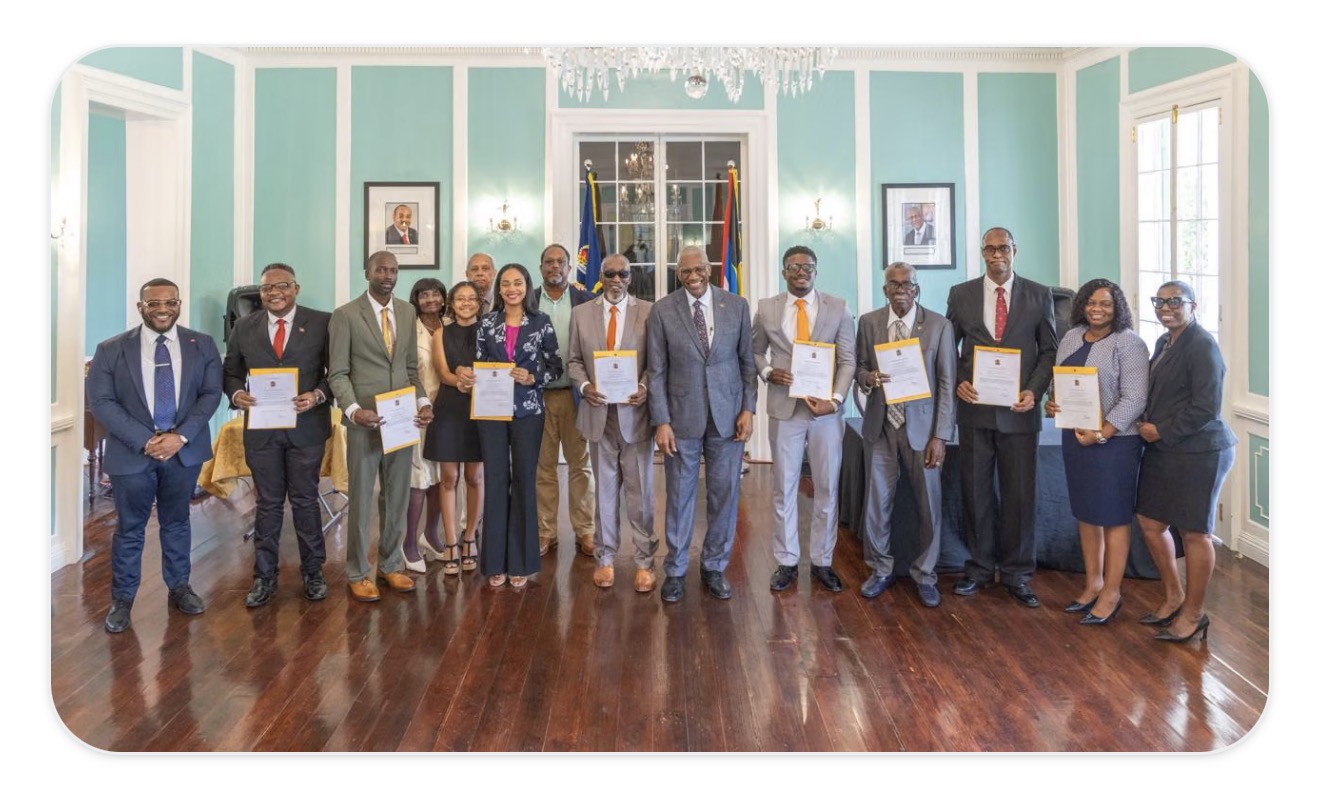
    In a significant reshaping of Antigua and Barbuda’s Upper House of Parliament, Prime Minister Gaston Browne has announced 10 new senate appointments, a move that brings fresh faces and institutional continuity to the country’s legislative upper chamber. The appointment that has drawn widespread attention is that of 22-year-old Shaquan O’Neil, a serving Youth Ambassador, who will now enter the history books as the youngest person ever to take a seat in the nation’s Senate.
    Beyond O’Neil’s landmark appointment, the new cohort of senators includes Kendra Beazer, who previously stood as the Antigua Barbuda Labour Party (ABLP) candidate for the Barbuda constituency in the April 30 general election, ultimately falling short of a winning result. Three other first-time senators will also take their seats: Angelica O’Donoghue, Abena St. Luce and Joel Rayne, expanding the range of new perspectives in the upper legislative body.
    Alongside the incoming new members, Prime Minister Browne has reappointed five senators who held seats in the previous legislative term, ensuring a balance between fresh representation and institutional experience. Among the returning legislators is Alincia Williams-Grant, who is set to take on the role of Senate President in the new session. The returning cohort also includes Lamin Newton, an ABLP candidate who unsuccessfully contested the All Saints East & St. Luke constituency in the recent general election, as well as Colin O’Neil Browne, Phillip Shoul and Shenella Govia.
    The appointments mark a key post-election restructuring of the national legislature, blending youth representation, new political talent, and experienced incumbency to shape the upper house’s work ahead.

  • Governor General Sir Rodney Williams Pays Tribute to the late Mary-Clare Hurst

    Governor General Sir Rodney Williams Pays Tribute to the late Mary-Clare Hurst

    Against the backdrop of a landmark ceremonial sitting for newly elected senators following Antigua and Barbuda’s recent general election, Governor General Sir Rodney Williams opened the official swearing-in proceedings this week with a moving, heartfelt tribute to one of the nation’s most groundbreaking public servants: the late former Senator Mary Clare Hurst, who passed away earlier this week.

    Before administering oaths of office to the incoming Upper House members, Sir Rodney paused the formal agenda to shine a light on Hurst’s decades of cross-sector contributions that shaped Antigua and Barbuda’s political, tourism, parliamentary, and public administration landscapes. He stressed that honoring her legacy amid the induction of new lawmakers was a fitting tribute to a figure who dedicated her life to national progress.

    “Miss Hurst devoted many of the years of her life to public service and national development, serving Antigua and Barbuda with commitment, discipline, and distinction,” Sir Rodney told attendees gathered in the parliamentary chamber.

    Across a decades-long career, Hurst built a reputation for excellence that earned respect from every corner of national life, Sir Rodney noted. Among her most historic achievements was her trailblazing role as the first woman to hold the position of General Secretary of the Antigua and Barbuda Labour Party — a milestone that drew spontaneous applause from attendees when it was highlighted.

    Hurst’s public service extended across multiple senior leadership roles, including stints as a government senator, Leader of Government Business in the Senate, Minister of State in the Ministry of Tourism and Economic Development, and chairman of the Antigua and Barbuda Tourism Authority. Beyond her formal titles, Sir Rodney emphasized that Hurst leaves behind a far-reaching legacy centered on lifting up the next generation: she was a dedicated mentor to young people, a passionate advocate for youth development, and a relentless champion for strengthening Antigua and Barbuda’s public institutions.

    He remembered Hurst as a leader defined by resilience, compassion, and unwavering professionalism, with a lifelong commitment to advancing the interests of Antigua and Barbuda. As the nation welcomes a new cohort of senators to the Upper House, Sir Rodney argued that reflecting on Hurst’s contributions is a critical reminder of the work that has built the country’s parliamentary institutions today. Her work laid critical groundwork for the nation’s modern democratic and parliamentary development, he added.

    Closing his tribute, Sir Rodney extended sincere condolences on behalf of himself and Her Excellency Lady Williams to Hurst’s family, friends, colleagues, and supporters. “May her contribution to national life continue to inspire future generations, and may she rest in peace,” he said.

    Following the tribute, the ceremony proceeded to mark the official swearing-in of the new senators, an occasion Sir Rodney framed as a pivotal moment in Antigua and Barbuda’s constitutional history. The induction, he said, reflects core values of continuity, stability, public service, and public confidence in the institutions that undergird the nation’s parliamentary democracy.