分类: environment

  • Indomet forecasts downpours and thunderstorms through Saturday

    Indomet forecasts downpours and thunderstorms through Saturday

    Officials from the Dominican Institute of Meteorology (Indomet) have released an updated weather advisory warning that significant unstable atmospheric conditions will bring widespread wet, stormy weather to multiple regions of the Dominican Republic through the end of this weekend. The event kicks off on Friday, when a low-pressure trough moving through the area will trigger heavy rain, thunderstorms, and sudden isolated gusty winds across large swathes of the country.

    Forecasters outlined that the day will start with scattered light showers and isolated thunderstorm activity concentrated along the nation’s Caribbean coastline during the early morning hours. As local heating and atmospheric interactions interact with the approaching trough through the afternoon and into early evening, precipitation will intensify dramatically. By the peak of the storm activity, intense downpours, sustained thunderstorm activity, and gusty wind conditions will impact the country’s southeast, northeast, the Central Mountain Range, and all regions along the Dominican-Haitian border.

    The wet weather will not clear on Friday night, however. Indomet forecasts that a second weather system, an approaching tropical wave, will move into the area and extend the rainy conditions through Saturday. Morning showers are expected to develop first across a long list of provinces, including popular tourist destinations La Altagracia (home to Punta Cana) and La Romana, as well as San Pedro de Macorís, Hato Mayor, the national capital district of Santo Domingo, San Cristóbal, Peravia, Samaná, María Trinidad Sánchez and Duarte. As the tropical wave advances further inland through Saturday afternoon, rainfall coverage and intensity will increase across most of the Dominican Republic, bringing an extended period of unsettled weather to the entire nation.

  • Premier Brantley: Geothermal Project Advances Toward Drilling Phase

    Premier Brantley: Geothermal Project Advances Toward Drilling Phase

    After a period of temporary delays caused by unresolved internal issues, one of the Caribbean’s most high-profile renewable energy initiatives is moving full steam ahead, with Nevis Island Administration (NIA) officials confirming the landmark Nevis Geothermal Project is poised to enter its critical drilling phase by the end of 2026.

    In a monthly press briefing on July 28, 2026, Honourable Mark Brantley — Premier of Nevis and the island’s Minister of Finance and Energy — announced that all outstanding barriers to progress have been resolved, clearing the way for mobilization of a specialized drilling rig in the coming weeks. The rig, currently located in Iceland, will undergo final inspection by Nevis project representatives before being shipped to the island’s Hamilton well site, with drilling operations set to launch before the close of the year.

    While the original project timeline targeted rig mobilization by August 2026, Brantley noted that only a minor adjustment to the schedule is now needed, thanks to resolved issues and consistent funding flow that has kept the initiative on track for its 2026 drilling target. For decades, Nevis has held untapped geothermal energy potential, but logistical and financial barriers prevented large-scale development of the resource. Brantley emphasized that the project’s steady progress to date would not have been possible without the cross-government partnership between the NIA and the federal government of St. Kitts and Nevis, led by Prime Minister Dr. Terrance Drew.

    This collaboration enabled Nevis to secure the critical international financing required to advance the project, turning a long-held community vision into an actionable infrastructure initiative. “This is how the country is supposed to work,” Brantley stated, noting that both Nevis and St. Kitts will share the benefits of clean, low-cost renewable energy once the plant is operational. He extended public gratitude to Drew and the federal administration for their ongoing cooperation.

    As the largest renewable energy project ever undertaken by the Federation of St. Kitts and Nevis, the initiative carries transformative potential for the nation’s energy landscape and economic trajectory. The project will unlock Nevis’ abundant underground geothermal resources to generate 30 megawatts of consistent, low-emission electricity for both islands, drastically cutting the nation’s reliance on costly imported fossil fuels while strengthening long-term energy security.

    Development costs are covered by a blended international financing package, including a US$51.6 million allocation from the Green Climate Fund administered through the Caribbean Development Bank and the Inter-American Development Bank, alongside a US$20 million investment from the Saudi Fund for Development. The upcoming launch of drilling marks the most significant milestone to date for the project, bringing the federation one step closer to a more sustainable and affordable energy future for all residents.

  • Jaguar Cub Controversy Ends in Fine

    Jaguar Cub Controversy Ends in Fine

    A widely circulated social media video showing a Belizean man interacting with a wild jaguar cub has reached a legal conclusion, with authorities issuing a substantial fine and sending a firm message about protected species conservation in the Central American nation.

    The incident, which took place earlier this month in Belize’s protected Mountain Pine Ridge Forest Reserve, sparked widespread public outrage after footage of Ruben Stoll handling the young wild big cat spread rapidly across digital platforms. Conservation advocates and members of the public condemned the act, arguing that disturbing protected wildlife for viral content sets a dangerous precedent for the country’s vulnerable ecosystems.

    Following weeks of public pressure and an official investigation, Belize’s Forest Department confirmed that Stoll voluntarily returned to the country and turned himself in to law enforcement officials. He was formally charged under Belize’s Wildlife Protection Act, and ultimately ordered to pay a $1,000 fine, which he has already settled.

    Beyond resolving this specific case, local environmental authorities are using the controversy to reinforce longstanding conservation rules: jaguars are listed as a protected species across Belize, and wild animals are not suitable as domestic pets or props for viral social media content. Officials emphasized that the legal consequences for this incident are not an isolated action, and that any person who disturbs protected wildlife will face similar legal penalties going forward.

    The incident has also reignited broader calls from conservation groups for stronger, more consistent enforcement of existing wildlife protection laws across Belize, which is home to one of the largest remaining healthy jaguar populations in Central America. Environmental advocates argue that increased patrols in popular protected reserve areas and greater public education about the risks of interacting with wild big cats are needed to prevent similar incidents that threaten jaguar conservation efforts.

  • Caribbean Children Are Now at the Center of Climate Plans

    Caribbean Children Are Now at the Center of Climate Plans

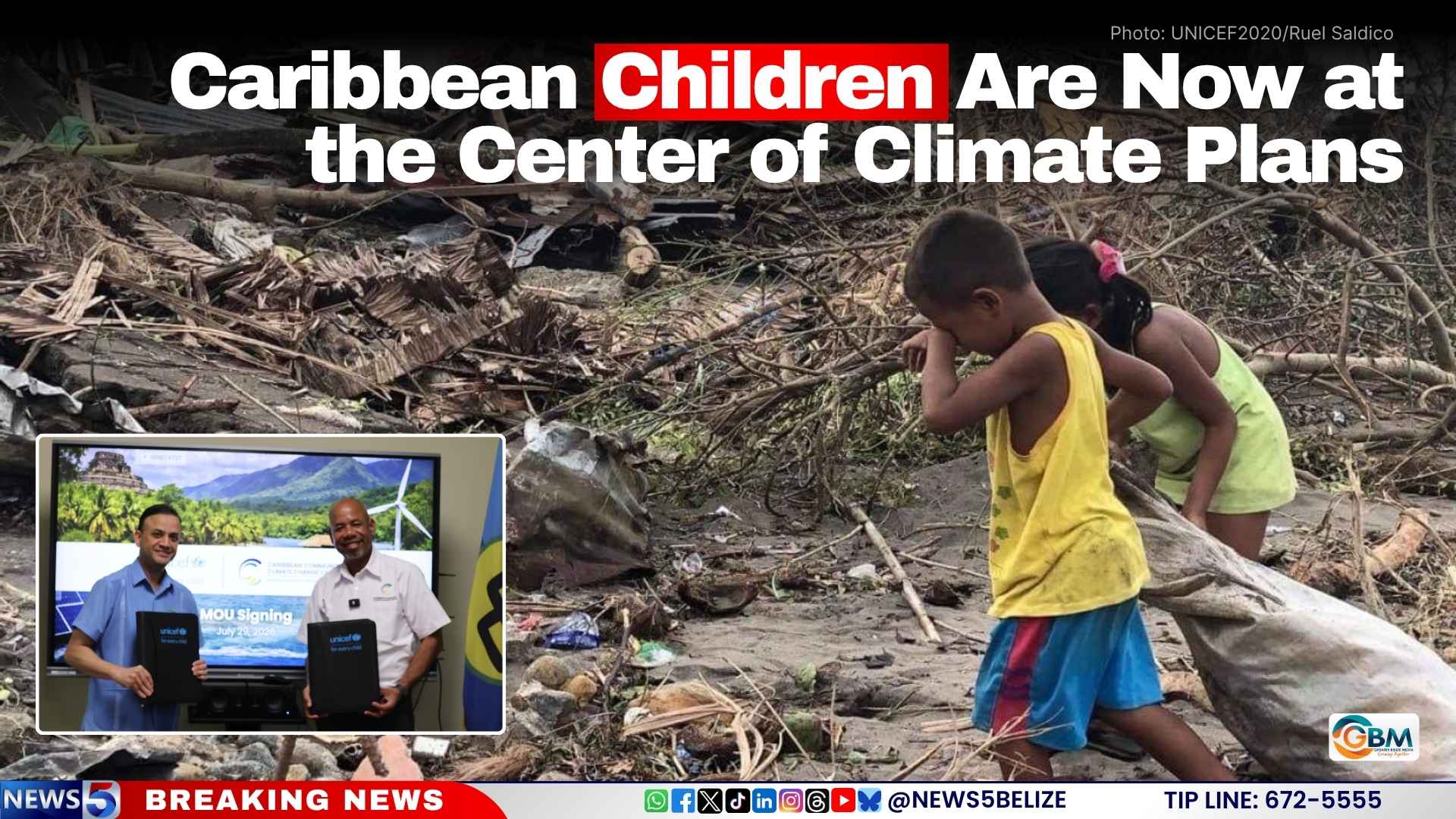
    Across the Caribbean, a rapidly shifting climate landscape is redefining how global organizations frame the climate crisis, moving it beyond a purely environmental challenge to a pressing child rights priority. For years, the small island and coastal nations of the region have faced escalating climate-driven threats: intensifying hurricanes, increasingly severe coastal flooding, prolonged droughts, record-breaking extreme heat events, and widespread environmental degradation. These interconnected hazards do not just alter ecosystems — they upend the daily lives and fundamental rights of young people, cutting off access to safe schooling, life-saving healthcare, reliable clean drinking water, functional sanitation systems, and consistent nutritious food supplies.

    Sajid Ali, the regional UNICEF Representative, emphasized the stark injustice at the core of the crisis. “Children are among those least responsible for the climate crisis yet they bear some of its greatest consequences,” Ali stated. This disproportionate impact has long been overlooked in formal climate planning and resilience work, according to regional climate leaders. Dr. Colin Young, Executive Director of the Caribbean Community Climate Change Centre (CCCCC), pointed out a longstanding gap in climate action: “It is a well-known fact that children and youth have not been a central focus of climate resilience programming, either regionally or globally.”

    To close this gap and center the needs and voices of young Caribbean people, UNICEF and CCCCC have formalized a new five-year strategic partnership that will embed children’s rights in every level of climate planning across the region, including in climate-vulnerable nations such as Belize. The collaboration is built around four core pillars: integrating child-sensitive policies into national and regional climate frameworks, upgrading social services to withstand climate shocks, scaling up community and national disaster risk reduction efforts that protect children specifically, and creating formal, structured pathways for young people to contribute directly to climate decision-making processes that shape their futures.

    This partnership marks a landmark shift for regional climate action, aligning global recognition of children’s disproportionate vulnerability with tangible, long-term investment in centered, youth-informed climate resilience across one of the world’s most climate-threatened regions.

  • DNCTF strengthens conservation projects through grant management and environmental training

    DNCTF strengthens conservation projects through grant management and environmental training

    Grantees carrying out island-wide biodiversity conservation projects in Dominica have completed a targeted capacity-building workshop designed to sharpen their skills in project administration, financial transparency, and environmental protection compliance.

    Hosted on July 28, 2026, the specialized training was organized for recipients of awards from the Caribbean Biodiversity Fund’s (CBF) CRAB Pro-Nature Grant Programme, according to an official statement released by the Dominica National Conservation Trust Fund (DNCTF). The workshop centered on two core competency areas: formal reporting to financial donors, and the development and implementation of Environmental and Social Management Plans (ESMP).

    This regional capacity-building initiative forms part of the broader Caribbean Regional Architecture for Biodiversity (CRAB) Project, which receives backing from the Agence Française de Développement (AFD) and the Fonds Français pour l’Environnement Mondial (FFEM), with resourcing channeled through the Caribbean Biodiversity Fund.

    The training session was tailored specifically to strengthen two high-priority conservation projects active on the island: the Rapid Response to Lethal Yellowing Disease Project, which targets a devastating palm pathogen, and the coral-focused initiative working to boost reef restoration, monitoring, surveillance, and regulatory compliance within the Soufriere and Scotts Head Marine Reserve.

    Instruction was led by independent specialist Ms. Lyn Baron in partnership with DNCTF Chief Executive Officer Dr. Rhonda Linton. The pair walked all participating organizations through the strict financial and environmental governance requirements that come with international donor funding, clarifying expectations and addressing common implementation challenges.

    Participants left the workshop with hands-on, actionable knowledge covering end-to-end financial management processes: from formal donor reporting protocols and budget allocation to standardized record keeping, required supporting documentation, and frameworks for maximizing the value of every grant dollar. On the environmental and social governance side, attendees explored critical topics including environmental and social risk mapping, inclusive stakeholder engagement, formal grievance redress mechanisms, integrating gender equity into project design, rights considerations for Indigenous Peoples, protocols for managing unexpected archaeological or ecological finds, incident reporting protocols, performance monitoring, and sustainable waste management.

    Facilitators also emphasized evidence-based best practices for upholding robust environmental and social safeguards throughout project lifecycles. Key takeaways included the importance of conducting early risk mapping to flag potential harms before implementation, rolling out targeted mitigation measures for identified risks, maintaining consistent open communication with impacted communities, creating thorough documentation of all project activities, responding rapidly to community grievances and unplanned incidents, and conducting regular assessments to confirm safeguard measures are delivering intended results.

    In its post-workshop statement, DNCTF emphasized that effective support for conservation goes far beyond cutting checks for local projects. Building the operational and governance capacity of grant recipients, the organization noted, is a non-negotiable foundation for ensuring projects are run efficiently, maintain full accountability to funding partners, and deliver long-term, tangible benefits both for Dominica’s unique native ecosystems and the local communities that depend on them.

  • Geothermal energy cuts July electricity bills as DOMLEC reports lower fuel surcharge

    Geothermal energy cuts July electricity bills as DOMLEC reports lower fuel surcharge

    Residents and businesses across Dominica are starting to see tangible financial benefits from the Caribbean nation’s landmark geothermal energy project, with significant reductions appearing on July 2026 electricity bills thanks to a lowered fuel surcharge, national utility Dominica Electricity Services Ltd. (DOMLEC) has announced.

    In an official announcement posted to its Facebook page, DOMLEC confirmed that electricity customers in all usage categories will see lower monthly charges, as long as their overall consumption levels have not risen dramatically compared to previous billing cycles. The savings stem directly from the recent integration of geothermal energy into the country’s power generation portfolio, which has cut reliance on costly imported fossil fuels and allowed regulators to lower the fuel surcharge passed directly to consumers.

    DOMLEC has published concrete examples of the savings across different customer groups to illustrate the scale of the reduction. For residential users, a household consuming 100 kilowatt-hours (kWh) will save roughly $24 on their July bill, while a larger home using 250 kWh can expect savings of approximately $61. For commercial operations, a small business using 500 kWh will see around $122 in savings, while a mid-sized enterprise consuming 2,416 kWh could cut their monthly power costs by as much as $589.

    Large-scale energy users are also reaping major benefits from the transition. A local hotel using 8,609 kWh will see their bill drop by roughly $2,098, while major industrial customers consuming 14,402 kWh are projected to save approximately $3,509. Across all usage segments, DOMLEC calculates that the total savings represent a 17 to 18 percent reduction compared to what customers would have paid before geothermal energy was added to the grid.

    Beyond immediate consumer savings, the utility frames the lower fuel surcharge as a key milestone in Dominica’s journey toward a cleaner, more reliable, and more energy-secure future. Currently, renewable energy sources account for approximately 68 percent of the country’s total electricity generation, putting the island well on track to meet its national target of 100 percent renewable electricity by 2030.

    DOMLEC credited the Government of Dominica, acting through the state-run Dominica Geothermal Development Company (DGDC), for the transformative investment that has reshaped the country’s energy sector. The 10-megawatt geothermal power plant, officially commissioned in early 2026, stands as the cornerstone of the nation’s renewable energy transition. In a June 2026 cover feature for the Caribbean Electric Utility Services Corporation (CARILEC) CE Industry Journal, DOMLEC CEO Dwayne Cenac and DGDC CEO Fred John noted that Dominica is now the first independent Caribbean nation to fully integrate geothermal energy into its national power grid, establishing the country as a regional leader in renewable innovation.

    The geothermal facility was developed by DGDC with backing from the Dominican government and multiple international development partners. Once fully operational, it is projected to cut the country’s reliance on imported diesel dramatically. When combined with Dominica’s existing hydroelectric generation capacity, geothermal energy will supply roughly 60 percent of the nation’s total electricity needs, strengthening energy independence while keeping consumer power costs stable.

    Under the project structure, DOMLEC manages and operates the transmission network that connects the new geothermal plant, existing hydroelectric stations, and the overall national grid. The entire integrated system is supported by a 6-megawatt/6-megawatt-hour Battery Energy Storage System, which boosts grid stability, improves overall energy resilience, and creates room for additional renewable capacity to be added in coming years.

    Industry leaders emphasized that the benefits of the geothermal project extend far beyond lower monthly power bills. The transition will boost Dominica’s national energy independence, cut the country’s total greenhouse gas emissions, shield consumers and businesses from volatile global fossil fuel price swings, and open new pathways for sustainable economic growth and foreign investment. Most importantly, it advances the nation’s long-term vision of full renewable energy adoption, laying the groundwork for a more resilient, sustainable future for coming generations.

  • Ruben Stoll Charged, Fined BZ$1,000 Over Jaguar Cub Incident

    Ruben Stoll Charged, Fined BZ$1,000 Over Jaguar Cub Incident

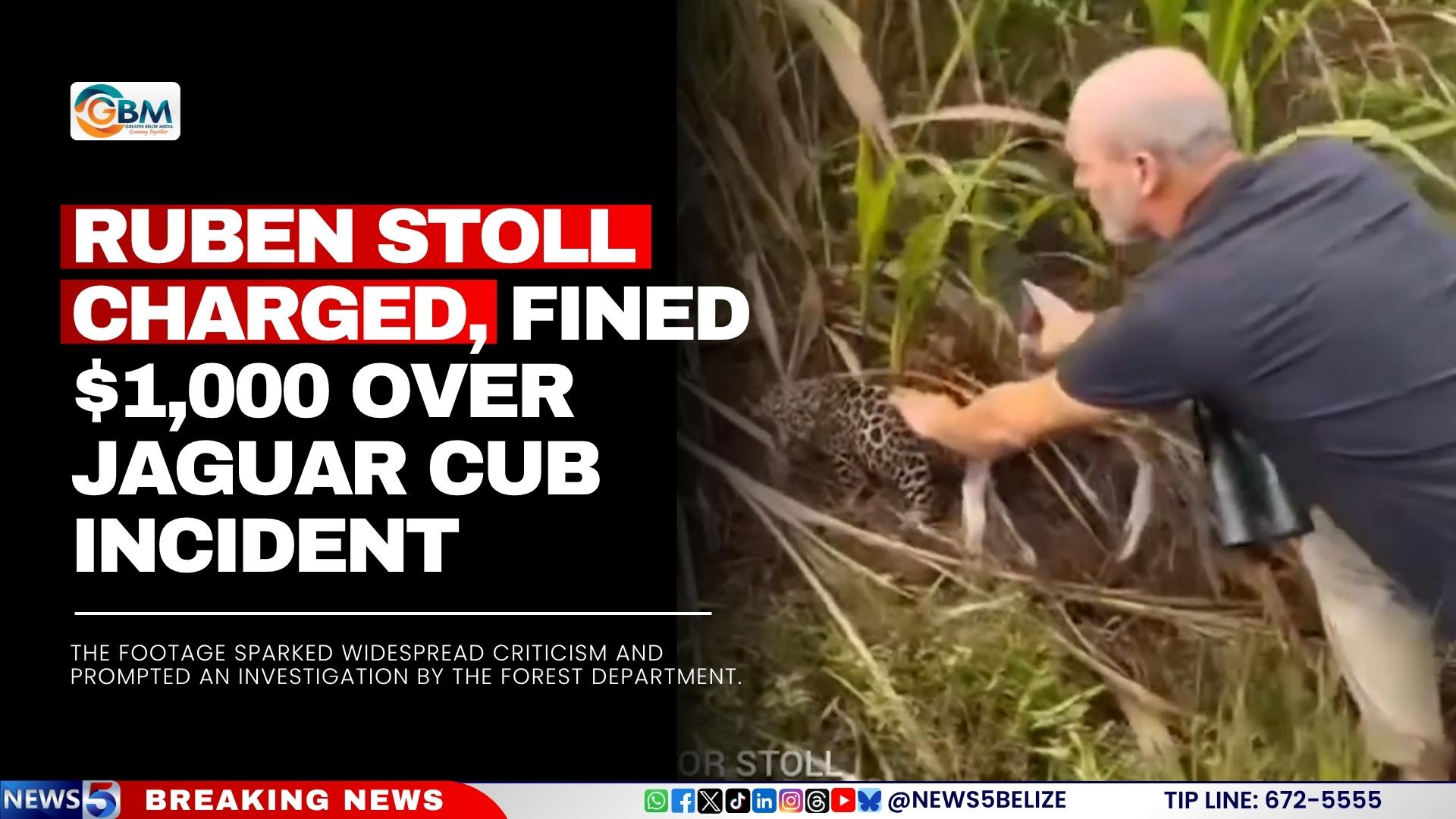
    In a high-profile case that drew international attention after viral social media footage emerged, Belizean-American Ruben Stoll has been convicted under Belize’s Wildlife Protection Act and ordered to pay a BZ$1,000 fine for unlawfully interacting with a wild jaguar cub in the protected Mountain Pine Ridge Forest Reserve.

    The incident that sparked the case dates back to when a video circulating across social media platforms captured Stoll petting the young jaguar, which was reported to have been separated from its mother by a passing vehicle. The footage quickly went viral, drawing widespread public condemnation from conservationists and wildlife advocates, and forcing Belize’s Forest Department to launch a formal investigation into the incident.

    Prior to Stoll’s surrender, Forest Department authorities had confirmed they believed Stoll had crossed Belize’s northern border out of the country before investigators could locate and detain him. Officials had already completed charge preparations and moved to secure an arrest warrant that would have allowed for detainment if Stoll re-entered Belize. Contrary to initial expectations, Stoll voluntarily made the decision to return to Belize and turn himself in to law enforcement authorities, leading to the immediate processing of charges and payment of the issued fine.

    Leslie Penner, a member of Stoll’s travel group who was present during the incident, publicly spoke out against the action, describing the decision to touch the wild cub as both unnecessary and reckless. Even so, Penner emphasized that Stoll and his family held no malicious intent toward the animal, noting that the Stoll brothers have a long track record of supporting formal conservation initiatives across Belize.

    Dr. Celso Poot, Managing Director of the Belize Zoo, joined widespread criticism of Stoll’s actions, issuing a public warning about the risks of human interaction with wild big cat cubs. While Poot confirmed that the jaguar mother was unlikely to reject the cub after the human contact, the encounter still caused significant avoidable stress to the young animal. He reiterated a core guideline for wildlife management: wild jaguar cubs should never be handled or disturbed by human visitors under any circumstances, even in scenarios where the animal appears to be separated from its mother.

  • Dominican authorities bring Tetero Valley wildfire under control

    Dominican authorities bring Tetero Valley wildfire under control

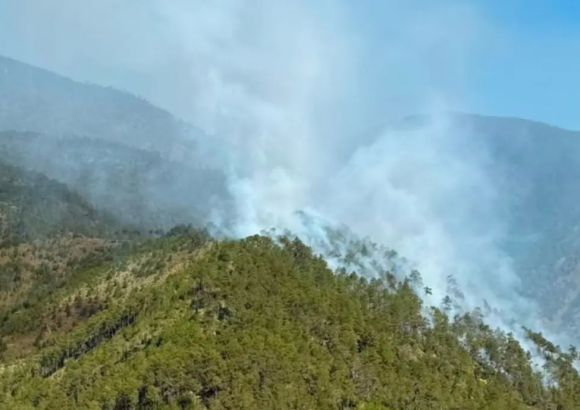
    A wildfire that broke out in the Tetero Valley section of one of the Dominican Republic’s key protected natural spaces has been successfully contained, after a swift joint operation by national government agencies, the country’s Ministry of Environment and Natural Resources confirmed in an official statement released Thursday.

    The inferno was first spotted in the early hours of Wednesday, at roughly 3:00 a.m., through the Ministry’s cutting-edge satellite monitoring network. This system is designed to provide 24/7 constant surveillance of the nation’s protected wild areas, enabling early detection of fire risks before they escalate into unmanageable disasters. As soon as the blaze was flagged, emergency response protocols were immediately put into action, with senior environment officials launching coordination efforts with the Ministry of Defense and multiple other local and national response stakeholders.

    To tackle the fire rapidly, specialized forest firefighter brigades were pulled from nearby active operational units and deployed to the remote valley. In a supporting role, the Ministry of Defense mobilized an aircraft that first conducted an aerial assessment of the fire’s scope and intensity, before transporting an additional 25 trained forest firefighters to reinforce the ground response team.

    By approximately 8:00 a.m. Thursday, just over 29 hours after the fire was first detected, official responders announced that the blaze had been fully contained. In the aftermath of containment, fire crews remain staged at the Tetero Valley site to systematically put out any lingering hotspots that could reignite, and maintain continuous surveillance of the burned area to stop potential flare-ups from spreading.

    In its official announcement, the Ministry of Environment highlighted that the successful containment of the wildfire was directly the result of two key factors: the early detection capabilities of the satellite monitoring system, and seamless, fast coordination across multiple government agencies. The statement concluded by reaffirming the Dominican government’s long-term commitment to safeguarding the nation’s forest ecosystems and protected natural areas for future generations.

  • Frankrijk en Spanje bereiden zich voor op hittegolf die bosbranden kan verergeren

    Frankrijk en Spanje bereiden zich voor op hittegolf die bosbranden kan verergeren

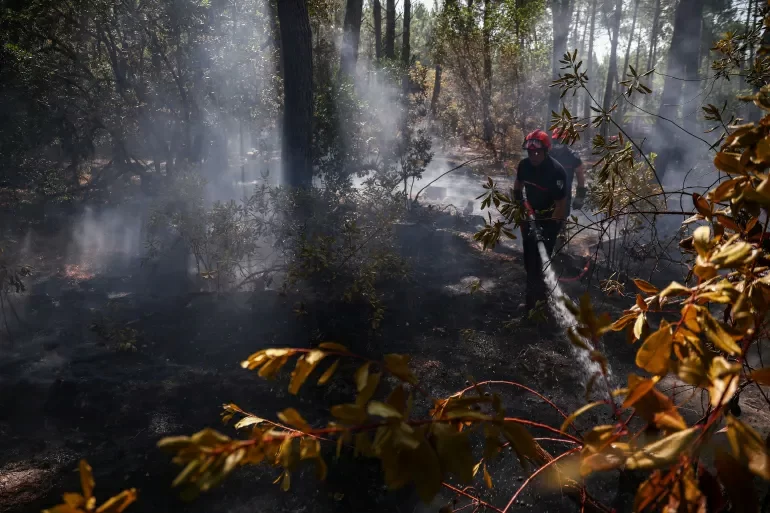
    As Europe grapples with an escalating climate crisis, neighboring France and Spain are bracing for a new wave of extreme heat that threatens to rekindle and spread devastating wildfires already burning within reach of major population centers including Bordeaux and Madrid. Though fire containment efforts have slowed the spread of active blazes in recent days, national emergency authorities have issued urgent warnings that soaring temperatures will dry out vegetation further, stoke existing fires and trigger new outbreaks across drought-stricken regions.

    In southwestern France, the Gironde department – a region world-renowned for its premium wine production and home to the historic port city of Bordeaux – has emerged as the hardest-hit area by the ongoing wildfire crisis. Nearly 4,000 additional people have been evacuated from popular tourist hubs surrounding Lacanau, pushing the total number of displaced residents across the region past 250,000. Visual footage published by French newspaper Le Figaro shows fine gray ash blanketing a popular Lacanau beach, a stark visual indicator of how far wildfire damage has spread into populated coastal areas. Gironde prefect Sophie Brocas has implemented a full ban on all public sporting and cultural events through August 8 to reduce wildfire risk and free up emergency response resources.

    Eric Brocardi, spokesperson for the French national fire service, described the region’s precarious position in a Tuesday press briefing. “We are in an extremely vulnerable situation,” Brocardi said. “Our teams will continue to fight the flames relentlessly, even as forecasted temperature increases put additional strain on our operations.” France’s fourth heatwave of 2026 officially got underway Tuesday, with maximum temperatures projected to climb as high as 40 degrees Celsius across affected regions.

    Across the border in Spain, where the emergency is already far more advanced, more than 116,000 people have been forced to evacuate their homes since wildfires first broke out amid earlier extreme heat. While some displaced residents have been cleared to return to their properties in recent days as containment improves, the crisis remains far from over. On Tuesday, residents of nine out of 11 evacuated villages in central Spain’s Toledo province were permitted to return to their homes, but the risk of reactivation remains high.

    Spanish Interior Minister Fernando Grande-Marlaska noted that the public can be “slightly more reassured” after tangible progress in battling blazes concentrated in central parts of the country. Firefighting teams are still active suppressing fires in the Ávila and Toledo provinces, where roughly 800 square kilometers of land has already been reduced to ash. One evacuee from eastern Spain described the terrifying experience of fleeing the fast-moving blazes to Reuters, calling the situation “total chaos.” “It looked like hell had opened up beneath the ground, and all you could see was roaring red fire,” the evacuee said.

    Spain is bracing for even higher extreme temperatures set to arrive on Wednesday, adding new urgency to ongoing containment efforts. The string of extreme heat events and devastating wildfires has amplified growing global concern about accelerating climate change, with top Spanish leaders framing the crisis as a clear symptom of ongoing planetary warming. Spanish Prime Minister Pedro Sánchez called the wildfires “the most painful expression of a climate emergency” this week. While Sánchez noted that there is “light at the end of the tunnel” in the battle to contain the active blazes, he stressed that the incoming heatwave will present a major new test for emergency response teams across the country.

  • DNA sommeert Brunings tot verantwoording over vissterfte: Na 7 weken willen we antwoorden

    DNA sommeert Brunings tot verantwoording over vissterfte: Na 7 weken willen we antwoorden

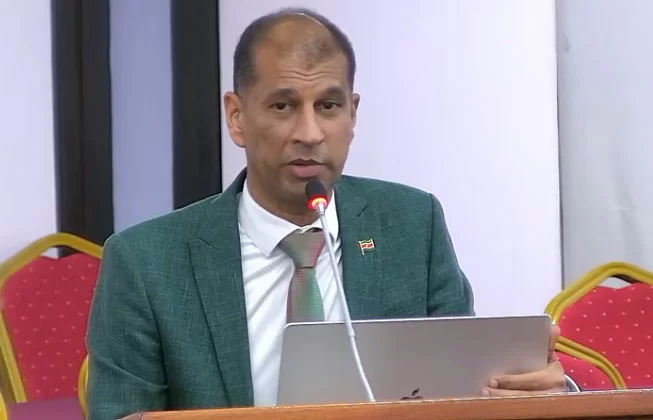
    A major environmental crisis in Suriname has sparked intense political scrutiny, after the country’s National Assembly called Minister of Oil, Gas and Environment Patrick Brunings to parliament on Tuesday to answer questions about a widespread mass fish die-off in the Saramacca River.

    Nearly all parliamentary factions delivered sharp criticism of the government’s handling of the disaster, pointing to persistent lack of clarity around the root cause of the event, poor outreach to affected rural communities, and frustratingly slow progress on official investigations. By the end of the heated debate, lawmakers gave the government an ultimatum: return to the legislature later this week with comprehensive, detailed answers to outstanding questions.

    During his opening testimony, Brunings outlined the immediate actions taken after initial reports of dead fish first emerged near the village of Totikamp. He confirmed that water and fish samples were collected immediately after the first alerts, local communities were warned to avoid using river water and consuming any fish caught from the waterway, and emergency supplies of drinking water and food were distributed to affected settlements.

    However, the minister explained that critical delays have stemmed from a major gap in Suriname’s domestic scientific capacity: the country lacks sufficient in-country laboratory infrastructure to run detailed contamination testing. As a result, samples had to be routed through French Guiana to specialized testing facilities in France for analysis. Parallel to the laboratory work, the Public Prosecution Service’s Environmental Crime Unit has been tasked with conducting forensic investigations to identify the source of the contamination.

    Brunings openly acknowledged shortcomings in the government’s response, admitting that communication with impacted communities could have been far more effective. In hindsight, he said, the government should have maintained a more visible, consistent presence in the affected region. The disaster, he added, has also exposed two critical, unmet needs for Suriname: a national environmental disaster response plan, and upgraded domestic laboratories that can deliver fast, on-site analysis during emerging crises.

    Lawmakers made clear that Brunings’ explanation did little to ease their widespread concerns. Seven weeks after the first reports of fish mortality, residents still have no confirmed information about what caused the die-off — a gap that assembly members said was unacceptable. Lawmakers pressed for answers on how long residents will need to avoid using the river for water or food, whether all affected villages have received adequate emergency supplies, and why engagement with local communities has been so ineffective. They also pushed for stricter regulatory oversight of Suriname’s gold mining sector, a common source of water contamination in the region, and greater protection for river-dependent communities that rely on the waterway for their daily livelihoods.

    Multiple parliamentarians demanded full transparency around any potential parties responsible for the contamination. They called for disclosure of which concession holders are under investigation, which companies operating in the area use hazardous chemicals, what inspections have already been completed, and what enforcement actions will be taken if negligence or illegal dumping is confirmed. Lawmakers also asked whether the party found responsible will be held liable for all environmental damage and the full cost of the investigation.

    Brunings told the assembly that investigators have identified a suspected source of the contamination, but he refused to name any specific parties until all laboratory results and forensic work are finalized. He projected that the final analysis results will arrive within roughly two weeks, after which officials can formally confirm the exact cause of the disaster and assign responsibility. The minister stressed he has no intention of protecting any party, but also would not name anyone without conclusive, irrefutable evidence to back up the claim.

    Many lawmakers rejected this response, including Rabin Parmessar, leader of the opposition NDP faction, who said that all concrete questions posed to the minister remained unanswered. Parmessar emphasized that the government is legally required to provide full information to the national legislature, and that transparency during an environmental disaster is critical to maintaining public trust. “No information, I repeat with capital letters, no information may be withheld from parliament,” Parmessar told Brunings. He added that if any information is deemed sensitive, the government can always request a closed-door executive session to share it confidentially. Parmessar said he felt “enormous disappointment” with Brunings’ testimony, noting that no substantive answers were provided to specific questions about concession holders, implicated companies, or the status of aid to affected villages. He called the government’s approach to parliamentary oversight completely unacceptable.

    Following the conclusion of the debate, government coordinator Marinus Bee committed to delivering a full, detailed response to all outstanding questions by Thursday. Bee confirmed that multiple government ministers will take part in the next session to address the full range of lawmakers’ concerns.