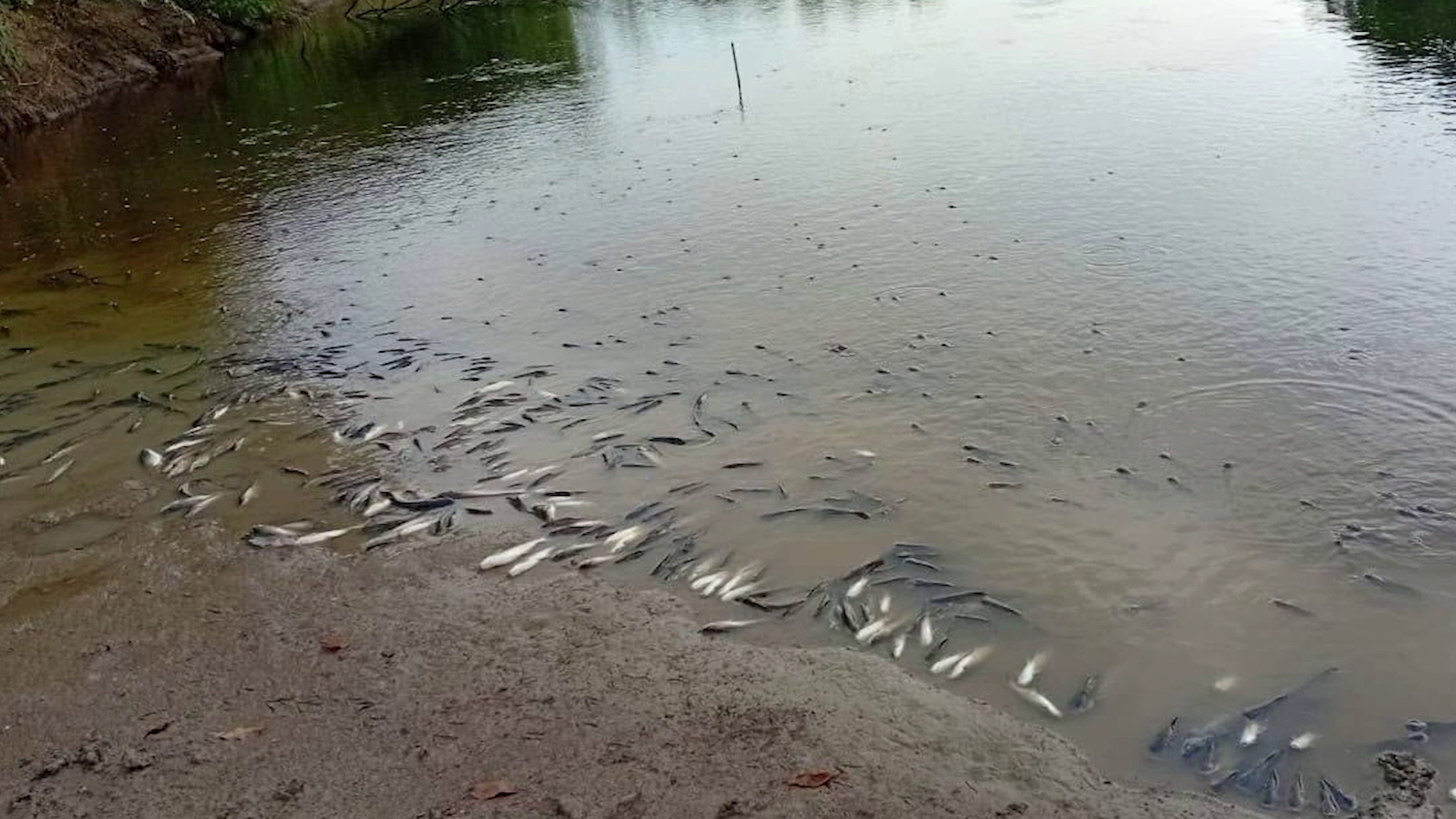
A widespread mass fish mortality event across the Belize River Valley has been traced to a toxic combination of contaminants washed into the waterway by extreme seasonal flooding, rather than contamination from a single source or polluter, Belizean environmental authorities have confirmed. The incident, which unfolded weeks after an unprecedented downpour that dumped 10.5 inches of rain over a 12-hour period, left large stretches of the river littered with dead fish, triggering public alarm and an official investigation into its root causes.
According to Sustainable Development Minister Orlando Habet, the extreme flooding overwhelmed the river’s banks and swept a dangerous mixed cocktail of pollutants into the water: decomposing organic material, agricultural pesticides, and synthetic fertilizers from surrounding commercial and small-scale farms, including the Santander property and a regional rice operation. Unlike typical point-source pollution events where fish die-offs occur close to the contamination origin, Habet explained that mortality was concentrated far downstream, where the accumulated toxic compounds built up to lethal concentrations as the water flowed.
The Belize Department of the Environment is set to release its full final investigative report at a public meeting scheduled for September 11, 2026, but policy planning to prevent future disasters is already underway. Officials have launched a comprehensive review of environmental compliance plans (ECPs) for all agricultural operations in the affected watershed to check whether existing protocols are being followed and identify gaps that need to be addressed.
Looking ahead, the Belizean government is drafting updated land-use regulations that would impose stricter protections for riparian ecosystems. One key proposal under discussion would require mandatory environmental impact assessments for smaller development projects located near rivers, streams, and other critical water sources, a shift from current rules that often exempt small-scale operations from this screening step. The reforms are aimed at reducing long-term pollution risk and protecting Belize’s vital freshwater resources from similar catastrophic events.
This reporting is adapted from a transcript of a televised evening news broadcast.