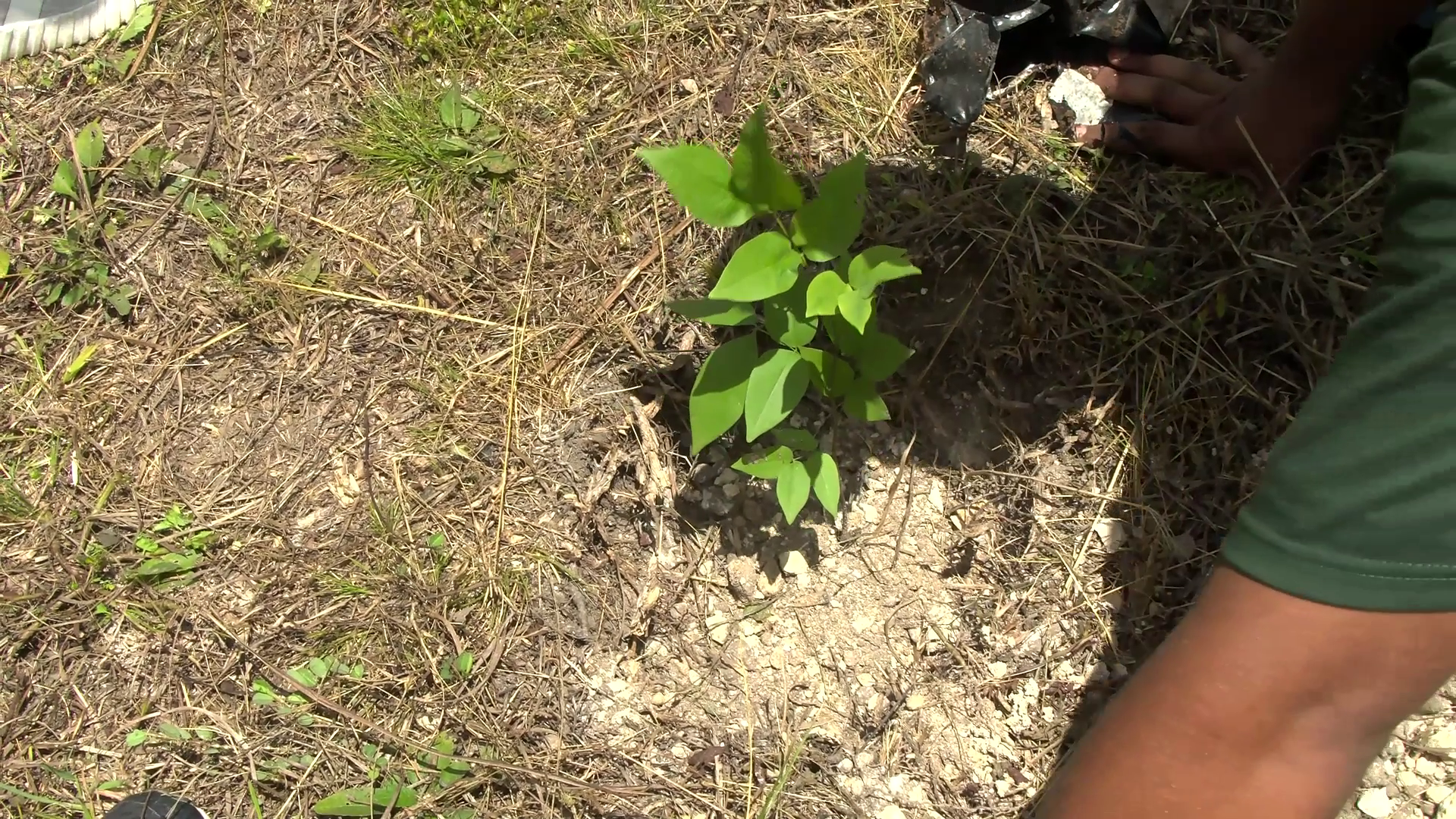
On a crisp September morning in Belmopan, dozens of university students and environmental advocates gathered to kick off the on-the-ground phase of Belize’s ambitious national reforestation campaign: Greening Belize, an initiative that aims to plant one million trees across the country by the end of the project. Fifty carefully selected native saplings went into the ground across five sites in the capital Wednesday, marking a public launch of the community-centered push that brings together the United Nations Development Programme (UNDP), Belize’s Forest Department, government ministries, and local grassroots stakeholders to combat climate change and restore degraded ecosystems.
First announced earlier this year in January, the Greening Belize Initiative sets out two core interconnected goals: reverse widespread land degradation across the country, and protect the nation’s critical watershed systems that support both local communities and biodiversity. But a key question has lingered for many supporters: which regions will receive the new tree plantings? Speaking to reporters on site Wednesday, Belize’s Minister of Sustainable Development Orlando Habet outlined that the site selection process was guided by rigorous, data-backed technical research.
According to Habet, priority will be given to four categories of at-risk land: areas degraded by historical deforestation, including former agricultural lands that have been abandoned; coastal ecosystems where mangrove habitats have been damaged or lost; degraded land both inside and outside of the country’s existing network of protected areas; and urban centers that face growing heat island impacts from rapid development.
He further explained that unplanned urban growth, marked by expanding networks of paved roads and heat-trapping concrete infrastructure, has driven steady temperature increases across Belize’s towns and cities. Adding new tree cover in dense urban areas will not only sequester carbon, but also lower ambient temperatures, creating more livable, comfortable communities for local residents.
Michael Lund, Deputy Resident Representative for UNDP Belize, noted that the initiative is not a mass, one-size-fits-all planting effort. Organizers have relied on the technical study to match tree species to local ecosystems, a step that will dramatically improve long-term survival rates and ecological benefits. On Wednesday, students planted a mix of native species suited to Belmopan’s local environment, including Shower of Gold, Guanacaste, and Bukut.
Lund added that the September timing of the launch was intentional: trees hold deep cultural and historical significance to Belizean national identity, making the start of the country’s annual September celebration a fitting moment to mobilize public participation. “You can’t just plant any tree anywhere, and I’m glad to know that there is that study, so it can guide us to have a more sustainable planting of trees,” Lund said. “We’re trying to help plant the million trees, and what we wanted to do here during the September celebration, because of the importance of the tree in Belize’s history and I think the identity of being Belizean, is to use this opportunity to plant fifty trees in five different locations in the city of Belmopan.”
The entire Belmopan planting event was organized and led by young people, part of UNDP’s global Student Ambassadors Program that empowers youth to turn climate education into direct action. Ten University of Belize students have spent the past six months researching key sustainable development challenges facing Belize, and Wednesday’s tree planting marked their first large-scale public outreach event for the initiative.
Seventeen-year-old Sabrina Landaverde, one of the UNDP Student Ambassadors who coordinated the drive, said the project aligns directly with global sustainable development goals (SDGs) focused on climate action. “When I applied to be student ambassador, I wanted to click into some of the SDGs that we have, sustainable development goals. And one of those is climate change and what this project does is putting a foot forward into the one million trees project,” Landaverde explained.
Organizers have emphasized that the project prioritizes native species, which offer greater ecological benefits, require less water and long-term maintenance, and provide ample shade for urban communities. While recent seasonal rains will help the newly planted saplings establish strong root systems, Habet confirmed that multiple government agencies are already working together to develop a coordinated maintenance plan to ensure the young trees survive the dry season that will hit Belize in the coming months. The national campaign is expected to continue mobilizing community groups, students, and volunteers across the country as it works toward its one million tree goal, building long-term climate resilience for Belize while increasing public participation in environmental action.