分类: environment

  • Dominica among first Caribbean countries to benefit from new resilient Infrastructure initiative

    Dominica among first Caribbean countries to benefit from new resilient Infrastructure initiative

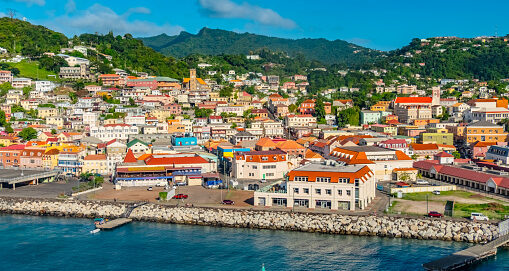
    Against a backdrop of growing climate risk and stalled development projects, a groundbreaking regional partnership has launched to empower Caribbean nations to deliver critical climate-resilient infrastructure. The Caribbean Resilient Infrastructure Implementation and Skills Exchange (RIISE) Facility, a collaborative effort between Global Affairs Canada and the United Nations Office for Project Services (UNOPS), has already welcomed its first cohort of participating countries: Dominica, Grenada, Saint Lucia, and Saint Vincent and the Grenadines.

    Funded entirely by the Government of Canada and hosted by UNOPS, RIISE was designed to address a persistent gap facing small island developing states across the Caribbean. While regional governments have prioritized climate-resilient infrastructure and earmarked major investments for these projects, systemic implementation barriers often delay or derail delivery, leaving communities vulnerable to the increasing frequency and intensity of climate disasters like hurricanes and coastal flooding.

    To solve this challenge, RIISE will operate out of a regional secretariat based in Bridgetown, Barbados. The hub combines local Caribbean leadership with UNOPS’ decades of global operational expertise and project management experience. Its core mandate is to work directly with participating national governments to map unique implementation bottlenecks, coordinate cross-border support requests, and connect local project teams with specialized technical assistance that many small administrations cannot access independently.

    Unlike one-size-fits-all development programs, RIISE tailors its support to each country’s specific needs. Available assistance ranges from short-term targeted technical advice to temporary placements of seasoned infrastructure specialists, as well as structured platforms for Caribbean nations to share on-the-ground knowledge and lessons learned with one another. This peer learning component is designed to build long-term local capacity, rather than relying on permanent external support.

    Brenda Wills, Canada’s High Commissioner to Barbados and the Eastern Caribbean, emphasized the initiative’s alignment with Canada’s longstanding commitment to Caribbean climate action. “Canada is proud to support RIISE as part of our longstanding commitment to strengthening climate resilience across the Caribbean,” Wills said. “By helping governments deliver resilient infrastructure more effectively, build local capacity and promote specialized expertise across the region, RIISE will generate lasting benefits for Caribbean communities while deepening the strong ties between Canada and the region.”

    Giuseppe Mancinelli, UNOPS Director for Barbados and Caribbean Coordinator, noted that Caribbean nations have already laid out clear, ambitious priorities for sustainable, climate-resilient development, but often lack the specialized support to turn plans into tangible community impact. “RIISE will provide timely access to the specialized expertise they need to overcome implementation challenges and turn those priorities into tangible results for communities,” Mancinelli explained. “At the same time, it will strengthen national capacities and foster greater regional collaboration.”

    For the four initial participating countries, RIISE opens immediate access to additional resources and expertise to streamline project delivery, improve the quality of infrastructure outcomes, and advance long-term climate adaptation goals. The launch marks a new chapter in collaborative climate action, uniting a global multilateral body, a donor nation, and regional governments around a shared goal of building safer, more resilient communities across the Caribbean.
  • CCCCC short story competition for Caricom citizens

    CCCCC short story competition for Caricom citizens

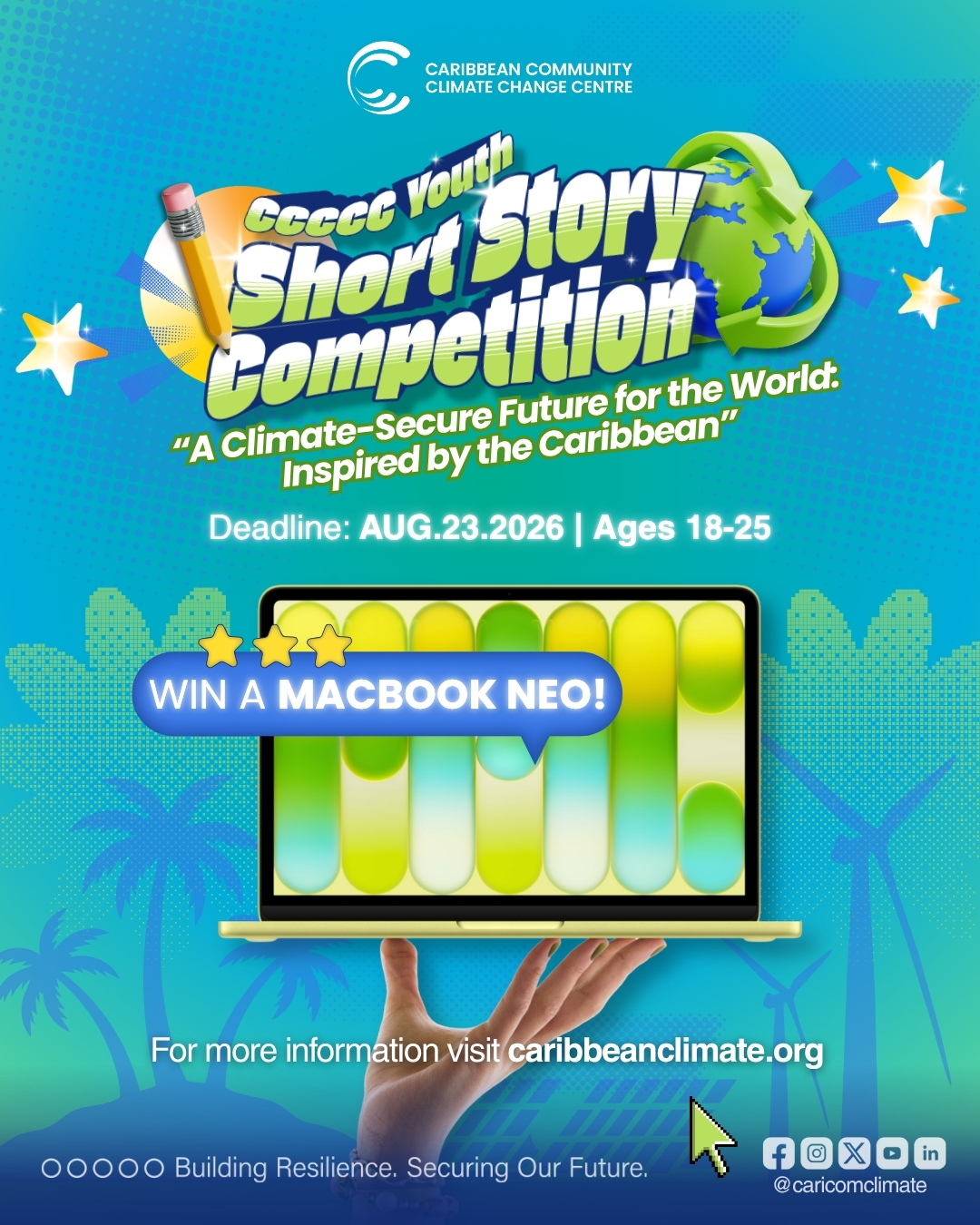
    As small island developing states on the front lines of accelerating climate change, the Caribbean region has long faced existential threats from rising sea levels, extreme weather events, and ecosystem degradation. Now, the Caribbean Community Climate Change Centre (CCCCC) is turning to young people to reimagine what a sustainable, climate-resilient future could look like for the region, launching a new youth-focused short story competition on July 27, 2026.

    Open exclusively to nationals of Caribbean Community (Caricom) member states between the ages of 18 and 25, the competition invites emerging writers to craft original short stories centered on a deliberate, evocative prompt: “Imagine a climate-secure future for the world. Inspired by the Caribbean.” Unlike traditional climate action initiatives that prioritize technical policy and scientific data, this competition centers narrative and creative vision as core tools for driving climate engagement.

    Danelle De Coteau Campbell, Lead Communications Specialist at CCCCC, emphasized the unique value of creative storytelling in climate discourse. “The future of climate action will be shaped not only by data and science but also by the stories we tell and the ideas we inspire,” Campbell explained. “Through this competition, we are inviting young people to imagine a climate-secure Caribbean and commit to protecting our culture, our people and our homes. This is our way of handing them the pen to shape that vision. We are excited to see how participants will bring their ideas to life, and in doing so, spark meaningful conversations about the shared future we all build together.”

    The storytelling competition is a core component of CCCCC’s broader regional strategy to center youth as active, leading voices in the Caribbean’s collective climate response. Beyond showcasing young creative talent, the initiative also aims to broaden public understanding of the unique climate challenges facing Caribbean communities and elevate homegrown, Caribbean-led solutions that address local needs.

    To enter, participants must submit an original, previously unpublished short story between 1,500 and 2,500 words through the official competition portal hosted on CCCCC’s website, caribbeanclimate.org. The competition strictly prohibits AI-generated submissions, requiring all entries to be fully original works created by the entrant.

    Prizes for top entries include a MacBook Neo for first place, with additional awards granted to second and third place finalists. Full entry guidelines, eligibility details, and submission instructions are available to the public on the CCCCC website.

    The launch of this creative competition marks a new approach to youth climate engagement, framing imagination as a critical catalyst for action in one of the world’s most climate-vulnerable regions.

  • Dominican Constitutional Court upholds ruling on Jaragua National Park boundaries

    Dominican Constitutional Court upholds ruling on Jaragua National Park boundaries

    SANTO DOMINGO — In a landmark decision that has sparked debate over environmental protection and private land rights, the Constitutional Court of the Dominican Republic has formally upheld a lower court ruling that mandates the Ministry of Environment revise the country’s official National Cadastre of Protected Areas (SINAP). The update is required to reflect longstanding territorial adjustments outlined in 2004’s Law 266-04, which calls for the removal of four disputed parcels of land from the official boundaries of Jaragua National Park.

    The court’s ruling, registered as case TC/0568/26, rejected two separate appeals brought by the Ministry of Environment and the General Administrative Prosecutor’s Office. This rejection leaves intact an earlier decision from the Superior Administrative Court, which ruled in favor of private developer Inversiones del Sur, SRL in the years-long land dispute.

    The boundary adjustment at the center of the case is tied to the creation of the Southwest Region Tourist Hub, a major development initiative first formalized under Laws 202-04 and 266-04 that redefined portions of Jaragua National Park’s official limits. The high court’s decision drew on authoritative technical evidence to support its outcome: a 2025 geospatial assessment compiled by the National Directorate of Cadastral Surveys, which definitively concluded that the four contested parcels do not fall within the boundaries of Jaragua National Park, nor any other legally protected area in the country.

    Despite the majority’s ruling, the decision has not come without opposition. One justice issued a formal dissenting opinion, arguing that the legal mechanism of an amparo action — a court proceeding typically used to protect constitutional rights — is not the appropriate avenue to formalize private property claims or adjust the boundaries of specific protected land parcels. The dissenting justice warned that the ruling could set a problematic precedent that undermines collective environmental rights enshrined in Dominican law, raising questions about how future land disputes involving protected natural areas will be resolved.

  • Gouddossier 5: Matawai slaat alarm over aangevoerd materiaal voor goudwinning

    Gouddossier 5: Matawai slaat alarm over aangevoerd materiaal voor goudwinning

    On July 27, an indigenous community in Suriname sounded the alarm after a large shipment of equipment suspected to be used for illegal gold mining was delivered to the border between Atjoni and the Matawai people’s traditional territory. The incident has sparked swift pushback from community leaders and environmental advocates, who are demanding an immediate end to the encroachment.

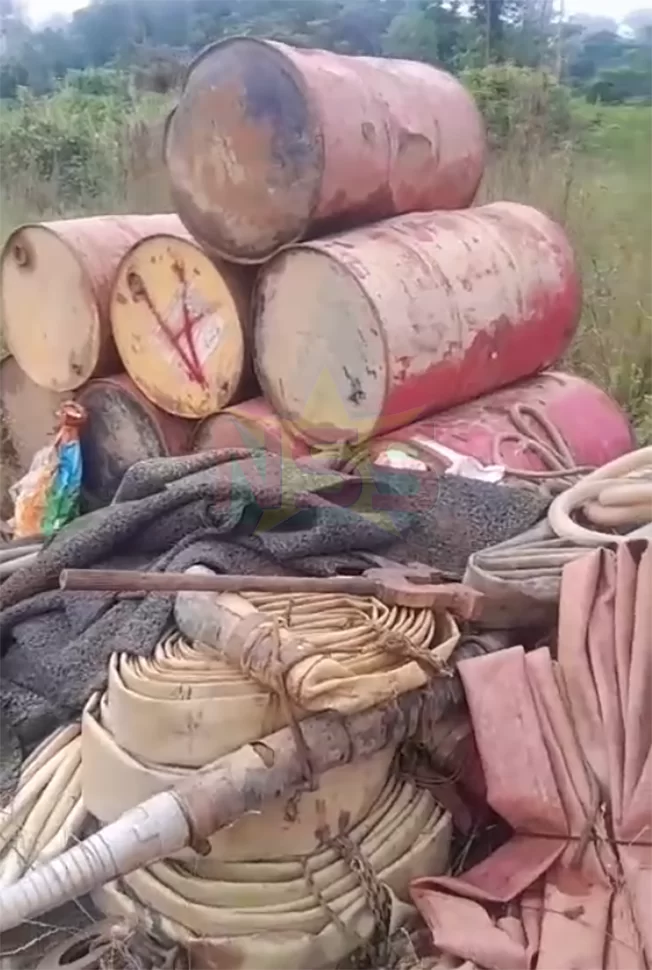
    Visual evidence obtained by local media outlet Starnieuws clearly shows heavy machinery, water pumps, barrels of fuel oil, and other specialized gear consistent with small-scale and industrial gold mining operations already staged at a makeshift camp within the territory. Marlon Valentijn, captain of the Matawai community, traveled to the site immediately after receiving reports of the incursion to assess the situation firsthand.

    In an interview with Starnieuws, Valentijn stated that camp occupants were given an unambiguous order to leave the area immediately. “We do not want any gold mining activities on our land,” he stated firmly, emphasizing that the Matawai have never consented to extractive operations in their traditional homeland, and the entire community remains united in blocking any attempts to begin mining. During his inspection of the camp, Valentijn encountered two Brazilian men who told him their project supervisor is based in Paramaribo, Suriname’s capital. He confirmed that a substantial volume of equipment has already been moved into the area, and additional excavators are reportedly en route to the site.

    Valentijn announced that relevant national authorities have already been notified of the incursion, and the community is taking all available steps to prevent the unauthorized mining operation from expanding. The situation has also been brought to the attention of John Goedschalk, presidential climate advisor for Suriname and a prominent environmental activist. Goedschalk described the new incursion as deeply worrying, and extended his full and unreserved support to the Matawai community in their opposition to the mining.

    He rejected outright any attempt to develop gold mining operations in the Matawai territory, stressing that no extractive activity should be forced on a community that has clearly stated it does not welcome such projects. For his part, Captain Valentijn said he chose to speak publicly about the incident to make the Matawai’s position clear to all outside parties: no form of gold extraction will be accepted on their traditional land.

    “We want everyone to know that this activity is not permitted on our territory,” Valentijn said, adding that the community will formalize its opposition in official communications with national authorities. He reiterated that all people occupying the camp and all mining equipment must be removed from the area without delay. This latest conflict over unauthorized gold mining comes amid a broader ongoing public debate in Suriname over unregulated extractive activity across the country’s interior, with previous investigative reporting exposing systemic governance gaps and unaddressed environmental damage along key waterways including the Marowijne River.

  • Consistency is the measure of environmental leadership

    Consistency is the measure of environmental leadership

    For democracies around the world, the handover of power between administrations brings far more than the transfer of infrastructure, public budgets, and public service responsibilities. It also carries an unwritten, intergenerational duty to protect the natural heritage that belongs to both current citizens and generations yet to come. This non-negotiable responsibility, the statement from Grenada Land Actors argues, should never shift based on a project’s location, the size of its associated investment, or the prevailing political mood of the moment.

    Grenada’s population has a long track record of showing profound care for their island’s unique natural landscapes. The widespread public mobilization to defend Camerhogne Park made this clear: when residents believe a beloved public space is under threat, they are ready to organize, rally, and demand a seat at the decision-making table. Thousands of Grenadians united around a core conviction: public natural spaces and environmental assets deserve formal protection, and communities must have a meaningful say in decisions that alter these landscapes.

    Today, that same level of public concern is growing around new development proposals impacting ecologically significant sites across the country, including La Sagesse, Mt Hartman, Levera, and Woodford. While each of these areas carries distinct ecological characteristics, social needs, and economic potential, all of them force stakeholders to confront the same four foundational questions about Grenada’s environmental governance.

    First, are environmental impact assessments conducted for these projects open and fully transparent to the public? Second, have communities that will be directly affected by development had the chance to provide genuine input before final decisions are made? Third, is key environmental data about proposed projects easily accessible to ordinary citizens, rather than locked behind bureaucratic barriers? Fourth, do development decision-makers strike a fair balance between long-term ecological health and short-term economic gains from new projects?

    Crucially, these questions do not amount to opposition to all development. The group emphasizes that Grenada needs new investment, expanded job opportunities, and sustained economic growth to thrive. Tourism, infrastructure improvements, and private sector investment all have critical roles to play in building the country’s future prosperity. But sustainable development cannot be measured only by whether a construction project is completed. It must also be judged by the quality and inclusivity of the process that leads to project approval.

    Transparency, public accountability, and meaningful community participation are not barriers to progress, the statement argues. Instead, they are core components of effective democratic governance. Projects developed through open, collaborative dialogue between developers, officials, and local communities tend to earn broader public trust, minimize costly conflict, and deliver better outcomes for all stakeholders over the long term. This is why consistent application of environmental principles matters so much: if the government celebrates public participation when one community raises concerns, it must extend that same respect to other communities seeking answers about their local environments. If officials commit to environmental protection at one site, those same standards must be applied everywhere.

    When environmental principles are enforced selectively, the entire framework of environmental governance loses public credibility. Grenada has repeatedly made formal international and domestic commitments to strengthening environmental governance, expanding public access to environmental information, and increasing citizen engagement in development decision-making. These promises must be reflected not only in official policy documents, but in every day decision-making for every proposed project. Every major development, whether at Camerhogne Park or any other site across the country, deserves the same standard of open process, reliance on scientific evidence, and meaningful community input.

    The group stresses that environmental protection is not a partisan political issue. Wetlands do not shift their ecological value based on which party holds office. Endangered species do not adjust their conservation needs to align with election cycles. Coastal ecosystems cannot speed up their recovery just because one administration is more popular than its predecessor. These fragile natural systems depend on consistent, cross-generational stewardship that outlives individual governments.

    For citizens, the responsibility to protect Grenada’s natural heritage goes beyond reacting to individual high-profile projects. Residents should demand permanent governance systems that are transparent, predictable, and fair, no matter who holds public office. For governments, in turn, informed public participation should be embraced as a marker of a strong democracy, not dismissed as an inconvenient obstacle to development.

    Grenada’s natural heritage is one of the nation’s most valuable economic and cultural assets. Protecting it does not require choosing between conservation and economic development. Instead, it requires building a new model of development that honors the needs of both people and the natural environment.

    Ultimately, effective environmental stewardship is not measured by campaign speeches or policy promises. It is measured by how consistently leaders uphold their stated principles when facing difficult, high-stakes decisions. If Grenada aims to build a resilient, prosperous future for all its people, consistency — not political convenience — must become the foundation of the country’s environmental governance.

  • Tyfoon Noul bereikt China: honderdduizenden geëvacueerd in Guangdong

    Tyfoon Noul bereikt China: honderdduizenden geëvacueerd in Guangdong

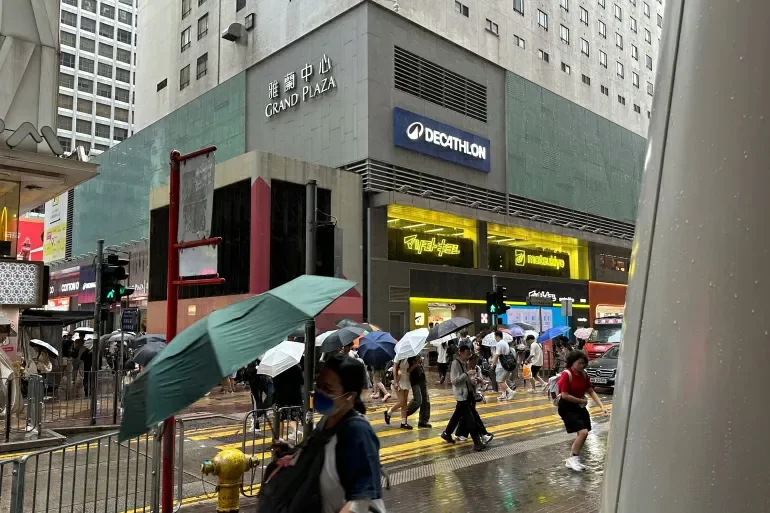
    The strongest typhoon to hit Chinese territory this year, Typhoon Noul, made landfall in southern China over the weekend, bringing destructive gale-force winds and torrential rainfall that have forced mass evacuations and widespread disruptions across Guangdong Province and Hong Kong.

    According to China’s National Meteorological Center, the storm moved inland over the coastal region of Huidong County, Huizhou City, Guangdong, on Sunday afternoon. The Hong Kong Observatory confirmed the typhoon carried maximum sustained winds of 110 kilometers per hour as it crossed into Guangdong’s interior, where it gradually weakened after landfall. Even as its intensity diminished, Noul still unleashed severe wind gusts and extreme rainfall across large swathes of the region, leaving damage in its wake.

    Precautions ahead of the storm led authorities to evacuate more than 715,000 residents across Guangdong by Sunday, state broadcaster China National Radio reported. That figure marked a sharp increase from the 340,000 people evacuated just a day earlier, as the storm’s projected path shifted and threat levels rose. State-run CCTV also documented downed trees across multiple coastal locations in Guangdong, including Huilai County, as strong winds swept the shoreline ahead of landfall.

    In Hong Kong, the storm triggered major travel disruptions and safety incidents: Hong Kong International Airport canceled roughly 350 flights on Sunday, while local authorities confirmed at least nine people across the city suffered storm-related injuries. A day earlier, as Noul approached the special administrative region, a section of a large scaffolding structure attached to a high-rise building collapsed amid worsening conditions. Hong Kong Police confirmed no injuries were reported from that incident.

    Meteorologists warn that heavy rain and strong winds will continue to impact parts of southern Guangdong and southeastern Fujian Province in the coming days as the remnants of Noul move slowly inland. Fishing boats across the region have already anchored in sheltered harbors, including the Shenzhen-Shanwei Special Cooperation Zone, to wait out the storm’s aftermath.

    Noul also brushed Taiwan over the weekend: the island’s Central Weather Administration reported the storm passed over waters south of Taiwan on Saturday before continuing west toward mainland China, leaving only scattered rainfall on the island with no major damage reported.

    This storm marks the third significant typhoon to impact China in July 2026. Earlier in the month, Typhoon Maysak hit southern China on July 3, followed by Typhoon Bavi, which made landfall in eastern China on July 11 and forced the evacuation of more than two million residents.

  • CCCCC Launches Short Story Competition for CARICOM citizens

    CCCCC Launches Short Story Competition for CARICOM citizens

    On July 27, 2026, the Caribbean Community Climate Change Centre (CCCCC) launched an innovative new initiative to center youth voices in regional climate action: the CCCCC Youth Short Story Competition. Open exclusively to CARICOM citizens between the ages of 18 and 25, the competition invites young writers to craft original narratives responding to a targeted, forward-looking prompt: “Imagine a climate-secure future for the world. Inspired by the Caribbean.”

    Unlike traditional climate policy initiatives that lean heavily on technical data and scientific research, this competition frames storytelling as a core tool for driving climate progress. Lead Communications Specialist Danelle De Coteau-Campbell emphasized that climate action’s future depends just as much on shared narratives and inspired ideas as it does on empirical data. “Through this competition, we are inspiring the youth to imagine a climate secure Caribbean and to protect our culture, our people and our homes and this is our way of handing them the pen,” De Coteau-Campbell explained. “We are excited to see how participants will give life to their ideas and in doing so, inspire meaningful conversations about the future we all share.”

    The short story competition is not a standalone project, but rather a key component of CCCCC’s broader regional strategy to position young people as active, leading contributors to the Caribbean’s climate adaptation and mitigation efforts. It also aims to boost public awareness of the unique climate challenges facing Caribbean small island and coastal states, while highlighting homegrown solutions developed by regional stakeholders.

    Entry requirements are clear to ensure originality and accessibility: all submissions must be original, previously unpublished works between 1,500 and 2,500 words, and AI-generated content is strictly prohibited. Entries must be submitted through the official competition portal hosted on CCCCC’s website, caribbeanclimate.org, where prospective participants can also find full guidelines, eligibility rules, and judging criteria.

    To incentivize participation, the competition offers tangible prizes for top-placed entries: the first-place winner will receive a MacBook Neo, with additional prizes awarded to second and third place finalists.

    For more than two decades, CCCCC has led regional efforts to address climate change impacts across the Caribbean, a region disproportionately vulnerable to sea level rise, extreme weather events, and shifting climate patterns that threaten livelihoods, cultural heritage, and community stability. This competition marks a new approach to engaging the generation that will bear the brunt of future climate change, inviting them to shape the vision of the future they will help build.

  • Gouddossier 4: Grensakkoord nog in de ijskast, ecologische ramp langs Marowijnerivier

    Gouddossier 4: Grensakkoord nog in de ijskast, ecologische ramp langs Marowijnerivier

    Along the Marowijne River, which forms a disputed border between Suriname and French Guiana (an overseas department of France), an unfolding environmental disaster is raising urgent alarms from French authorities, indigenous communities, and scientific bodies. More than five years after Suriname signed a 2021 border agreement for the river, the country has yet to ratify the deal, leaving the river’s hundreds of islands and unclarified border zones as safe havens for criminal networks and unregulated gold prospectors.

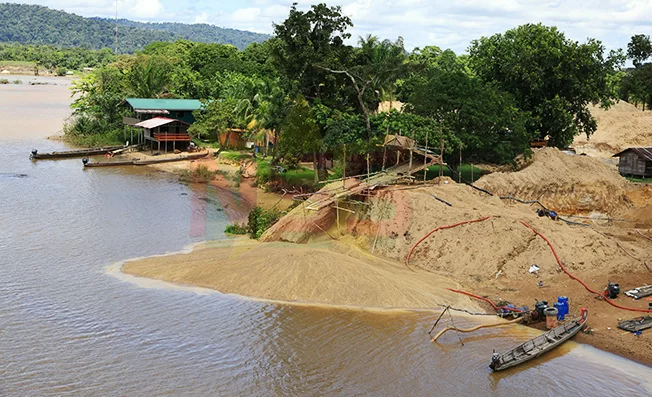
    On the Surinamese side of the river, illegal gold miners are poisoning ecosystems with mercury and causing irreversible destruction to riverbanks and island habitats, according to on-site inspections and data gathered by French enforcement agencies. During an aerial survey organized by EMOPI – the French Guiana-based mining police unit – the scale of the damage was laid bare: miners use heavy machinery to strip riverbank terrain and rely on mercury to extract gold, leaving behind excavated shorelines, toxic standing water, widespread erosion, and heavily contaminated river water that crosses the unmarked border into French territory.

    Sébastien Linares, EMOPI’s project manager based in Cayenne, explained that after Suriname dismantled 30 illegal mining barges (known locally as skalians) in 2022 – the last major crackdown on the activity praised by French authorities – prospectors simply shifted operations to Surinamese riverbanks, inland areas, and unclaimed river islands. By 2023, Linares’s team counted at least 37 active shoreline mining sites and 9 exploited islands, some of which have been in continuous operation since 2019. Today, just two to three small illegal barges remain active opposite the Gran Santi region of French Guiana.

    Mercury contamination from the mining has emerged as a major public health time bomb for communities on both sides of the border. French public health officials regularly test hair samples from French Guiana residents to track mercury exposure, and have recorded a 25% increase in contamination levels in the most remote river communities since 2005. The average mercury concentration measured in residents of the Upper Marowijne region currently sits at 12 μg/g – exceeding the World Health Organization’s (WHO) safety threshold of 10 μg/g, and far outstripping the 1.5 μg/g limit French authorities set for children. This discrepancy led French Ambassador Nicolas de Lacoste to summarize the cross-border harm with the quip: “You get the gold, we get the mercury.”

    Indigenous Wayana communities in southeastern Suriname are facing even more extreme contamination, documented through their own community-led monitoring program, the Wayana Biocultural Monitoring System. Jupta Itoewaki, an indigenous rights activist working with the program, shared that local tests have recorded mercury levels up to 8,469 times the WHO safety limit, and arsenic levels as high as 4,623 times the accepted standard. Wayana residents are exposed to these toxins daily through contaminated drinking water and food sources, but Itoewaki notes that the Surinamese government has failed to conduct systematic medical monitoring of affected communities, calling the state itself a contributor to the crisis.

    Itoewaki added that illegal mining activity has grown visibly across southeastern Suriname along both the Marowijne and Lawa Rivers, with prospectors including Brazilian garimpeiros (artisanal miners), Surinamese nationals, and criminal actors operating from the French side. Supply chains for the illegal operations are largely run by Chinese business owners along the Surinamese riverbank, who operate stores catering exclusively to mining needs. When French authorities conduct raids on illegal sites, miners simply retreat across the unclear border to Suriname to resupply before returning to the region.

    France has already enacted strict regulations to limit mining harm on its side of the river: all legal gold mining requires a strict permit that limits operations to a maximum 25-hectare area for just four years, and requires full ecological restoration of mining sites – including returning soil, waterways, and vegetation to their original pre-mining state – before operations can conclude. Mining police maintain continuous inspection authority to enforce these rules. However, French officials say the lack of action from Suriname and the unratified border agreement have rendered cross-border enforcement ineffective, describing current efforts as “mopping with the tap left open.”

    Ambassador de Lacoste told reporters that urgent coordinated cross-border action is needed to protect the river’s unique ecosystem and the communities that depend on it. The French Scientific Council for the Amazon Park has also joined the call for immediate intervention, noting that contamination already affects more than 300 populated areas on the French side of the border. Ratification of the 2021 border agreement would not immediately end illegal mining, de Lacoste acknowledged, but it would establish a formal joint governance body – the Maroni River Council – and create the legal framework needed for coordinated enforcement against illegal activity. Once borders are clearly demarcated, authorities can crack down on the criminal networks that use unclaimed islands as bases for operations, he added.

    Beyond illegal mercury mining, Itoewaki warns that the Wayana community now faces a new environmental threat: large-scale industrial mining permitted by the Surinamese government that would use cyanide for extraction. The Surinamese government has awarded a 102,000-hectare concession to a Canadian mining company on traditional indigenous territory, a move that is legal under Surinamese law but violates the Inter-American Court of Human Rights’ 2015 ruling requiring Suriname to obtain free, prior, and informed consent from indigenous communities for development on their lands. Itoewaki says the community’s traditional leader was only informed after the concession was granted, without translation or input into the decision.

    For the Wayana, ratification of the border agreement is a necessary first step to curb cross-border illegal activity, but not a complete solution. Itoewaki argues that a bilateral agreement negotiated without including the Wayana as legitimate territorial authorities repeats the patterns of colonial control that created the current crisis. “We call for ratification of the protocol, but it must also be paired with formal recognition of our land rights,” she said. “Without that, nothing will change for our river.”

    French officials also note that cracking down on illegal gold mining would also help address broader cross-border crime, including human trafficking, drug smuggling, and contraband trade that thrives in the ungoverned border zone. France has offered to support Suriname in cutting off the illegal supply lines that sustain mining operations, but says progress cannot happen until the border agreement is ratified.

  • Met Office Says No Flood Warning in Place Despite Trough Bringing Heavy Rain

    Met Office Says No Flood Warning in Place Despite Trough Bringing Heavy Rain

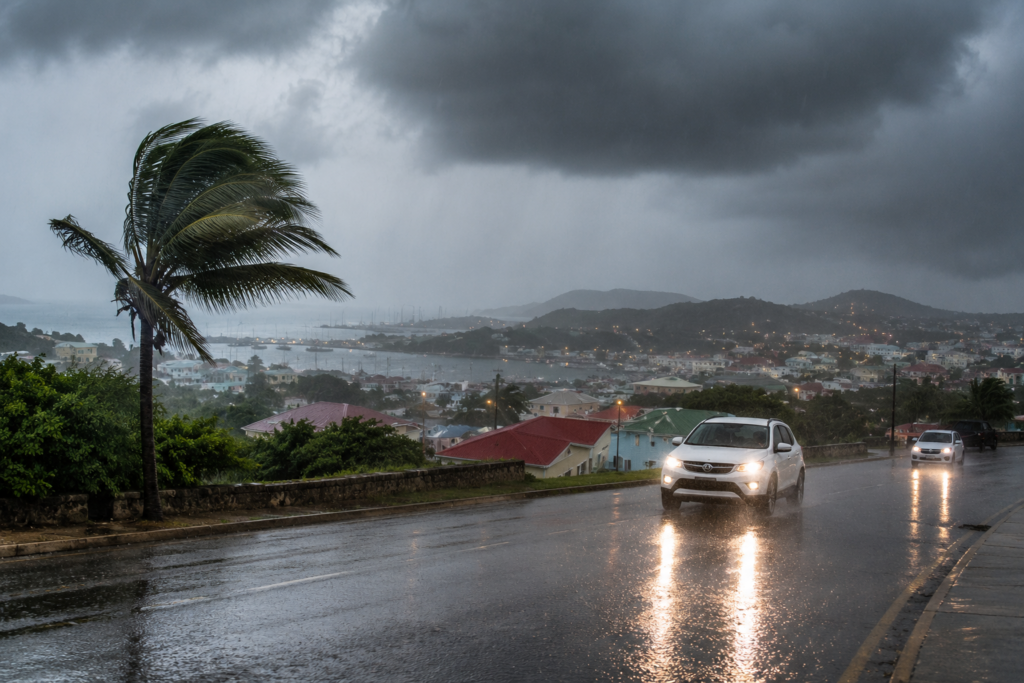
    A low-pressure trough system is currently driving unstable atmospheric conditions across Antigua, Barbuda, and the broader Leeward Islands, bringing dense cloud cover, frequent thunderstorm activity and sustained periods of intense rainfall that have put local officials on alert. The Antigua and Barbuda Meteorological Service has issued an urgent advisory calling on all residents to maintain the highest level of caution amid the ongoing adverse weather event.

    Meteorological officials warn that the persistent unsettled conditions carry significant safety risks for the public. Heavy downpours are already cutting visibility across large swathes of the islands, creating slick, dangerous driving conditions on both urban and rural roads, especially in regions that have recorded the highest rainfall accumulations. In response to these hazards, authorities have issued a clear appeal to all motorists to reduce speed, allow extra stopping distance, and avoid unnecessary travel for the duration of the system’s passage over the islands.

    As of the latest update, the meteorological service has not issued formal flood watches or warnings for the territory. However, forecasters have stressed that this status could change rapidly: if current high-intensity rainfall continues, a formal flood advisory will be activated to alert at-risk communities to potential flooding of low-lying areas.

    According to current meteorological projections, the trough system is expected to begin moving away from the region, with conditions forecast to steadily improve through the course of this afternoon and into tonight. The Antigua and Barbuda Meteorological Service has confirmed that it will maintain continuous monitoring of the weather system and issue timely updates to the public as new information becomes available.

  • Verón-Punta Cana planning proposal focuses on sustainable transportation

    Verón-Punta Cana planning proposal focuses on sustainable transportation

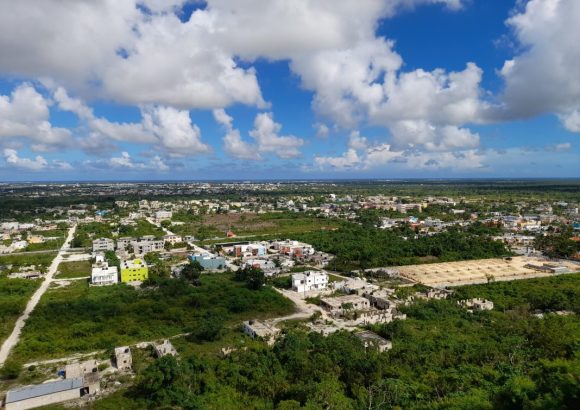
    In the Verón-Punta Cana region of the Dominican Republic, a bold new urban development framework is set to transform the country’s most high-profile tourism destination, reorienting all future growth around the core principle of sustainable mobility. The Verón-Punta Cana Territorial Planning Plan (POT) proposes a systemic overhaul of the area’s transportation infrastructure, addressing growing mobility challenges that have come with the region’s rapid tourism and residential expansion.

    At the heart of the proposal is a redesigned hierarchical road network that categorizes routes into four functional tiers: expressways, arterial roads, collector roads, and local roads. This clear functional separation is designed to streamline traffic flow, cut down on chronic congestion, and improve overall road safety for all users. Beyond motor vehicle infrastructure, the plan prioritizes expanding accessibility and infrastructure for non-motorized travel and shared public transit, with the explicit goal of reducing the region’s overwhelming dependence on private passenger vehicles.

    Aligned with global best practices for Sustainable Transit-Oriented Development (TOD), the initiative aims to build a more interconnected, walkable community. The plan maps out integrated pedestrian paths and cycling corridors that link residential neighborhoods directly to employment hubs, commercial districts, public service facilities, and major transit stops, eliminating the common disconnect between where people live and where they work, shop, and access services.

    One of the most notable innovations in the proposal is the creation of Verón-Punta Cana’s first formal, integrated bicycle lane network. Unlike recreational cycling paths that are common in many tourist regions, this network is designed to function as a core part of the area’s public transportation system. The routes will connect residential areas, workplaces, public facilities, and transit stations, and will meet strict international standards for safety, including adequate width, nighttime lighting, clear signage, and physical barriers separating cyclists from motor vehicle traffic.

    To further advance the plan’s safety and sustainability goals, the proposal designates protected mobility corridors along two major regional routes: Frank Rainieri Boulevard and the Verón-Bávaro Ring Road. Within these corridors, developers will be prohibited from constructing permanent structures or adding parallel service roads, a restriction intended to preserve the corridors’ primary transportation function, reduce encroachment on public right-of-way, and create a safer, more pleasant environment for pedestrians and cyclists. The corridors will feature purpose-built pedestrian paths, separated bike lanes, and added public urban amenities to enhance user experience.