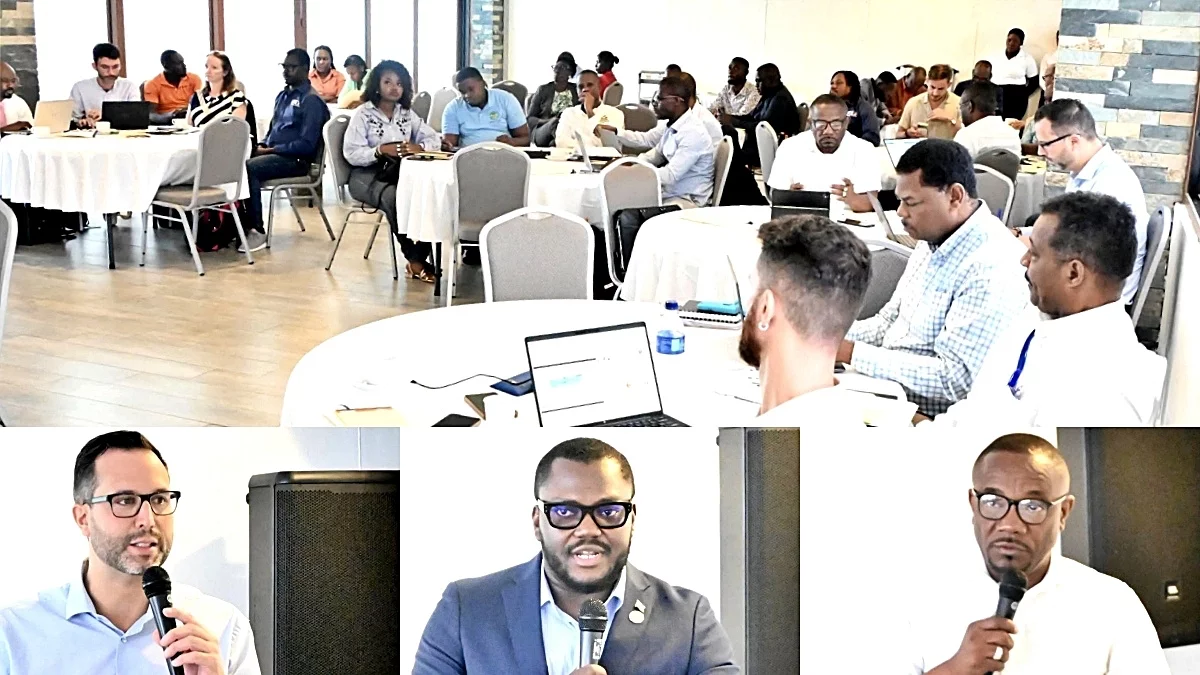
Against a backdrop of growing climate threats to Haiti’s precious coastal and marine ecosystems, the national Steering Committee (COPIL) for the Inclusive Blue Economy (I-BE) initiative has greenlit the project’s full implementation plan for the 2026-2027 fiscal year. The approval was formalized during a committee gathering held earlier this week in the northern coastal city of Cap-Haitien.
Led by Haiti’s Ministry of Environment through the country’s National Observatory for Environmental Quality and Vulnerability (ONQEV), the cross-ministerial project brings together partners from the Ministry of Economy and Finance and the Ministry of Agriculture, Natural Resources and Rural Development (MARNDR), with core funding and technical support from the International Fund for Agricultural Development (IFAD).
At its core, the I-BE project pursues two interconnected goals: to advance science-backed, sustainable stewardship of Haiti’s marine and coastal natural assets, and to meaningfully improve economic outcomes for the millions of Haitian households that rely on these resources for their survival.
The second plenary meeting of COPIL was chaired by Valéry Fils-Aimé, Haiti’s Minister of Environment and current head of the steering committee. Attendees included MARNDR Minister Marcelin Aubourg, senior officials from the Ministry of Environment, MARNDR, and the National Agency for Protected Areas (ANAP), as well as municipal leaders, civil society representatives from Haiti’s North and Northeast departments, and IFAD technical experts.
In his opening address to participants, Minister Fils-Aimé highlighted the urgency of the project’s mission, noting that Haiti’s biologically diverse marine and coastal heritage is already facing severe degradation from accelerating climate change impacts and years of unregulated, unsustainable extraction. He stressed that the Haitian government’s commitment to the initiative is unwavering, calling on all participating stakeholders to position the country’s natural resources as a long-term driver of inclusive sustainable development, rather than a commodity to be exploited at the cost of future generations. “We cannot prioritize short-term gains over the integrity and regenerative capacity of our most vital natural assets,” he emphasized.
Minister Aubourg echoed this balanced approach, underlining the critical need to align conservation of Haiti’s fragile ecosystems with tangible progress in lifting living standards for local communities that depend on these lands and waters for work and food. He praised the I-BE project’s framework for directly advancing the Haitian government’s core national priorities of strengthening food security and ending widespread hunger. Per Aubourg, the initiative will deliver widespread public benefits by diversifying local livelihood opportunities, boosting household incomes, improving community nutrition, and cultivating new economic sectors that operate in harmony with long-term natural resource management goals.
Following a recent on-site evaluation of project activities across intervention zones, IFAD Country Director Samir Bejaoui offered a positive assessment of early outcomes. Bejaoui attributed the documented improvements in beneficiary livelihoods to the project’s focus on supporting local entrepreneurship paired with targeted technical guidance from collaborating national institutions. He also commended the Ministry of Environment for its strong leadership of the initiative and the consistent commitment of all implementing bodies, noting that their work has already helped participating households increase their earnings and build greater resilience to overlapping economic, climate, and social shocks.
When fully rolled out over the 2026-2027 period, the I-BE project will reach 24,000 households across a range of sustainable resource-focused sectors, including artisanal fishing, climate-smart rice cultivation, beekeeping, sustainable cattle ranching, and improved access to microfinance for small-scale local entrepreneurs. Project activities are concentrated in five municipalities across Haiti’s North and Northeast departments: Caracol, Limonade, Terrier-Rouge, Fort-Liberté, and Ferrier, regions with extensive coastal ecosystems and high rates of poverty linked to natural resource dependence.
By investing in these interventions, the initiative aligns with Haiti’s national development goals to expand the inclusive blue economy, strengthen food security, reduce extreme poverty, and build greater community resilience—particularly for coastal populations that are among the most vulnerable to climate change impacts globally.